Quick Facts
Formation & Origin
Botswana agate formed approximately 187 million years ago during massive volcanic eruptions that created the Karoo flood basalts across southern Africa. Silica-rich fluids filled gas cavities in the cooling lava, depositing chalcedony in fine, rhythmic bands that record the oscillating chemistry of the depositing solutions.
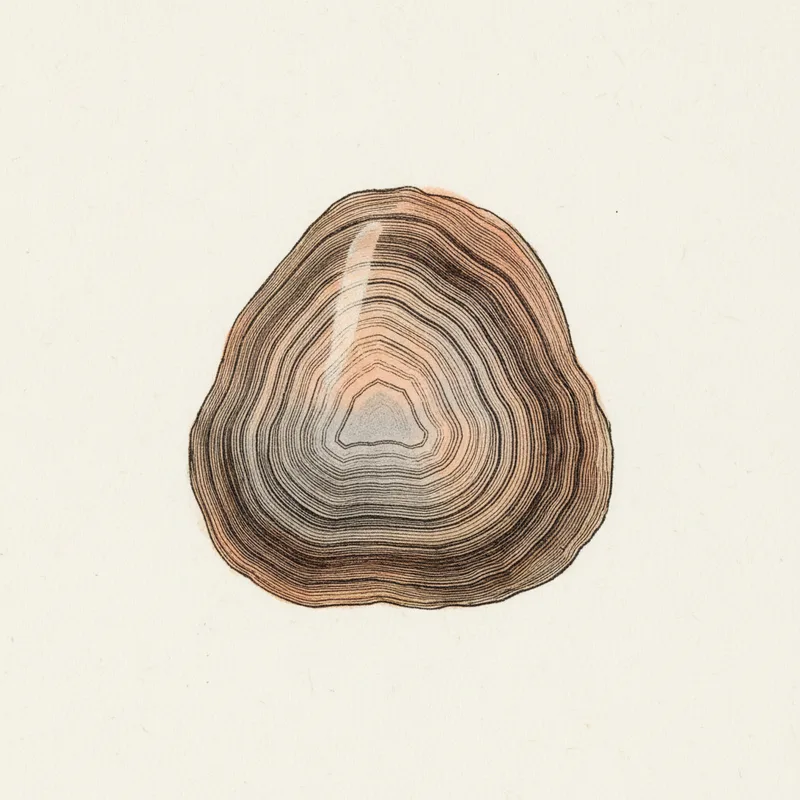
What makes Botswana agate distinctive is the fineness and regularity of its banding - thin, parallel stripes in muted, sophisticated colors of gray, salmon, pink, apricot, and white. The color palette is warmer and more subtle than most agates, creating an almost fabric-like pattern that has made it popular in high-end jewelry design.
The parallel banding (as opposed to the concentric banding of most agates) formed because the silica was deposited in flat-lying cavities where gravity kept the banding horizontal. This produces the characteristic straight-line pattern when the stone is sliced.
Identification Guide
Botswana agate is identified by its fine, parallel banding in warm muted colors - gray, pink, salmon, and white. The regularity and fineness of the bands distinguish it from other agates. At hardness 7, it's durable.
Distinguish from crazy lace agate (chaotic swirling vs straight parallel bands), banded onyx (typically black and white, sharper contrast), and dyed banded agate (colors too vivid for natural Botswana material). Genuine Botswana agate has a sophisticated, muted color palette.
Spotting Fakes
Some Botswana agate is dyed to intensify the pink and salmon tones. Natural Botswana agate has soft, subtle colors - anything vivid or bright should be examined for dye (check for color concentration in cracks). Banded agate from other localities is sometimes sold under the Botswana name. The genuine material has a distinctive warm, pastel quality to its banding that's hard to replicate with dye.
Cultural & Metaphysical Traditions
Presented as cultural traditions, not scientific evidence
In Botswanan tradition, agates have been used for centuries in fertility rituals and as protective amulets. The stone is associated with transitions and changes - its many bands are interpreted as layers of experience and growth. Modern practitioners consider it especially useful during grief, transition periods, and for overcoming smoking addiction (a specific and popular application in crystal healing circles). Its gentle, comforting colors reinforce the association with emotional support.
Where It's Found
The defining source, fine parallel banding
Price Guide
Good to Know
Scratch test: At hardness 7, Botswana Agate can scratch glass and steel. It's durable enough for any type of jewelry.
Sources: Found at only one location on Earth - Botswana. Supply is inherently limited.
Heft test: Botswana Agate has average mineral density (2.60). It feels about as heavy as you'd expect from a stone its size.
Explore More
Stay in the loop
From the Almanac
Updates from Crystal Almanac, when there’s something worth sharing.