Quick Facts
Formation & Origin
Contra-luz opal forms through the same silica gel precipitation that produces all precious opal. Silica-saturated groundwater seeps into cavities in host rock (volcanic rhyolite in Mexico, lacustrine sediments in Ethiopia) and slowly deposits microscopic spheres of hydrated silica. Over thousands to millions of years, these spheres settle into orderly arrangements, and when the sphere diameter matches visible light wavelengths, the resulting diffraction grating produces play-of-color.
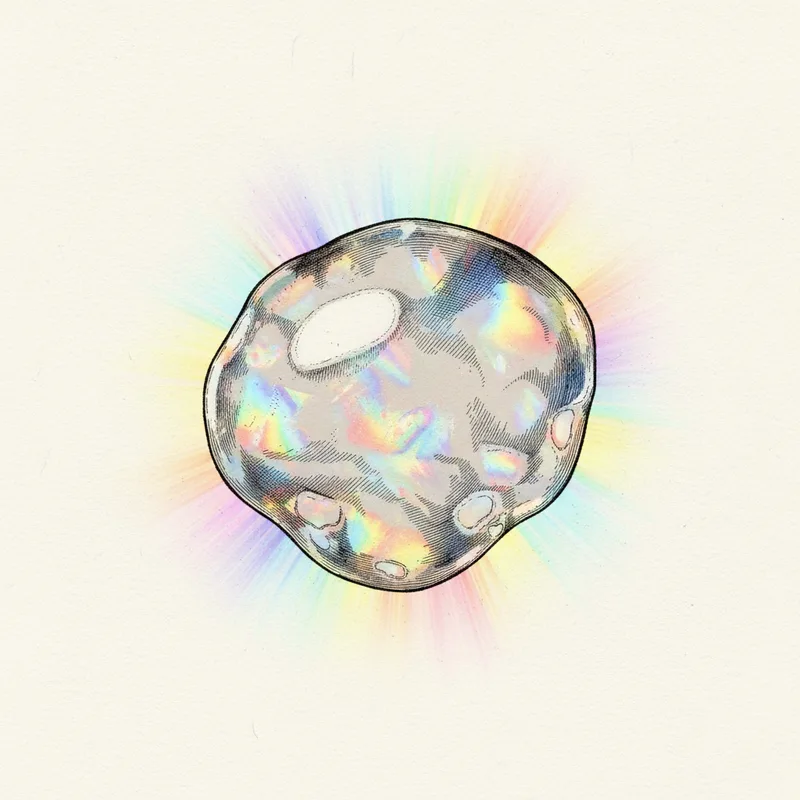
What makes contra-luz different is the geometry of the sphere packing relative to the stone's surface. In standard precious opal, spheres are arranged in opaque domains oriented so diffracted light bounces back out through the top surface, producing the familiar flash seen in reflected light. In contra-luz material, the packing arrangement, body transparency, and sphere orientation combine so that play-of-color only becomes visible when light passes through the stone from behind. The host body tends to be more transparent than standard opal, letting transmitted light reach the diffracting layers and then exit toward the viewer carrying the spectral flash.
Mexican Magdalena Valley material is the classic contra-luz source, formed in volcanic cavities where slow silica deposition under stable conditions produced the specific transparent matrix needed. That deposit was heavily mined in the 1980s and 1990s and is now largely played out. Ethiopian Welo material, discovered in 2008 and formed in sedimentary nodules, produces some contra-luz stones in addition to its more common reflected-light precious opal.
Identification Guide
The defining test is simple. Hold the stone up to a bright light source, then rotate it while viewing it in transmission. Genuine contra-luz opal shows moving spectral flashes (typically reds, oranges, and greens) that appear only when light is passing through the stone, not when viewed in reflected room light. The same stone viewed flat against a dark background will often appear almost colorless or faintly milky, with little to none of the reflected-light play-of-color that characterizes standard precious opal.
Body transparency is higher than standard opal. Most contra-luz material is transparent to translucent rather than semi-opaque. SG ranges from 2.00 to 2.15, and RI is 1.44 to 1.46, the same as all opal. Hardness is 6, meaning stones scratch easily and require care in settings. Mexican contra-luz tends to be clean and glassy, while Ethiopian material often shows the slightly cellular internal structure (sometimes called a digit pattern) typical of Welo hydrophane opal.
Distinguish from fire opal (orange to red body color with or without play-of-color) and from jelly opal (transparent opal with no play-of-color at all).
Spotting Fakes
Synthetic opal (Gilson, Slocum stone) exists but rarely targets contra-luz, since the effect is niche and reflected-light play-of-color sells more easily. When synthetics do appear, the columnar or lizard-skin pattern of Gilson material is visible under 10x magnification, quite different from the random flash of natural opal. Glass imitations are easy to detect. They lack the silica-sphere diffraction mechanism entirely and produce dull, directionless color at best, usually with visible bubbles. The main market problem is ordinary transparent jelly opal or crystal opal being sold as "contra-luz" when the stone has no play-of-color in either reflected or transmitted light. Test with a strong backlight. A genuine contra-luz stone shows moving spectral flashes that shift position as you rotate the stone, visible only in transmission. If the stone looks equally colorful (or equally dull) under normal reflected light as it does backlit, it is not contra-luz. Also watch for Ethiopian hydrophane contra-luz that has been treated with resin or polymer impregnation to stabilize it. Treated stones may not change color when wet, unlike untreated Welo material. Ask sellers about treatment history, and for stones over a few hundred dollars, request a lab report specifying origin and treatment.
Cultural & Metaphysical Traditions
Presented as cultural traditions, not scientific evidence
Contra-luz opal lacks ancient cultural traditions because it was only recognized as a distinct variety in the late twentieth century, when Mexican Magdalena material reached international markets. The name comes from Spanish "contra la luz," meaning "against the light," describing how the stone must be backlit to reveal its play-of-color. In broader opal tradition, the Romans considered opal a stone of hope and love, the Aboriginal peoples of Australia wove opal into Dreamtime creation stories, and medieval Europeans associated it with clear sight. Contemporary crystal practitioners treat contra-luz as a variant of precious opal, emphasizing its association with hidden truth, inner vision, and light brought forth from within, a natural metaphor given that its beauty only appears when illuminated from behind.
Where It's Found
Classic 1980s to 1990s source, transparent volcanic opal with red and green contra-luz flash, now nearly exhausted
Discovered 2008, produces some contra-luz alongside standard precious opal
Secondary Mexican source, mostly fire opal with occasional contra-luz material
Rare crystal opal showing contra-luz effect from sedimentary deposits
Price Guide
Good to Know
Scratch test: At hardness 6, Contra-luz Opal resists scratching from a knife but can be scratched by quartz. Best for pendants and earrings rather than rings.
Sources: Found in 4 notable locations worldwide, from Mexico to Brazil.
Heft test: With a specific gravity of 2.00-2.15, Contra-luz Opal feels lighter than most minerals. This lightness can help identify it.
Related Minerals
Parent variety, same silica-sphere diffraction in reflected light
Mexican volcanic relative, orange to red body color
Ethiopian precious opal, sometimes shows contra-luz behavior
Stay in the loop
From the Almanac
Updates from Crystal Almanac, when there’s something worth sharing.