Quick Facts
Formation & Origin
Pietersite is brecciated tiger's eye and hawk's eye - meaning it started as fibrous quartz pseudomorphs after crocidolite (like tiger's eye), but was then broken apart by geological forces and recemented by silica. This brecciation process created the chaotic, swirling patterns that distinguish pietersite from ordinary tiger's eye.
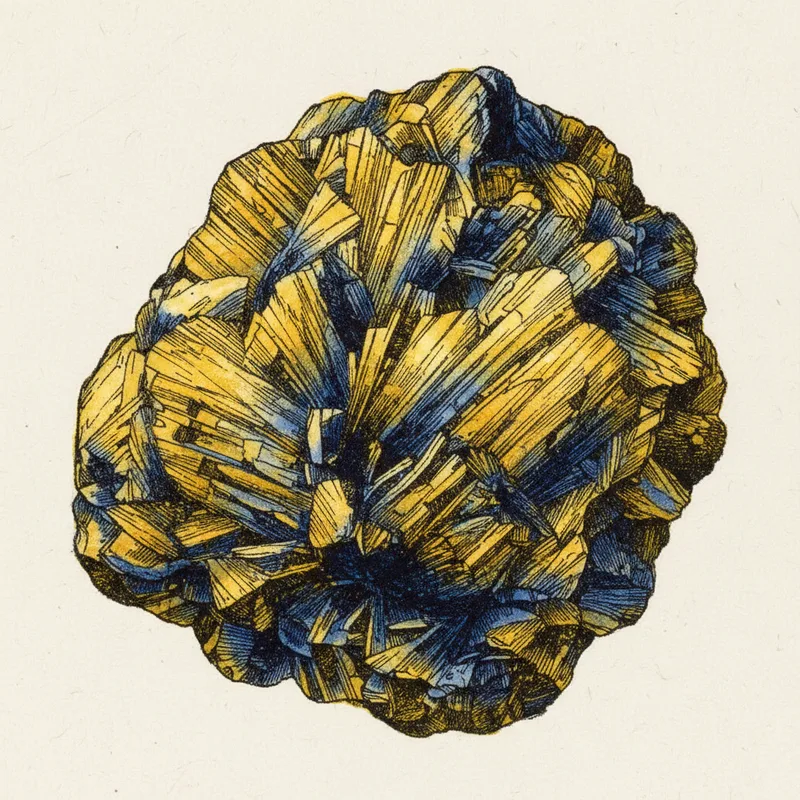
The result is spectacular: fragments of chatoyant material oriented in random directions, creating a turbulent, storm-like appearance when polished. Blue-gray hawk's eye fragments show blue shimmer from one angle while golden tiger's eye fragments flash gold from another, creating a visual effect that changes constantly as the stone is rotated.
Pietersite was discovered in 1962 by Sid Pieters in Namibia. A second deposit was found in China's Hunan Province in 1993. The Namibian material tends to be blue-dominant with golden accents, while Chinese pietersite is typically red-brown-dominant with blue areas. Both varieties are sought after, but Namibian pietersite is generally considered more valuable.
Identification Guide
Pietersite is identified by its swirling, chaotic chatoyant pattern - fragments of blue, gold, and red-brown tiger's eye material jumbled together in random orientations. The key difference from regular tiger's eye is the lack of parallel banding. Tiger's eye shows a single directional shimmer; pietersite shows shimmer in multiple directions simultaneously.
At hardness 7, pietersite is durable and takes a beautiful polish. Distinguish from regular tiger's eye (parallel bands, single shimmer direction), jasper (no chatoyancy), and labradorite (different mineral, different flash mechanism).
Spotting Fakes
Pietersite is uncommon enough and distinctive enough that outright faking is rare. Some sellers market regular tiger's eye with slight color variations as 'pietersite,' but the diagnostic swirled, multi-directional chatoyancy is absent. Genuine pietersite has a turbulent, storm-like quality that's immediately different from the linear shimmer of tiger's eye. Low-quality pietersite with minimal chatoyancy exists and is sometimes overpriced.
Cultural & Metaphysical Traditions
Presented as cultural traditions, not scientific evidence
Called 'the tempest stone' for its stormy, swirling appearance, pietersite was unknown before 1962 and has no ancient traditions. Modern crystal practitioners associate it with willpower, overcoming indecision, and navigating chaotic life changes. Its visual connection to storm imagery has made it popular with practitioners who work with themes of transformation through upheaval.
Where It's Found
Original discovery (1962), blue dominant
Red-brown dominant, discovered 1993
Price Guide
Good to Know
Scratch test: At hardness 7, Pietersite can scratch glass and steel. It's durable enough for any type of jewelry.
Sources: Found in 2 notable locations worldwide, from Namibia to China.
Heft test: Pietersite has average mineral density (2.65). It feels about as heavy as you'd expect from a stone its size.
Related Minerals
The parent material before brecciation
Blue component within pietersite
The original asbestos mineral, now replaced
Similar hardness, no chatoyancy
Explore More
Stay in the loop
From the Almanac
Updates from Crystal Almanac, when there’s something worth sharing.