Quick Facts
Formation & Origin
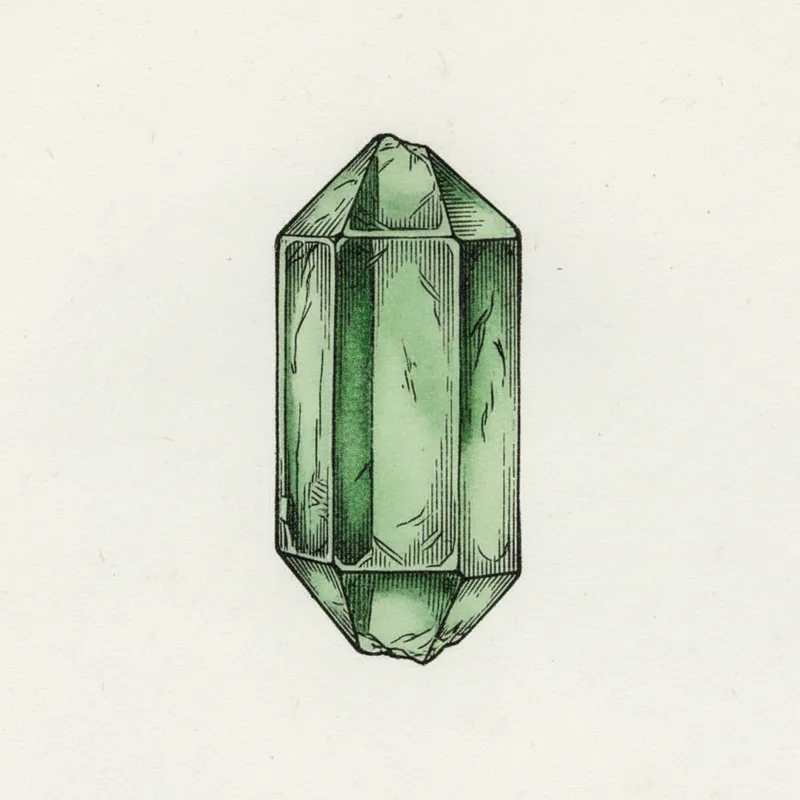
Pargasite forms during contact metamorphism when granitic or syenitic magmas intrude impure dolomitic limestones. The heat and fluid interaction between silica-rich melts and carbonate-bearing country rock generates the calcium, sodium, magnesium, and aluminum proportions needed for amphibole crystallization. The Pargas district in Finland, the 1814 type locality, is the textbook example of this marble-granite contact aureole setting. The premier gem source at Kukh-i-Lal in Tajikistan's Pamir Mountains produces exceptional transparent crystals from a spinel-bearing marble skarn, where pargasite crystallizes alongside ruby-red spinel and yellow clinohumite from the same metamorphic event. Myanmar's Mogok valley hosts pargasite in ruby-bearing marbles formed under similar conditions. Crystals typically occur as stubby prismatic forms with the diagnostic 124 degree amphibole cleavage angles.
Identification Guide
Pargasite shows vivid green to blue-green color in gem-quality material, driven by Fe²⁺ and Fe³⁺ substitution in the amphibole structure. Gem crystals from Tajikistan are typically 1-3 carat faceted stones with refractive index 1.61-1.63 and biaxial negative optic character. The diagnostic feature is amphibole cleavage at 124 and 56 degrees, visible on broken surfaces, which distinguishes pargasite from pyroxenes with their 90 degree cleavage. Specific gravity of 3.04-3.17 is moderate for the amphibole group. Hardness of 5-6 is softer than quartz. Crystals are prismatic and monoclinic, often with rhombic cross-sections. Streak is white to faintly greenish. Vitreous luster on crystal faces, pearly on cleavage surfaces.
Spotting Fakes
Tsavorite garnet is the most common confusion at retail level since both produce vivid green faceted stones. Tsavorite has much higher refractive index of 1.73-1.75 and is singly refractive, while pargasite is doubly refractive with visible birefringence doubling on facet junctions under a 10x loupe. Emerald can be confused at surface glance but has much higher RI and a distinctive chromium absorption spectrum visible with a handheld spectroscope. Peridot shares similar RI range but has no cleavage, while pargasite's perfect 124 degree amphibole cleavage is diagnostic and visible on any broken edge. Green glass imitations lack cleavage entirely and show gas bubbles or swirl marks under magnification. Synthetic pargasite is not produced commercially, so any stone sold as pargasite should be natural. Verify Tajik provenance with locality documentation, since Kukh-i-Lal material commands premium pricing.
Cultural & Metaphysical Traditions
Presented as cultural traditions, not scientific evidence
A relatively obscure stone in metaphysical circles due to its rarity, pargasite has been adopted by some collectors as a stone of disciplined growth and structural integrity, reflecting its formation in the high-pressure contact zones between granite and limestone. Modern practitioners associate the green amphibole with heart-centered focus and the grounded persistence required for long-term projects. Traditional lapidary literature treated pargasite primarily as a collector and gem curiosity rather than a magical material.
Where It's Found
Premier gem-quality locality producing transparent faceted-grade crystals in marble skarns alongside spinel and clinohumite
Type locality described in 1814, the classic marble-granite contact aureole where the mineral was first named
Occurs in ruby-bearing marbles, often intergrown with spinel and pale blue apatite
Produces brownish-green opaque to translucent prismatic crystals
Alkaline intrusion locality producing dark green crystals in syenite
Price Guide
Good to Know
Scratch test: At hardness 6, Pargasite resists scratching from a knife but can be scratched by quartz. Best for pendants and earrings rather than rings.
Sources: Found in 5 notable locations worldwide, from Kukh-i-Lal to Greenland.
Heft test: Pargasite has average mineral density (3.04-3.17). It feels about as heavy as you'd expect from a stone its size.
Related Minerals
Closely related amphibole end-member, often confused in hand specimen
Calcium amphibole forming in similar metamorphic environments
Iron-rich amphibole sharing formation conditions
Co-occurs at Kukh-i-Lal and Mogok in ruby-spinel-pargasite marble assemblages
Associated mineral in Pamir marble skarn deposits
Explore More
Stay in the loop
From the Almanac
Updates from Crystal Almanac, when there’s something worth sharing.