Quick Facts
Formation & Origin
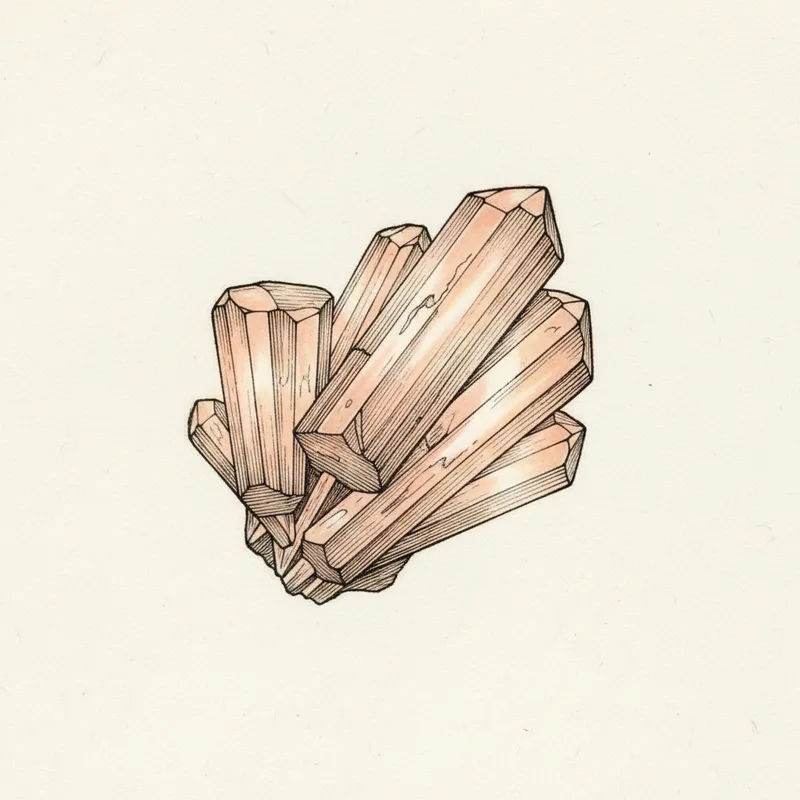
Stilbite is a common zeolite mineral that forms in volcanic rock cavities from low-temperature hydrothermal solutions. Its crystal habit is its most recognizable feature - stilbite grows as flattened, bow-tie shaped crystal aggregates with a distinctive sheaf-like or wheat-bundle appearance.
The peach-pink color that makes Indian stilbite so popular comes from trace amounts of iron and manganese. White and colorless stilbite is more common globally, but the warm salmon-pink Indian material has dominated the collector market since large-scale production began in the late 20th century.
Stilbite often occurs alongside apophyllite, scolecite, and other zeolites in the Deccan Trap basalts. These cavities can contain multiple zeolite species growing together, creating multi-mineral specimens of considerable beauty and educational value.
Identification Guide
Stilbite is identified by its distinctive bow-tie or sheaf-like crystal aggregates, pearly luster on cleavage faces, and zeolite associations. At hardness 3.5-4, it's quite soft. The flattened, fan-shaped crystal habit is unique among common minerals.
Distinguish from heulandite (similar zeolite but tabular/coffin-shaped crystals rather than sheaf-shaped), calcite (different crystal forms, fizzes in acid), and baryte (much denser, different crystal habit). Stilbite's wheat-sheaf form is essentially diagnostic.
Spotting Fakes
Stilbite is abundant and affordable from Indian sources, making faking unnecessary. The main practical concern is fragility - stilbite aggregates are delicate and easily damaged. Some specimens are stabilized with clear adhesive at stress points. Quality factors include color intensity (deeper pink is more valued), crystal definition, and the aesthetics of the overall specimen composition. Multi-mineral specimens with stilbite, apophyllite, and scolecite together command premiums.
Cultural & Metaphysical Traditions
Presented as cultural traditions, not scientific evidence
Stilbite is one of the most popular zeolites in crystal healing, associated with dreaming, intuition, and gentle emotional support. Its soft pink color and gentle energy make it a favorite for bedside placement. Practitioners use it for lucid dreaming, accessing dream wisdom, and calming an overactive mind. The bow-tie crystal form is interpreted as connecting the physical and spiritual realms.
Where It's Found
World's finest specimens, massive production
Classic European locality
Historic American zeolite locality
Good quality specimens
Price Guide
Good to Know
Scratch test: At hardness 3.5, Stilbite can be scratched with a copper coin. Handle gently and keep away from harder stones in your collection.
Sources: Found in 4 notable locations worldwide, from India to Australia.
Heft test: With a specific gravity of 2.15, Stilbite feels lighter than most minerals. This lightness can help identify it.
Explore More
Stay in the loop
From the Almanac
Updates from Crystal Almanac, when there’s something worth sharing.