Quick Facts
Formation & Origin
Bismuth is a native element - it occurs in its pure metallic form in nature, though natural specimens of any size are extremely rare. Almost all bismuth crystals sold in the mineral market are laboratory-grown from commercially refined bismuth metal.
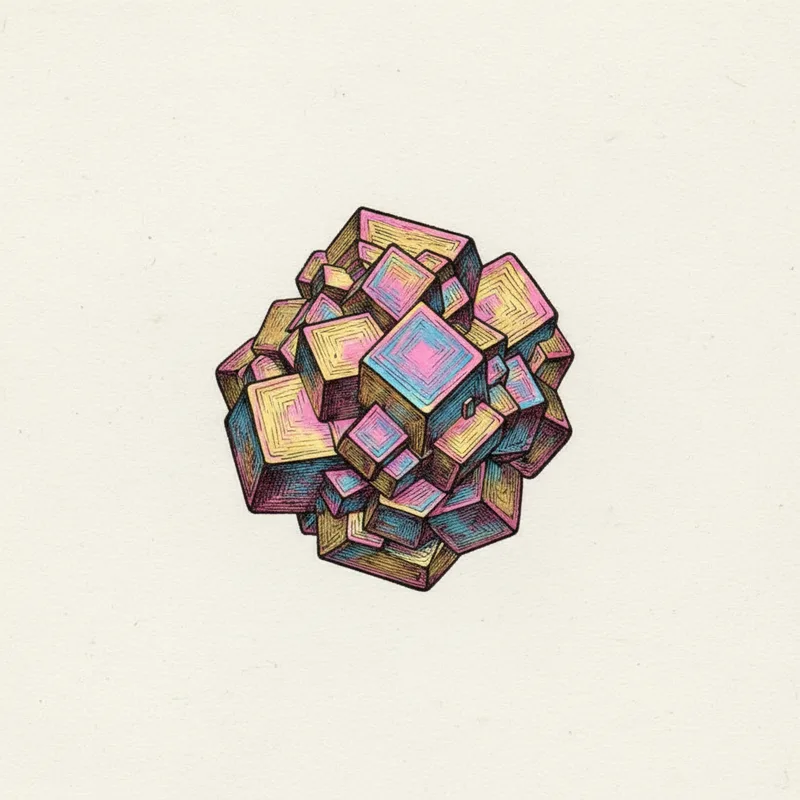
The spectacular rainbow-colored, geometric hopper crystals that have made bismuth a social media sensation are created by melting bismuth metal (melting point: 271 degrees Celsius - low enough for a kitchen stove) and allowing it to cool slowly. As bismuth crystallizes, it forms characteristic staircase-shaped hopper crystals with hollow, geometric step patterns. The rainbow iridescence comes from a thin oxide layer that forms on the surface as the crystal cools in air - similar to how oil on water creates rainbow colors through thin-film interference.
This means bismuth is one of the few collectible crystals that anyone can grow at home with basic equipment and commercially available bismuth ingots. The results are genuinely beautiful and scientifically interesting, even though they're lab-grown rather than natural.
Identification Guide
Lab-grown bismuth is identified by its distinctive staircase hopper crystal form, iridescent rainbow surface colors, and very high density (SG 9.78 - it feels extremely heavy for its size). The geometric step pattern is unique to bismuth among common crystals.
Natural bismuth is extremely rare and typically forms as irregular masses or dendritic (branch-like) shapes without the hopper crystal form. Natural specimens lack the dramatic rainbow iridescence of lab-grown crystals (which develops during controlled cooling). If someone claims a rainbow hopper bismuth crystal is 'natural,' they're either mistaken or dishonest.
Spotting Fakes
The 'fake' question is inverted for bismuth. Nearly all bismuth crystals ARE lab-grown, and this is widely known and accepted. The deception to watch for is sellers claiming lab-grown bismuth is natural, or pricing common lab-grown crystals as if they were rare natural specimens. Lab-grown bismuth is inexpensive because anyone can make it. Natural bismuth specimens (which look very different - silver-gray, no rainbow, no hopper form) are actually rarer and more valuable to serious mineral collectors.
Cultural & Metaphysical Traditions
Presented as cultural traditions, not scientific evidence
Bismuth has no traditional metaphysical history because rainbow hopper crystals only became widely available in recent decades. Modern crystal practitioners have adopted it enthusiastically, associating the rainbow colors with all chakras and the geometric form with order and transformation. Some practitioners specifically value that bismuth is lab-grown, viewing the controlled crystallization as a metaphor for intentional personal transformation.
Where It's Found
Most specimens are lab-grown from bismuth metal
Historic mining source, natural specimens rare
Associated with tin and tungsten mining
Minor natural occurrences
Price Guide
Good to Know
Scratch test: At hardness 2.5, Bismuth can be scratched with a fingernail. This is a display specimen, not a wearable stone.
Sources: Found in 4 notable locations worldwide, from Laboratory to Australia.
Heft test: With a specific gravity of 9.78, Bismuth feels surprisingly heavy for its size. This weight is actually a useful identification tool.
Related Minerals
Bismuth sulfide, a natural bismuth ore mineral
Another native element collected in pure form
Another native element, similar iridescence on surface
Another heavy metallic mineral
Explore More
Stay in the loop
From the Almanac
Updates from Crystal Almanac, when there’s something worth sharing.