Quick Facts
Formation & Origin
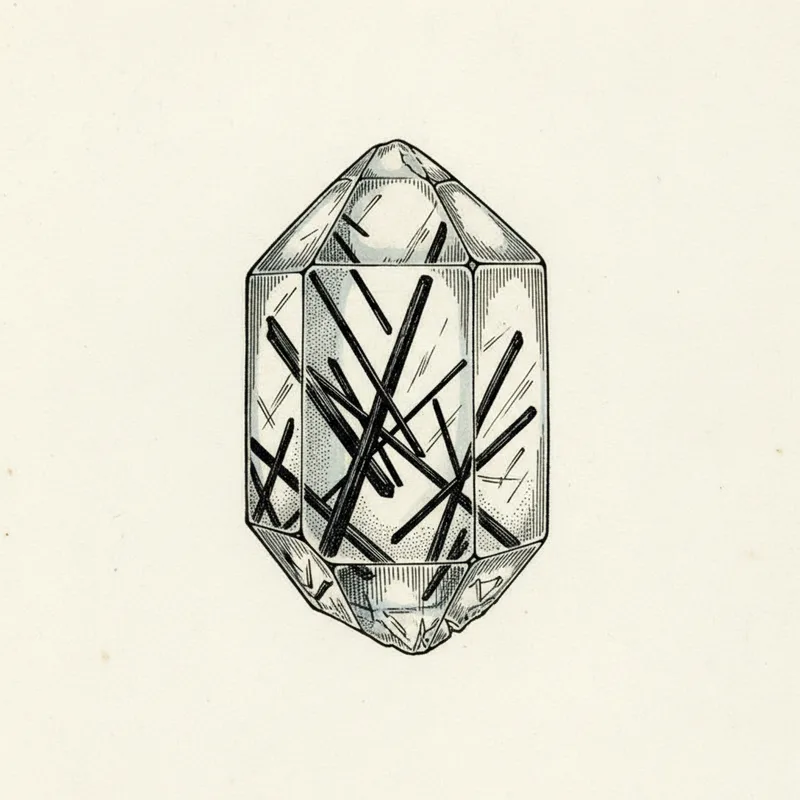
Tourmalinated quartz contains black schorl (iron tourmaline) needles trapped within clear or smoky quartz. Like rutilated quartz, the tourmaline crystallized first as elongated prismatic needles, and quartz later grew around them, permanently encapsulating the dark rods within the transparent host.
The black tourmaline needles often pass completely through the quartz crystal, sometimes extending beyond its faces. They may be scattered randomly, aligned in parallel groups, or radiate from a central point. The contrast between jet-black opaque tourmaline and water-clear quartz creates one of the most visually striking inclusion patterns in any gem material.
Because both quartz and tourmaline are common pegmatite minerals that frequently occur together, tourmalinated quartz is not geologically unusual - but specimens with clean, well-distributed needles in transparent quartz are valued far above either mineral alone.
Identification Guide
Tourmalinated quartz is identified by black, opaque, rod-like inclusions within clear quartz. The tourmaline needles are thicker and more irregular than the golden metallic needles in rutilated quartz, and they're always black (occasionally very dark green).
Distinguish from rutilated quartz (golden metallic needles, not black), actinolite in quartz (green, fibrous), and black phantom quartz (ghost outline rather than discrete rods). The tourmaline inclusions show the characteristic striated, rounded-triangular cross-section of tourmaline when viewed end-on.
Spotting Fakes
Tourmalinated quartz is common and affordable, so faking is rare. Glass with embedded black rods exists but lacks the natural randomness and crystal structure of genuine inclusions. Under magnification, real tourmaline needles show the characteristic striations and triangular cross-section of the tourmaline crystal system. The needles should interact naturally with the quartz, sometimes causing slight distortion in the surrounding crystal.
Cultural & Metaphysical Traditions
Presented as cultural traditions, not scientific evidence
The black-and-white contrast in tourmalinated quartz has made it a popular stone for balancing opposing energies in crystal healing practice. Black tourmaline's protective grounding energy combined with clear quartz's amplifying clarity creates what practitioners consider a uniquely balanced stone. It's commonly used for transmuting negative energy into positive, for finding balance during difficult decisions, and as a protection stone that maintains mental clarity.
Where It's Found
Primary world source, finest quality
Good quality specimens
Some material available
Price Guide
Good to Know
Scratch test: At hardness 7, Tourmalinated Quartz can scratch glass and steel. It's durable enough for any type of jewelry.
Sources: Found in 3 notable locations worldwide, from Brazil to Australia.
Heft test: Tourmalinated Quartz has average mineral density (2.65). It feels about as heavy as you'd expect from a stone its size.
Explore More
Stay in the loop
From the Almanac
Updates from Crystal Almanac, when there’s something worth sharing.