Moldavite vs Green Glass: How to Spot a Fake Tektite
Key Takeaway: Genuine moldavite is a rare natural glass formed by a meteorite impact 15 million years ago. The market is flooded with fakes made from melted green bottle glass. Look for torpedo-shaped bubbles and wire-like lechatelierite inclusions.
Genuine moldavite is a tektite, a rare natural glass formed by a meteorite impact 15 million years ago. Because of its high price, the market is flooded with fake moldavite made from melted green bottle glass. You can identify the real thing by looking for microscopic trapped gas bubbles, wire-like lechatelierite inclusions, and an olive-green color.
At a Glance
| Feature | Genuine Moldavite | Green Glass (Fakes) |
|---|---|---|
| Hardness | 5.5 | 5 to 5.5 |
| Chemical Formula | SiO₂ (+ Al, Ca, Fe, K) | Varies (commercial glass) |
| Crystal System | Amorphous | Amorphous |
| Color Range | Olive green, brownish green | Bright Kelly green, artificial emerald green |
| Price Range | $20 to $100+ per gram | Pennies |
| Best For | High-end collector displays | Avoiding entirely |
How They Form
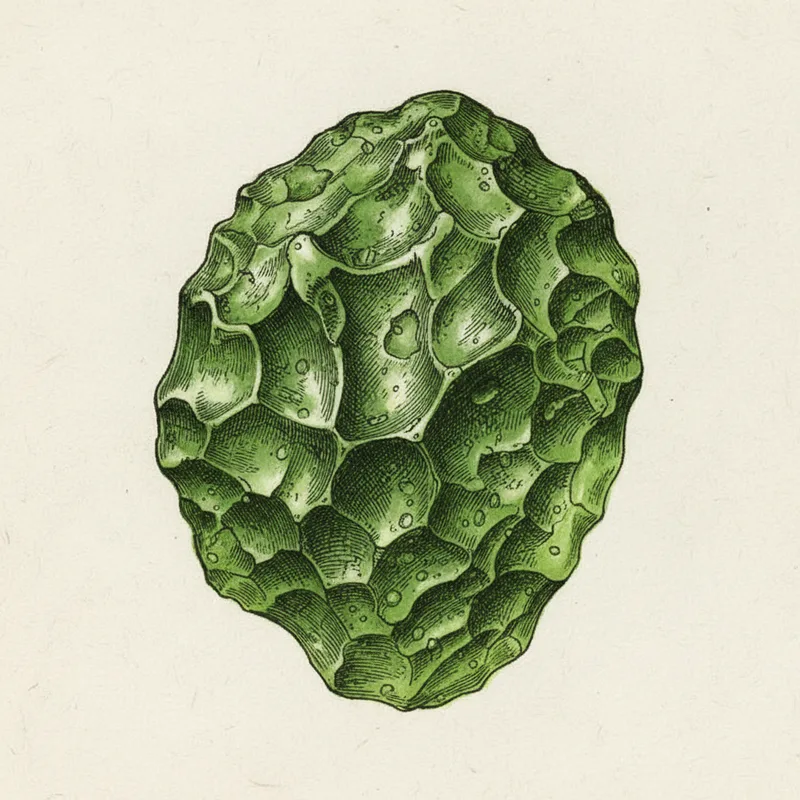
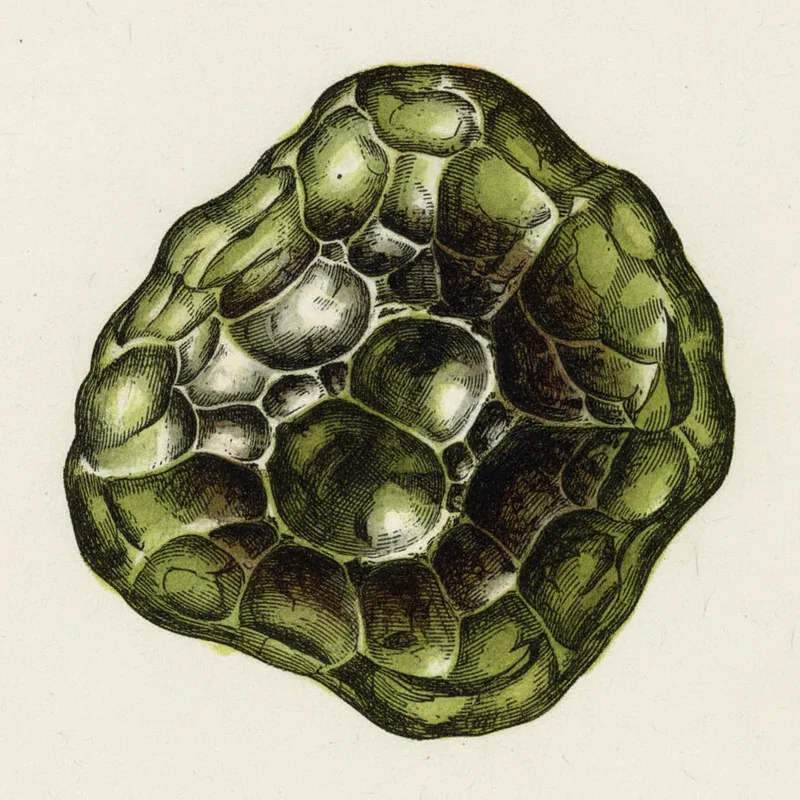
The formation of genuine moldavite is one of the most violent geological events possible. Around 15 million years ago, a massive meteorite struck the area that is now the Nordlinger Ries crater in Germany. The intense heat and pressure of the impact instantly melted the local terrestrial rock and blasted it up into the upper atmosphere. As this liquid rock rained back down over the modern-day Czech Republic, it cooled rapidly as it flew through the air, forming aerodynamic, splash-shaped pieces of green glass. This natural glass is called a tektite.
Fake moldavite forms in factories. Manufacturers take standard green glass, melt it down, and press it into molds cast from real moldavite pieces. They often treat the surface with hydrofluoric acid to mimic the natural, heavily pitted texture of real moldavite that took millions of years of chemical weathering in the soil to form.
How to Tell Them Apart
Fake moldavite is getting sophisticated, but you can beat the scammers with a jeweler's loupe. First, look at the color. Real moldavite is a moody, earthy olive or brownish-green. If the stone is a vibrant, bright, bottle green, be very suspicious. Second, check the surface texture. Real moldavite has a matte, rough exterior. Fakes often look slightly wet, glossy, or shiny on the high points.
The absolute best way to spot a fake is to look inside the stone using a 10x or 20x loupe. Genuine moldavite contains tiny, elongated, torpedo-shaped gas bubbles trapped when the glass solidified mid-air. More importantly, it contains "lechatelierite," which are squiggly, wire-like inclusions of pure melted quartz. Manufactured glass will have perfectly round, spherical bubbles and will absolutely lack the lechatelierite wires. Finally, if you see multiple pieces from the same seller that have the exact same shape and texture, they are molded fakes.
Price & Value
Moldavite has skyrocketed in price over the last decade. Because there is a finite supply in the ground, and mining is heavily restricted in the Czech Republic, prices have climbed from a few dollars per gram to over $50 or even $100 per gram for high-quality, deeply textured pieces.
Green glass is inherently worthless. The markup on fake moldavite represents a massive scam in the gem community. If you see a large, two-inch piece of "moldavite" being sold on a large e-commerce platform for $20, it is guaranteed to be glass.
Which Should You Choose?
You should always choose genuine moldavite, provided you are willing to pay the market rate. Never buy moldavite from untrusted mass-market websites. Only purchase from reputable mineral dealers who specialize in meteorites and tektites, and who can provide clear, macro photographs of the inclusions and the specific locality where the piece was mined.
Crystals in This Article
Keep Reading
Stay in the loop
From the Almanac
Updates from Crystal Almanac, when there’s something worth sharing.