Best Crystals for Manifestation: A Practical Guide
Key Takeaway: No crystal will manifest a promotion, a relationship, or a bank balance. Zero controlled studies support the idea that minerals influence external events. But the rituals built around "manifestation crystals" tap into well-documented psychological mechanisms: implementation intentions, behavioral anchoring, and cognitive reframing. The geology behind these ten stones is genuinely fascinating, and understanding why the traditions chose them makes the practice more interesting than any magical claim ever could.
You've probably seen the videos. Someone holds a citrine point, closes their eyes, whispers an intention, and credits the crystal when something good happens three weeks later. The comment section is a mix of believers, skeptics, and people genuinely wondering whether there's anything to it.
Here's what's actually happening, and it's more interesting than magic.
Quick Reference Table
| Crystal | Formula | Hardness | System | Manifestation Tradition |
|---|---|---|---|---|
| Citrine | SiO₂ | 7 | Trigonal | Abundance, prosperity, "the merchant's stone" |
| Clear Quartz | SiO₂ | 7 | Trigonal | Amplifying any intention, programmable focus |
| Pyrite | FeS₂ | 6.5 | Cubic | Ambition, material goals, structured action |
| Green Aventurine | SiO₂ | 7 | Trigonal | Opportunity, openness, new possibilities |
| Carnelian | SiO₂ | 7 | Trigonal | Action, courage, creative momentum |
| Labradorite | (Ca,Na)(Al,Si)₄O₈ | 6-6.5 | Triclinic | Hidden potential, transformation |
| Tiger's Eye | SiO₂ (fibrous) | 7 | Trigonal | Practical vision, strategic planning |
| Moldavite | SiO₂ (glass) | 5.5 | Amorphous | Rapid transformation, life change |
| Moonstone | (Na,K)AlSi₃O₈ | 6-6.5 | Monoclinic | Cyclical goals, long-term unfolding |
| Fluorite | CaF₂ | 4 | Cubic | Mental clarity, organized planning |
What "Manifestation" Actually Means (Psychologically)
Strip away the spiritual language and manifestation describes a process that behavioral psychologists have studied for decades. It has three components, all of which have research support.
Implementation intentions. Psychologist Peter Gollwitzer's research, published across multiple peer-reviewed journals since the 1990s, demonstrates that tying a goal to a specific cue dramatically increases follow-through. "When I sit at my desk, I will open the manuscript" outperforms "I should work on my book" by a wide margin. The physical act of picking up a crystal and stating what you intend to accomplish is a textbook implementation intention. The crystal is the cue. The stated goal is the plan. The combination works not because the stone has power, but because the brain treats the physical cue as a trigger for action.
Behavioral anchoring. An anchor is any sensory stimulus consistently paired with a particular mental state. Athletes do this instinctively: a basketball player bounces the ball exactly three times before a free throw. A swimmer adjusts their goggles in a specific sequence before a race. These rituals don't improve muscle performance. They trigger the neural state associated with focused execution. A crystal held before a work session, a meditation, or a goal-setting practice functions as exactly this kind of anchor. Over time, the weight and texture of the stone become neurologically associated with the mental state you enter when you use it.
Cognitive reframing. Self-determination theory, developed by Deci and Ryan, demonstrates that people who frame goals in terms of personal agency ("I am choosing to build this") rather than external pressure ("I have to finish this") show dramatically higher motivation and completion rates. Manifestation practices, whatever else they involve, consistently encourage participants to reframe goals as choices. The language of manifestation is active and intentional. That linguistic shift alone has measurable psychological effects.
None of this requires believing that crystals emit frequencies, channel energy, or communicate with the universe. The mechanisms are mundane. But mundane doesn't mean ineffective.
Why Crystals Work as Manifestation Tools
The question isn't whether crystals have magical properties. They don't. The question is why crystals work better as behavioral anchors than, say, a paperclip.
Three reasons stand out.
They're ancient. Humans have been assigning meaning to minerals for at least 75,000 years. Ochre (iron oxide) was the first pigment used in symbolic art. Carnelian beads appear in graves dating to 4500 BCE. Jade was more valuable than gold in imperial China. When you hold a crystal and set an intention, you're participating in a practice with genuine archaeological depth. That sense of continuity and significance makes the ritual feel more meaningful, and meaningful rituals produce stronger psychological effects than arbitrary ones.
They're sensory-rich. A crystal has weight, temperature, texture, color, and often optical effects like chatoyancy or labradorescence. Each of these sensory dimensions creates a neural pathway for association. A paperclip gives you one sensation: thin metal. A labradorite palm stone gives you cool weight, smooth surface, and an iridescent flash that shifts as you rotate it. More sensory input means more anchoring pathways, which means a stronger behavioral cue.
They're specific. Crystal traditions assign particular stones to particular intentions. Citrine for abundance. Carnelian for action. Fluorite for mental clarity. Whether these assignments are "real" is beside the point. The specificity forces you to clarify your goal before choosing a stone. That clarification process is itself valuable. Vague goals fail. Specific goals succeed. Any practice that pushes you toward specificity is doing useful psychological work.
The 10 Best Crystals for Manifestation
1. Citrine: The Merchant's Stone
Formula: SiO₂ | Hardness: 7 | Crystal System: Trigonal
Here's the uncomfortable truth about citrine: most of what's sold as citrine is heat-treated amethyst. When amethyst is heated to 300-450°C, the iron-based color centers that create purple shift their absorption spectrum, producing yellow, orange, or burnt amber tones. The deep orange "citrine" with a white base that fills crystal shops started life as purple amethyst from Brazil's Rio Grande do Sul.
Natural citrine is genuinely rare. It forms in hydrothermal veins where specific conditions, different iron oxidation states, lower radiation doses, produce yellow color centers instead of purple ones. Natural citrine is typically a pale, champagne-like yellow. Zambia, the Congo, and a few select Brazilian localities produce the real thing.
The manifestation tradition is specific and old. European merchants placed citrine in cash registers and money boxes, earning it the name "the merchant's stone." The association with prosperity and abundance is one of the most consistent in all crystal traditions, appearing independently across European, Chinese, and South American practices. Whether this reflects something inherent in the stone's warm solar color, or simply a self-reinforcing cultural tradition, the assignment is remarkably stable across centuries.
Practical use: Citrine works well as a workspace anchor for financial or career goals. Place a piece where you can see it during work. The warm yellow tone adds a cheerful visual accent, and color psychology research consistently associates warm yellows with optimism and energy.
What to buy: If you want natural citrine, look for pale, transparent yellow specimens and expect to pay $15-40 for a quality point. Natural citrine doesn't have that deep burnt-orange color or white base. If you're comfortable with heat-treated material (and there's no shame in that, it's beautiful and durable), you'll find abundant options at $5-15. Just know what you're getting. At hardness 7, either variety handles daily desk use and pocket carry without damage.
2. Clear Quartz: The Programmable Amplifier
Formula: SiO₂ | Hardness: 7 | Crystal System: Trigonal
Clear quartz is the most abundant mineral in Earth's continental crust, and it has a real physical property that makes the "programmable" tradition fascinating: piezoelectricity. Apply mechanical pressure to quartz and it generates an electrical charge at a precise, reliable frequency. This is why quartz oscillators keep time in watches, computers, and telecommunications equipment. Every smartphone you've ever owned relies on quartz's ability to vibrate at an exact frequency when stimulated.
The crystal structure is pure silicon dioxide, with each silicon atom bonded to four oxygen atoms in a continuous tetrahedral framework that spirals in either a left-handed or right-handed helix. This chirality is a measurable structural property, not a metaphysical claim.
In manifestation traditions worldwide, clear quartz is called the "master amplifier." The tradition holds that it doesn't carry a specific intention of its own but intensifies whatever you bring to it. Practitioners "program" clear quartz by holding it, stating a specific intention, and then keeping it in a place associated with that goal. The practice is essentially a crystallized implementation intention: you pair a specific goal with a specific physical object, then use the object as a daily visual and tactile reminder.
Practical use: Clear quartz is the most versatile entry point for any manifestation practice. Hold it while stating a specific, concrete goal. Place it where you'll see it daily. The transparency and internal complexity of a good quartz point make it visually interesting without being distracting.
What to buy: Clear quartz is among the most affordable crystals on Earth. Natural points run $3-10. Brazilian quartz from Minas Gerais and Arkansas quartz from the Ouachita Mountains are both excellent sources. For manifestation practice, a natural point with good clarity and some interesting internal features (rainbow inclusions, phantom layers) gives you more to focus on during visualization. Be aware that very clear, very perfect, very inexpensive "quartz" points sold in bulk may be smelted glass. Natural quartz almost always has some inclusions, slight cloudiness, or internal fractures that create rainbow reflections.
3. Pyrite: The Geometry of Ambition
Formula: FeS₂ | Hardness: 6.5 | Crystal System: Cubic
Pyrite forms some of the most geometrically perfect natural crystals on Earth. Its cubic crystal system produces near-perfect cubes, pyritohedrons, and octahedrons that look engineered. The faces are often striated, with fine parallel lines on each cube face running perpendicular to the striations on adjacent faces. These striations record the oscillation between cubic and pyritohedral growth during crystallization, a geological process frozen in metallic geometry.
The mineral is iron disulfide. It forms across an enormous range of environments: hydrothermal veins, sedimentary rocks, metamorphic zones, and coal beds. The brass-yellow metallic luster earned it "fool's gold," though any experienced prospector knows the difference. Pyrite is harder, brittle, and streaks greenish-black. Gold is softer, malleable, and streaks golden.
The manifestation tradition around pyrite centers on ambition and material goals. Its resemblance to gold is culturally impossible to ignore, and practitioners have leaned into that association for centuries. Pyrite is recommended for goals involving career advancement, financial growth, and tangible outcomes. The perfect cubic geometry adds a layer: there's something about holding a natural object with right angles that makes abstract goals feel structured and achievable.
Practical use: A pyrite cube on your desk is both a conversation piece and an anchoring object for goals that benefit from structure. The geometry is genuinely remarkable: iron and sulfur atoms arranged themselves into right angles without instruction, guided only by crystal field theory and molecular orbital bonding. That's worth contemplating when you're trying to bring structure to your own plans.
What to buy: Spanish pyrite cubes from Navajun (La Rioja) are the gold standard for perfect natural cubes, running $10-40 depending on size. Peruvian pyrite clusters are more affordable and equally striking. The metallic luster catches light beautifully on a desk. Note that pyrite can tarnish in humid conditions and occasionally develops a faint sulfur smell if moisture reacts with the iron sulfide. Keep it dry and it will last indefinitely.
4. Green Aventurine: The Opportunity Stone
Formula: SiO₂ | Hardness: 7 | Crystal System: Trigonal
Green aventurine gets its signature sparkle from tiny platelets of fuchsite mica (a chromium-bearing muscovite) scattered throughout a quartz matrix. When light enters the translucent quartz and hits those tiny reflective mica flakes, it bounces back as a scattered shimmer called aventurescence. The effect is subtle, a gentle glitter rather than a bold flash, and it depends on the density and orientation of the fuchsite inclusions.
The mineral forms in metamorphic environments where quartz-rich rocks interact with chromium-bearing fluids. Indian deposits, particularly from Tamil Nadu and Rajasthan, dominate the global market. The green color comes from the fuchsite itself, which gets its green from chromium ions (Cr³⁺) substituting for aluminum in the mica structure, the same element that makes emeralds green.
In manifestation traditions, green aventurine is called "the stone of opportunity." The association is specifically about openness to possibility rather than pursuing a defined goal. Where citrine is for financial targets and pyrite is for career ambition, aventurine is for the person who senses that something new is approaching but hasn't defined exactly what it is. The tradition frames it as a stone for saying yes.
Practical use: Green aventurine is ideal for transition periods: new jobs, relocations, life changes. Keep a tumbled piece in your pocket during periods of active decision-making. When you notice yourself overthinking a choice, hold the stone and notice the aventurescent shimmer in natural light. The practice interrupts rumination and redirects attention to a sensory experience, which is a well-documented grounding technique.
What to buy: Indian aventurine dominates the market and offers rich green color with visible shimmer. Tumbled stones run $2-5, making aventurine one of the most affordable crystals on any list. Look for pieces with visible sparkle when held at an angle to light. Avoid pieces that are a flat, opaque green with no shimmer, as these may be dyed quartzite rather than true aventurine.
5. Carnelian: The Action Crystal (2026 Crystal of the Year)
Formula: SiO₂ | Hardness: 7 | Crystal System: Trigonal (microcrystalline)
Carnelian is microcrystalline quartz (chalcedony) colored orange to red-orange by iron oxide (Fe₂O₃) dispersed throughout the silica matrix. The color deepens with heat treatment, a practice dating back at least 4,500 years. Indian lapidaries in Gujarat perfected the technique, placing rough carnelian among burning cow dung to reach the precise temperature range that converts yellow iron hydroxide (FeOOH) to red iron oxide. It's one of the oldest examples of humans intentionally modifying a mineral's appearance.
Carnelian is 2026's crystal of the year, and for good reason. It appears in Neolithic graves, Egyptian funerary texts, Roman signet rings (hot wax doesn't stick to it, a practical advantage), and Buddhist, Hindu, and Islamic prayer beads. No other chalcedony variety has this depth of cross-cultural use.
The manifestation tradition around carnelian is action-oriented. Where clear quartz is for setting the intention and citrine is for attracting abundance, carnelian is for actually doing the work. Practitioners associate it with courage, creative momentum, and overcoming procrastination. The tradition frames it as the stone that bridges the gap between wanting and executing.
Practical use: Carnelian is the manifestation stone for people who have clear goals but struggle with follow-through. Hold it before creative work sessions, physical challenges, or difficult conversations. The warm orange-red color has research support in color psychology: warm tones are consistently associated with increased arousal and action-orientation.
What to buy: Indian carnelian is the classic source and offers the warmest orange tones. Brazilian and Madagascan material is also excellent. Polished tumbled stones run $2-6. At hardness 7, carnelian handles daily pocket carry and desk use without damage. Avoid pieces that are uniformly bright orange-red with zero color variation, as these may be dyed agate rather than natural carnelian. Real carnelian typically shows some banding or gradation when held to a light source.
6. Labradorite: Hidden Potential Made Visible
Formula: (Ca,Na)(Al,Si)₄O₈ | Hardness: 6-6.5 | Crystal System: Triclinic
Labradorite is a plagioclase feldspar, and its optical effect, labradorescence, is one of the most visually dramatic phenomena in mineralogy. The flash of blue, green, gold, or orange that sweeps across the surface when you rotate the stone is caused by light interference within the crystal's internal microstructure. During cooling, the feldspar undergoes exsolution, separating into alternating thin lamellae (layers) of different compositions. These layers are thin enough (on the order of visible light wavelengths) to create constructive interference for specific colors, similar to the physics behind oil-on-water rainbows.
The mineral was first described from specimens found on Paul's Island in Labrador, Canada, in 1770, though Inuit oral traditions reference iridescent stone long before European contact. Finnish spectrolite, a premium variety found in Ylämaa, displays a wider color range than most Canadian material.
In manifestation traditions, labradorite represents hidden potential. The visual metaphor is hard to miss: a dark, unremarkable-looking stone that suddenly reveals brilliant color when light hits it at the right angle. Practitioners associate it with discovering capabilities you didn't know you had, recognizing opportunities others overlook, and bringing latent projects into reality. The tradition frames labradorescence itself as a symbol of manifestation: something invisible becoming visible.
Practical use: Labradorite is a meditation companion for visualization-based manifestation practices. Hold it during goal-visualization sessions and rotate it slowly to watch the color shift. The iridescence is genuinely captivating and provides a natural focal point that reduces mental wandering. The moment of discovering the flash in an unremarkable-looking stone mirrors the psychological shift that manifestation practices aim for: seeing potential where you previously saw nothing.
What to buy: Madagascan labradorite offers strong, broad flashes at reasonable prices. Finnish spectrolite commands a premium but delivers the widest color range. Polished palm stones with strong flash run $10-25. When buying online, always ask for video, as photographs can dramatically exaggerate or entirely miss the labradorescent effect. In person, rotate the stone under a single light source to assess the flash quality and color range.
7. Tiger's Eye: The Stone of Practical Vision
Formula: SiO₂ (fibrous) | Hardness: 7 | Crystal System: Trigonal
Tiger's eye is a pseudomorph, a mineral that replaced another mineral while preserving its original structure. The original was crocidolite, a blue fibrous amphibole (a type of asbestos). Over millions of years, silica-rich fluids dissolved the crocidolite fibers and deposited quartz in their place, atom by atom, preserving the fibrous architecture while completely changing the chemistry. Iron oxides stained the replacement quartz golden-brown during the process.
That preserved fibrous structure creates chatoyancy, the moving band of light that slides across the surface like a cat's eye. Light reflects off millions of parallel microscopic quartz fibers, producing the effect. Should you worry about the asbestos origin? No. The crocidolite is completely gone, replaced by silica. Polished tiger's eye is safe to handle.
The manifestation tradition around tiger's eye is distinctly practical. Where labradorite is about discovering hidden potential, tiger's eye is about seeing clearly what's already in front of you. Practitioners associate it with discernment, strategic thinking, and practical planning. Roman soldiers reportedly carried it for courage and clear-headedness. The tradition frames it as a stone for people who need to turn a vision into a step-by-step plan.
Practical use: Tiger's eye is an excellent fidget stone for planning sessions. The chatoyancy gives you something to watch while thinking, and the rolling band of light is genuinely hypnotic in a productive way. Rolling a tumbled piece between your fingers while working through a complex decision provides tactile grounding without becoming a distraction.
What to buy: South African material dominates the market and is very affordable. Polished palm stones and tumbled pieces run $3-8. At hardness 7, tiger's eye handles daily pocket carry without concern. Blue tiger's eye (hawk's eye), which preserves more of the original crocidolite's blue color, is less common and slightly more expensive. Red tiger's eye has been heat-treated to shift the iron oxides, producing a deeper mahogany tone.
8. Moldavite: The Cosmic Accelerator
Formula: SiO₂ (+ Al₂O₃, FeO, MgO, CaO, Na₂O, K₂O) | Hardness: 5.5 | Crystal System: Amorphous (glass)
Moldavite is not a crystal. It's a tektite, a natural glass formed approximately 15 million years ago when a large meteorite struck what is now the Nördlinger Ries crater in southern Germany. The impact was violent enough to eject molten terrestrial rock into the upper atmosphere, where it cooled into glass as it fell across what is now the Czech Republic. The distinctive bottle-green color comes from iron in its reduced state (Fe²⁺), and the wrinkled, sculpted surface texture formed during atmospheric re-entry.
Moldavite is genuinely finite. The entire global supply comes from a single impact event in a specific geographic region. As deposits are mined out, prices have climbed steadily, making it one of the most frequently faked stones on the market. Genuine moldavite has characteristic lechatelierite inclusions (threads of pure silica glass formed at extreme temperatures), flow structures visible under magnification, and a specific gravity of approximately 2.34-2.39. If it looks too clean, too uniform, or too cheap, it's probably bottle glass.
In manifestation traditions, moldavite is considered the most intense stone on any list. Practitioners call it a "transformation accelerator" and warn beginners about its intensity, a cultural phenomenon worth noting even if you don't accept the premise. The tradition holds that moldavite doesn't gently support goals but forces rapid change, removing obstacles (including comfortable habits) that stand between you and what you're trying to create. The cosmic origin story reinforces the narrative: this is material that was literally transformed by an event of extraordinary violence.
Practical use: Moldavite is best used intentionally and sparingly. The tradition advises reserving it for goals that require genuine life change, not incremental improvements. Hold it during focused visualization sessions. The rough, sculpted texture and unusually light weight (lower density than most silicates) distinguish it from every other stone on this list, creating a unique and unmistakable tactile anchor.
What to buy: Genuine moldavite runs $15-30 per gram for rough material. Small pieces (1-3 grams) are accessible at $20-60. Verify authenticity carefully: real moldavite has a distinctive wrinkled or sculpted surface, internal flow structures and lechatelierite inclusions visible under magnification, and never looks too clean or too perfect. Faceted moldavite for jewelry commands premium prices. Fakes are extremely common, especially online. Read our guide to spotting fake moldavite before buying.
9. Moonstone: The Cyclical Manifester
Formula: (Na,K)AlSi₃O₈ | Hardness: 6-6.5 | Crystal System: Monoclinic
Moonstone is a feldspar, specifically an orthoclase or sanidine with alternating layers of orthoclase and albite that form during slow cooling. These microscopically thin layers scatter light through a phenomenon called adularescence, a billowing glow that appears to float just beneath the surface, shifting as you move the stone. The effect is caused by the same physics as labradorescence (thin-film interference), but the layer spacing in moonstone scatters shorter wavelengths preferentially, producing a blue-white sheen rather than the bold spectral colors of labradorite.
The finest moonstone comes from Sri Lanka, where specimens display a strong blue adularescence against a transparent body color. Indian material tends toward a milky body with a warmer, more diffused glow. Rainbow moonstone, which displays multicolored flashes, is actually a variety of labradorite rather than true orthoclase moonstone.
The manifestation tradition around moonstone is cyclical. Where citrine and pyrite are about linear goal pursuit (set a target, achieve it), moonstone is associated with goals that unfold in phases: creative projects, personal growth, relationship development, seasonal business cycles. The lunar connection is cultural but deep, spanning Hindu, Greek, Roman, and Ayurvedic traditions. The adularescent glow, which waxes and wanes as you rotate the stone, reinforces the metaphor visually.
Practical use: Moonstone suits long-term manifestation practices. Use it for goals measured in months rather than days. Hold it during monthly review sessions where you assess progress and adjust plans. The adularescence provides a natural mindfulness focal point. Quality moonstone with strong blue flash runs $15-40 for cabochons. Common milky moonstone is $5-10.
10. Fluorite: The Organized Mind
Formula: CaF₂ | Hardness: 4 | Crystal System: Cubic
Fluorite gave its name to fluorescence. In 1852, physicist George Gabriel Stokes studied how fluorite glows under ultraviolet light and coined the term based on the mineral. The fluorescence comes from rare earth elements (yttrium, cerium, europium) substituting for calcium in the crystal lattice. When UV photons excite electrons in those impurity sites, the electrons release visible photons as they return to their ground state. A mineral that literally transforms invisible light into visible color.
Fluorite forms in hydrothermal veins where hot, fluorine-bearing fluids encounter calcium-rich limestone. The enormous color range (purple, green, blue, yellow, clear, and rainbow-banded) depends on which trace elements are present and the radiation history of the surrounding rock. The crystal habit is distinctly cubic, and fluorite also displays perfect octahedral cleavage, meaning it breaks along four planes at equal angles to produce eight-sided fragments. This combination of cubic growth and octahedral cleavage makes fluorite one of the most geometrically instructive minerals in any collection.
The manifestation tradition around fluorite is about mental organization. Practitioners don't associate it with attracting specific outcomes (like citrine) or taking bold action (like carnelian). Instead, fluorite is for the step that comes before both: getting clear on what you actually want. The tradition frames it as a stone for turning vague desires into organized plans, for sorting through confusion, and for the analytical thinking that separates achievable goals from fantasy. Its nickname, "The Genius Stone," points to this cognitive emphasis.
Practical use: Fluorite is the manifestation stone for planning phases. Use it when you need to brainstorm, organize, and structure goals before pursuing them. Keep it on your desk during strategic thinking sessions. The color banding in a quality specimen gives your eyes a complex, beautiful micro-break from screen work. At hardness 4, fluorite scratches easily, so store it separately from harder minerals. Chinese fluorite from Hunan Province offers stunning variety at $5-15 for polished pieces.
How to Use Crystals for Manifestation (Practical Methods)
The traditions offer several approaches. Here's what each one actually involves, stripped of mystical language.
Programming a crystal. Hold a clean stone in your dominant hand. Close your eyes. State a specific, concrete goal, not "I want abundance" but "I will save $5,000 by September." Visualize the outcome in sensory detail. Place the stone somewhere you'll see it daily. Psychologically, you've just created a vivid implementation intention anchored to a physical cue. The "programming" is happening in your brain, not the stone.
Crystal grids. Arrange multiple stones in a geometric pattern, typically around a central "master" stone (usually clear quartz), with supporting stones radiating outward. Each position represents a different aspect of the goal. The process forces you to break a large goal into components, assign specific intentions to each, and create a physical map of your plan. This is project planning disguised as ritual, and project planning works.
Carry stones. Keep a single stone in your pocket or bag. Touch it throughout the day as a reminder of your intention. This is the simplest form of behavioral anchoring. Each time you feel the stone's weight or texture, you re-activate the neural pathways associated with your goal. Over time, the touch becomes an automatic trigger for goal-directed thinking.
Workspace placement. Place specific stones in your work environment. Citrine near your computer for financial goals. Carnelian near your creative tools for creative output. Fluorite on your planning desk for organizational thinking. The practice combines workspace anchoring (environmental psychology) with color psychology and ritual specificity. Whether the stones "radiate energy" is irrelevant. They radiate visual and tactile cues, and those cues influence behavior.
For maintaining your stones' appearance and longevity, see our crystal care guide. For energetic cleansing traditions, our guide on how to cleanse crystals covers every method with safety notes.
What Manifestation Crystals Can't Do
Honesty matters more than sales.
Crystals cannot attract money, love, or opportunities through any mechanism that physics recognizes. No controlled, peer-reviewed study has demonstrated that proximity to any mineral influences external events, other people's decisions, or probability. The claims made in many crystal shops and social media posts are not supported by evidence.
What crystals can do is serve as effective tools within psychological practices that do have research support. Implementation intentions increase goal completion. Behavioral anchoring strengthens habits. Cognitive reframing improves motivation. Ritual creates useful transitions between mental states. Crystals can participate in all of these practices, and they do so with more sensory richness and cultural resonance than most alternative anchor objects.
The distinction matters. If you buy a citrine point expecting it to make you wealthy, you'll be disappointed. If you buy a citrine point and use it as the centerpiece of a daily intention-setting ritual, where you clarify financial goals, visualize specific steps, and anchor that process to a physical object you see every morning, you're using a technique with genuine psychological support. The citrine didn't manifest anything. Your focused, repeated, physically anchored intention-setting did.
These ten minerals span billions of years of geological history. Pyrite crystallized into perfect cubes from iron and sulfur without any blueprint. Moldavite records an asteroid impact that reshaped a continent 15 million years ago. Moonstone's adularescent glow is caused by internal architecture measured in nanometers. Tiger's eye preserves the ghost of a mineral that no longer exists.
They're remarkable objects regardless of what you believe about their metaphysical properties. And if holding one helps you sit down, clarify what you want, and take the first step toward getting it, that's not nothing.
That's the whole point.
Browse our full Manifestation Collection for additional stones associated with intention-setting and goal work.
Crystals in This Article
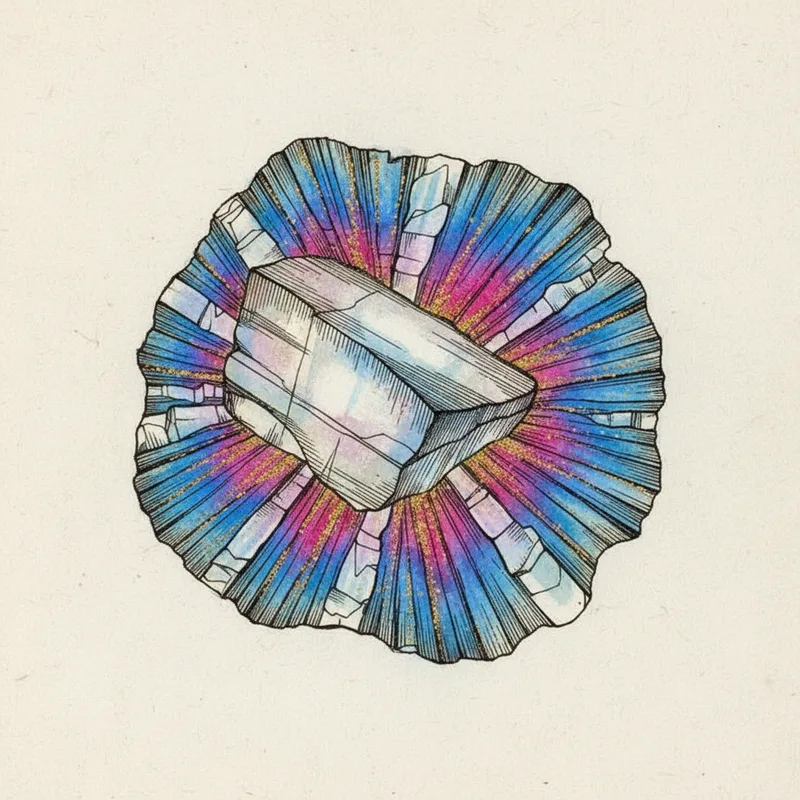
Rainbow Moonstone
The Labradorite in Disguise
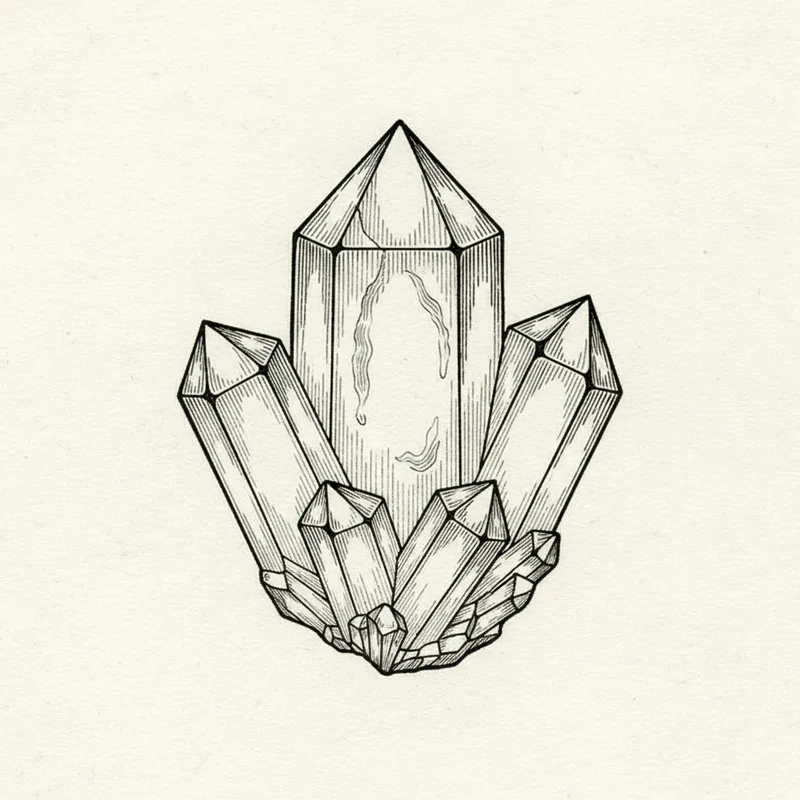
Clear Quartz
The Master Healer
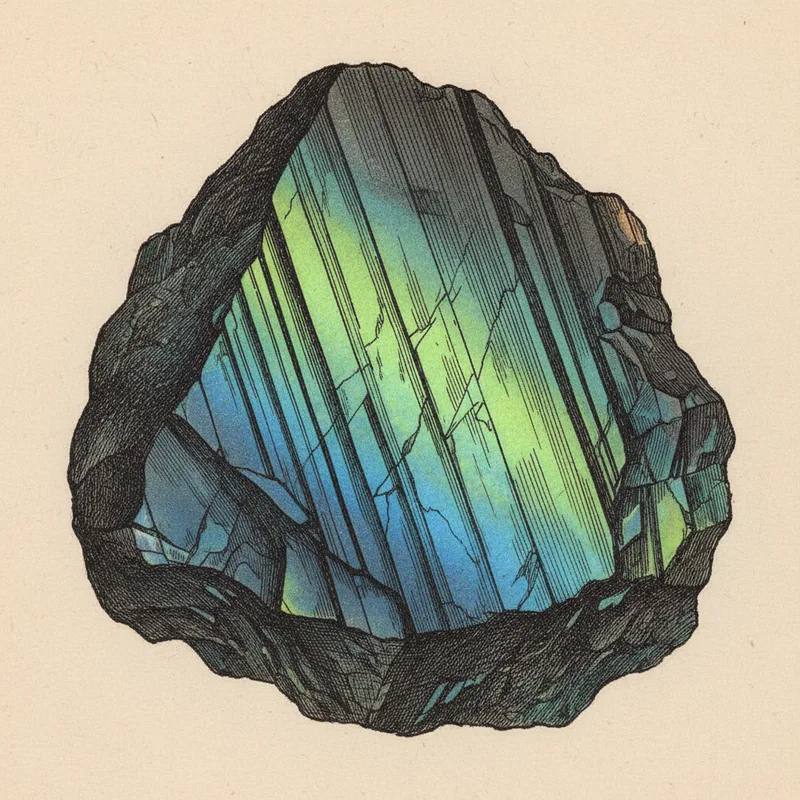
Labradorite
The Stone of Transformation
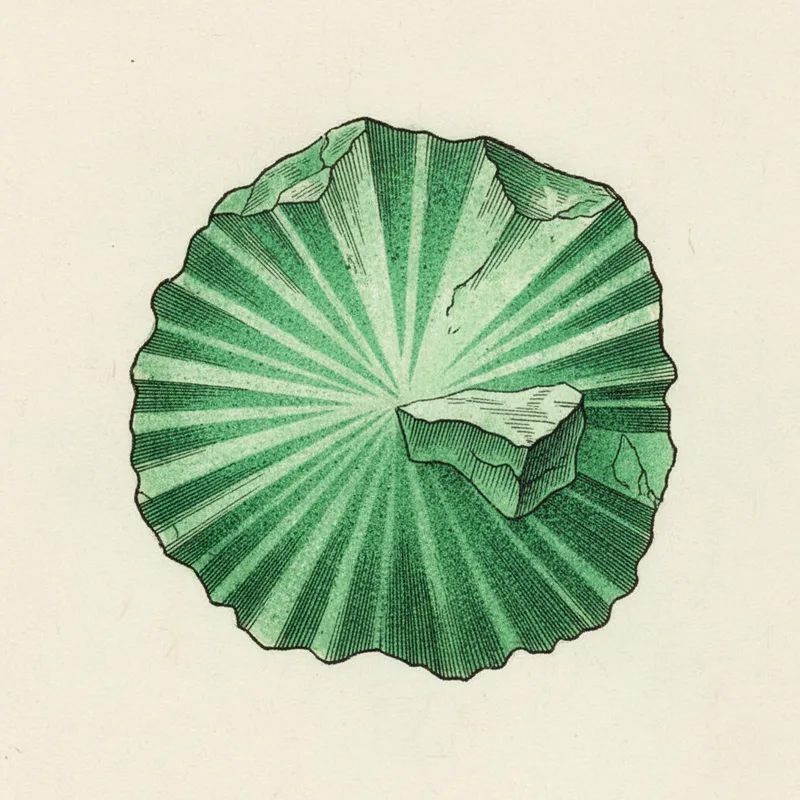
Aventurine
The Stone of Opportunity
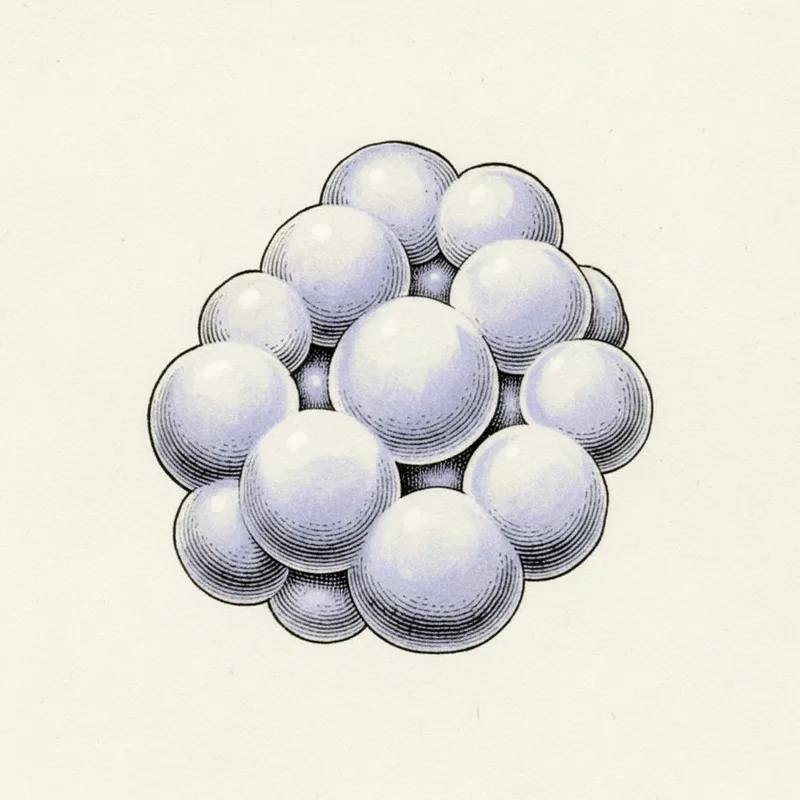
Chalcedony
The Mother of Agates

Orthoclase
The Foundation Feldspar
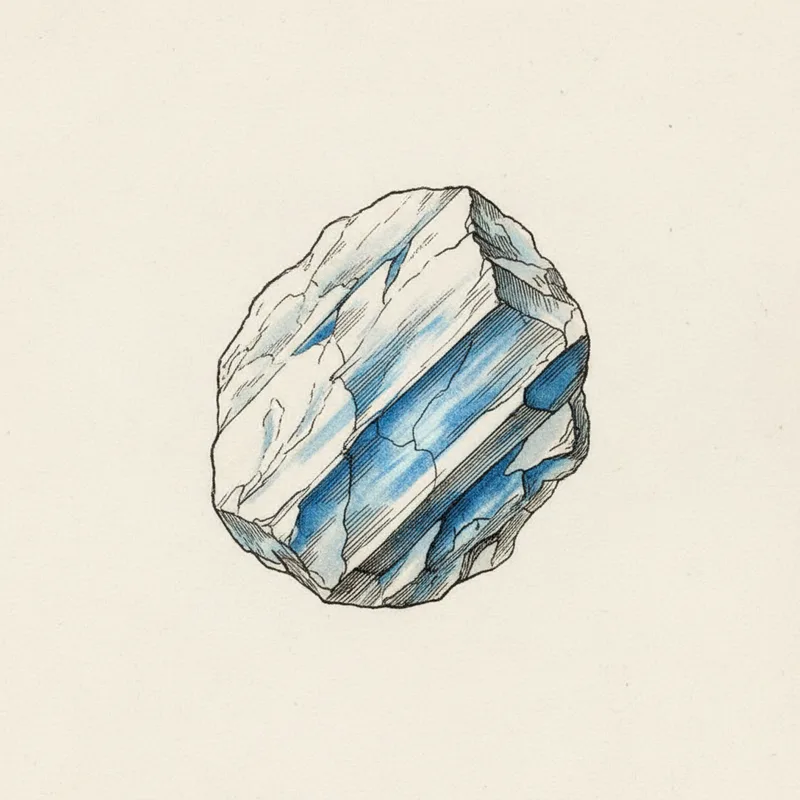
Moonstone
The Traveler's Stone
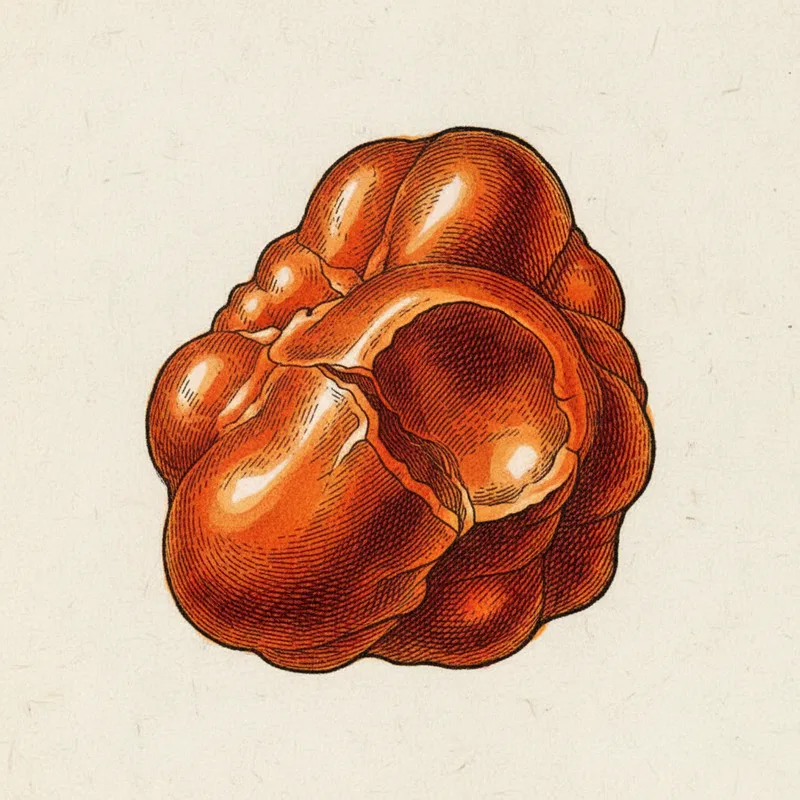
Carnelian
The Singer's Stone
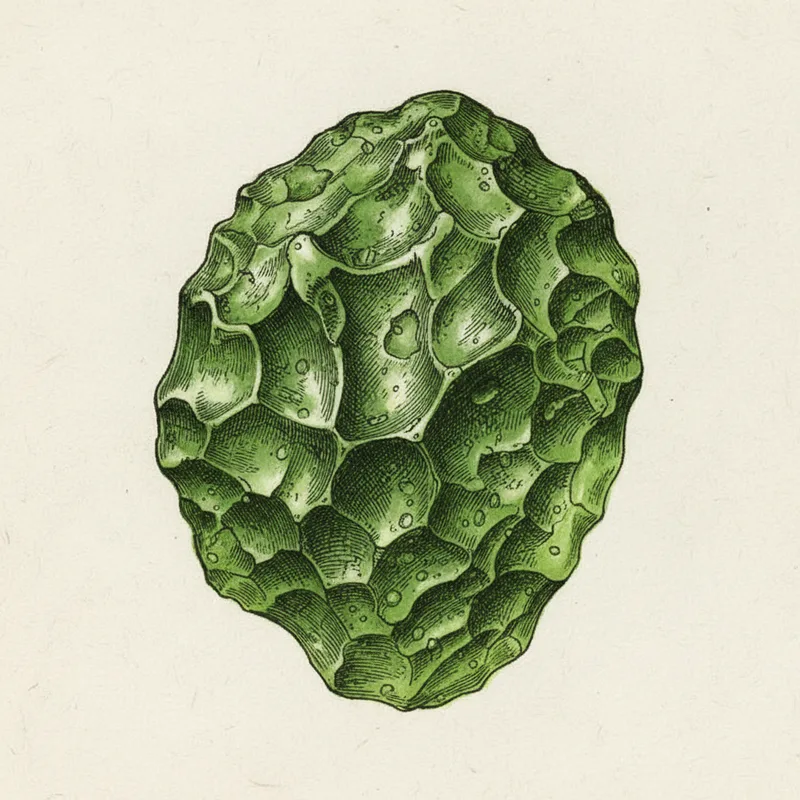
Moldavite
The Stone from the Stars
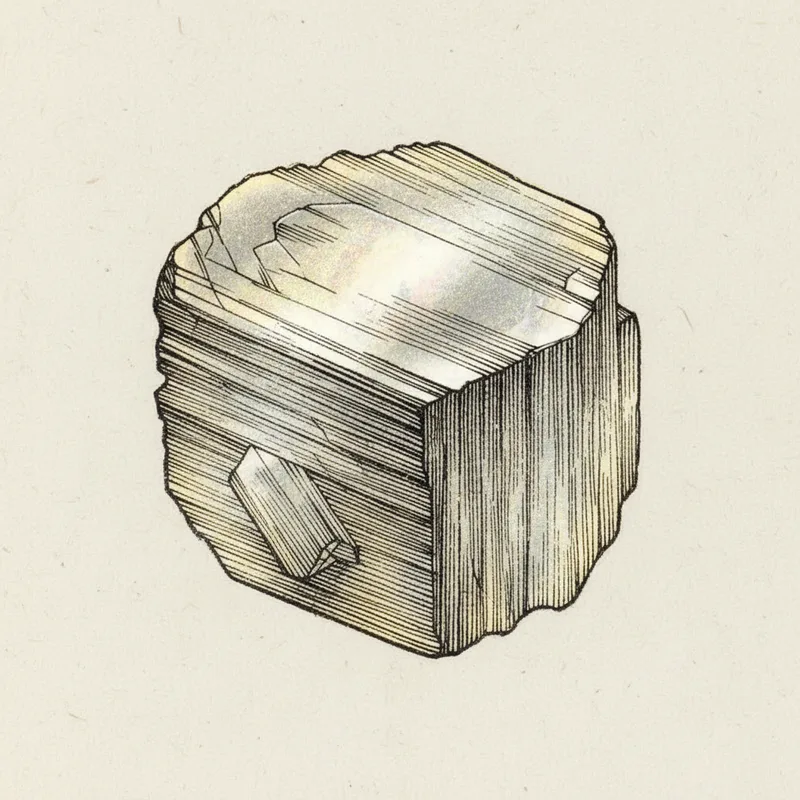
Muscovite
The Silver Mica
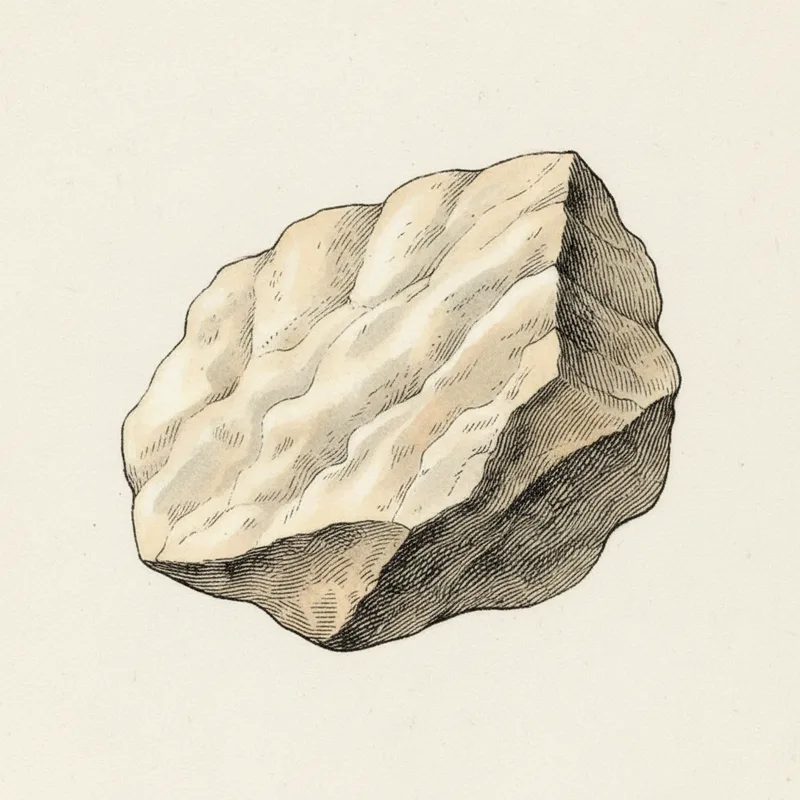
Limestone
The Fossil Record
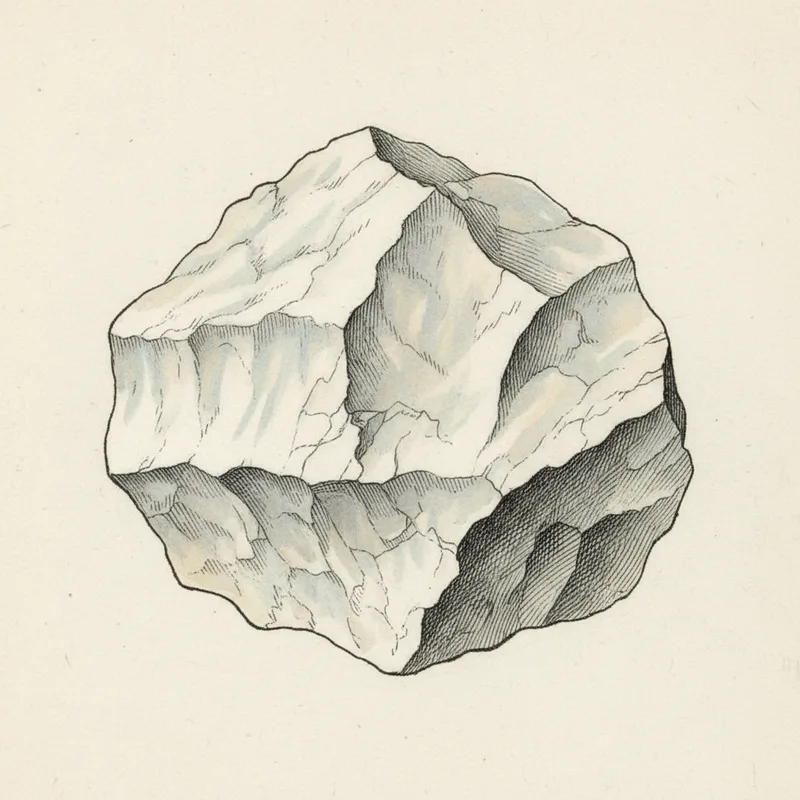
Quartzite
The Indestructible Sandstone