Quick Facts
Formation & Origin
Emerald is the green variety of beryl, colored by trace amounts of chromium and sometimes vanadium. Like alexandrite, emerald requires beryllium and chromium to occur together - an extremely unlikely geological event because these elements originate from different rock types.
Colombian emeralds formed through a unique process: beryllium-bearing hydrothermal fluids percolated through chromium-rich black shales during Cretaceous mountain building. The specific chemistry of these shales provided the chromium coloring agent, while the hydrothermal fluids supplied beryllium, silicon, and aluminum. The result is emeralds with a warm, pure green color unique to Colombian material.
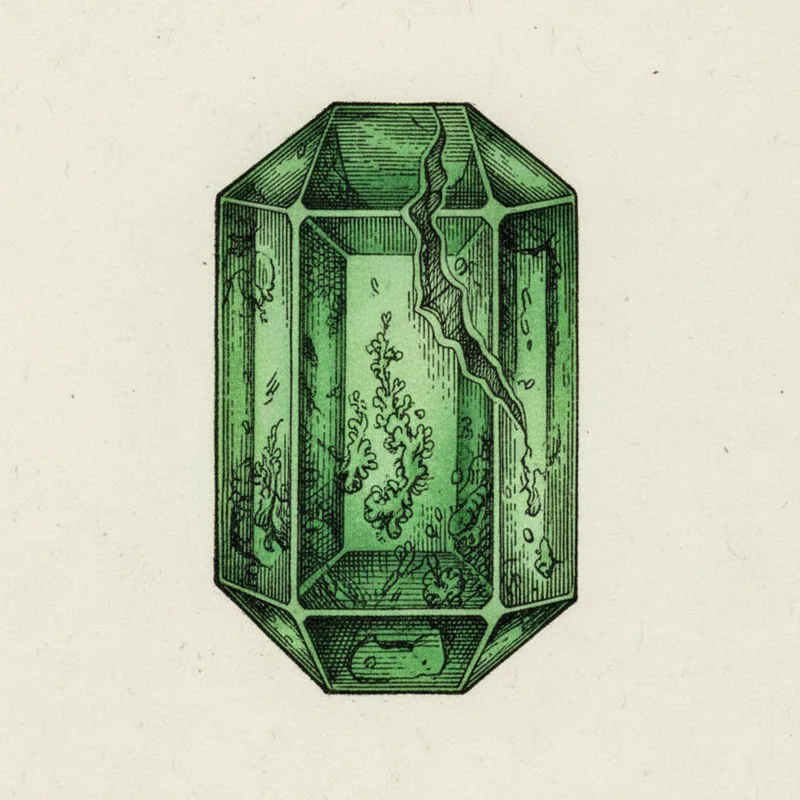
Almost all emeralds contain visible inclusions - fractures, mineral crystals, and fluid-filled cavities called 'jardin' (French for garden) because of their resemblance to plant growth. Unlike most gemstones, these inclusions are accepted and even valued in emeralds. An eye-clean emerald is so rare that it would be suspected of being synthetic. The gemological trade accepts oil treatment of emeralds (filling surface-reaching fractures with cedar oil or resin) as standard practice.
Identification Guide
Emerald is identified by its distinctive green color, hexagonal crystal habit, hardness of 7.5-8, and characteristic inclusions. The green is noticeably different from green tourmaline (more blue-green) or chrome diopside (too dark).
Distinguish from green tourmaline (different crystal system, different green tone), tsavorite garnet (no hexagonal crystals, different inclusions), and chrome diopside (softer, too dark). Emerald's inclusions under magnification are diagnostic - three-phase inclusions (containing solid, liquid, and gas) in Colombian emeralds are essentially fingerprints of natural origin.
Spotting Fakes
The emerald market has more treatments and synthetics than almost any other gemstone. Cedar oil treatment is universal and accepted but should be disclosed. Synthetic emeralds (hydrothermal and flux-grown) are chemically identical and require lab testing. Glass-filled emeralds (composite emeralds) are heavily treated stones where significant fractures are filled with colored resin - these are worth a fraction of natural. Any emerald over 1 carat should come with a lab report from GIA, Gubelin, AGL, or SSEF. The terms 'minor,' 'moderate,' and 'significant' oil describe treatment levels.
Cultural & Metaphysical Traditions
Presented as cultural traditions, not scientific evidence
Cleopatra was famously obsessed with emeralds, claiming ownership of all emerald mines in Egypt. The Incas revered emeralds as sacred objects. Mughal emperors inscribed prayers onto emeralds. In medieval Europe, emerald was believed to cure diseases and reveal truth - a person wearing an emerald while lying would supposedly trigger the stone to shatter. Modern practitioners associate it with unconditional love, unity, and abundance. Emerald is the May birthstone and the gem of 20th and 35th wedding anniversaries.
Where It's Found
World's finest emeralds, legendary pure green
Major producer, slightly bluish green
Good commercial quality, some fine stones
Emerging source of good quality material
Price Guide
Good to Know
Scratch test: At hardness 7.5, Emerald can scratch glass and steel. It's durable enough for any type of jewelry.
Sources: Found in 4 notable locations worldwide, from Colombia to Ethiopia.
Heft test: Emerald has average mineral density (2.72). It feels about as heavy as you'd expect from a stone its size.
Explore More
Beryl Family
The Love Collection
Cleopatra's stone. Associated with successful love and loyalty across cultures from Egyptian to Mughal to European.
The Abundance Collection
The gem of royalty and wealth. Cleopatra, Mughal emperors, and European monarchs all hoarded emeralds as symbols of power.
Taurus Season Crystals: 6 Stones for Stability and Abundance
Ruby vs Garnet: The Red Stone Showdown
Jade vs Aventurine: Spotting the True Green Stone
Mohs Hardness Scale
See where Emerald sits on the scale
Crystal Care Guide
Water safety, sunlight, and handling tips
Stay in the loop
From the Almanac
Updates from Crystal Almanac, when there’s something worth sharing.