Best Crystals for Love and Relationships
Key Takeaway: Ten stones carry more love tradition than any others in human history, from the rose quartz that Japanese couples exchange at weddings to the emerald Romans sacred to Venus. None of these crystals will fix a relationship. But the cross-cultural impulse to anchor love in a beautiful, durable object is older than writing itself, and the geology underneath these traditions is genuinely remarkable.
Long before Tiffany & Co. started selling diamond engagement rings in the 1880s, couples around the world were exchanging stones. Medieval European betrothal rings were set with garnet and emerald, not diamond. Vedic marriage traditions called for moonstone, believed to hold captured moonlight. Egyptian lovers carved carnelian scarabs. Japanese couples today still exchange polished rose quartz at weddings. The practice of giving a stone to mark love is one of the oldest human rituals we can document.
The cultural case for love crystals is strong. The metaphysical case is more complicated. Crystals don't generate love, repair bonds, or replace the hard work of being a good partner. What they can do, according to behavioral psychology, is function as anchors for ritual, memory, and shared meaning. A stone a couple picks out together becomes a physical marker of the relationship itself.
This post walks through ten crystals historically tied to love, partnership, and relationship healing across cultures. Every entry covers the geology, the tradition, and a practical, grounded way people actually use them. Whether you believe in crystal energy or simply like the idea of a beautiful object with a story, these ten stones have earned their place.
The Psychology of Shared Objects in Relationships
Research from the Gottman Institute, which has studied couples for over four decades, consistently finds that the healthiest long-term relationships are built on small, repeated rituals of connection. John Gottman calls these "bids for connection," tiny gestures that partners make toward each other dozens of times a day. Couples who notice and respond to bids stay together. Couples who miss them drift apart.
Shared objects play a quiet but real role in this research. Wedding rings, inherited furniture, a specific coffee mug one partner always uses: these function as what psychologists call "transitional objects" in adult relationships. They carry meaning across time and space. They remind partners of each other when apart. They anchor rituals of reunion, apology, and celebration.
A crystal on a shared nightstand, picked out together at a rock shop or gifted at an anniversary, fits cleanly into this framework. The stone doesn't need to be magical to matter. It only needs to be consistent, visible, and shared. The ritual of acknowledging it becomes a small daily bid for connection, the kind Gottman's research identifies as the bedrock of lasting partnership.
This is why so many of the world's love stone traditions involve pairs. Two stones exchanged. Two stones set in a single ring. Two stones placed on an altar. The geometry of paired objects mirrors the geometry of partnership itself.
Quick Reference Table
| Crystal | Formula | Hardness | Best For |
|---|---|---|---|
| Rose Quartz | SiO₂ | 7 | Self-love foundation, emotional healing |
| Pink Tourmaline | Na(Li,Al)₃Al₆(BO₃)₃Si₆O₁₈(OH)₄ | 7.5 | Heart opening after past hurts |
| Rhodonite | MnSiO₃ | 6 | Forgiveness and reconciliation |
| Moonstone | (K,Na)AlSi₃O₈ | 6 | Goddess traditions, feminine and receptive energy |
| Garnet | Fe₃Al₂(SiO₄)₃ | 7.5 | Passion, commitment, Persephone myth |
| Carnelian | SiO₂ | 7 | Physical intimacy, warmth |
| Lapis Lazuli | (Na,Ca)₈(AlSiO₄)₆(S,SO₄,Cl)₂ | 5.5 | Honest communication |
| Emerald | Be₃Al₂Si₆O₁₈ | 8 | Venus tradition, faithful love |
| Rhodochrosite | MnCO₃ | 4 | Inner child healing in partnership |
| Morganite | Be₃Al₂Si₆O₁₈ | 8 | Unconditional love, compassion |
Romantic, Platonic, and Familial: Not All Love Stones Are for Couples
A common misconception about love crystals is that they're all about romantic partnership. The traditions tell a more textured story. Rose quartz is primarily a self-love stone in nearly every tradition that mentions it, and the base layer of every other kind of love rests on that foundation. Rhodochrosite is associated with inner child healing and the self-mothering practices that therapists increasingly recommend for adult attachment work. Morganite has traditions around familial and universal compassion, not just romance.
When you read these entries, think about which kind of love is actually relevant to the person receiving the stone. A friend going through a breakup doesn't need a passion stone. A new parent struggling with self-compassion doesn't need a commitment stone. Matching the mineral to the moment makes the gift meaningful. The traditions are specific for a reason.
The 10 Best Crystals for Love and Relationships
Rose Quartz: The Base of the Pyramid
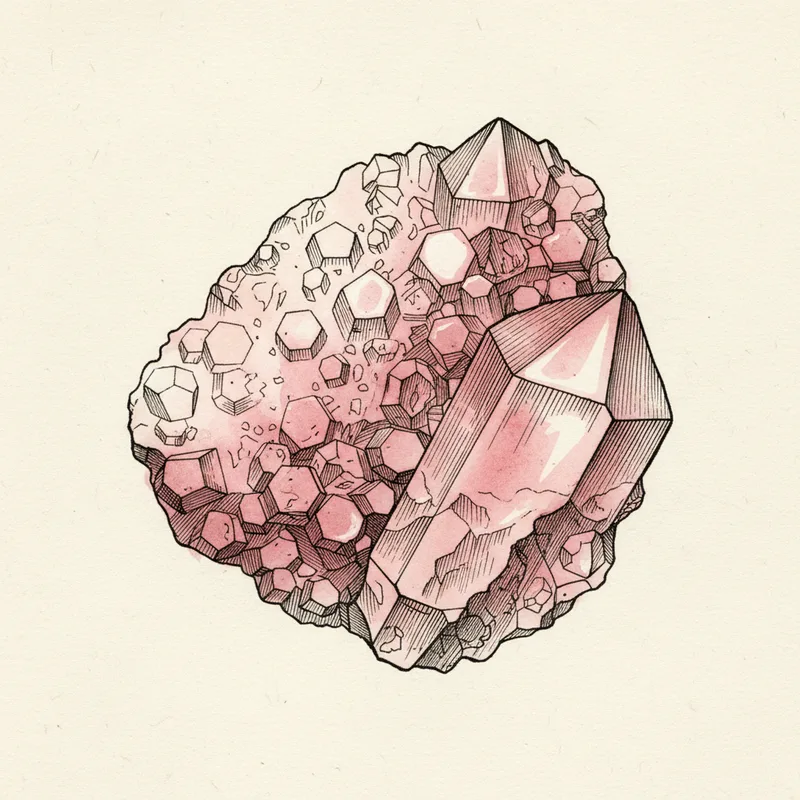
Rose quartz is the foundational love stone in nearly every crystal tradition worldwide, and the tradition is almost always explicit that self-love comes first. You cannot pour from an empty cup. You cannot love another person well if you don't extend the same grace to yourself. Rose quartz is the stone that sits at the base of the pyramid.
The chemistry is quartz (SiO₂) at its simplest, but the pink color has been a mineralogical puzzle for decades. Current research attributes the rose tint to microscopic fibrous inclusions of dumortierite, a borosilicate mineral that scatters light to produce the characteristic soft pink. Some varieties also contain trace titanium. Japanese wedding tradition includes giving polished rose quartz to the couple as a symbol of the gentleness they will need with each other.
How people use it: Keep a tumbled piece on a nightstand or in a pocket. Hold it during difficult moments of self-criticism. It's often the first crystal people buy, and for good reason.
Pink Tourmaline: Heart Opening After Hurt
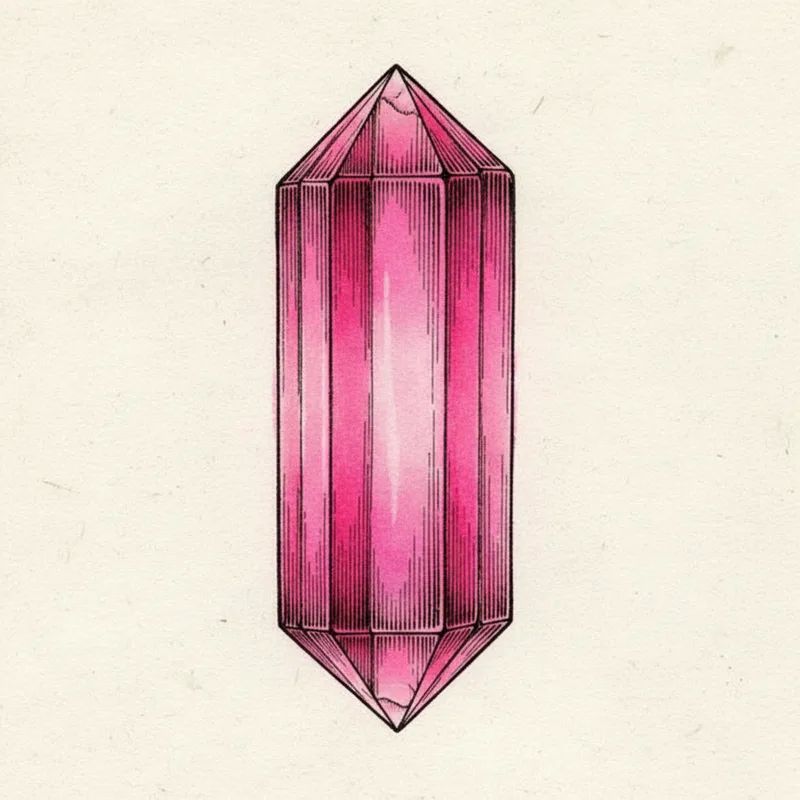
Pink tourmaline belongs to the elbaite family of tourmalines, with its pink coloration coming from Mn²⁺ (manganese) substituting for aluminum in the crystal structure. At hardness 7.5, it's durable enough to set into rings that last generations. Historically, pink tourmaline has been confused with ruby. The so-called "Caesar Ruby" in the Russian crown jewels and one of the famous "rubies" on the Spanish crown are both pink tourmaline, not corundum.
The tradition centers on opening the heart after it has been closed by hurt. Practitioners recommend it for the moment after a breakup when you're ready to feel again but don't yet trust yourself to. The dual chemistry (hard enough to protect, soft in color enough to feel tender) makes the metaphor land.
How people use it: Often set into jewelry. A pendant worn over the heart is the classic placement.
Rhodonite: The Forgiveness Stone
Rhodonite is manganese silicate (MnSiO₃), with its rose-pink color coming from the manganese itself. The characteristic black veining in most specimens is manganese oxide, which forms as the rhodonite weathers at the surface. The contrast between pink and black is visually striking and metaphorically loaded, which is why the tradition locked in centuries ago.
Russian imperial craftsmen, particularly the Fabergé workshop, used rhodonite extensively in jewelry and decorative objects throughout the nineteenth century. The Russian term for it, orlets, means "eagle stone," from a legend about eagles bringing the stones to their nests for their young. The tradition tied to relationships specifically frames rhodonite as a reconciliation stone, the one you reach for when you need to forgive or be forgiven.
How people use it: Hold during difficult conversations. Some couples keep a piece on a shared altar or shelf as a visual commitment to repair work.
Moonstone: The Vedic Marriage Stone
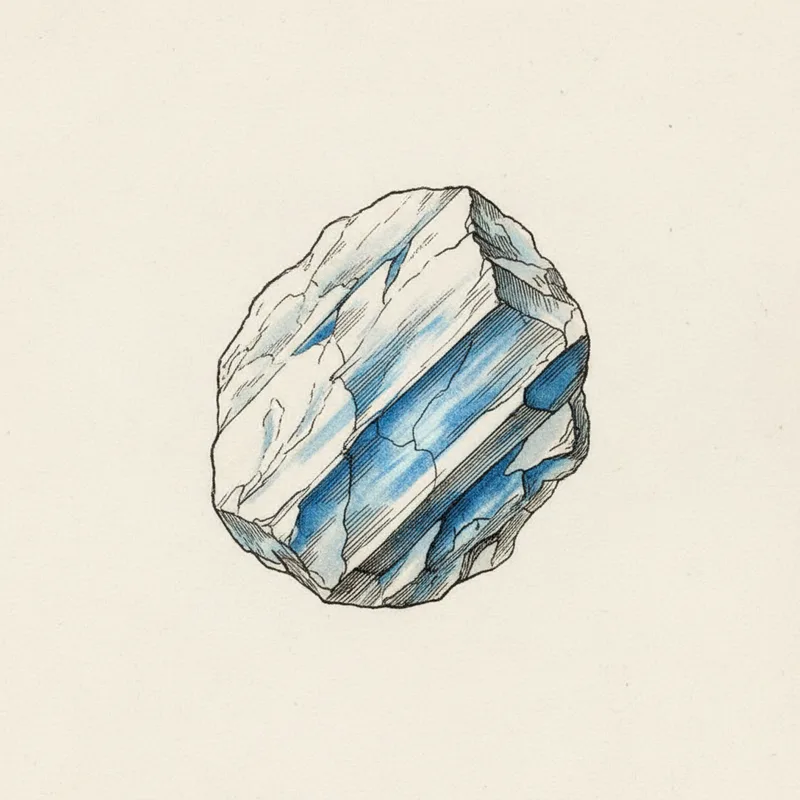
Moonstone is a variety of orthoclase feldspar that displays adularescence, a floating, moving glow that seems to move beneath the surface as you tilt the stone. The effect comes from light scattering off alternating microscopic layers of orthoclase and albite feldspar within the crystal. It's interference optics at work, the same physics that produces the colors on a soap bubble.
In Vedic tradition, moonstone is the classical wedding gift, believed to bring harmony to a marriage. Romans held that it contained captured moonlight, and Pliny the Elder wrote in the first century that its appearance changed with the phases of the moon. Sri Lanka produces the finest blue-sheen moonstone in the world, and the stone has been mined there for over two thousand years.
How people use it: Often worn as jewelry, particularly during wedding ceremonies or given as anniversary gifts. Traditional placement is at the throat or heart.
Garnet: The Pomegranate Stone
Garnet takes its name from the Latin granatum, meaning pomegranate, because the deep red crystals look like the seeds of that fruit. The connection runs deeper than appearance. In Greek mythology, Persephone ate six pomegranate seeds in the underworld, binding her to return to Hades for six months every year. Medieval Europeans linked garnet to this story and gave garnet rings as betrothal jewelry with the understanding that the stone represented commitment across separation.
Chemically, almandine garnet is Fe₃Al₂(SiO₄)₃, an iron aluminum silicate with the deep wine-red color that characterizes most traditional garnet jewelry. It's hard enough at 7.5 to survive daily wear for generations, which is why so many antique garnet pieces have outlived their original owners many times over. The tradition around garnet is passion and commitment together, not one without the other.
How people use it: Set into rings, pendants, or kept as a tumbled stone in a pocket during long-distance phases of a relationship.
Carnelian: The Warmth Stone
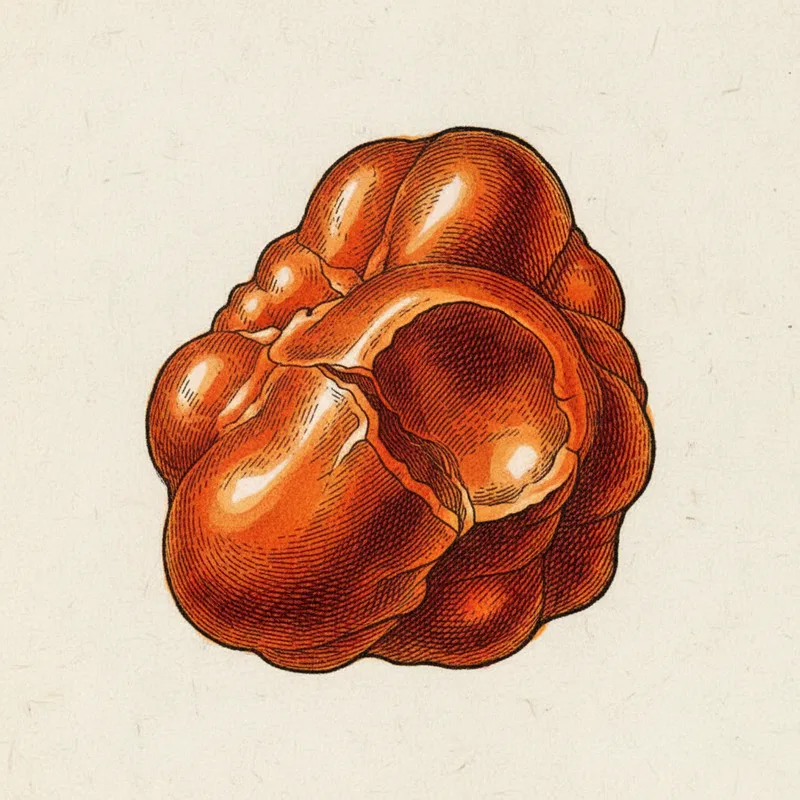
Carnelian is a red-orange variety of chalcedony (microcrystalline quartz), with its color coming from iron oxide inclusions dispersed through the silica. The Egyptian Book of the Dead contains specific instructions for placing carnelian amulets on the body, and the goddess Isis was associated with a sacred carnelian knot called the tyet. Egyptian lovers carved carnelian into scarabs and exchanged them as tokens of affection.
The tradition centers on physical warmth, sensuality, and the body side of love rather than the mental or spiritual. Roman tradition associated carnelian with courage and vitality, and it was worn by both warriors and lovers. The deep orange-red color reads as warmth on any skin tone, which is part of why the tradition has lasted.
How people use it: Placed on a nightstand or worn as a pendant. Some couples exchange matching carnelian pieces as anniversary gifts.
Lapis Lazuli: The Honest Communication Stone
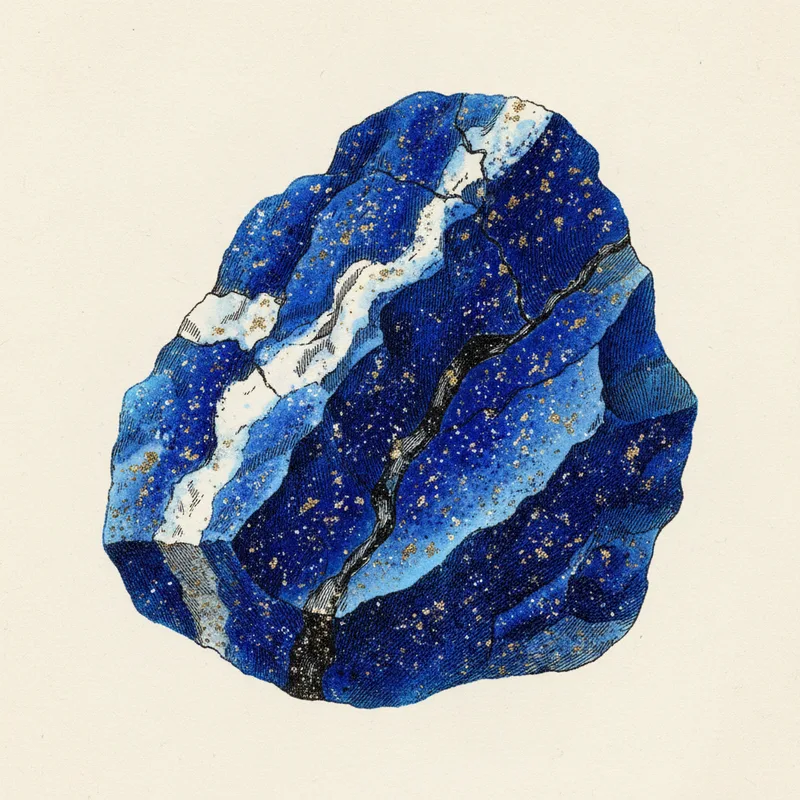
Lapis lazuli is a rock rather than a single mineral, composed mostly of lazurite with flecks of pyrite and calcite. The deep blue color comes from sulfur radical anions within the lazurite structure, the same mechanism that colors sodalite. The best lapis comes from the Sar-i Sang mines in Afghanistan, which have been producing this stone continuously for over six thousand years. Ancient Egyptian love poetry repeatedly invokes lapis, and Cleopatra was said to have ground it into eye makeup.
The ultramarine pigment that Vermeer used to paint "Girl with a Pearl Earring" and that Renaissance masters reserved for the robes of the Virgin Mary was ground lapis lazuli. It was more expensive than gold. The tradition tied to love is specifically about honest communication, the ability to say what you mean without cruelty and to hear what your partner means without defensiveness.
How people use it: Often worn as a pendant at the throat, in keeping with its association with communication. Some couples keep a piece near where they have difficult conversations.
Emerald: The Venus Stone
Emerald is a variety of beryl (Be₃Al₂Si₆O₁₈) colored by chromium and sometimes vanadium. Cleopatra's mines in Egypt produced emeralds for Roman and Egyptian royalty for centuries, and the Romans specifically dedicated emerald to Venus, goddess of love. The tradition of emerald as a stone of faithful love dates to this period and has run continuously through Western jewelry ever since.
The Taylor-Burton emerald necklace, gifted by Richard Burton to Elizabeth Taylor during their turbulent marriage, became one of the most famous love stories in twentieth century jewelry history. Colombian emeralds from the Muzo and Chivor mines remain the gold standard, with a slightly bluish-green color that distinguishes them from African or Brazilian material. At hardness 8, emerald is durable, though it's brittle and often contains internal fractures that jewelers call jardin (garden).
How people use it: Set into engagement rings (a classic non-diamond choice), pendants, or kept as a raw crystal specimen. May is the birth month, which makes it a natural anniversary stone.
Rhodochrosite: The Inner Child Stone
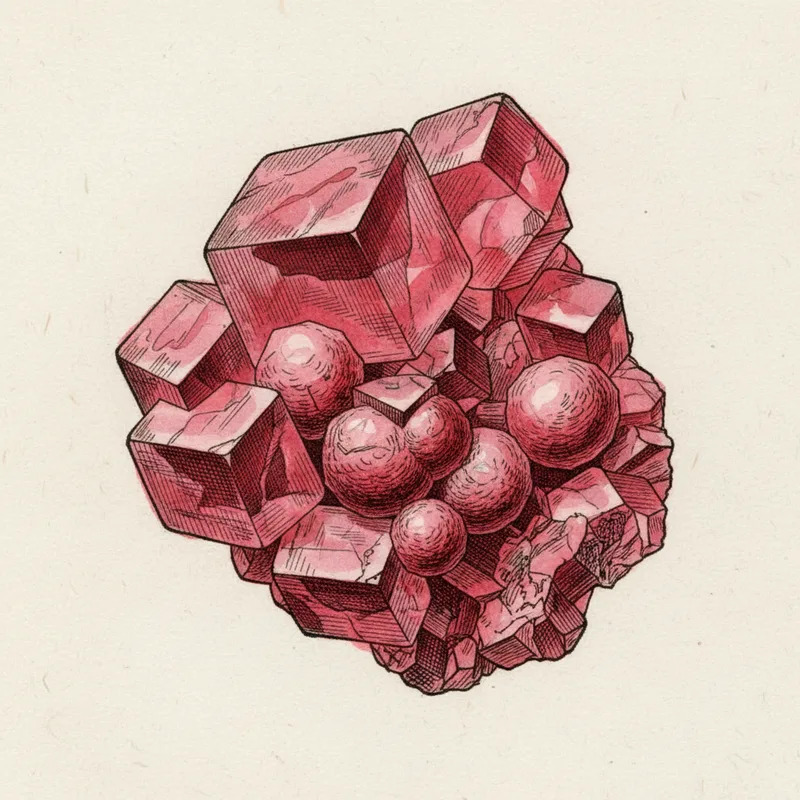
Rhodochrosite is manganese carbonate (MnCO₃), with its characteristic rose-pink to salmon color coming from the manganese. At hardness 4, it's significantly softer than most gemstones and requires careful handling. The finest specimens come from the Capillitas mine in Argentina, where the stone is known as Rosa del Inca (Rose of the Inca). Legend holds that the blood of Inca royalty turned to stone in these mines, producing the pink bands that characterize the finest material.
The tradition connects rhodochrosite to inner child healing and what modern therapists call self-reparenting. The idea is that many adult relationship patterns trace back to unmet childhood needs, and that doing compassionate work on those earlier wounds makes us better partners in the present. Rhodochrosite's soft pink color and associations with nurturing make it the go-to stone in crystal traditions for this kind of work.
How people use it: Kept on a personal altar, held during journaling or therapy work, or given as a gift to someone doing attachment work with a therapist.
Morganite: The Unconditional Love Stone
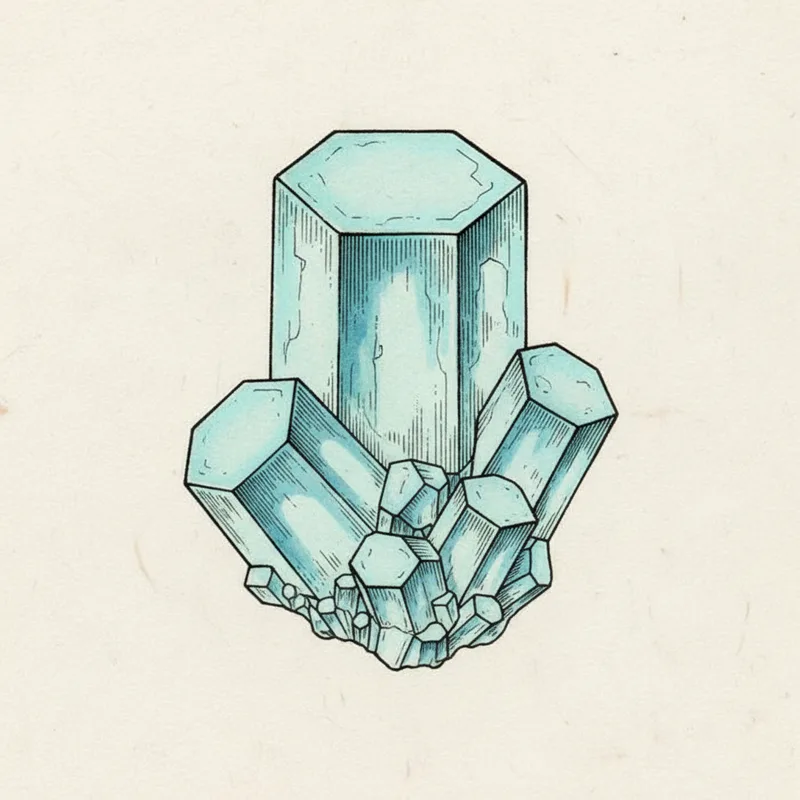
Morganite is the pink-to-peach variety of beryl, colored by manganese (Mn²⁺) in a structure chemically identical to emerald and aquamarine. It was named in 1911 by George Kunz, chief gemologist at Tiffany & Co., in honor of J.P. Morgan, who was both a client and a major mineral collector. For most of the twentieth century, morganite was considered a "lesser beryl," overlooked in favor of its more famous relatives.
That changed in the 2010s, when morganite started appearing on the engagement ring market as a softer, warmer alternative to diamond. The current popularity is real, and the geology supports the hype. Madagascar, Brazil, and Afghanistan produce gem-quality material, and at hardness 8, morganite is durable enough for daily ring wear. The tradition around morganite centers on unconditional love and compassion, the kind of love that persists through difficulty rather than depending on perfect conditions.
How people use it: Most commonly set into engagement rings. Also given as gifts to mark reconciliations, recoveries, or the start of a new chapter in an established relationship.
How to Use These Crystals Together
The traditions suggest specific pairings that map onto different relationship phases.
For a new partnership: Moonstone and garnet together, one receptive and one passionate. Vedic traditions pair them at weddings. Keep them on a shared nightstand or exchange them as gifts.
For an established relationship: Rose quartz and pink tourmaline work well together, providing a base of self-love and ongoing heart openness. A piece of each on a shared shelf or in a couple's meditation space anchors the daily practice.
For reconciliation work: Rhodonite and rhodochrosite in pairing. One addresses forgiveness between partners, the other addresses the inner wounds that partners bring into relationships. Hold one in each hand during journaling, or place them on a surface where difficult conversations happen.
For communication challenges: Lapis lazuli kept near where you talk. A piece on the kitchen table, on a dinner tray, or in the space where you have weekly check-ins.
For commitment ceremonies: Emerald or morganite set into rings or pendants, in the long tradition of paired jewelry as a physical marker of chosen partnership.
The practical side of these pairings matters more than the mystical. Placing a stone somewhere visible creates a cue. Picking it up before a conversation creates a ritual. Saying something out loud to your partner while holding it creates a shared practice. None of that requires you to believe the stone is doing anything. The ritual is the active ingredient.
A Note on What These Crystals Won't Do
Crystals don't fix relationships. They don't replace therapy, honest conversation, or compatibility. If a relationship is in serious trouble, a rose quartz on the nightstand is not the answer. A good couples therapist, time, honesty, and sometimes the difficult decision to separate are the real tools.
What a crystal can do is serve as a small, consistent cue for a practice that already works. If you and your partner set aside ten minutes each evening to check in with each other, a stone on the table you reach for before that conversation can anchor the habit. If you're doing inner child work with a therapist, a piece of rhodochrosite kept near your journaling space can become part of that practice. The stone is the prop. The work you do around it is the active ingredient.
No crystal will make someone love you who doesn't. No crystal will repair trust that has been broken beyond repair. No crystal will substitute for the daily, unglamorous work of being kind to the person you live with. The traditions have always understood this. The mystical claims attached to love stones in contemporary marketing often forget it.
Use them as markers. Use them as anchors. Use them as gifts that carry a story. That's what they've been for thousands of years, and it's more than enough.
Crystals in This Article
This post features rose quartz, pink tourmaline, rhodonite, moonstone, garnet, carnelian, lapis lazuli, emerald, rhodochrosite, and morganite. Each entry links to its full profile with geology, identification guidance, care instructions, and the cultural history behind the tradition.
Crystals in This Article

Almandine Garnet
The Warrior's Stone
Pink Tourmaline
The Manganese Elbaite
Rhodochrosite
The Rose of the Incas
Lapis Lazuli
The Stone of the Heavens
Dumortierite
The Patience Stone
Rose Quartz
The Stone of Unconditional Love
Tourmaline
The Rainbow Stone
Aquamarine
The Sailor's Gem
Chalcedony
The Mother of Agates

Orthoclase
The Foundation Feldspar
Moonstone
The Traveler's Stone
Carnelian
The Singer's Stone
Keep Reading
Stay in the loop
From the Almanac
Updates from Crystal Almanac, when there’s something worth sharing.