Quick Facts
Formation & Origin
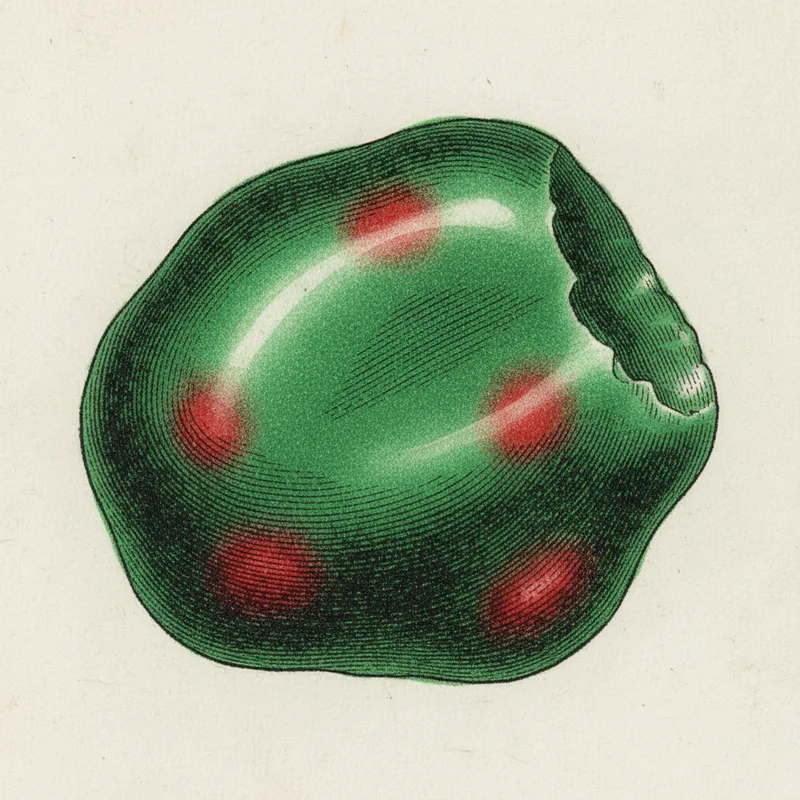
Bloodstone (also called heliotrope) is a dark green chalcedony speckled with spots of bright red jasper. The green base color comes from chlorite and hornblende mineral inclusions dispersed throughout the microcrystalline quartz. The red spots are iron oxide (hematite) concentrations.
It forms through the same process as other chalcedony varieties - silica-rich fluids depositing microcrystalline quartz in cavities and fractures within host rock. The iron oxide spots form when iron-bearing solutions penetrate the chalcedony along micro-fractures or in localized pockets during or after the primary formation.
A related variety called plasma is similar but has yellow spots instead of red (from goethite rather than hematite). The distinction between bloodstone and plasma is primarily the color of the inclusions.
Identification Guide
Bloodstone is identified by its dark green color with red to orange spots - this specific combination is unique among common gemstones. At hardness 7, it's durable and takes a good polish. The waxy luster and opaque character are typical of chalcedony varieties.
Distinguish from green jasper (may have red spots but is typically lighter green), moss agate (green inclusions are filamentous, not spotted), and ruby in zoisite (pink-red and green, different minerals). The red spots in genuine bloodstone are irregularly distributed and vary in size.
Spotting Fakes
Bloodstone is affordable enough that outright faking is uncommon. Dyed green chalcedony with painted red spots exists but is easy to detect - the spots feel different from the surrounding material and may come off with scratching. Glass imitations lack the waxy texture and variable color of genuine bloodstone. The main market issue is quality variation - heavily included or poorly colored bloodstone is sometimes sold at premium prices.
Cultural & Metaphysical Traditions
Presented as cultural traditions, not scientific evidence
Medieval Christians believed the red spots represented the blood of Christ, fallen on green jasper at the foot of the cross - hence 'bloodstone.' It was carved into crucifixes and religious scenes. Ancient Babylonians used bloodstone for divination. Roman gladiators carried it for endurance and courage. In Ayurvedic medicine, bloodstone was ground and used in preparations believed to stop bleeding (a practice based on sympathetic magic, not pharmacology). It was the original March birthstone before being replaced by aquamarine.
Where It's Found
Primary global source, traditional cutting center
Good quality material, significant producer
Fine specimens with vivid red spots
Limited but high-quality material
Price Guide
Good to Know
Scratch test: At hardness 7, Bloodstone can scratch glass and steel. It's durable enough for any type of jewelry.
Sources: Found in 4 notable locations worldwide, from India to United States.
Heft test: Bloodstone has average mineral density (2.60). It feels about as heavy as you'd expect from a stone its size.
Related Minerals
Similar base color, different inclusion pattern
Green chalcedony with different inclusion type
Same chalcedony family, different color
Same mineral, yellow spots instead of red
Explore More
Quartz & Chalcedony
The Grounding Collection
Roman gladiators carried it for endurance. The combination of earth-green with blood-red spots symbolizes life force rooted in the physical world.
Best Crystals for Confidence and Self-Esteem
Crystals by Zodiac Sign: A Complete Guide
Mohs Hardness Scale
See where Bloodstone sits on the scale
Crystal Care Guide
Water safety, sunlight, and handling tips
Stay in the loop
From the Almanac
Updates from Crystal Almanac, when there’s something worth sharing.