Best Crystals for Confidence and Self-Esteem
Key Takeaway: The crystals most associated with confidence across global traditions share three geological features: warm colors from iron and copper chemistry, high density that makes them feel substantial in hand, and metallic or fiery optical effects. Roman soldiers carried carnelian into battle. Vikings may have navigated by sunstone. Medieval knights set garnets into sword hilts. The geology behind these "warrior stones" is genuinely fascinating, and the psychology of using physical objects as confidence anchors is better supported by research than most crystal websites will tell you.
Why Warm Stones Dominate Confidence Traditions
Pick up any crystal healing reference, flip to the confidence section, and you'll notice something immediately. The stones are almost all warm-colored: orange, red, gold, amber, metallic. Cool blues and greens dominate the calm and communication categories. But confidence? It's a bonfire palette.
This isn't random.
Color psychology research consistently shows that warm colors, particularly red and orange, are associated with energy, assertiveness, and action across cultures. A 2004 study published in the Journal of Experimental Psychology found that the color red increased grip strength and reaction speed in test subjects. Athletes wearing red win slightly more often across multiple sports, a phenomenon documented extensively enough to be called the "red advantage." The effect is small but persistent across studies spanning decades, and it shows up in combat sports, team competitions, and even video games.
But there's something beyond color happening with confidence stones. Many of them are dense.
Hematite has a specific gravity of 5.26, nearly twice that of quartz. Garnet ranges from 3.5 to 4.3. Pyrite sits at 5.0. When you pick these stones up, they feel unexpectedly heavy. That physical sensation of weight and substance isn't metaphysical. It's gravitational, and it registers in the brain as "solid, real, grounded." Research in embodied cognition has shown that holding heavier objects makes people rate topics as more serious and important. The weight of a confidence stone isn't symbolic. It's doing something real in your nervous system.
Then there's metallic luster. Pyrite flashes gold. Hematite polishes to a mirror-dark shine. Sunstone throws copper sparkles. Metallic minerals have been associated with power and divinity since the earliest human civilizations, for the obvious reason that they look like the metals used for weapons, currency, and crowns. Gold, silver, and bronze defined status hierarchies in virtually every ancient culture. A mineral that mimics these metals inherits their psychological associations.
So when crystal traditions associate warm, heavy, metallic-looking minerals with confidence, they're building on deeply embedded human responses to color, weight, and shine. The traditions came first. The psychology research came later. They arrived at the same place.
The Warrior Stone Tradition
Soldiers have carried specific minerals into battle for at least 5,000 years, and the pattern is remarkably consistent across cultures that had no contact with each other.
Roman legionaries wore carnelian signet rings engraved with images of Mars, the god of war. The mineral was so strongly associated with military courage that Pliny the Elder documented its use across the Roman military in his Natural History. Roman engravers developed specific iconography for carnelian battle rings: images of eagles, swords, and Mars himself, carved in intaglio so they could be pressed into wax seals. Egyptian soldiers carried carnelian scarabs into battle, connecting the stone to both courage and safe passage through danger. The Book of the Dead specifically mentions carnelian amulets placed on the body for protection during the journey through the underworld.
Norse warriors set garnet into sword hilts and shield bosses. The Sutton Hoo burial, one of the most significant Anglo-Saxon archaeological finds, contained garnets cut into cloisonne patterns on a ceremonial war helmet. The craftsmanship required to cut and set these garnets was extraordinary. Each piece was backed with textured gold foil to maximize the stone's brilliance in firelight. Medieval European knights continued this tradition, setting almandine garnets into sword pommels as symbols of endurance in combat.
The Aztecs and other Mesoamerican civilizations used pyrite mirrors for divination before warfare, interpreting reflected images as visions of battle outcomes. These mirrors were polished to a reflective finish that modern metallurgists consider remarkably sophisticated for the technology available. In Chinese tradition, tiger eye was set into armor as a talisman of protection and fearlessness, with its shifting golden light interpreted as the watchful gaze of a predator.
Baltic peoples traded amber warrior amulets along trade routes stretching from Scandinavia to the Mediterranean. Amber beads have been found in warrior graves from the Bronze Age through the Viking era, often positioned near the chest or throat, suggesting they were worn as pendants during life. The Amber Road, one of the ancient world's major trade routes, carried this fossilized resin from the Baltic coast as far south as Egypt and as far east as China.
These weren't decorative choices. Soldiers facing death chose specific minerals and carried them deliberately. The materials were often rare and costly, traded across vast distances. Whatever the mechanism, the tradition of connecting certain stones to courage under pressure is one of the oldest and most geographically widespread practices in human mineralogy.
The 10 Best Crystals for Confidence
1. Carnelian
Carnelian is chalcedony (microcrystalline quartz, SiO₂) colored by dispersed iron oxide (Fe₂O₃) inclusions. The concentration of iron determines the color range, from pale orange through deep reddish-brown. It forms when silica-rich groundwater deposits quartz in layers within volcanic cavities, and iron from surrounding rocks stains the growing chalcedony. The best specimens come from India, Brazil, and Madagascar.
The formation process is slow and incremental. Silica-saturated water fills a void in volcanic rock, deposits a thin layer of microcrystalline quartz, retreats, and returns. Each cycle builds another band. Iron dissolved in the groundwater from surrounding basalt or laterite soils incorporates into the growing chalcedony, and the oxidation state of that iron determines whether you get orange (Fe₂O₃), red (higher concentration Fe₂O₃), or brownish tones (mixed iron oxides). Heat from nearby volcanic activity can further deepen the color, which is why some carnelian is deliberately heat-treated to intensify its natural reddish tone.
Carnelian has one of the longest documented histories of any confidence stone. Ancient Egyptian workers wore carnelian amulets engraved with hieroglyphs invoking courage. The stone appears in the breastplates of high priests across multiple ancient traditions. Roman soldiers wore carnelian rings specifically for bravery in battle, and the stone appears in more Roman military archaeological contexts than any other mineral. In Islamic tradition, the Prophet Muhammad is said to have worn a carnelian ring, and the stone is associated with eloquence and boldness in speech. Napoleon famously carried a carnelian seal throughout his campaigns.
In modern crystal traditions, carnelian is linked to the sacral chakra and personal power. It's recommended specifically for situations requiring assertive action: job interviews, confrontations, performances. Practitioners describe it as a stone of doing rather than thinking, of forward motion rather than reflection.
What to buy: Look for translucent specimens with rich, even orange-to-red color. Hold it to a light source. Real carnelian shows some translucency and often has subtle banding visible in bright light. A polished palm stone runs $5-12. Beware of dyed agate being sold as carnelian. Natural carnelian typically has some color variation rather than perfectly uniform saturation.
2. Tiger Eye
Tiger eye is one of geology's most visually striking pseudomorphs. It begins as crocidolite (blue asbestos), a fibrous amphibole mineral. Over millions of years, silica-rich fluids dissolve the crocidolite and replace it with quartz, fiber by fiber, preserving the original fibrous structure while completely changing the chemistry. Iron oxide stains the resulting quartz golden-brown. The parallel fibers create chatoyancy, that characteristic silky, shifting band of light that moves across the surface as you turn the stone.
This optical effect is called the "cat's eye" phenomenon, and it requires an extraordinarily specific geological process. The replacement must be thorough enough to create solid quartz but gentle enough to preserve individual fiber orientations. Get the balance wrong and you either dissolve the fibers completely (producing ordinary quartz) or fail to replace them (leaving unstable asbestos material). Most tiger eye comes from South Africa and Western Australia.
When the replacement process is incomplete, traces of blue crocidolite remain visible alongside the golden quartz, producing a mixed blue-and-gold stone called hawk's eye. Fully unreplaced crocidolite produces the deep blue hawk's eye variety. The complete replacement sequence, from blue hawk's eye through transitional stages to fully golden tiger eye, is a geology lesson in a single mineral family.
The "all-seeing eye" association runs deep. Egyptian craftsmen carved tiger eye into statue eyes, including representations of Ra, the sun god. Chinese tradition connects tiger eye to the literal tiger, a symbol of courage, focus, and unwavering attention. In crystal healing traditions, tiger eye is one of the most commonly recommended stones for situations requiring both confidence and strategic thinking, the idea being that courage without clarity is recklessness.
What to buy: Good tiger eye should show a strong, well-defined chatoyant band. Roll the stone slowly under a light source and watch for a single bright stripe that sweeps across the surface. Flat cabochons and polished palm stones display the effect best. Very affordable at $3-8 for a nice piece.
3. Pyrite
Pyrite is iron sulfide (FeS₂) with a distinctive brassy-gold metallic luster that earned it the name "fool's gold." But calling pyrite a fool's mineral sells it short. Pyrite crystallizes in the cubic system, and its natural crystal forms are spectacular: perfect cubes, octahedrons, and pyritohedrons (twelve-sided forms unique to this mineral). The fact that nature produces geometrically perfect golden cubes is one of geology's most visually arresting phenomena.
Pyrite forms in a wide range of geological environments, from hydrothermal veins to sedimentary rocks. Its specific gravity of 5.0 means a pyrite cube feels noticeably heavy, substantially denser than quartz at 2.65. That density, combined with its metallic luster and geometric precision, gives pyrite a physical presence that few minerals match.
In confidence traditions, pyrite is associated with self-worth and personal value. The logic is fairly literal: this is a mineral that looks and feels like gold. Traditions in numerous cultures connect it to abundance, willpower, and the idea that surface appearances can be deceiving, that true value doesn't need external validation. In crystal healing practice, pyrite is commonly linked to the solar plexus chakra and recommended for people who struggle with imposter syndrome or persistent self-doubt.
What to buy: Natural cubic crystals from Spain (particularly Navajun) are museum-quality and unmistakable. Smaller specimens with visible crystal faces run $10-25. Pyrite can tarnish over time, so keep it dry and handle it occasionally to maintain its luster. Check our crystal care guide for storage tips.
4. Sunstone
Sunstone is a plagioclase feldspar (typically oligoclase or labradorite) that contains tiny platelets of copper or hematite aligned within the crystal lattice. When light hits these inclusions, it reflects back in a sparkling, warm-toned flash called aventurescence. Oregon sunstone, the most prized variety, owes its sparkle to native copper inclusions that can create flashes ranging from pale gold to deep red.
The geology is precise: the copper or hematite platelets precipitate out of the cooling feldspar magma and settle into parallel planes within the crystal structure. The size, density, and orientation of these platelets determine the intensity and color of the aventurescence. Larger copper platelets in Oregon sunstone can create such vivid red flashes that the stones have been mistaken for rubies.
Norse sagas mention a "sunstone" used for navigation, a mineral that could locate the sun's position on overcast days. While the historical sunstone was likely Iceland spar (optical calcite) rather than the feldspar we call sunstone today, the association between this mineral and solar power, guidance, and leadership has persisted. Crystal traditions link sunstone to personal empowerment, leadership, and the confidence to take charge. It's associated with the solar plexus chakra and recommended for people who tend to defer to others or suppress their own needs.
What to buy: Oregon sunstone with visible copper schiller is the most spectacular but runs $20-50 for a quality cabochon. Indian and Norwegian sunstone is more affordable at $5-15 and shows a warm golden aventurescence. Tilt the stone under direct light to check for genuine internal sparkle.
5. Citrine
Natural citrine is one of the rarest forms of quartz. Its pale yellow-to-amber color comes from iron (Fe³⁺) impurities in the SiO₂ crystal lattice, with the specific oxidation state of the iron creating the yellow rather than the purple of amethyst. In amethyst, iron sits in an Fe⁴⁺ state created by radiation. In citrine, the iron is in the Fe³⁺ state, which absorbs different wavelengths and transmits yellow instead of purple. Same element, different charge, completely different color. Natural citrine forms in the same geological environments as other quartz varieties, primarily in pegmatites, hydrothermal veins, and volcanic cavities.
Here's what most crystal shops won't tell you: roughly 95% of citrine on the market is heat-treated amethyst or smoky quartz. When you bake amethyst at 300-450°C, the iron color centers reconfigure, and the purple shifts to yellow-orange. The result is technically real quartz with a real iron-based color, but it didn't form that way in nature. Heat-treated citrine tends to have a burnt-orange base fading to white tips, while natural citrine shows a more uniform, pale champagne-yellow throughout the crystal. The color difference is obvious once you've seen them side by side. Natural citrine looks like white wine. Heat-treated citrine looks like burnt caramel.
The confidence tradition around citrine centers on its solar plexus connection and its association with personal power and optimism. Called the "merchant's stone" in numerous crystal healing traditions, citrine is associated with self-confidence in professional and financial contexts. Chinese feng shui practitioners place citrine in the wealth corner of a room or business. Scottish Highlanders set citrine into sword handles and brooches. The tradition recommends it specifically for people who know their worth but struggle to advocate for themselves, making it less about bravery and more about self-advocacy.
What to buy: If you want natural citrine, expect to pay a premium and look for that distinctive pale, smoky yellow. Kundalini citrine from the Congo and natural specimens from Brazil's Rio Grande do Sul are genuine. Heat-treated citrine is still real quartz and perfectly functional as a confidence talisman. Just know what you're buying. Tumbled stones start around $3-8 for treated material, $15-30 for verified natural citrine.
6. Red Jasper
Red jasper is opaque microcrystalline quartz (SiO₂) with its rich red color derived from substantial iron oxide (hematite) inclusions, typically making up 15-20% of the stone's composition. Unlike the translucent chalcedonies like carnelian, jasper is fully opaque due to its dense matrix of tiny quartz crystals, iron oxides, and sometimes clay minerals. It forms primarily in volcanic and sedimentary environments where silica-rich fluids percolate through iron-bearing rocks.
The "supreme nurturer" label jasper carries in crystal traditions is ancient. In the Hebrew Bible, jasper is one of the twelve stones set into the High Priest's breastplate. Ancient Egyptian and Greek traditions both associated red jasper with stamina, endurance, and sustained strength, notably different from the explosive courage attributed to carnelian. Where carnelian was the soldier's charge, red jasper was the marathon.
In modern crystal healing, red jasper is linked to the root chakra and specifically recommended for emotional endurance, the kind of confidence that sustains through long-term challenges rather than single high-pressure moments. Practitioners recommend it for people rebuilding confidence after setbacks, divorces, job losses, or extended periods of self-doubt.
What to buy: Red jasper is abundant and affordable. Look for rich, even color without too many brown or yellow patches. It takes a beautiful polish and is durable enough (hardness 7) for daily carry. Tumbled stones cost $2-5, making it one of the most accessible crystals on this list.
7. Garnet
Garnet isn't a single mineral. It's a group of closely related silicate minerals sharing a common crystal structure but varying in chemistry. The most common red garnets, almandine (Fe₃Al₂(SiO₄)₃) and pyrope (Mg₃Al₂(SiO₄)₃), get their deep crimson from iron and chromium. All garnets crystallize in the isometric system, typically forming beautiful dodecahedral or trapezohedral crystals.
What makes garnet stand out physically is its density. With specific gravities ranging from 3.5 to 4.3, garnets feel noticeably heavier than quartz-family stones of similar size. This density is a direct consequence of the tightly packed crystal structure, with metal cations fitting snugly into coordinated oxygen sites. Garnet is also remarkably hard (6.5-7.5) and tough, resisting both scratching and fracturing.
The warrior stone tradition around garnet is particularly well-documented. Anglo-Saxon, Merovingian, and Viking craftsmen set garnets into weaponry and war gear across Northern Europe from the 5th through 10th centuries. The Sutton Hoo helmet alone contains hundreds of individually cut garnet inlays. Crusaders wore garnet talismans for safe return. In Hindu tradition, garnet is associated with the root chakra, survival instinct, and raw vitality.
Garnet forms primarily in metamorphic rocks, where intense heat and pressure transform existing minerals into new, denser structures. Garnet literally forms under pressure, and the metaphorical connection to building strength through adversity isn't lost on crystal traditions that associate this stone with resilience, courage, and deep inner fire.
What to buy: Almandine garnet is the most affordable variety. Look for deep red specimens with good transparency. Raw garnets in their natural dodecahedral form are stunning display pieces at $8-20. Polished cabochons and tumbled stones run $5-15.
8. Hematite
Pick up a piece of hematite and the first thing you notice is the weight. Iron oxide (Fe₂O₃) with a specific gravity of 5.26, hematite is twice as dense as quartz. A palm-sized polished stone feels almost implausibly heavy. This immediate physical impression, the sensation of holding something dense and substantial, is central to hematite's role in confidence traditions.
Hematite's name comes from the Greek haima, meaning blood. Scratch hematite across a ceramic streak plate and it leaves a blood-red streak, despite the mineral's metallic silver-black surface appearance. This contrast between exterior darkness and interior red fascinated ancient cultures. Roman soldiers rubbed hematite across their bodies before battle, believing it made them invincible. The practice gave hematite its reputation as the original "blood stone" (distinct from the green chalcedony called bloodstone today).
Hematite forms in sedimentary, metamorphic, and igneous environments. Some of the largest deposits are banded iron formations dating to 2.5 billion years ago, when Earth's newly oxygenated atmosphere oxidized dissolved iron in ancient oceans, precipitating massive layers of iron oxide on the seafloor. The hematite in your hand may contain iron that first rusted when our planet learned to breathe.
In crystal healing, hematite is the quintessential grounding stone. Its tradition specifically connects physical heaviness to emotional anchoring, recommending it for people who feel unmoored, scattered, or disconnected from their own authority. The weight is the point.
What to buy: Polished hematite is inexpensive at $3-8 for a palm stone. The high-shine, mirror-like polish is distinctive and genuine. "Magnetic hematite" sold at crystal shops is usually synthetic ceramic, not natural hematite. Real hematite is not noticeably magnetic. Test with the streak plate: genuine hematite always leaves a red-brown streak.
9. Amber
Amber isn't a mineral at all. It's fossilized tree resin, aged 30 to 90 million years, that has undergone polymerization and cross-linking until the original sticky sap transformed into a stable, lightweight organic solid. Baltic amber (from ancient Scandinavian pine forests buried beneath the Baltic Sea) is the most famous variety, but significant deposits exist in the Dominican Republic, Myanmar, and Mexico.
Amber's chemistry is complex: a mixture of organic acids, alcohols, and terpenes with the approximate formula C₁₀H₁₆O. It often contains inclusions, trapped insects, plant material, and air bubbles that provide paleontologists with snapshots of ecosystems that existed millions of years before humans appeared.
Amber is almost certainly the oldest amulet material in human use. Archaeological evidence dates amber beads to at least 13,000 years ago. Baltic amber was traded across enormous distances, from Scandinavia to Egypt and Mesopotamia, along what historians call the Amber Road. In Baltic and Norse traditions, amber was specifically connected to warriors, courage, and the power of the sun captured in solid form. The Greek word for amber, elektron, gave us the word "electricity" after Thales of Miletus observed that rubbed amber attracted small objects through static charge.
Unlike mineral crystals, amber is warm to the touch (a poor thermal conductor, it feels warmer than stone or glass). This warmth is central to its confidence tradition: practitioners describe it as carrying solar energy, and its light weight and warm surface create a distinctly different tactile experience from cold, dense minerals like hematite.
What to buy: Genuine Baltic amber with good transparency and warm honey color runs $10-30 for a polished pendant or palm piece. The float test (real amber floats in saturated saltwater) and hot needle test (real amber smells of pine resin when touched with a heated needle) separate genuine amber from plastic and copal imitations.
10. Rhodonite
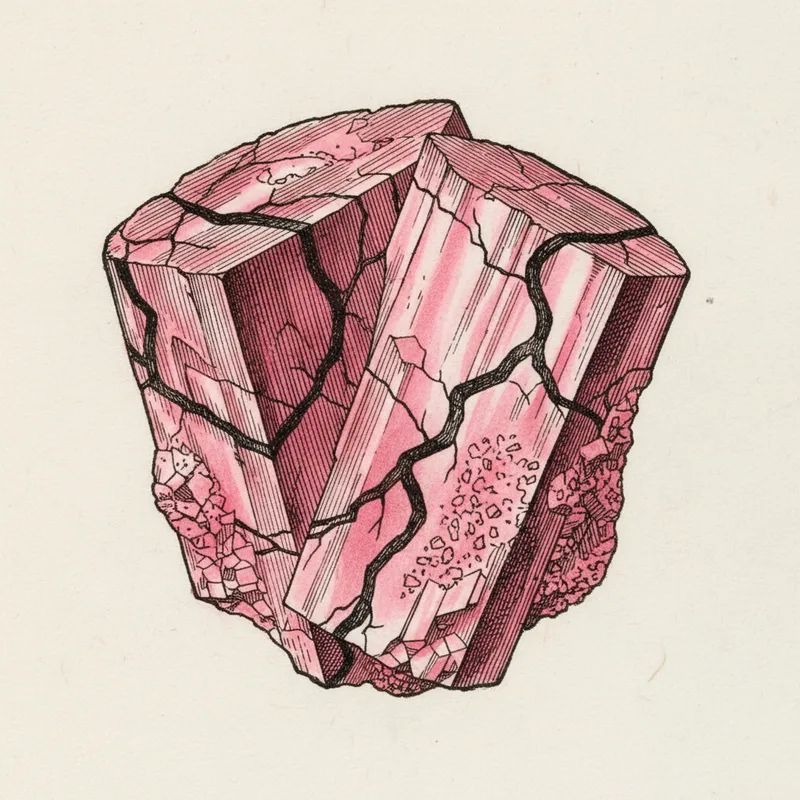
Rhodonite is a manganese inosilicate (MnSiO₃) that forms distinctive pink-to-rose crystals often veined or patched with black manganese oxide. The contrast is visually striking and geologically meaningful: the black veining represents surface oxidation of manganese, recording the stone's exposure to oxygen and weathering over time. The mineral forms primarily in metamorphic manganese deposits and metasomatic environments.
Rhodonite has a hardness of 5.5-6.5 and a specific gravity of 3.4-3.7, putting it in the mid-range for density. Its crystal system is triclinic, and while large transparent crystals are rare collectors' items, most rhodonite occurs as massive material ideal for carving and polishing. Major sources include Russia's Ural Mountains (where it's the national stone), Australia, Brazil, and Madagascar.
The confidence tradition around rhodonite is distinct from the warrior stones. Where carnelian and garnet are about assertive courage, rhodonite is specifically associated with emotional recovery and rebuilding self-worth after damage. Crystal traditions call it the "rescue stone" and recommend it for confidence that's been broken by criticism, rejection, failure, or emotional abuse. Russian traditions connect rhodonite to enduring love and emotional resilience, and it was carved into talismans given to travelers for protection and safe return.
This is the stone for the person who used to be confident and needs to find their way back.
What to buy: Rhodonite with vivid pink color and clean black veining is the most visually appealing. Tumbled stones are affordable at $3-8. Larger polished pieces showing the full pink-and-black contrast make excellent desk or nightstand anchors. Make sure the pink is genuinely pink and not faded to brown, which indicates lower-quality material.
How to Use Confidence Crystals
Crystal traditions offer various methods, but the most psychologically sound approaches share a common structure: they tie the stone to a specific situation, creating what behavioral psychologists call an implementation intention.
Before presentations or interviews. Hold the stone for 60 seconds before entering the room. Focus on its temperature, weight, and texture. This isn't mystical. It's a grounding exercise that redirects nervous energy into sensory awareness. Then slip the stone into your pocket as a tactile anchor. Any time anxiety spikes during the event, touch the stone briefly. The physical sensation interrupts the anxious thought loop.
Workplace desk stone. Place a polished piece where you'll see it throughout the day. Pyrite cubes and tiger eye palm stones work particularly well for this. The stone serves as a visual reminder of an intention you've set. Every time you notice it, you're reinforcing a self-directed message.
Morning anchor ritual. Hold your stone for one minute each morning while setting a specific intention for the day. Not a vague affirmation, but a concrete goal: "I will speak up in the 2 PM meeting." The stone becomes a physical token of that commitment, and carrying it through the day maintains the connection between the object and the intention.
Confidence pairing. Many practitioners combine a warm assertive stone (carnelian, citrine, or tiger eye) with a grounding stone (hematite or red jasper). The idea is to balance forward energy with stability. Whether or not you subscribe to the energetic theory, carrying two stones with different textures and weights does create a more complex sensory experience.
For crystal care guidance on all ten minerals covered here, including water safety, sunlight stability, and cleaning methods, see our complete crystal care guide.
The Real Psychology of Crystal Confidence
Here's where it gets genuinely interesting. The mechanisms that make confidence crystals "work" are well-documented in behavioral psychology, even if crystal traditions describe them in different language.
Conditioned anchoring is a concept from Neuro-Linguistic Programming that's been validated in more rigorous cognitive-behavioral research. The basic principle: if you consistently pair a physical stimulus (holding a specific stone) with a mental state (confidence, calm, focus), the physical stimulus eventually triggers the mental state on its own. This is classical conditioning, the same mechanism Pavlov documented. The stone doesn't generate confidence. It becomes associated with it through repeated pairing, until touching the stone in a stressful moment automatically activates the mental state you've practiced.
Implementation intentions are one of the most robust findings in goal-pursuit research. Peter Gollwitzer's meta-analysis of 94 studies found that forming an implementation intention ("when situation X arises, I will perform behavior Y") increases goal attainment significantly. Choosing a crystal, assigning it a specific purpose, and carrying it as a reminder of that purpose is a textbook implementation intention with a physical anchor.
Embodied cognition research demonstrates that physical sensations influence mental states. Holding something heavy makes you perceive things as more important (a 2010 study in Psychological Science). Warmth increases social trust (a 2008 study in Science). The weight of a hematite in your palm, the warmth of amber against your skin, these sensory inputs aren't neutral. They shift cognitive processing in measurable ways.
Object attachment and transitional objects. Developmental psychologist D.W. Winnicott's research on transitional objects (a child's security blanket) extends into adult psychology. Adults use physical tokens, wedding rings, lucky pens, worry stones, to externalize internal states and create a sense of continuity and security. A confidence crystal functions identically.
None of this diminishes the crystal traditions. If anything, it validates them. Thousands of years of human practice arrived at techniques that modern psychology would describe as effective anchoring, implementation intentions, embodied cognition, and transitional object use. The practitioners got the mechanism wrong (it's not mystical energy). They got the practice right.
Whether you carry a carnelian because Roman soldiers did, keep a pyrite cube on your desk because its geometry reminds you of structured thinking, or slip a rhodonite into your pocket on a day you need emotional rebuilding, you're participating in one of humanity's oldest psychological technologies. The stone is the tool. The confidence was always yours.
Looking for crystals that address the other side of the equation? Check out our guide to the best crystals for anxiety and stress, where many of these same psychological principles apply to calm rather than courage. And explore our full confidence crystal collection for additional stones and pairing ideas.
Crystals in This Article

Almandine Garnet
The Warrior's Stone
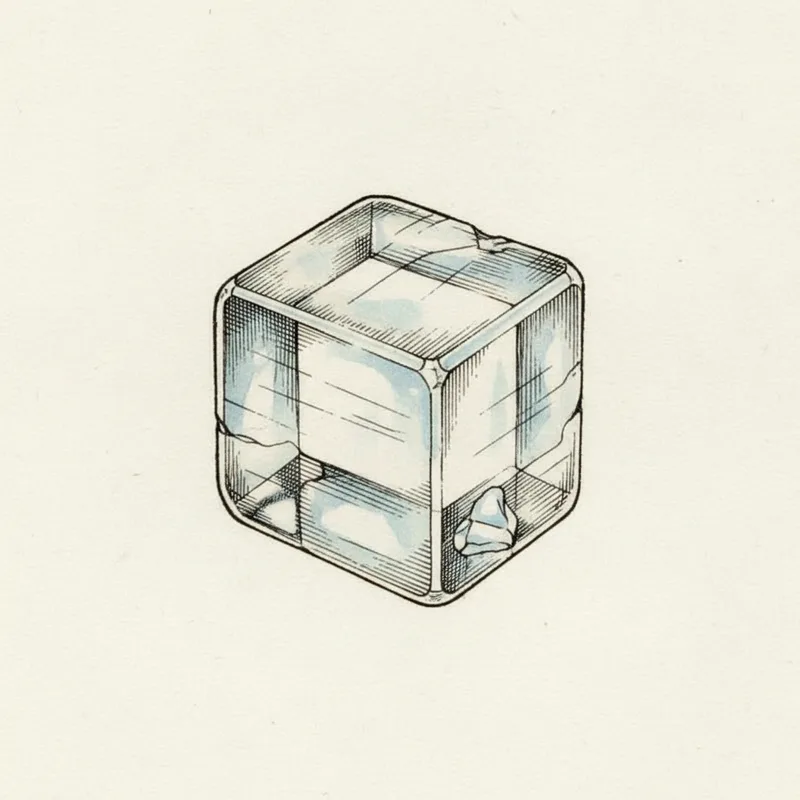
Optical Calcite
The Viking Sunstone
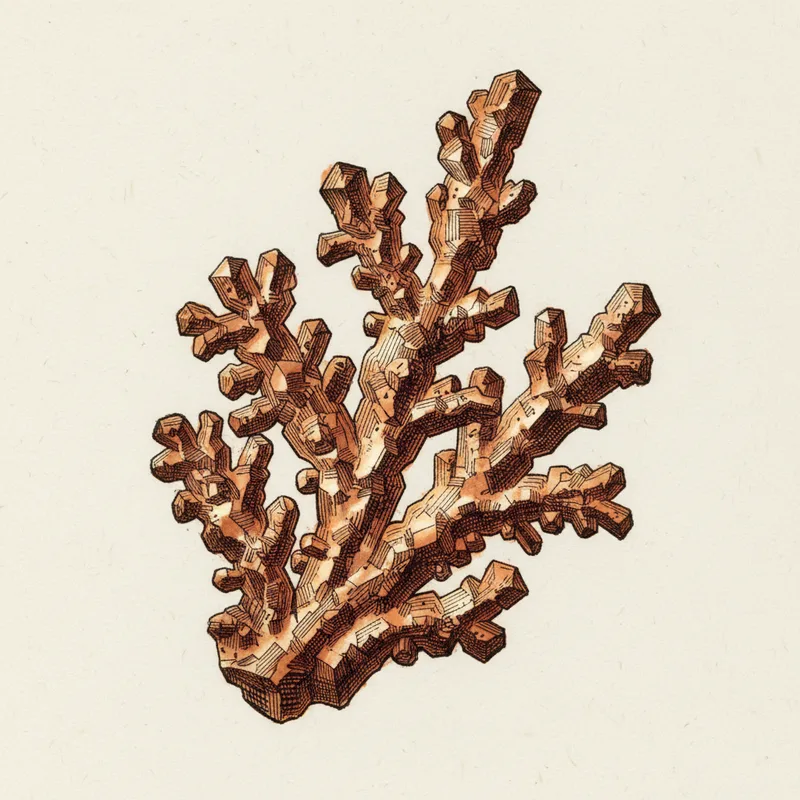
Native Copper
The Builder's Metal
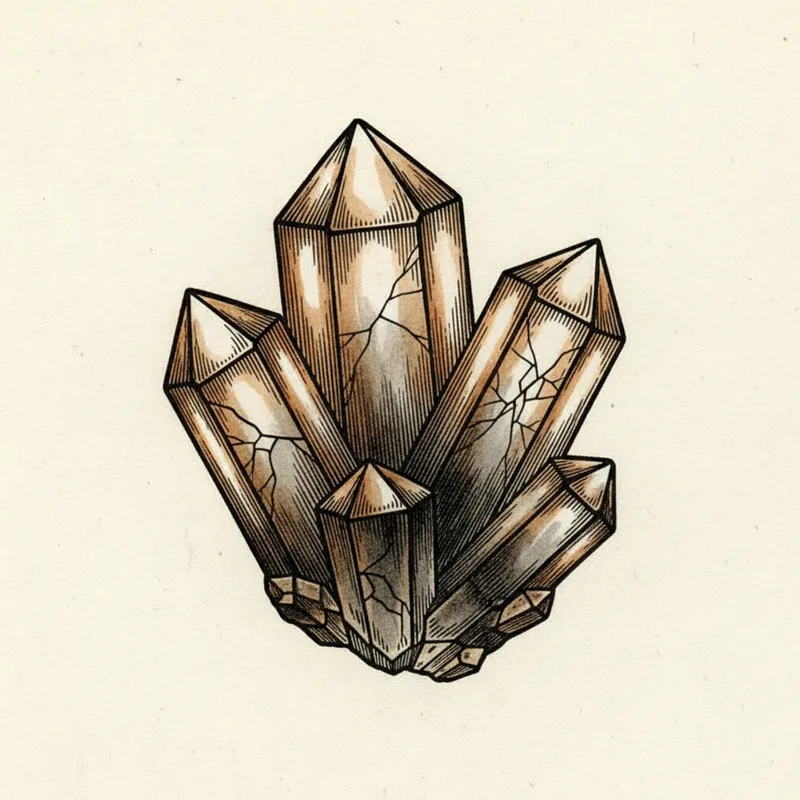
Smoky Quartz
The Grounding Stone
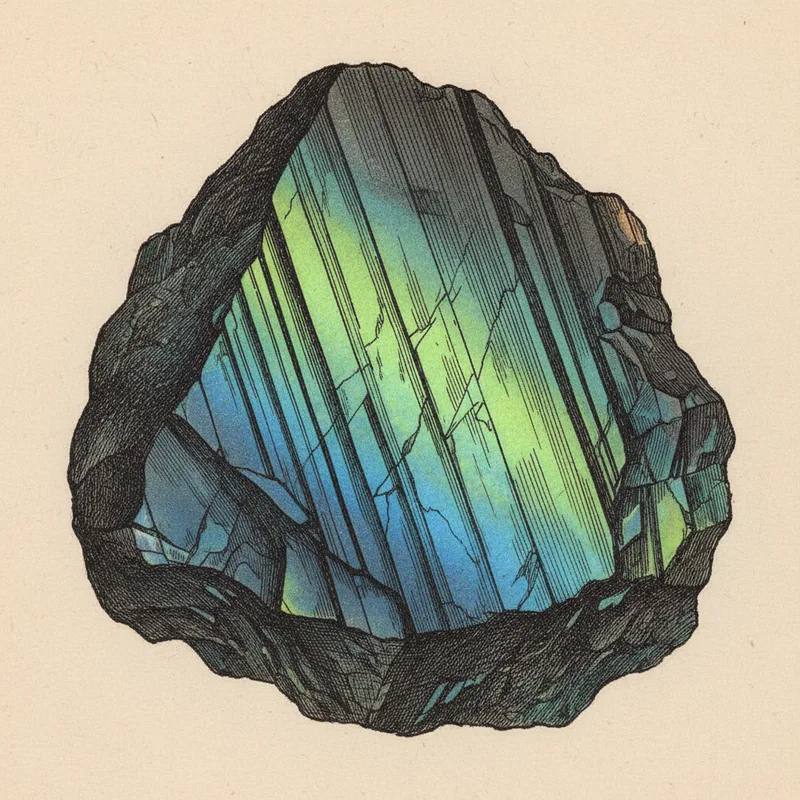
Labradorite
The Stone of Transformation
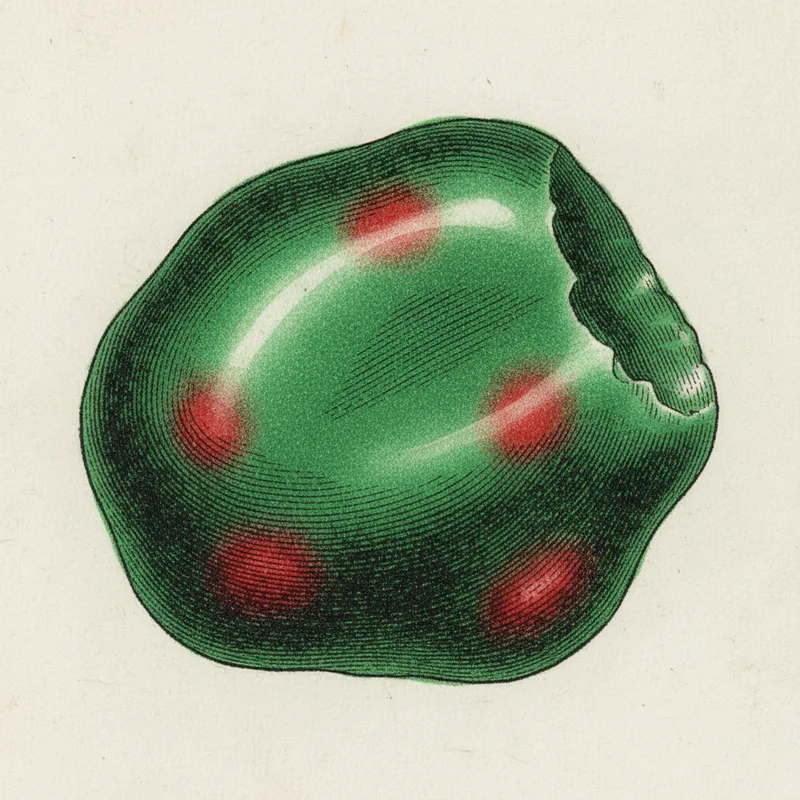
Bloodstone
The Martyr's Stone
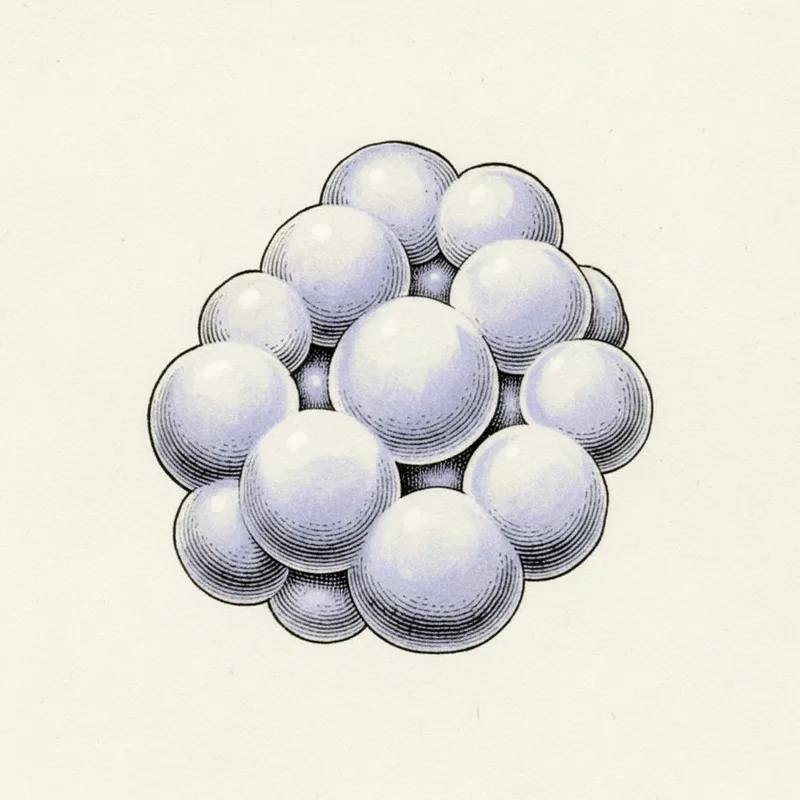
Chalcedony
The Mother of Agates
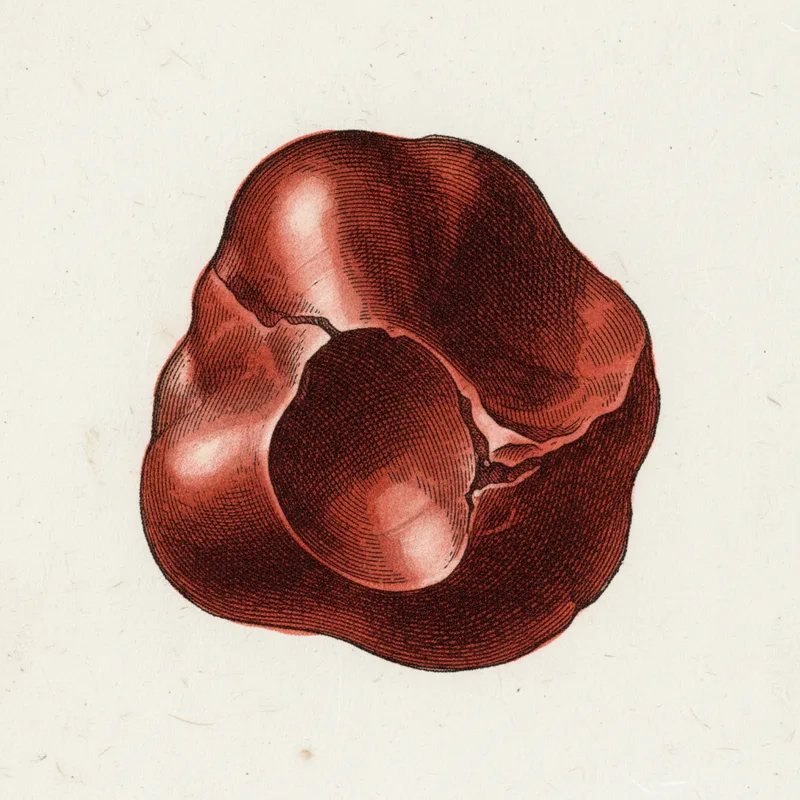
Red Jasper
The Supreme Nurturer

Oligoclase
The Sunstone Mother Mineral
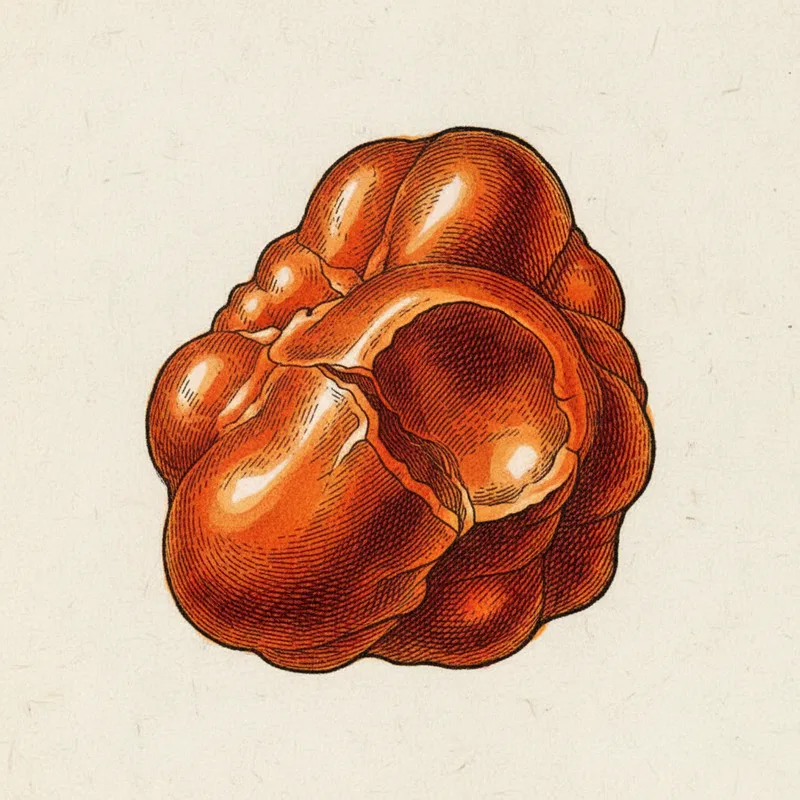
Carnelian
The Singer's Stone
Rhodonite
The Rescue Stone
Amethyst
The Stone of Spiritual Wisdom