Quick Facts
Formation & Origin
Indicolite is the blue variety of tourmaline, colored primarily by iron (Fe²⁺) in the crystal structure. The blue is produced when iron occupies specific crystallographic sites within the complex tourmaline structure, allowing it to absorb red and yellow light.
Like other elbaite tourmalines, indicolite forms in lithium-rich granitic pegmatites. The combination of lithium, boron, aluminum, iron, and other elements must be present in the right proportions and at the right temperature for blue tourmaline to crystallize. This specificity makes true blue tourmaline less common than green or pink varieties.
Pure blue indicolite (without green overtones) is particularly rare and valuable. Most blue tourmaline has at least some teal or greenish component. Heat treatment can sometimes reduce the green component, shifting blue-green tourmaline toward a purer blue.
Identification Guide
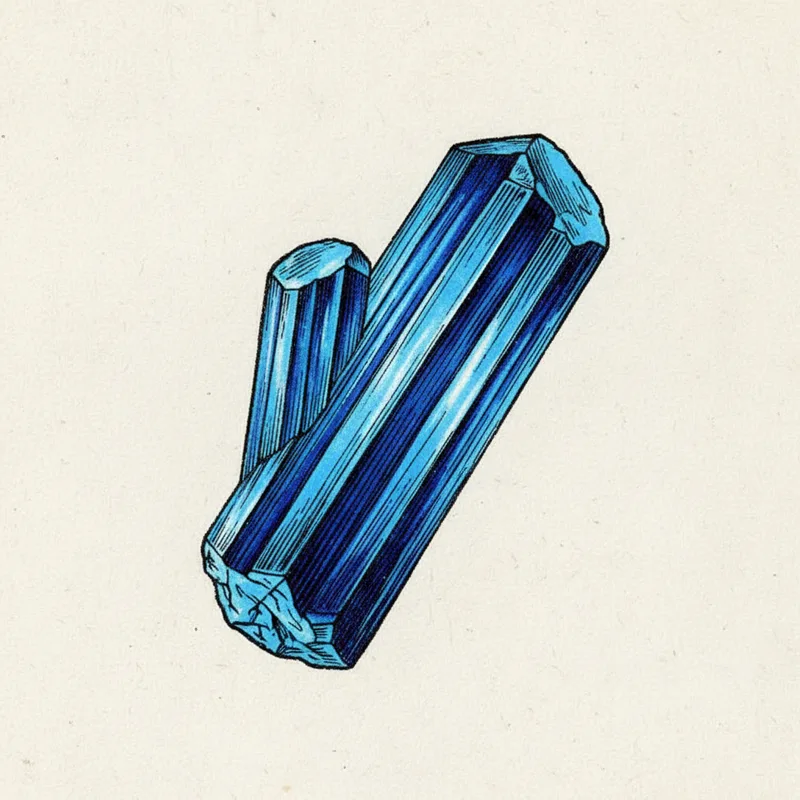
Indicolite is identified by its blue to teal-blue color within the tourmaline crystal habit: elongated striated prisms with rounded triangular cross-section. Strong pleochroism shows different intensities of blue from different angles.
Distinguish from blue sapphire (higher RI, different crystal system), blue topaz (orthorhombic, different properties), aquamarine (hexagonal, lighter blue), and blue apatite (softer). The triangular cross-section and strong dichroism are key tourmaline identifiers.
Spotting Fakes
Heat treatment is common and accepted in the trade, used to lighten overly dark stones or reduce green tones. This is stable and generally considered acceptable. Irradiation can produce blue color in some tourmaline but may not be stable. Synthetic blue tourmaline is not commercially significant. The main risk is blue glass or assembled stones at lower price points. Check for tourmaline's characteristic inclusions and dichroism.
Cultural & Metaphysical Traditions
Presented as cultural traditions, not scientific evidence
Indicolite is associated with honest communication, intuition, and emotional depth in crystal healing. As the blue member of the tourmaline family, it combines tourmaline's protective properties with the throat and third-eye chakra associations of blue stones. Practitioners use it for enhancing psychic awareness and expressing difficult truths with compassion.
Where It's Found
Classic source, wide range of blue tones
Fine blue crystals from pegmatites
Excellent specimen-quality crystals
Gem-quality blue tourmaline
Price Guide
Good to Know
Scratch test: At hardness 7.5, Indicolite can scratch glass and steel. It's durable enough for any type of jewelry.
Sources: Found in 4 notable locations worldwide, from Brazil to Nigeria.
Heft test: Indicolite has average mineral density (3.01-3.11). It feels about as heavy as you'd expect from a stone its size.
Explore More
Tourmaline Group
The Communication Collection
The rare blue tourmaline. Combines tourmaline's protective energy with the throat-chakra association of blue stones. Connected to expressing difficult truths with compassion.
How to Tell Real Tourmaline from Glass and Plastic: 9 Tests
12 Best Crystals for Beginners: Science-First Guide
Mohs Hardness Scale
See where Indicolite sits on the scale
Crystal Care Guide
Water safety, sunlight, and handling tips
Stay in the loop
From the Almanac
Updates from Crystal Almanac, when there’s something worth sharing.