12 Best Crystals for Beginners: Science-First Guide
Key Takeaway: You don't need to believe in crystal healing to appreciate crystals. These 12 minerals are the best starting points for any collection because they're affordable, widely available, scientifically fascinating, and teach you something real about geology every time you pick one up.
Most "best crystals for beginners" lists lead with chakra associations and zodiac pairings. This one leads with chemical formulas and crystal systems.
Because here's the thing: crystals are genuinely remarkable objects. They formed under extreme conditions over millions of years. They have measurable physical properties that make them useful in electronics, optics, industry, and scientific research. And learning to identify them, understand their geology, and spot fakes is a skill set that gets more rewarding the deeper you go.
This guide covers 12 minerals that belong in every starter collection. For each one, you'll get the real science: chemical formula, crystal system, Mohs hardness, formation geology, identification tips, how to spot fakes, and what you should expect to pay. No vibes. No energy fields. Just rocks, done right.
1. Clear Quartz
The Foundation Stone
| Property | Value |
|---|---|
| Chemical Formula | SiO₂ |
| Crystal System | Trigonal |
| Mohs Hardness | 7 |
| Luster | Vitreous |
Clear quartz is the most abundant mineral on Earth's surface, and there's a reason it's listed first. Understanding quartz means understanding the backbone of mineralogy.
Formation: Quartz crystallizes from silica-rich fluids in an enormous range of geological environments. It grows in hydrothermal veins where superheated water (200-500°C) carrying dissolved silica cools slowly within fractures in the Earth's crust. It forms in granite pegmatites, where the final stages of magma crystallization concentrate volatile-rich fluids. It precipitates in geodes within volcanic basalt, where gas cavities fill with silica over millennia. The diversity of quartz-forming environments is exactly why it appears on every continent and in nearly every rock type.
The crystal structure is elegant: each silicon atom is bonded to four oxygen atoms in a continuous three-dimensional framework of SiO₄ tetrahedra. This tetrahedral framework is what gives quartz its hardness (7 on Mohs), its piezoelectric properties (quartz oscillators run every quartz watch on the planet), and its remarkable chemical stability.
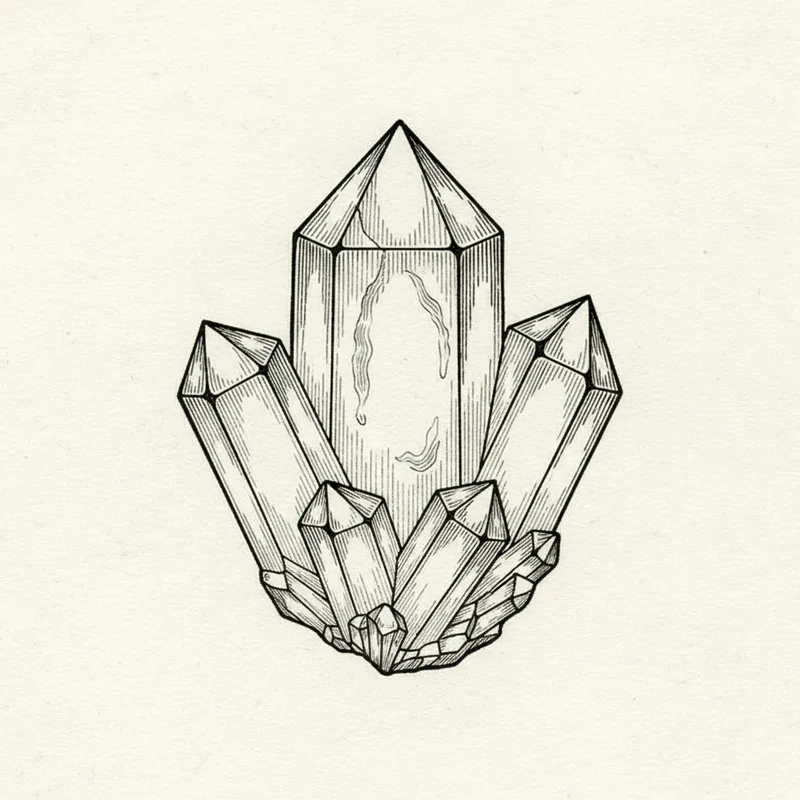
Identification: Clear quartz has a vitreous (glassy) luster, conchoidal fracture (smooth, curved breakage like glass), no cleavage, and a white streak. It will scratch steel and glass easily. Natural crystals typically form hexagonal prisms terminated by six-sided pyramids. Look for internal features: natural quartz almost always contains inclusions, veils, or fracture planes. Perfect optical clarity with zero inclusions is rare in natural specimens and common in synthetic ones.
How to spot fakes: Glass and synthetic quartz are the usual impostors. Glass is amorphous, meaning it lacks a crystal structure, so it fractures differently, won't show crystal faces, and feels warmer to the touch than quartz (quartz conducts heat faster). Under 10x magnification, glass often contains round gas bubbles, while natural quartz shows angular inclusions, phantoms, or fluid-filled cavities. Synthetic quartz grown by the hydrothermal method is chemically identical to natural quartz but typically has no inclusions at all. If a "crystal point" is optically perfect, perfectly symmetrical, and suspiciously cheap, question it.
Price range: $2-5 for tumbled stones · $5-20 for natural points · $20-100+ for museum-quality clusters
2. Rose Quartz
The Collector's Pink
| Property | Value |
|---|---|
| Chemical Formula | SiO₂ |
| Crystal System | Trigonal |
| Mohs Hardness | 7 |
| Luster | Vitreous to waxy |
Rose quartz teaches beginners something important: the same mineral (SiO₂) can look completely different depending on trace impurities measured in parts per million.
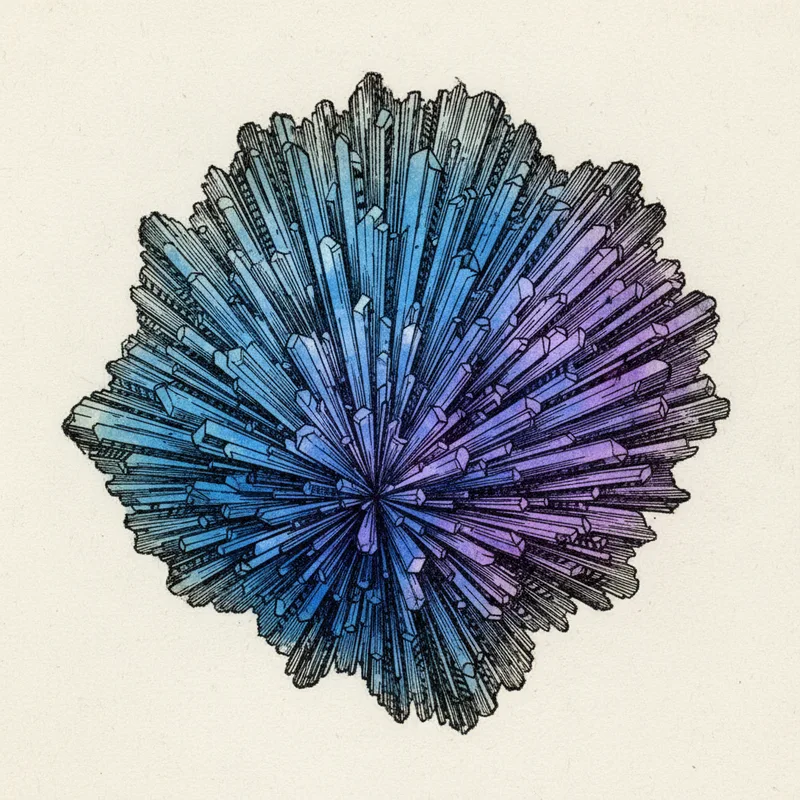
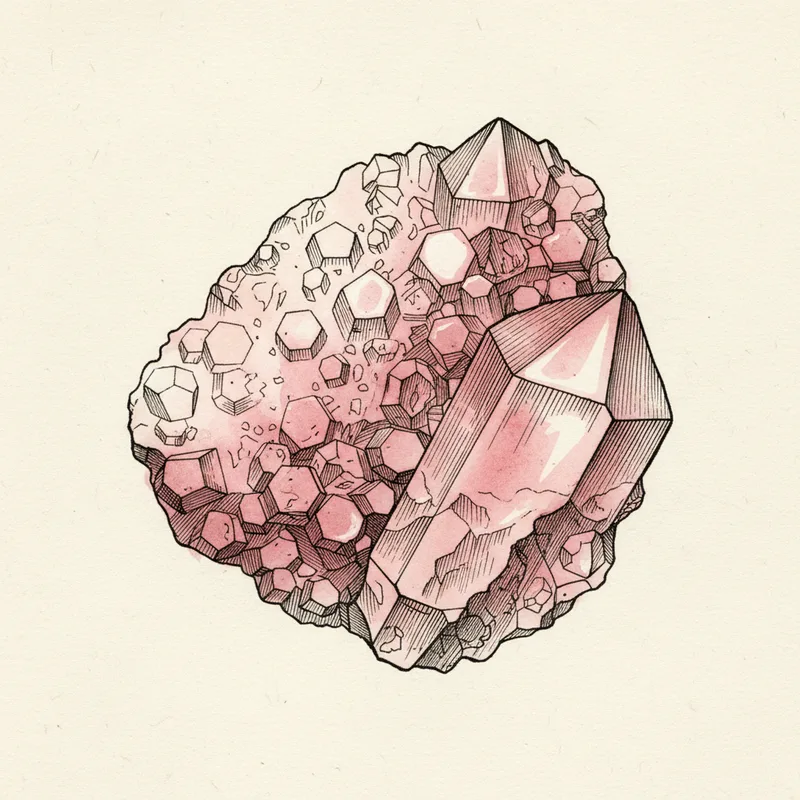
Formation: Rose quartz forms primarily in granitic pegmatites, those coarse-grained igneous bodies that crystallize from the last, volatile-rich dregs of cooling magma. The pink color was debated for decades. Research published in the early 2000s confirmed that most massive rose quartz owes its color to microscopic fibers of a mineral called dumortierite (an aluminum borosilicate) embedded within the quartz matrix. The fibrous inclusions scatter light and give rose quartz its characteristic translucent, milky-pink appearance. Rarer transparent pink quartz crystals, which do form well-developed crystal faces, get their color from a different mechanism involving phosphorus and aluminum substituting into the quartz lattice.
Identification: Rose quartz is almost always massive (meaning it doesn't form individual crystal points). The color ranges from very pale pink to medium rose. It has a slightly waxy luster compared to clear quartz because of those dumortierite fibers. Some specimens show asterism (a six-rayed star effect) when cut as a cabochon and illuminated with a point light source, caused by the aligned fibrous inclusions.
How to spot fakes: Rose quartz is cheap and abundant enough that faking it rarely makes economic sense. But dyed quartz or dyed glass does appear in the market. Natural rose quartz has subtle, even color throughout the piece. If the color is concentrated in fractures or surface cracks, it's been dyed. Hot pink rose quartz doesn't exist in nature. If it looks like bubblegum, it's treated.
Price range: $3-8 for palm stones · $8-25 for spheres · $15-50 for raw chunks
3. Amethyst
The Color Center Crystal
| Property | Value |
|---|---|
| Chemical Formula | SiO₂ (with Fe³⁺ impurities) |
| Crystal System | Trigonal |
| Mohs Hardness | 7 |
| Luster | Vitreous |
Amethyst is a masterclass in how trace chemistry and natural radiation create color. Same formula as clear quartz. Same crystal system. Same hardness. Completely different appearance, all because of a few iron atoms and some gamma rays.
Formation: Amethyst forms when silica-rich fluids containing trace iron (Fe³⁺) fill cavities in volcanic basalt. In southern Brazil and Uruguay, massive lava flows from the Paraná flood basalts (130 million years ago) trapped gas bubbles that became the cavities. Over millions of years, silica-bearing groundwater percolated through the basalt, depositing quartz crystals layer by layer inside these voids. The iron that substituted for silicon in the crystal lattice was then exposed to natural gamma radiation from potassium-40 and other radioactive elements in surrounding rock. This radiation created "color centers," specific defects in the crystal lattice that absorb yellow-green light and transmit the purple you see.
The connection between iron concentration, radiation dose, and color intensity means that amethyst color varies enormously, from pale lilac to deep violet, sometimes within the same geode.
Identification: Amethyst crystals form hexagonal prisms with six-sided pyramid terminations, identical in habit to clear quartz. Color zoning is one of the most reliable identifiers: hold an amethyst crystal up to light and you'll often see angular zones of deeper and lighter purple following the crystal's growth planes. This zoning pattern is extremely difficult to replicate in synthetic or glass imitations.
How to spot fakes: Glass imitations are common in cheap jewelry. They lack color zoning, often contain round bubbles, and feel warm compared to real quartz. Heat-treated amethyst turns yellow-orange and is sold as "citrine" (more on that below). Lab-grown amethyst exists but is rare in the collector market since natural amethyst is already affordable. If the price seems too good for the size and quality, hold it up to light and check for color zoning.
Price range: $5-15 for tumbled or polished pieces · $15-50 for small geodes · $50-500+ for cathedral geodes
4. Fluorite
The Mineral Rainbow
| Property | Value |
|---|---|
| Chemical Formula | CaF₂ |
| Crystal System | Isometric (Cubic) |
| Mohs Hardness | 4 |
| Luster | Vitreous |
Fluorite is the mineral that teaches beginners about cleavage. Pick up a piece of fluorite and you're holding a mineral that will break along four perfect planes, forming octahedra every time. This is the defining crystal in geology courses for demonstrating cleavage versus fracture.
Formation: Fluorite precipitates from hydrothermal fluids, typically in veins associated with granitic intrusions. When calcium-rich and fluorine-rich fluids meet at temperatures between 100-300°C, calcium fluoride crystallizes in its characteristic cubic habit. The range of colors is extraordinary: purple, green, blue, yellow, pink, and colorless, sometimes all in the same crystal. Different color zones record different fluid chemistries. Purple fluorite gets its color from calcium ions displaced by radiation into interstitial positions in the lattice. Green involves rare earth element substitution. Yellow involves additional color center mechanisms. Every color band in a piece of banded fluorite is a geological diary entry.
Identification: Fluorite's perfect octahedral cleavage is diagnostic. Cubic crystals are common and distinctive. At Mohs 4, it's notably softer than quartz. A steel knife will scratch it easily. Many fluorite specimens fluoresce under ultraviolet light (the word "fluorescence" literally derives from fluorite). The fluorescence is caused by rare earth elements, particularly europium and yttrium, substituting into the crystal structure.
How to spot fakes: Fluorite is rarely faked because it's abundant and affordable. The main risk is mislabeling: dyed fluorite sold as higher-value colors, or fluorite sold as more expensive minerals. Know that fluorite is soft (Mohs 4) and cleaves perfectly, which immediately distinguishes it from quartz, topaz, or any harder mineral.
Price range: $3-10 for tumbled stones · $10-40 for cleavage octahedra · $20-200+ for display specimens
5. Pyrite
The Geometry Lesson
| Property | Value |
|---|---|
| Chemical Formula | FeS₂ |
| Crystal System | Isometric (Cubic) |
| Mohs Hardness | 6-6.5 |
| Luster | Metallic |
Pyrite is the mineral that makes people realize crystals aren't just pretty colors. A pyrite cube looks engineered. The flat faces, sharp edges, and 90-degree angles seem impossible as natural formations. And yet that geometry is a direct expression of its cubic crystal system, atoms arranging themselves into perfect cubes because the physics of iron-sulfur bonding makes cubes the lowest-energy configuration.
Formation: Pyrite forms in an enormous range of geological environments: sedimentary rocks where organic matter reduces sulfate in groundwater, hydrothermal veins where iron and sulfur precipitate from hot fluids, metamorphic rocks, and even as a replacement mineral in fossils (pyritized ammonites are museum favorites). The Spanish deposits near Navajún in La Rioja produce the famous near-perfect cubes that sit in collections worldwide. These formed in Jurassic-age marl (calcareous mudstone) from diagenetic fluids during burial and lithification.
Identification: The metallic luster and brassy yellow color are immediately recognizable. Pyrite is harder than most people expect at 6-6.5, harder than steel. It produces sparks when struck against flint (its name comes from the Greek "pyr" meaning fire). The streak is greenish-black to brownish-black, which is the fastest way to distinguish it from gold, which streaks yellow. Pyrite crystals commonly form cubes, pyritohedra (twelve-sided forms), and octahedra, often with striated faces.
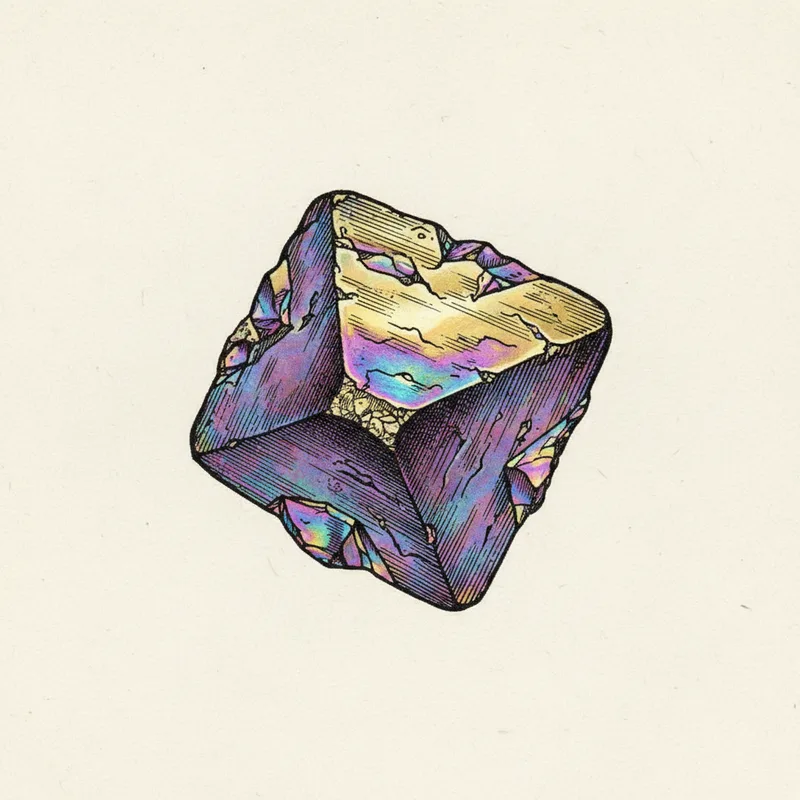
How to spot fakes: Pyrite itself isn't faked, but it's sometimes confused with chalcopyrite (which is more golden-yellow with iridescent tarnish) or mistaken for gold by the hopeful. The streak test is definitive: pyrite streaks dark, gold streaks gold. Pyrite is also much harder than gold (gold is only 2.5-3 on Mohs) and brittle where gold is malleable.
Price range: $3-8 for tumbled stones · $10-30 for natural cubes · $30-150+ for large Spanish cubes
6. Obsidian
The Volcanic Glass
| Property | Value |
|---|---|
| Chemical Formula | ~70-75% SiO₂ (amorphous) |
| Crystal System | Amorphous (no crystal structure) |
| Mohs Hardness | 5-5.5 |
| Luster | Vitreous |
Obsidian technically isn't a crystal at all, and that's exactly why it belongs in a beginner collection. It teaches the crucial distinction between crystalline and amorphous solids.
Formation: Obsidian forms when silica-rich (felsic) lava erupts and cools so rapidly that atoms don't have time to arrange into an ordered crystal lattice. The result is a natural glass, a supercooled liquid frozen in time. The cooling has to be fast, typically at or near the surface during a volcanic eruption. Give the same magma more time to cool underground and you'd get granite instead. Obsidian is chemically similar to granite but structurally its opposite.
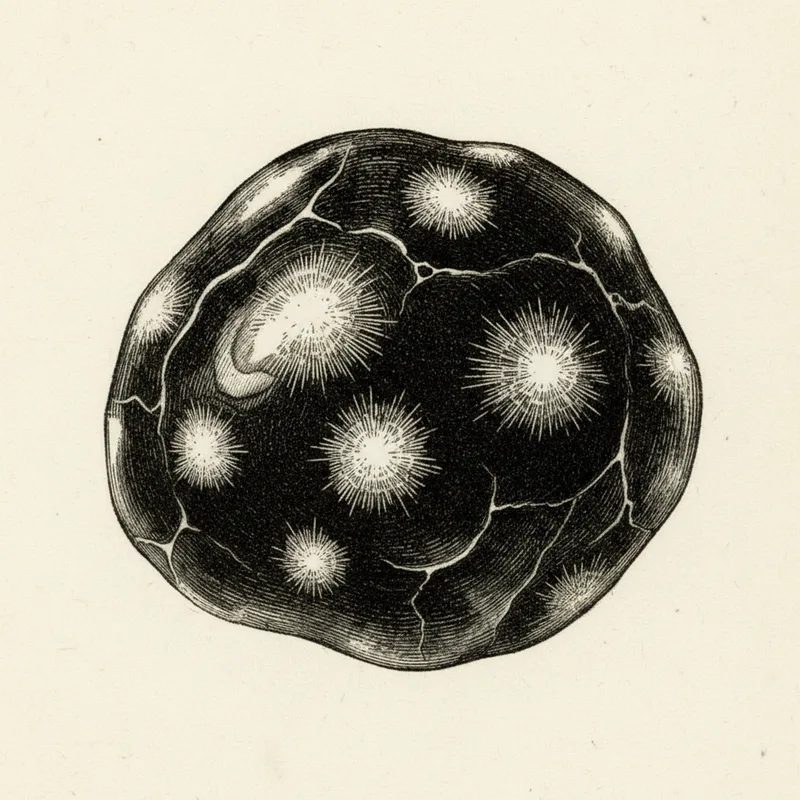
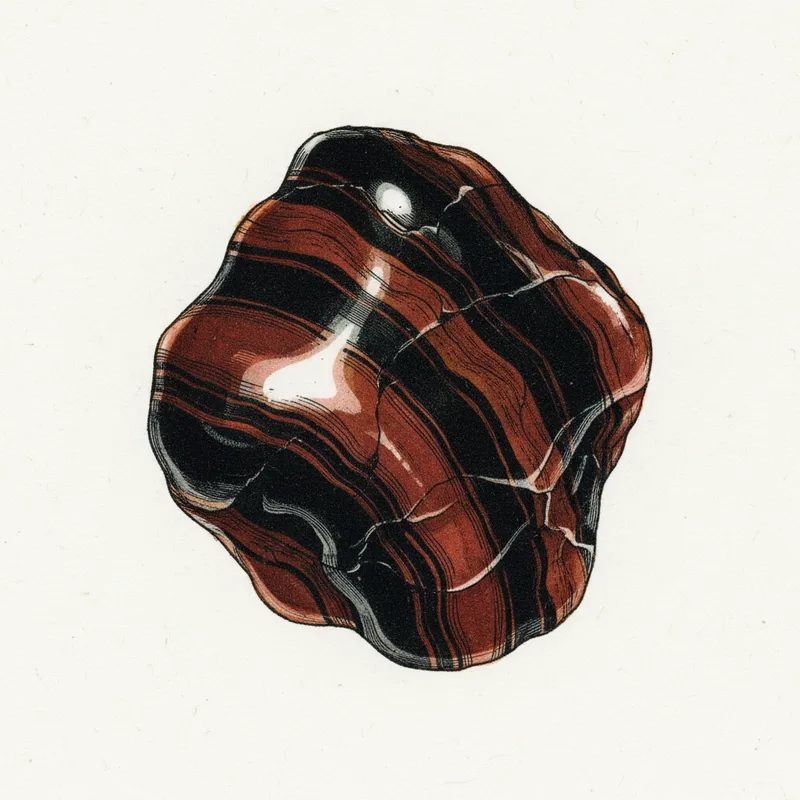
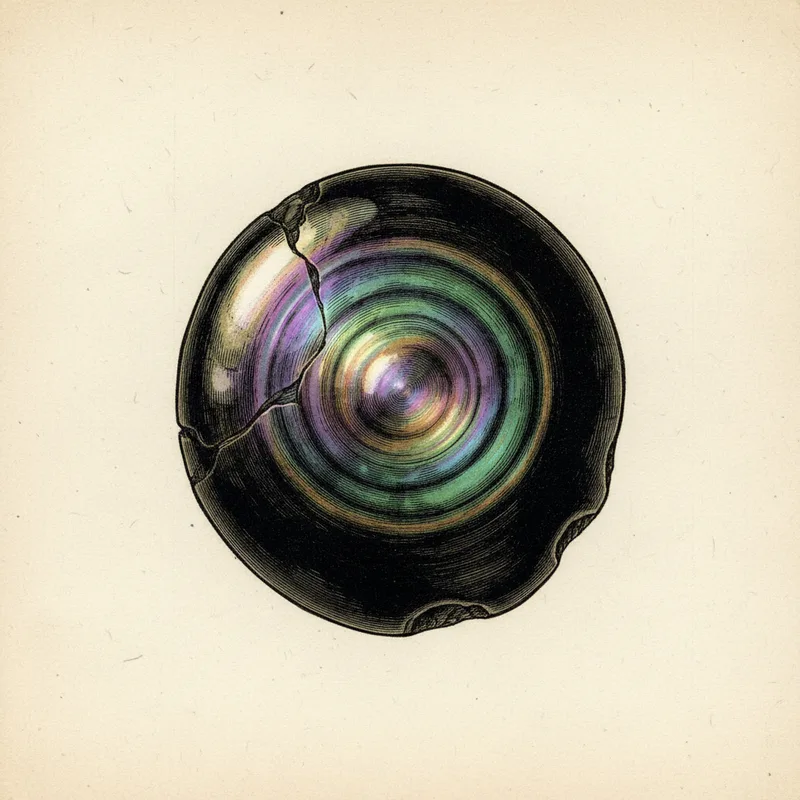
The various types of obsidian are a geology lesson in themselves. Snowflake obsidian contains cristobalite spherulites, tiny radiating clusters of a high-temperature silica polymorph that crystallized within the glass after formation. Rainbow obsidian gets its iridescence from thin layers of magnetite nanoparticles aligned during flow. Mahogany obsidian's red-brown patches are caused by iron oxide inclusions.
Identification: Obsidian has a glassy luster and conchoidal fracture that produces razor-sharp edges (obsidian blades are still used in some surgical contexts because they can be sharper than steel scalpels at the microscopic level). It's typically black but comes in many varieties. It has no cleavage (amorphous materials can't have cleavage since cleavage requires a crystal structure). It feels cool to the touch and is notably lighter than metallic minerals of similar size.
How to spot fakes: Black glass from bottles or industrial sources is sometimes tumbled and sold as obsidian. True obsidian almost always has some flow texture, slight variations in sheen, tiny inclusions, or subtle color variation visible in strong transmitted light. Hold a thin edge up to bright light. Natural obsidian typically transmits some light as brown or dark green at thin edges. Perfectly uniform black throughout, with zero internal features, is suspicious.
Price range: $2-5 for tumbled stones · $5-15 for raw pieces · $10-40 for polished shapes
7. Selenite
The Crystal That Grows in Caves
| Property | Value |
|---|---|
| Chemical Formula | CaSO₄·2H₂O |
| Crystal System | Monoclinic |
| Mohs Hardness | 2 |
| Luster | Vitreous to silky |
Selenite is the variety of gypsum that forms transparent, tabular crystals, and it's the best mineral in any beginner collection for understanding the concept of hardness. At Mohs 2, you can scratch it with a fingernail. This single property teaches you more about the Mohs scale than reading about it ever could.
Formation: Selenite crystallizes from evaporating bodies of water where calcium and sulfate ions concentrate. The Naica Mine in Chihuahua, Mexico, contains the most spectacular selenite crystals ever found: translucent beams up to 12 meters long and weighing 55 tons, grown over approximately 500,000 years in a cave filled with mineral-rich water heated to 58°C by underlying magma. The uniform temperature and undisturbed fluid conditions allowed uninterrupted crystal growth at a geological pace, roughly one billionth of a meter per year.
More commonly, selenite forms as "desert roses" (rosette clusters incorporating sand grains), "satin spar" (fibrous, silky gypsum often sold as "selenite wands"), and tabular crystals in clay beds and evaporite deposits.
Identification: The fingernail test is diagnostic. If you can scratch it with your nail, it's at most Mohs 2, which immediately narrows the field to gypsum, talc, or a handful of rare minerals. Selenite's transparency, tabular crystal habit, and perfect cleavage on one plane distinguish it from other soft minerals. Satin spar shows a distinctive chatoyant (cat's eye) sheen when polished. Selenite is water-soluble over long periods, which is why it should never be cleansed in water.
How to spot fakes: Selenite is too cheap to fake. The bigger concern is mineral identification: "satin spar" (fibrous gypsum) is routinely sold as "selenite" in the crystal market. They're both gypsum (CaSO₄·2H₂O) with the same chemistry, but true selenite is the transparent, tabular crystalline form. This is a nomenclature issue, not a fraud issue, but knowing the difference shows you understand mineralogy.
Price range: $3-8 for satin spar wands · $5-15 for tabular selenite plates · $15-50 for desert roses
8. Hematite
The Iron Mineral
| Property | Value |
|---|---|
| Chemical Formula | Fe₂O₃ |
| Crystal System | Trigonal |
| Mohs Hardness | 5.5-6.5 |
| Luster | Metallic to earthy |
Hematite is the most important iron ore mineral on Earth and the reason Mars is red. The rusty orange-red color of the Martian surface comes from fine-grained hematite distributed through its regolith, confirmed by the Mars Exploration Rovers in 2004. Pick up a piece of polished hematite and you're holding the same mineral that colors another planet.
Formation: Hematite forms through multiple geological processes. The most geologically significant are banded iron formations (BIFs), massive sedimentary deposits laid down 2.5-1.8 billion years ago when Earth's atmosphere first accumulated oxygen. Iron dissolved in ancient oceans oxidized and precipitated as layers of hematite alternating with silica, forming the economic iron deposits mined today in Australia, Brazil, and Minnesota's Mesabi Range. Hematite also forms through hydrothermal processes, as a weathering product of other iron minerals, and in volcanic fumaroles.
Identification: The streak test is the single most diagnostic feature of hematite: it always streaks red to reddish-brown, regardless of whether the specimen appears metallic silver-black or earthy red. This red streak has been known for millennia (the name comes from the Greek "haima," meaning blood). Specular hematite has a brilliant metallic luster with a silver-steel color that seems contradictory to the red streak until you actually do the test.
How to spot fakes: "Magnetic hematite" sold in the crystal market is almost always synthetic. Real hematite is paramagnetic (weakly attracted to strong magnets) but is not a permanent magnet. If your "hematite" snaps to a fridge magnet, it's man-made ceramic or metallic material. Natural polished hematite is heavy (specific gravity 5.3), cold to the touch, and produces that diagnostic red streak. The weight alone is a useful test. Hematite is dense, noticeably heavier than glass or ceramic of the same size.
Price range: $2-5 for tumbled stones · $5-15 for polished shapes · $15-50 for specular specimens
9. Labradorite
The Light Show
| Property | Value |
|---|---|
| Chemical Formula | (Ca,Na)(Al,Si)₄O₈ |
| Crystal System | Triclinic |
| Mohs Hardness | 6-6.5 |
| Luster | Vitreous |
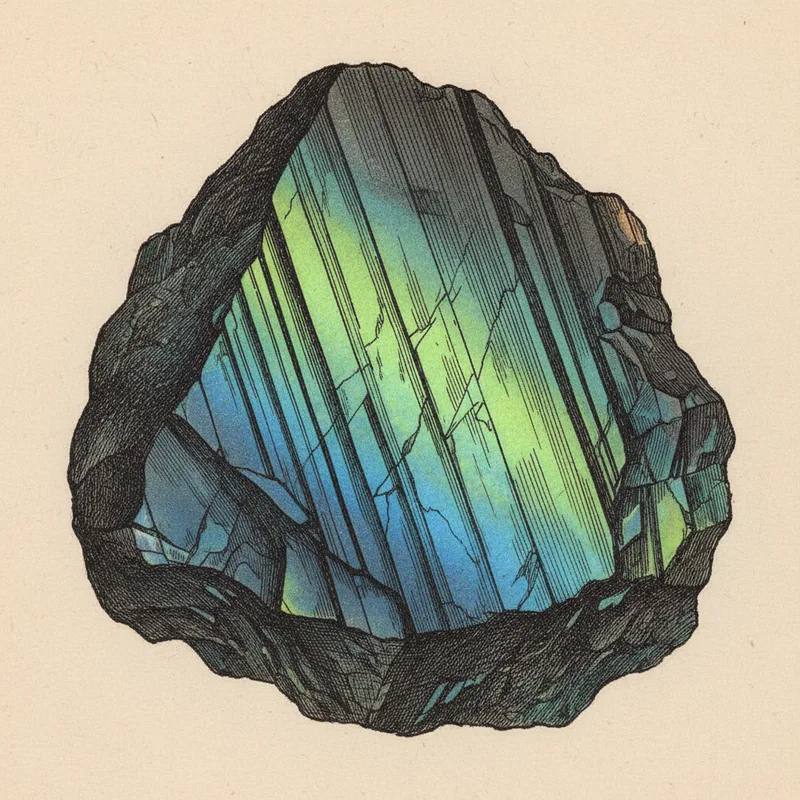
Labradorite teaches beginners about an optical phenomenon so distinctive it's named after the mineral itself: labradorescence. That flash of blue, green, gold, or orange that appears when you rotate the stone isn't surface color. It's structural color created by light interference within the crystal.
Formation: Labradorite is a plagioclase feldspar (the most abundant mineral group in Earth's crust) with a composition between calcium-rich anorthite and sodium-rich albite. It crystallizes from basaltic and gabbroic magmas at temperatures around 1,100-1,200°C. As the feldspar cools, it undergoes exsolution, a process where the originally homogeneous crystal separates into alternating layers of calcium-rich and sodium-rich plagioclase at the nanometer scale. These layers have slightly different refractive indices, and when light passes through them, it interferes constructively at specific wavelengths, creating that signature flash of color. The thickness of the layers determines which colors you see.
Identification: The labradorescence is diagnostic. No other common mineral produces exactly this effect (although its close relative, spectrolite from Finland, shows a wider range of colors through the same mechanism). Base color is typically dark gray to black. The mineral has two cleavage directions at approximately 86°, characteristic of all feldspars. It's hard enough (6-6.5) to scratch glass but softer than quartz.
How to spot fakes: Labradorite is abundant enough that faking it is rare. The main concern is quality misrepresentation: specimens with poor flash being sold at premium prices, or photographs taken under ideal lighting that exaggerate the effect. When buying online, look for video rather than photos, since labradorescence is directional and depends on viewing angle. Synthetic "opalite" or coated glass sometimes gets mislabeled as labradorite, but these lack the directional flash and feldspar cleavage.
Price range: $5-15 for tumbled stones · $10-30 for polished freeforms · $20-100+ for spectrolite specimens
10. Tourmaline
The Complex Silicate
| Property | Value |
|---|---|
| Chemical Formula | (Na,Ca)(Li,Mg,Fe,Al)₃(Al,Fe,Cr)₆(BO₃)₃Si₆O₁₈(OH)₄ |
| Crystal System | Trigonal |
| Mohs Hardness | 7-7.5 |
| Luster | Vitreous |
Tourmaline has arguably the most complex chemical formula of any common mineral, and that complexity is the whole point of including it in a starter collection. It demonstrates how mineral group classification works when a single structure can accommodate an enormous range of chemical substitutions.
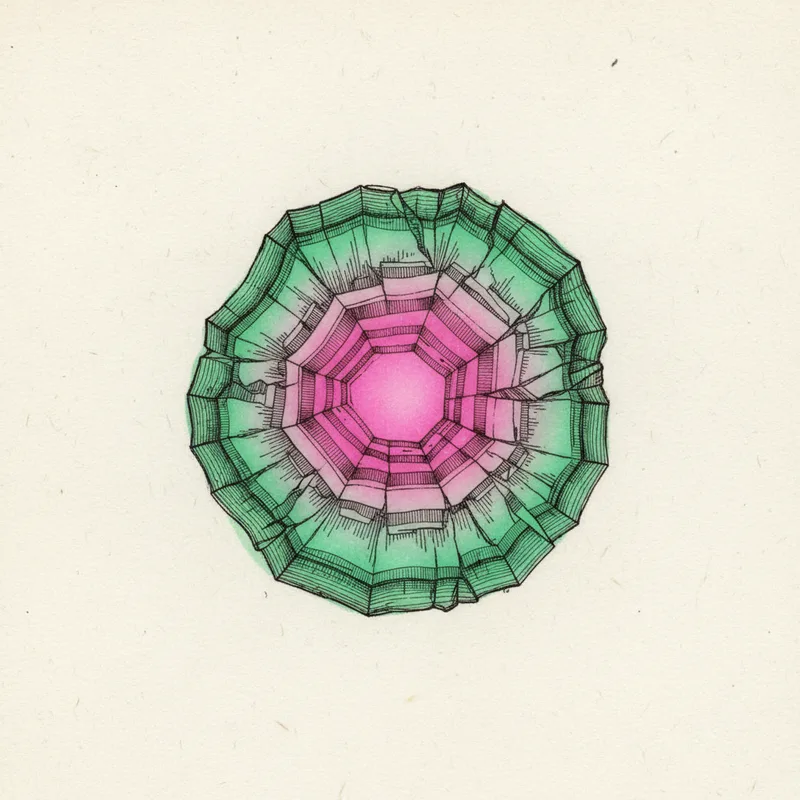
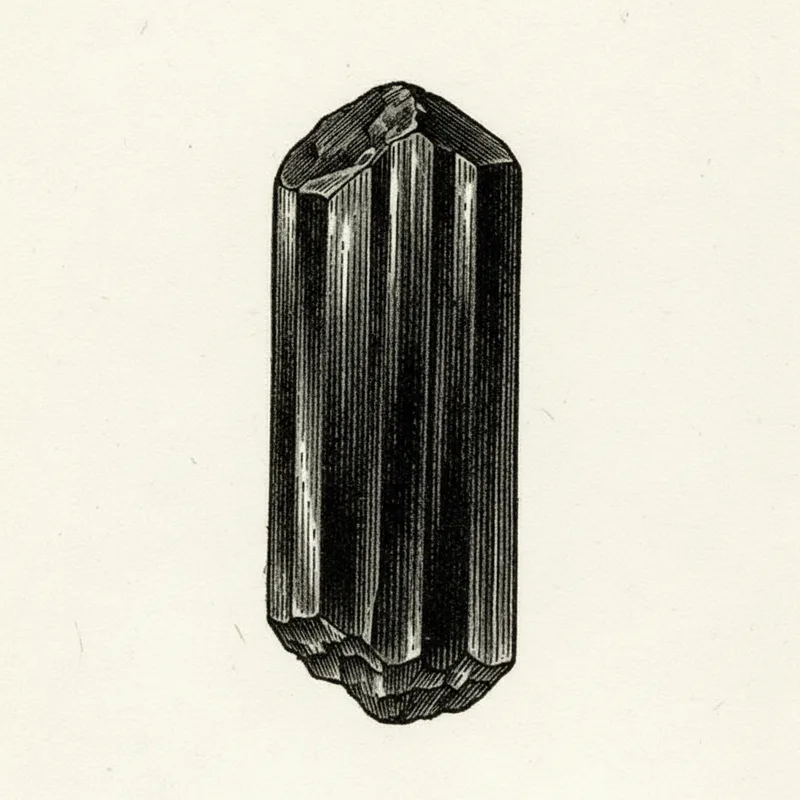
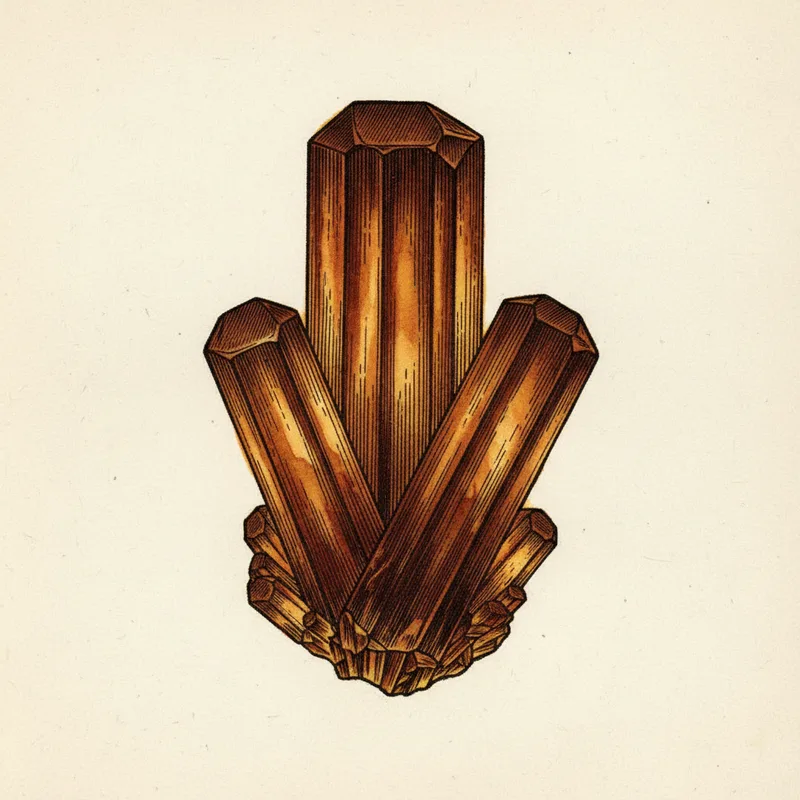
Formation: Tourmaline is a boron-bearing cyclosilicate that forms primarily in granitic pegmatites, where boron concentrates in the late-stage fluids of cooling magma. It also forms in metamorphic rocks (particularly schists) and as a result of metasomatic alteration where boron-rich fluids interact with existing rock. The wide range of colors directly reflects its chemical variability: iron-rich schorl is black, lithium-rich elbaite can be pink (rubellite), green (verdelite), blue (indicolite), or multiple colors in a single crystal (watermelon tourmaline). Magnesium-rich dravite is brown.
Identification: Tourmaline crystals have a distinctive triangular cross-section with striated prism faces, visible even in tumbled specimens if you look closely. The mineral is pleochroic, meaning it shows different colors when viewed from different directions (look down the length of the crystal versus from the side). It's hard (7-7.5), which puts it above most common minerals. The combination of triangular cross-section, striations, and pleochroism is essentially unique to tourmaline.
How to spot fakes: Black tourmaline (schorl) is too abundant to bother faking. But colored tourmaline, especially Paraíba (neon blue-green) and rubellite (pink-red), is valuable enough to attract counterfeits. Glass imitations lack pleochroism and the triangular cross-section. Synthetic tourmaline doesn't exist commercially. For beginner collectors buying affordable specimens, the risk is low, but always check for those characteristic striations on prism faces.
Price range: $3-8 for schorl (black) tumbled · $10-30 for colored tourmaline pieces · $50-500+ for gem-quality crystals
11. Carnelian
The Iron-Stained Chalcedony
| Property | Value |
|---|---|
| Chemical Formula | SiO₂ (with Fe₂O₃ inclusions) |
| Crystal System | Trigonal (microcrystalline) |
| Mohs Hardness | 6.5-7 |
| Luster | Waxy to vitreous |
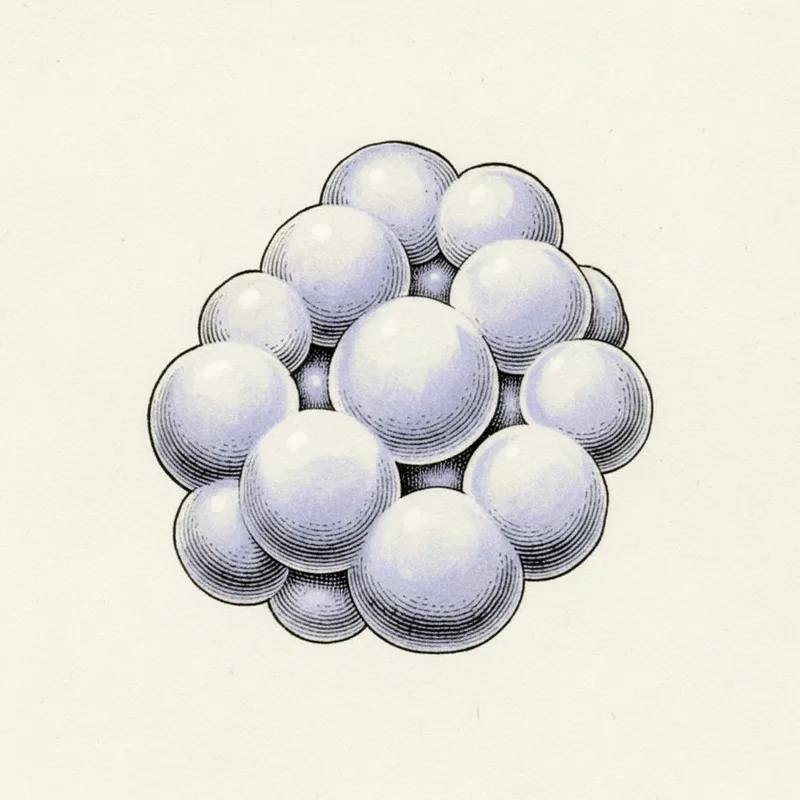
Carnelian is the crystal that teaches beginners the difference between macrocrystalline and microcrystalline quartz. While amethyst and clear quartz form visible individual crystals, carnelian is chalcedony, a variety where the quartz crystals are so small they can only be resolved with a microscope. Same SiO₂, completely different texture, habit, and appearance.
Formation: Carnelian forms when silica-rich fluids deposit microcrystalline quartz within cavities and fractures in volcanic rock. The orange to red-orange color comes from iron oxide (Fe₂O₃, the same compound as hematite) dispersed as submicroscopic particles within the chalcedony matrix. Many carnelians in the market have been heat-treated to deepen the orange color. This is an ancient practice, documented in Roman times, and is so universal that it's considered standard treatment in the gemstone trade. Natural carnelian tends toward brownish-orange, while heat-treated material leans toward a more uniform, saturated orange-red.
Identification: Carnelian has the waxy luster characteristic of all chalcedony varieties. It's translucent when held to light, with color ranging from pale orange to deep reddish-orange. It lacks visible crystal faces (microcrystalline minerals don't form individual crystals you can see). Hardness of 6.5-7 means it scratches glass easily. When held up to strong light, natural carnelian typically shows some color variation or slight banding, while uniformly dyed stones look too perfect.
How to spot fakes: Dyed agate is the most common substitute. Hold the stone up to strong light: dyed material often shows dye concentration along fracture lines. Natural and heat-treated carnelian show a more diffuse, even color from within the stone. Red-dyed glass sold as carnelian can be identified by the bubble test (glass has round bubbles, carnelian doesn't) and the hardness test (glass is softer at about 5.5).
Price range: $2-5 for tumbled stones · $5-15 for palm stones · $10-30 for polished shapes
12. Malachite
The Banded Copper Carbonate
| Property | Value |
|---|---|
| Chemical Formula | Cu₂(CO₃)(OH)₂ |
| Crystal System | Monoclinic |
| Mohs Hardness | 3.5-4 |
| Luster | Vitreous to silky |
Malachite is the most visually distinctive mineral on this list and one of the best for teaching beginners about the relationship between chemistry and color. That intense green isn't caused by trace impurities. Copper is fundamental to malachite's structure. Remove the copper and you don't have malachite anymore.
Formation: Malachite is a secondary copper mineral, meaning it forms from the weathering and oxidation of primary copper ore deposits. When copper sulfide minerals like chalcopyrite (CuFeS₂) are exposed to water, carbon dioxide, and oxygen near the surface, they break down and reprecipitate as copper carbonates. Malachite forms in the oxidized zone of copper deposits, often alongside azurite (another copper carbonate with a different crystal structure and a blue color). The famous banded pattern forms through rhythmic precipitation: repeated cycles of copper carbonate deposition create alternating bands of lighter and darker green that record changing fluid chemistry over time.
The Democratic Republic of the Congo produces the largest quantities of gem-quality malachite today, with significant deposits also in Zambia, Russia (the Ural Mountains, historically the most famous source), and Arizona.
Identification: The green color and banding pattern are diagnostic. No other common mineral looks like malachite. It's relatively soft (3.5-4), which means it scratches easily and should be handled with care. It effervesces (fizzes) in dilute hydrochloric acid because of the carbonate component. The specific gravity of 3.9-4.0 makes it noticeably heavy for its size.
How to spot fakes: Reconstituted malachite (genuine malachite powder mixed with resin and pressed into shapes) is common and can be difficult to distinguish from solid malachite without examination. Look for the banding: natural malachite bands are irregular and follow organic, flowing patterns. Reconstituted material often has a more uniform, repetitive pattern. Plastic imitations exist but are immediately detectable by weight (too light), hardness (too soft), and feel (plastic warms quickly in the hand, malachite stays cool).
Safety note: Malachite contains copper, which is toxic in large amounts. Don't use raw malachite to make gem elixirs or crystal water. Polished specimens are perfectly safe to handle, but wash your hands after working with raw or dusty malachite, especially before eating.
Price range: $5-15 for tumbled stones · $15-50 for polished slabs · $30-200+ for large display pieces
Building Your First Collection: Practical Advice
Start with tumbled stones. They're affordable ($2-8 each), portable, and still show all the key mineralogical properties. A full set of these 12 minerals in tumbled form runs about $40-80, less than most textbooks.
Buy a streak plate. An unglazed porcelain tile (the back of a bathroom tile works) is one of the most useful tools in mineral identification. The streak test immediately distinguishes pyrite from gold, hematite from magnetite, and dozens of other commonly confused pairs.
Get a hand lens. A 10x loupe costs $5-15 and transforms how you see minerals. Suddenly you can spot the gas bubbles in glass fakes, the fibrous dumortierite in rose quartz, and the color zoning in amethyst. It's the single best investment in a mineral hobby.
Learn one mineral well before moving on. Pick up your amethyst, research how it formed, examine it under magnification, do the streak test, try scratching it against glass. Understanding one mineral deeply teaches you more than superficially knowing fifty.
Visit a mineral show. Gem and mineral shows happen year-round across the country. Dealers at shows let you handle specimens, ask questions, and compare quality in person. The education you get from one afternoon at a mineral show is worth months of online research.
Don't overpay. All twelve minerals on this list are abundant and affordable. If someone is charging premium prices for common minerals, find another seller. Save the big spending for once you know enough to evaluate what you're buying.
Quick Reference Table
| Mineral | Formula | Hardness | Crystal System | Key Test |
|---|---|---|---|---|
| Clear Quartz | SiO₂ | 7 | Trigonal | Scratches glass; conchoidal fracture |
| Rose Quartz | SiO₂ | 7 | Trigonal | Pink color; always massive; waxy luster |
| Amethyst | SiO₂ | 7 | Trigonal | Purple color zoning under light |
| Fluorite | CaF₂ | 4 | Isometric | Perfect octahedral cleavage; scratched by knife |
| Pyrite | FeS₂ | 6-6.5 | Isometric | Metallic luster; greenish-black streak |
| Obsidian | ~SiO₂ glass | 5-5.5 | Amorphous | Conchoidal fracture; no crystal structure |
| Selenite | CaSO₄·2H₂O | 2 | Monoclinic | Scratched by fingernail |
| Hematite | Fe₂O₃ | 5.5-6.5 | Trigonal | Red-brown streak, always |
| Labradorite | (Ca,Na)(Al,Si)₄O₈ | 6-6.5 | Triclinic | Labradorescence (directional color flash) |
| Tourmaline | Complex borosilicate | 7-7.5 | Trigonal | Triangular cross-section; striated faces |
| Carnelian | SiO₂ | 6.5-7 | Trigonal | Orange-red; translucent; waxy luster |
| Malachite | Cu₂(CO₃)(OH)₂ | 3.5-4 | Monoclinic | Green banding; fizzes in acid |
These twelve minerals span six different crystal systems (plus amorphous), five chemical classes, hardnesses from 2 to 7.5, and formation environments from volcanic eruptions to slow evaporating seas. They are a geology education you can hold in your hands. Start here, learn the science, and build from there.
Crystals in This Article
Watermelon Tourmaline
The Dual Heart Stone
Snowflake Obsidian
The Stone of Balance
Mahogany Obsidian
The Stone of Inner Strength
Black Tourmaline
The Shield Stone
Rainbow Obsidian
The Stone of Light in Darkness
Clear Quartz
The Master Healer
Dumortierite
The Patience Stone
Chalcopyrite
The Peacock Mineral
Labradorite
The Stone of Transformation
Rose Quartz
The Stone of Unconditional Love
Tourmaline
The Rainbow Stone
Chalcedony
The Mother of Agates
Keep Reading
Stay in the loop
From the Almanac
Updates from Crystal Almanac, when there’s something worth sharing.