Quick Facts
Formation & Origin
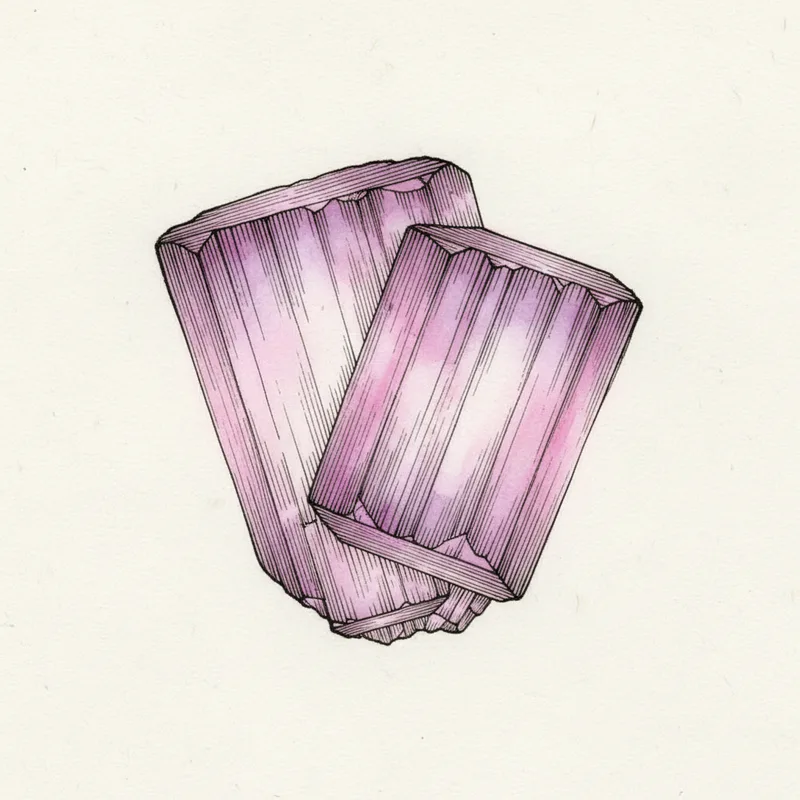
Kunzite is the pink to lilac variety of spodumene - a lithium-bearing pyroxene mineral that forms in granitic pegmatites. The pink color comes from manganese impurities substituting into the crystal structure.
Spodumene crystals can grow to extraordinary sizes - the largest known single crystal of any mineral is a spodumene from the Etta Mine in South Dakota, measuring 12.8 meters long and weighing 37 tons. Kunzite crystals, while not that extreme, can reach impressive sizes - gem-quality crystals over 10 centimeters are not uncommon from Afghanistan.
Kunzite has a significant weakness: it's strongly light-sensitive. Prolonged exposure to bright light or UV radiation can permanently fade the pink color, sometimes to colorless. This is why gem dealers call it 'the evening stone' - it looks best in evening or indoor lighting and should be stored away from sunlight. The fading is caused by the manganese color centers being destabilized by UV photons, and the process is irreversible.
Identification Guide
Kunzite is identified by its distinctive pink to lilac color, strong pleochroism (showing different intensities of pink from different angles), and spodumene crystal habit (elongated, flat prismatic crystals). At hardness 6.5, it's moderately durable but has two directions of cleavage that make it challenging to cut.
Distinguish from pink tourmaline (different crystal shape, no cleavage), morganite (different pink tone, different crystal system), and rose quartz (translucent vs transparent, no crystal faces). Kunzite's strong pleochroism is diagnostic - viewed down the crystal length, it appears most deeply colored; from the side, it's much paler.
Spotting Fakes
Synthetic kunzite doesn't exist commercially. The main concerns are pink glass (no pleochroism, may have bubbles) and irradiated colorless spodumene (the color is usually unstable and fades rapidly). Genuine kunzite's pleochroism is the best verification - rotate the stone and observe the color change. Remember that kunzite WILL fade in prolonged light, so a suspiciously pale stone may have started life as a deeper pink.
Cultural & Metaphysical Traditions
Presented as cultural traditions, not scientific evidence
Named after legendary Tiffany & Co. gemologist George Frederick Kunz, who first described it in 1902. Kunz was one of the most important figures in American gemology and personally named several gemstones. In modern crystal practice, kunzite is associated with unconditional love, emotional healing, and heart-centered consciousness. Its light sensitivity has been metaphorically connected to vulnerability and the need for gentle handling in relationships.
Where It's Found
Finest deep pink crystals, world's best source
Large crystals, good transparency
Original discovery locality (1902)
Fine pink material from pegmatites
Price Guide
Good to Know
Scratch test: At hardness 6.5, Kunzite resists scratching from a knife but can be scratched by quartz. Best for pendants and earrings rather than rings.
Sources: Found in 4 notable locations worldwide, from Afghanistan to Pakistan.
Heft test: Kunzite has average mineral density (3.18). It feels about as heavy as you'd expect from a stone its size.
Explore More
Pyroxene & Amphibole
The Calming Collection
Connected to unconditional love and emotional calming. Its gentle pink energy is considered soothing.
The Love Collection
Named by Tiffany's gemologist. Connected to unconditional love and vulnerability. Its light-sensitivity is interpreted as a metaphor for protecting tender feelings.
The Sleep Collection
The pink spodumene named by Tiffany's. Light-sensitive and associated with vulnerability and tenderness. Placed near the bed for the kind of openness and safety that allows deep rest.
Spring Crystal Rituals: Stones for New Beginnings
Lepidolite for Anxiety: Science vs. Lore
How to Store and Display Your Crystal Collection
Mohs Hardness Scale
See where Kunzite sits on the scale
Crystal Care Guide
Water safety, sunlight, and handling tips
Stay in the loop
From the Almanac
Updates from Crystal Almanac, when there’s something worth sharing.