Spring Crystal Rituals: Stones for New Beginnings
Key Takeaway: Spring is a natural inflection point for setting new intentions, and crystals make excellent physical anchors for that process. The eight stones here were chosen for geological reasons that map to spring themes: green minerals whose color comes from the same elements that fuel plant growth, solar-colored gems driven by iron photochemistry, and translucent stones that literally play with returning light. Whether you call it a ritual or a quarterly review, pairing a specific crystal with a specific intention leverages well-documented behavioral psychology around physical cues and implementation intentions.
The vernal equinox is one of the few astronomical events that people across nearly every culture in human history have marked with some kind of ceremony. The reason is simple physics: after months of decreasing daylight, the trend reverses. Days get longer. The sun climbs higher. Light returns.
This isn't just symbolic. Seasonal light changes directly affect human neurobiology. Serotonin production increases with sunlight exposure. Cortisol patterns shift. The "spring feeling" of renewed energy and motivation has measurable physiological underpinnings, driven by the hypothalamic-pituitary axis responding to changes in photoperiod length. When people describe feeling a surge of motivation in March and April, they're describing a real neurochemical shift.
Cultures figured this out long before neuroscience confirmed it. The Persian New Year (Nowruz) falls on the spring equinox and has been celebrated for over 3,000 years. Ancient Egyptian temple alignments at Karnak tracked the equinox sunrise. The Hindu festival of Holi marks the arrival of spring with color and fire. Celtic traditions celebrated Imbolc and the spring equinox as markers of renewal, with early medieval Irish texts describing rituals at stone circles timed to the lengthening days. In each tradition, the equinox represents a threshold, a transition from dormancy to action.
Crystals show up in these traditions repeatedly. Not as magic, but as markers. Physical objects chosen to represent an intention and placed where you'll see them daily. The spring equinox is, in many ways, the original "fresh start" date, older than January 1st by several millennia.
There's also a practical reason crystals pair well with spring intentions specifically. Unlike a written list you file away, unlike an app notification you learn to ignore, a crystal is a persistent, beautiful, three-dimensional object in your physical space. It doesn't need charging. It doesn't ping you. It just sits there, catching light, waiting to be noticed. And in spring, when the light itself is changing, when windows you had curtained against winter darkness are suddenly flooded with new sun, that crystal catches your eye more often. The environmental cue becomes stronger precisely when your motivation to act on it is highest.
And here's what's geologically interesting: the processes that form crystals are themselves cyclical. Hydrothermal fluids pulse through fractures in seasonal patterns driven by groundwater recharge. Freeze-thaw cycles crack open new pathways for mineral-bearing solutions. The geological deep time that creates the crystals on your shelf was itself shaped by seasonal rhythms, just measured in millions of years instead of months.
What a Crystal Ritual Actually Is
The word "ritual" can trigger skepticism, and that's fair. But stripped of mystical connotations, a ritual is simply a structured, repeated behavior performed with intentional attention. Making coffee the same way every morning is a ritual. Reviewing your goals on Sunday evening is a ritual. The structure is what matters, not any supernatural component.
In behavioral psychology, the concept of an implementation intention is one of the most reliably effective tools for behavior change. Formulated by psychologist Peter Gollwitzer in the 1990s, implementation intentions follow an "if-then" format: "If situation X arises, I will perform behavior Y." Meta-analyses across hundreds of studies show that implementation intentions significantly increase the probability of goal-directed behavior compared to simply stating a goal.
A crystal ritual is, at its core, a physical implementation intention. You choose a stone. You assign it a meaning. You place it somewhere you'll encounter it repeatedly. Every time you see it or touch it, it triggers a micro-reminder of your intention. The crystal becomes what psychologists call an environmental cue, a physical feature of your surroundings that prompts a specific thought or behavior pattern.
This is the same mechanism behind keeping running shoes by the door, placing a water bottle on your desk, or setting a book on your pillow. Objects placed with intention shape behavior. Crystals just happen to be particularly good at this role because they're beautiful, durable, and small enough to carry or place anywhere. Unlike a sticky note that fades into the background after a day, a crystal has visual depth, it catches light differently at different times of day, it has weight and texture when you pick it up. These multi-sensory properties make crystals unusually effective as environmental cues because they engage more than just your visual system.
There's also a selection effect worth noting. The act of choosing a crystal for a specific purpose is itself a form of commitment. You're browsing, evaluating, deciding. You're thinking about what you actually want and which physical form best represents it. That selection process forces clarity on goals that might otherwise remain vague. By the time you place the crystal, you've already done the cognitive work of defining your intention.
Spring is an especially effective time for this practice because you're working with your neurobiology rather than against it. The seasonal uptick in serotonin, the longer daylight hours, the general cultural energy around "fresh starts" in spring all reduce the activation energy needed to begin new habits. Launching an intention in April is neurochemically easier than launching one in November.
8 Crystals for Spring Rituals and New Beginnings
1. Clear Quartz: The Clean Slate
Clear quartz is the obvious starting point for a spring reset, and the geology explains why. Pure quartz is silicon dioxide (SiO₂) with no trace element impurities and no structural defects. That's remarkable. Most minerals incorporate at least some foreign atoms during crystallization, which is why perfectly colorless, transparent quartz is less common than you might think. What you see when you look through a gem-quality clear quartz point is the visual expression of chemical purity. Every silicon and oxygen atom is exactly where the crystal lattice says it should be.
This purity is why clear quartz interacts with light so cleanly. It transmits across the full visible spectrum without selective absorption, which is the scientific definition of "colorless." It's also piezoelectric, generating a tiny electrical charge when mechanically stressed, a property so reliable that quartz oscillators keep time in virtually every watch and clock on Earth. The frequency is precise to within a few seconds per month, driven by the regularity of the crystal lattice.
In crystal traditions spanning Hindu, Native American, and European practices, clear quartz is called a "master healer" or "amplifier." The tradition of programming clear quartz with a specific intention is one of the oldest and most widespread in the crystal community. The logic follows from its visual clarity: a blank canvas, an empty page, a fresh start.
For spring: Place a clear quartz point on your desk or nightstand at the equinox as a physical marker of your reset. It's metaphysically the "programmable" stone, the one you assign your own meaning to. Geologically, it's the closest thing nature makes to a blank slate, pure structure with no impurities to color the story.
Practical note: Clear quartz is completely sun-safe, won't fade, scratch, or degrade in any normal indoor or outdoor environment. Hardness 7. One of the most durable crystals you can own. It's also abundant and affordable. A polished clear quartz point suitable for intention-setting runs $5-15 for a 2-3 inch specimen. Look for optical clarity and minimal internal fractures (called "veils"), which you can check by holding the crystal up to a light source.
2. Green Aventurine: The Color of Growth
If spring has a single visual signature, it's the emergence of green. And green aventurine captures that green through one of the more interesting optical phenomena in mineralogy: aventurescence.
Green aventurine is a variety of quartz (SiO₂) that contains tiny platelet inclusions of fuchsite mica, a chromium-bearing variety of muscovite. These microscopic green plates, typically 10-100 micrometers across, are scattered throughout the quartz matrix at random orientations. When light enters the stone, it bounces off these platelets at different angles, creating a spangled, shimmering effect. The green color itself comes from chromium (Cr³⁺) ions in the fuchsite, the same element responsible for the green in emeralds and chrome diopside.
Some green aventurine gets its color from chlorite inclusions rather than fuchsite, and in those specimens the green tends to be darker, more forest-toned. The aventurescence may be less pronounced in chlorite-bearing material because chlorite particles tend to be more fibrous than platy.
The best deposits are in India (Tamil Nadu and Mysore), Brazil (Minas Gerais), and Russia (the Ural Mountains, where aventurine was first described). Indian material dominates the market and typically shows the strongest aventurescence.
In Indian and Chinese traditions, green aventurine is called the "stone of opportunity." Feng shui practitioners place it in the southeast corner of rooms (the traditional wealth/growth area) and near the front door to invite new possibilities. Italian gamblers carried it as a good luck charm as early as the 18th century, which is where the name "aventurine" likely originates, from the Italian "a ventura" meaning "by chance."
For spring: Green aventurine is the literal color of new growth, and the chromium that makes it green is an essential plant micronutrient. It's spring in mineral form. Keep a tumbled piece in your pocket during April as a tactile anchor for growth-oriented intentions. At hardness 7 with no cleavage, it's tough enough for daily carry without any risk of damage.
3. Carnelian: The Return of Warmth
After months of short days and cold light, spring brings warmth back. Carnelian is the mineral expression of that warmth, a translucent chalcedony (microcrystalline quartz, SiO₂) colored in shades of orange, red-orange, and burnt sienna by iron oxide impurities, specifically hematite (Fe₂O₃) and goethite (FeOOH) dispersed through the silica matrix.
The color chemistry is worth understanding. Iron is one of the most common coloring agents in minerals, and its effects depend entirely on its oxidation state and structural environment. In carnelian, finely dispersed particles of iron oxide absorb blue and green wavelengths while transmitting red and orange. Heating carnelian intensifies the color because it converts hydrated iron oxide (goethite) to anhydrous hematite, which produces a richer red. This heat-treatment practice dates back to at least ancient Egypt, where carnelian beads were baked in clay pots to deepen their color.
The ancient Egyptians associated carnelian with the setting sun and the goddess Isis. Roman soldiers wore carnelian signet rings engraved with insignia, choosing the stone for both its hardness (excellent for intaglio carving at hardness 7) and its associations with courage and vitality. In Islamic tradition, Prophet Muhammad wore a carnelian ring, making it one of the most valued stones in Muslim culture.
The spring connection is direct: carnelian represents the return of solar energy, the shift from winter's cool blues and grays to warm oranges and reds. Its traditional associations with motivation, creative fire, and courageous action map to the psychological shift that happens when light returns and energy increases.
For spring: Carnelian is the action stone, the crystal for people whose spring intention involves doing rather than just planning. Place one where you work or create. It's completely sun-safe (iron oxide pigments are UV-stable, unlike the color centers in amethyst or rose quartz), so a windowsill placement works perfectly. For more on this stone's geology and cultural significance, see our 2026 crystal intentions guide.
4. Citrine: Solar Energy in Mineral Form
Citrine looks like bottled sunlight, and its color story is one of the most interesting in the quartz family. True natural citrine is colored by a specific type of iron color center, a structural defect where Fe³⁺ ions substitute for silicon in the quartz lattice. Natural radiation from surrounding rock over geological time creates additional lattice distortions around these iron sites, producing the characteristic pale yellow-to-champagne color. The key wavelength absorption happens in the blue-violet range, letting yellow through.
Here's what every crystal buyer should know: the vast majority of "citrine" on the market is heat-treated amethyst. Take an amethyst crystal, heat it to 300-450°C, and the iron color centers restructure. The purple vanishes and a yellow-orange appears. The resulting stone is real quartz with real iron chemistry, but the color was created in an oven rather than over millions of years. You can usually tell the difference: natural citrine is a pale, transparent champagne to smoky yellow, while heat-treated material tends toward saturated orange or burnt yellow, often with a white base where the amethyst wasn't fully converted.
Both forms are legitimate quartz. Neither is "fake." But natural citrine is genuinely rare and commands higher prices, so knowing the difference matters for your wallet.
In crystal traditions, citrine is called the "merchant's stone." European merchants kept citrine in their cash boxes from at least the 17th century onward. Chinese feng shui places citrine in the southeast "wealth corner." The solar associations are straightforward: this is a stone that looks like it trapped a piece of the sun.
For spring: Citrine is for intentions around abundance, new ventures, and projects you want to launch while the energy of the season is behind you. A small natural citrine point on your workspace catches the strengthening spring light beautifully. Note the care caveat, though: natural citrine can lighten with prolonged sun exposure (the same color centers that create the yellow can be bleached by UV), so keep it out of direct windowsill placement. Heat-treated citrine is generally more UV-stable since the color centers were already restructured by heat.
5. Rose Quartz: Softening After Winter
Spring isn't all fierce energy and bold action. There's a gentler register too, the softening of frozen ground, the first tender shoots, the return of birdsong at dawn. Rose quartz lives in that register.
Rose quartz is silicon dioxide (SiO₂) colored pink by microscopic fibrous inclusions of a dumortierite-like mineral, likely a borosilicate related to the mineral family that includes dumortierite (Al₇BO₃(SiO₄)₃O₃). These fibers are so fine, typically less than a micrometer in diameter, that they scatter light within the stone, producing the characteristic translucent, milky-pink appearance. This is different from the rare "pink quartz" (sometimes called crystalline rose quartz), where the color comes from aluminum and phosphorus substituting for silicon, creating color centers sensitive to light.
The fibrous inclusions in rose quartz are also responsible for its asterism. In well-structured specimens, the fibers align along three crystallographic directions at 120-degree angles, and when the stone is cut as a cabochon, a six-rayed star appears. Star rose quartz from Madagascar is particularly prized for this property.
Rose quartz has been associated with love and the heart across cultures for millennia. The ancient Greeks told a myth involving Aphrodite and Adonis, where rose quartz was stained pink by the blood of the goddess of love. Egyptian facial masks recovered from tombs included rose quartz, suggesting cosmetic or beautifying associations as early as 3000 BCE. In Chinese tradition, rose quartz is placed in the relationship corner (southwest) of a room in feng shui practice. Across these traditions, the common thread is the connection between the soft pink color and the softening of emotional barriers.
The major deposits are in Brazil (Minas Gerais, which produces the majority of commercial rose quartz), Madagascar (known for exceptional star rose quartz and deeper pink hues), and South Dakota's Black Hills. Brazilian material tends to be paler and more translucent, while Malagasy rose quartz often shows a richer, more saturated pink.
For spring: Rose quartz anchors intentions around relationships, self-compassion, and emotional renewal. It's the spring thaw in mineral form. After months of winter's introversion, spring invites reconnection, and rose quartz represents that opening. Place it in your bedroom or living space. A rose quartz palm stone ($5-12) is particularly nice for this purpose because the tactile experience of holding a smooth, cool stone reinforces the sensory anchor. One important care note: rose quartz can fade in direct sunlight because those delicate color centers are UV-sensitive. Keep it away from windows that receive strong afternoon sun. For more on which stones are light-sensitive, see our crystal care guide.
6. Moonstone: Cycles and Renewal
Spring is fundamentally about cycles, the return of a pattern, the beginning of a new turn around the sun. Moonstone is the mineral of cycles, and its optical effect is one of the most captivating in all of gemology.
Moonstone is a variety of feldspar, specifically an orthoclase-albite combination (KAlSi₃O₈ and NaAlSi₃O₈). During cooling, these two feldspar compositions that were mixed at high temperature begin to separate, forming alternating layers of potassium-rich and sodium-rich feldspar. These layers are extraordinarily thin, on the order of the wavelength of visible light (roughly 300-700 nanometers). When light hits this layered structure, it undergoes thin-film interference, the same physics that creates colors in soap bubbles and oil slicks. The phenomenon is called adularescence, named for the Adula Mountains in Switzerland where fine moonstone was historically found.
The best moonstone displays a billowy, blue-white glow that appears to float beneath the surface of the stone, shifting as the stone moves. This "floating light" effect is mesmerizing precisely because it mimics the way moonlight seems to glow from within rather than reflecting off surfaces.
In Hindu tradition, moonstone is sacred. It was believed to be formed from solidified moonbeams. Hindu mythology associates it with Chandra, the moon deity, and with the cycles of creation and dissolution. In Art Nouveau jewelry (1890-1910), moonstone enjoyed enormous popularity, prized for its ethereal quality.
The spring connection is through lunar cycles, which many traditional planting and gardening calendars follow. New moons in spring have been traditional times for planting seeds and beginning new projects across European, Chinese, and Mesoamerican agricultural traditions. The lunar cycle itself, a regular 29.5-day rhythm of waxing and waning, mirrors the seasonal cycle of growth and dormancy at a smaller timescale.
For spring: Moonstone is particularly suited for new moon rituals in April and May, when you're setting intentions at the start of a fresh lunar cycle during the most growth-oriented season. Hold it while you clarify what you want to begin. The adularescence is best appreciated in soft, indirect light, making it a beautiful evening ritual stone. Sri Lankan moonstone shows the finest blue adularescence and is the benchmark for gem quality.
7. Selenite: Clearing the Way
Before you can begin something new, you often need to clear out what's old. Selenite has been used in exactly this role across multiple traditions, and its geology makes it genuinely unusual among popular crystals.
Selenite is a crystalline variety of gypsum, calcium sulfate dihydrate (CaSO₄·2H₂O). That "dihydrate" is important: water molecules are locked into the crystal structure itself, arranged in layers between sheets of calcium sulfate. This gives selenite its distinctive properties, including perfect cleavage along those water layers, low hardness (just 2 on the Mohs scale, soft enough to scratch with a fingernail), and a luminous, almost waxy translucence that transmits light beautifully.
The name comes from Selene, the Greek goddess of the moon, chosen because of the stone's cool, moonlight-like glow. Large selenite crystals can act as natural fiber optics, channeling light along their length. The Cave of the Crystals (Cueva de los Cristales) in Naica, Mexico, contains selenite crystals up to 12 meters long and weighing 55 tons, formed over approximately 500,000 years in mineral-rich water at temperatures around 58°C.
Selenite's metaphysical tradition centers on clearing and purification. It's one of the few stones that crystal practitioners believe "doesn't need cleansing." In Moroccan tradition, large selenite slabs are used as window panes in some traditional buildings, filtering light into a soft, diffused glow that feels different from glass. European crystal healing traditions use selenite wands to "clear" the energy of other crystals and spaces, a practice that echoes the stone's physical property of conducting and diffusing light.
Whether or not you subscribe to that framework, selenite's translucent, light-conducting quality makes it visually unique among crystals, a physical object that seems to glow from within. Hold a selenite tower near a window in spring and watch how it transforms the light. There's a reason this stone is named for a moon goddess: it doesn't just reflect light, it softens and redistributes it.
For spring: Use selenite to mark the "clearing" phase of your spring ritual, the part where you let go of winter's stagnation before setting new intentions. A selenite wand or tower placed near your front door is a common feng shui practice for refreshing the energy of a space. Critical care note: selenite is water-soluble. Never cleanse it with water, never leave it in a bathroom, and keep it away from humidity. Dust it with a soft, dry cloth. For more on safe cleansing methods that won't damage your crystals, see our full guide.
8. Peridot: Deep Earth Green
If green aventurine represents the green of surface growth, peridot represents something deeper. This is a mineral that forms not in the crust where most gems originate, but in the upper mantle, 20-50 kilometers below the surface, at temperatures between 1,200-1,500°C and pressures that would crush any surface rock.
Peridot is the gem variety of olivine, (Mg,Fe)₂SiO₄, and it's one of the few gemstones that occurs in only one color: green. That's not a coincidence. The green comes from iron (Fe²⁺) in the crystal structure, and it's an inherent part of the mineral's chemistry rather than a trace impurity. Every peridot crystal is green because every olivine crystal contains iron. The shade varies from yellow-green to deep olive depending on the iron-to-magnesium ratio, with the most prized stones showing a vivid lime to grass-green color.
Peridot arrives at the surface through volcanic eruptions that carry chunks of mantle rock (called xenoliths) upward in basaltic magma. Some peridot even arrives from space, found in pallasite meteorites where olivine crystals are embedded in an iron-nickel matrix, remnants of the differentiated interior of ancient asteroids. When you hold a peridot, you're holding a piece of rock that formed at depths and temperatures where the Earth is actively convecting, where solid rock flows like very slow taffy over millions of years.
The ancient Egyptians called peridot "the gem of the sun" and mined it on the Red Sea island of Zabargad (St. John's Island) for over 3,500 years. In Hawaiian tradition, peridot crystals found in volcanic ash on the Big Island's Papakolea Beach are called "Pele's tears," named for the goddess of fire and volcanoes.
For spring: Peridot connects your spring intentions to geological deep time. This stone spent millions of years forming in conditions of extreme heat and pressure before being launched to the surface. There's a useful metaphor here: real growth happens under pressure, in darkness, over long periods, and then suddenly arrives. Peridot is for intentions that you know will take time, the career shift, the creative project, the relationship you're building slowly. Carry it as a reminder that the process is the point.
Gem-quality peridot is surprisingly affordable for a precious stone. Faceted stones under 3 carats from Arizona or China run $20-60 per carat, and tumbled peridot for ritual use is even less ($3-8 per stone). The most prized material comes from the Suppat mines in Pakistan's Kohistan district and from the San Carlos Apache Reservation in Arizona, which has produced gem peridot for over a century.
Bonus: Amazonite, the Fresh Start Stone
Amazonite deserves mention as a spring stone, though it's less commonly cited in seasonal crystal lists. This potassium feldspar (KAlSi₃O₈) gets its striking blue-green color from an unusual source: tiny amounts of lead (Pb²⁺) substituting for potassium in the crystal lattice, combined with water molecules and structural disorder created by natural irradiation. The exact color mechanism was debated for decades, with copper initially suspected as the chromophore, before spectroscopic studies in the 1980s and 1990s confirmed the lead-water model.
The color is striking, a cool teal to turquoise-green that looks like spring water over river stones. The best specimens come from Colorado (Pikes Peak), Madagascar, Russia (the Ilmen Mountains), and Brazil. Colorado amazonite, in particular, often occurs alongside smoky quartz crystals in graphic granite pegmatites, creating some of the most photogenic mineral specimens in American collecting.
Despite its name, amazonite has no confirmed connection to the Amazon River. The name was likely applied in the 18th century based on green stones traded from Brazil, which may not have been amazonite at all.
In crystal traditions, amazonite is associated with truth, clear communication, and fresh starts. It's sometimes called the "hope stone," linked to soothing anxiety and encouraging the courage to move forward.
For spring: Amazonite's cool blue-green is the color of possibility, a visual reset from winter's palette. Place it in a workspace where you're beginning new creative projects. The traditional "fresh start" and communication associations make it a natural choice for intentions around speaking up, starting conversations, or being more authentic in how you present yourself to the world. At hardness 6-6.5, it's reasonably durable but avoid drops (feldspar has two good cleavage directions and can chip along them). Amazonite is sun-safe, so windowsill placement works well. The blue-green color comes from a structural feature rather than a light-sensitive color center, so UV won't fade it.
Spring Ritual Ideas: Practical Approaches
These are not magic spells. They're structured, intentional practices that use crystals as physical anchors for psychological focus. Think of them as seasonal goal-setting with a tangible component.
1. The Spring Equinox Reset
When: On or near the vernal equinox (March 20 in most years).
What you need: One crystal that represents what you want to grow this season (choose from the list above), a piece of paper, and five minutes.
The practice: Write down one to three intentions for the season ahead. Be specific. "Get healthier" is vague. "Walk 30 minutes every morning before work" is an implementation intention. Place your chosen crystal on top of the written intentions. Leave it there through the season. Every time you see the crystal, it triggers a micro-reminder of what you committed to.
The behavioral science here is straightforward. Written goals are more effective than mental ones (a finding replicated across dozens of studies in organizational and educational psychology). Physical cues in your environment increase goal-directed behavior. And specificity in goal-setting is one of the strongest predictors of follow-through in the implementation intention literature.
Why the equinox specifically? Beyond the astronomical significance, there's a psychological power in choosing a date that the entire planet shares. The equinox isn't a cultural construct like January 1st or a fiscal year boundary. It's an observable, physical event: the moment when the sun crosses the celestial equator, and every point on Earth experiences roughly equal day and night. Starting an intention on a date rooted in planetary mechanics rather than calendar convention can feel more grounded, more real.
2. New Moon Intention Setting
When: The new moon in April (March 29, 2026) or May (April 27, 2026).
What you need: Moonstone or clear quartz, a journal, candlelight.
The practice: New moon rituals appear in Hindu, Wiccan, and various indigenous traditions worldwide. The common thread is that the new moon, a dark sky that will progressively brighten, symbolizes planting seeds for what you want to grow. Write your intention during the new moon. Place the crystal where you'll see it daily. At the full moon two weeks later, review your progress.
This creates a built-in two-week review cycle, which productivity research suggests is an effective cadence for goal-tracking. The lunar cycle provides an external rhythm that's more natural than arbitrary weekly check-ins.
3. Workspace Renewal
When: Any time in April or May. This works well paired with a physical desk cleanout.
What you need: Citrine for projects involving growth or abundance. Carnelian for creative work. Green aventurine for new opportunities. Clear quartz as a general-purpose intention anchor.
The practice: Clear your workspace completely. Clean the surface. Then place items back intentionally, including your chosen crystal in a visible position. The act of physically resetting your workspace signals to your brain that a new phase is beginning. The crystal serves as the centerpiece of that reset, a persistent visual reminder that this is a space for whatever intention you've assigned.
This works because environmental psychology research consistently shows that physical spaces shape mental states. A cluttered desk increases cortisol. A deliberately arranged workspace reduces cognitive load. Adding a crystal as the focal point of your renewed workspace creates a single point of visual attention that carries your intention through the daily noise.
Some people pair different crystals with different types of work. Citrine near a laptop for financial or business projects. Carnelian near a sketchbook or creative workspace. Amazonite near a phone for communication-heavy days. The specific pairing matters less than the consistency: same crystal, same intention, same location, repeated daily.
4. Garden and Plant Crystal Placement
When: Spring planting season.
What you need: Green aventurine, peridot, or any green crystal. Tumbled stones work best since they're durable and inexpensive.
The practice: Many gardeners place crystals among their plants as a seasonal tradition. There's no evidence that crystals affect plant growth. But placing a green stone in your garden bed or beside a houseplant you've just repotted creates another environmental cue: you see the crystal when you tend the plant, which reminds you of whatever growth-oriented intention you've set for the season.
Green aventurine and peridot are both durable enough for outdoor placement. Both are hardness 6.5-7, chemically stable, and won't degrade from rain, soil, or sun exposure. Clear quartz is another excellent garden option, equally durable and visually striking when wet from rain or morning dew.
Avoid placing selenite outdoors. It will dissolve in rain. Also skip any tumbled stones that have been dyed or coated with artificial color, as the dye can leach into soil. Stick with naturally colored minerals for any garden placement.
The gardening tradition of crystal placement is widespread across cultures. In parts of India, specific stones are placed at the four corners of a garden plot. In European folk traditions, quartz points were buried in fields before planting. In modern permaculture communities, crystals placed in garden beds serve as mindfulness anchors that encourage gardeners to slow down and observe their plants more carefully. Whatever the tradition, the practical effect is the same: the crystal draws your attention to the garden, and attention is what gardens actually need.
How to Set Intentions with Crystals: The Psychology
The effectiveness of crystal intention-setting has nothing to do with metaphysical energy and everything to do with well-established behavioral psychology. Here's the framework.
Physical Anchors for Abstract Goals
Human brains are wired to respond to concrete, physical stimuli more strongly than abstract concepts. This is why vision boards work for some people, why writing goals by hand is more effective than typing them, and why a physical object associated with a goal outperforms a mental note alone. A crystal on your desk is a physical anchor for an abstract intention. Every visual encounter triggers a brief retrieval of the associated goal, keeping it active in working memory.
The Implementation Intention Effect
Research by Gollwitzer and Sheeran (2006) showed that implementation intentions ("If X happens, I will do Y") increase the probability of goal attainment by an effect size of d = 0.65, which is substantial in behavioral science. A crystal ritual naturally creates this structure: "When I see my carnelian each morning, I will review today's creative priorities." The crystal becomes the "if" trigger, and the behavior becomes the "then" response.
Specificity Matters
Vague intentions produce vague results. "I want to be more creative this spring" is a wish, not an intention. "When I sit down at my desk on Monday, Wednesday, and Friday mornings, I will spend 30 minutes writing before checking email, and my carnelian will sit beside my notebook" is an implementation intention with a physical anchor, a time trigger, and a specific behavior. The crystal doesn't do the work. You do the work. The crystal helps you remember to do it.
The Novelty Effect
New objects in familiar environments attract attention disproportionately. A crystal you've just chosen and placed for a specific purpose will draw your eye more in the first few weeks than after months. This is actually useful: the novelty period coincides with the habit-formation window, when you most need frequent reminders of your new intention. By the time the crystal fades into your visual background, the habit it was anchoring should be established.
This is also why rotating crystals seasonally makes psychological sense even if you don't subscribe to any metaphysical framework. Swapping your winter crystal for a spring crystal refreshes the environmental cue. The new object grabs attention again. The new intention gets the benefit of the novelty window. It's the same principle behind rearranging your desk or changing your phone wallpaper to match a new goal, but crystals are better at it because they engage touch, weight, and visual depth in ways flat images cannot.
The Ritual as Transition Marker
Psychologists who study life transitions note that marking the boundary between phases improves adjustment to the new phase. Graduation ceremonies, housewarming parties, retirement dinners: these rituals don't change external reality, but they change internal framing. They signal to your brain that the old phase is over and the new one has begun.
A spring crystal ritual serves this same function. You're not just setting a goal. You're marking the transition from winter mode to spring mode, from dormancy to growth, from reflection to action. The physical act of choosing a crystal, assigning it meaning, and placing it in your environment creates a bright line in time. Before the ritual, you were in the old pattern. After it, you're in the new one. The crystal is the physical evidence that the transition happened.
Spring Crystal Care: What the Returning Sun Means for Your Collection
As days lengthen and sunlight strengthens, it's worth reviewing which crystals in your collection are sun-safe and which need to stay out of direct light. UV radiation causes real, irreversible photochemical damage to certain minerals, and spring's increasing sun exposure is when that damage begins to accumulate.
Sun-Sensitive Crystals (Move Away from Windows)
- Amethyst: The Fe³⁺ color centers that produce purple are destabilized by UV radiation. Prolonged sunlight exposure fades amethyst from deep purple to pale gray or yellowish. This is permanent.
- Rose quartz: The fibrous inclusions responsible for the pink color are UV-sensitive. Rose quartz can fade to near-white with extended sun exposure.
- Citrine: Natural citrine (the pale champagne variety) can lighten. Heat-treated citrine is generally more UV-resistant since the color centers were already restructured by heat.
- Fluorite: Highly light-sensitive. Some colors fade rapidly.
- Kunzite: Extremely photosensitive. Can lose significant color in just days of direct sun exposure.
- Smoky quartz: Lightens over time in direct sunlight.
Sun-Safe Crystals (Windowsill-Approved)
- Carnelian: Iron oxide pigments are UV-stable. Carnelian can sit in full sun indefinitely.
- Green aventurine: The chromium-bearing fuchsite inclusions are structurally stable in sunlight.
- Clear quartz: No color centers to degrade. Completely sun-proof.
- Peridot: The iron in olivine's crystal structure is UV-stable.
- Jasper: Opaque iron oxide coloring, very sun-stable.
- Most agates: Generally sun-safe due to iron-based coloring, though dyed agates may fade.
General Spring Care Tips
As you bring crystals out of winter storage or rearrange your collection with longer daylight hours, keep these principles in mind:
Audit your windowsills. If amethyst, rose quartz, or fluorite has been sitting in a sunny window through winter, the low-angle winter sun may not have caused much damage. But spring and summer sun is higher, stronger, and present for more hours. Move sensitive stones now.
Dust before repositioning. Winter heating systems circulate dry, dusty air. Wipe crystals with a soft, dry cloth (microfiber works well) before placing them in new positions.
Humidity transition. If you live in a climate where spring brings increased humidity, check on selenite and any other gypsum-family minerals. Selenite absorbs surface moisture and can develop a cloudy or chalky appearance in humid environments. Keep it in a dry room.
Temperature stability. Rapid temperature changes can stress certain crystals, especially opals (which contain internal water that can expand and cause crazing) and fluorite (which has perfect octahedral cleavage and can crack along those planes with thermal shock). Don't move crystals directly from a cold room to warm sunlight. Let them acclimate gradually.
Check for winter damage. If you stored crystals in an unheated space over winter, inspect them for new fractures or color changes before returning them to display. Freezing temperatures can stress minerals with internal water content (opals, chrysocolla, turquoise). Iron-bearing minerals stored in damp conditions may show new oxidation.
Refresh your display. Spring is a natural time to rotate which crystals are on display and which are in storage. This serves the psychological function discussed above: new visual stimuli in familiar environments grab attention, refreshing the environmental cues you use for intention-setting. Swap out your winter stones for spring-appropriate ones, and you'll notice them more in the first weeks, exactly when the novelty effect is strongest.
For a complete guide to crystal-safe practices, including water safety, cleaning methods, and toxicity warnings, see our full crystal care page. And for safe cleansing methods that won't damage your collection, our how to cleanse crystals guide covers every method with specific mineral-by-mineral safety notes.
Spring as Geological Time
There's one more layer to the connection between spring and crystals, and it's the most literal.
Geological processes are seasonal. Frost wedging, one of the most powerful weathering forces on Earth, occurs when water seeps into rock fractures, freezes in winter, expands by 9%, and widens the crack. Come spring, the ice melts, water penetrates deeper, and the cycle repeats. Over centuries, this process splits boulders, opens cavities, and exposes mineral veins that were hidden underground. Some of the most accessible mineral collecting sites in temperate climates are best visited in spring, after freeze-thaw cycles have freshened the exposures and before summer vegetation covers them again.
Groundwater recharge peaks in spring as snowmelt and rain saturate the water table. This drives hydrothermal circulation, the movement of heated, mineral-rich water through fractures in the crust, that deposits quartz, calcite, fluorite, and dozens of other minerals in veins and cavities. The crystals that form in these environments are, in a real sense, products of seasonal water cycles operating over geological timescales.
Spring is also when many mineral collecting seasons begin. After winter locks up mountain trails and stream beds under ice, spring melt opens access to new exposures. Collectors in the American West time their trips to the first weeks after snowmelt, when frost-weathered outcrops reveal fresh material that winter's freeze-thaw cycles have loosened from the host rock. Brazilian garimpeiros (independent miners) traditionally begin new digs in the dry spring season. For rockhounds everywhere, spring is quite literally the season of new mineral discoveries.
Even the tides connect. "Spring tides" (the highest high tides and lowest low tides, occurring at new and full moons) are strongest near the equinoxes, when the sun and moon are aligned with Earth's equatorial plane. These tides influence coastal erosion, cave formation, and the exposure of mineral-bearing rocks along shorelines. The word "spring" in spring tide doesn't refer to the season. It comes from the Old English "springan," meaning to leap or surge. But the coincidence is poetic.
When you hold a crystal during a spring ritual, you're holding an object created by processes that are themselves cyclical. Heating and cooling. Dissolving and precipitating. Pressure and release. The geological record is a story told in cycles, just like the seasons, just like your own patterns of dormancy and growth.
The difference is timescale. Your spring reset happens over weeks. The crystal in your hand was millions of years in the making. Both are real. Both involve transformation under specific conditions. And both are, in their own way, new beginnings.
That's the quiet power of a spring crystal ritual. It connects the personal to the planetary. Your intention to start something new in April is mirrored by a hemisphere tilting toward light, by sap rising in trees, by groundwater flushing through rock fractures to deposit new mineral layers in ancient veins. You're not doing something weird by choosing a crystal to mark the season. You're doing something very old, very human, and grounded in the same cycles that built the crystal itself.
Explore crystals by their visual signature in our crystals by color guide, or browse all 300+ crystal profiles in our crystal encyclopedia.
Crystals in This Article

Star Rose Quartz
The Star of the Heart
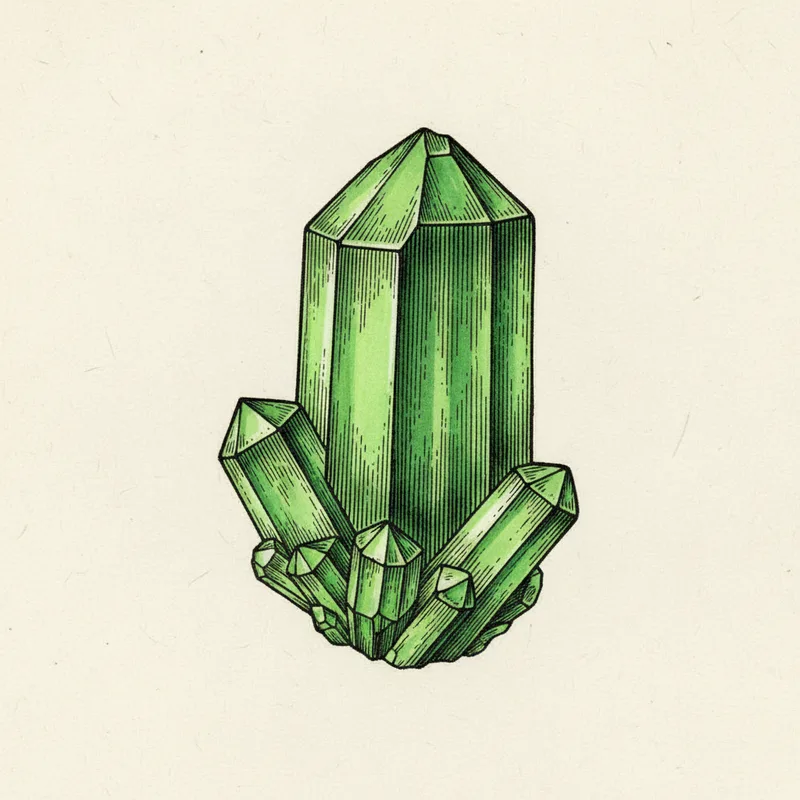
Chrome Diopside
The Siberian Emerald
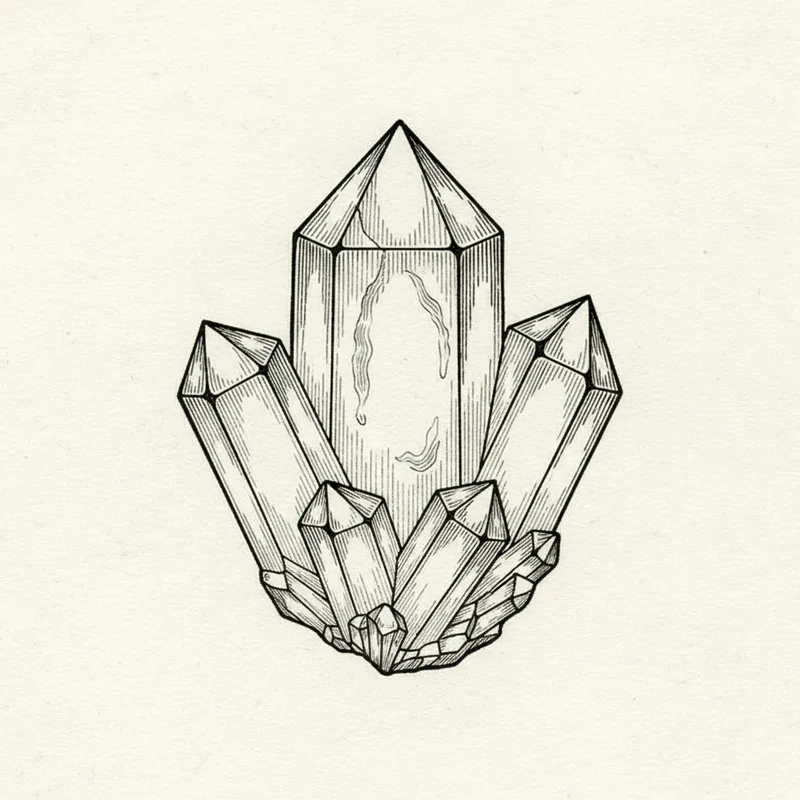
Clear Quartz
The Master Healer
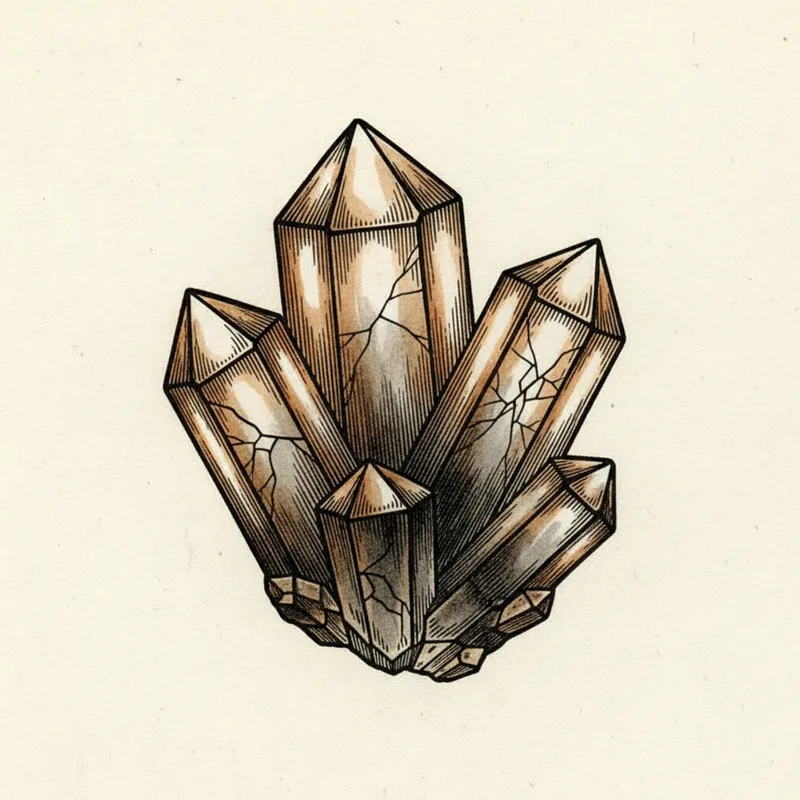
Smoky Quartz
The Grounding Stone
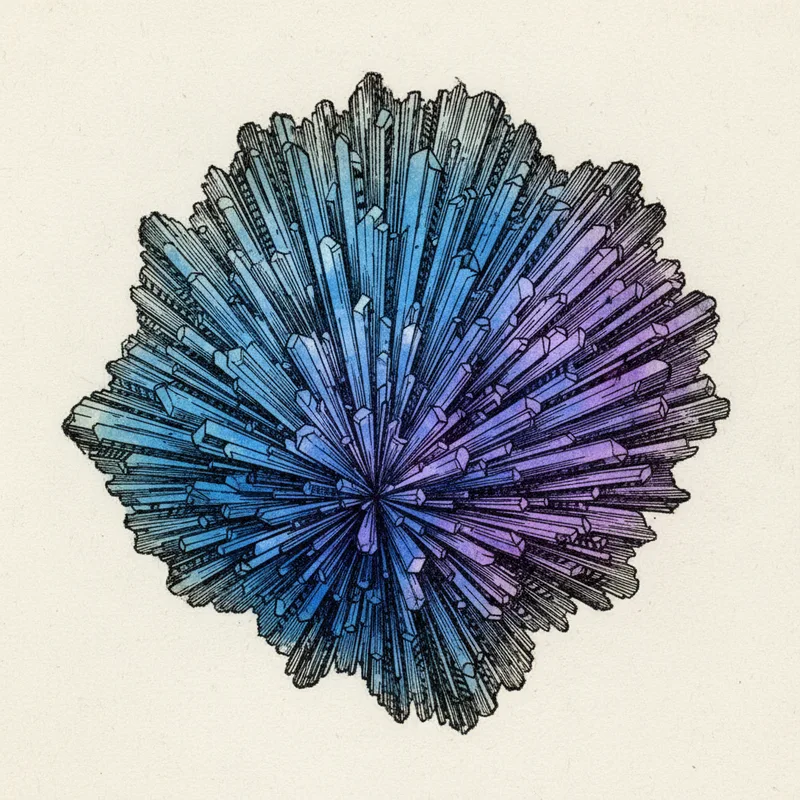
Dumortierite
The Patience Stone
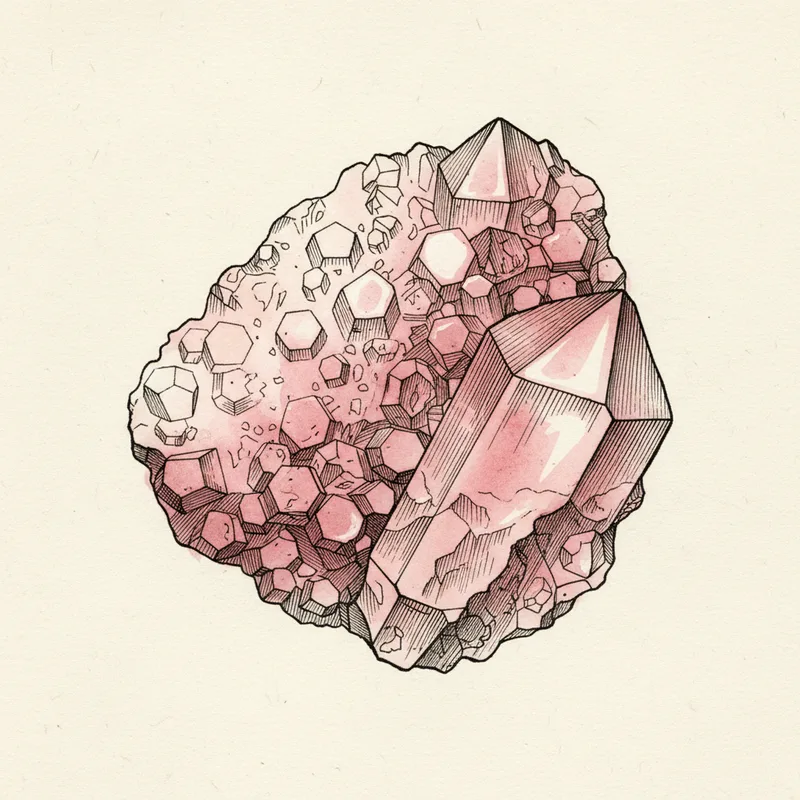
Rose Quartz
The Stone of Unconditional Love
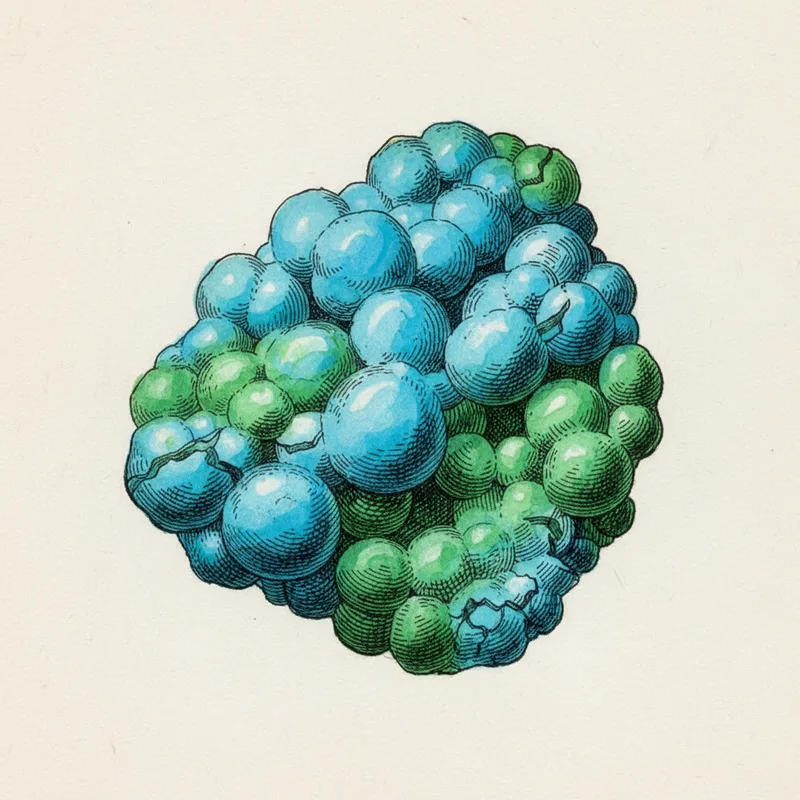
Chrysocolla
The Teaching Stone
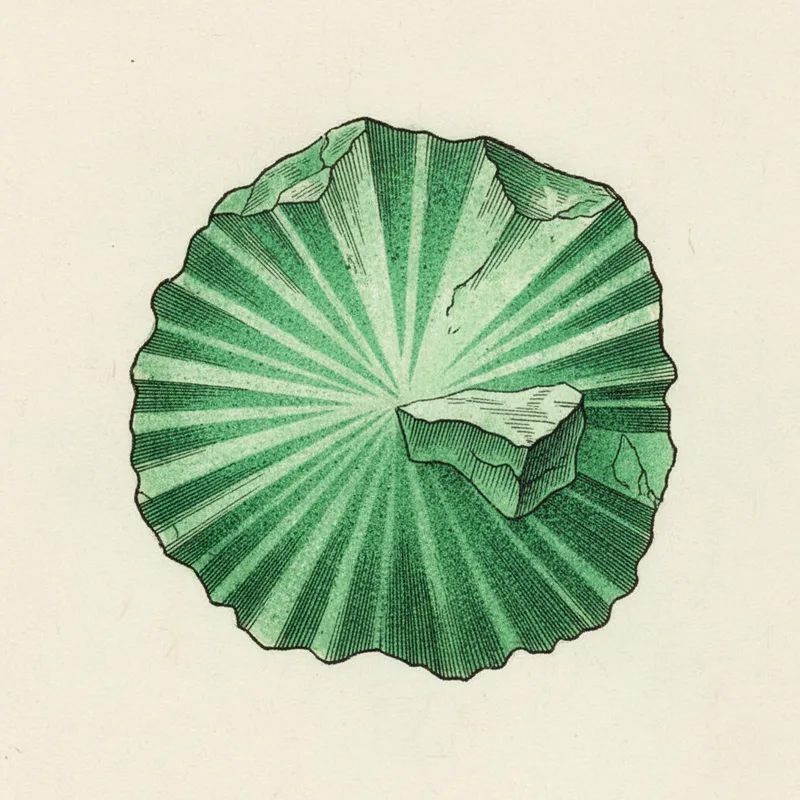
Aventurine
The Stone of Opportunity
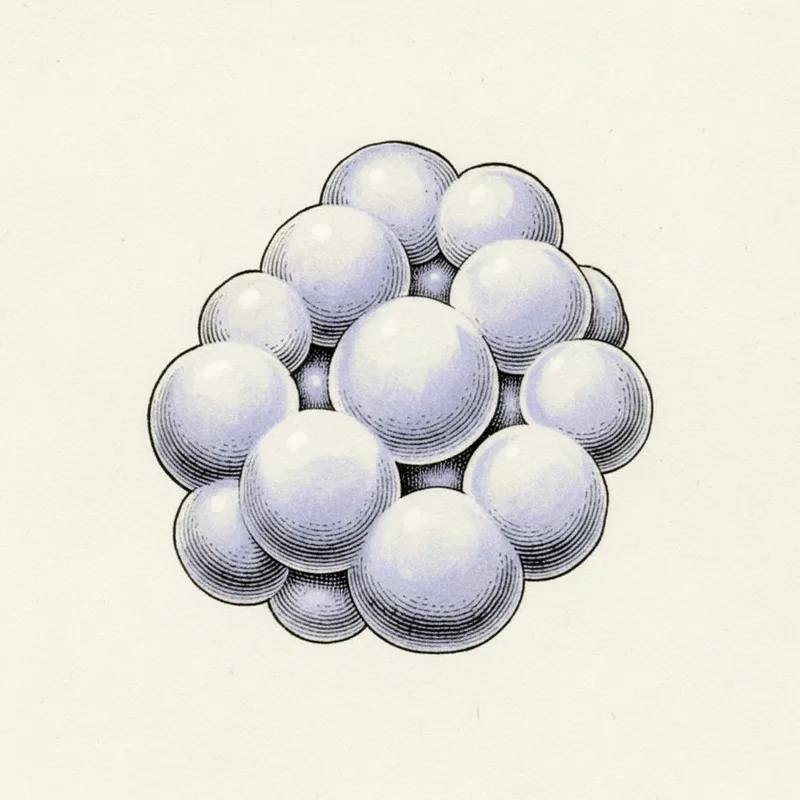
Chalcedony
The Mother of Agates

Orthoclase
The Foundation Feldspar
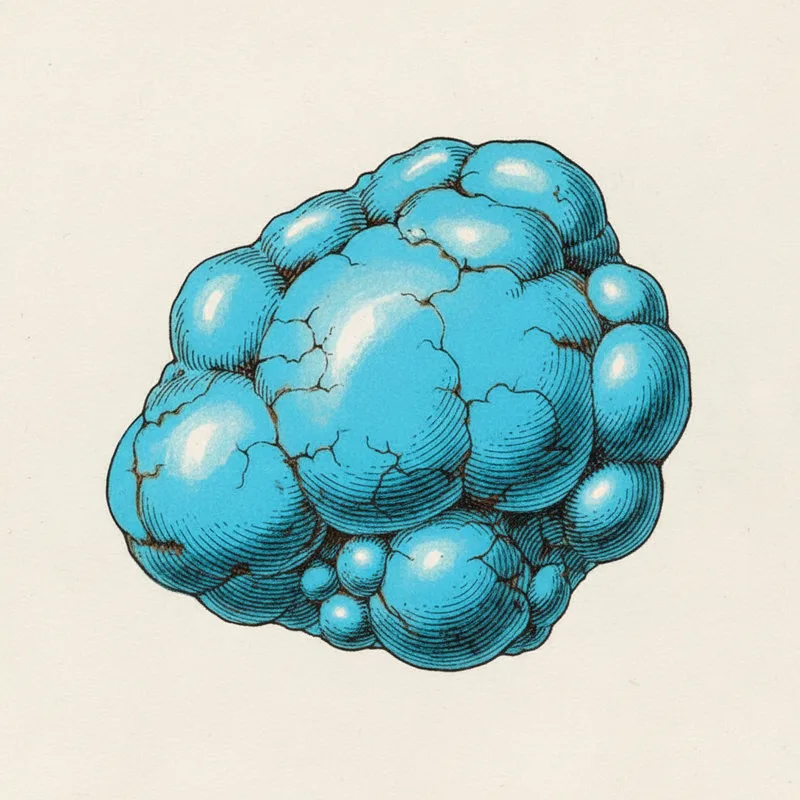
Turquoise
The Sky Stone
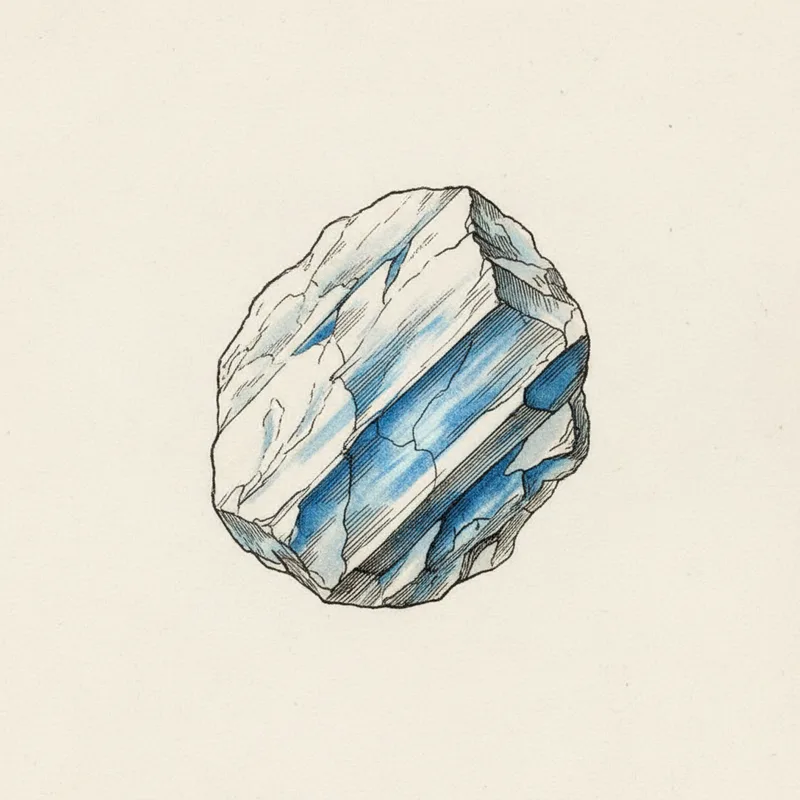
Moonstone
The Traveler's Stone