Lepidolite for Anxiety: Science vs. Lore
Key Takeaway: Lepidolite genuinely contains lithium, the same element used in psychiatric mood stabilizers. But you cannot absorb therapeutic lithium by holding a rock. The lithium is locked inside a stable crystal lattice and does not enter your bloodstream through skin contact. That said, the connection between this mineral and emotional calm is more interesting than a simple debunking, and the reasons people find comfort in lepidolite are worth understanding honestly.
This is the crystal that makes every geologist pause during the "crystals and anxiety" conversation.
Lepidolite contains lithium. Real lithium. The same element that revolutionized psychiatric medicine in the mid-20th century and remains one of the most effective treatments for bipolar disorder and treatment-resistant depression. When crystal healing practitioners recommend lepidolite for anxiety and emotional balance, they are pointing at a mineral that genuinely contains a mood-stabilizing element.
That fact deserves more than a passing mention in a listicle. It deserves a full, honest examination. What is lepidolite, exactly? How much lithium is in it? Can any of that lithium actually reach your brain? And if not, why do so many people report feeling calmer when they carry this lilac stone?
We covered lepidolite briefly in our guide to the best crystals for anxiety. This post goes deeper. Much deeper. Because this is one of those rare cases where the science and the tradition intersect in a way that's genuinely worth exploring, even if the conclusion isn't what either side expects.
The Lithium Question
Let's start with the headline fact, because it's true and it matters.
Lepidolite is a lithium-bearing mica mineral. Its chemical formula is K(Li,Al)₃(AlSi₃)O₁₀(F,OH)₂. That "Li" in the formula isn't decorative. Lepidolite can contain up to 3.5% lithium oxide by weight, making it one of the most significant lithium ore minerals on Earth. In fact, before the development of spodumene and brine extraction, lepidolite was a primary industrial source of lithium. Mining operations in Portugal, Zimbabwe, and Australia have all processed lepidolite specifically for its lithium content.
So yes. When someone picks up a piece of lepidolite and says "this crystal contains lithium," they are scientifically correct.
Now the honest part.
The lithium in lepidolite is not the same thing as the lithium in a prescription bottle. Lithium carbonate (Li₂CO₃), the pharmaceutical form, works because it is soluble. You swallow it. It dissolves in your stomach. It enters your bloodstream through the walls of your small intestine. It crosses the blood-brain barrier. It modulates neurotransmitter activity at carefully controlled doses that are monitored through regular blood tests, because the therapeutic window is narrow and lithium toxicity is a real medical concern.
Lepidolite is a stable aluminosilicate mineral. The lithium atoms are locked inside its crystal lattice, bonded to aluminum, silicon, oxygen, and fluorine in a rigid sheet structure. Holding this mineral against your skin delivers essentially zero lithium to your body. The mineral does not dissolve on contact with skin. It does not release lithium vapor. It does not transmit lithium through some kind of energetic transfer. The lithium is structurally imprisoned in the crystal, and your skin is not a solvent capable of dismantling an aluminosilicate lattice.
To put numbers on it: a typical therapeutic dose of lithium carbonate is 600 to 1200 milligrams per day, delivering about 113 to 226 milligrams of elemental lithium. Even if you could somehow extract all the lithium from a 50-gram tumbled lepidolite stone (which, again, you cannot through skin contact), you would get roughly 600 milligrams of lithium oxide, which contains about 280 milligrams of elemental lithium. That's roughly equivalent to one day's therapeutic dose. But that lithium is bonded into a crystal structure that has remained stable for millions of years inside a pegmatite. Your palm sweat is not going to accomplish what geological time could not.
This is not a minor caveat. It is the central scientific fact of the entire conversation.
And yet. The story does not end there, because the relationship between lepidolite and emotional wellbeing is more nuanced than "it doesn't work." We'll get to why. But first, you should know what you're actually holding.
What Lepidolite Actually Is
Lepidolite belongs to the mica group of minerals, the same family as muscovite (the clear, flaky mica you've probably seen in granite) and biotite (the dark mica). If you've ever peeled apart thin, flexible sheets from a rock, you've handled mica. That sheet-like habit is the defining characteristic of the group, and it comes from the crystal structure itself.
Micas are phyllosilicates, meaning their silicon-oxygen tetrahedra are linked into continuous two-dimensional sheets. These sheets are bonded together by layers of metal ions, and the bonds between sheets are weaker than the bonds within them. This is why micas cleave so perfectly along flat planes. You can peel a mica crystal into thinner and thinner sheets, down to fractions of a millimeter, along what mineralogists call perfect basal cleavage.
Think of it like a book. The pages (silicate sheets) are strongly bonded within themselves. The binding between pages (interlayer bonds, primarily through potassium ions) is weaker. You can separate the pages from each other much more easily than you can tear a page in half. This is the fundamental architecture of every mica mineral, and it is what gives lepidolite its distinctive texture, its pearly luster, and its fragility.
Lepidolite's formula, K(Li,Al)₃(AlSi₃)O₁₀(F,OH)₂, tells you what's in those layers. Potassium (K) sits between the sheets, holding them together loosely. Lithium (Li) and aluminum (Al) occupy octahedral sites within the sheets. Silicon (Si) and aluminum share the tetrahedral sites. Fluorine (F) and hydroxyl groups (OH) sit at the corners. It's a complex sandwich of elements, and the lithium is deep inside that sandwich, not sitting on the surface waiting to be absorbed.
The crystal system is monoclinic, meaning the unit cell is slightly tilted rather than perfectly rectangular. In well-formed crystals, this produces a pseudo-hexagonal outline, as the monoclinic symmetry closely approximates hexagonal geometry. But most lepidolite you'll encounter in the crystal market is massive, meaning it formed as a fine-grained aggregate rather than as individual crystals. The massive material polishes more readily and is far more common.
Hardness is just 2.5 to 3 on the Mohs scale. For comparison, your fingernail is about 2.5. You can scratch lepidolite with a copper coin. A steel knife will dig into it easily. This is a soft, delicate mineral that demands gentle handling, and if you're used to the durability of quartz-family crystals like amethyst or smoky quartz, lepidolite will surprise you with how easily it marks.
The specific gravity is 2.84, which means it feels noticeably lighter in the hand than most silicate minerals of comparable size. It's denser than water but lighter than, say, a piece of agate or jasper. This lightness is consistent with the open, layered crystal structure, where sheets are held together by relatively sparse interlayer bonding.
The streak is white, meaning that when you scratch lepidolite across unglazed porcelain, it leaves a white powder regardless of the specimen's surface color. The luster is vitreous (glassy) on crystal faces and pearly on cleavage surfaces, that distinctive soft sheen that mica minerals are known for.
And that color. Lepidolite ranges from pale lilac to deep violet-purple, sometimes with pink or rose tones. The color comes primarily from manganese substituting into the crystal structure, replacing some of the aluminum in the octahedral sites. Different concentrations of manganese produce the range of colors you see in the market, from barely-there lavender to rich, saturated grape purple. Some specimens also show a gray-violet tone when manganese content is lower. Occasionally, iron substitution creates brownish or yellowish tints, but these are uncommon and not what people typically seek out.
Some specimens show a lovely pearly luster on fresh cleavage surfaces, the light catching those perfect flat planes and reflecting with a soft, almost opalescent glow. Hold a cleavage flake of lepidolite up to the light and you'll see it transmit a warm purple, the same way a thin sheet of muscovite mica transmits golden light. It is, by any standard, a beautiful mineral.
The transparency ranges from translucent to opaque depending on the thickness and grain size. Thin individual crystal flakes can be remarkably translucent, while massive polished pieces are typically opaque or only slightly translucent at the edges.
In the crystal market, you'll most often encounter lepidolite as polished palm stones, tumbled pieces, or slabs cut from massive fine-grained aggregates. Individual crystals with visible hexagonal mica habit are rarer and more prized by mineral collectors. The massive material polishes well, but always remember that the mica structure is still there underneath. A polished lepidolite can delaminate along those cleavage planes if it's stressed, dropped, or exposed to water over time. That beautiful layered structure is also its weakness.
Where Lepidolite Comes From
Lepidolite forms in granitic pegmatites. These are the geological environments where the most exotic and element-rich minerals on Earth crystallize, and understanding them helps explain why lepidolite is the way it is.
A pegmatite begins as a granitic magma, rich in silica, aluminum, and alkali metals. As the main body of granite crystallizes, the remaining melt becomes increasingly concentrated with water, dissolved gases, and rare elements that didn't fit into the crystal structures of the common minerals (quartz, feldspar, mica) that crystallized first. Lithium is one of those leftover elements. So are boron, beryllium, cesium, tantalum, and niobium.
This residual melt is extremely fluid because of all the dissolved water and fluorine. It penetrates cracks and voids in the surrounding rock and crystallizes slowly, sometimes producing individual crystals measured in meters rather than millimeters. Pegmatites are where you find giant tourmaline crystals, aquamarine, spodumene (kunzite), and lepidolite. They are geological treasure chests.
The technical name for this process is fractional crystallization. As each mineral crystallizes from the melt, it removes certain elements and leaves others behind. Lithium, because of its small ionic radius and +1 charge, does not substitute easily into most early-crystallizing minerals. It gets concentrated in the residual melt until conditions are right for lithium-bearing minerals to form. This is why lepidolite is almost exclusively found in pegmatites and virtually never in ordinary granite. The lithium needs to be concentrated first.
Fluorine plays a critical role too. Notice that "F" in lepidolite's formula. Fluorine lowers the viscosity and melting point of silicate melts, allowing pegmatitic fluids to remain liquid at lower temperatures and penetrate further into surrounding rock. The presence of fluorine is often the difference between a barren pegmatite (just big crystals of quartz and feldspar) and a mineralized one (loaded with lithium micas, tourmaline, beryl, and other exotic minerals). When you hold lepidolite, you're holding evidence of a fluorine-rich melt that once existed deep in the Earth's crust.
The world's most important lepidolite sources include:
Minas Gerais, Brazil. The Brazilian state of Minas Gerais is one of the great pegmatite provinces on Earth, stretching across a vast region of Precambrian metamorphic and igneous rocks. Lepidolite here occurs in large masses, often intimately associated with tourmaline, quartz, and other pegmatite minerals. The Jequitinhonha Valley and the Doce River region host dozens of lithium-bearing pegmatites. Brazilian material tends to produce the large, vibrantly colored specimens that dominate the crystal market, and the volume of production keeps prices accessible.
Madagascar. Madagascan lepidolite is prized for its fine purple color and is widely available in polished forms. The island's complex geology includes numerous lithium-bearing pegmatites, particularly in the central and southern highlands. Madagascan specimens often have a particularly rich, saturated lilac color that some collectors prefer to Brazilian material. The country exports significant quantities of polished lepidolite to the global crystal market.
California and Maine, United States. The Pala district in San Diego County, California, and the Oxford County pegmatites of Maine have both produced notable lepidolite specimens, often found alongside gem-quality tourmaline. The Stewart Mine in Pala was historically one of the most famous lithium mineral localities in North America. These localities have been mined on and off since the late 19th century, and while production is smaller than the South American and African sources, American specimens are valued by collectors for their historical significance and crystal quality.
Zimbabwe. The Bikita pegmatite in Zimbabwe is one of the world's largest lithium deposits, containing massive amounts of lepidolite alongside petalite and other lithium minerals. This is a reminder that lepidolite is not just a pretty collector's mineral. It is an industrial ore, increasingly relevant in the age of lithium-ion batteries. The Bikita deposit has been mined since the 1950s and remains a significant source of lithium.
Czech Republic. Historic European lepidolite localities exist in Bohemia, where the mineral was first described in the 18th century. The name "lepidolite" comes from the Greek word lepidos, meaning "scale," a reference to the scaly, flaky texture of mica. Czech specimens are historically important to mineralogy even though modern commercial production comes primarily from other countries.
It's worth noting that the global demand for lithium has transformed how we think about lepidolite deposits. Pegmatites that were once mined only for beautiful mineral specimens are now being evaluated as lithium sources for the battery industry. The same mineral that crystal practitioners hold for calm is being ground up to power electric vehicles. There's a poetry to that, even if it's not the kind the metaphysical community usually discusses.
The Science of What Lithium Actually Does
To understand why the lepidolite-anxiety connection is interesting (even though holding the rock doesn't deliver lithium to your brain), you need to understand what lithium actually does in the body when it IS bioavailable.
Lithium's psychiatric use has one of the stranger origin stories in medicine. In 1949, an Australian psychiatrist named John Cade was studying the urine of manic patients. He was testing the theory that mania might be caused by an excess of urea, and he needed a way to dissolve uric acid for his experiments. He chose lithium urate because it was the most soluble urate salt available. When he injected guinea pigs with lithium urate, they became markedly calm and lethargic. Cade realized the lithium, not the urate, was producing the sedation.
He began testing lithium carbonate on patients with manic episodes, and the results were dramatic. Patients who had been agitated and psychotic for years became calm and functional within days. It was one of the first effective psychiatric medications ever discovered, predating the introduction of chlorpromazine (the first antipsychotic) by several years.
The impact on psychiatry was enormous, though the adoption was slow. The United States didn't approve lithium for medical use until 1970, more than two decades after Cade's discovery, partly because lithium is a natural element that cannot be patented and therefore offered no profit incentive for pharmaceutical companies to champion it through clinical trials. Other countries adopted it faster. Denmark was prescribing lithium by the mid-1950s, based on the work of psychiatrist Mogens Schou, who conducted the first controlled clinical trials.
How lithium works in the brain is still not fully understood, which is remarkable for a drug that has been prescribed for over seventy years. The leading theories involve multiple mechanisms operating simultaneously.
Lithium appears to modulate the enzyme glycogen synthase kinase-3 (GSK-3), which plays a role in neuronal signaling and cellular resilience. Overactive GSK-3 has been linked to neuronal death and impaired neuroplasticity, and lithium's inhibition of this enzyme may explain some of its neuroprotective effects.
It influences the inositol signaling pathway, reducing the sensitivity of certain neurotransmitter receptors. The "inositol depletion hypothesis" suggests that lithium reduces the recycling of inositol, a molecule involved in signal transduction, which dampens the activity of overactive signaling cascades in neurons.
It promotes the expression of brain-derived neurotrophic factor (BDNF), a protein that supports the survival and growth of neurons. Studies have shown that long-term lithium use is associated with increased gray matter volume in certain brain regions, suggesting genuine neuroprotective effects.
And it may stabilize circadian rhythms, which are frequently disrupted in mood disorders. Lithium has been shown to affect clock gene expression and lengthen the circadian period, potentially stabilizing the sleep-wake cycle in patients whose biological clocks are disrupted.
The therapeutic dose is narrow. Blood lithium levels need to stay between approximately 0.6 and 1.2 milliequivalents per liter for bipolar disorder treatment. Below that, it's ineffective. Above 1.5, toxicity symptoms begin: tremor, nausea, confusion, diarrhea. Above 2.0, it becomes dangerous, with risk of kidney damage, cardiac arrhythmias, and seizures. This is why patients on lithium require regular blood monitoring, typically every few months for stable patients and more frequently during dose adjustments.
The point of this section is not to suggest that lepidolite can replicate these effects. It cannot. But it establishes why the connection between a lithium-containing mineral and emotional calm is genuinely fascinating from a scientific perspective, even if the mechanism that crystal traditions propose (absorption through holding) does not hold up.
There is a footnote worth mentioning, and it's a genuinely interesting one. Some epidemiological studies have found correlations between naturally occurring lithium in drinking water and lower rates of suicide, violent crime, and psychiatric hospital admissions. A 2020 meta-analysis published in the British Journal of Psychiatry examined 15 studies across multiple countries and found a generally consistent (though modest) association between higher lithium levels in public drinking water and lower suicide rates. The doses involved are far below therapeutic levels, measured in micrograms per liter rather than milligrams.
The mechanism, if the correlation is causal, remains unknown. Some researchers have proposed that even microdoses of lithium may have subtle mood-stabilizing effects when consumed consistently over a lifetime. Others argue that the correlation may be confounded by other factors (the geological conditions that produce lithium-rich water might also correlate with other environmental variables that affect mental health). The research is ongoing and the question is genuinely unsettled.
This is relevant because it suggests that even trace amounts of lithium may have some effect on mood at a population level. But "trace amounts dissolved in water that you drink daily and process through your digestive system over a lifetime" is still fundamentally different from "lithium locked in a crystal lattice that you hold in your hand." The exposure routes are not comparable. Dissolved lithium ions in water are bioavailable. Lithium atoms bonded into a crystal lattice are not.
The Traditions: What Crystal Healers Say and Why
In crystal healing traditions, lepidolite occupies a specific and consistent role. It is, above all others, the anxiety stone. The emotional balance stone. The calm-in-crisis mineral.
This is not a recent designation. Lepidolite has been specifically associated with emotional calm and stress relief in crystal healing literature for decades, well before the mineral became widely available in polished forms. Melody's "Love is in the Earth" (1991), one of the foundational texts of modern crystal healing, associates lepidolite specifically with emotional stability, reduction of stress, and support during periods of transition and change. Judy Hall's "The Crystal Bible" (2003) describes lepidolite as "extremely useful in the reduction of stress and depression" and connects it to the dissipation of negativity. Robert Simmons and Naisha Ahsian's "The Book of Stones" (2005) focuses on lepidolite's ability to bring "calm, balance, and stability" to the emotional body.
The consistency across these independently written texts is notable. Crystal healing is not a centralized tradition with an authoritative canon. Different practitioners and authors develop their own associations through personal experience, historical research, and intuition. The fact that they converge so specifically on lepidolite as the anxiety mineral suggests either a common source of information (the lithium content) or a genuine consistency in practitioners' subjective experiences with the mineral. Or, most likely, both.
The tradition assigns lepidolite to the Third Eye, Crown, and Heart chakras, linking it to both mental clarity and emotional openness. Its elemental association is Water, connecting it to emotional flow and adaptability. The zodiac sign most commonly associated with lepidolite is Libra, the sign of balance. The color connection makes intuitive sense within the system: purple and violet are the colors of the Crown and Third Eye chakras in the Hindu-derived model that most Western crystal healing uses.
Crystal practitioners recommend lepidolite specifically for:
- Anxiety and panic attacks
- Insomnia related to racing thoughts
- Emotional volatility during major life transitions (job changes, breakups, moves, loss)
- Obsessive thought patterns and rumination
- Grief and emotional processing
- Overwhelm and sensory overload
- Support during withdrawal from dependencies (sometimes recommended alongside professional treatment)
The tradition explicitly and repeatedly references the lithium content as supporting evidence. This is one of the clearest cases in crystal healing where practitioners point to a verifiable chemical fact to support a metaphysical claim. The logic, stated plainly, is straightforward: lithium is a mood stabilizer, lepidolite contains lithium, therefore lepidolite stabilizes mood. The logic is also, as we've established, scientifically incomplete, because the lithium is not bioavailable through contact.
But there is something worth noticing in how consistently and specifically lepidolite is associated with emotional calm. Many crystals get assigned broad, overlapping properties. Protection, energy, healing, love, abundance. The property lists for amethyst, rose quartz, and smoky quartz overlap significantly. Lepidolite's assignment is unusually narrow and specific: anxiety and emotional balance. It is not commonly recommended for protection, manifestation, creativity, or physical healing. It is the anxiety stone, and practitioners are remarkably focused about that.
Whether this specificity developed because of the known lithium content (a form of confirmation bias in the tradition) or whether practitioners independently arrived at this association through experiential observation is historically difficult to disentangle. The lithium fact has been widely known in the crystal community for at least three decades, which is long enough to influence a tradition.
What is clear is that the tradition is remarkably consistent. Across practitioners, across decades, across cultural contexts, lepidolite equals emotional calm. That consistency is itself a data point, even if it doesn't tell us what the tradition's proponents think it tells us.
Why Lepidolite Rituals Might Actually Help
Here's where the conversation gets more interesting than either pure skepticism or pure belief allows.
If holding lepidolite doesn't deliver lithium to your brain, but people consistently report feeling calmer when they use it, what is actually happening? The answer involves several well-documented psychological mechanisms that are genuinely effective for anxiety management, regardless of whether you believe the crystal has supernatural properties.
We explored these mechanisms in our skeptic's guide to healing crystals. Here, we'll apply them specifically to lepidolite practice.
Tactile Grounding
Cognitive Behavioral Therapy (CBT) and Dialectical Behavior Therapy (DBT) both use grounding techniques as front-line interventions for acute anxiety. The principle is simple: when your mind is racing with anxious thoughts, redirecting your attention to immediate physical sensations pulls you out of the anxiety spiral and into the present moment. The anxious mind is usually projecting into the future or replaying the past. Grounding snaps it back to right now.
Lepidolite is an unusually effective grounding object because of its specific physical properties. That mica texture is distinctive and tactilely interesting. When you hold a lepidolite palm stone and run your thumb across its surface, you can feel the subtle layers, the slight pearliness, the soft resistance that is different from any other stone. It engages your tactile attention in a way that smooth, glassy stones like amethyst or smoky quartz do not. The texture is complex enough to hold your focus, varied enough to reward continued exploration.
The softness itself is a feature for this purpose. Lepidolite yields slightly under thumb pressure in a way that harder minerals do not. There's a responsiveness to it. Combined with the layered structure and the pearly surface quality, it creates a sensory experience that is particularly well-suited to the kind of focused attention that grounding techniques require.
A therapist teaching the 5-4-3-2-1 grounding technique (identify five things you see, four you can touch, three you hear, two you smell, one you taste) might hand you a smooth stone. A lepidolite does that job and then some, because there is more to notice: the layers, the color variations, the way light plays across the cleavage surfaces.
Ritual and Structure
Anxiety thrives in formlessness and unpredictability. One of the most consistent findings in anxiety research is that structured routines and predictable rituals reduce anxiety symptoms. The specific content of the ritual matters less than its consistency and the sense of control it provides. When you feel out of control (which is what anxiety fundamentally is), predictable rituals restore a sense of agency.
When someone develops a practice of holding their lepidolite during morning meditation, placing it on their bedside table at night, or carrying it in their pocket and touching it when stress spikes, they are building exactly the kind of structured anxiety-management routine that clinical psychologists recommend. The crystal serves as an anchor for the routine, a physical object that marks the beginning and end of a calming practice.
The crystal is not the active ingredient. The routine is. But the crystal makes the routine tangible, portable, and personally meaningful in a way that abstract advice ("take three deep breaths") often does not. The crystal gives the practice a physical form you can hold.
The Power of Intentional Objects
Psychologists call it "implementation intention," the practice of linking a specific behavioral response to a specific cue. "When I feel anxious, I will hold my lepidolite and take five deep breaths" is a textbook implementation intention. The research on this technique is robust and well-replicated. People who form specific if-then plans for managing anxiety are significantly more likely to actually use their coping strategies in moments of need compared to people who simply resolve to "manage their anxiety better."
The crystal becomes a physical anchor for the intention. It's in your pocket. You can feel it through the fabric. When anxiety hits, the plan is already there, embodied in a tangible object you can reach for. You don't have to remember what to do. The object reminds you. This is not mysticism. It is behavioral psychology with a purple mineral as its tool.
The Placebo Effect Is Not "Nothing"
The placebo effect has a terrible name. It sounds like "fake" or "imaginary." In reality, the placebo effect involves measurable, physiological changes in the brain and body. When you believe something will help you, your brain can release endorphins, reduce cortisol production, lower heart rate, and modulate pain perception. These are real neurological events, observable on brain scans and measurable in blood chemistry.
If someone holds lepidolite and believes it will help with their anxiety, and they subsequently feel calmer, the calm they experience is real. The mechanism is internal rather than external, originating in their own brain rather than in the crystal, but the result is genuine. Dismissing this as "just placebo" misunderstands what placebo actually is.
The Meaning Layer
There is something psychologically powerful about choosing a mineral that genuinely contains an element used to treat mood disorders, even if the mechanism of action is different from what the tradition claims. The story of lepidolite, its lithium content, its formation in the extreme environments of granitic pegmatites, its delicate layered structure, creates a rich narrative that can be personally meaningful.
Meaning reduces anxiety. When we have a framework for understanding our emotional experiences, when we feel we have tools and knowledge and context, the formless dread of anxiety becomes something more manageable. Lepidolite's real geology provides a genuine and fascinating story to hold onto. You're holding a piece of ancient magma's last exhalation, concentrated over geological time, formed under conditions so specific that they only occur in certain types of granitic intrusions. That story has value, independent of whether the crystal "works" in the way traditions claim.
The Color Factor
Color psychology, while a less rigorous field than clinical psychology, has produced some consistent findings about the calming effects of certain hues. Purple and lavender tones are consistently rated as calming in studies on color preference and emotional response. Hospital and therapy waiting rooms frequently use these colors. Whether this is cultural or has deeper roots in visual processing is debated, but the association between purple-lavender hues and calm is cross-culturally robust.
Lepidolite is one of the most distinctively colored minerals in the crystal market. Its soft lilac is immediately distinguishable from the deeper purple of amethyst or the pink of rose quartz. That particular shade of lavender-purple occupies a calming region of the color spectrum, and simply looking at a beautiful lepidolite specimen may trigger a mild relaxation response through the visual system alone.
How to Use Lepidolite for Anxiety
Whether you approach this through the lens of crystal tradition, behavioral psychology, or simply wanting a beautiful anxiety-management tool, here are the practical ways people use lepidolite.
Carry It
A tumbled lepidolite in your pocket gives you a tactile grounding tool available at any moment. When anxiety spikes, reach for it. Focus on the weight, the texture, the layered surface. Take five slow breaths while you hold it. This is grounding technique, and it works whether or not you assign any metaphysical properties to the stone.
One practical note: because lepidolite is soft (2.5 to 3 Mohs), do not carry it loose in the same pocket as your keys, coins, or phone. It will scratch. A small cloth pouch or a dedicated pocket works well. Some people keep their lepidolite in a small drawstring bag they can reach into without removing the stone from the bag.
Bedside Practice
Place a lepidolite on your bedside table and incorporate it into a sleep routine. Hold it for two to three minutes before bed while doing a body scan meditation (progressively relaxing each muscle group from toes to forehead). The mineral becomes a signal to your brain that it's time to wind down. Over time, the association strengthens, and the sight or feel of the stone begins to trigger the relaxation response automatically.
This is classical conditioning, and it is well-documented. When you consistently pair a neutral stimulus (the lepidolite) with a relaxation response (the meditation), the stimulus eventually begins to trigger the response on its own. Pavlov's dogs salivated at the bell. Your nervous system can learn to calm at the feel of a familiar stone.
Breathing Exercise Tool
Lie down. Place a flat lepidolite on your chest, over your sternum. As you breathe slowly and deeply, focus on the stone rising and falling with your breath. This gives you a visual and tactile anchor for diaphragmatic breathing, which is one of the fastest-acting anxiety reduction techniques available. The weight of the stone on your chest provides gentle pressure that some people find calming, related to the same principle behind weighted blankets.
Count: inhale for four counts, hold for two, exhale for six. The exhale being longer than the inhale activates the parasympathetic nervous system (your body's "rest and digest" mode). The stone rising and falling with your breath gives you something external to focus on, pulling your attention away from anxious thoughts and into your body's rhythmic movement.
Meditation Anchor
Hold a lepidolite during seated meditation as your object of focus. Instead of watching the breath (which is the most common instruction), focus on the physical sensations in your hand: the weight, the texture, the temperature. When your mind wanders (and it will), gently return your attention to the stone. This is standard mindfulness practice, and the crystal simply provides a more engaging focal point than breath alone for people who find pure breath meditation difficult.
Many people who struggle with meditation find that having a physical object to focus on makes the practice more accessible. The crystal gives your hands something to do, gives your attention something to anchor to, and provides a clear "I am meditating" signal that helps establish the practice as a distinct activity rather than "sitting and trying to think about nothing."
Pair It With Other Stones
Crystal traditions often recommend combining lepidolite with other minerals for anxiety. Common pairings include amethyst for mental calm, rose quartz for self-compassion, black tourmaline for grounding, and blue lace agate for communication anxiety. From a psychological perspective, a curated collection of anxiety-management stones is simply a more elaborate version of the same grounding and ritual practices described above. More tools, more engagement, more ritual structure, more sensory variety.
If you're going to combine stones, just remember to store the lepidolite separately from harder minerals. That 2.5 Mohs hardness means amethyst (7), tourmaline (7 to 7.5), and even agate (6.5 to 7) will all scratch it over time.
Set Intentions, Not Expectations
The most productive way to work with lepidolite (or any crystal) for anxiety is to treat it as a tool for practices that have evidence behind them: grounding, breathing, ritual, intention-setting. Do not expect the stone to eliminate your anxiety through its composition or energy. Do expect that consistent use of the stone as part of a calming practice can, over time, build a genuinely effective coping mechanism.
And if your anxiety is severe, persistent, or interfering with your daily life, please see a mental health professional. Lepidolite is not a substitute for therapy or medication. A crystal can complement professional care. It cannot replace it.
Caring for Lepidolite
This is important, because lepidolite is more fragile than most crystals people work with. Treating it like you'd treat an amethyst or a piece of quartz will damage it.
Hardness: 2.5 to 3 Mohs. This is very soft. Your fingernail can scratch it. A copper coin will definitely scratch it. Do not store lepidolite loose in a bag or pouch with harder stones, because every crystal in there above a 3 on the Mohs scale will scratch the surface. Quartz (7), amethyst (7), tourmaline (7 to 7.5), even apatite (5) will all damage lepidolite over time. Store it separately, ideally wrapped in a soft cloth or in its own compartment in a divided tray. If you carry it daily, expect some surface wear over time, especially on edges and corners.
Water can cause delamination. Remember that mica structure with its perfect basal cleavage? Water can seep between those layers and, over time, cause the stone to begin separating. The interlayer bonds (held together primarily by potassium ions) are susceptible to hydration, meaning water molecules can wedge themselves between the silicate sheets and gradually force them apart. Do not soak lepidolite. Do not run it under water for extended periods. Brief, gentle cleaning with a barely damp cloth is fine. Ultrasonic cleaners, steam cleaning, and saltwater baths are all out of the question.
This is particularly important because many crystal care guides recommend "cleansing" crystals under running water or in saltwater. These methods are appropriate for quartz, agate, and other durable minerals. They will damage lepidolite. If you follow cleansing traditions, use methods that don't involve water: moonlight, sound, selenite charging plates, or sage smoke are the traditions that won't harm your stone. Check our crystal care guide for more detailed guidance.
Avoid prolonged direct sunlight. Some lepidolite specimens can fade with extended UV exposure. The manganese-based color centers can be affected by intense ultraviolet light over time. Display pieces are fine in normal room lighting, but don't leave your lepidolite on a windowsill in direct sun for weeks at a time. A drawer or display case away from direct sunlight is ideal for long-term storage.
Handle with care. Because lepidolite can delaminate along cleavage planes, dropping it on a hard surface may cause it to crack or split in a way that other crystals would not. The same structural property that makes it beautiful (those smooth, pearly cleavage faces) makes it vulnerable to mechanical shock. If you're using lepidolite as a daily carry stone for anxiety management, accept that it will develop character over time, small scratches and worn edges that are evidence of use rather than damage.
Some commercial lepidolite pieces, especially those sold as jewelry or worry stones, are coated with a thin layer of resin or lacquer to stabilize the surface and prevent flaking. This is a practical treatment and not a cause for concern, but it should be disclosed by the seller. If your lepidolite has an unusually glossy, plastic-looking surface, it may be stabilized. This coating does protect the stone from water damage and surface scratching, so for a daily carry piece, it's actually beneficial.
What to Look for When Buying
Lepidolite is affordable and widely available. Fakes are rare, because the mineral is inexpensive enough that faking it is not economically worthwhile. But there are still things to know.
Color
The most desirable color is a rich, saturated lilac to purple. Pale lavender pieces are common and perfectly genuine but tend to be less expensive. Some specimens show a beautiful pink-purple or rose tone that is particularly popular. Gray-violet pieces exist but are less sought after in the crystal market. The color comes from manganese, and its intensity varies with the manganese content of the specific pegmatite where the specimen formed. There is no "right" color. Choose what appeals to you, because the visual appeal is part of what makes any crystal practice work.
Texture and Structure
Look for visible mica texture. Even in polished pieces, you should be able to see (and sometimes feel) the layered, slightly sparkly structure of the mica. This is both beautiful and diagnostic. If a purple stone is completely smooth and glassy with no mica texture, it is not lepidolite. It might be amethyst, charoite, sugilite, or dyed glass.
The best lepidolite for anxiety practice tends to be polished palm stones or flat worry stones where the mica texture is still visible but the surface is smooth enough to hold comfortably. Raw lepidolite with exposed crystal faces is beautiful for display but can be flaky and impractical for pocket carry.
Source Material
Brazilian lepidolite tends to come in larger masses with vibrant color and is the most common origin in the market. Madagascan material often has a slightly different purple tone and polishes beautifully. Both are excellent. Some sellers market "Madagascan lepidolite" as premium, but the source affects the character of the piece, not its authenticity or quality in any fundamental way. Don't pay a premium for origin alone.
Price
Tumbled lepidolite runs $3 to $8 for a pocket-sized piece. Polished palm stones and slabs are $8 to $40 depending on size and color intensity. Collector specimens with visible crystal habit (individual hexagonal mica books) or matrix pieces with associated tourmaline can run $30 to $200 or more. If someone is charging significantly more than these ranges for ordinary polished lepidolite, they are overcharging. This is not a rare mineral.
For anxiety practice, a $5 to $10 tumbled stone is perfectly adequate. You don't need a museum specimen. You need something that feels good in your hand, that you find beautiful, and that you'll actually carry. Spend the money you save on therapy.
Common Misidentifications
The most common issue is not faking but misidentification. Dyed rose quartz is occasionally sold as lepidolite, though the texture difference is obvious to anyone who knows what mica looks like. Dyed rose quartz is smooth and glassy. Lepidolite is layered and slightly sparkly. They feel completely different in the hand.
Charoite (swirled pattern, harder, waxy luster) and sugilite (harder, no flaky texture) are sometimes confused with lepidolite at a glance, but neither has the mica sheet structure. Charoite in particular has a distinctive swirling, fibrous appearance that is quite different from lepidolite's layered sparkle once you know what to look for.
The simplest test: can you see or feel mica layers? Is it soft enough to scratch with your fingernail? If both are yes, it's almost certainly lepidolite. No other common purple mineral has that combination of softness and mica texture. If you can't scratch it with your nail, it's too hard to be lepidolite, regardless of color.
The Bottom Line
Lepidolite contains lithium. Lithium is a proven mood stabilizer. But you cannot absorb lithium from holding a crystal, because the element is bonded into a stable aluminosilicate lattice that does not dissolve through skin contact.
Does that mean lepidolite is useless for anxiety? No. It means lepidolite is a beautiful, geologically fascinating grounding tool that can anchor real anxiety-management practices, breathing, mindfulness, ritual, intention-setting, practices that have genuine evidence behind them. The crystal is the vehicle, not the medicine. The practice is the medicine.
The traditions surrounding lepidolite arrived at something true through a different path. They identified a mineral that is genuinely connected to mood chemistry and prescribed practices (carrying it, meditating with it, holding it during stress) that genuinely reduce anxiety through well-documented psychological mechanisms. They got the mechanism wrong but the outcome substantially right.
There is no contradiction in knowing that lepidolite's lithium is not bioavailable through touch AND finding genuine comfort in carrying a piece. The science and the practice coexist. The geology is real and fascinating. The anxiety-management techniques that crystal practice facilitates are evidence-based. The mineral is beautiful and tactilely satisfying. None of these things require you to believe something that isn't true.
If you want to carry a piece of Earth's deep history in your pocket, a fragment of a lithium-bearing pegmatite that crystallized from exotic melt in the roots of an ancient mountain range, and use it as a tactile reminder to breathe, slow down, and return to the present moment, that is a perfectly reasonable thing to do.
Just don't flush your prescriptions.
Crystals in This Article
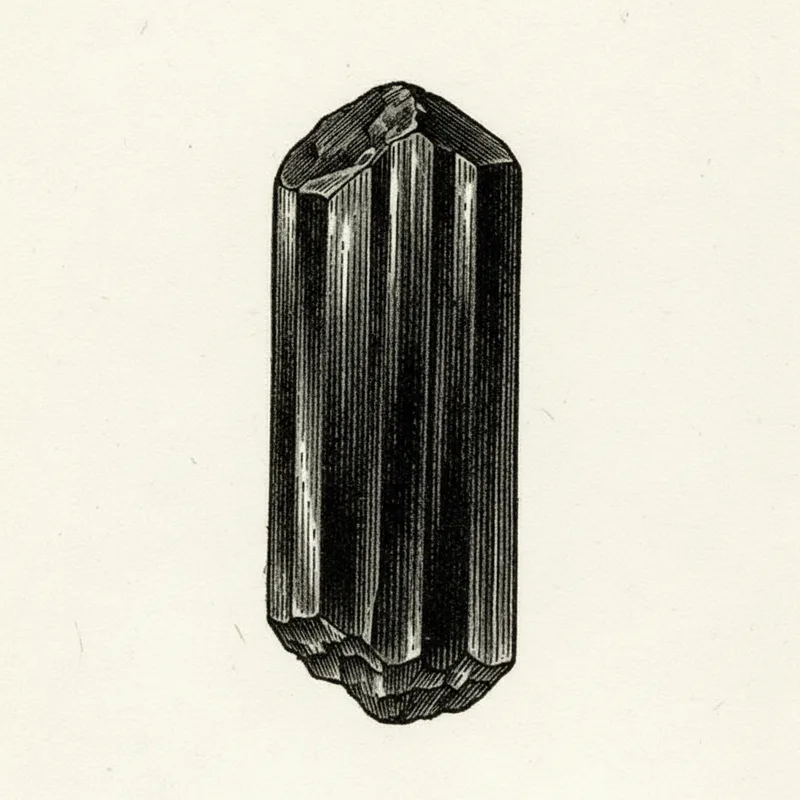
Black Tourmaline
The Shield Stone
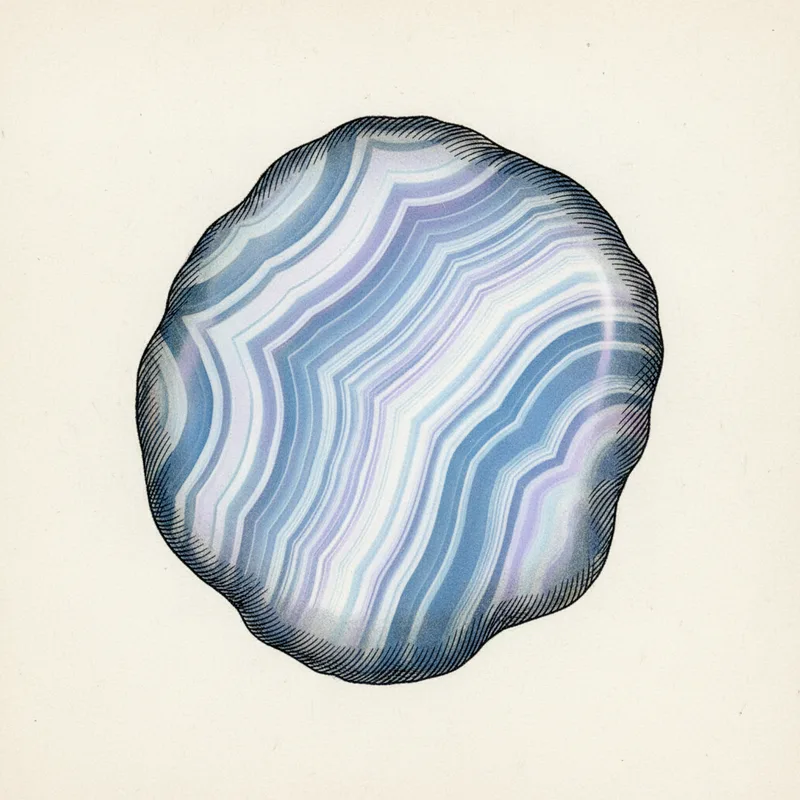
Blue Lace Agate
The Communication Stone
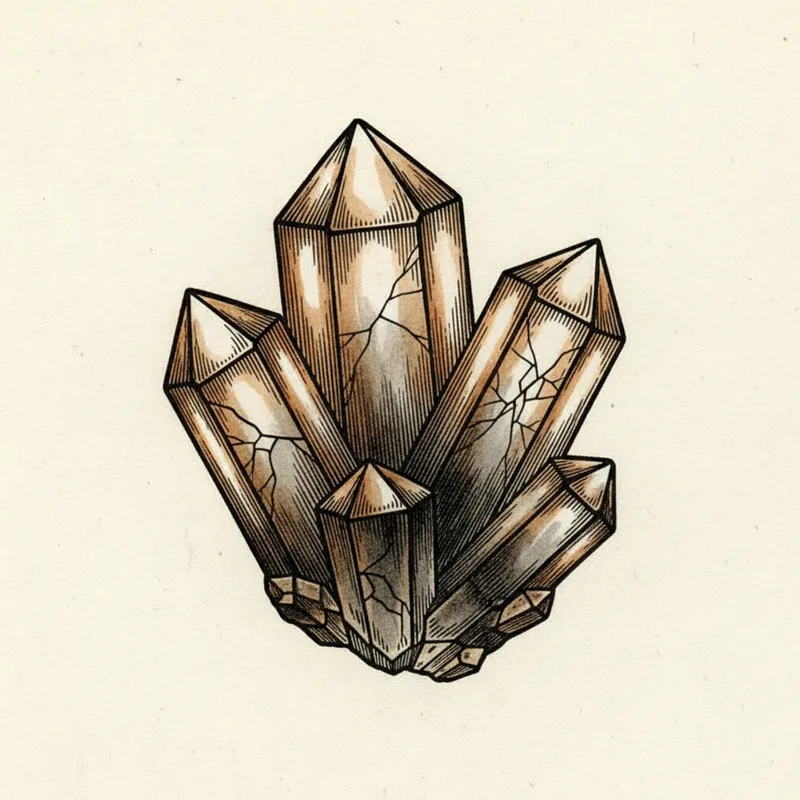
Smoky Quartz
The Grounding Stone
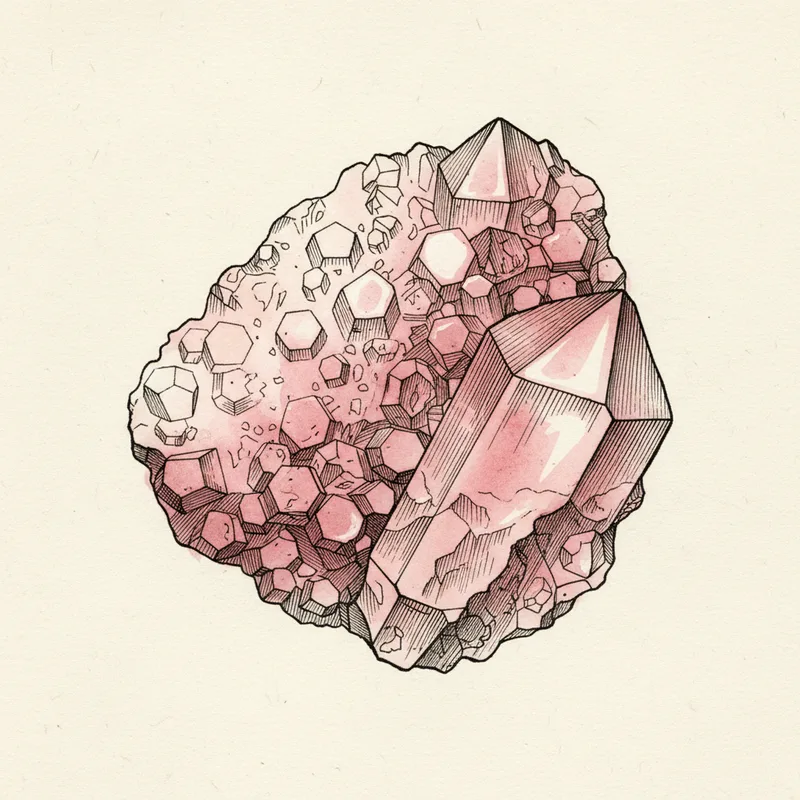
Rose Quartz
The Stone of Unconditional Love
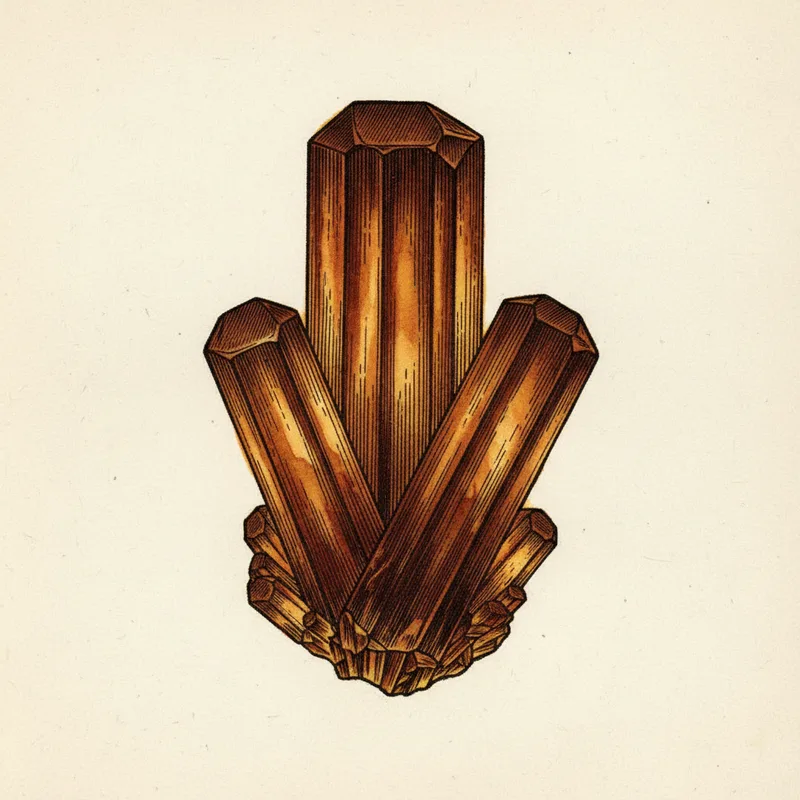
Tourmaline
The Rainbow Stone
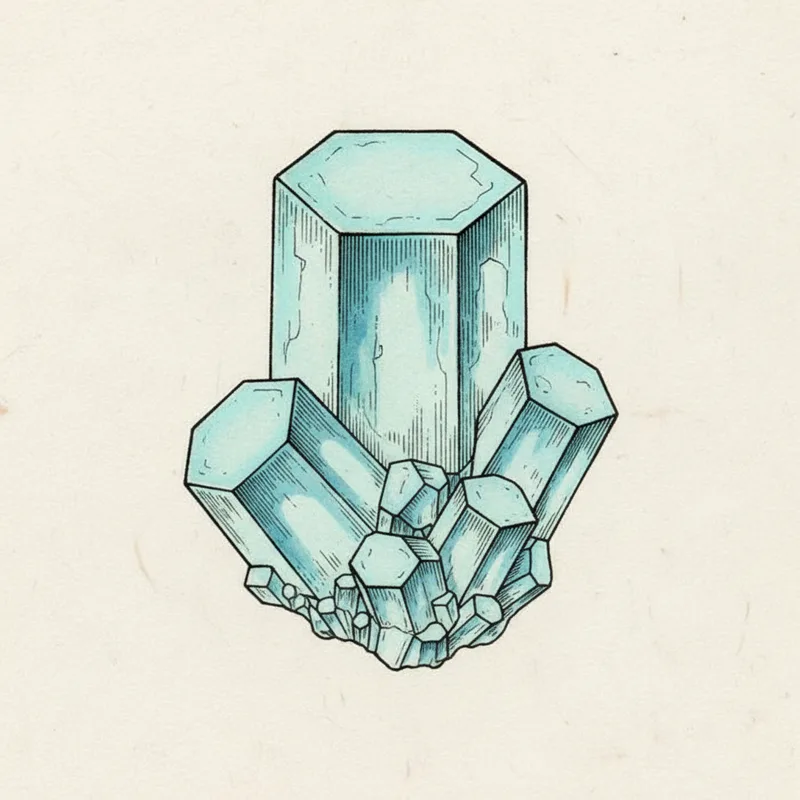
Aquamarine
The Sailor's Gem
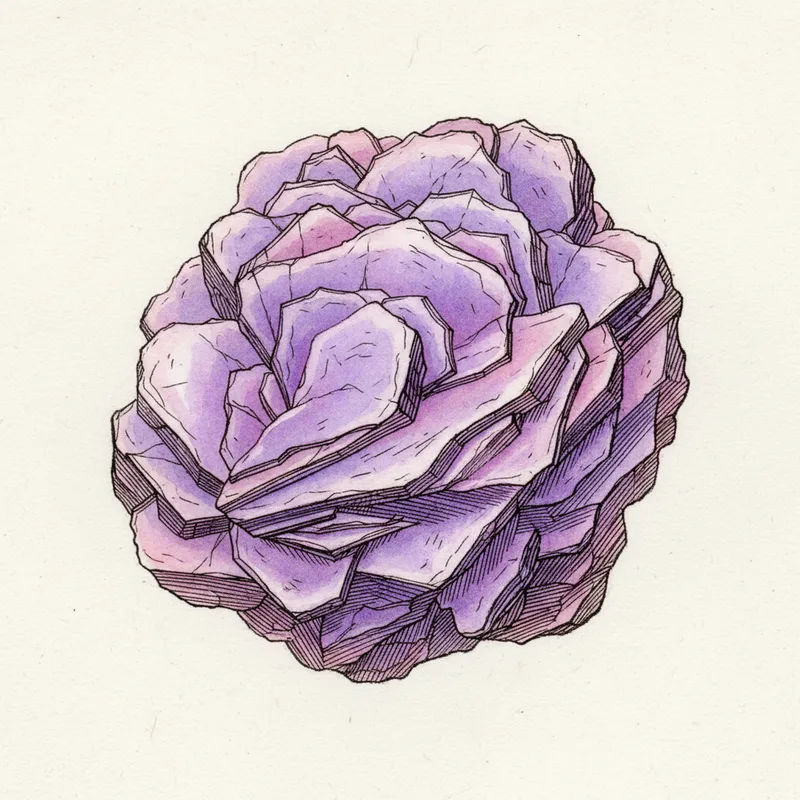
Lepidolite
The Peace Stone
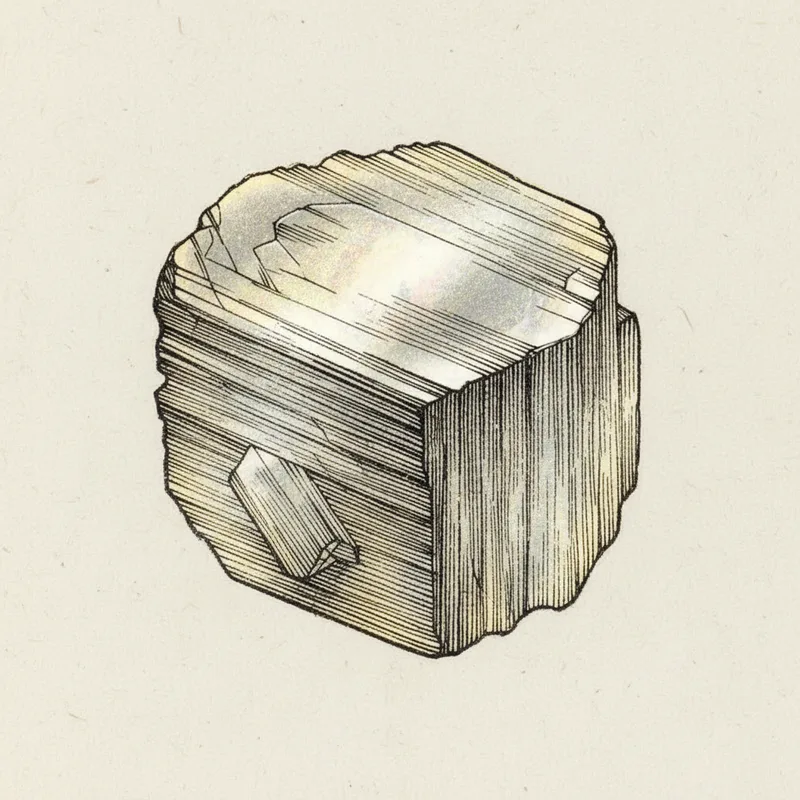
Muscovite
The Silver Mica

Spodumene
The Lithium Giant
Amethyst
The Stone of Spiritual Wisdom
Selenite
The Liquid Light
Charoite
The Stone of Transformation