Quick Facts
Formation & Origin
Sphalerite is zinc sulfide - the primary ore mineral of zinc and one of the most common sulfide minerals. It forms in hydrothermal vein deposits alongside galena, pyrite, and calcite, and in sedimentary-hosted massive sulfide deposits.
What makes sphalerite remarkable as a gemstone is its optical dispersion - the ability to split white light into spectral colors. Sphalerite's dispersion (0.156) is more than three times that of diamond (0.044). This means faceted sphalerite produces more 'fire' (rainbow flashes) than any other natural gemstone. Spanish honey sphalerite from Santander, when expertly faceted, produces a light show that makes diamond look restrained.
The problem is that sphalerite is extremely soft (3.5) and has perfect cleavage in six directions, making it both difficult to facet and impractical for most jewelry. It's a collector's gemstone - beautiful to look at under controlled conditions but too fragile for daily wear.
Identification Guide
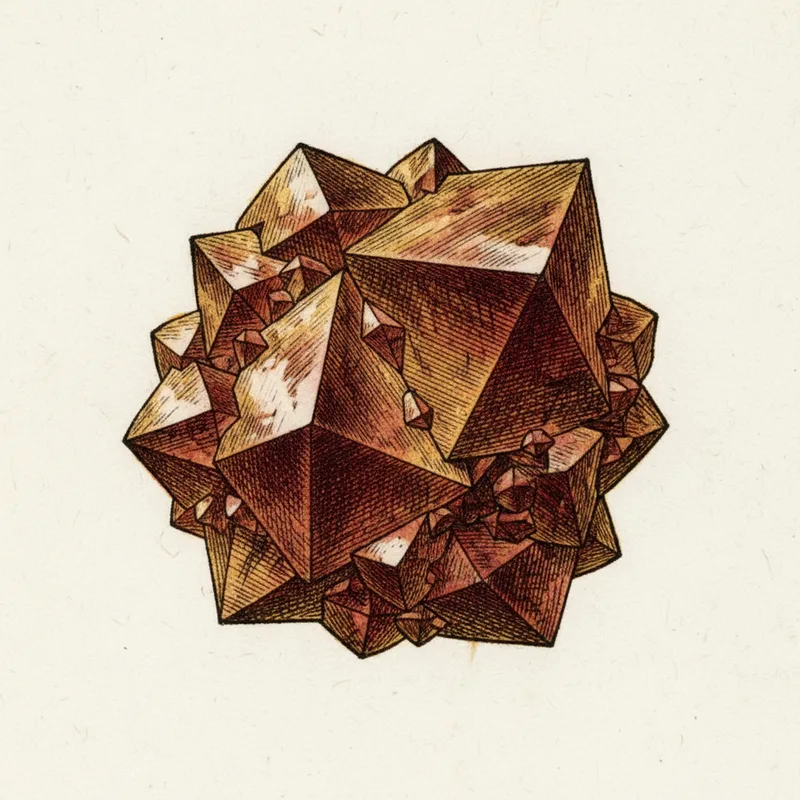
Sphalerite is identified by its adamantine to resinous luster, perfect dodecahedral cleavage (six cleavage directions), high specific gravity (4.09), and characteristic honey yellow to dark brown color. Gem-quality transparent sphalerite shows extraordinary fire in faceted stones.
Distinguish from amber (organic, much lighter, no cleavage), citrine (much harder at 7, no cleavage), and cassiterite (much harder at 6-7, higher SG). Sphalerite's combination of adamantine luster, dodecahedral cleavage, and high density is diagnostic.
Spotting Fakes
Gem sphalerite from Spain is valuable enough that glass imitations exist. Glass lacks sphalerite's extreme dispersion and characteristic cleavage. CZ (cubic zirconia) can mimic the fire but has different specific gravity and hardness. For faceted gems, the extraordinary fire combined with softness and visible cleavage confirm sphalerite. Lab reports are worthwhile for expensive faceted pieces.
Cultural & Metaphysical Traditions
Presented as cultural traditions, not scientific evidence
Sphalerite's name comes from the Greek 'sphaleros' meaning treacherous - because it was frequently mistaken for galena but yielded no lead when smelted, frustrating miners. In modern crystal practice, its extraordinary fire and dispersion are associated with creative inspiration, energy, and personal power. Its fragility is seen as a reminder that the most brilliant things in life require careful handling. Sphalerite is a niche stone in the metaphysical market, known mainly to serious collectors.
Where It's Found
World's finest gem-quality honey sphalerite
Excellent crystal specimens
Classic mining district specimens
Dark crystals with galena
Price Guide
Good to Know
Scratch test: At hardness 3.5, Sphalerite can be scratched with a copper coin. Handle gently and keep away from harder stones in your collection.
Sources: Found in 4 notable locations worldwide, from Spain to Bulgaria.
Heft test: Sphalerite has a specific gravity of 4.09 - noticeably heavier than quartz. You'll feel the density when you pick it up.
Related Minerals
Lead sulfide, commonly found with sphalerite
Iron sulfide, another common sulfide associate
Same ZnS composition, different crystal structure
Famous for fire, but sphalerite has 3x more
Explore More
Sulfide Minerals
The Creative Collection
Has three times diamond's fire. Associated with creative brilliance and the energy to pursue ambitious projects.
Mohs Hardness Scale
See where Sphalerite sits on the scale
Crystal Care Guide
Water safety, sunlight, and handling tips
Stay in the loop
From the Almanac
Updates from Crystal Almanac, when there’s something worth sharing.