Malachite vs Chrysoprase: Two Very Different Greens
Key Takeaway: Compare the distinct dark green banding of heavy malachite with the translucent, glowing apple green of chrysoprase. Chrysoprase is far harder and better for everyday jewelry.
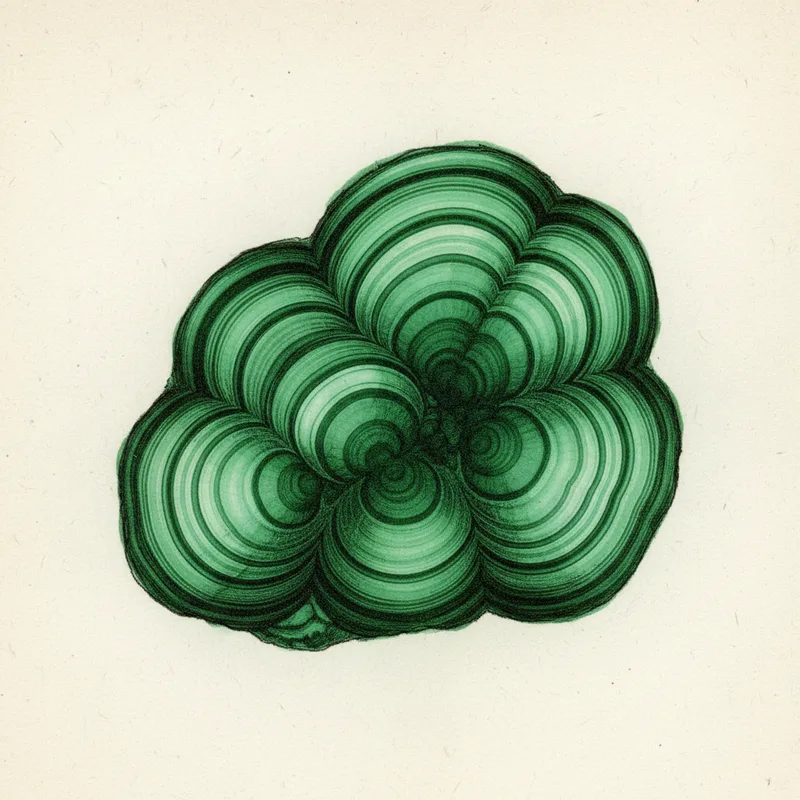
Malachite is an opaque, heavy copper mineral famous for its swirling bands of light and dark green. Chrysoprase is a hard, translucent variety of chalcedony quartz that glows with a solid, bright apple-green color derived from nickel. They look entirely different, with malachite being heavy and patterned, and chrysoprase being hard and glowing.
At a Glance
| Feature | Malachite | Chrysoprase |
|---|---|---|
| Hardness | 3.5 to 4 | 6.5 to 7 |
| Chemical Formula | Cu₂CO₃(OH)₂ | SiO₂ (with Nickel) |
| Crystal System | Monoclinic | Trigonal (Microcrystalline) |
| Color Range | Light, medium, and dark banded green | Mint green to deep apple green |
| Price Range | $10 to $40 per pound | $5 to $50 per carat |
| Best For | Carvings, inlay, protected pendants | Rings, fine jewelry, daily wear |
How They Form
Malachite is a copper carbonate that forms in the shallow oxidation zones of copper deposits. As carbonated water interacts with copper minerals in the earth, malachite slowly precipitates out of the solution. It typically forms inside caves or cavities as stalactites or botryoidal (bubbly) masses. Because it builds up layer by layer over thousands of years, with slightly different concentrations of copper in each layer, it develops the spectacular, concentric light and dark green banding it is famous for.
Chrysoprase has a completely different chemical makeup. It is a variety of chalcedony, which is a microcrystalline quartz. While most green stones in the mineral kingdom get their color from chromium or iron, chrysoprase is colored by trace amounts of nickel. It forms in deep cracks and veins of serpentine rocks that are highly weathered. The silica-rich solutions carrying the nickel slowly solidify into dense, hard, translucent veins of green quartz.
How to Tell Them Apart
You will not confuse these two in person. Malachite is completely opaque. You cannot see through it, even at the thinnest edges. It is defined by its striking patterns, stripes, bullseyes, and whorls of alternating green shades. It is also quite heavy due to its high copper content. Note that fake malachite is common. Manufactured malachite is usually made from polymer clay or resin, and you can spot it because the bands are separated by harsh, solid black lines rather than natural shades of dark green.
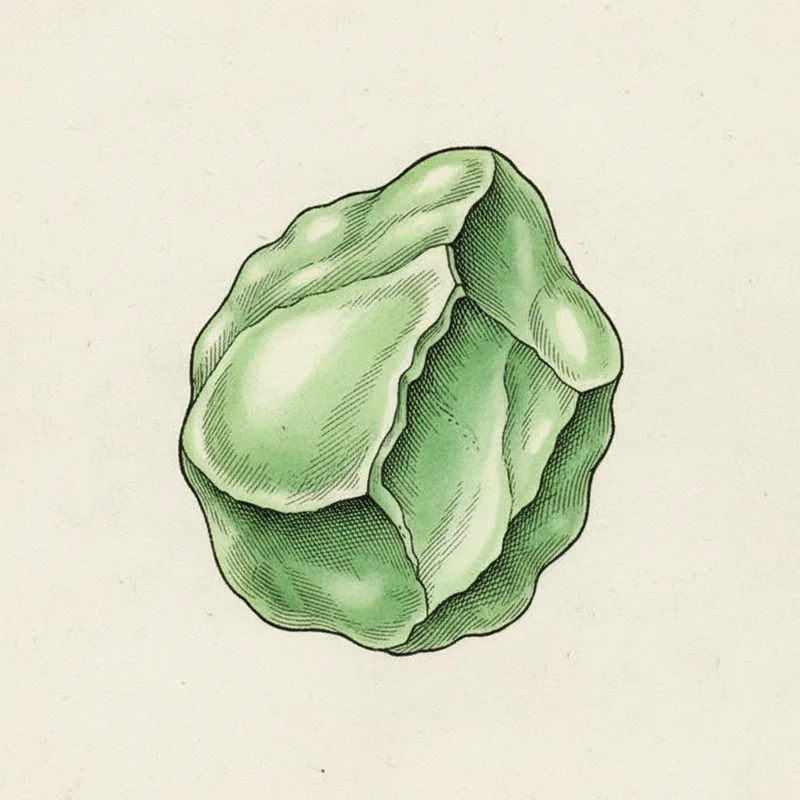
Chrysoprase is solid in color with no banding. It is translucent, meaning light passes through it, giving it a soft, glowing appearance that rivals high-quality jade. It looks like a drop of green water frozen in stone.
Price & Value
Malachite is beautiful but abundant, especially from mines in the Democratic Republic of the Congo. It is relatively inexpensive, though value increases for pieces with highly uniform, perfectly centered bullseye patterns.
High-quality chrysoprase is rare and highly sought after. Because of its stunning color and high translucency, top-grade chrysoprase from Australia is sometimes referred to as "Australian Jade" and can be quite expensive. It is one of the most valuable varieties of chalcedony, fetching prices far higher than standard malachite.
Which Should You Choose?
For an everyday ring, chrysoprase is the absolute winner. Its hardness of 7 means it will resist scratches and stay polished for years. Malachite is very soft and will easily scratch, dull, or even chip if worn on the hands. Furthermore, malachite reacts poorly to acidic environments, including sweat, which can ruin its polish. Save malachite for beautiful earrings, pendants, or display specimens where its mesmerizing patterns can be safely admired.
Crystals in This Article
Keep Reading
Stay in the loop
From the Almanac
Updates from Crystal Almanac, when there’s something worth sharing.