Quick Facts
Formation & Origin
Serpentine is a group of minerals that form through the hydration and metamorphism of ultramafic rocks - iron and magnesium-rich rocks from the Earth's mantle. When oceanic crust is thrust onto continental margins (a process called obduction), the mantle rocks are exposed to water and undergo serpentinization - a chemical reaction where olivine and pyroxene minerals absorb water and transform into serpentine.
This process is geologically significant: serpentinization releases hydrogen gas and heat, and may support deep subsurface microbial life. Some scientists have proposed that serpentinization on early Earth could have provided the chemical energy for the origin of life.
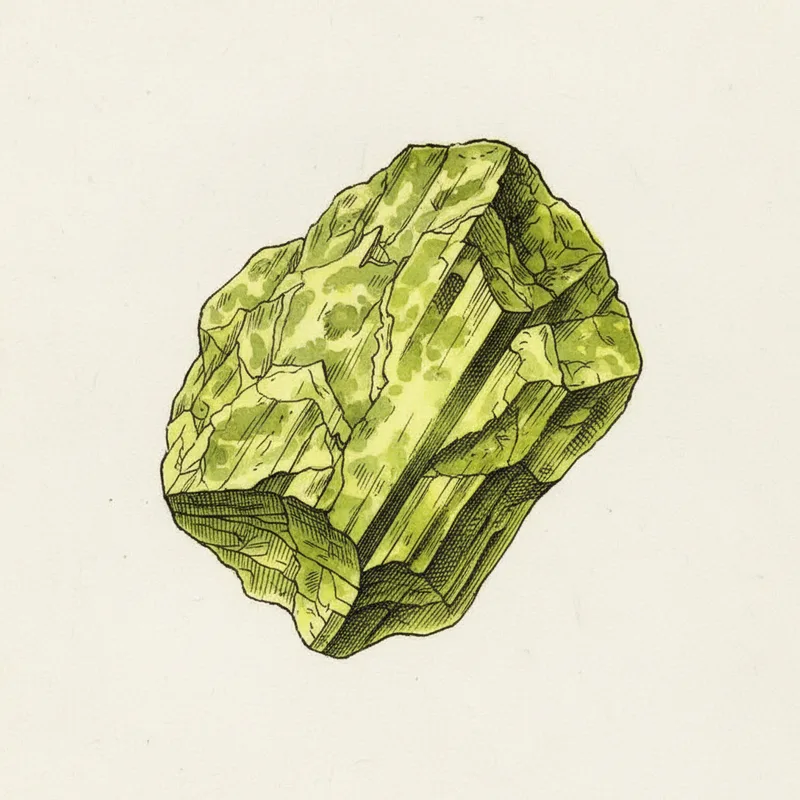
Serpentine ranges from translucent lime green (antigorite and chrysotile varieties) to dark, waxy olive green (lizardite). The name comes from the Latin 'serpentinus' meaning 'resembling a serpent' - the mottled green color and sometimes scaly texture reminded early mineralogists of snakeskin. Bowenite, the hardest and most translucent variety, is carved as a jade substitute in some traditions.
Identification Guide
Serpentine is identified by its greasy to waxy luster, green color, low hardness (3-5 depending on variety), and association with ultramafic rocks. It feels soapy or slippery to the touch.
Distinguish from jade (much harder at 6-7, denser), green marble (fizzes in acid), and soapstone (even softer at 1-2). Serpentine is commonly mislabeled as 'new jade' in the crystal market - it's a completely different mineral. The waxy feel and low hardness are the quickest distinguishing tests.
Spotting Fakes
Serpentine itself isn't faked, but it's frequently mislabeled. 'New jade,' 'olive jade,' 'Korean jade,' and 'Styrian jade' are all serpentine, not jade. This matters because genuine jade (jadeite or nephrite) is significantly more valuable. If you're told something is jade and it feels waxy-soft and scratches easily with a knife, it's likely serpentine. NOTE: Some serpentine varieties (chrysotile) are a form of asbestos. Polished serpentine specimens are safe to handle, but cutting or grinding raw serpentine should only be done with proper respiratory protection.
Cultural & Metaphysical Traditions
Presented as cultural traditions, not scientific evidence
In Italian folk tradition, serpentine protected against snakebite and was carried as a talisman by travelers. The Maori of New Zealand use bowenite (tangiwai) as a traditional carving stone. In Mesoamerican cultures, serpentine was carved into ornamental objects and associated with the feathered serpent deity Quetzalcoatl. Modern practitioners associate it with kundalini energy (the serpent imagery aligns well), meditation, and accessing ancient wisdom.
Where It's Found
State rock of California
Fine verde antico, architectural use
Carved as 'new jade' in decorative arts
Dark green bowenite variety
Price Guide
Good to Know
Scratch test: At hardness 3.5, Serpentine can be scratched with a copper coin. Handle gently and keep away from harder stones in your collection.
Sources: Found in 4 notable locations worldwide, from United States to Afghanistan.
Heft test: Serpentine has average mineral density (2.55). It feels about as heavy as you'd expect from a stone its size.
Explore More
Mica & Sheet Silicates
Malachite vs Chrysoprase: Two Very Different Greens
Jade vs Aventurine: Spotting the True Green Stone
6 Undervalued Gemstones That Outperform Diamonds
Mohs Hardness Scale
See where Serpentine sits on the scale
Crystal Care Guide
Water safety, sunlight, and handling tips
Stay in the loop
From the Almanac
Updates from Crystal Almanac, when there’s something worth sharing.