Moonstone vs Opal: The Ethereal Stone Showdown
Key Takeaway: Moonstone produces a soft, glowing light effect called adularescence, while opal displays vivid, flashing play-of-color from light diffracting through microscopic silica spheres. They look completely different in person.
Moonstone is a feldspar mineral that exhibits a soft, glowing light effect called adularescence, which moves across the stone like moonlight. Opal is an amorphous silica containing water, and precious opal displays a vivid, flashing "play-of-color" caused by light diffracting through microscopic silica spheres. They look completely different in person and require very different levels of care.
At a Glance
| Feature | Moonstone | Opal |
|---|---|---|
| Hardness | 6 to 6.5 | 5.5 to 6.5 |
| Chemical Formula | (Na,K)AlSi₃O₈ | SiO₂·nH₂O |
| Crystal System | Monoclinic | Amorphous (None) |
| Color Range | Colorless, white, peach, or gray with blue/white sheen | Any background color with rainbow flashes |
| Price Range | $2 to $30 per carat | $20 to $5,000+ per carat |
| Best For | Pendants, earrings, occasional-wear rings | High-end pendants, carefully worn statement jewelry |
How They Form
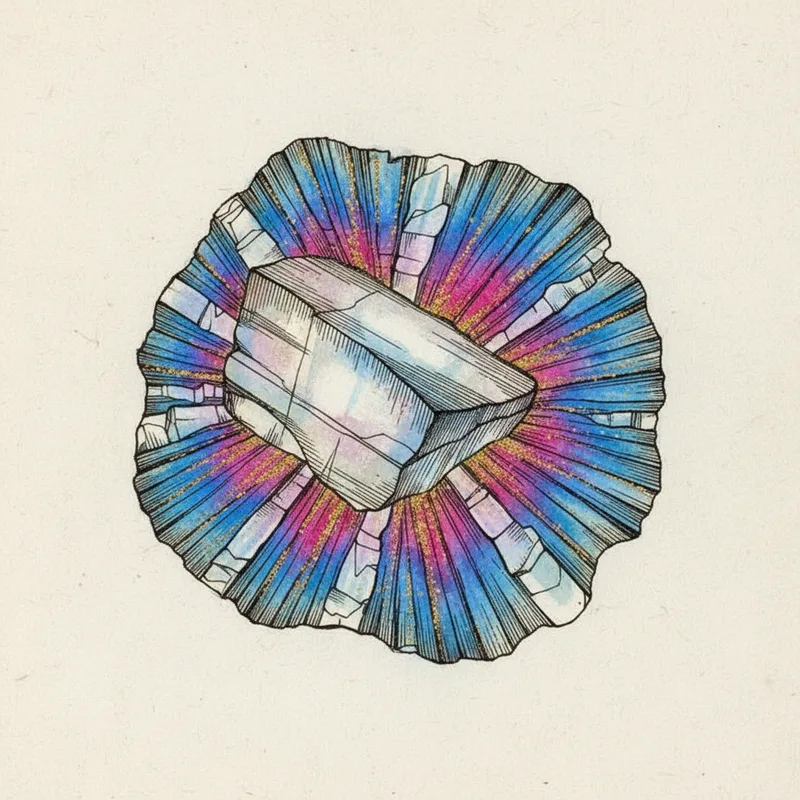
Moonstone is a member of the feldspar group, which makes up more than half of the Earth's crust. It forms in igneous rocks like pegmatites. The magic of moonstone comes from its cooling process. As the molten rock cools, two different types of feldspar, orthoclase and albite, intergrow in alternating, microscopic layers. When light enters the stone, it hits these alternating layers and scatters, creating the floating, billowy light effect known to geologists as adularescence.
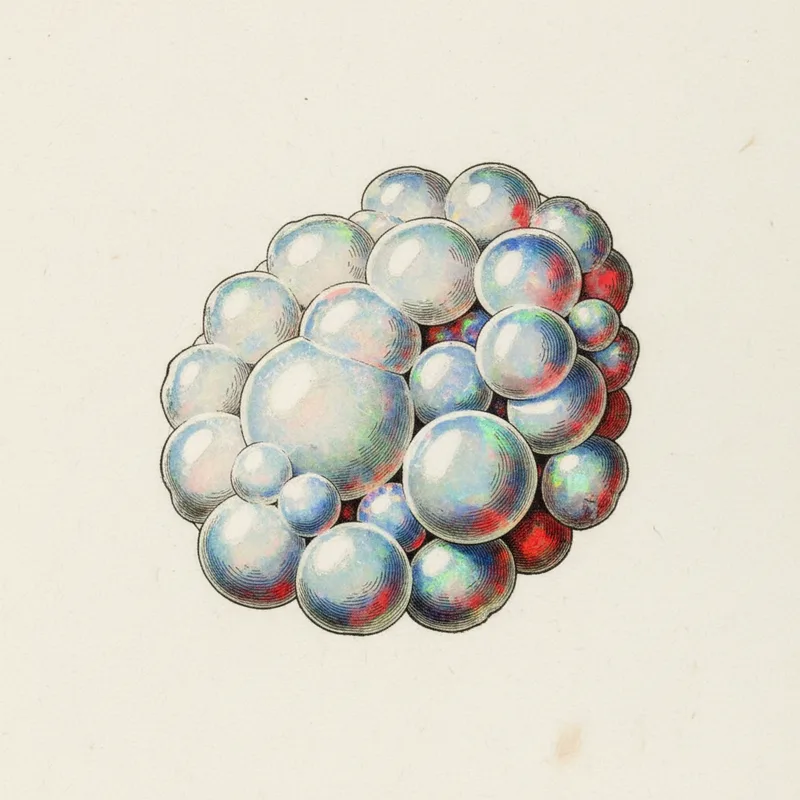
Opal has a much wetter history. It is a mineraloid, meaning it lacks a true crystalline structure. Opal forms when water picks up silica from sandstone and carries it into cracks and voids in the Earth. As the water evaporates over thousands of years, it leaves behind a deposit of silica gel. In precious opal, this silica forms perfectly stacked, uniform microscopic spheres. When light passes through the gaps between these spheres, it diffracts into brilliant flashes of spectral colors.
How to Tell Them Apart
You will rarely confuse the two if you look at how they handle light. Moonstone has a directional sheen. The body of the stone is usually cloudy or semi-translucent, and a soft, uniform blue or white light glides across the surface as you tilt it. It does not sparkle, and it does not show distinct rainbow colors.
Precious opal looks like a tiny galaxy or a stained-glass window. As you move the stone, distinct patches or pinpoints of red, green, blue, and yellow flash on and off. If you are looking at an "opalite" stone that looks perfectly clear with a milky blue sheen and a slight orange tint when held to the light, you are actually looking at manufactured glass. Opalite glass is frequently sold as a fake for both moonstone and opal, but a jeweler's loupe will quickly reveal tiny, perfectly round air bubbles inside the glass.
Price & Value
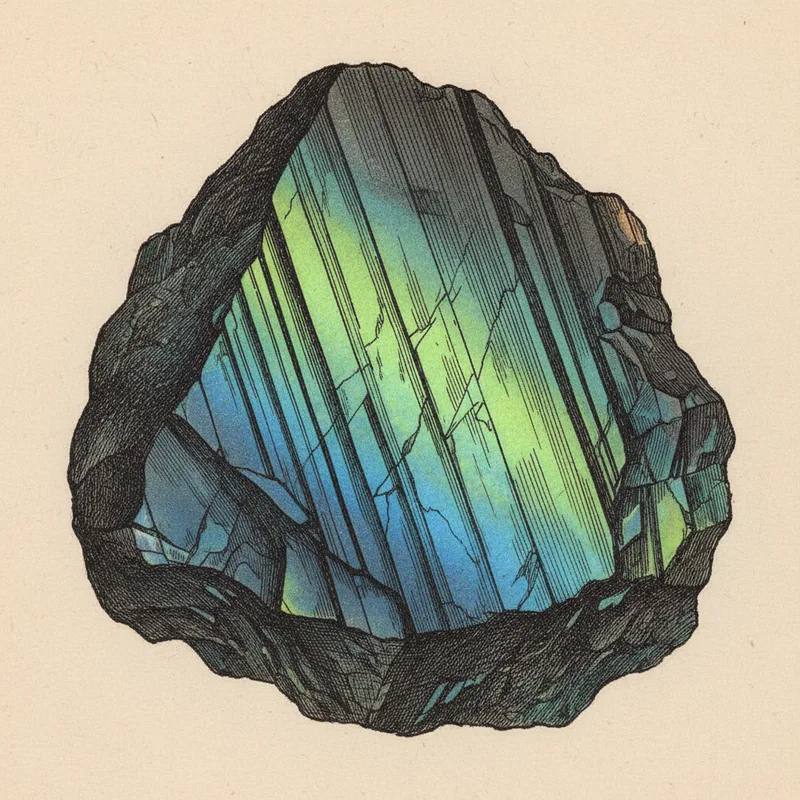
Moonstone pricing depends heavily on the transparency of the background and the intensity of the blue sheen. "Rainbow moonstone" is technically a variety of labradorite, but it dominates the moonstone market. Completely transparent moonstones with a strong blue flash command the highest prices, yet remain accessible to most collectors.
Opal valuation is incredibly complex. It depends on the body color (black opals from Australia are the most valuable), the brightness of the flashes, the pattern of the colors, and the presence of red, which is the rarest color in opal. A top-tier black opal can rival diamonds in price, while common white opals with weak fire are very affordable.
Which Should You Choose?
Moonstone is excellent if you prefer a subtle, elegant, and ethereal look. It is also more affordable and slightly more durable than opal. Opal is for the collector who wants a show-stopping, colorful center stone. Keep in mind that opals contain water and can crack, a process called crazing, if exposed to extreme temperature changes or dry environments. Both stones are relatively soft and are best suited for necklaces or earrings rather than everyday rings.
Crystals in This Article

Keep Reading
Stay in the loop
From the Almanac
Updates from Crystal Almanac, when there’s something worth sharing.