Best Crystals for New Year Intentions 2026
Key Takeaway: Setting intentions for a new year is a powerful psychological tool, and choosing a crystal to anchor that intention gives it a physical form you can see and touch daily. Here are the crystals most closely associated with common New Year goals, examined through the lens of what they actually are geologically, why they've been linked to these intentions across cultures, and how to buy them without getting ripped off.
A New Year intention is a commitment made visible. Writing it down helps. Telling someone helps more. And placing a physical object on your desk, nightstand, or pocket that represents that intention is one of the oldest human practices for keeping abstract goals tangible.
Crystals have served this function for thousands of years across cultures that never had contact with each other. The ancient Egyptians carried lapis lazuli for wisdom. Roman soldiers wore carnelian for courage. Chinese jade traditions span over 8,000 years of documented cultural significance.
You don't need to believe a crystal transmits energy to benefit from this practice. Behavioral psychology is clear: environmental cues that remind you of your goals increase goal-directed behavior. A crystal on your desk is an environmental cue. What matters is that you choose one, assign it meaning, and let it do its job as a daily reminder.
Here are the best matches for 2026's most common intentions, along with the real geology behind each stone.
For Abundance and Financial Goals
Citrine
Citrine has been called "the merchant's stone" across European and Asian trading traditions since at least the 17th century. Merchants kept citrine in their cash boxes, and the association between this golden-yellow quartz and financial prosperity is one of the most consistent in global crystal traditions. Chinese feng shui traditions place citrine in the southeast "wealth corner" of a home or office, a practice that has spread globally.
The geology deserves your attention here, because the citrine market has a transparency problem. Natural citrine is genuinely rare. It's quartz (SiO₂) colored by a specific type of iron-based color center, different from amethyst's. Natural citrine ranges from pale, smoky yellow to warm honey tones. It forms primarily in Brazil, Zambia, and Madagascar in hydrothermal veins where specific iron concentrations and natural radiation produce the yellow color.
What fills most of the citrine market is heat-treated amethyst. Take an amethyst (purple quartz with iron color centers) and heat it to 300-450°C, and those color centers restructure, shifting the absorbed wavelengths from yellow-green to blue-violet. The result: the purple disappears and a yellow-orange color emerges. This treated material tends toward a darker, more orange or burnt-yellow color compared to natural citrine's pale champagne. Both are real quartz. The chemistry is genuine. But knowing the difference matters for your wallet.
How to tell them apart: natural citrine has a pale, champagne-to-smoky yellow hue that's relatively uniform. Heat-treated material tends toward deeper orange or burnt yellow, and often has a white or chalky base where the amethyst wasn't fully converted. If it looks like burnt orange and has a bright white base, it's heat-treated amethyst. If it's a gentle, transparent champagne yellow throughout, it's more likely natural.
What to buy for 2026: A small natural citrine point (pale yellow, translucent) for $10-25 makes a beautiful desk piece. If budget is tight, a heat-treated citrine tumble ($3-8) works perfectly as an intention anchor. Just know which you're buying.
Pyrite
Pyrite is the other "abundance" crystal, and its symbolism is literally built into its appearance. Those metallic golden cubes look like tiny ingots of gold, and the association is ancient. The name comes from the Greek "pyr" (fire) because pyrite sparks when struck against flint, but the visual connection to gold made it a prosperity talisman across medieval European and Chinese traditions.
Pyrite is iron disulfide (FeS₂), crystallizing in the isometric system. The near-perfect cubes that come from the Spanish deposits at Navajún, La Rioja, formed in Jurassic-age calcareous mudstone over roughly 150 million years. Each cube is a natural expression of iron and sulfur atoms arranging themselves into the lowest-energy cubic configuration. The faces of these cubes often display fine parallel striations, alternating between perpendicular orientations on adjacent faces, a surface feature caused by oscillation between cubic and pyritohedral growth forms during crystallization.
One practical note: pyrite can oxidize over time, especially in humid environments. The iron sulfide reacts with moisture and oxygen to form iron sulfate and sulfuric acid, a process known as pyrite disease in museum conservation. Keep your pyrite specimens in a dry environment and handle them with clean, dry hands. A light coat of mineral oil or Renaissance Wax can slow the process.
What to buy for 2026: A natural pyrite cube ($10-30 depending on size) is both a mineralogical specimen and a striking desk accessory. The geometry alone starts conversations. Look for specimens with sharp, well-defined edges and minimal surface oxidation (avoid pieces with rusty brown patches).
For Calm and Mental Health
Amethyst
Amethyst is the default recommendation for calm across virtually every crystal healing tradition, and the cultural history runs deep. The ancient Greek word "amethystos" means "not intoxicated," and Greeks carved amethyst drinking vessels in the belief that they prevented drunkenness. The broader metaphor stuck: amethyst became synonymous with clear-headedness, emotional control, and calm under pressure.
Geologically, amethyst is quartz (SiO₂) with iron (Fe³⁺) impurities that have been exposed to natural gamma radiation from surrounding rock. This radiation creates color centers, specific lattice defects that absorb yellow-green wavelengths and transmit the violet you see. The best amethyst comes from the Paraná flood basalts of southern Brazil and Uruguay, where 130-million-year-old gas cavities in volcanic rock became the geodes now mined in enormous quantities.
Amethyst is also one of the safest crystals to buy as a beginner. The market is well-supplied, fakes are relatively uncommon (glass imitations exist but lack color zoning), and even small investments yield beautiful specimens. Uruguay and Brazil produce the majority of the world's gem-quality amethyst, with Uruguayan material generally showing the deepest, most saturated purple.
What to buy for 2026: A polished amethyst palm stone ($5-15) for a nightstand or meditation spot. The deep purple Uruguayan material is particularly beautiful and still affordable. For a more dramatic statement, a small amethyst geode section ($15-40) makes a striking desk piece that catches light throughout the day.
Lepidolite
If mental health is your primary 2026 intention, lepidolite is worth knowing about. This lithium-bearing mica, K(Li,Al)₃(AlSi₃O₁₀)(F,OH)₂, literally contains the same element used in psychiatric mood stabilizers. You can't absorb therapeutic lithium from holding a rock (the element is locked in the crystal lattice, not bioavailable through skin contact), but the coincidence between its chemistry and its traditional association with emotional balance is notable.
Lepidolite forms in lithium-rich granitic pegmatites, those coarse-grained igneous bodies that crystallize from the final, volatile-rich stages of cooling magma. The lavender-to-lilac color comes from manganese in its layered silicate structure. It has that characteristic mica habit, flaking apart along perfect basal cleavage planes into thin, flexible sheets. The best specimens come from Brazil (Minas Gerais), Madagascar, and the Black Hills of South Dakota.
The mineral is softer than most crystals in this guide (Mohs 2.5-3), which means tumbled lepidolite tends to be rounded and smooth. Raw specimens show the layered, book-like crystal habit that's characteristic of all micas. Both forms are beautiful, but for a pocket stone, the tumbled form is more durable.
What to buy for 2026: A tumbled lepidolite stone ($3-8) or a raw specimen showing mica sheets ($5-15). The purple-pink color is distinctive and attractive on any shelf. Pair it with amethyst for a calming combination that's been recommended across multiple crystal healing traditions.
For Creativity and Motivation
Carnelian
Carnelian is the crystal of the year for 2026, and its association with creativity and courage is one of the oldest in recorded history. Egyptian artists wore carnelian amulets dedicated to the goddess Isis. Roman signet rings were carved from carnelian because sealing wax doesn't stick to it (a practical reason that became ritual). In multiple cultural traditions, carnelian's fire-orange color linked it to vitality, boldness, and creative energy.
Carnelian is chalcedony (microcrystalline quartz, SiO₂) colored by dispersed iron oxide (Fe₂O₃) particles. It forms when silica-rich fluids deposit microcrystalline quartz in volcanic cavities, incorporating iron during precipitation. Most commercial carnelian has been heat-treated to intensify the orange, a practice documented since antiquity.
Buying tip: hold carnelian up to a strong light source. Natural and heat-treated carnelian shows a diffuse, warm glow with subtle color variations. Dyed agate (a common substitute) shows dye concentrations along fracture lines. The edges of dyed material often appear darker where the dye has accumulated. Natural carnelian's color comes from within the stone, not painted onto it.
What to buy for 2026: A carnelian palm stone or tumbled piece ($3-10) kept near your workspace. The warm orange is particularly nice as a desk accent. Since carnelian is the crystal of the year for 2026, it's widely available and well-priced right now.
Sunstone
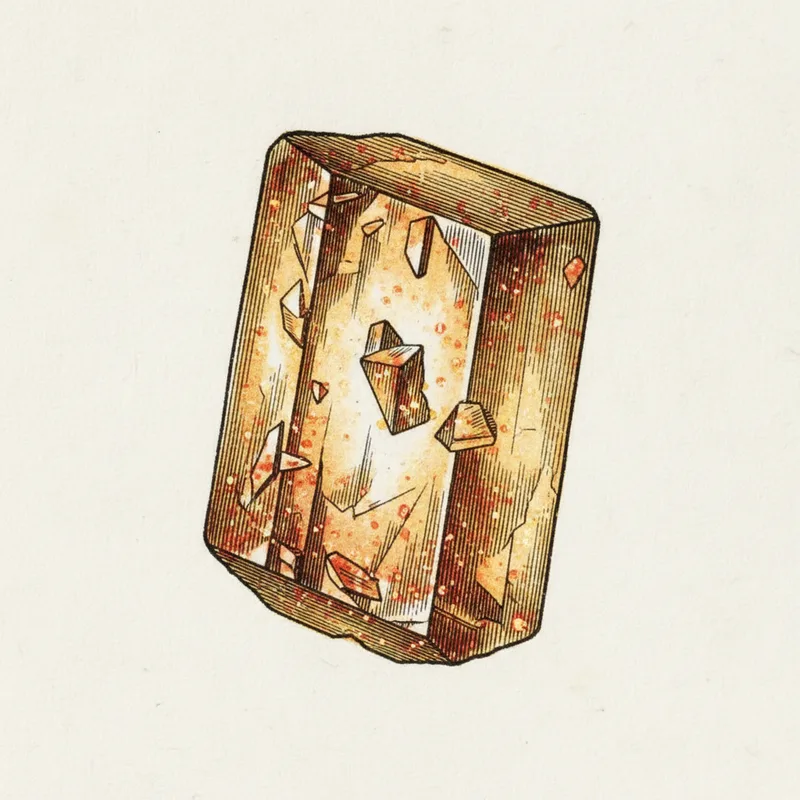
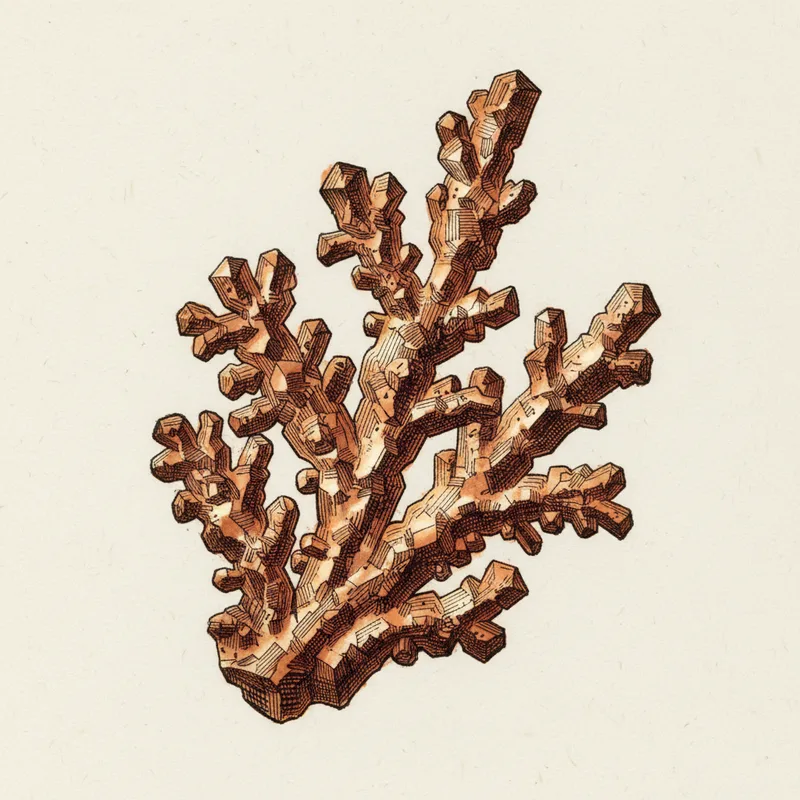
Sunstone is an underappreciated crystal for creative intentions. The aventurescence (glittery metallic flash) comes from tiny platelets of copper, hematite, or goethite included within the feldspar crystal. Oregon sunstone, specifically, contains native copper inclusions that create a remarkable red-to-green schiller effect. It's one of the few gems where you can see actual metallic copper trapped inside a transparent crystal.
Sunstone forms in basaltic lava flows where plagioclase feldspar crystallizes with included metallic platelets. The Oregon deposits, found in the high desert of southeastern Oregon, are particularly prized because the copper inclusions create color-change effects unique in the gem world. These labradorite-composition feldspars crystallized in basalt flows approximately 15-20 million years ago, trapping microscopic platelets of native copper as they grew.
The cultural tradition is consistent with the visual: a mineral that literally contains flashes of golden light has been associated with vitality, creativity, and joyful energy across Scandinavian, Greek, and Indian traditions. The Vikings reportedly used sunstone as a navigational tool, though the "Viking sunstone" may have been Iceland spar calcite rather than the feldspar variety.
What to buy for 2026: Oregon sunstone is pricier ($20-80 for a faceted stone), but Indian sunstone with hematite inclusions offers the same sparkle for $5-15 in tumbled form. For a creative workspace crystal, the sparkle effect catches light beautifully.
For Love and Relationships
Rose Quartz
Rose quartz is the most universally recommended crystal for love and relationship intentions across every crystal healing tradition worldwide. The association is ancient: Egyptians placed rose quartz masks on the faces of the deceased for its connection to beauty and restoration. Greek mythology linked it to Aphrodite and Adonis.
The pink color comes from microscopic fibers of dumortierite (an aluminum borosilicate) embedded within the quartz matrix in most specimens. Rarer transparent pink quartz crystals get their color from phosphorus and aluminum trace chemistry. Both are SiO₂ at their core.
Rose quartz is also one of the most forgiving crystals for new buyers. It's extremely abundant, which means prices are low and consistent. Fakes are almost nonexistent because the real material is too cheap to bother counterfeiting. If the color is hot pink rather than soft, pastel pink, it's been dyed, but genuine rose quartz is difficult to misidentify.
What to buy for 2026: Rose quartz is one of the most affordable crystals available. A polished heart shape ($5-15) or palm stone ($3-8) is the traditional choice for relationship intentions. Madagascar and Brazilian material dominates the market with consistently beautiful quality. Some specimens show a subtle six-rayed star (asterism) when cut as a cabochon and viewed under a point light source, caused by the aligned dumortierite inclusions. Star rose quartz cabochons are only slightly more expensive and considerably more interesting.
Rhodonite
Rhodonite is rose quartz's more sophisticated cousin in the relationship crystal category. Where rose quartz is soft and gentle in both color and energy associations, rhodonite's dramatic pink-and-black pattern represents the tradition of healing through contrast, working through difficult emotions rather than avoiding them.
Rhodonite is a manganese inosilicate, MnSiO₃, with the pink color coming directly from manganese (the same element that colors rubies when substituted into corundum's structure). The black veining is manganese oxide, formed when the mineral partially weathers at the surface. Rhodonite forms in manganese-rich metamorphic and metasomatic environments, with significant deposits in Russia's Ural Mountains (where it was declared the national stone), Australia, Peru, and Brazil.
The mineral has a hardness of 5.5-6.5, making it durable enough for daily handling but softer than quartz. Each specimen has a unique pattern of pink and black, which makes rhodonite a genuinely personal stone. No two pieces look the same. The veining patterns are determined by the degree and distribution of surface weathering on the original rhodonite crystal before it was collected and cut.
What to buy for 2026: A tumbled rhodonite stone ($3-8) with good contrast between the pink and black veining. The pattern is unique to each piece, making it feel personal. For a more dramatic specimen, polished rhodonite slabs ($15-40) show the banding in full detail.
For Clarity and Focus
Fluorite
Fluorite is traditionally called "the genius stone" in crystal healing, associated with mental clarity, analytical thinking, and concentration. The mineral itself demonstrates remarkable optical properties: fluorite is used as a lens material in high-end optics because of its low dispersion and high UV transparency. Fluorite lenses are in microscopes, telescopes, and camera systems worldwide.
The mineral is calcium fluoride (CaF₂), crystallizing in the cubic system. The famous color range (purple, green, blue, yellow, colorless, sometimes in the same crystal) comes from various mechanisms: rare earth element substitutions, radiation-induced color centers, and colloidal calcium precipitates. Each color zone in a banded fluorite specimen records a different episode of fluid chemistry during growth.
Fluorite also fluoresces under ultraviolet light. The word "fluorescence" was literally coined from fluorite's name by George Stokes in 1852 after studying the phenomenon in this mineral. The fluorescence is caused by rare earth element impurities (europium, yttrium, and others) substituting into the calcium sites of the crystal lattice. If you own a UV flashlight, fluorite is one of the most rewarding minerals to examine under it.
What to buy for 2026: A fluorite octahedron ($5-15) is the perfect desk crystal. The natural cleavage form demonstrates the cubic system beautifully, and the colors are genuinely stunning. Pair one with a small UV flashlight ($5-10) and you have a conversation starter that demonstrates real physics.
Sodalite
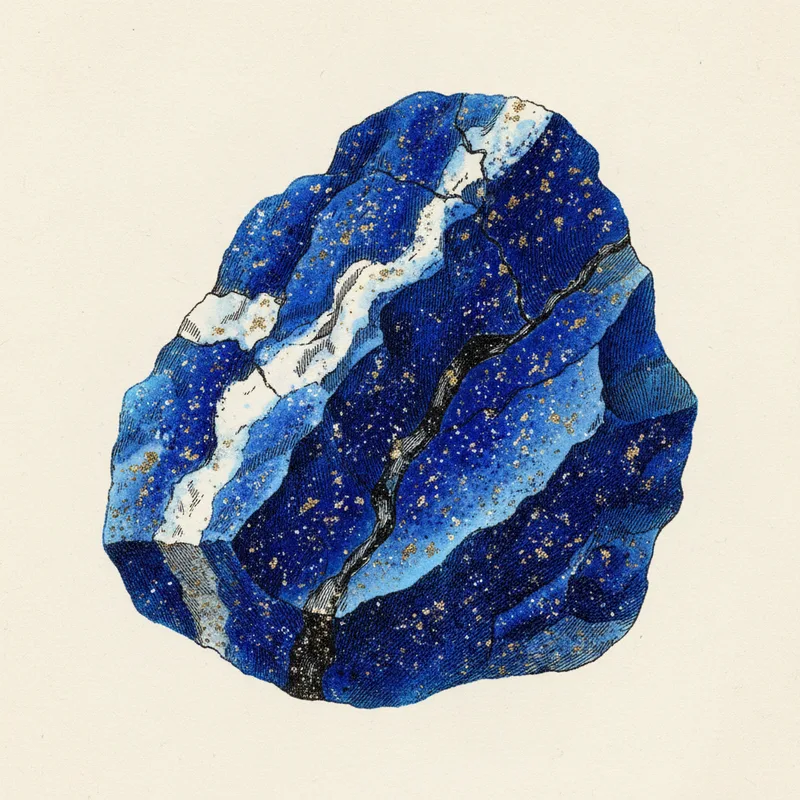
Sodalite is the less famous blue mineral that deserves more attention for focus and clarity intentions. While lapis lazuli gets the spotlight, sodalite is actually a primary component of lapis lazuli itself. The blue in lapis comes largely from the lazurite mineral (a sodalite-group member), and sodalite stands beautifully on its own as a specimen.
Sodalite is a feldspathoid mineral with the formula Na₈(Al₆Si₆O₂₄)Cl₂. The blue color comes from the sulfur radical anion (S₃⁻) trapped within the sodalite cage structure. This is the same sulfur-based color mechanism that gives lazurite and ultramarine their famous blue. Some sodalite varieties (hackmanite) exhibit tenebrescence, a reversible photochromism where the mineral changes color when exposed to UV light and then slowly returns to its original shade over hours or days. This is a real, measurable physical phenomenon caused by the interaction between sulfur species and the sodalite lattice. It's one of the few cases where you can watch a mineral change color in real time.
Sodalite forms in silica-undersaturated igneous rocks (nepheline syenites) and their associated pegmatites. Major sources include Brazil (Bahia), Canada (Ontario, which designated sodalite as a provincial stone), Namibia, and India. The characteristic blue-and-white pattern comes from sodalite intergrown with white nepheline or calcite.
What to buy for 2026: A sodalite palm stone ($5-12) or a raw piece showing the characteristic blue-and-white patterning. It's significantly more affordable than lapis lazuli and equally striking. If you can find hackmanite, the tenebrescent variety, it's a particularly fascinating specimen for a desk.
For Protection and Grounding
Black Tourmaline (Schorl)
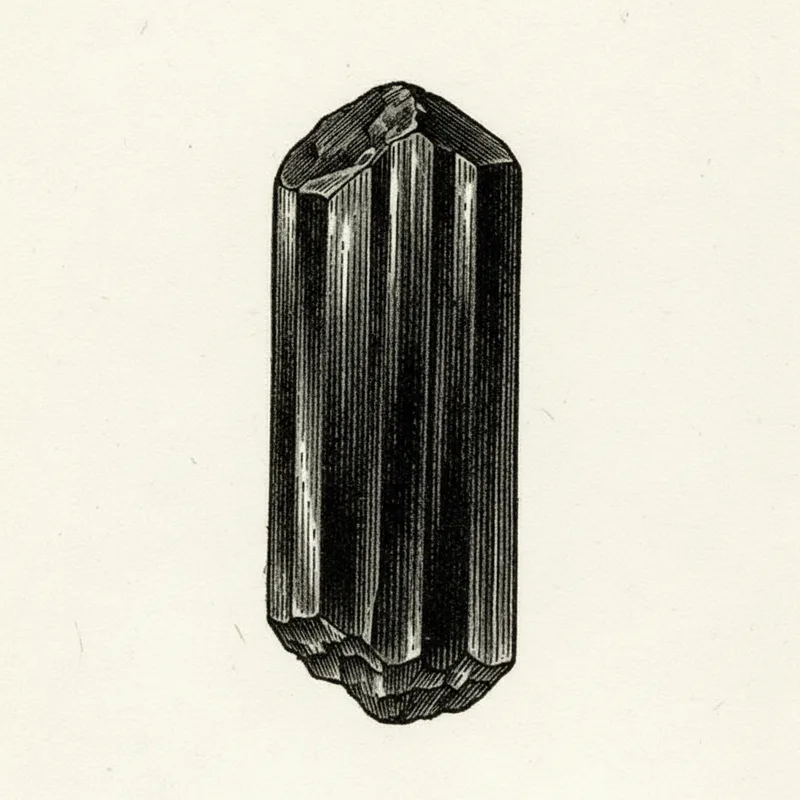
Black tourmaline is the most commonly recommended protection crystal in modern crystal healing, and it has genuinely interesting physics. Tourmaline is piezoelectric (generates electric charge under pressure) and pyroelectric (generates charge when heated or cooled). These are real, measurable properties caused by its polar crystal structure. The complex formula, NaFe²⁺₃Al₆(BO₃)₃Si₆O₁₈(OH)₄, creates a crystal with a permanent electric dipole.
Does this electrical property protect you from anything? Not in any measurable way. But the fact that crystal traditions describe tourmaline as having "energy" and the mineral genuinely does generate electrical charge is one of those intersections between tradition and physics that makes the conversation interesting.
Schorl forms in granitic pegmatites and metamorphic rocks, crystallizing from boron-rich fluids. The prismatic crystals develop heavy vertical striations and that distinctive triangular cross-section that's immediately recognizable even in tumbled specimens.
What to buy for 2026: A raw schorl specimen with visible crystal striations ($5-15) is the traditional choice. The triangular cross-section and striated faces are immediately recognizable and aesthetically striking. For grounding intentions, many practitioners recommend placing black tourmaline near the entrance to a home or workspace.
Smoky Quartz
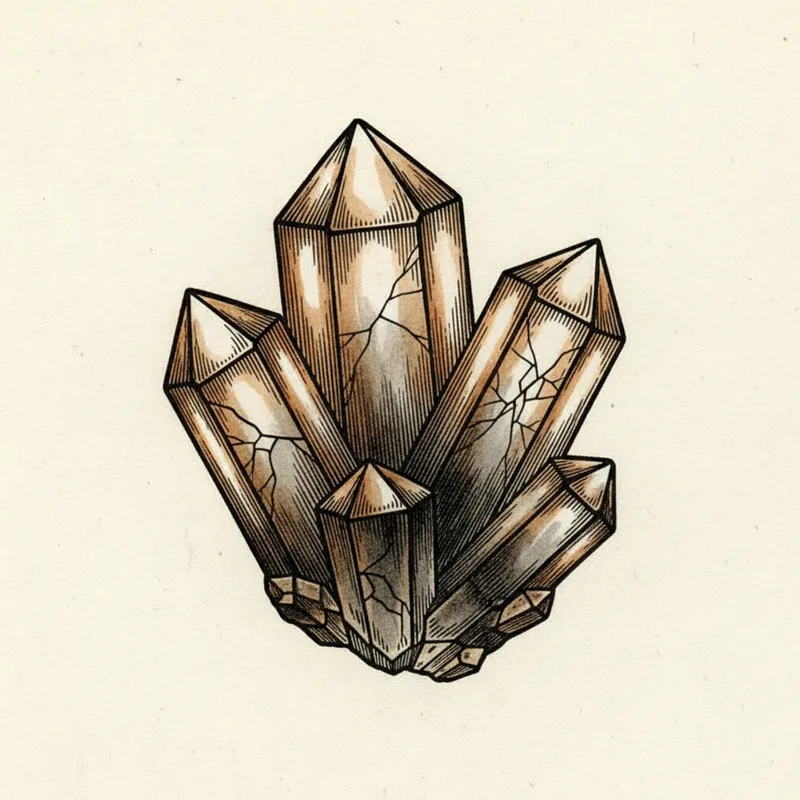
Smoky quartz anchors the grounding category with its distinctly earthy color and a formation story involving natural nuclear physics. Trace aluminum (Al³⁺) substitutes for silicon (Si⁴⁺) in the quartz lattice, and natural gamma radiation from radioactive elements in surrounding rock (potassium-40, uranium, thorium) creates color centers at those aluminum sites. The radiation knocks electrons into new positions, creating "holes" that absorb visible light and produce the brown-to-gray-to-nearly-black color.
The depth of color directly correlates with radiation exposure. Specimens from uranium-bearing granites tend to be the darkest. The crystal is essentially a geological radiation dosimeter, recording the total gamma exposure it received over millions of years in its color.
Scotland designated smoky quartz as its national gem. The Cairngorm variety from the Scottish Highlands has been treasured for centuries, appearing in traditional Scottish jewelry (the sgian-dubh dagger often features a Cairngorm stone in its pommel). Celtic tradition associated dark quartz with the earth and with protection against malevolent spirits.
What to buy for 2026: A smoky quartz point ($5-15) with a natural warm brown tone. Avoid extremely dark, near-black specimens unless you can verify they haven't been artificially irradiated. Natural smoky quartz typically shows variation in color intensity through the crystal, with warmer brown tones. Artificially irradiated quartz tends toward a flat, uniform dark gray-black.
For Spiritual Growth
Labradorite
Labradorite is consistently associated with spiritual transformation and intuition across modern crystal healing traditions. The Inuit peoples of Labrador, where the mineral was first formally described in 1770, have traditions connecting the stone's flashing colors to the Northern Lights trapped in rock.
The optical phenomenon, labradorescence, is caused by light interference within nanometer-scale exsolution lamellae: alternating layers of calcium-rich and sodium-rich plagioclase feldspar that formed as the mineral cooled from its original magmatic temperature of 1,100-1,200°C. The layer thickness determines which colors flash.
The best labradorite flash is directional. You need to find the right angle to see it, which makes buying online tricky. Video is far more reliable than photos for assessing labradorescence quality. In person, rotate the stone slowly under a light source. The best specimens show broad, vivid flashes that cover most of the polished surface.
What to buy for 2026: A polished labradorite freeform ($10-30) that shows strong blue or multicolor flash. Turn it in your hand under a light source before buying to assess the quality and direction of the labradorescence. Finnish spectrolite, which shows a wider range of colors than standard labradorite, is worth the premium if you find it ($20-60).
Moonstone
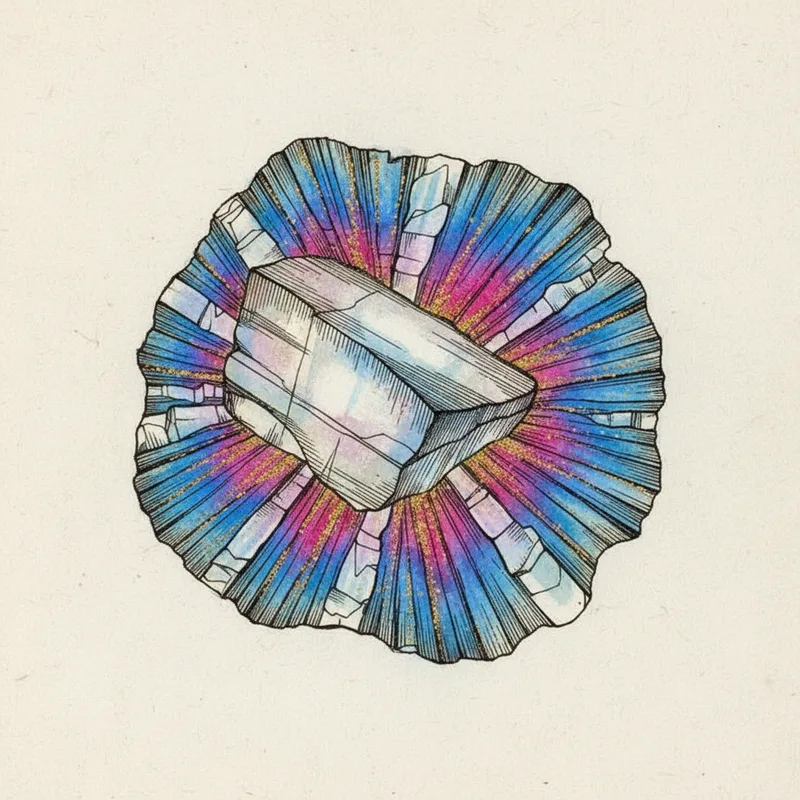
Moonstone is another feldspar (orthoclase or oligoclase composition) that displays adularescence, a billowing, milky-blue light that appears to float beneath the surface like moonlight through water. Like labradorescence, this is a structural optical effect caused by light scattering from alternating layers of orthoclase and albite that formed during cooling. The layers in moonstone are thinner than in labradorite (on the order of tens of nanometers rather than hundreds), producing the softer, more diffuse glow rather than sharp spectral flashes.
The physics of adularescence involves Rayleigh scattering of light from these submicroscopic lamellae. The blue adularescence of the finest moonstone occurs when the lamellae are thin enough to scatter shorter (blue) wavelengths preferentially, the same physics that makes the sky blue, applied at the mineral scale.
Moonstone traditions span virtually every culture. Hindu mythology considers it formed from solidified moonbeams. Roman natural history connected it to lunar phases. Art Nouveau jewelers of the early 1900s used moonstone extensively in their naturalistic designs. In modern crystal traditions, it's associated with intuition, feminine energy, and new beginnings, making it a natural fit for New Year intention-setting.
What to buy for 2026: A moonstone cabochon ($10-30) or palm stone ($5-15). Sri Lankan moonstone with strong blue adularescence is the most prized, but Indian rainbow moonstone (which is technically labradorite-composition) with multicolor flashes is more accessible and equally beautiful. Look for specimens where the adularescence moves fluidly across the surface as you tilt the stone.
For Physical Health and Wellness
Tiger Eye
Tiger eye has been associated with physical vitality and willpower across South African, East Asian, and Middle Eastern traditions for centuries. Roman soldiers carried it into battle, believing it granted courage and physical strength. The golden-brown chatoyant stone was considered as valuable as gold in the ancient world.
The optical phenomenon that defines tiger eye is chatoyancy, a silky band of light that moves across the surface when the stone is rotated. This effect is caused by parallel fibers of crocidolite (a blue asbestos mineral) that have been replaced by quartz while retaining their fibrous structure. The original blue crocidolite is oxidized to iron oxide, which gives tiger eye its golden-brown color. In hawk's eye (the blue variety), the crocidolite hasn't fully oxidized, preserving the original blue color.
Tiger eye is SiO₂ at its core, with the chatoyancy created by aligned pseudomorphic fibers. It forms when hydrothermal fluids replace crocidolite asbestos fibers with chalcedony while maintaining the fibrous microstructure. This pseudomorphic replacement is a beautiful geological concept: the new mineral inherits the shape and texture of the old one, creating a structure that neither mineral would form on its own.
A safety note: while tiger eye does contain pseudomorphic asbestos (the crocidolite has been replaced by quartz), the fibers are encapsulated within solid silica. There is no health risk from handling polished tiger eye. The asbestos fibers are no longer asbestos; they're quartz that took asbestos's shape. Cutting or grinding raw tiger eye could theoretically release fine particles, so lapidary work should be done wet, but holding or wearing the finished stone is perfectly safe.
What to buy for 2026: A tiger eye tumbled stone ($2-5) or cabochon ($5-15). The chatoyant band should be sharp and well-defined, moving smoothly across the surface as you tilt the stone.
Garnet
Garnet is one of the oldest documented gemstones used for health and vitality intentions. Egyptian pharaohs wore garnet amulets. The mineral was placed in graves throughout the ancient world as a symbol of life force and regeneration. In medieval medicine, garnets were prescribed for inflammatory diseases and believed to strengthen the heart.
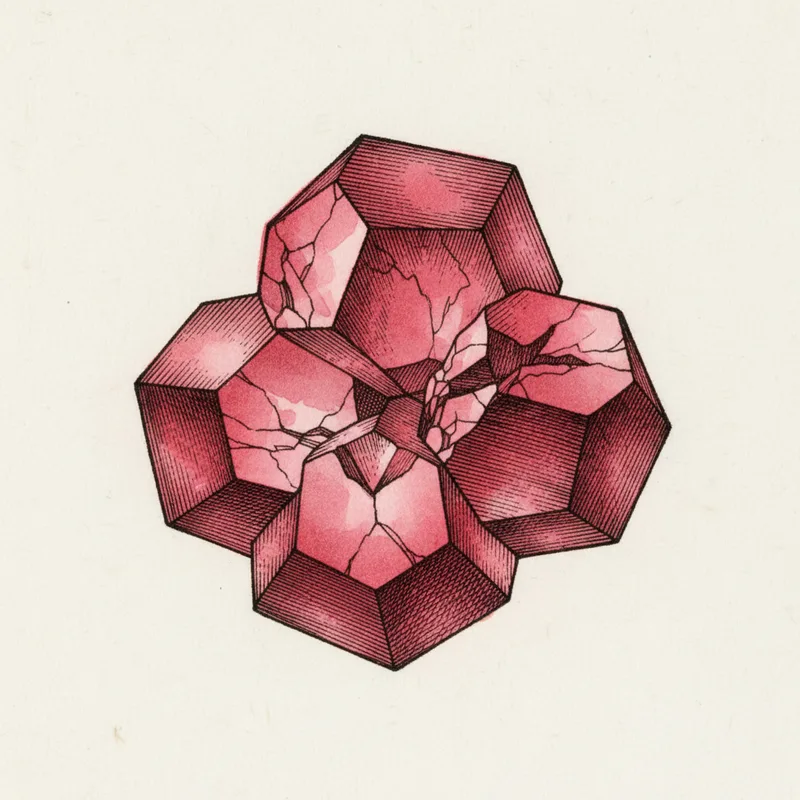
The garnet group encompasses multiple mineral species, but the most common, almandine (Fe₃Al₂(SiO₄)₃), is the deep red variety that most people picture. The iron content gives almandine its characteristic wine-red to brownish-red color. Pyrope garnet (Mg₃Al₂(SiO₄)₃), with magnesium replacing iron, shows a brighter, more saturated red. Both form in metamorphic rocks under conditions of high pressure and moderate temperature.
Garnets are nesosilicates, meaning their SiO₄ tetrahedra are isolated rather than linked into chains or sheets. This structure gives garnets their high hardness (6.5-7.5), excellent crystal form (the dodecahedral and trapezohedral shapes that make garnets immediately recognizable), and absence of cleavage.
What to buy for 2026: A tumbled almandine garnet ($2-5) is affordable and widely available. For something more special, a small faceted pyrope or rhodolite garnet ($10-30) shows the mineral's brilliance and color at its best.
For Communication and Self-Expression
Amazonite
Amazonite is the blue-green variety of microcline feldspar, K(AlSi₃O₈), with its color long attributed to copper but more recently linked to lead and water content within the crystal structure. Research published in the 1980s-90s identified small amounts of lead (Pb²⁺) substituting into the feldspar lattice and interacting with structural water as the likely source of the distinctive teal color, though the mechanism is still refined by ongoing research.
Amazonite forms in granitic pegmatites, particularly in the Pikes Peak batholith of Colorado (the most famous US source), Russia, Madagascar, and Brazil. The crystals can be large and well-formed, showing the characteristic feldspar cleavage at near-right angles.
In crystal healing traditions, amazonite is consistently associated with communication, particularly honest and compassionate expression. The tradition connects it to the throat and heart chakras simultaneously, suggesting that communication rooted in empathy is its specific domain.
What to buy for 2026: A polished amazonite palm stone ($5-12) or tumbled stone ($2-5). Look for strong blue-green color with minimal white streaking, though the white streaks (albite intergrowth) are natural and characteristic.
Blue Lace Agate
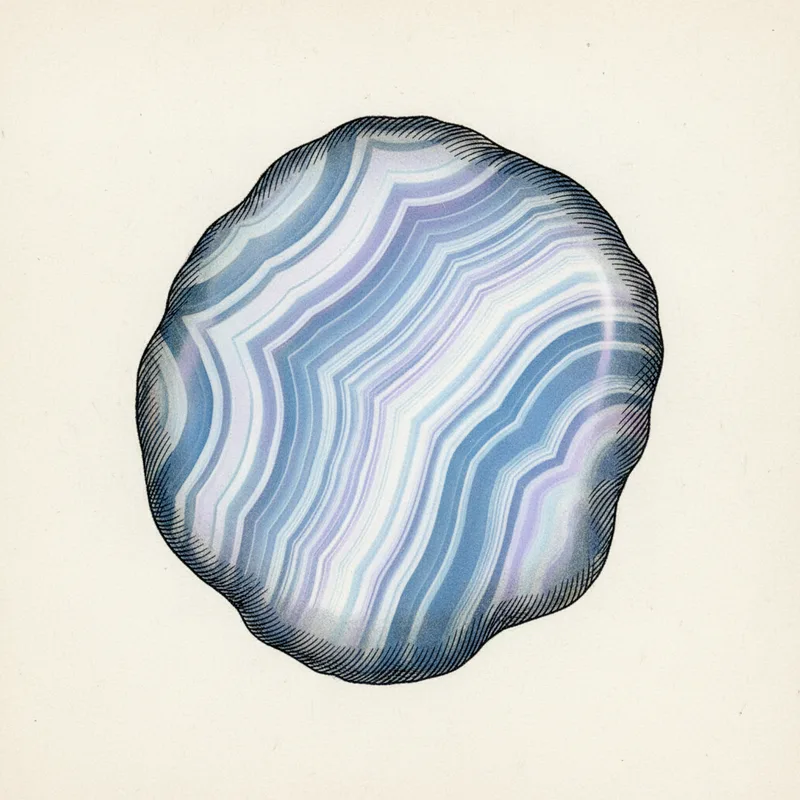
Blue lace agate is a banded chalcedony with delicate light-blue and white banding formed by rhythmic precipitation of silica within volcanic cavities. The pale blue color involves Rayleigh scattering from submicroscopic inclusions, a structural color effect related to the same physics that makes the sky blue.
Nearly all gem-quality blue lace agate comes from a single deposit in Namibia, making it significantly rarer than many more famous crystals. In crystal healing traditions, it's specifically associated with relieving the anxiety around communication: public speaking, difficult conversations, and self-expression under pressure.
The mineral has a Mohs hardness of 6.5-7 and a waxy to vitreous luster characteristic of all chalcedony. The banding forms over long periods as silica-bearing fluids deposit layer after layer within rock cavities, with subtle chemical changes between deposition cycles creating each distinct band.
What to buy for 2026: A blue lace agate tumbled stone ($5-12) or palm stone ($8-20). The best specimens show well-defined, regular banding with a strong blue color. If the blue is too vivid or too uniform, the stone may be dyed ordinary agate.
Pairing Crystals with Intentions: The Psychology
Before we get to the practical how-to, it's worth understanding why this practice works from a psychological perspective, entirely independent of any metaphysical framework.
Environmental cues and goal persistence. Research in behavioral psychology consistently shows that physical reminders of goals increase goal-directed behavior. This is why vision boards work, why people put sticky notes on their monitors, and why setting your running shoes by the door increases the likelihood of a morning run. A crystal assigned to a specific intention functions as a tactile, visual environmental cue. Every time you see it, your brain triggers the associated goal memory.
Tactile engagement and embodied cognition. Holding a physical object while thinking about a goal engages what psychologists call embodied cognition: the idea that physical sensory experience influences cognitive processing. Turning a smooth stone in your hands while reflecting on your intentions isn't mystical. It's multisensory encoding of a goal state, and research suggests it strengthens memory formation and recall.
Ritual and commitment mechanisms. The act of choosing a crystal, assigning it meaning, and placing it in a specific location is a commitment ritual. Research by psychologist Robert Cialdini and others demonstrates that public or ceremonial commitments to goals significantly increase follow-through. The crystal becomes a physical manifestation of a commitment you made to yourself.
The specificity principle. Each crystal on this list is associated with a specific intention rather than a vague "good vibes" category. This matters because specificity in goal-setting is one of the most robust findings in motivation research. "I will be more creative" is weaker than "I will write for 30 minutes each morning, and my carnelian on my desk will remind me."
None of this requires believing that crystals emit energy. It requires understanding that humans are physical beings who respond to physical cues, and that a $5 stone can serve as a remarkably effective anchor for intentional behavior.
How to Use Intention Crystals (Without the Mysticism)
The practical framework is simple and requires zero metaphysical belief:
Choose your crystal. Pick one that resonates with your intention based on tradition, personal attraction, or simple aesthetic preference.
Place it where you'll see it daily. Your desk, nightstand, bathroom counter, or pocket. The point is consistent visual contact.
Assign it meaning. When you see it, think about your intention. This is cognitive behavioral psychology: environmental cues trigger associated thoughts, which influence behavior.
Handle it during reflection. Taking a moment to hold a physical object while thinking about your goals engages tactile memory and grounds abstract intentions in sensory experience.
Don't overcomplicate it. You don't need to cleanse, charge, program, or activate your crystal. You need to see it, remember what it represents, and do the actual work your intention requires.
The crystal is a tool. The work is yours. But 8,000 years of human tradition across every culture on Earth suggests that having a physical anchor for your intentions is worth the $5-15 investment.
Quick Shopping Guide for 2026 Intentions
| Intention | Crystal | Budget Option | Mid-Range |
|---|---|---|---|
| Abundance | Citrine | Heat-treated tumble, $3-8 | Natural citrine point, $15-25 |
| Financial goals | Pyrite | Tumbled stone, $3-8 | Natural cube, $15-30 |
| Calm / mental health | Amethyst | Tumbled stone, $3-5 | Polished palm stone, $8-15 |
| Emotional balance | Lepidolite | Tumbled stone, $3-8 | Raw mica specimen, $8-15 |
| Creativity | Carnelian | Tumbled stone, $3-5 | Palm stone, $8-15 |
| Motivation | Sunstone | Indian tumbled, $5-12 | Oregon sunstone, $25-80 |
| Relationships | Rose Quartz | Tumbled stone, $2-5 | Polished heart, $8-15 |
| Healing | Rhodonite | Tumbled stone, $3-8 | Polished palm stone, $8-15 |
| Focus | Fluorite | Tumbled stone, $3-8 | Cleavage octahedron, $8-15 |
| Clarity | Sodalite | Tumbled stone, $3-8 | Palm stone, $8-15 |
| Protection | Black Tourmaline | Raw piece, $3-8 | Large specimen, $10-20 |
| Grounding | Smoky Quartz | Tumbled stone, $3-8 | Polished point, $10-20 |
| Spiritual growth | Labradorite | Tumbled stone, $5-12 | Polished freeform, $15-30 |
| Intuition | Moonstone | Tumbled stone, $5-12 | Cabochon, $15-30 |
Total cost for one crystal per intention: $3-30. Total cost for the whole set: $50-180. That's a comprehensive intention toolkit for less than a single therapy session.
Whatever you choose for 2026, learn the geology. Every crystal in this guide has a formation story worth knowing, a chemistry worth understanding, and a history worth reading. The intention practice is simple. The science behind your stones is endlessly deep.
Where to Buy Intention Crystals (Without Getting Scammed)
The crystal market has a fake problem, and it's worth five minutes of your time to buy smart.
Avoid Amazon for crystals. The platform's commingled inventory system means even reputable sellers' stock gets mixed with low-quality or mislabeled material from other vendors. A "natural citrine" listing may ship you heat-treated amethyst or dyed glass, and the seller may not even know.
Gem and mineral shows are ideal. You can handle specimens, compare quality side by side, and ask sellers about provenance. The Tucson Gem Show (February), Denver Gem Show (September), and hundreds of regional shows throughout the year are the best places to buy crystals in person. Prices are often 30-50% below retail because you're buying directly from importers and miners.
Etsy is better than Amazon but still requires caution. Look for sellers with thousands of reviews, detailed descriptions, and clear photos. Red flags include: stock photos instead of actual specimen photos, "AAA grade" marketing language (there is no standardized grading system for crystals), and prices that seem too good to be true. A real piece of natural citrine shouldn't cost $2.
Local crystal shops vary enormously in quality and knowledge. The best ones have knowledgeable staff who can tell you where their material comes from and what treatments it's undergone. The worst are essentially gift shops with a New Age aesthetic and no mineralogical knowledge. Ask questions. If the seller can't tell you the chemical formula or crystal system of what they're selling, their expertise is limited.
For the crystals in this guide specifically:
- Citrine: Know the difference between natural (pale yellow) and heat-treated (burnt orange). Both are real quartz, but natural is 5-10x the price of treated.
- Amethyst: Very safe buy. Rarely faked because it's abundant and affordable. Check for color zoning.
- Rose quartz: Essentially never faked. Too cheap to bother counterfeiting.
- Moonstone: Watch for "opalite" (synthetic glass) sold as moonstone. Real moonstone has a softer, more subdued adularescence.
- Labradorite: Rarely faked. Quality varies enormously. Buy in person or from video if buying online.
- Carnelian: Often dyed agate. Check for dye concentration in fractures under strong light.
The best defense against fakes is education. Every mineral in this guide has specific, testable physical properties. Learn them, carry a hand lens, and trust what you can verify over what a seller claims.
Crystals in This Article
Rainbow Moonstone
The Labradorite in Disguise
Black Tourmaline
The Shield Stone
Rhodolite Garnet
The Rose Garnet

Almandine Garnet
The Warrior's Stone

Star Rose Quartz
The Star of the Heart
Blue Lace Agate
The Communication Stone
Oregon Sunstone
The Copper-Lit State Gem
Native Copper
The Builder's Metal

Pyrope Garnet
The Fire Garnet
Lapis Lazuli
The Stone of the Heavens
Smoky Quartz
The Grounding Stone
Dumortierite
The Patience Stone
Keep Reading
Stay in the loop
From the Almanac
Updates from Crystal Almanac, when there’s something worth sharing.