Quick Facts
Formation & Origin
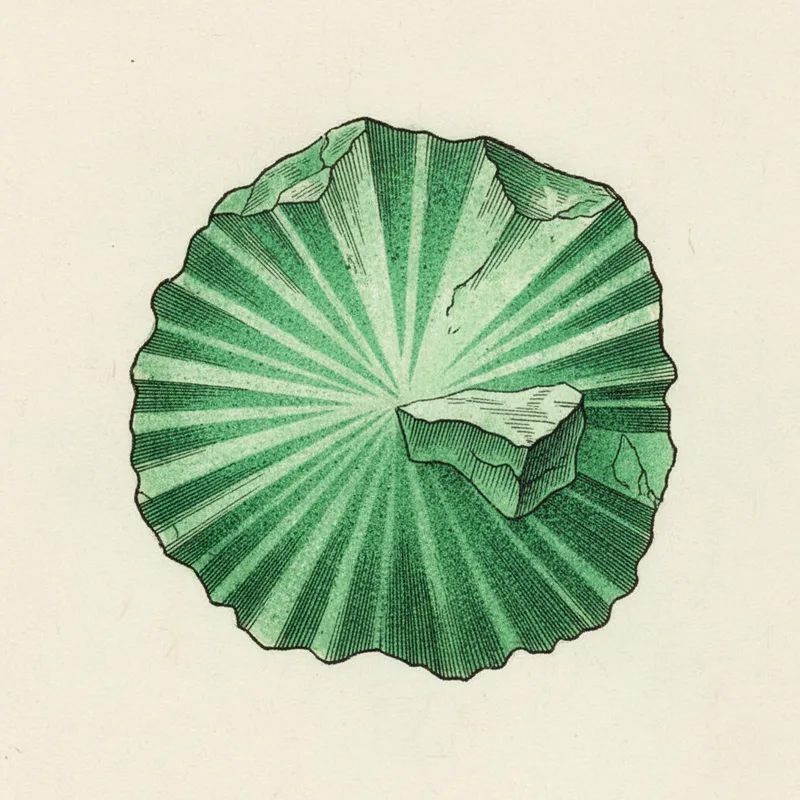
Aventurine is a variety of quartzite (metamorphosed sandstone) that contains platy mineral inclusions which create a sparkly, shimmering effect called aventurescence. In green aventurine - by far the most common variety - the sparkle comes from tiny flakes of fuchsite, a chromium-rich mica.
The stone forms when quartz-rich sandstone is subjected to regional metamorphism, recrystallizing the quartz grains while trapping existing mica flakes in alignment. These aligned, reflective platelets catch and reflect light, producing the characteristic glittering effect.
Different inclusion minerals create different colors: fuchsite (chrome mica) for green, hematite or goethite for red-brown, and dumortierite for blue (though blue aventurine is rare and highly sought after). The degree of aventurescence varies from subtle to dramatic depending on the density and size of the inclusions.
Identification Guide
Aventurine is identified by its aventurescence - the sparkly, glittering shimmer visible when light hits the internal platy inclusions. This distinguishes it from jade (no sparkle), amazonite (different mineral, no sparkle), and dyed quartzite (which may have color but no aventurescence).
At Mohs 7, aventurine is hard and durable. It has a slightly granular texture compared to the smooth, even surface of jade. The sparkle is most visible on polished surfaces viewed at certain angles - rotate the stone under direct light to see it.
Spotting Fakes
The main confusion is between aventurine and jade - sellers sometimes label aventurine as 'Indian jade' or 'new jade,' which is misleading. Aventurine sparkles; jade doesn't. Aventurine is also much less dense than jadeite. Dyed quartzite without aventurescence is sometimes sold as aventurine - look for the sparkle. Goldstone (a type of glass with copper flakes) is a man-made material sometimes confused with red-brown aventurine, but goldstone's sparkle is more metallic and uniform.
Cultural & Metaphysical Traditions
Presented as cultural traditions, not scientific evidence
The name comes from the Italian 'a ventura' meaning 'by chance,' referencing either the stone's discovery or the accidental creation of goldstone (glass). In traditional Indian medicine, green aventurine was used for eye ailments. Tibetan statues sometimes have aventurine eyes. Modern practitioners associate it with luck, opportunity, and heart-centered emotional healing.
Where It's Found
Primary source of green aventurine globally
Various colors including rare blue
Historic source of green and golden varieties
Fine green material with strong aventurescence
Price Guide
Good to Know
Scratch test: At hardness 7, Aventurine can scratch glass and steel. It's durable enough for any type of jewelry.
Sources: Found in 4 notable locations worldwide, from India to Tanzania.
Heft test: Aventurine has average mineral density (2.65). It feels about as heavy as you'd expect from a stone its size.
Explore More
Quartz & Chalcedony
The Abundance Collection
Called 'the stone of opportunity.' Green aventurine is one of the most popular prosperity stones in the crystal market.
The Manifestation Collection
The stone of opportunity. Green aventurine's fuchsite mica inclusions give it a sparkling shimmer associated with luck and new possibilities opening.
Taurus Season Crystals: 6 Stones for Stability and Abundance
Best Crystals for Manifestation: A Practical Guide
Spring Crystal Rituals: Stones for New Beginnings
Mohs Hardness Scale
See where Aventurine sits on the scale
Crystal Care Guide
Water safety, sunlight, and handling tips
Stay in the loop
From the Almanac
Updates from Crystal Almanac, when there’s something worth sharing.