Quick Facts
Formation & Origin
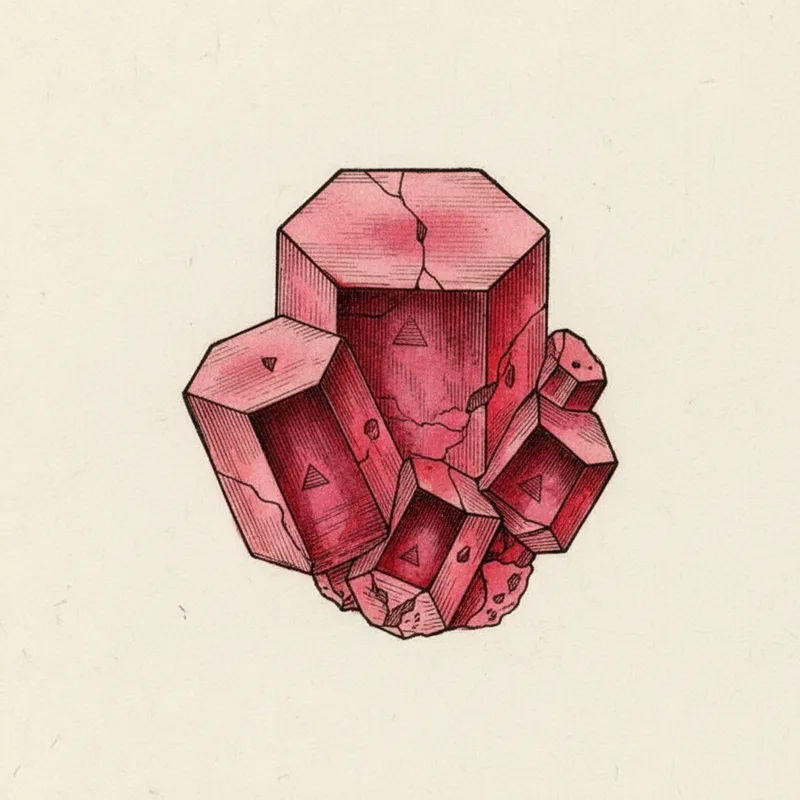
Ruby is the red variety of corundum - the same mineral that produces sapphire. The difference is a single element: chromium. When trace amounts of chromium (typically 1-3%) substitute for aluminum in the corundum crystal structure, the result is the most valued red gemstone on Earth.
Corundum forms in aluminum-rich, silica-poor metamorphic and igneous rocks. The critical requirement is that silica must be absent - if aluminum encounters silica, it forms feldspar or mica instead of corundum. This chemical restriction makes gem corundum uncommon, and the additional requirement of chromium makes ruby genuinely rare.
The finest rubies come from the Mogok Valley in Myanmar, where corundum crystallized in marble during regional metamorphism. The marble host rock scatters light internally, giving Mogok rubies a characteristic fluorescent 'glow' that enhances their red color. The term 'pigeon blood' describes the ideal: a pure red with a faint blue undertone and strong fluorescence.
Identification Guide
Ruby is identified by its intense red color combined with exceptional hardness (9 on the Mohs scale - only diamond is harder). The red color distinguishes it from all other corundum varieties, which are classified as sapphire.
Distinguish from red spinel (lower specific gravity, singly refractive), red garnet (lower hardness, different crystal system), and red tourmaline (much lower hardness at 7). Ruby shows strong fluorescence under UV light - most rubies glow bright red under long-wave UV, which is a useful diagnostic tool.
Spotting Fakes
The ruby market is flooded with treatments and synthetics. Lead glass-filled rubies are extremely common - low-quality corundum is infused with glass to fill fractures and improve appearance. These sell for a fraction of natural ruby prices but are often mislabeled. Check for flash effects (bright reflections from glass fills visible under magnification). Synthetic rubies (flame-fusion, flux-grown) are chemically identical to natural and require lab testing to identify. Any ruby over 1 carat sold without a lab report from GIA, AGL, or Gubelin should be treated with extreme skepticism.
Cultural & Metaphysical Traditions
Presented as cultural traditions, not scientific evidence
In ancient Sanskrit texts, ruby was called 'ratnaraj' - king of precious stones. Hindu tradition assigned rubies to the Sun. Burmese warriors embedded rubies in their flesh, believing it made them invincible. Medieval Europeans considered ruby a remedy for bleeding and inflammation. In the modern gem trade, fine rubies regularly sell for more per carat than diamonds, making them the most valuable colored gemstone.
Where It's Found
Legendary 'pigeon blood' rubies, finest in the world
Major modern source, rivaling Burmese quality
Lighter pinkish rubies, historically important
Darker rubies, important cutting center
Price Guide
Good to Know
Scratch test: At hardness 9, Ruby can scratch glass and steel. It's durable enough for any type of jewelry.
Sources: Found in 4 notable locations worldwide, from Myanmar to Thailand.
Heft test: Ruby has a specific gravity of 4.00 - noticeably heavier than quartz. You'll feel the density when you pick it up.
Explore More
Stay in the loop
From the Almanac
Updates from Crystal Almanac, when there’s something worth sharing.