Quick Facts
Formation & Origin
Sapphire encompasses all gem-quality corundum that isn't red (that's ruby). Blue sapphires get their color from a charge transfer between iron (Fe²⁺) and titanium (Ti⁴⁺) ions in the crystal structure - a mechanism completely different from chromium coloring in ruby.
Like ruby, sapphire forms in aluminum-rich, silica-poor environments. The most prized blue sapphires historically came from a single deposit in Kashmir, India, discovered around 1881 at an elevation of 4,500 meters. These Kashmir sapphires have a unique velvety appearance caused by microscopic rutile silk inclusions that scatter light, creating a soft, luminous blue unlike sapphire from any other source. The deposit produced intensively for only a few decades before being largely exhausted.
Sapphire also occurs in alluvial deposits (gravel beds) where it accumulates after weathering from its host rock. Sri Lanka's gem gravels have produced sapphires for over 2,000 years, including the rare padparadscha - a pink-orange sapphire named after the Sinhalese word for lotus blossom.
Identification Guide
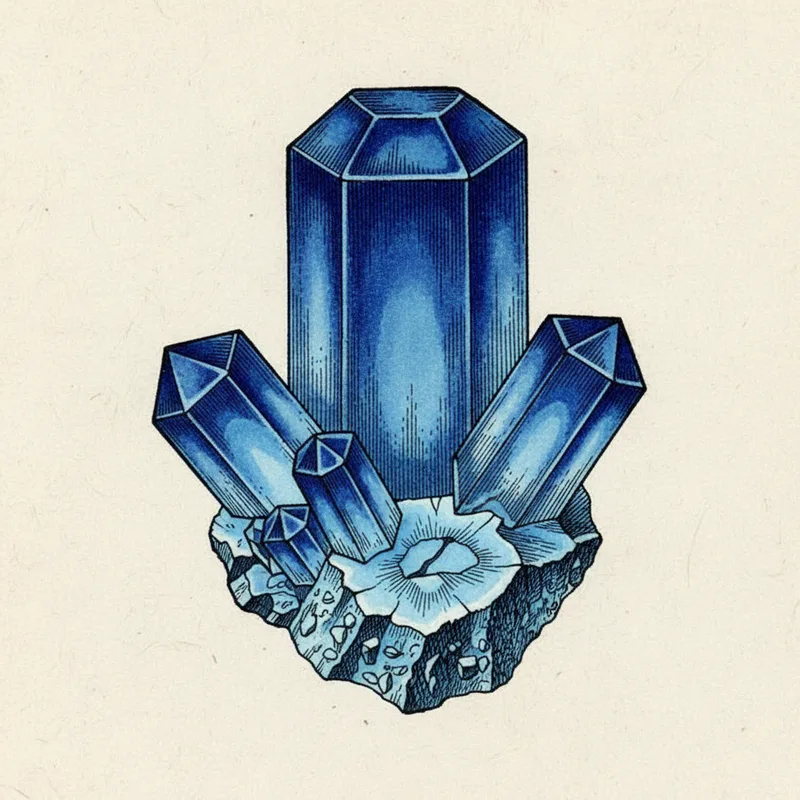
Sapphire is identified by its exceptional hardness (9), high specific gravity (4.00), and hexagonal crystal habit. Blue sapphire's color is distinctive, but sapphires come in every color except red. The color-change variety appears blue in daylight and purple in incandescent light.
Distinguish from tanzanite (softer at 6.5, different pleochroism), blue spinel (singly refractive, lower SG), and synthetic sapphire (requires lab testing). Natural sapphire typically contains rutile silk (fine needle-like inclusions) and color zoning visible under magnification.
Spotting Fakes
Synthetic sapphire is abundant and inexpensive to produce. Flame-fusion synthetic sapphire has been manufactured since 1902 and is used in watch crystals and phone screens. In the gem market, synthetic sapphires require laboratory identification. Diffusion-treated sapphires (where color is added by diffusing elements into the surface) and heavily heated sapphires are common. Heat treatment of sapphire is widespread and generally accepted, but beryllium diffusion treatment is controversial. Lab reports are essential for any significant purchase.
Cultural & Metaphysical Traditions
Presented as cultural traditions, not scientific evidence
Medieval clergy wore blue sapphires to symbolize heaven and divine wisdom. Kings believed sapphires protected against envy and harm. In Hindu astrology, blue sapphire (neelam) is associated with Saturn and is considered one of the most powerful - and potentially dangerous - gemstones. Prince Charles proposed to Princess Diana with a blue sapphire ring (now worn by Catherine, Princess of Wales), making it one of the most famous engagement rings in history.
Where It's Found
Legendary velvety blue, deposits largely exhausted
Full range of colors including padparadscha
Fine royal blue, vivid fluorescence
Major modern source, diverse colors
Price Guide
Good to Know
Scratch test: At hardness 9, Sapphire can scratch glass and steel. It's durable enough for any type of jewelry.
Sources: Found in 4 notable locations worldwide, from Kashmir to Madagascar.
Heft test: Sapphire has a specific gravity of 4.00 - noticeably heavier than quartz. You'll feel the density when you pick it up.
Explore More
Oxide & Hydroxide Minerals
Ruby vs Garnet: The Red Stone Showdown
Carnelian: Meaning, Properties, and How to Use It
How to Store and Display Your Crystal Collection
Mohs Hardness Scale
See where Sapphire sits on the scale
Crystal Care Guide
Water safety, sunlight, and handling tips
Stay in the loop
From the Almanac
Updates from Crystal Almanac, when there’s something worth sharing.