6 Undervalued Gemstones That Outperform Diamonds
Key Takeaway: Diamonds are the most marketed gemstone in history, but they are not the rarest, the most brilliant, or the most beautiful by any objective optical measurement. These six gemstones match or exceed diamonds in hardness, brilliance, fire, or rarity, and most cost a fraction of the price.
The diamond industry spent over a century convincing the world that diamonds are the ultimate gemstone. De Beers' "A Diamond Is Forever" campaign, launched in 1938, is arguably the most successful marketing campaign in human history. It created artificial scarcity (diamonds are not geologically rare), manufactured a cultural norm (diamond engagement rings were uncommon before the 1940s), and established a pricing structure that has almost nothing to do with the mineral's actual properties.
Let's talk about those properties. A diamond is carbon, crystallized in the isometric system under extreme pressure (around 5 GPa) and temperature (around 1,100-1,300°C) at depths of 150-250 kilometers in Earth's mantle. It's brought to the surface by kimberlite eruptions, violent volcanic events that travel at speeds exceeding 100 km/h and are over in hours. The diamond itself may have formed 1-3 billion years ago. The eruption that delivered it to the surface may have occurred 50-500 million years ago. The geological story is genuinely remarkable.
Its hardness of 10 on the Mohs scale is legendary and deserved. Diamond is the hardest natural material known, roughly four times harder than corundum (Mohs 9) in absolute terms. Its refractive index (RI) of 2.417 is high. Its dispersion (the splitting of white light into spectral colors, or "fire") is 0.044, which is good but not exceptional.
Here are six gemstones that beat diamond on one or more of these measures, and the geology behind each one.
Before we start, a quick primer on the key terms:
Refractive Index (RI): How much a material bends light. Higher RI means more brilliance, that white-light sparkle you see in a well-cut stone. Diamond's RI of 2.417 is high, but it's not the highest. Moissanite beats it.
Dispersion: How much a material splits white light into spectral colors (the rainbow flashes called "fire"). Higher dispersion means more fire. Diamond's 0.044 is good. Demantoid garnet's 0.057 is 30% better. Moissanite's 0.104 is 2.4 times better.
Mohs Hardness: Scratch resistance on a 1-10 scale. Diamond is 10, the hardest natural material. But Mohs is not linear: the jump from 9 to 10 is roughly four times larger than the jump from 8 to 9. Diamond is much harder than corundum (9) in absolute terms, but the gap between 7 and 9 is much smaller than people assume.
Brilliance vs. Fire: These are different things. Brilliance is the total internal light return (related to RI and cut quality). Fire is the spectral decomposition of that light into rainbow colors (related to dispersion). A gemstone can be brilliant without much fire (white sapphire), fiery without much brilliance (sphene), or both (moissanite). Most people conflate these terms, which is part of how the diamond industry maintains the "unmatched brilliance" narrative. Diamond is brilliant. It's not the most brilliant.
Treatment status: This matters more than most consumers realize. A gemstone labeled "untreated" or "no indication of heating" is worth significantly more than an equivalent-looking treated stone. Among these six gems, tsavorite, spinel, demantoid, and alexandrite are typically sold untreated. Paraíba tourmaline is sometimes gently heated to improve color (an accepted practice). Moissanite is lab-grown by definition. Compare this to the diamond market, where laser drilling, fracture filling, HPHT color treatment, and irradiation are all common practices that many consumers are unaware of.
1. Tsavorite Garnet
The Emerald Killer
| Property | Tsavorite | Diamond | Emerald |
|---|---|---|---|
| Chemical Formula | Ca₃Al₂(SiO₄)₃ | C | Be₃Al₂(SiO₃)₆ |
| Hardness | 7-7.5 | 10 | 7.5-8 |
| Refractive Index | 1.740 | 2.417 | 1.577 |
| Dispersion | 0.028 | 0.044 | 0.014 |
| Price per carat (1ct, fine) | $500-3,000 | $5,000-15,000 | $3,000-10,000 |
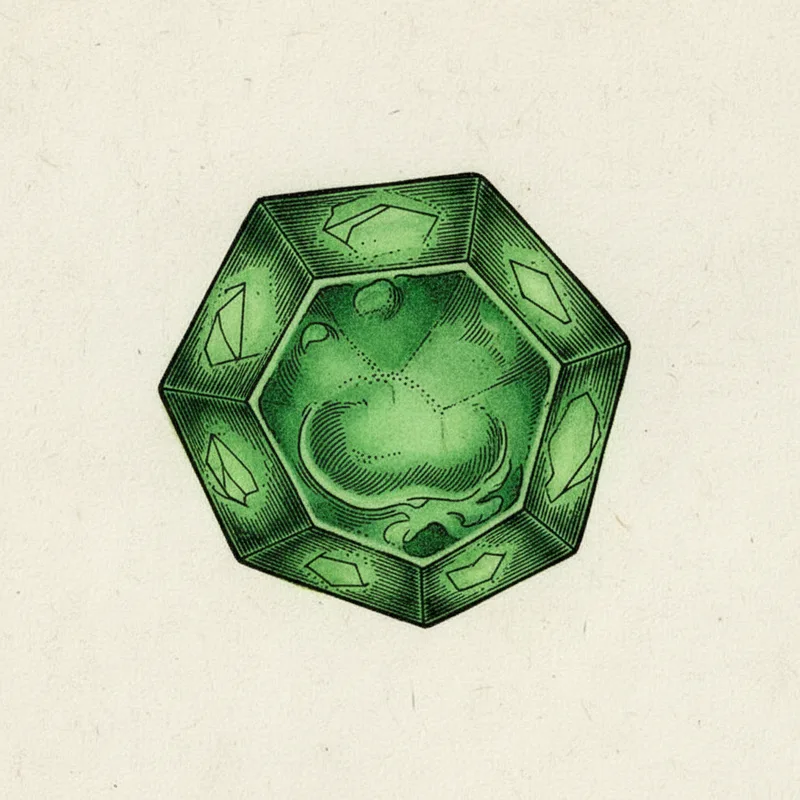
Tsavorite is a green grossular garnet colored by chromium and vanadium, the same chromophores that color emerald. But tsavorite typically has higher clarity, higher brilliance, and significantly more fire than emerald. It's also untreated. Virtually all emeralds on the market have been oiled or filled to mask fractures. Tsavorite requires no treatment.
Formation geology: Tsavorite forms in metamorphic environments where calcium-rich and aluminum-rich rocks are subjected to regional metamorphism in the presence of chromium and vanadium. The primary deposits straddle the border between Kenya and Tanzania, in Neoproterozoic metamorphic rocks of the Mozambique Belt, a 600-million-year-old tectonic suture zone. The mineral crystallizes in graphite-bearing nodules within gneiss, and mining these nodules is painstaking work since the crystals are typically small and fragile within the host rock.
Campbell Bridges discovered tsavorite in 1967 while working as a geologist in Tanzania, and later found additional deposits across the border in Kenya. Tiffany & Co.'s Henry Platt named the gem "tsavorite" after Kenya's Tsavo National Park and promoted it through the company's retail network. Despite Tiffany's backing, tsavorite never achieved mainstream recognition, largely because De Beers' diamond marketing machine was vastly larger than anything a single colored gemstone could counter. The result: a genuinely rare, naturally untreated gemstone that offers better clarity than emerald at one-third the price, and most people have never heard of it.
Why it outperforms diamond: Tsavorite doesn't beat diamond in hardness or brilliance. What it beats is value. A vivid green tsavorite delivers comparable visual impact to a fine emerald at one-third the price, with better clarity and no treatment. And unlike diamonds, tsavorite is genuinely rare. Large stones (over 3 carats) are extremely uncommon because the geological conditions that form them produce small crystals. Rarity here is geological, not manufactured.
How to buy: Look for vivid, medium-to-dark green with high clarity. The finest tsavorites have a pure green color without brown or yellow secondary tones. The color should ideally remind you of the best emerald green, but with a clarity and life that emerald rarely achieves. Stones under 1 carat are accessible at $500-1,000 per carat for nice quality. Above 2 carats, prices climb steeply because large crystals are genuinely rare, a consequence of the small nodule-forming environment. Above 5 carats, tsavorites become museum-level rarities.
Buy from a reputable colored stone dealer who can provide origin documentation. Tsavorite doesn't have a treatment problem (virtually all tsavorite on the market is untreated, one of its great selling points), which makes it one of the more straightforward colored gemstone purchases. The main concern is ensuring you're getting tsavorite and not cheaper green grossular without the chromium/vanadium chromophores.
Collector's tip: Tsavorite has gained significantly in value over the past two decades as the Kenyan and Tanzanian deposits have been increasingly mined. Campbell Bridges, who discovered the gem, was murdered in 2009 near his mine in Kenya, reportedly in a land dispute. The tragic story underscores the challenges of gemstone mining in East Africa and the genuine scarcity of the resource.
2. Red Spinel
The Ruby Imposter That Outshines the Original
| Property | Red Spinel | Diamond | Ruby |
|---|---|---|---|
| Chemical Formula | MgAl₂O₄ | C | Al₂O₃ |
| Hardness | 8 | 10 | 9 |
| Refractive Index | 1.718 | 2.417 | 1.762 |
| Dispersion | 0.020 | 0.044 | 0.018 |
| Price per carat (1ct, fine) | $1,000-5,000 | $5,000-15,000 | $5,000-25,000 |
Spinel is the most historically important case of mistaken identity in gemology. The Black Prince's Ruby in the British Imperial State Crown is a 170-carat red spinel. The Timur Ruby, also in the Crown Jewels, is spinel. For centuries, the finest "rubies" in royal collections were actually spinels, because the two minerals can look virtually identical to the naked eye and pre-scientific gemologists had no way to distinguish them.
Formation geology: Spinel crystallizes in metamorphosed limestone (marble) and in igneous rocks, particularly in contact metamorphic zones where magnesium-rich and aluminum-rich precursor minerals recrystallize under heat and pressure. The finest red spinels come from Myanmar's Mogok Stone Tract (the same region that produces the world's best rubies), Sri Lanka, Tanzania, and Tajikistan's Badakhshan province, which has been a source of "Balas rubies" (red spinels) since antiquity.
Spinel is a magnesium aluminum oxide that crystallizes in the isometric system, forming characteristic octahedral crystals. The red color comes from chromium substituting for aluminum in the crystal structure, exactly the same chromophore that colors ruby. Both minerals often form in the same geological environment, in the same marble host rocks, in the same deposits, sometimes in the same piece of rock, which is why they were confused for so long.
The distinction between ruby and red spinel was only established in the late 18th century, when advances in crystallography and chemical analysis allowed mineralogists to determine that they were fundamentally different minerals. Ruby is corundum (aluminum oxide, Al₂O₃) with a trigonal crystal system. Spinel is a magnesium aluminum oxide (MgAl₂O₄) with an isometric crystal system. Different chemistry, different structure, similar color, similar geological origin.
Why it outperforms diamond: Red spinel is harder than any gemstone except diamond, ruby, and sapphire. It's singly refractive (unlike ruby, which is doubly refractive), giving it a cleaner brilliance without the doubling of facet edges that can blur ruby's appearance at higher magnification. A fine red spinel costs roughly one-fifth to one-third of a comparable ruby. And unlike the diamond market, spinel pricing reflects genuine rarity. Large, fine red spinels are truly rare, which makes them more interesting as collector stones than diamonds whose market price is artificially maintained.
How to buy: The best red spinels show a vivid, saturated red without the pinkish or brownish tones that affect lesser quality material. Myanmar (Burma) produces the most coveted stones, with "Jedi" spinels from the Namya deposit in Kachin State showing a particular neon-hot pink-red that's become highly sought after. Sri Lankan spinels tend toward lighter tones but can be exceptionally brilliant. Expect $500-2,000 per carat for good 1-carat stones, with prices rising sharply above 3 carats.
Why spinel is having a moment: The gemstone trade is in the middle of a spinel renaissance. After centuries of being dismissed as "not ruby," spinel is finally getting recognition on its own merits. Auction houses have seen spinel prices climb 200-400% over the past decade for top-quality stones. It was added as an August birthstone in 2016 by the American Gem Trade Association. If the trend continues, today's prices may look like bargains in a decade.
3. Paraíba Tourmaline
The Neon Outlier
| Property | Paraíba Tourmaline | Diamond |
|---|---|---|
| Chemical Formula | Na(Li,Al)₃Al₆(BO₃)₃Si₆O₁₈(OH)₄ + Cu²⁺ | C |
| Hardness | 7-7.5 | 10 |
| Refractive Index | 1.624-1.644 | 2.417 |
| Dispersion | 0.017 | 0.044 |
| Price per carat (1ct, fine) | $10,000-50,000+ | $5,000-15,000 |
Paraíba tourmaline is the exception on this list. It doesn't outperform diamond on technical optical measures. It outperforms diamond on sheer visual impact. The neon blue-to-green color, caused by copper (Cu²⁺) substituting into the tourmaline crystal structure, is unlike anything else in the mineral world. It appears to glow. Under any lighting condition, a fine Paraíba tourmaline commands attention in a way that diamonds simply don't.
Formation geology: The original Paraíba tourmalines were discovered in 1989 in the state of Paraíba, Brazil, in pegmatite veins within a weathered granite dome called Mina da Batalha. The specific combination of lithium-rich tourmaline (elbaite) with copper and manganese trace elements had never been documented before. The copper produces the distinctive neon blue-green, while manganese can add violet tones. The interplay between these two chromophores creates a range of colors from electric blue to swimming-pool green to violet.
Similar copper-bearing tourmalines were later found in Mozambique (2005) and Nigeria (2001), expanding the supply of copper-bearing tourmaline but generating a heated debate in the gem trade about naming. Can African material be called "Paraíba tourmaline"? The Laboratoire Français de Gemmologie (LFG) and the Laboratory Manual Harmonisation Committee (LMHC) defined "Paraíba tourmaline" by its copper content rather than its geographic origin, meaning Mozambican and Nigerian stones qualify if they contain sufficient copper. But the original Brazilian material, particularly stones with strong saturation and medium tone from the Batalha mine, remains the most valued by collectors and commands the highest per-carat prices. The mine is largely exhausted, and new finds are sporadic.
Why it outperforms diamond: Paraíba tourmaline is one of the few colored gemstones that regularly sells for more per carat than diamonds. A fine 1-carat Brazilian Paraíba can fetch $20,000-50,000 per carat, exceeding all but the rarest diamonds. This isn't marketing. This is genuine geological rarity combined with an optical phenomenon (the copper-induced neon glow) that no other gemstone replicates. The mine that produced the finest stones is nearly depleted. There is no second source of comparable quality.
How to buy: This is a specialist gemstone. Don't buy Paraíba tourmaline from a general jewelry store or online marketplace without documentation. Legitimate Paraíba tourmalines should come with a gemological laboratory report (GIA, GRS, Gübelin, or SSEF) confirming copper content. Mozambican and Nigerian material is genuine copper-bearing tourmaline and significantly more affordable than Brazilian stones ($1,000-5,000 per carat for fine material). The distinction between origins is important because Brazilian Paraíba commands a 5-10x premium over African material for comparable quality. If a deal seems too good for "Brazilian Paraíba," it almost certainly isn't Brazilian.
The science of that glow: The neon appearance of Paraíba tourmaline isn't just about color saturation. Copper creates a narrow absorption band that produces an unusually high spectral purity. The color is "vivid" in a measurable sense: the bandwidth of transmitted wavelengths is narrower than in most colored gemstones, creating a color that appears to emit light rather than merely reflect it. In gemological terms, this is exceptionally high chroma. The visual effect is immediate and unmistakable.
4. Demantoid Garnet
The Fire Champion
| Property | Demantoid | Diamond |
|---|---|---|
| Chemical Formula | Ca₃Fe₂(SiO₄)₃ | C |
| Hardness | 6.5-7 | 10 |
| Refractive Index | 1.888 | 2.417 |
| Dispersion | 0.057 | 0.044 |
| Price per carat (1ct, fine) | $2,000-10,000 | $5,000-15,000 |
Demantoid garnet is the gemstone that diamond lovers don't want to know about, because it beats diamond at what diamond does best. Demantoid's dispersion of 0.057 exceeds diamond's 0.044 by 30%. In practical terms, this means demantoid throws more spectral fire (those rainbow flashes you see in a well-cut stone) than diamond. The name "demantoid" literally means "diamond-like" in Dutch/German, and it was chosen because early gemologists recognized that its fire rivaled or exceeded diamond.
Formation geology: Demantoid is the green variety of andradite garnet, colored by chromium. It forms in serpentinites, metamorphosed ultramafic rocks where calcium, iron, and chromium-rich fluids generate the andradite garnet structure. The most famous and valued source is Russia's Ural Mountains, where demantoid was first identified in 1868. Russian demantoid often contains distinctive "horsetail" inclusions: radiating bundles of chrysotile (a serpentine mineral) fibers that are considered a desirable feature rather than a flaw. These horsetail inclusions confirm Russian origin and actually increase the stone's value, one of the very few cases in gemology where inclusions add price.
Additional sources include Namibia (which produces clean, bright green stones without horsetails, often with higher saturation than Russian material), Madagascar, and Iran. Italian demantoid from Val Malenco in Lombardy occasionally reaches the market as well. But the Russian material with horsetail inclusions remains the most collectible, combining geological interest (the chrysotile inclusions prove formation in serpentinite) with aesthetic appeal (the golden-green horsetails catch light beautifully within the stone) and historical significance (these are the same stones that captivated 19th-century Russian aristocracy and Fabergé).
Why it outperforms diamond: The numbers are clear. Demantoid has 30% more dispersion than diamond. In a well-cut stone, the spectral fire is stunning, rainbow flashes leaping from every facet. The refractive index of 1.888 is also high for a garnet, giving it strong brilliance. The trade-off is hardness: at 6.5-7, demantoid is significantly softer than diamond and requires more careful wear in jewelry. But for visual impact per dollar, a fine demantoid delivers more fire than a diamond at a fraction of the cost.
How to buy: For Russian demantoid with horsetail inclusions, expect $3,000-10,000+ per carat for fine stones. Namibian demantoid, which tends to be cleaner but lacks the horsetails, runs $1,000-4,000 per carat. Small stones (under 0.5 carat) are more available and can be found for $500-1,500 per carat. Melee-sized demantoid (under 0.25 carat) is used by some high-end jewelry designers and can be found for less. Always examine the stone under strong light to see the fire. Demantoid's dispersion is its defining feature, and a well-cut stone under a point light source will throw spectral flashes visibly across a table. If a dealer has a fiber-optic light or strong LED, ask them to demonstrate the fire. The effect is immediately obvious and dramatic.
One consideration: demantoid is slightly heat-sensitive. Some stones can change color or lose saturation if exposed to high temperatures during jewelry repair or resizing. Any jeweler working with demantoid should be told in advance so they can take precautions.
Historical note: Peter Carl Fabergé was famously enamored with demantoid and used it extensively in his legendary eggs and jewelry objects. The green flash of Ural demantoid in Fabergé pieces remains one of the hallmarks of the firm's work. When antique Fabergé pieces containing demantoid sell at auction, the provenance of the stones becomes part of the object's history.
5. Alexandrite
The Color-Change Phenomenon
| Property | Alexandrite | Diamond |
|---|---|---|
| Chemical Formula | BeAl₂O₄ (with Cr³⁺) | C |
| Hardness | 8.5 | 10 |
| Refractive Index | 1.746 | 2.417 |
| Dispersion | 0.015 | 0.044 |
| Price per carat (1ct, fine) | $10,000-70,000+ | $5,000-15,000 |
Alexandrite is the chameleon of the gem world. It appears green in daylight and red under incandescent light. This isn't a trick of perception. It's a precisely balanced absorption spectrum caused by chromium (Cr³⁺) substituting for aluminum in chrysoberyl's crystal structure. The chromium absorption bands fall in the yellow portion of the spectrum, creating a transmission window for both red and green light. Under daylight (which is rich in blue-green wavelengths), the green transmission dominates. Under incandescent light (which is rich in red wavelengths), the red transmission dominates.
Formation geology: Alexandrite forms in phlogopite mica schists, emerald-bearing mica schists, and in some pegmatite environments. The geological conditions are extremely specific: you need beryllium (rare), aluminum, and chromium (which concentrates in ultramafic rocks) to come together in the same formation environment, which requires unusual tectonic juxtaposition of beryllium-bearing pegmatites with chromium-bearing ultramafic rocks. This is why alexandrite is genuinely one of the rarest gemstones.
The original source, Russia's Ural Mountains (discovered in 1830 and named after Tsar Alexander II), is essentially exhausted. Brazilian alexandrite, discovered in the 1980s in the state of Minas Gerais, now accounts for most of the market. Brazilian stones can show excellent color change, though connoisseurs consider the finest Russian stones (vivid emerald green to vivid pigeon-blood red) as the ultimate standard. Sri Lanka produces alexandrite with typically lighter tones, Tanzania yields occasional fine stones, and India's Orissa deposits have contributed smaller quantities.
The color-change mechanism is specific and demanding. The chromium absorption spectrum must be precisely balanced to create roughly equal transmission in the red and green portions of the spectrum. Too much chromium absorption shifts the balance too far toward red. Too little and the green dominates in all lighting. The narrow window of chromium concentration that produces strong color change is one reason why alexandrite is so rare. Many chrysoberyl crystals contain chromium, but very few have the exact concentration needed for dramatic color change.
Why it outperforms diamond: Alexandrite's color-change property is a genuine optical phenomenon that no diamond can replicate. Fine alexandrite regularly sells for more per carat than diamonds, with top Russian stones exceeding $70,000 per carat. The rarity is real: the geological conditions that form alexandrite are extraordinarily specific, and the most important historical source is depleted. Unlike diamonds, where De Beers controls supply to maintain prices, alexandrite's scarcity is the product of geology, not marketing.
How to buy: The most important factor in alexandrite is the degree of color change. A stone that goes from green to red commands a massive premium over one that goes from brownish-green to brownish-purple. Look for stones that show vivid, distinct colors in both lighting conditions. Lab reports from GIA or GRS will describe the color change percentage. Anything described as "strong" or "vivid" color change is premium material. Brazilian alexandrite is the most available on the market today, with prices starting around $3,000 per carat for moderate color-change stones.
The synthetic question: Lab-grown alexandrite (usually produced by the Czochralski method) exists and shows excellent color change. It costs a tiny fraction of natural alexandrite. If you want the optical experience without the geological rarity premium, synthetic alexandrite is a legitimate option. Just make sure the seller discloses it honestly. Any "alexandrite" offered at under $500 per carat is almost certainly synthetic.
6. Moissanite
The Brilliance King
| Property | Moissanite | Diamond |
|---|---|---|
| Chemical Formula | SiC | C |
| Hardness | 9.25 | 10 |
| Refractive Index | 2.654 | 2.417 |
| Dispersion | 0.104 | 0.044 |
| Price per carat (1ct, lab-grown) | $300-600 | $5,000-15,000 |
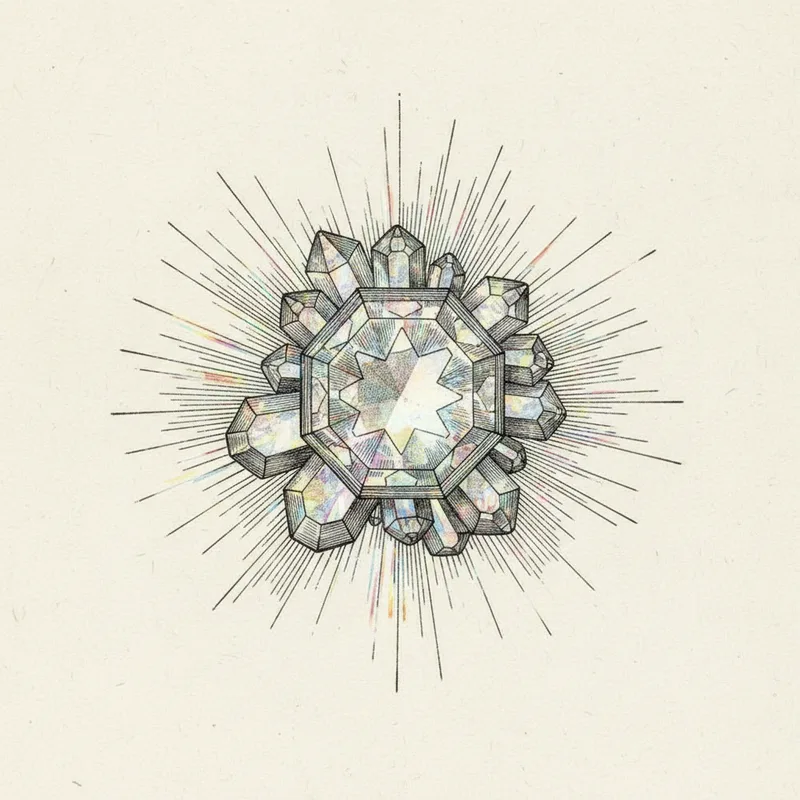
Moissanite is the gemstone that diamond marketers hope you never learn about, because it beats diamond on nearly every optical measurement. Its refractive index of 2.654 exceeds diamond's 2.417, meaning moissanite is more brilliant. Its dispersion of 0.104 is 2.4 times greater than diamond's 0.044, meaning it throws dramatically more spectral fire. And at 9.25 on the Mohs scale, it's the second hardest gemstone after diamond, making it entirely practical for daily wear jewelry.
Formation geology: Natural moissanite is one of the rarest minerals on Earth. Henri Moissan discovered microscopic crystals in the Canyon Diablo meteorite crater in Arizona in 1893, and for decades scientists debated whether terrestrial moissanite existed at all. It does, but only in tiny quantities: in kimberlite pipes (the same formations that bring diamonds to the surface), in some metamorphic rocks, and as inclusions within other minerals. Natural moissanite crystals large enough for gemstone use are essentially nonexistent.
The moissanite you can buy is lab-grown silicon carbide, produced by the Lely process or modified chemical vapor deposition. Charles & Colvard commercialized gem-quality moissanite in the late 1990s, and the technology has improved dramatically since. Modern moissanite is virtually colorless (early material had a yellowish-green tint that was its biggest drawback) and optically consistent.
Silicon carbide is also one of the hardest known materials and is used industrially as an abrasive and semiconductor. The same compound that makes a beautiful gemstone also grinds metal and powers electronic devices. It exists at the intersection of materials science and gemology in a way that no other gem material does.
One technical distinction: moissanite is doubly refractive (it crystallizes in the hexagonal system), while diamond is singly refractive (isometric). This means moissanite shows doubling of back facet edges when viewed through the table, an effect that trained gemologists can spot. Most consumers never notice it, and some prefer the visual complexity it adds. Under strong point lighting, moissanite's extreme dispersion produces dramatic rainbow flashes that are visibly different from diamond's more subtle fire. Whether you prefer moissanite's "disco ball" effect or diamond's more restrained sparkle is a matter of personal taste.
Why it outperforms diamond: The comparison is stark. Moissanite has higher brilliance (RI 2.654 vs. 2.417), more than double the fire (0.104 vs. 0.044), nearly equal hardness (9.25 vs. 10), and costs roughly 1/10th to 1/20th the price. The only metric where diamond wins is hardness, by less than one Mohs step. The primary argument for diamond over moissanite is emotional and cultural, not optical or physical.
The catch: all commercially available moissanite is lab-grown. If natural origin matters to you, moissanite isn't the answer. If optical performance matters, it's the clear winner.
How to buy: Modern moissanite is widely available from multiple manufacturers (Charles & Colvard's Forever One line, and various competitors). Quality has standardized significantly since the early days. Look for "colorless" or "near-colorless" grades. The doubly refractive nature of moissanite means you can see facet doubling when looking through the stone at certain angles, a visual effect that distinguishes it from singly refractive diamond. Some people find the extra fire "too much" compared to diamond's more subdued sparkle. This is personal preference, not a quality issue.
The bigger picture: The lab-grown diamond market is converging toward moissanite's price range as manufacturing scales up. Lab-grown diamonds have dropped from $4,000-5,000 per carat in 2017 to $500-1,500 per carat in 2025 for 1-carat stones, and the trend line points further downward. As lab-grown diamond prices continue to fall, the traditional diamond industry's pricing structure looks increasingly artificial. Moissanite was the first gemstone to demonstrate that optical performance and high price don't have to go together. Lab-grown diamonds are proving the same point.
Durability note: At Mohs 9.25, moissanite is harder than every natural gemstone except diamond. It won't scratch from quartz dust (the main source of scratching on jewelry), it's tougher than diamond (less prone to chipping, because diamond has perfect cleavage along certain planes while moissanite does not), and it's stable at high temperatures. For a gemstone you plan to wear daily for decades, moissanite's physical properties are genuinely excellent. The cultural cachet of diamond is the only real counterargument, and that's a personal value judgment, not a materials science one.
Why These Gems Stay Undervalued
The answer is simple: marketing.
Diamond has had over a century of sustained, global advertising. The "A Diamond Is Forever" tagline, created by Frances Gerety at N.W. Ayer & Son in 1947, has been running in some form for nearly 80 years. De Beers spent billions establishing diamond engagement rings as a social norm, creating gift-giving occasions (anniversary bands, eternity rings, three-stone rings), and lobbying against synthetic alternatives.
None of these six gemstones has anything comparable. Tsavorite had a brief push from Tiffany. Spinel was added as a birthstone in 2016. Paraíba tourmaline is a specialist interest. Demantoid, alexandrite, and moissanite have no major marketing presence at all.
The result is an information asymmetry. Most consumers know what a diamond looks like, what it costs, and why they "should" buy one. Most consumers have never heard of tsavorite, couldn't identify a spinel, and think moissanite is a "fake diamond" rather than a superior optical performer in its own right.
This is gradually changing. Social media has democratized gemstone education. Colored gemstone dealers report increasing demand from younger buyers who research online before purchasing. The lab-grown diamond revolution has opened consumers' minds to alternatives. And the simple fact that a $500 moissanite throws more fire than a $5,000 diamond is increasingly difficult for the traditional industry to suppress.
The Comparison Table
| Gemstone | Hardness | RI | Dispersion | Price/ct (1ct fine) | Beats Diamond In |
|---|---|---|---|---|---|
| Diamond | 10 | 2.417 | 0.044 | $5,000-15,000 | (baseline) |
| Tsavorite | 7-7.5 | 1.740 | 0.028 | $500-3,000 | Value, no treatment needed |
| Spinel | 8 | 1.718 | 0.020 | $1,000-5,000 | Value, no treatment needed |
| Paraíba Tourmaline | 7-7.5 | 1.624-1.644 | 0.017 | $10,000-50,000+ | Visual impact, true rarity |
| Demantoid | 6.5-7 | 1.888 | 0.057 | $2,000-10,000 | Fire (+30%) |
| Alexandrite | 8.5 | 1.746 | 0.015 | $10,000-70,000+ | Color change, true rarity |
| Moissanite | 9.25 | 2.654 | 0.104 | $300-600 (lab) | Brilliance, fire (+140%), price |
Understanding the Numbers: A Visual Guide
Numbers on a page don't capture the visual experience, so here's what these differences actually look like in practice.
Brilliance (RI). A higher RI means more total internal reflection, meaning more light entering the stone bounces back to your eye instead of leaking out the bottom. Diamond's 2.417 is high enough to create strong brilliance in a well-cut stone. Moissanite's 2.654 creates noticeably more brilliance, a difference that's visible even to untrained eyes when the two stones are compared side by side under the same lighting. The other four gems on this list have lower RIs than diamond, which means they rely on color, fire, or unique optical phenomena rather than raw brilliance to compete.
Fire (dispersion). Put a well-cut demantoid garnet next to a well-cut diamond under a point light source (a single LED or a sunny window). The demantoid will throw more rainbow flashes. Put a moissanite next to either, and it will throw dramatically more. The differences are not subtle. A moissanite under strong lighting produces visible spectral flashes that can be seen from several feet away. Diamond's fire is real but relatively restrained by comparison.
Color saturation. This is where tsavorite, spinel, Paraíba tourmaline, demantoid, and alexandrite have an advantage that no colorless gemstone can match. A vivid colored gemstone creates an immediate, visceral response that a colorless stone (no matter how brilliant) simply cannot. The human visual system is wired to respond to saturated color, and a fine Paraíba tourmaline or vivid tsavorite activates that response in a way that a white diamond never will. This isn't a criticism of diamonds. It's an observation about human perception.
The viewing distance test. Hold a 1-carat diamond and a 1-carat vivid-colored gemstone at arm's length. The diamond's brilliance diminishes rapidly with distance. The colored stone's color remains visible and compelling. For jewelry designed to be seen from across a room (cocktail rings, pendants, earrings), color carries further than brilliance. This is one reason why large colored gemstones in jewelry create more visual impact per carat than equivalent-sized diamonds.
What This Actually Means
The gemstone market is a strange place where perception trumps physics. A diamond with a dispersion of 0.044 is marketed as having unparalleled "fire" while a demantoid with 30% more dispersion sits in a specialist dealer's display case. A moissanite that outperforms diamond on every optical metric costs one-tenth the price because it lacks the century of marketing mythology.
This isn't an argument against diamonds. If you want a diamond, buy a diamond. The cultural significance is real, the hardness is genuinely exceptional, and the stone itself is a remarkable product of extreme geology.
But if you're interested in gemstones as natural phenomena, as products of geology and chemistry and physics rather than marketing, these six deserve your attention. They formed under extraordinary conditions. They possess measurable optical properties that match or exceed diamond. And they represent some of the most interesting mineralogy on the planet.
The best gemstone is the one whose story, science, and beauty resonate with you. That might be a diamond. Or it might be a tiny Russian demantoid throwing rainbows across a room with 30% more fire than any diamond ever could.
Where to Start
If this list has sparked your interest, here's a practical starting point for each budget:
Under $500: A fine Mozambican Paraíba tourmaline (small but genuine copper-bearing), a quality tsavorite under 0.5 carat, or a well-cut moissanite. Each one demonstrates a specific optical property that rivals or exceeds diamond.
$500-2,000: A 0.5-1 carat tsavorite, a nice red spinel from Sri Lanka or Myanmar, or a small demantoid garnet. At this range, you're getting genuinely beautiful natural gemstones with interesting geological stories.
$2,000-10,000: A fine 1-carat red spinel, a Russian demantoid with horsetail inclusions, a Brazilian alexandrite with moderate color change, or a small Mozambican Paraíba. These are collector-quality stones that hold their value.
$10,000+: Top-quality alexandrite, fine Brazilian Paraíba, or exceptional Ural demantoid. These compete directly with diamond pricing but offer properties that diamond simply cannot match. At this level, you're collecting geological rarities that may appreciate significantly over time.
For engagement rings specifically: Moissanite ($300-600) is the practical choice. It's harder than sapphire, more brilliant than diamond, and more fiery than anything else on the market. Red spinel ($1,000-5,000) and alexandrite ($3,000+) are both hard enough for daily wear and offer something no diamond can: vivid color or color-change phenomena that make the ring genuinely unique. Tsavorite in a protective setting works beautifully for someone who wants color without fragility.
The key insight isn't that diamonds are bad. It's that the gemstone world is vastly more interesting than a century of diamond marketing has led most people to believe. These six stones prove it.
Frequently Asked Questions
Are these gemstones good for engagement rings? Spinel (Mohs 8), alexandrite (8.5), and moissanite (9.25) are all hard enough for daily wear in rings. Tsavorite (7-7.5) and Paraíba tourmaline (7-7.5) can work in protective settings but are more vulnerable to scratching than diamond. Demantoid (6.5-7) is best reserved for earrings, pendants, or occasional-wear rings. For context, quartz (which is in common household dust) is Mohs 7, so any ring stone below 7 will show wear over time from simply being in a dusty environment.
Can gemologists tell these apart from diamond? Easily. Every gemstone has a unique set of optical and physical properties (RI, dispersion, specific gravity, UV fluorescence, spectroscopic signature) that make identification straightforward for a trained gemologist with basic tools. A standard refractometer will immediately separate any of these from diamond. The concern isn't identification; it's that many consumers don't know these alternatives exist.
Do these gemstones hold their value? Natural colored gemstones with genuine rarity (alexandrite, Paraíba tourmaline, tsavorite, demantoid, fine spinel) have appreciated significantly over the past two decades and show strong auction performance. Moissanite, as a lab-grown product, does not hold resale value the same way but offers the best optical value per dollar. Diamonds, despite their reputation, actually have poor resale value for consumers. Try selling a diamond ring back to a jeweler and you'll typically receive 30-50% of what you paid.
Where can I see these gemstones in person? Major gem and mineral shows (Tucson Gem Show in February, Denver Gem Show in September, the Smithsonian's gem collection in Washington, DC) are the best places to see these stones in person and compare them side by side. Some specialty jewelers carry colored gemstones, but most mall jewelers stock only diamonds, sapphires, rubies, and emeralds. The online market for colored gemstones has improved dramatically, with reputable dealers offering high-quality photography and video, but nothing replaces seeing fire and brilliance in person.
Is lab-grown diamond a seventh option? Lab-grown diamond is chemically identical to mined diamond (both are pure crystalline carbon). It matches mined diamond on every physical and optical property. The only difference is origin: one formed 1-3 billion years ago at 150-250 km depth, the other grew in a reactor over a few weeks. As prices continue to fall, lab-grown diamond increasingly competes with moissanite rather than mined diamond. Whether to include it on this list depends on whether you consider it a separate gemstone or the same mineral with a different origin story. Geologically, it's the same crystal. Commercially, the market is still sorting that out.
What about sapphires? Sapphire (corundum, Al₂O₃) is a worthy gemstone with excellent hardness (9) and a long history. But it doesn't outperform diamond in any optical measure. Its RI (1.762) and dispersion (0.018) are both lower than diamond's. What sapphire offers is extraordinary color diversity (blue, pink, yellow, orange, green, color-change varieties) at accessible prices. Fine blue sapphires from Kashmir or Myanmar are genuinely expensive, but quality sapphires from Sri Lanka and Madagascar are available at $500-2,000 per carat, making them excellent value. They didn't make this list because the focus is specifically on gemstones that match or exceed diamond's measurable properties, but sapphire deserves its own conversation.
Should I invest in gemstones? This article is about appreciation, not investment advice. Colored gemstones can appreciate in value, but they're illiquid assets with no standardized exchange. Selling a gemstone typically means finding a specialist buyer and accepting a wholesale discount. If you buy these stones, buy them because they fascinate you, not because you expect a financial return. The returns are educational and aesthetic. Those are valuable too.
How do I learn more about colored gemstones? The Gemological Institute of America (GIA) offers courses and a wealth of free educational content. Richard Wise's book "Secrets of the Gem Trade" is considered the definitive guide for colored gemstone buyers. Online, the Pricescope and Gemology Online forums have active communities of collectors and dealers sharing knowledge. And visiting the Smithsonian's gem gallery (free admission) in Washington, DC lets you see many of these stones in world-class examples. The more you learn, the more absurd the "diamond is the ultimate gemstone" narrative becomes.
The gemstone world is vast, varied, and genuinely fascinating. Diamonds are one chapter. These six gemstones are six more. There are hundreds more waiting to be discovered by anyone willing to look beyond the De Beers playbook.
Crystals in This Article
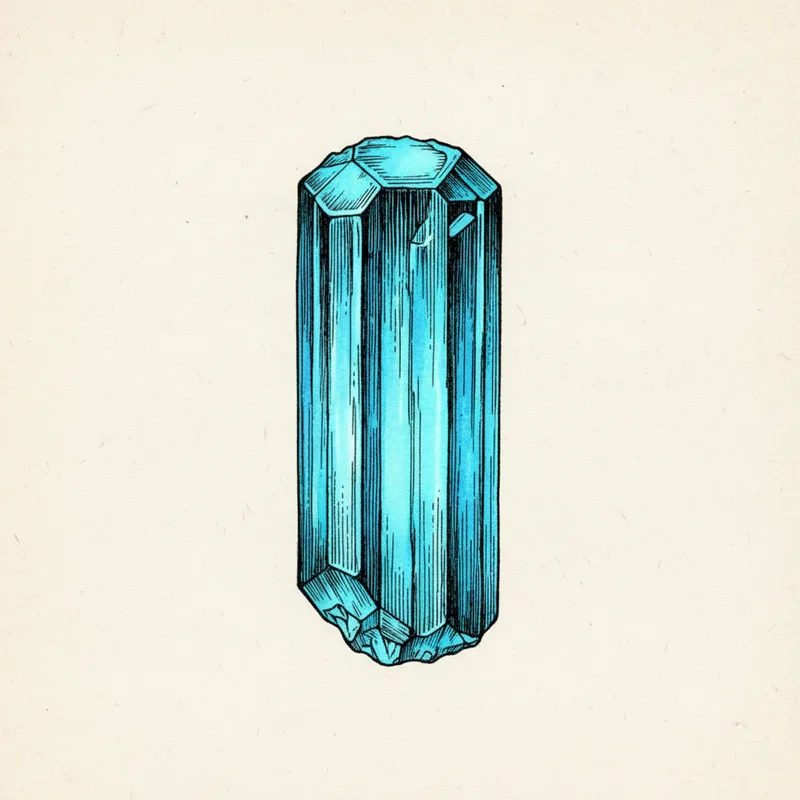
Paraíba Tourmaline
The Neon Gem
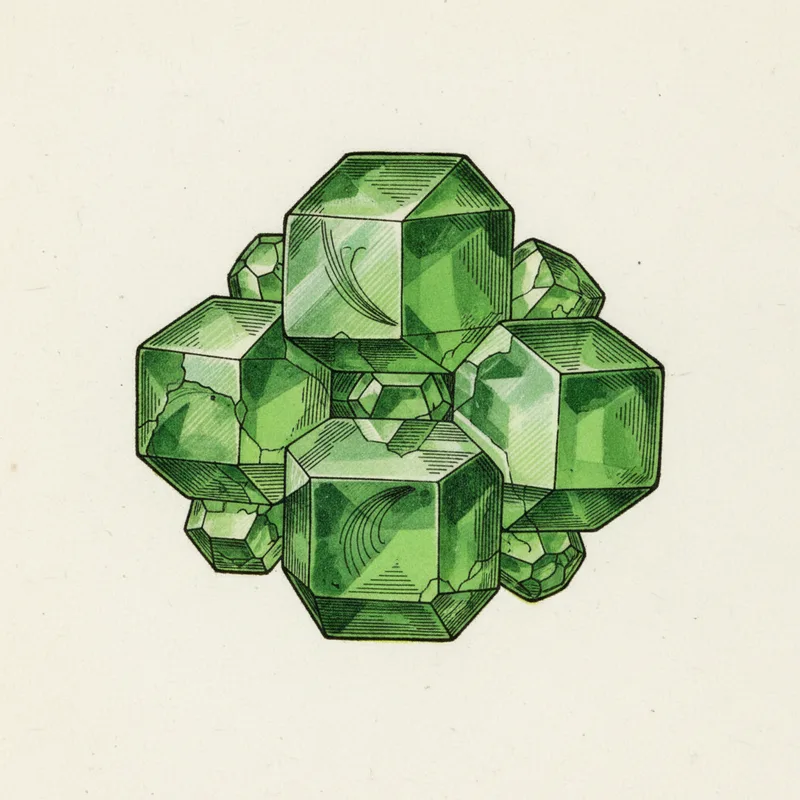
Demantoid Garnet
The Green Fire

Grossular Garnet
The Rainbow Garnet

Andradite Garnet
The Collector's Garnet
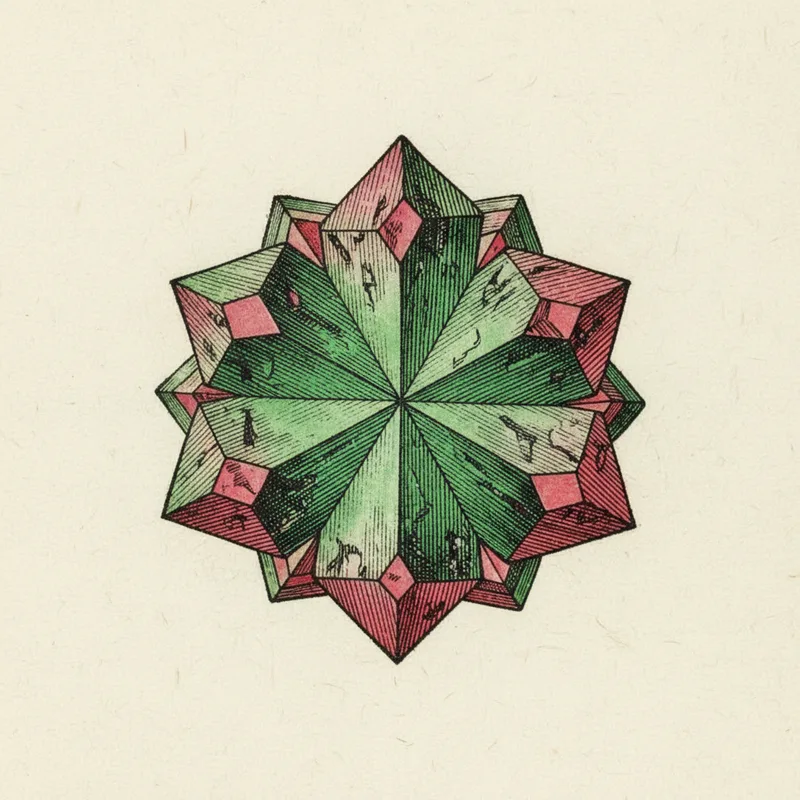
Alexandrite
The Chameleon Gem
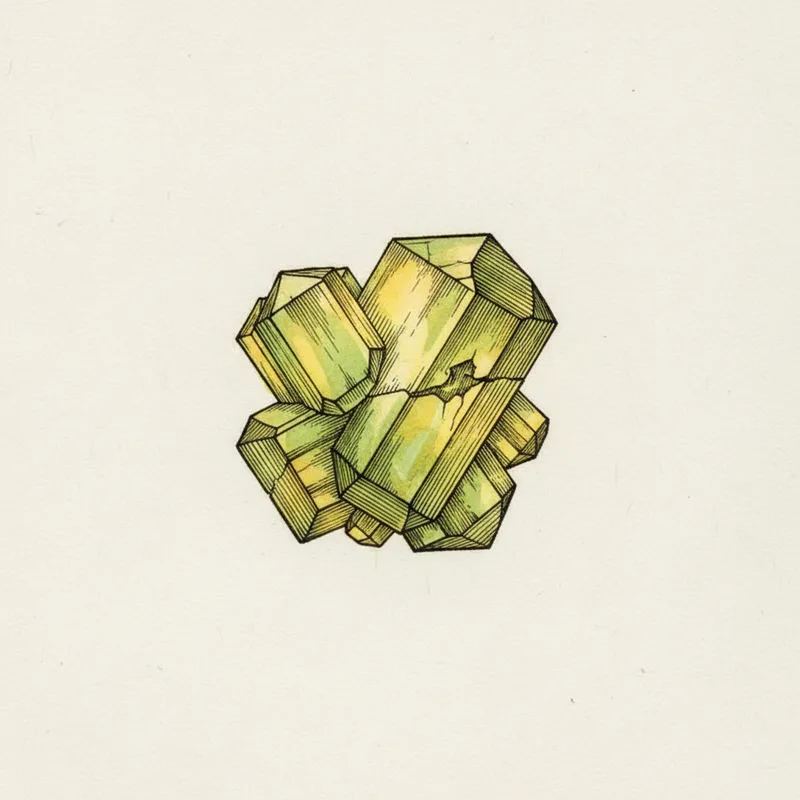
Chrysoberyl
The Cat's Eye Gem
Tourmaline
The Rainbow Stone
Serpentine
The Serpent Stone
Moissanite
The Space Diamond

Chrysotile
The Serpentine Fiber
Tsavorite
The Emerald's East African Rival
Limestone
The Fossil Record
Keep Reading
Stay in the loop
From the Almanac
Updates from Crystal Almanac, when there’s something worth sharing.