Crystal of the Year 2026: Why Carnelian Is Everywhere
Key Takeaway: Carnelian, a chalcedony variety of quartz (SiO₂) stained sunset-orange by iron oxide, has become the defining crystal of 2026. Its geological origins in ancient lava flows, its 4,500-year track record as a stone of courage and creative fire, and its alignment with the year's numerological energy have made it inescapable. Best of all, genuine specimens start at $3.
Scroll through crystal TikTok right now and count the seconds before you see carnelian. Five, maybe ten. It's in every haul video, every "2026 starter kit" reel, every shop window from Brooklyn to Byron Bay. Carnelian towers. Carnelian bracelets. Carnelian palm stones tucked into jacket pockets like talismans against a timid year.
This kind of collective fixation doesn't happen by accident. Every year, the crystal community rallies around a stone that captures the mood, and 2026 has chosen carnelian with unusual conviction. The logic comes from numerology: 2026 is a 1 Universal Year (2+0+2+6=10, 1+0=1). In numerological tradition, a 1 year marks the opening of a fresh nine-year cycle. New beginnings. Bold starts. The courage to build something from nothing. Carnelian, with its millennia-old reputation as the stone of action and creative nerve, fits that narrative so precisely it almost feels choreographed.
But strip away the trend cycle and carnelian is still one of the most geologically interesting and historically significant stones you can hold in your hand. Here's everything worth knowing about it, from the volcanic chemistry that gives it color to the practical tricks that keep you from buying a fake.
The Geology: Iron, Silica, and Deep Time
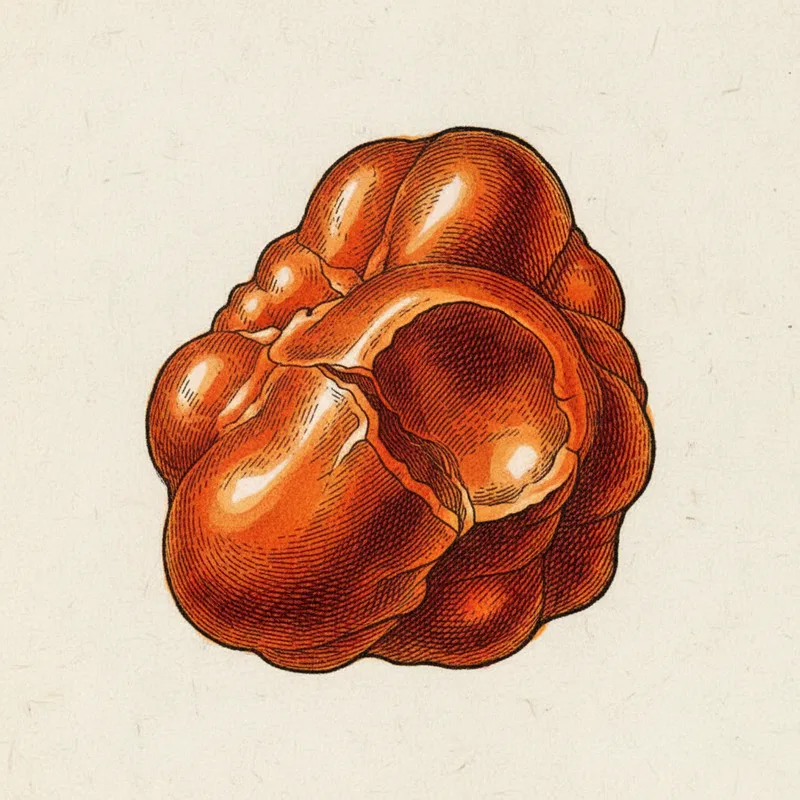
Carnelian is a variety of chalcedony, which is itself a microcrystalline (or cryptocrystalline) form of quartz. Its chemical formula is SiO₂, identical to clear quartz, amethyst, citrine, and every other member of the quartz family. What separates carnelian from its colorless cousins is iron. Trace amounts of iron oxide (Fe₂O₃), sometimes as little as a fraction of a percent, dispersed through the silica matrix produce that unmistakable warm orange to reddish-brown body color.
The concentration and oxidation state of the iron determine the shade. Pale, honey-toned carnelian contains less Fe₂O₃. Deep, blood-orange specimens contain more, with the iron more thoroughly oxidized. Some pieces show both extremes in a single stone, fading from translucent amber at the edges to a rich rust at the core. This gradation is one of the hallmarks of natural, untreated material.
At 6.5 to 7 on the Mohs scale, carnelian is harder than steel and tougher than window glass. It takes a beautiful waxy-to-vitreous polish, fractures conchoidally (those smooth, shell-like curves you see when flint breaks), and transmits light through thin sections with a warm inner glow. That translucency is worth remembering. It's one of your best tools for separating real carnelian from imitations.
How Carnelian Forms: Two Paths to the Same Stone
Carnelian doesn't grow as the glittering, well-formed crystal points you might picture when you hear the word "quartz." Its crystals are far too small to see without a microscope. Instead, carnelian forms as solid masses, nodules, and cavity linings, built up molecule by molecule over geological time. Two environments produce most of the world's supply.
Volcanic. When silica-saturated groundwater circulates through gas cavities in cooling basalt or rhyolite, it deposits thin layers of microcrystalline quartz on the cavity walls. If that groundwater carries dissolved iron, the silica picks up an orange tint as the iron oxidizes. The process is staggeringly slow. A single carnelian nodule might represent tens of thousands of years of mineral deposition at temperatures between 50 and 200 degrees Celsius. India's Deccan Traps, a colossal basalt province that erupted roughly 66 million years ago and covered an area the size of France, remain one of the world's premier sources. The carnelian found there formed long after the eruptions themselves, as hydrothermal fluids worked through the ancient lava over millions of years.
Sedimentary. Silica-bearing groundwater also flows through limestone, sandstone, and gravel beds, precipitating chalcedony in voids and fractures. Brazilian and Uruguayan carnelian often forms this way, deposited as rounded nodules within river gravels and sedimentary host rocks. Madagascar, Indonesia, and several East African localities (particularly along the Mozambique coast) contribute significant commercial material through similar processes.
The cryptocrystalline structure is what gives carnelian its smooth, almost glassy polish, completely unlike the sharp faceted geometry of amethyst points or quartz clusters. When you run your thumb over a polished carnelian, you're feeling the surface of billions of interlocking quartz crystals, each far too small to distinguish individually.
Carnelian vs Moonstone: The Two Crystals of 2026
Moonstone is the other stone that dominates every "best crystals for 2026" list. Together they make a fascinating pair, because mineralogically, they have almost nothing in common.
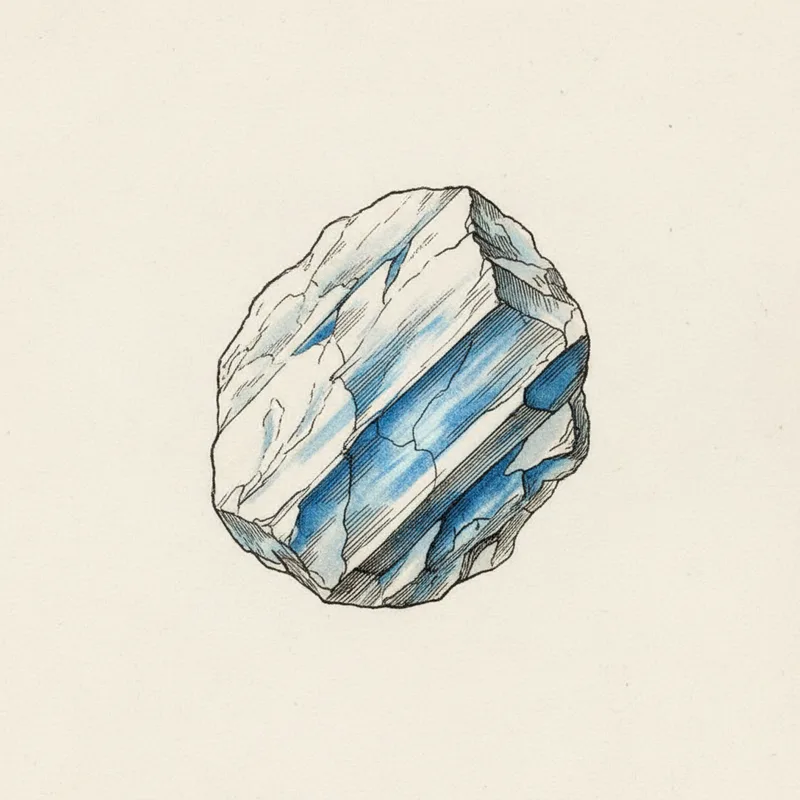
Moonstone is a feldspar, specifically an alkali feldspar with the formula KAlSi₃O₈. It belongs to an entirely different mineral family from quartz, with a different crystal structure (monoclinic vs trigonal), different hardness (6 to 6.5, slightly softer than carnelian), and a fundamentally different optical phenomenon. Moonstone's signature floating shimmer, called adularescence, occurs because the stone contains alternating microscopic layers of two feldspar species, orthoclase and albite, that formed as the mineral cooled and chemically separated. These layers are thin enough to interfere with light waves, scattering blue and white light across the stone's surface as you tilt it.
Carnelian has nothing like this. Its color is body color, uniform and intrinsic, caused by iron atoms locked into the silica structure rather than by any trick of internal architecture. Where moonstone plays with light, carnelian absorbs it and glows.
The contrast extends to their traditional associations. Moonstone runs cool: silver, blue, soft peach. It's linked in traditions to intuition, receptivity, and inner reflection. Carnelian runs hot: orange, amber, deep red. Its traditions emphasize action, confidence, and outward creative force. That the crystal community has embraced both for 2026 has a certain symmetry. One stone for looking inward. The other for charging forward.
How to Spot Fake Carnelian
Carnelian is inexpensive enough that elaborate forgeries are rare. Nobody is running a carnelian fraud ring. But the stone's surge in popularity has brought three common substitution issues worth understanding.
Dyed agate. This is by far the most frequent problem. Natural gray or pale agate is soaked in iron nitrate solution (or occasionally sugar solution), then heated in a kiln to produce an orange-red color. The result can pass a casual glance. To catch it, examine the stone under 10x magnification and look at any cracks, fractures, or natural fissures. In dyed material, color concentrates in these lines, creating dark streaks that follow the fracture pattern rather than the stone's natural banding. Genuine carnelian transitions smoothly between color zones. If the orange stops abruptly at a crack, walks away.
Glass. Hold the suspect piece up to a strong light source and look inside for tiny spherical air bubbles. Glass almost always contains them. Carnelian never does. Glass also tends toward a more perfectly uniform color, lacking the subtle translucency variations and organic banding of real chalcedony. And glass warms to skin temperature noticeably faster than stone, so a piece that feels warm within seconds of picking it up deserves scrutiny.
Heat-treated yellow agate sold as carnelian. This occupies a gray area. Heat treatment of chalcedony has been practiced for at least 4,000 years (the Indus Valley civilizations were doing it), and the gem trade generally considers it an accepted enhancement. The resulting stone is still real chalcedony with real iron. But if you're paying a premium for "natural, untreated" carnelian, know what to look for: heat-treated pieces tend toward an overly uniform orange, sometimes with a slightly artificial "hot" quality to the color, lacking the gentle gradations of naturally colored material.
For a comprehensive guide to these techniques and more, our post on how to spot fake crystals covers the scratch test, temperature test, UV light check, and visual inspection methods that work across dozens of stone types.
4,500 Years of Carrying This Stone
The 2026 trend is new. The human fascination with carnelian is ancient.
Ancient Egyptians treated carnelian as one of their most sacred stones, associating it with the blood of Isis and the power of the setting sun. Carnelian amulets, frequently carved into scarab forms, appear throughout burial sites from the Old Kingdom forward. The stone was placed on the chest of the deceased as protection in the afterlife, and it shows up in the Book of the Dead as a material of ritual significance.
Roman aristocrats and military officers favored carnelian for signet rings. The stone's hardness made it ideal for fine engraving, and its polished surface has a useful practical property: hot sealing wax doesn't adhere to it. A carnelian seal could press a clean impression into wax and pull away without damage, making it the preferred material for authenticating letters, contracts, and official documents. Roman soldiers also carried carnelian into battle as a stone of courage, a tradition that predates Rome and traces back through Greek and Mesopotamian cultures.
In Islamic tradition, the Prophet Muhammad wore a carnelian ring on his right hand, and the stone holds a place of particular respect across Islamic cultures. Tibetan Buddhism counts carnelian alongside turquoise and coral among the sacred materials used in religious practice and jewelry. Medieval European lapidaries, the stone encyclopedias of their era, consistently listed carnelian as a stone that promoted courage, eloquent speech, and protection against misfortune.
The consistency across these traditions is striking. Different civilizations, separated by thousands of miles and thousands of years, landed on remarkably similar associations: courage, vitality, creative expression, protection. Whether this reveals something about the stone or something about the human response to warm, glowing, blood-colored objects is an open question.
Why Carnelian and 2026 Make Sense Together
The crystal community's logic here has an internal consistency worth understanding, whether or not you personally subscribe to it.
In numerological tradition, a 1 Universal Year is a threshold. It's the first year of a new nine-year cycle, the point where seeds are planted, new ventures launched, and dormant ambitions finally acted on. The energy is forward-moving, individual, and assertive.
Carnelian's traditional associations map onto this framework with striking precision. Across cultures and centuries, it has been the stone of courage (the willingness to begin), creativity (the ability to bring something new into being), confidence (the trust in your own capacity to carry it through), and vitality (the raw energy to sustain action over time). In the chakra system used in Hindu and New Age traditions, carnelian corresponds to the sacral chakra, the energetic center associated with creative force, emotional fluency, and the drive to make things real.
These are cultural traditions, not scientific claims about what a piece of silicon dioxide physically does to the human body. But they are remarkably durable traditions, ones that have persisted across millennia and civilizations with unusual consistency. Whether the stone shifts something subtle or simply serves as a physical reminder of your own intentions is a question each person resolves privately.
What to Pay and What to Look For
Carnelian is one of the most wallet-friendly stones in the crystal world. The 2026 trend hasn't changed that. Supply is abundant, sources are numerous, and the material is common enough that markups beyond the standard retail range should raise questions.
Tumbled stones and small palm stones run $3 to $10. You can find beautiful tumbled carnelian for $5 or less at reputable shops, both online and in person. This is the most popular format for everyday carry, and perfectly good specimens are available at the low end of this range.
Polished towers, points, and carved shapes (4 to 6 inches) typically range from $15 to $45, scaling with size, color depth, and polish quality.
Premium specimens, large spheres with deep red-orange saturation, naturally shaped nodules with exceptional translucency, or unusually large display pieces, can reach $50 to $150. Anything substantially above this for carnelian (unless it's a genuine antique or museum-grade piece) warrants skepticism.
When buying, favor pieces that show natural color transitions rather than perfectly uniform orange. Check for translucency by holding the stone against your phone flashlight. Ask where the stone was sourced. Indian and Brazilian carnelian are the most common and most reliable commercial origins, with Madagascar and Indonesian material also widely available.
The Long View
Crystal trends rotate. Next year the community will rally around something else, garnet or lepidolite or some stone that captures whatever 2027 feels like it needs. That's the nature of trends.
But carnelian has never really gone away. It was in Egyptian tombs 4,500 years ago. It was on Roman senators' fingers 2,000 years ago. It was in Tibetan monasteries 500 years ago. It's in your TikTok feed right now. The specific reasons people reach for it shift with the era, but the reaching itself has been remarkably constant.
If the buzz has you curious, start simple. Pick up a single tumbled stone for a few dollars. Hold it up to the light and watch the orange glow through. Feel the weight of something that formed in ancient lava while dinosaurs were still warm in the ground, then spent millions of years quietly becoming the color of a sunset.
For the full geological and cultural breakdown, visit our complete Carnelian profile.
Crystals in This Article
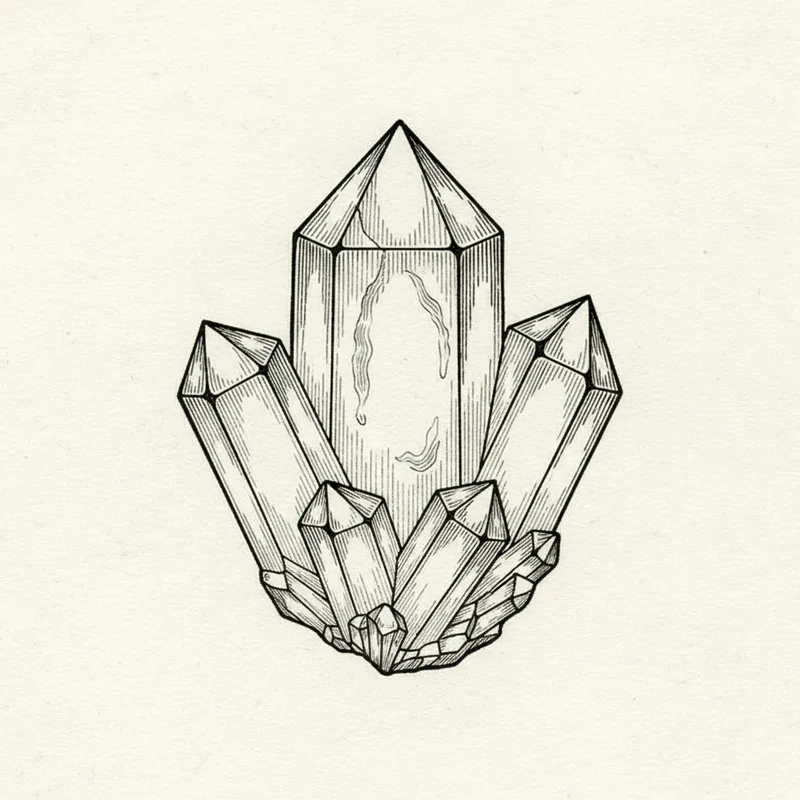
Clear Quartz
The Master Healer
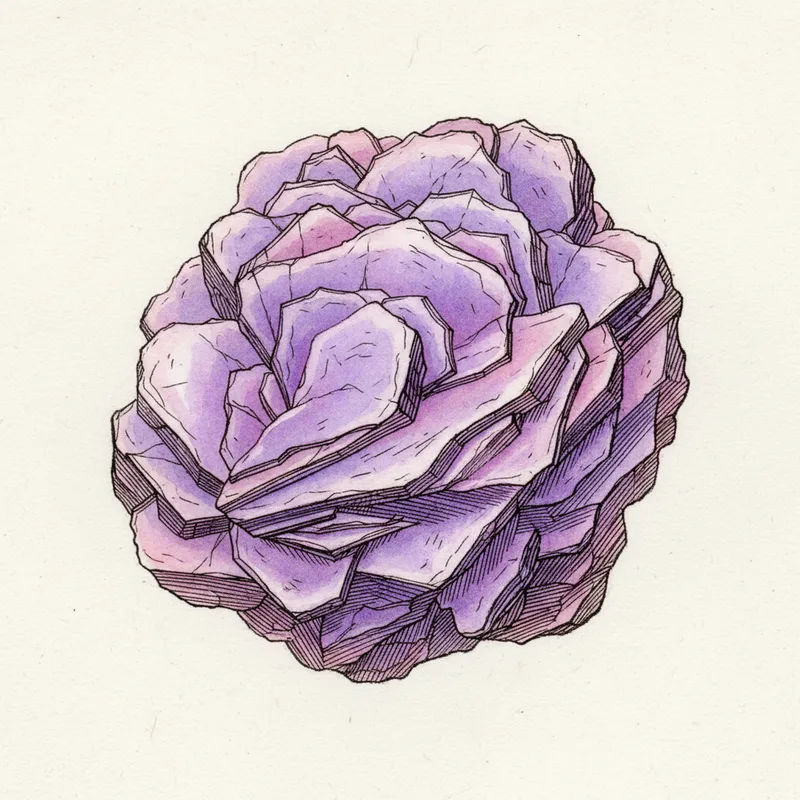
Lepidolite
The Peace Stone
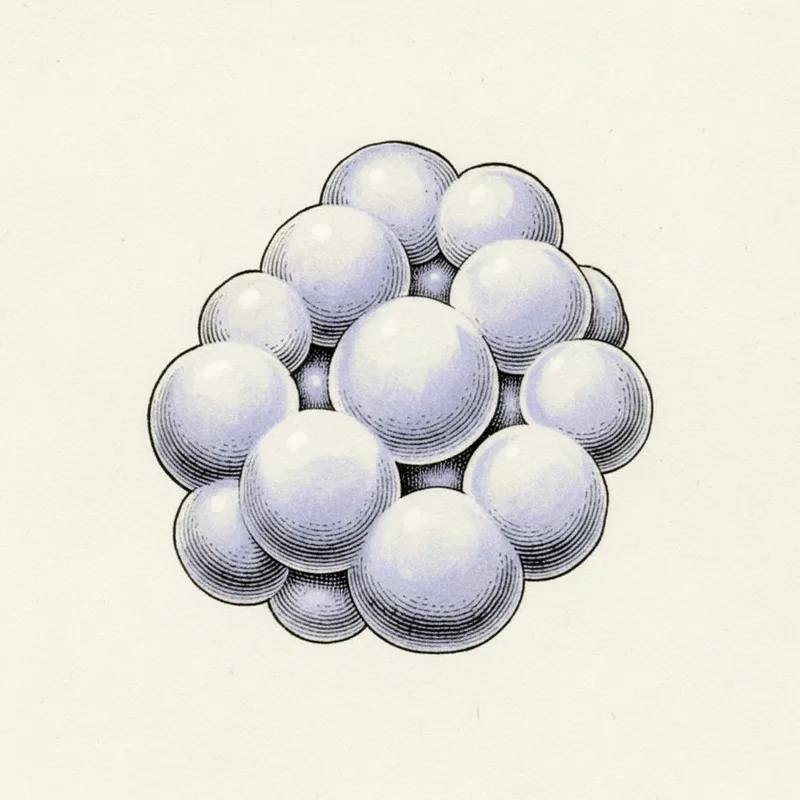
Chalcedony
The Mother of Agates

Orthoclase
The Foundation Feldspar
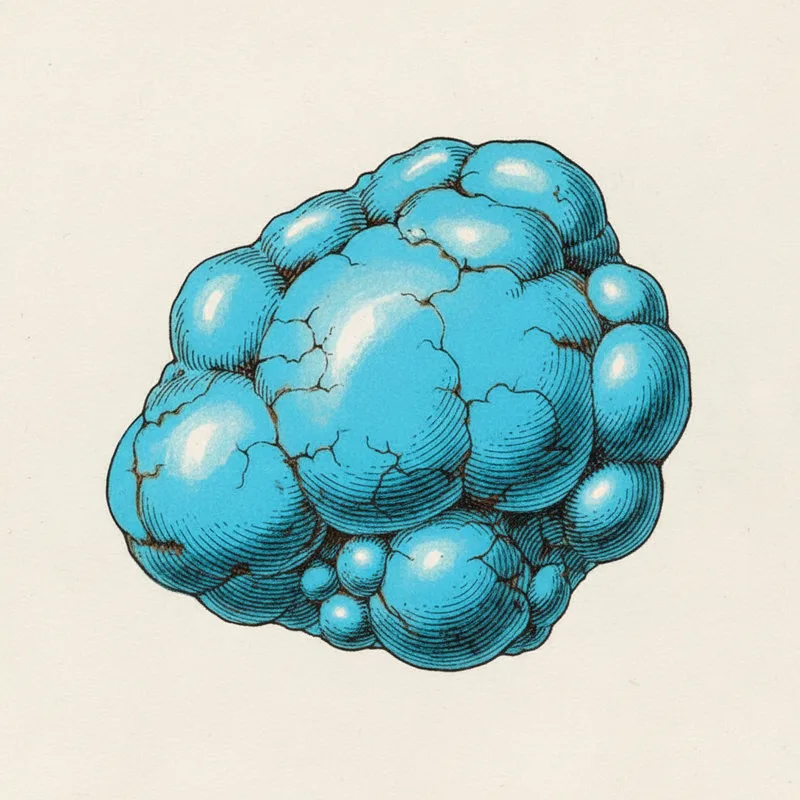
Turquoise
The Sky Stone
Moonstone
The Traveler's Stone
Carnelian
The Singer's Stone
Limestone
The Fossil Record
Sandstone
The Desert Archive
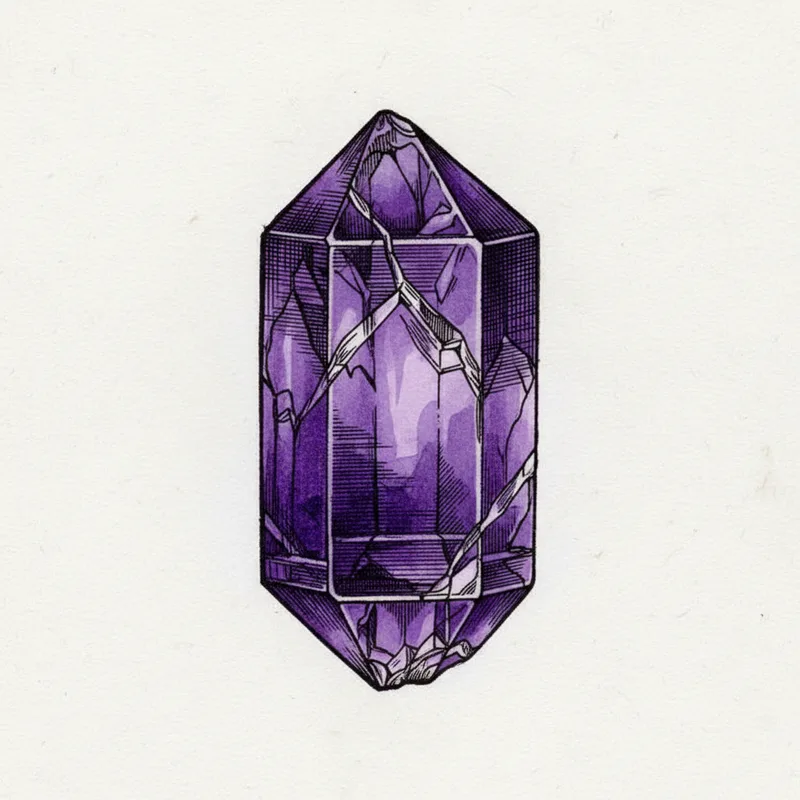
Amethyst
The Stone of Spiritual Wisdom
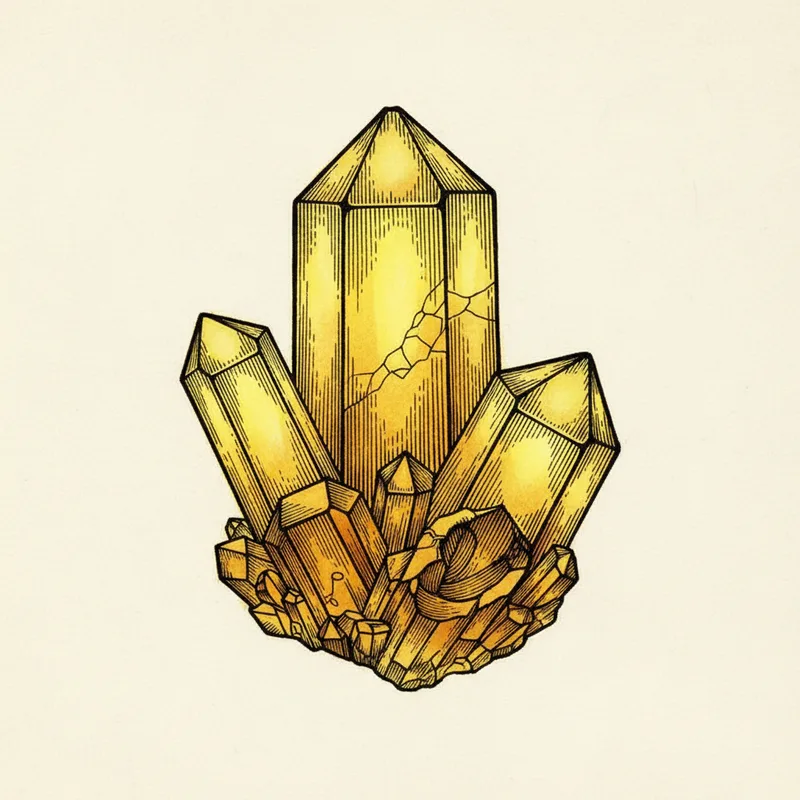
Citrine
The Merchant's Stone
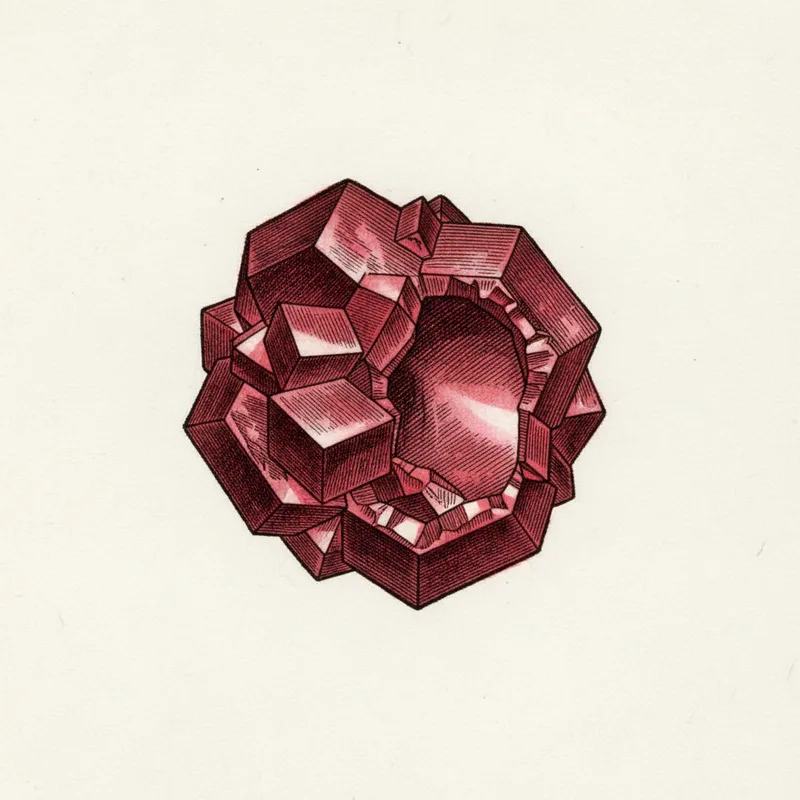
Garnet
The Warrior's Stone
Keep Reading
Stay in the loop
From the Almanac
Updates from Crystal Almanac, when there’s something worth sharing.