Best Crystals for Focus: What Actually Works
Key Takeaway: Crystals don't rewire your brain or boost your IQ. No controlled study has demonstrated that holding a mineral improves cognitive performance. But the rituals around crystal use tap into real psychological mechanisms, the geology behind these stones is genuinely fascinating, and understanding both makes the conversation worth having.
You're staring at your laptop. The cursor blinks. You've read the same paragraph three times. Your phone buzzes, and even though you know it's nothing important, your hand is already reaching for it.
Now imagine a different version: before sitting down, you placed a cool, heavy piece of fluorite on your desk. You held it for ten seconds. You set an intention for the next ninety minutes. You put the phone in a drawer.
Did the fluorite sharpen your focus? Or did the three-second ritual of picking it up and stating a goal create a cognitive anchor that your brain now associates with deep work?
The honest answer is the second one. But that doesn't mean the crystal is irrelevant. And the geology behind the ten minerals most commonly associated with mental clarity is worth your time regardless of what you believe about their metaphysical properties.
Quick Reference Table
| Crystal | Formula | Hardness | System | Focus Tradition |
|---|---|---|---|---|
| Fluorite | CaF₂ | 4 | Cubic | Mental clarity, decision-making |
| Tiger's Eye | SiO₂ (fibrous) | 7 | Trigonal | Willpower, determination |
| Clear Quartz | SiO₂ | 7 | Trigonal | Amplifying intention, clarity |
| Sodalite | Na₈(Al₆Si₆O₂₄)Cl₂ | 5.5 | Cubic | Rational thought, logic |
| Hematite | Fe₂O₃ | 5.5 | Trigonal | Grounding, mental organization |
| Amazonite | KAlSi₃O₈ | 6 | Triclinic | Filtering distractions |
| Pyrite | FeS₂ | 6.5 | Cubic | Confidence, motivation |
| Carnelian | SiO₂ | 7 | Trigonal | Action, creative momentum |
| Black Tourmaline | NaFe₃Al₆(BO₃)₃Si₆O₁₈(OH)₄ | 7 | Trigonal | Shielding from distraction |
| Citrine | SiO₂ | 7 | Trigonal | Mental stamina, optimism |
1. Fluorite: The Mineral That Defines Fluorescence
Formula: CaF₂ | Hardness: 4 | Crystal System: Cubic
If there's one mineral that deserves the title "focus stone," fluorite has the strongest claim, and the geology alone makes the case interesting.
Fluorite is calcium fluoride, and it gave its name to the phenomenon of fluorescence. In 1852, physicist George Gabriel Stokes studied how fluorite crystals glow under ultraviolet light and coined the term based on the mineral's name. The fluorescence comes from trace rare earth elements (yttrium, cerium, europium) substituting for calcium in the crystal lattice. When UV photons excite electrons in those impurity sites, the electrons release lower-energy visible photons as they return to their ground state. The result: a mineral that literally transforms invisible light into visible color.
Fluorite forms in hydrothermal veins where hot, fluorine-bearing fluids from deep magmatic sources encounter calcium-rich limestone country rock. The calcium from the limestone reacts with the fluorine in solution, precipitating CaF₂ crystals in veins, vugs, and replacement bodies. The enormous color range (purple, green, blue, yellow, clear, and rainbow-banded) depends on which trace elements are present and the radiation history of the surrounding rock.
The focus tradition around fluorite is remarkably specific compared to most crystal associations. Rather than a vague claim about "good energy," practitioners across modern crystal traditions consistently associate fluorite with structured thinking, absorbing new information, and making complex decisions. Its nickname in the crystal community, "The Genius Stone," reflects this. Chinese, European, and North American crystal healing traditions all converge on the same theme: this stone is for the mind.
How to use it: Keep a piece on your desk where you can see it. The color banding in a quality fluorite specimen is genuinely beautiful and complex enough to serve as a productive micro-break for your eyes between screen sessions. At a hardness of just 4, fluorite scratches easily, so don't toss it in a bag with your keys.
What to buy: Chinese fluorite from Hunan Province offers extraordinary color variety at reasonable prices. A polished palm stone runs $5-15. Octahedral crystals (fluorite's natural crystal habit) are stunning desk pieces at $10-30.
2. Tiger's Eye: Fossilized Light
Formula: SiO₂ (fibrous) | Hardness: 7 | Crystal System: Trigonal
Tiger's eye is a pseudomorph, a mineral that replaced another mineral while preserving its original structure. The original mineral was crocidolite, a blue fibrous amphibole (a type of asbestos). Over millions of years, silica-rich fluids gradually dissolved the crocidolite fibers and deposited quartz in their place, preserving the fibrous structure at the microscopic level while completely changing the chemistry. Iron oxides stained the replacement quartz golden-brown during this process.
That preserved fibrous structure is what creates chatoyancy, the moving band of light that slides across the surface when you rotate the stone. Light reflects off the parallel microscopic quartz fibers like sunlight glancing off a spool of silk thread. The effect is mesmerizing, and it happens because of an atomic-scale fossil record locked inside the stone.
Should you worry about the asbestos connection? No. The crocidolite is gone. It was completely replaced by quartz during pseudomorphism. What remains is SiO₂ with the ghost architecture of the original fibers. Polished tiger's eye is considered safe to handle.
In crystal traditions, tiger's eye is associated with willpower, courage, and sustained determination. Roman soldiers reportedly carried it into battle for confidence. In modern practice, it's specifically recommended for projects that require persistence rather than bursts of inspiration. The tradition frames it as a stone for following through, not starting up.
How to use it: Tiger's eye's chatoyancy makes it an excellent fidget stone. Rolling a tumbled piece between your fingers while thinking is tactile grounding in action. At a hardness of 7, it's durable enough for daily pocket carry without concern.
What to buy: South African material dominates the market and is affordable. Polished palm stones run $3-8. Blue tiger's eye (hawk's eye), which preserves more of the original crocidolite color, is less common and slightly more expensive.
3. Clear Quartz: The Silicon Dioxide Foundation
Formula: SiO₂ | Hardness: 7 | Crystal System: Trigonal
Clear quartz is the most abundant mineral in Earth's continental crust, and it's the baseline against which nearly every other crystal is compared. It's pure silicon dioxide, with each silicon atom bonded to four oxygen atoms in a continuous tetrahedral framework that spirals in either a left-handed or right-handed helix. This chirality (handedness) is a real structural property. It's also piezoelectric, which is why quartz oscillators keep time in watches and computers. Apply pressure to quartz and it generates a tiny electrical signal at a precise, reliable frequency.
Clear quartz forms across an extraordinary range of geological environments: igneous pegmatites, hydrothermal veins, metamorphic rocks, and sedimentary deposits. Brazilian quartz from Minas Gerais and Arkansas quartz from the Ouachita Mountains are two of the most celebrated sources.
In virtually every crystal tradition worldwide, clear quartz is described as an "amplifier." The tradition holds that it doesn't have a specific energy of its own but rather intensifies whatever intention you bring to it. In focus contexts, this translates to a practice of holding clear quartz while stating a specific goal, using the crystal as a physical anchor for the intention.
The amplifier tradition is, of course, metaphor. But the underlying practice, externalizing a goal by tying it to a physical object, is a technique that behavioral psychologists call "implementation intention." Research by Peter Gollwitzer and others has shown that tying a goal to a specific physical cue significantly increases follow-through rates. A piece of clear quartz on your desk, consciously associated with a work session, functions as exactly this kind of cue.
How to use it: Place a clear quartz point on your desk facing toward you (if you want to follow the traditional practice) or simply hold it while setting your work intention for the session. The transparency makes it easy to appreciate without being distracting.
What to buy: Clear quartz is among the most affordable crystals on Earth. A nice polished point runs $3-10. For desk use, a natural point with good clarity is ideal. Be aware that very clear, very perfect, very inexpensive "quartz" points sold in bulk may be smelted glass. Natural quartz almost always has some inclusions or slight cloudiness.
4. Sodalite: Chlorine Locked in Stone
Formula: Na₈(Al₆Si₆O₂₄)Cl₂ | Hardness: 5.5 | Crystal System: Cubic
Sodalite has one of the more unusual chemical formulas in common mineralogy. It's a feldspathoid, a mineral that forms in silica-poor igneous environments where there isn't enough silicon to make true feldspar. The formula includes chlorine as a structural component, not just a trace impurity. Those two chlorine atoms per formula unit are locked into cages formed by the aluminosilicate framework, making sodalite one of the few minerals to incorporate a halogen directly into its crystal structure.
The royal blue color comes from sulfur radical anions (S₃⁻) trapped in those same structural cages. When these sulfur groups absorb red and yellow wavelengths of light, the deep blue remains. Some sodalite varieties fluoresce brilliant orange under UV light due to additional sulfur species, a phenomenon called hackmanite behavior when the fluorescence is accompanied by tenebrescence (reversible color change).
Sodalite forms in alkaline igneous rocks, particularly nepheline syenites and related sodium-rich, silica-poor magmas. Major deposits occur in Brazil, Canada (the famous Princess Sodalite from Bancroft, Ontario), and Namibia.
In crystal traditions, sodalite is associated with logic, rational thought, and verbal expression. It's called "The Poet's Stone" and "The Thinker's Stone" in different traditions. The focus association is specifically about analytical thinking rather than creative brainstorming. Practitioners recommend it for tasks that require evaluation, comparison, and structured reasoning.
How to use it: Sodalite's deep blue color with white calcite veining makes it one of the more visually distinctive desk stones. The white-on-blue patterning is unique to each specimen. At 5.5 on the Mohs scale, it's moderately durable but will scratch if stored loose with harder minerals.
What to buy: Brazilian sodalite offers the deepest, most saturated blue. Polished palm stones run $5-12. Avoid confusing it with lapis lazuli, which is more expensive and contains pyrite flecks (golden specks) that sodalite lacks.
5. Hematite: Iron's Mirror
Formula: Fe₂O₃ | Hardness: 5.5 | Crystal System: Trigonal
Hematite is iron oxide, and it's the most important iron ore on Earth. It puts the red in red rock formations, red soil, red sandstone, and the rusty landscapes of Mars. When NASA's rovers identified hematite on the Martian surface, it was a significant finding because hematite on Earth typically forms in the presence of water.
The name comes from the Greek haima, meaning blood. Scrape hematite across a porcelain streak plate and it leaves a cherry-red streak, even when the mineral itself appears metallic silver-black. This counterintuitive property (a silver mineral leaving a red streak) is one of the most reliable identification features in hand-specimen mineralogy. The metallic luster of polished hematite is so reflective that it was used as mirrors in ancient Egypt. Hematite mirrors have been found in Egyptian tombs dating to 2000 BCE.
Hematite forms across a wide range of geological environments: banded iron formations deposited in Precambrian oceans, hydrothermal veins, volcanic sublimation, and as a weathering product of other iron minerals. The banded iron formations of Western Australia and Brazil's Iron Quadrangle contain hematite deposits billions of years old, formed when Earth's atmosphere first accumulated free oxygen.
In crystal traditions, hematite is the quintessential grounding stone. The focus association is specifically about clearing mental clutter and creating a sense of order. Practitioners describe it as pulling scattered thoughts downward into structure. The weight and coolness of hematite (it's noticeably heavy for its size due to iron's density) play directly into the tactile grounding effect.
How to use it: Hematite is one of the best fidget stones available. The metallic surface is smooth and cool, warming slowly in your hand. The density makes it satisfying to hold. Keep a polished piece in your non-dominant hand while reading, reviewing, or thinking through a problem.
What to buy: Polished hematite is very affordable at $2-6 for tumbled stones. Be aware that "magnetic hematite" sold in many shops is actually synthetic magnetite or ceramic ferrite, not natural hematite. Natural hematite is very weakly magnetic at best. If a "hematite" piece snaps onto your refrigerator, it's not hematite.
6. Amazonite: The Feldspar Nobody Expected
Formula: KAlSi₃O₈ | Hardness: 6 | Crystal System: Triclinic
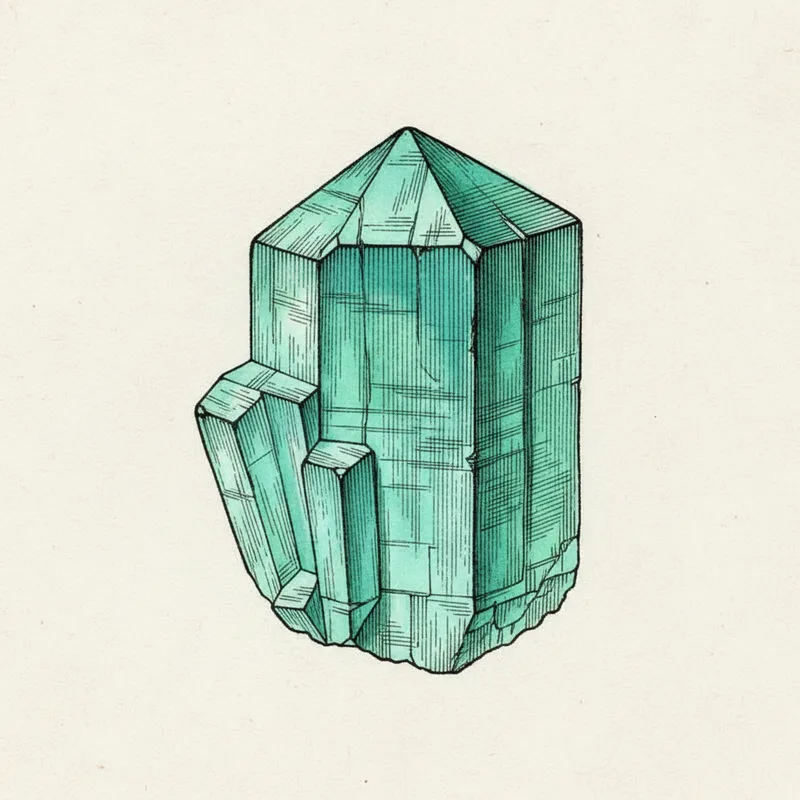
Amazonite is a variety of microcline feldspar, and its vivid blue-green color puzzled mineralogists for over a century. The color was long attributed to copper, which seemed logical given the turquoise-like hue. But in the 1980s, research demonstrated that the color actually comes from lead (Pb²⁺) and water (OH⁻) incorporated into the crystal structure, combined with exposure to natural radiation. The lead impurities interact with radiation to create color centers that absorb red light, transmitting the blue-green you see.
This is a potassium aluminum silicate, the same basic chemistry as orthoclase feldspar (the pink mineral in granite), just with different trace impurities creating a completely different appearance. Amazonite forms in granitic pegmatites, where slow cooling allows large, well-formed crystals to develop. The Pikes Peak region of Colorado produces some of the world's finest specimens, often found in association with smoky quartz on matrix.
Despite its name, amazonite has no confirmed connection to the Amazon River or the Amazon region. The name was applied in the 18th century based on green stones reportedly found near the Amazon, but those were likely nephrite jade. The mineral we call amazonite today was first properly described from Russian specimens.
In crystal traditions, amazonite is associated with filtering out stress, calming the brain, and creating space for clear thinking. The focus connection is specifically about removing noise rather than adding power. Practitioners describe it as helping you ignore what doesn't matter so you can attend to what does. In the language of modern productivity, it's the "do not disturb" stone.
How to use it: Amazonite's calming blue-green color has a genuine basis in color psychology research. Cool blue and green tones are consistently associated with reduced stress and improved concentration in environmental psychology studies (though these studies measure wall and room colors, not hand-held stones). A piece of amazonite on your desk adds a genuinely pleasant color to your visual field.
What to buy: Colorado, Madagascan, and Russian amazonite are all excellent. Polished pieces run $4-10. Look for vivid blue-green saturation. Pale, washed-out amazonite is less visually interesting and typically less valued.
7. Pyrite: The Geometry of Iron and Sulfur
Formula: FeS₂ | Hardness: 6.5 | Crystal System: Cubic
Pyrite forms some of the most geometrically perfect natural crystals on Earth. Its cubic crystal habit produces near-perfect cubes, pyritohedrons (twelve-sided forms), and octahedrons that look manufactured. The faces are often striated, with fine parallel lines on each cube face running perpendicular to the striations on adjacent faces. These striations reflect the oscillation between cubic and pyritohedral growth during crystallization.
The mineral is iron disulfide, and it forms across an enormous range of geological environments: hydrothermal veins, sedimentary rocks (where it replaces organic material, producing pyritized fossils), metamorphic rocks, and even in coal beds. The brass-yellow metallic luster is what earned it the name "fool's gold," though experienced prospectors would never actually confuse it with gold. Pyrite is harder, more brittle, and streaks greenish-black. Gold is softer, malleable, and streaks golden.
In crystal traditions, pyrite is associated with confidence, willpower, and taking action. The focus connection centers on motivation rather than concentration. It's recommended for moments when you know what to do but can't summon the drive to start. Practitioners describe it as a stone of initiative, a spark for getting momentum going.
The geometry is genuinely relevant here. There's something about holding a near-perfect natural cube that captures attention and provokes curiosity. How did iron and sulfur atoms arrange themselves into right angles without any template or instruction? The answer involves crystal field theory and molecular orbital bonding, but the visual result is a mineral that looks like it was designed by an engineer.
How to use it: A pyrite cube on your desk is a conversation piece and a genuine object of wonder. The metallic luster catches light and the geometry draws the eye. At 6.5 on the Mohs scale, pyrite is hard enough to handle daily. Note that pyrite can tarnish over time in humid conditions and occasionally develops a sulfur smell if moisture reacts with the iron sulfide. Keep it dry.
What to buy: Spanish pyrite cubes from Navajun (La Rioja) are the gold standard, literally the most perfect natural cubes found anywhere. They run $10-40 depending on size. Peruvian pyrite clusters are more affordable and equally striking.
8. Carnelian: Ancient Egypt's Motivation Stone
Formula: SiO₂ | Hardness: 7 | Crystal System: Trigonal (microcrystalline)
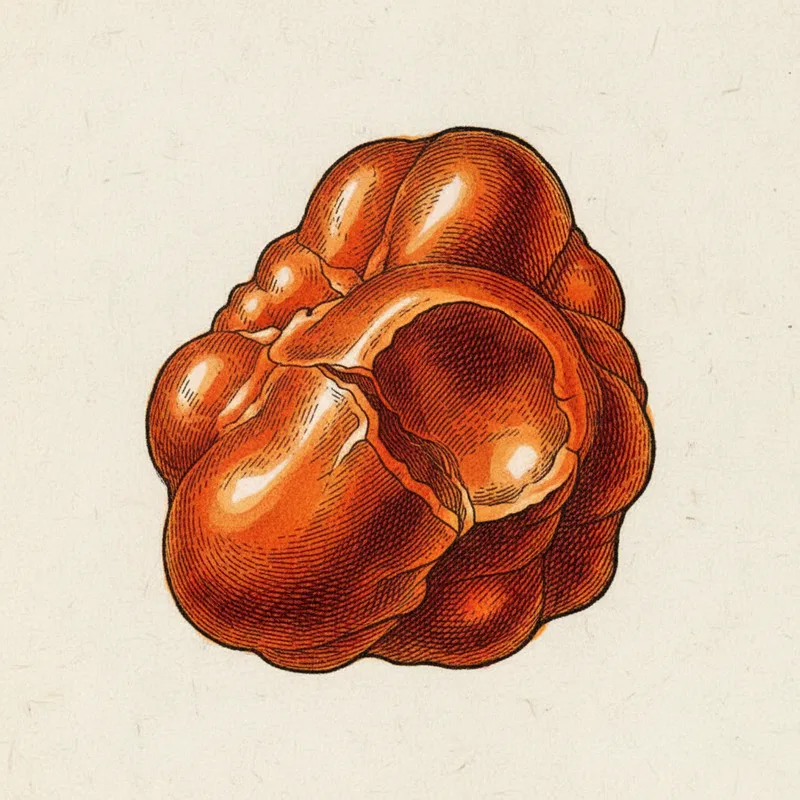
Carnelian is microcrystalline quartz (chalcedony) colored orange to red by iron oxide (Fe₂O₃) inclusions dispersed throughout the silica matrix. The color develops or intensifies with heat treatment, a technique that dates back thousands of years. Indian lapidaries in Gujarat have been heat-treating carnelian since at least 2500 BCE, placing the rough stones in clay pots among burning cow dung to reach the right temperature range. The heat converts yellow iron hydroxide (FeOOH) to red iron oxide (Fe₂O₃), deepening the color.
This is one of the oldest gemstones in continuous human use. Carnelian beads appear in Neolithic graves dating to 4500 BCE. Egyptian Book of the Dead texts specify carnelian amulets for safe passage in the afterlife. Roman signet rings were carved from carnelian because hot sealing wax doesn't stick to it (a practical advantage that had nothing to do with metaphysics).
In crystal traditions, carnelian is associated with action, courage, and creative momentum. The focus connection is specifically about activation rather than contemplation. Where sodalite is for analyzing, carnelian is for doing. Practitioners recommend it for tasks that require creative output: writing, designing, building, performing. The tradition frames it as a stone that overcomes procrastination and hesitation.
The warm orange-red color has a basis in color psychology research. Warm colors (red, orange, amber) are associated with increased arousal, energy, and action-orientation in multiple studies. A carnelian on your desk introduces a warm color accent into your workspace, which may have subtle effects on your mental state simply through the visual environment.
How to use it: Carnelian is ideal for creative work sessions. Hold it briefly before starting a creative task and state what you intend to produce. At a hardness of 7, it's extremely durable and handles pocket carry, desk placement, or being tossed in a bag without damage.
What to buy: Indian carnelian is the classic source and offers the warmest orange tones. Brazilian and Madagascan material is also excellent. Polished tumbled stones run $2-6. Avoid pieces that are uniformly bright orange-red with zero color variation, as these may be dyed agate rather than natural carnelian.
9. Black Tourmaline: The Piezoelectric Shield
Formula: NaFe₃Al₆(BO₃)₃Si₆O₁₈(OH)₄ | Hardness: 7 | Crystal System: Trigonal
Black tourmaline (schorl) has the most complex chemistry on this list. It's a boron-containing ring silicate with sodium, iron, aluminum, boron, silicon, oxygen, and hydrogen all organized into an elaborate crystal structure. The boron triangles (BO₃ groups) link with silicon-oxygen tetrahedra in a pattern so structurally sophisticated that tourmaline's crystal structure wasn't fully resolved until the mid-20th century.
The result of all that structural complexity is a crystal with a permanent electric dipole. Tourmaline is both piezoelectric (generates charge under mechanical pressure) and pyroelectric (generates charge with temperature change). These are measurable, real physical properties that have practical applications. Tourmaline is used in pressure gauges, and its pyroelectric properties were historically used to attract ash and small particles from Dutch clay pipes, earning it the name "aschentrekker" (ash puller) in 18th century Europe.
Black tourmaline forms in granitic pegmatites and metamorphic rocks. The iron content gives it its deep black color, and specimens commonly display pronounced vertical striations along the crystal length. In cross-section, tourmaline crystals are characteristically triangular with rounded edges.
In crystal traditions, black tourmaline is the primary "protective" stone, and its focus application is specifically about shielding against distraction and external chaos. Practitioners place it between themselves and perceived sources of disruption: near a door, beside a computer, or at the boundary of a workspace. The tradition is about creating a perimeter of concentration.
How to use it: Place a piece of black tourmaline at the edge of your desk, near your workspace boundary. The tradition of using it as a boundary marker dovetails neatly with the productivity concept of defining your workspace. At a hardness of 7, it's highly durable for any desk or pocket use.
What to buy: Black tourmaline is abundant and affordable. Raw specimens with visible striations are widely available at $4-12. Brazilian and African material is the most common on the market. Verify it's actually tourmaline by checking for the characteristic striated surface and triangular cross-section. Smooth, glassy black stones may be obsidian or onyx instead.
10. Citrine: The Rare Yellow Quartz (That Usually Isn't)
Formula: SiO₂ | Hardness: 7 | Crystal System: Trigonal
Here's the uncomfortable truth about citrine: the vast majority of citrine on the market is heat-treated amethyst. When amethyst is heated to around 300-450°C, the iron-based color centers that produce purple undergo a structural change, shifting the absorption spectrum to produce yellow, orange, or burnt amber tones. Most "citrine" sold in crystal shops, particularly pieces with a deep orange or brownish color and white base, started life as amethyst from Brazil's Rio Grande do Sul.
Natural citrine is genuinely rare. It forms in hydrothermal veins where specific conditions (different oxidation states of iron, lower radiation doses) produce yellow color centers rather than the purple ones that form amethyst. Natural citrine is typically a pale, champagne-like yellow, nothing like the deep burnt orange of heat-treated material. Zambia, the Congo, and a few Brazilian localities produce true natural citrine.
Does the distinction matter from a metaphysical perspective? That depends on your framework. From a geological perspective, the distinction matters enormously. Heat-treated amethyst and natural citrine are chemically identical (both SiO₂) but have different internal defect structures and different geological histories.
In crystal traditions, citrine is associated with mental stamina, optimism, and sustained energy. It's called "The Merchant's Stone" for its traditional association with prosperity and success. The focus connection is about endurance, keeping your energy and attention sustained through long work sessions rather than the initial moment of sitting down.
How to use it: Citrine's warm yellow tones make it a cheerful desk companion. If you're working through a long project and need a visual reminder that progress is happening, a citrine piece can serve that role. At a hardness of 7, it's fully durable for daily use.
What to buy: If you want natural citrine, look for pale, transparent yellow specimens and expect to pay more ($15-40 for a good point). If you're comfortable with heat-treated amethyst sold as citrine (and there's no shame in that, the stones are beautiful), you'll find abundant options at $5-15. Just know what you're buying.
Why Crystal Rituals Actually Help Focus (The Real Science)
The crystals are beautiful. The geology is fascinating. But the focus benefits people report come from well-documented psychological mechanisms, not from the stones themselves.
Implementation intentions work. Psychologist Peter Gollwitzer's research demonstrates that tying a goal to a specific cue ("when I pick up this stone, I will begin writing") dramatically increases follow-through compared to vague intentions ("I should write today"). A crystal on your desk is a physical implementation cue. The more consistently you use it, the stronger the association becomes.
Tactile grounding reduces cognitive noise. Anxiety and distraction share neurological pathways. When your amygdala is activated by stress or environmental stimulation, your prefrontal cortex (the part responsible for sustained attention) gets less resources. Holding a smooth, cool, heavy object and focusing on its physical properties, texture, weight, temperature, is a grounding technique used in Cognitive Behavioral Therapy. It redirects neural activity from the anxiety circuits back to sensory processing and executive function. A polished stone is an excellent grounding object.
Workspace anchoring is a real phenomenon. Environmental psychology research shows that consistent visual cues in a workspace help the brain transition into "work mode." This is why having a dedicated office is more effective than working from your couch, even if you have the same laptop in both places. A crystal that lives on your desk and is associated with focused work becomes part of your workspace's visual signature.
Color affects cognitive state. The research is nuanced and sometimes overstated, but controlled studies have shown that cool colors (blue, green) tend to enhance calm concentration while warm colors (red, orange) tend to increase arousal and urgency. Your choice between a blue sodalite and a red carnelian for your desk may be doing something subtle through color alone.
Ritual creates structure. This is perhaps the most important mechanism. Having a pre-work ritual, even a ten-second one (pick up crystal, state intention, set it down, begin), creates a transition boundary between "not working" and "working." Without a transition, the brain drifts. With one, it shifts modes. The crystal is the prop, but the ritual is the active ingredient.
Building a Focus Practice That Works
If you want to use crystals as part of a genuine focus practice, here's what the science and the traditions agree on.
Pick one stone. Not five. Not a grid. One piece that you find visually appealing and that feels good in your hand. Weight, smoothness, and temperature matter more than metaphysical properties. If you're drawn to fluorite's colors, use fluorite. If you like hematite's weight, use hematite.
Create a consistent ritual. Before each work session, hold the stone for five to ten seconds. State, out loud or silently, what you intend to accomplish in this session. Be specific. "Write the introduction" works better than "work on the project." Set the stone on your desk where you can see it. Begin.
Use it as a fidget tool. When you notice your attention wandering, pick up the stone instead of picking up your phone. Roll it in your hand. Notice its texture, temperature, and weight. This is not mysticism. This is the grounding technique that therapists teach for managing attention and anxiety.
Don't expect the crystal to do the work. The stone is a tool for supporting practices that actually improve focus: intention-setting, ritual, grounding, workspace definition. If you skip those practices and just put a rock on your desk, you've just put a rock on your desk.
Combine with proven focus methods. Pair your crystal ritual with a Pomodoro timer (25 minutes of work, 5-minute break). Pick up the stone at the start of each Pomodoro. Put it down when the timer goes off. Over time, your brain will associate the weight of the stone in your hand with the neural state of focused work. That's conditioning, and conditioning is one of the most robust findings in all of psychology.
The minerals on this list span billions of years of geological history. Fluorite crystallized from superheated fluids deep underground. Tiger's eye records the atom-by-atom replacement of one mineral by another over millions of years. Hematite formed in ancient oceans before complex life existed on Earth. These are remarkable objects by any standard.
Whether they help you focus because of mystical energy fields or because they anchor a psychological ritual that redirects your attention, the end result is the same. You sat down. You picked up a beautiful, ancient piece of Earth. And you got to work.
That's worth something.
For a supplement-based approach to focus, here are the non-stimulant options with the most evidence. Creatine and citicoline are the two with the strongest research for cognitive energy without caffeine.
Metaphysical and “healing” associations mentioned here are cultural traditions, not medical advice or scientific fact. Crystals are not a substitute for professional medical care. Full disclaimer.
Crystals in This Article
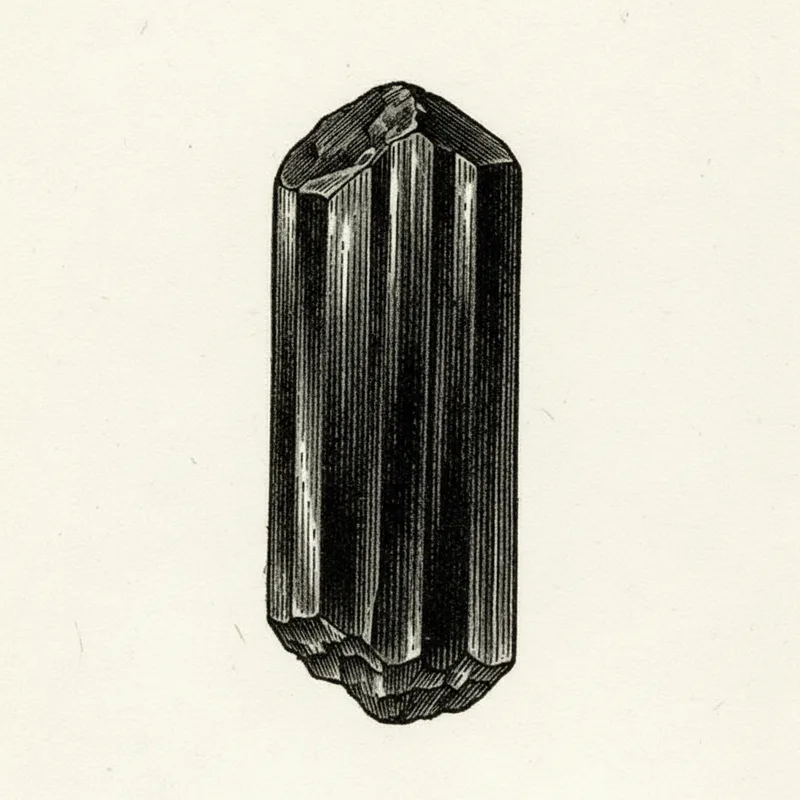
Black Tourmaline
The Shield Stone
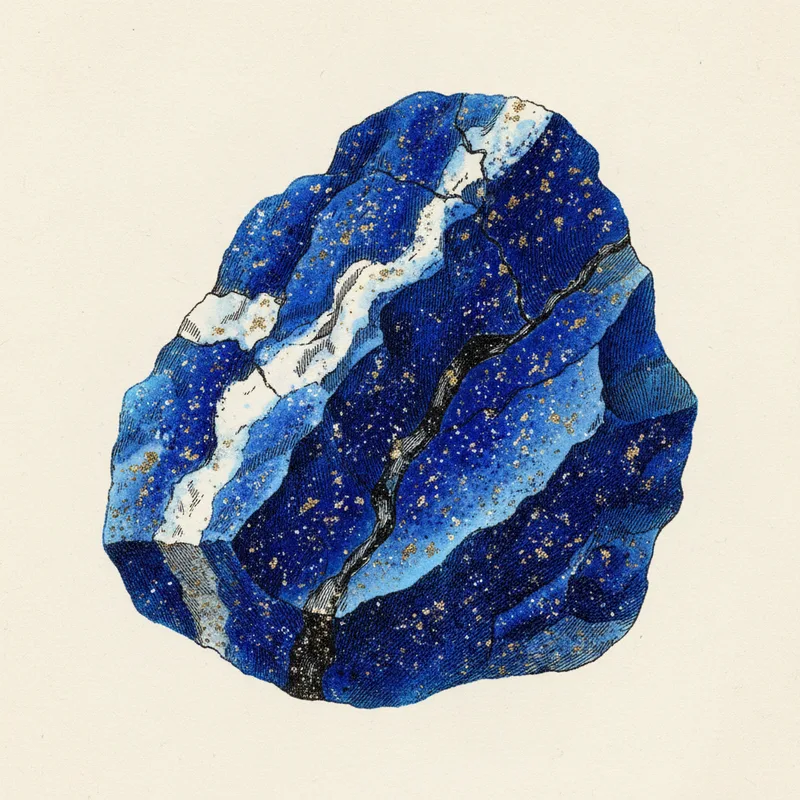
Lapis Lazuli
The Stone of the Heavens
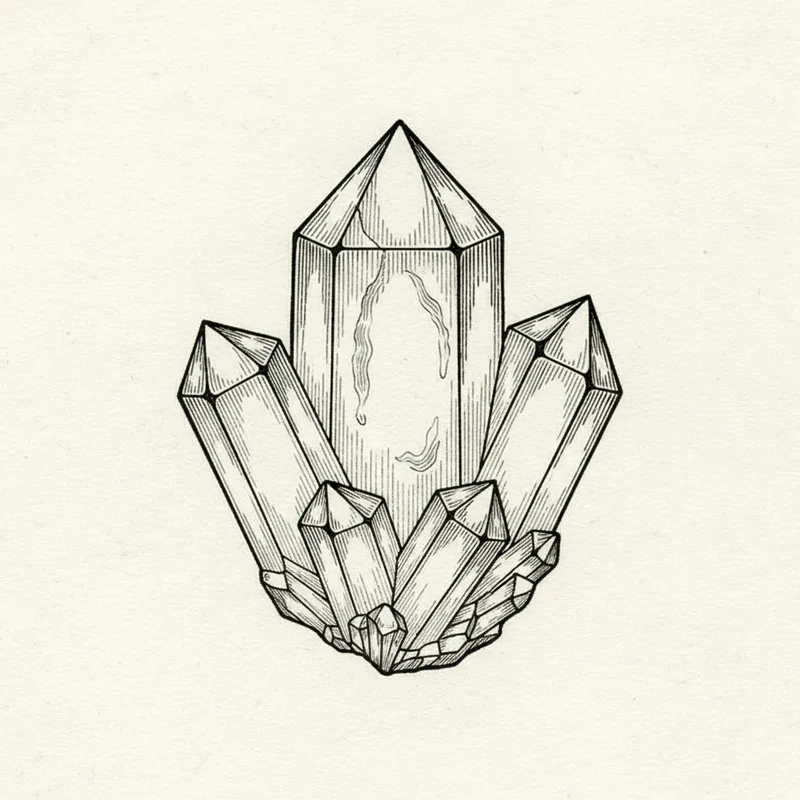
Clear Quartz
The Master Healer
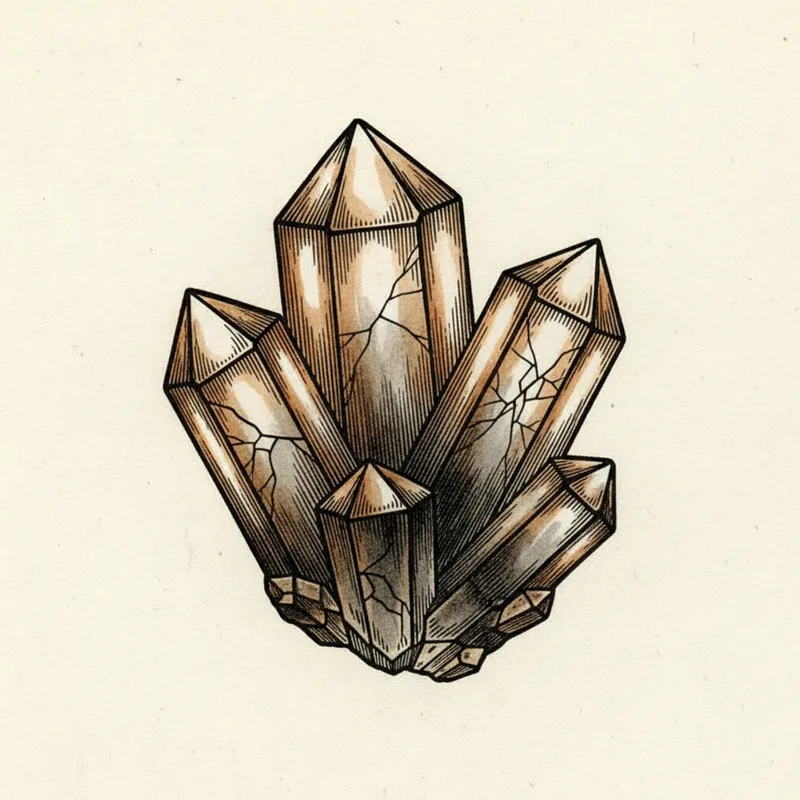
Smoky Quartz
The Grounding Stone
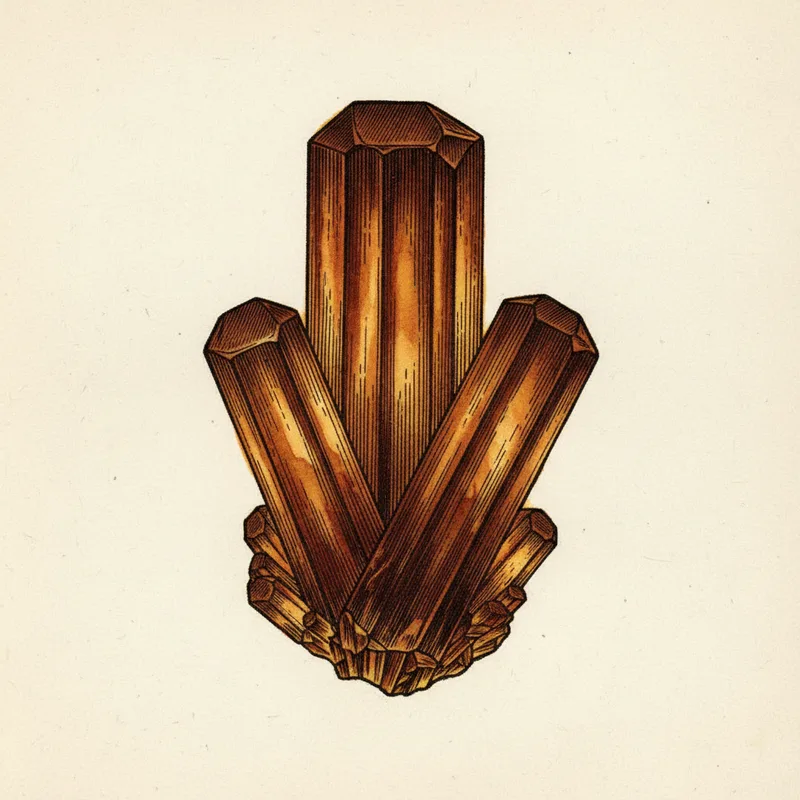
Tourmaline
The Rainbow Stone
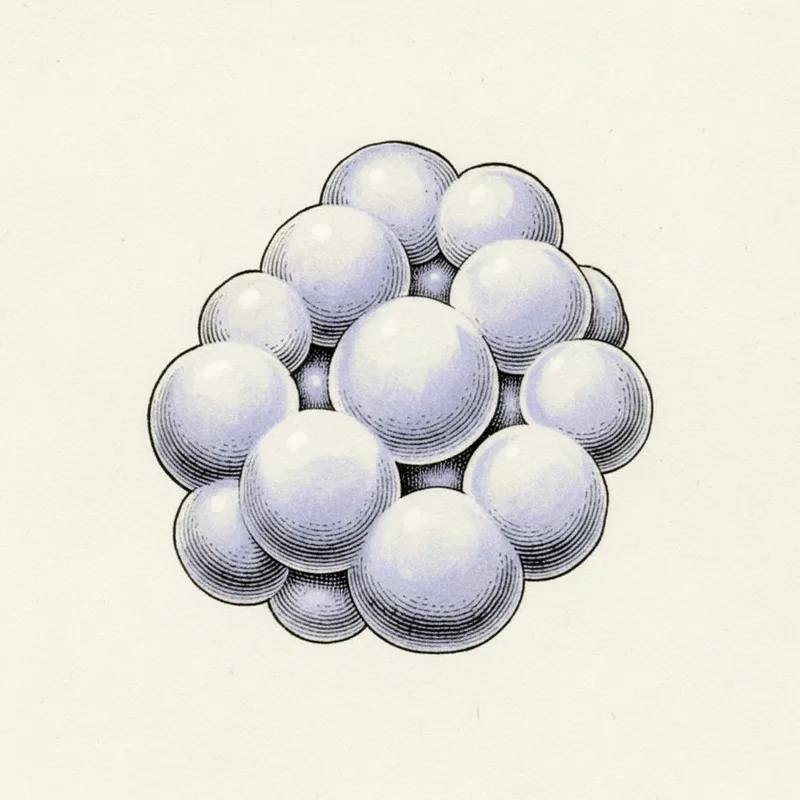
Chalcedony
The Mother of Agates
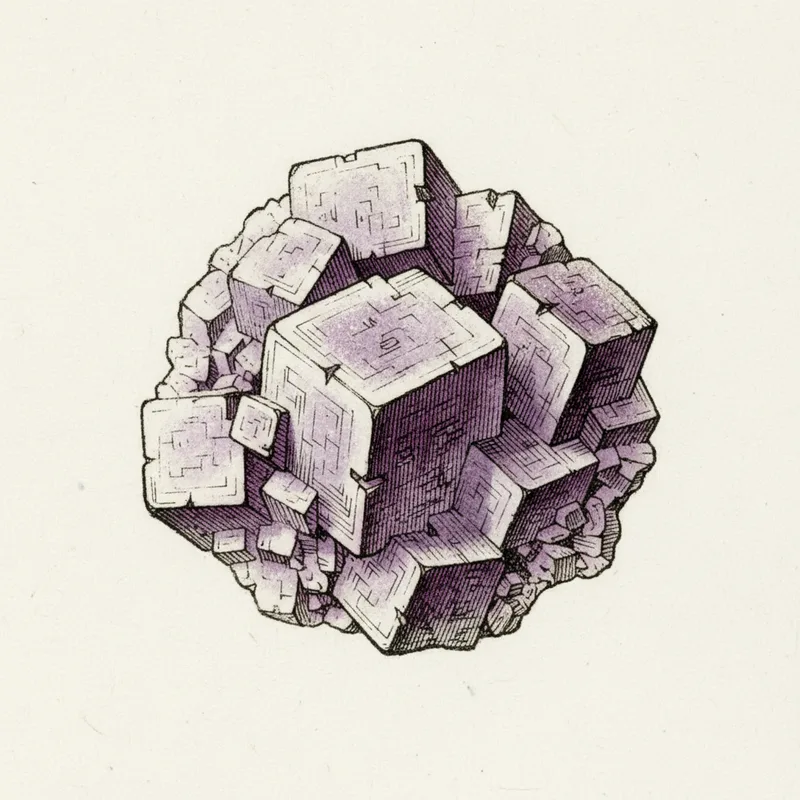
Hackmanite
The Color-Changing Sodalite

Orthoclase
The Foundation Feldspar
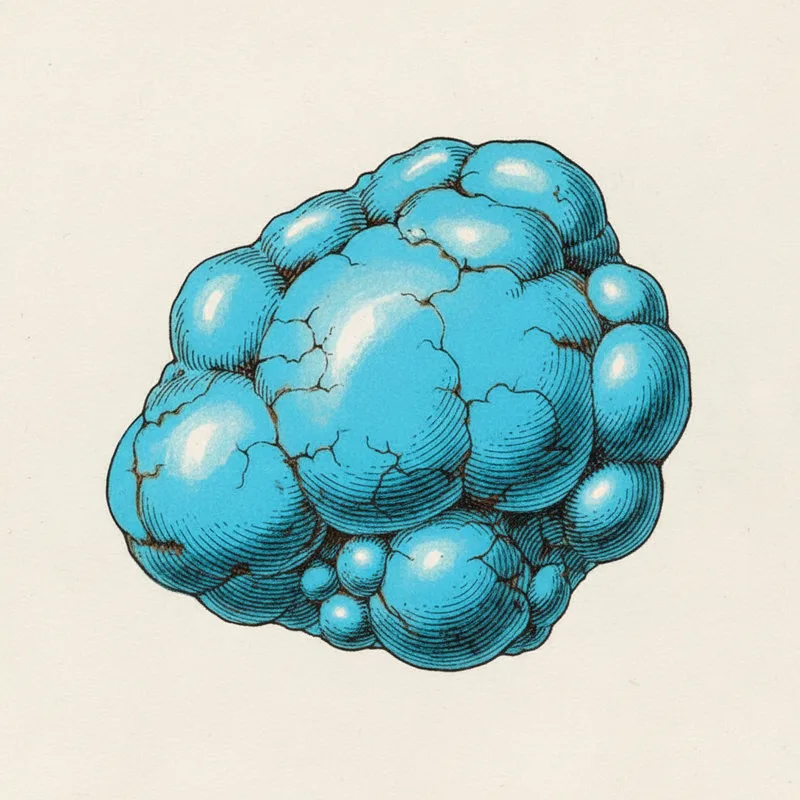
Turquoise
The Sky Stone
Carnelian
The Singer's Stone
Amazonite
The Hope Stone
Magnetite
The Lodestone
Keep Reading
Newsletter
Something shiny, now and then
A stone worth knowing, or a fake worth spotting, every so often. No spam.