Lapis Lazuli vs Sodalite: The Blue Rock Conundrum
Key Takeaway: Sodalite is frequently mistaken for lapis lazuli, but missing pyrite inclusions and differing blue tones give the secret away. If it has gold flakes, it is lapis.
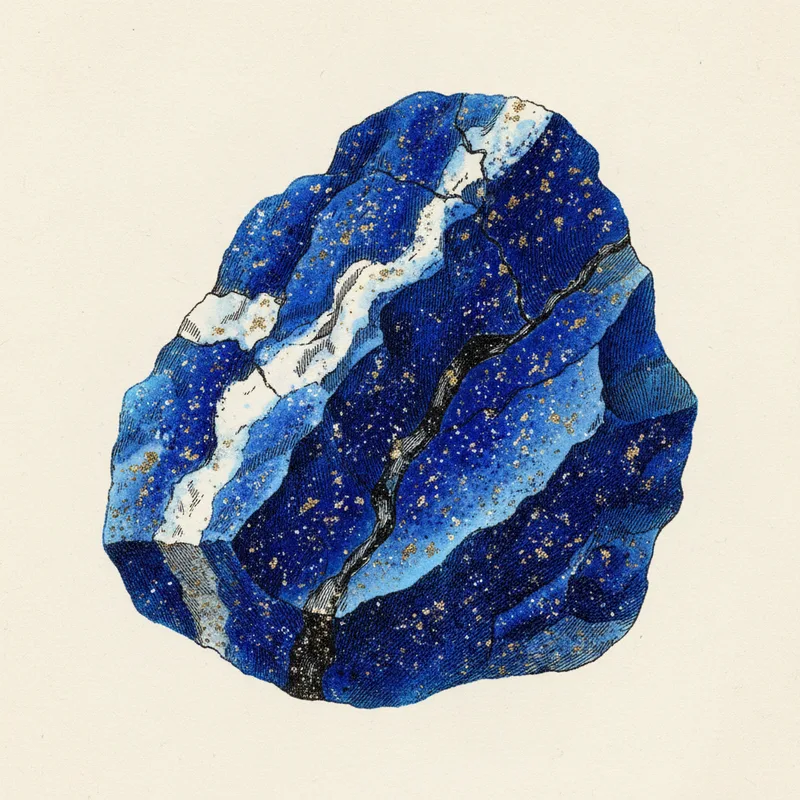
Lapis lazuli is a rock composed of multiple minerals, famous for its deep ultramarine blue color and glittering gold flecks of pyrite. Sodalite is a single mineral that is usually royal blue mixed with heavy white veining and completely lacks the golden pyrite sparkle. If it has gold flakes, it is lapis.
At a Glance
| Feature | Lapis Lazuli | Sodalite |
|---|---|---|
| Hardness | 5 to 5.5 | 5.5 to 6 |
| Chemical Formula | Rock (Lazurite + Pyrite + Calcite) | Na₈(Al₆Si₆O₂₄)Cl₂ |
| Crystal System | Rock (Various) | Isometric |
| Color Range | Deep ultramarine blue with gold flecks | Royal blue to navy blue with white veins |
| Price Range | $1 to $10 per gram | $5 to $20 per pound |
| Best For | Premium cabochons, carvings, fine inlay | Beaded bracelets, budget cabochons, large spheres |
How They Form
Lapis lazuli is unique because it is not a mineral, but a metamorphic rock. It forms when limestone is subjected to contact metamorphism by intruding magma. The primary mineral that gives lapis its famous blue color is lazurite. However, true lapis is a mixture. It almost always contains calcite, which creates white mottling, and pyrite, which provides the signature golden sparkles. The finest lapis in the world has been mined from the rugged mountains of the Badakhshan province in Afghanistan for over 6,000 years.
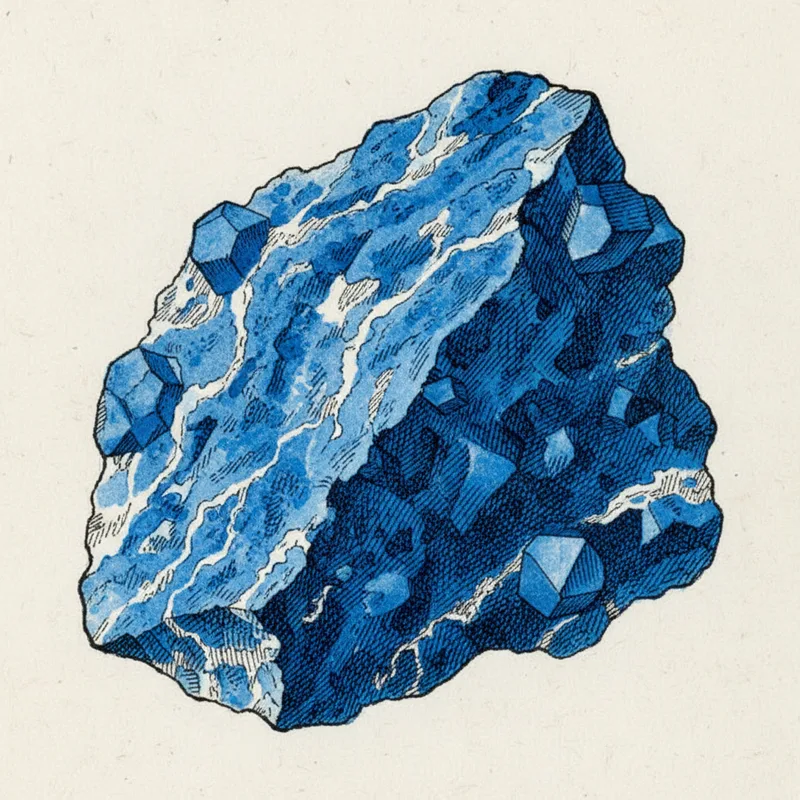
Sodalite is a feldspathoid mineral. It typically forms in silica-poor igneous rocks that crystallized from sodium-rich magmas. While sodalite is actually one of the constituent minerals that can sometimes be found inside lapis lazuli, massive deposits of pure sodalite exist independently, most notably in Canada and Brazil. Sodalite forms solid blocks of blue material that are heavily intersected by veins of white calcite or feldspar.
How to Tell Them Apart
The golden rule of identification here relies on pyrite. Look closely at the blue stone. If you see tiny, metallic gold-colored specks scattered like stars across a night sky, you are looking at lapis lazuli. Pyrite does not naturally co-occur with massive sodalite.
If there is no pyrite, look at the white patterning. Sodalite usually has thick, aggressive veins and blotches of bright white or gray. Lapis lazuli tends to have a more uniform blue color, and when white calcite is present, it looks more like dusty clouds than sharp veins. Finally, consider the shade of blue. Lapis lazuli is a rich, intense, slightly purplish ultramarine. Sodalite is usually a darker, slightly grayer royal blue or navy blue. Watch out for dyed howlite, which is used to fake both stones. If the blue dye rubs off with a cotton swab dipped in acetone, it is a fake.
Price & Value
Lapis lazuli is significantly more valuable. High-grade lapis, which is an intense, solid blue with minimal white calcite and an aesthetically pleasing dusting of pyrite, commands premium prices. It is a stone with a rich history, having been ground up to make the ultramarine paint used by Renaissance masters.
Sodalite is an abundant and inexpensive ornamental stone. It is highly valued in the lapidary community because large, solid blocks can be easily carved into bowls, bookends, and large beads, but it does not carry the high per-carat value of lapis lazuli.
Which Should You Choose?
Choose lapis lazuli if you want a classic, historically significant gemstone that pairs beautifully with gold jewelry. Its rich color and metallic flecks are unmatched. Choose sodalite if you want a beautiful, casual blue stone at a fraction of the cost, or if you are looking for large decorative pieces for your home. Both stones are somewhat soft, so treat them with care to avoid scratches.
Crystals in This Article
Keep Reading
Stay in the loop
From the Almanac
Updates from Crystal Almanac, when there’s something worth sharing.