Best Crystals for Work, Focus, and Your Desk
Key Takeaway: The "desk crystal" trend is real, and it's growing fast. No mineral will make you more productive on its own. But neuroscience research on environmental cueing, context-dependent memory, and focus objects explains why placing a specific stone on your desk before a work session can genuinely improve concentration. The geology behind these ten crystals is worth knowing regardless. Here are the best crystals for your workspace, what they actually are, and how to use them.
Walk into any coworking space in 2026 and count the crystals. They're on standing desks, tucked behind monitors, lined up on windowsills between succulents and coffee cups. A 2025 survey by the Global Wellness Institute found that 34% of millennials and Gen Z workers keep at least one crystal or mineral specimen at their desk. That number was 12% in 2019.
This isn't just a wellness trend dressed up in purple velvet. Something real is happening at the intersection of workspace design, ritual psychology, and the ancient human attraction to beautiful stones. People are reaching for fluorite and black tourmaline during their workday, not because they read a crystal healing blog, but because someone gifted them a polished stone, they put it on their desk, and something about the routine of picking it up before a deep work session stuck.
The question isn't whether crystals have mystical powers that boost your quarterly numbers. They don't. The question is whether a specific, beautiful, geologically fascinating object on your desk can become part of a focus practice that actually works. And the answer, backed by behavioral psychology research, is yes.
Environmental Cueing: Why a Desk Crystal Works
The neuroscience is straightforward, and it has nothing to do with energy fields.
Your brain is a context machine. It constantly reads environmental cues to determine what mode it should be in. This is why you feel sleepy in your bedroom, alert in a gym, and unfocused on your couch even when you're trying to work. Psychologists call this context-dependent memory: information encoded in a specific environment is easier to retrieve in that same environment.
James Clear, in Atomic Habits, breaks habit formation into four stages: cue, craving, response, reward. The cue is the trigger that initiates the behavior. A crystal on your desk is a cue. Not a magical one. A physical one. Your brain sees it, associates it with the last twenty times you sat down and did focused work after picking it up, and begins transitioning into work mode before you've opened your laptop.
This is the same mechanism behind why surgeons scrub their hands in a specific ritualized sequence before operating, why baseball players tap the plate in a specific pattern before batting, and why some writers sharpen a pencil before sitting down to write even though they type. The object and the ritual create a neurological on-ramp to a specific mental state.
Research by Gollwitzer and Sheeran (2006) on implementation intentions demonstrated that tying a goal to a specific physical cue ("when I see X, I will do Y") increased goal achievement rates by 30-40% across 94 independent studies. A crystal you pick up every morning while stating your top priority for the day is an implementation intention made physical.
The stone doesn't do the work. But it anchors the practice that does.
There's a third mechanism worth mentioning: the micro-break. Eye strain, screen fatigue, and attention depletion are occupational hazards of knowledge work. The 20-20-20 rule (every 20 minutes, look at something 20 feet away for 20 seconds) is well-established in optometry. A visually interesting crystal on your desk gives your eyes a resting point that's genuinely worth looking at. The color banding in fluorite, the chatoyant glow in tiger eye, the rainbow inclusions in clear quartz. These aren't distractions. They're ten-second visual resets between screen sessions.
And finally, there's the weight. Heavy objects in the hand activate proprioceptive feedback, the body's awareness of itself in space. This is why weighted blankets help some people sleep, why a heavy pen feels more "serious" than a plastic one, and why therapists give patients smooth, heavy stones to hold during anxiety-producing conversations. A polished piece of hematite or smoky quartz in your palm sends a signal to your nervous system: you are here, you are grounded, you are in your body. That signal competes with the amygdala's anxiety response, and sometimes it wins.
Quick Reference Table
| Crystal | Formula | Hardness | Best For |
|---|---|---|---|
| Fluorite | CaF₂ | 4 | Mental organization, structured thinking |
| Black Tourmaline | NaFe₃Al₆(BO₃)₃Si₆O₁₈(OH)₄ | 7 | Workspace boundaries, distraction shield |
| Citrine | SiO₂ | 7 | Sustained motivation, prosperity tradition |
| Sodalite | Na₈(Al₆Si₆O₂₄)Cl₂ | 5.5 | Articulating ideas, writing, presenting |
| Amazonite | KAlSi₃O₈ | 6 | Boundary-setting, calm assertion |
| Clear Quartz | SiO₂ | 7 | Intention anchoring, universal focus tool |
| Pyrite | FeS₂ | 6.5 | Confidence, initiative, conversation piece |
| Tiger Eye | SiO₂ (fibrous) | 7 | Decision-making, practical judgment |
| Smoky Quartz | SiO₂ | 7 | Stress clearing, grounding, afternoon reset |
| Blue Apatite | Ca₅(PO₄)₃(F,Cl,OH) | 5 | Goal articulation, strategic planning |
The 10 Best Crystals for Your Desk
1. Fluorite: The Genius Stone
Formula: CaF₂ | Hardness: 4 | Crystal System: Cubic
Fluorite gave its name to fluorescence. In 1852, George Gabriel Stokes studied how this mineral glows under ultraviolet light and coined the term based on the mineral itself. The phenomenon occurs because trace rare earth elements (yttrium, cerium, europium) substituting for calcium in the crystal lattice absorb UV photons and re-emit them as visible light. A mineral that literally transforms invisible energy into something you can see.
Fluorite is calcium fluoride, forming in hydrothermal veins where hot, fluorine-bearing fluids meet calcium-rich limestone. The reaction precipitates CaF₂ crystals in a color range that spans purple, green, blue, yellow, and clear, sometimes banded in rainbow layers within a single specimen. Which colors appear depends on trace elements and the radiation history of the surrounding rock.
The cubic crystal system produces fluorite's most iconic habit: perfect octahedrons. These eight-sided forms, which look like two pyramids joined at their bases, are the natural cleavage shape of fluorite. Set one on your desk and you have a geometric object so precise it looks manufactured, yet it assembled itself atom by atom underground.
Crystal traditions call fluorite "The Genius Stone." The association is remarkably specific compared to most crystal lore. Rather than vague claims about positive energy, practitioners across Chinese, European, and North American traditions consistently link fluorite to structured thinking, information absorption, and complex decision-making. It's the mineral recommended for studying, planning, and organizing.
Desk placement: Keep a fluorite octahedron or polished piece where you can see it between screen sessions. The color banding provides genuine visual complexity for micro-breaks. At a hardness of just 4, fluorite scratches easily. Don't pile it in a drawer with pens and binder clips.
What to buy: Chinese fluorite from Hunan Province offers extraordinary color variety at reasonable prices. Octahedral crystals run $10-30. Polished palm stones are $5-15.
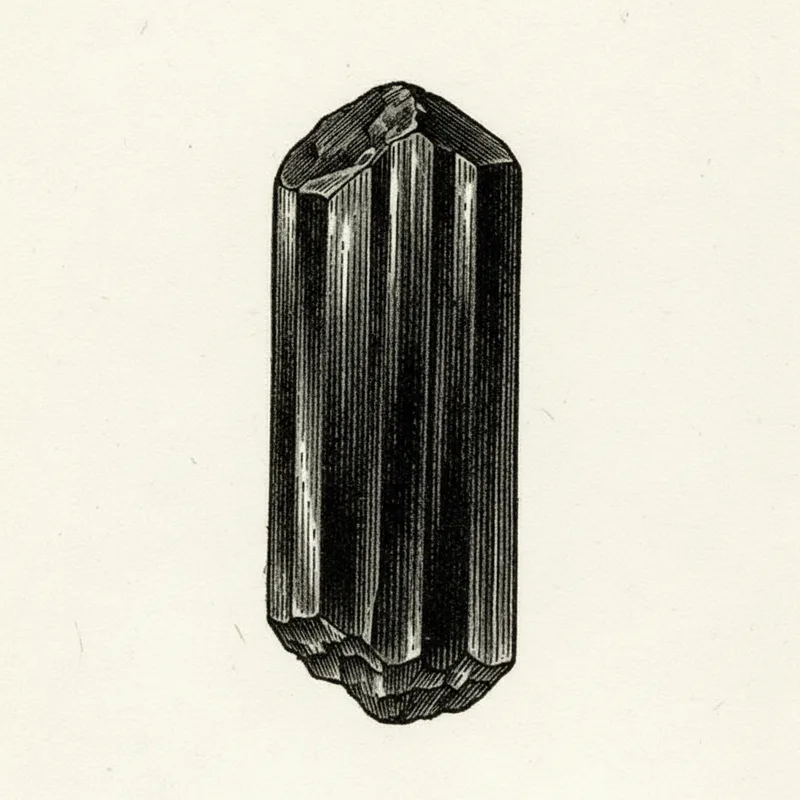
2. Black Tourmaline: The Boundary Setter
Formula: NaFe₃Al₆(BO₃)₃Si₆O₁₈(OH)₄ | Hardness: 7 | Crystal System: Trigonal
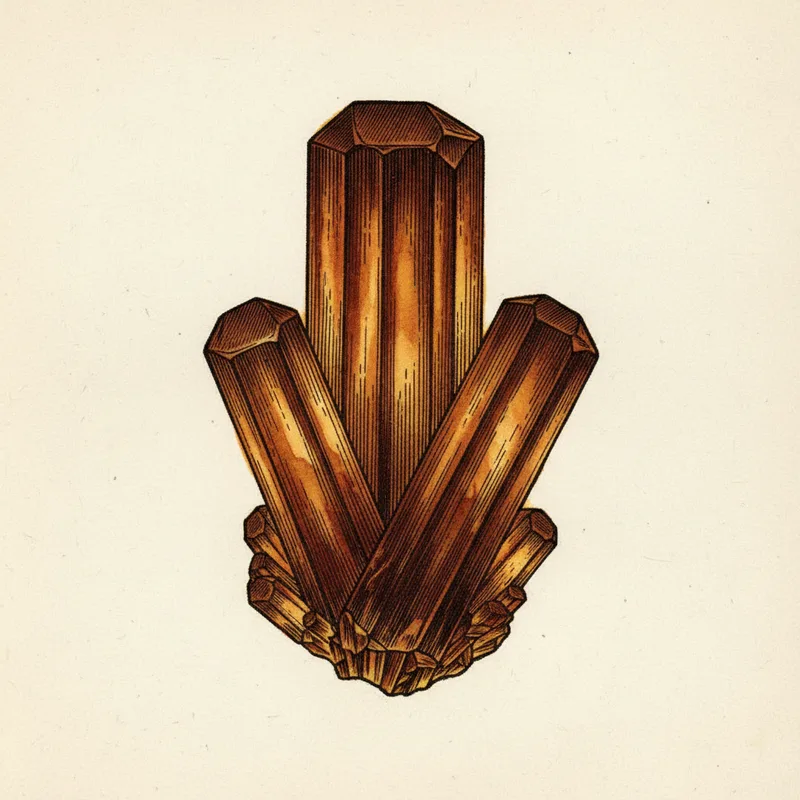
Black tourmaline has the most complex chemistry on this list. It's a boron-containing ring silicate with sodium, iron, aluminum, boron, silicon, oxygen, and hydrogen organized into a crystal structure so elaborate it wasn't fully resolved until the mid-twentieth century.
That structural complexity produces a crystal with a permanent electric dipole. Tourmaline is both piezoelectric (generates charge under mechanical pressure) and pyroelectric (generates charge with temperature change). These are measurable, real physical properties. Apply pressure to black tourmaline and it generates a tiny electrical charge. Heat it up and it does the same. Dutch traders in the 1700s called it "aschentrekker" (ash puller) because warmed tourmaline crystals attracted ash particles from clay pipes.
Does the piezoelectric charge do anything therapeutic? Almost certainly not. The voltages are minuscule. But when crystal traditions describe tourmaline as having "energy," there's a legitimate physical phenomenon underneath the metaphor.
The workplace tradition for black tourmaline is specifically about boundaries. Practitioners place it at the edge of their desk, between themselves and the door, or near their monitor. The tradition frames it as a perimeter stone, defining where your focus space begins and distractions end. In open-plan offices where everyone can see and interrupt everyone else, the impulse to mark territory with a meaningful object makes intuitive sense.
Desk placement: At the edge of your workspace, facing outward. The striated crystal surface and triangular cross-section are visually distinctive. At hardness 7, it handles daily desk life without damage.
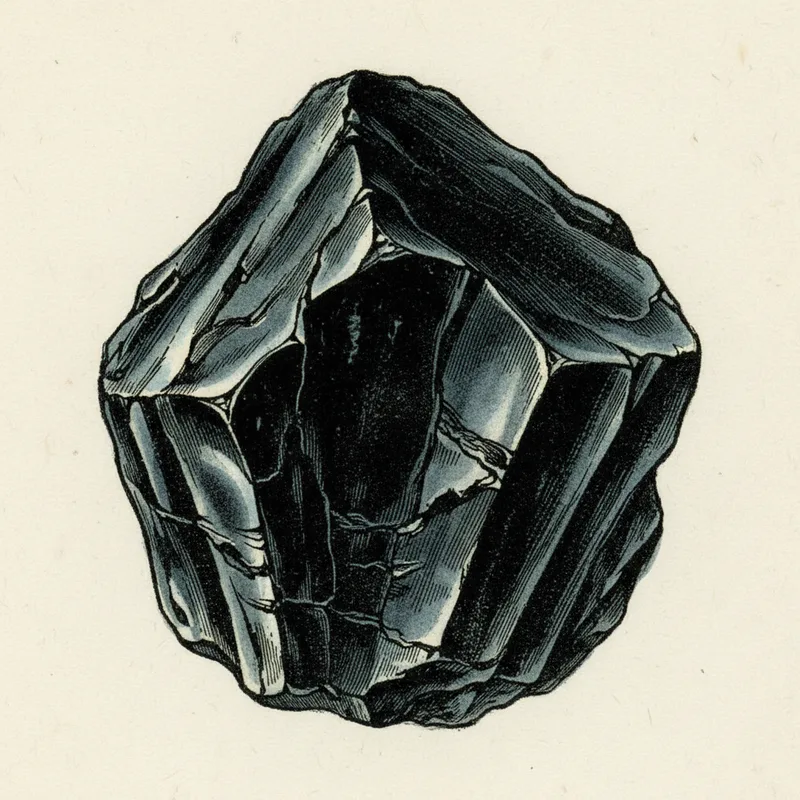
What to buy: Raw specimens with visible striations run $4-12. Brazilian and African material dominates the market. Verify you're getting tourmaline, not obsidian, by checking for the characteristic parallel grooves along the crystal length.
3. Citrine: The Merchant's Stone
Formula: SiO₂ | Hardness: 7 | Crystal System: Trigonal
Here's the thing about citrine that most crystal shops won't volunteer: the overwhelming majority of citrine on the market is heat-treated amethyst. Take amethyst, heat it to 300-450°C, and the iron-based color centers that produce purple undergo a structural shift, flipping the absorption spectrum to produce yellow, orange, or burnt amber. Most "citrine" with a deep orange color and a white base started life as Brazilian amethyst.
Natural citrine is genuinely rare. It forms in hydrothermal veins where specific iron oxidation states and lower radiation doses create yellow color centers instead of purple ones. Natural citrine is typically a pale, champagne-like yellow, nothing like the deep burnt orange of heated material. Zambia, the Congo, and a few Brazilian localities produce true natural citrine.
The workplace tradition is one of the most specific in crystal lore. Citrine is called "The Merchant's Stone," and the practice of placing it in a cash register or near a till dates back to at least the early twentieth century. Chinese feng shui traditions recommend citrine in the wealth corner of a workspace (the far left corner from the entrance). Whether you find this meaningful or charmingly superstitious, the tradition is consistent across cultures and centuries.
The solar plexus chakra association in Hindu tradition connects citrine to personal power, confidence, and the drive to take action. In the workplace context, practitioners recommend citrine for projects requiring sustained motivation and long-term energy, not quick bursts of inspiration.
Desk placement: Near your dominant hand or in the far left corner of your desk, following the feng shui convention. The warm yellow tones add a cheerful color accent to any workspace.
What to buy: Natural citrine runs $15-40 for a good point. Heat-treated amethyst sold as citrine is $5-15 and perfectly beautiful. Just know which you're buying.
4. Sodalite: The Poet's Stone
Formula: Na₈(Al₆Si₆O₂₄)Cl₂ | Hardness: 5.5 | Crystal System: Cubic
Sodalite has one of the stranger chemical formulas in common mineralogy. It's a feldspathoid, forming in silica-poor igneous environments where there isn't enough silicon to make true feldspar. The formula includes chlorine as a structural component, not a trace impurity. Two chlorine atoms per formula unit are locked into cages formed by the aluminosilicate framework, making sodalite one of the few minerals to incorporate a halogen directly into its crystal structure.
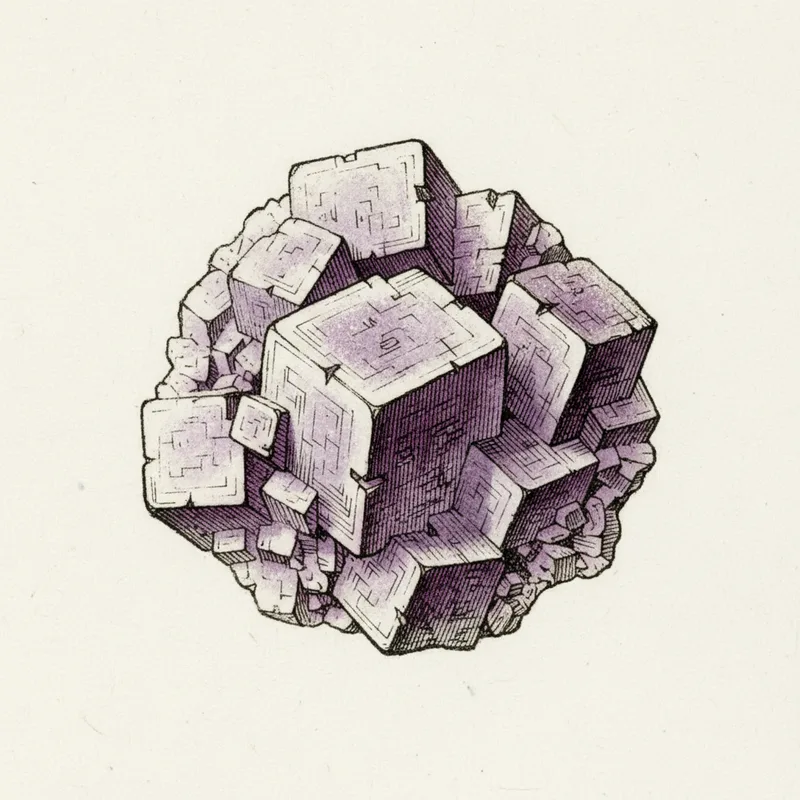
The royal blue color comes from sulfur radical anions (S₃⁻) trapped in those same structural cages. When these sulfur groups absorb red and yellow wavelengths, the deep blue remains. Some sodalite varieties fluoresce brilliant orange under UV light, a phenomenon called hackmanite behavior when accompanied by tenebrescence, a reversible color change triggered by light exposure.
The white veining you see in most sodalite specimens is calcite, intergrown with the blue mineral during formation in nepheline syenites and related alkaline igneous rocks. Each specimen's blue-and-white pattern is unique, like a fingerprint.
Crystal traditions call sodalite "The Poet's Stone" and "The Thinker's Stone." The focus association is specifically about articulating complex ideas. Practitioners recommend it for writing, presenting, and explaining difficult concepts. The tradition frames sodalite as the mineral for those moments when you know what you think but can't quite find the words. It's the stone for the email you've rewritten four times, the presentation you can't structure, the proposal that needs to be clear rather than clever.
Desk placement: Near your keyboard or where you do your writing. The deep blue with white veining makes it one of the more visually striking desk stones. At 5.5 on the Mohs scale, it's moderately durable.
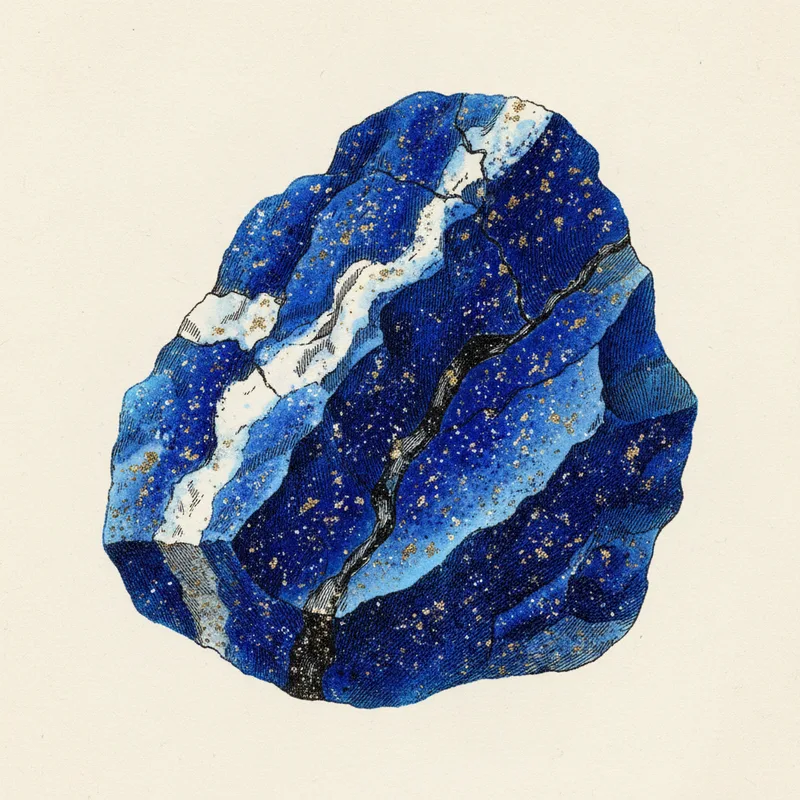
What to buy: Brazilian sodalite has the deepest blue saturation. Polished palm stones run $5-12. Don't confuse it with lapis lazuli, which is more expensive and contains golden pyrite flecks that sodalite lacks.
5. Amazonite: The Calm Assertion Stone
Formula: KAlSi₃O₈ | Hardness: 6 | Crystal System: Triclinic
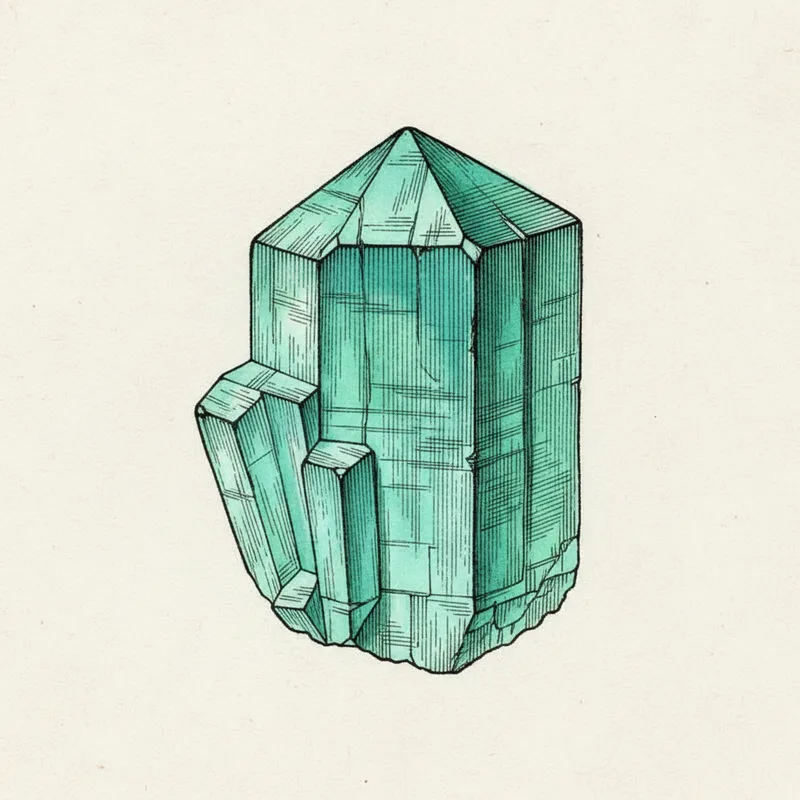
Amazonite is a variety of microcline feldspar, and its vivid blue-green color baffled mineralogists for over a century. The color was long attributed to copper, a logical guess given the turquoise-like hue. But research in the 1980s demonstrated that the color actually comes from lead (Pb²⁺) and water (OH⁻) incorporated into the crystal structure, combined with exposure to natural radiation. The lead impurities interact with radiation to create color centers that absorb red light, transmitting blue-green.
This is potassium aluminum silicate, the same basic chemistry as orthoclase feldspar (the pink mineral in granite), just with different trace elements creating a completely different appearance. Amazonite forms in granitic pegmatites where slow cooling allows large crystals to develop. The Pikes Peak region of Colorado produces world-class specimens, often growing alongside smoky quartz.
Despite its name, amazonite has no confirmed connection to the Amazon River. The name was applied in the eighteenth century based on green stones reportedly found near the Amazon, which were likely nephrite jade. The mineral we call amazonite was first properly described from Russian specimens.
The workplace tradition for amazonite centers on boundary-setting and calm assertion. Practitioners recommend it for people who overcommit, who struggle to say no, and who absorb other people's stress in collaborative environments. The tradition frames it as the stone for setting limits without aggression. In today's open-office, always-on Slack culture, there's a reason this one resonates.
Desk placement: Amazonite's blue-green color has a genuine basis in color psychology research. Cool blue and green tones are consistently associated with reduced stress in environmental psychology studies. A piece near your monitor introduces a calming color into your visual field.
What to buy: Colorado, Madagascan, and Russian amazonite are all excellent. Polished pieces run $4-10. Look for vivid blue-green saturation.
6. Clear Quartz: The Universal Amplifier
Formula: SiO₂ | Hardness: 7 | Crystal System: Trigonal
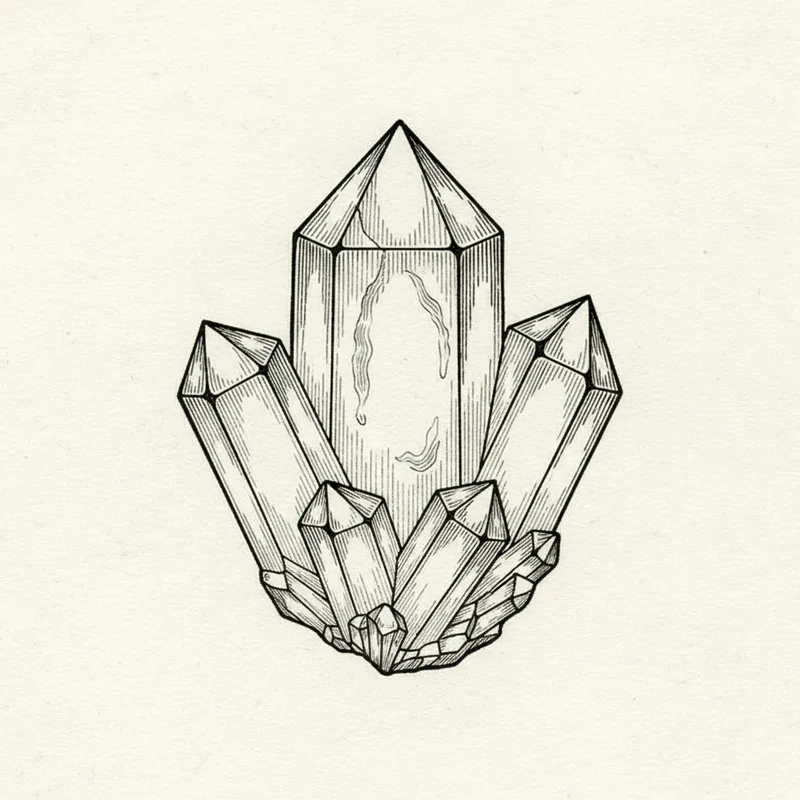
Clear quartz is the most abundant mineral in Earth's continental crust and the baseline against which nearly every other crystal is compared. It's pure silicon dioxide, with each silicon atom bonded to four oxygen atoms in a continuous tetrahedral framework that spirals in either a left-handed or right-handed helix. This chirality is a real structural property. Clear quartz is also piezoelectric, which is why quartz oscillators keep time in every watch and computer on your desk. Apply pressure and it vibrates at a precise, reliable frequency.
The internal structures in clear quartz are what make it a compelling desk piece. Even "clear" quartz contains inclusions, veils, rainbows from internal fractures, phantom growth planes, and fluid inclusions that trapped water millions of years ago. Hold a good specimen up to your desk lamp and you'll see a miniature landscape inside. This visual complexity makes clear quartz an excellent micro-break object, something to look at for ten seconds when your eyes need a rest from the screen.
In virtually every crystal tradition worldwide, clear quartz is described as an "amplifier." The tradition holds that it doesn't carry specific energy of its own but intensifies whatever intention you bring to it. In focus contexts, this translates to a practice of holding clear quartz while stating a specific goal. The crystal becomes a physical anchor for the intention.
The amplifier tradition is metaphor, but the underlying practice is a technique behavioral psychologists call implementation intention. A piece of clear quartz on your desk, consciously associated with a work session, functions as exactly the kind of physical cue that Gollwitzer's research shows improves follow-through.
Desk placement: A natural point standing upright or a polished sphere. The transparency lets light pass through, creating subtle refractions that shift as the sun moves. At hardness 7, clear quartz is fully durable for any desk environment.
What to buy: Among the most affordable crystals on Earth. A nice polished point runs $3-10. Be aware that very clear, very perfect, very cheap "quartz" points may be smelted glass. Natural quartz almost always has some inclusions.
7. Pyrite: The Engineer's Crystal
Formula: FeS₂ | Hardness: 6.5 | Crystal System: Cubic
Pyrite forms some of the most geometrically perfect natural objects on Earth. Its cubic crystal habit produces near-perfect cubes with faces so flat and edges so sharp they look machined. The faces are often striated, with fine parallel lines running perpendicular to striations on adjacent faces. These markings record the oscillation between cubic and pyritohedral growth during crystallization, a geological heartbeat frozen in stone.
Put a pyrite cube on your desk and watch what happens. People pick it up. They turn it over. They ask how nature made a perfect cube out of iron and sulfur atoms with no template, no mold, no instruction. The answer involves crystal field theory and molecular orbital bonding, but the visual result is an object that commands attention and curiosity from everyone who sees it.
Pyrite is iron disulfide, "fool's gold," though no experienced prospector would confuse it with the real thing. Pyrite is harder, brittle, and streaks greenish-black. Gold is softer, malleable, and streaks golden yellow. Pyrite forms across an extraordinary range of environments: hydrothermal veins, sedimentary rocks, metamorphic formations, and coal beds.
The workplace tradition connects pyrite to wealth consciousness and professional confidence. The metallic luster and golden color associate it with prosperity across Chinese, European, and South American traditions. Some practitioners place pyrite on their desk specifically during salary negotiations or business planning. The tradition frames it as a stone of initiative, the spark for getting momentum started on something you've been avoiding.
Desk placement: Front and center. A pyrite cube is a conversation starter, a genuine natural wonder, and the most visually striking object on any desk. Keep it dry. Pyrite can tarnish in humid conditions and occasionally develops a sulfur smell if moisture reacts with the iron sulfide.
What to buy: Spanish pyrite cubes from Navajun (La Rioja) are the gold standard. These are among the most perfect natural cubes found anywhere on Earth. They run $10-40 depending on size. Peruvian pyrite clusters are more affordable and equally striking.
8. Tiger Eye: The Decision Stone
Formula: SiO₂ (fibrous) | Hardness: 7 | Crystal System: Trigonal
Tiger eye is a pseudomorph, a mineral that replaced another mineral while preserving its original structure. The original mineral was crocidolite, a blue fibrous amphibole. Over millions of years, silica-rich fluids dissolved the crocidolite fibers and deposited quartz in their place, preserving the fibrous architecture at the microscopic level while completely changing the chemistry. Iron oxides stained the replacement quartz golden-brown during the process.
That preserved fibrous structure creates chatoyancy, the moving band of light that slides across the surface when you rotate the stone. Light reflects off parallel microscopic quartz fibers like sunlight glancing off a spool of silk thread. The effect is mesmerizing, and it happens because of an atomic-scale fossil record locked inside the stone.
Should you worry about the asbestos connection? No. The crocidolite is completely gone, replaced by quartz during pseudomorphism. Polished tiger eye is safe to handle.
The workplace tradition for tiger eye centers on practical judgment and decision-making. Roman soldiers reportedly carried it into battle for courage. In modern crystal practice, tiger eye is recommended specifically for choices that require weighing trade-offs rather than following inspiration. The tradition frames it as a stone for the moment when you have three good options and need to commit to one. Where fluorite is for analysis and citrine is for motivation, tiger eye is for the decision itself.
The chatoyant band of light is also what makes tiger eye an exceptional fidget stone. Rolling a polished piece between your fingers while thinking through a decision creates exactly the kind of tactile grounding that therapists recommend for managing decision anxiety.
Desk placement: Keep a tumbled piece in your desk drawer for hand-holding during phone calls or difficult thinking. At hardness 7, it handles daily pocket carry without damage.
What to buy: South African material dominates the market and is very affordable. Polished palm stones run $3-8. Blue tiger eye (hawk's eye), which preserves more of the original crocidolite blue color, is less common and slightly pricier.
9. Smoky Quartz: Scotland's National Gem
Formula: SiO₂ | Hardness: 7 | Crystal System: Trigonal
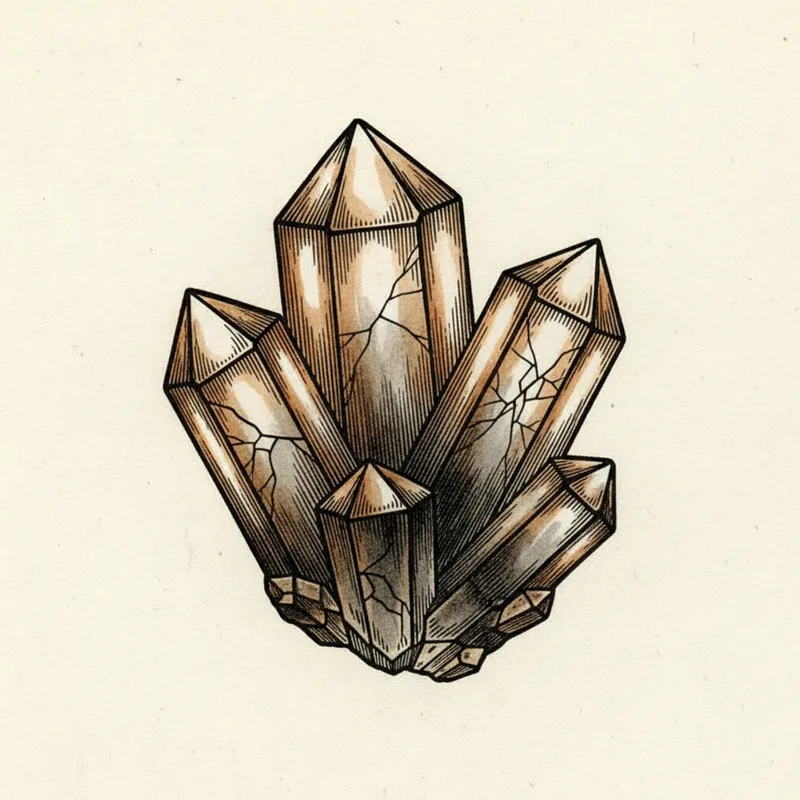
Smoky quartz demonstrates one of geology's more elegant color mechanisms. Like all quartz, it starts as SiO₂. Trace amounts of aluminum substitute for silicon in the crystal lattice, and when natural gamma radiation from surrounding rocks hits those aluminum sites, it creates color centers that absorb light, producing colors from pale champagne to nearly black. The amount of radiation exposure determines the depth of color. Specimens from uranium-bearing granites tend to be the darkest.
Scotland designated smoky quartz as its national gem, and the Celts associated dark quartz with the earth and with protection from negative forces. The Cairngorm mountains of Scotland give their name to cairngorm, a traditional term for the warm brown variety found there. Unlike amethyst, smoky quartz color is generally stable and won't fade under normal sunlight exposure, making it one of the safer crystals for a desk near a window.
The workplace tradition for smoky quartz centers on stress clearing and mental grounding. Where black tourmaline creates a boundary against external distraction, smoky quartz addresses internal noise. Practitioners recommend it for the anxiety that builds during a workday, the accumulated tension of back-to-back meetings, unread emails, and looming deadlines. The tradition frames it as a release stone, something to hold when you need to let the stress of the morning go before the afternoon begins.
The grounding mechanism here overlaps with Cognitive Behavioral Therapy techniques. Holding a smooth, heavy, cool object and focusing on its temperature, weight, and texture redirects neural activity from anxiety circuits to sensory processing. A polished smoky quartz point, with its satisfying weight and cool surface, is an excellent grounding object by any standard.
Desk placement: On your desk surface, within arm's reach for those moments when you need to hold something solid. The warm brown tones complement most office color palettes without drawing attention.
What to buy: Natural smoky quartz from Brazil, Switzerland, or Scotland has the most appealing warm brown tones. Be aware that very dark, nearly black "smoky quartz" is often clear quartz that's been artificially irradiated. Natural specimens show variation in color intensity. A good polished point runs $5-15.
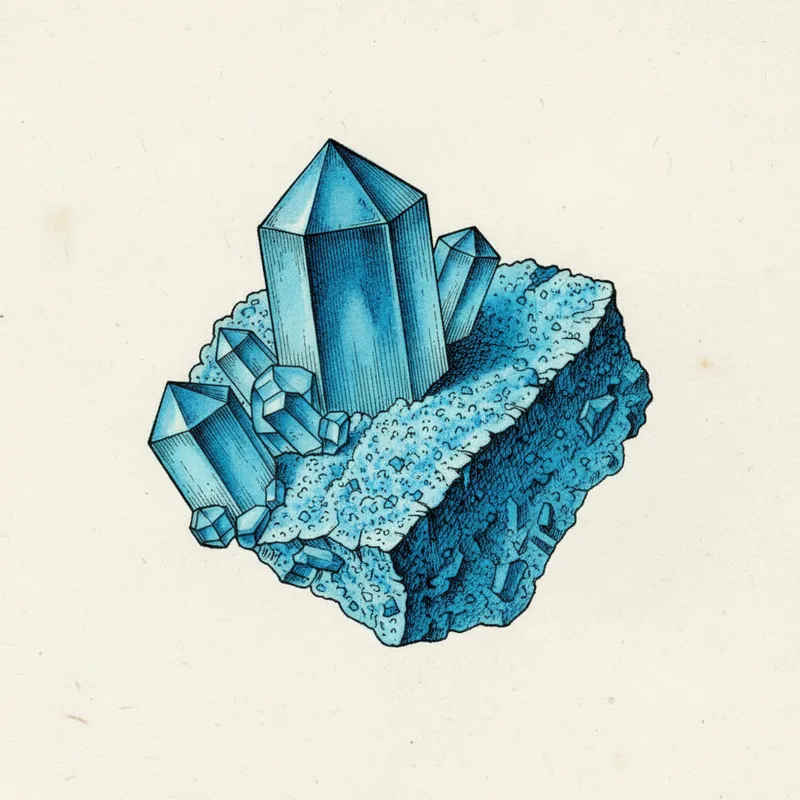
10. Blue Apatite: The Goal Setter
Formula: Ca₅(PO₄)₃(F,Cl,OH) | Hardness: 5 | Crystal System: Hexagonal
Blue apatite has the best etymology of any mineral on this list. The name comes from the Greek apatao, meaning "to deceive." German geologist Abraham Gottlob Werner named it in 1786 because apatite is so frequently confused with other minerals (beryl, tourmaline, olivine) that it earned a name literally meaning "the deceiver."
The irony is rich, because apatite is anything but obscure. Calcium phosphate, the mineral group apatite belongs to, is the primary mineral in your teeth and bones. Hydroxyapatite, Ca₅(PO₄)₃(OH), makes up about 70% of bone by weight. You are, in a very real sense, made of apatite.
Blue apatite gets its color from rare earth element substitutions and the interactions of transition metals within the hexagonal crystal structure. It forms in igneous, metamorphic, and sedimentary environments, one of the most geologically versatile minerals on this list. Major gem-quality sources include Madagascar, Brazil, and Myanmar.
The workplace tradition for blue apatite focuses on motivation and goal articulation. Practitioners recommend it specifically for the moment when you know you need to change direction but haven't committed to the new path. The tradition associates it with clarity of purpose, the ability to define what you want and state it plainly. In a workplace context, that translates to project planning, career reflection, and the kind of strategic thinking that requires you to zoom out from daily tasks.
At hardness 5, blue apatite is softer than most desk crystals on this list. It scratches more easily than quartz or tourmaline. Handle it with a little respect.
Desk placement: Near a notebook or planner where you set goals. The vivid blue-green color is eye-catching without being overwhelming. Keep it away from harder stones that could scratch it.
What to buy: Madagascan blue apatite is often the most vivid. Polished pieces run $8-20. Raw crystals are also beautiful and affordable. The color can rival much more expensive gems like Paraiba tourmaline, which is part of why Werner named it "the deceiver."
Desk Crystal Dos and Don'ts
You've chosen your stone. Now keep it in good shape.
DO keep soft crystals away from hard ones. Fluorite (4) and apatite (5) will scratch if tossed in a drawer with pyrite (6.5) or quartz (7). The Mohs hardness scale is your friend here. Any mineral can scratch anything softer than itself.
DON'T place light-sensitive crystals on a sunny windowsill. Amethyst fades in sustained UV light, and citrine (if it's heat-treated amethyst) can shift color. Smoky quartz and tiger eye are generally safe near windows. Fluorite is also stable. When in doubt, check our crystal care guide.
DO clean your desk crystals periodically. Dust settles. Oils from your hands build up. Warm water and a soft cloth are all most crystals need. Avoid submerging soft or porous stones. Sodalite and apatite should be wiped, not soaked.
DON'T use chemical cleaners, ultrasonic machines, or steam on desk crystals. These methods are for jewelers working with specific, durable gems. Your desk fluorite doesn't need an ultrasonic bath. It needs a damp cloth.
DO pick a consistent spot. The environmental cueing research works because your brain associates specific objects with specific states. If your crystal moves every day, the association weakens. Give it a permanent home on your desk.
DON'T feel obligated to "charge" or "cleanse" your crystals unless you enjoy the ritual. Moonlight doesn't change a mineral's crystal structure. Sage smoke doesn't alter silicon dioxide bonds. But if a cleansing ritual makes you feel like you're resetting your workspace and your mindset, the psychological reset has genuine value. The stone is the prop. The intention is the active ingredient.
The Best Desk Crystals as Gifts
Desk crystals are among the most giftable objects in the mineral world. They're affordable, universally appealing, and don't require the recipient to believe in anything metaphysical. Here's how to choose well.
Safest picks for anyone:
- Pyrite cube. Nobody dislikes a natural metallic cube. It's a conversation piece, a paperweight, and a genuine natural wonder. Even the most skeptical coworker will pick it up and turn it over.
- Clear quartz point. Universal, affordable, and elegant. A standing quartz point looks good on any desk and carries zero mystical baggage for the uninitiated.
- Tiger eye palm stone. Warm color, satisfying weight, and that chatoyant glow. It's a beautiful object without requiring any explanation.
Best for the stressed colleague:
- Smoky quartz. Grounding, warm-toned, and associated with stress relief across traditions. Pair it with a note about Scotland's national gem for a geology-first framing.
- Amazonite. The calming blue-green color speaks for itself. "I thought this was pretty and it's supposed to be good for staying calm" is all the context needed.
What to avoid gifting:
- Raw black tourmaline can look intense and "witchy" to someone unfamiliar with crystals. Save it for people who have expressed interest.
- Anything marketed as "healing." If the gift comes in packaging that claims it will cure anxiety or attract wealth, you've put your coworker in an awkward position. Buy the stone, skip the marketing.
- Fragile or soft specimens for someone who isn't a collector. Fluorite is beautiful but scratches at hardness 4. If your recipient is going to throw it in a pen cup, give them tiger eye (hardness 7) instead.
The gifting sweet spot is $8-25. A pyrite cube from Navajun, a polished smoky quartz point, or a tumbled tiger eye with a one-line card explaining the geology. You're giving someone a piece of Earth that's millions of years old, an object with a real formation story, and a potential focus anchor for their desk. That's a meaningful gift at any price point.
Building Your Desk Crystal Practice
If you've read this far and you're considering putting a crystal on your desk, here's the framework that combines what the science says with what the traditions recommend.
Pick one stone. Not five. One piece that you find visually compelling and that feels right in your hand. Weight, texture, and color matter more than metaphysical reputation. If you're drawn to sodalite's deep blue, start there. If pyrite's geometry fascinates you, start there. The crystal you actually pick up every morning is worth more than the "perfect" crystal that sits untouched.
Create a five-second ritual. Before your first work session, pick up the stone. Hold it for a breath. State, silently or aloud, the one thing you intend to accomplish first. Set it down. Open your laptop. That's it. Five seconds, and you've built a cue-craving-response chain that your brain will strengthen with every repetition.
Use it as a phone substitute. When your hand reaches for your phone out of habit, reach for the crystal instead. Roll it between your fingers. Notice its weight, temperature, and surface. This is tactile grounding, a real therapeutic technique. Ten seconds of it can be enough to break the scroll impulse and return your attention to the task.
Respect the geology. Learn your crystal's hardness, formation environment, and chemical composition. Know that your fluorite crystallized from superheated fluids deep underground. Know that your tiger eye records the atom-by-atom replacement of asbestos by quartz over millions of years. Know that your pyrite assembled itself into perfect cubes through nothing but the physics of atomic bonding. These stones are remarkable objects by any measure. The more you know about what they actually are, the more interesting they become.
Let the practice evolve. Some people start with one stone and stay there for years. Others rotate crystals seasonally or by project. Some people hold their stone during every meeting. Others only touch it during deep work blocks. There's no wrong way to use a desk crystal, as long as the practice is consistent enough for your brain to build the association. Consistency matters more than complexity.
Pair with a work method you already trust. If you use time-blocking, assign a crystal to your deep work block. If you use the Pomodoro technique (25 minutes focused, 5 minutes rest), pick up your stone at the start of each cycle and set it down when the timer rings. If you journal your priorities each morning, hold your crystal while writing. The crystal becomes a physical punctuation mark within a system that already works.
The desk crystal trend isn't about mysticism infiltrating the workplace. It's about people rediscovering what humans have known for thousands of years: beautiful natural objects anchor our attention, mark our spaces, and give our hands something better to do than scroll. The geology is real. The psychology is real. The minerals are millions of years old.
Put one on your desk. Pick it up tomorrow morning. Get to work.
Looking for a complete list of workplace crystals? Browse our workplace collection. For more on the psychology of crystal focus practices, see Best Crystals for Focus. And before you place anything on a sunny windowsill, check our crystal care guide and display guide.
Crystals in This Article
Black Tourmaline
The Shield Stone
Lapis Lazuli
The Stone of the Heavens
Clear Quartz
The Master Healer
Smoky Quartz
The Grounding Stone
Blue Apatite
The Motivation Mineral
Tourmaline
The Rainbow Stone
Hackmanite
The Color-Changing Sodalite

Orthoclase
The Foundation Feldspar
Turquoise
The Sky Stone
Amazonite
The Hope Stone
Limestone
The Fossil Record
Obsidian
The Volcanic Glass