Best Crystals for Sleep: What to Know & How to Use
Key Takeaway: No scientific study has ever demonstrated that crystals directly improve sleep. But the minerals traditionally associated with rest are genuinely fascinating, the ritual of a calming bedtime practice has real psychological benefits, and understanding the geology behind these stones makes the experience richer.
Let's get this out of the way: there is no peer-reviewed evidence that placing a crystal on your nightstand will help you fall asleep faster, stay asleep longer, or dream more vividly. Zero controlled studies. Zero replicated results.
But here's what is real. Bedtime rituals work. The psychological literature on sleep hygiene is clear that consistent pre-sleep routines, reduced screen time, and deliberate relaxation practices measurably improve sleep quality. If handling a cool, smooth piece of amethyst is part of your wind-down routine, the routine itself is doing something valuable. The crystal is the anchor for the habit.
And the traditions are real too. Cultures across thousands of years and thousands of miles independently associated certain minerals with rest, calm, and protection during sleep. That's worth exploring on its own terms.
So this guide does two things. It covers the genuine geology behind eight minerals traditionally connected to sleep, because these are remarkable stones regardless of what you believe about their metaphysical properties. And it gives you practical advice on which ones belong on a nightstand, which ones don't, and which ones will dissolve if you leave them in the wrong spot.
1. Amethyst: The Universal Sleep Stone
Formula: SiO₂ with Fe³⁺ impurities
Amethyst is just quartz. Specifically, it's quartz that contains trace amounts of iron (Fe³⁺) substituting for silicon in the crystal lattice. What makes it purple is a process that sounds like science fiction: natural gamma radiation from surrounding rocks knocks electrons out of position around those iron atoms, creating "color centers" that absorb certain wavelengths of light and reflect violet.
The depth of color depends on the iron concentration and the radiation dose the crystal received over millions of years. This is why amethyst fades in prolonged sunlight. UV radiation reverses the color center process, bleaching the purple back toward clear or yellowish tones. If you keep amethyst on a sunny windowsill, you'll watch millions of years of geological work slowly undo itself.
The sleep connection spans cultures and centuries. Ancient Greeks believed amethyst prevented intoxication (the name literally means "not drunk" in Greek, from a-methystos). Medieval Europeans placed amethyst under pillows to encourage calm dreams. In Tibetan Buddhist tradition, amethyst prayer beads are associated with meditation and mental clarity. Modern crystal practitioners almost universally list it as the top recommendation for sleep.
At a Mohs hardness of 7, amethyst is durable enough to handle being on a nightstand, dropped, or tucked under a pillow without concern. It's one of the most practical bedside crystals from a purely physical standpoint.
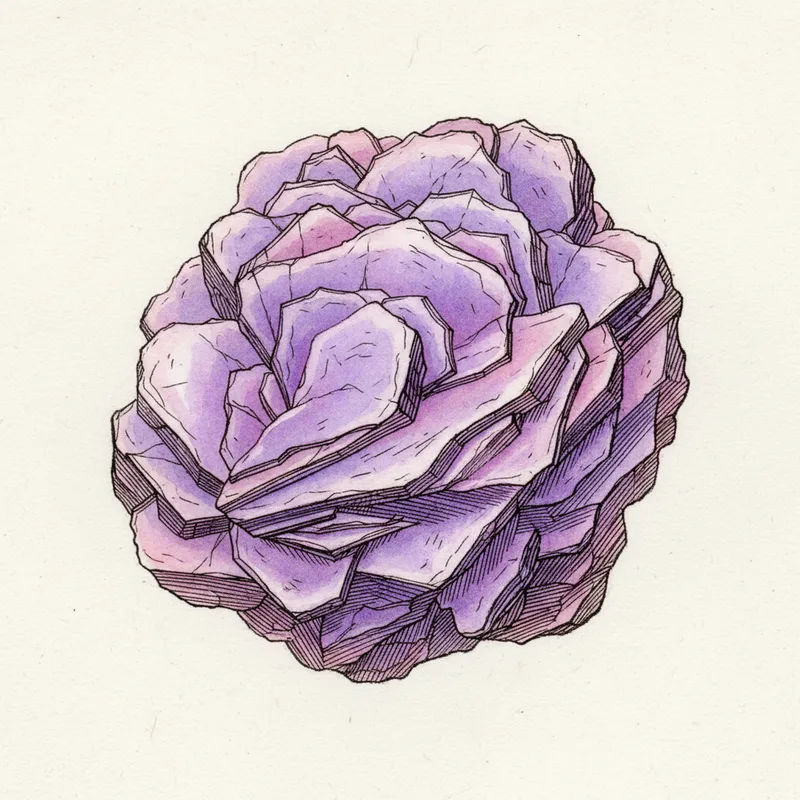
2. Lepidolite: The Lithium Mica
Formula: K(Li,Al)₃(Al,Si,Rb)₄O₁₀(F,OH)₂
Lepidolite is a lithium-bearing mica, and this is where things get genuinely interesting from a chemistry perspective. Lithium is one of the most effective psychiatric medications ever discovered. Lithium carbonate has been used since the 1940s to treat bipolar disorder, and it remains a first-line treatment today. It stabilizes mood, reduces anxiety, and improves sleep in clinical settings.
Lepidolite contains significant amounts of lithium locked into its crystal structure. Some specimens contain up to 7% lithium oxide by weight. That's a remarkable concentration.
Here's the critical caveat: you cannot absorb lithium by holding a rock. The lithium in lepidolite is chemically bonded within the silicate lattice. It doesn't leach through your skin or emit lithium particles into the air. To extract usable lithium from lepidolite, you'd need to heat it to over 1,000 degrees Celsius and process it with sulfuric acid. Your palm is not doing that.
But the geological coincidence is genuinely remarkable. A mineral that happens to contain a clinically proven calming agent also happens to be one of the most beautiful lilac-colored stones you can hold. The tradition of using lepidolite for relaxation predates our understanding of lithium's psychiatric applications by centuries.
Lepidolite is a soft mineral, around 2.5 to 3 on the Mohs scale. It flakes along its mica cleavage planes, so treat it gently. A nightstand is fine. Under a pillow is risky because body weight and movement could crack or flake it.
3. Selenite and Satin Spar: The Moon Stone Mix-Up
Formula: CaSO₄·2H₂O
Here's a correction that most crystal shops won't tell you: the smooth, white, fibrous wands sold as "selenite" are almost always satin spar. True selenite forms flat, transparent, tabular crystals. Satin spar forms fibrous, silky, opaque masses. Both are varieties of gypsum (calcium sulfate dihydrate), and both are beautiful, but they look nothing alike.
The naming confusion has become so entrenched in the crystal market that correcting it is nearly impossible. For this guide, just know that the white wands on your nightstand are satin spar, not selenite in the strict mineralogical sense.
Both varieties share a critical property: they dissolve in water. Gypsum is one of the most soluble common minerals. High humidity alone can slowly degrade a piece over time. Never place either near a humidifier, in a bathroom, or anywhere moisture is common. And never use the popular "moon water" ritual with these stones. You'll end up with slightly chalky water and a smaller crystal.
The name "selenite" comes from Selene, the Greek goddess of the moon. The lunar connection carried through into crystal healing traditions, where both selenite and satin spar are associated with calm, clarity, and restful sleep.
At a hardness of just 2 on the Mohs scale, these minerals scratch with a fingernail. They're fragile, soft, and water-soluble. A nightstand works perfectly fine. Under a pillow does not. And keep them away from windows where condensation forms. See our crystal care guide for more on water-sensitive minerals.
4. Celestite: Strontium's Pale Blue Gift
Formula: SrSO₄
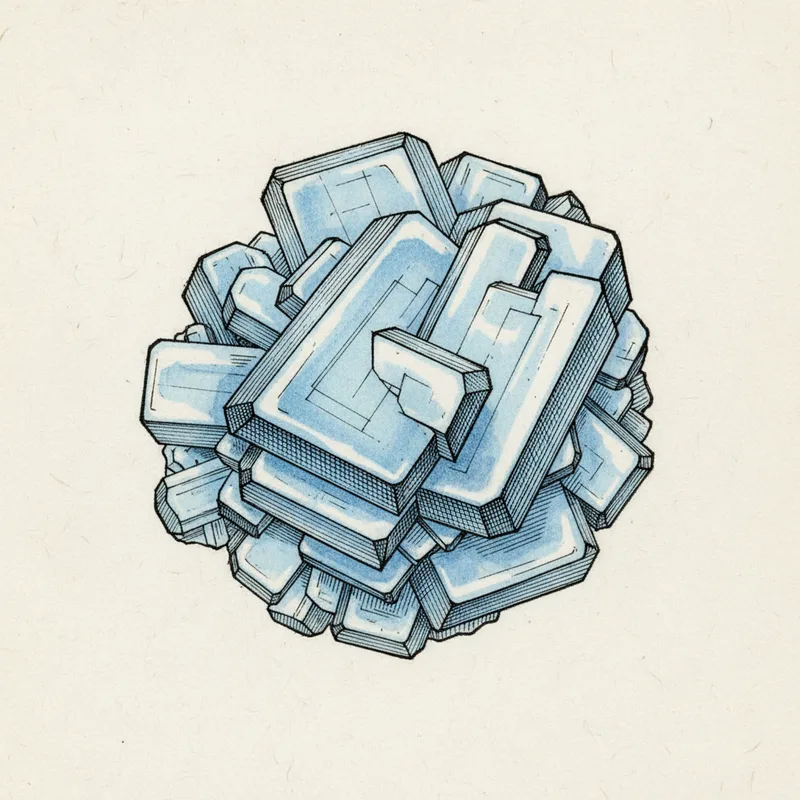
Celestite is strontium sulfate, and it forms some of the most delicate, otherworldly blue crystals on Earth. The pale blue color comes from trace impurities, likely small amounts of gold or barium substituting into the crystal lattice. The name comes from the Latin caelestis, meaning "heavenly," because early mineralogists thought the color looked like the sky.
The finest celestite comes from Madagascar, where enormous geodes lined with blade-like blue crystals can weigh hundreds of kilograms. These geodes formed in sedimentary rocks, precipitating from strontium-rich fluids that percolated through limestone cavities.
Celestite has two serious practical problems for bedside use. First, it's fragile. With a Mohs hardness of 3 to 3.5 and perfect cleavage in two directions, it chips and shatters easily. Second, it fades in light. Prolonged exposure to sunlight or even strong artificial light will bleach the blue color. If you use celestite near your bed, keep it away from windows and handle it with care.
In crystal traditions, celestite is associated with angelic communication, peaceful dreams, and astral travel during sleep. Its visual appearance alone makes it feel like a calming presence. The clusters look like frozen fragments of a pale blue sky.
5. Howlite: The Calm White Stone
Formula: Ca₂B₅SiO₉(OH)₅
Howlite is a calcium borosilicate hydroxide that forms as white, porcelain-like nodules with distinctive grey or black veining. It was first discovered in 1868 in Nova Scotia, Canada, and named after Henry How, the geologist who found it after local gypsum quarry workers complained about a tough new mineral that was ruining their drill bits.
Howlite has one of the more interesting commercial histories in the mineral world. It's extremely porous, which means it absorbs dye easily. Dyed blue howlite is the most common imitation of turquoise on the market. If you've ever bought inexpensive "turquoise" jewelry from a gift shop or online, there's a reasonable chance it was howlite.
In its natural white form, howlite is traditionally associated with calming the mind, reducing anxiety, and promoting sleep. Some practitioners place it under the pillow specifically, which is practical because at a hardness of 3.5, it won't scratch or damage anything, and it's tough enough not to shatter under normal conditions.
The white color and smooth texture of polished howlite make it pleasant to hold, and the veining pattern gives each piece a unique appearance. It's an affordable stone (typically a few dollars for a polished piece), which makes it a low-risk choice if you're experimenting with bedside crystals for the first time.
6. Moonstone: Light Dancing in Feldspar
Formula: KAlSi₃O₈ (orthoclase feldspar)
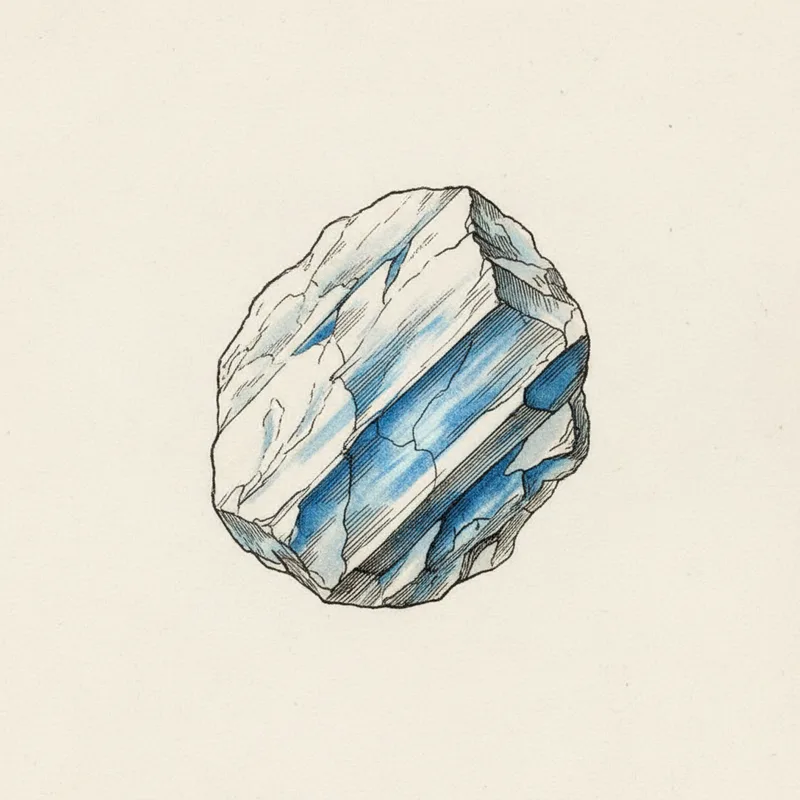
Moonstone is orthoclase feldspar, and its signature glow is one of the most beautiful optical phenomena in mineralogy. The effect, called adularescence, occurs because moonstone is not a single uniform crystal. As the feldspar cools from a molten state, it separates into alternating microscopic layers of orthoclase and albite feldspar (a process called exsolution). These layers are thin enough to scatter light, creating a billowing, internal glow that shifts as you rotate the stone.
The thickness of those exsolution lamellae determines the color of the glow. Thinner layers produce a blue adularescence (the most prized variety). Thicker layers produce white or silver glows. The finest specimens come from Sri Lanka and southern India, where they form in pegmatite veins.
Moonstone has been connected to sleep, dreams, and lunar cycles in nearly every culture that has encountered it. In Hindu tradition, it's considered sacred and associated with the moon deity Chandra. In Roman belief, it was formed from solidified moonlight. The consistent thread across traditions is an association with night, the moon, rest, and intuition.
At a hardness of 6 to 6.5, moonstone is reasonably durable for bedside use. However, it has two directions of perfect cleavage, which means it can split along flat planes if struck sharply. A nightstand is ideal. Under a pillow is fine for tumbled pieces but risky for raw or faceted specimens.
7. Smoky Quartz: Irradiated Calm
Formula: SiO₂ with Al³⁺ substitutions
Smoky quartz is another quartz variety whose color comes from natural radiation, but the mechanism differs from amethyst. In smoky quartz, trace aluminum (Al³⁺) substitutes for silicon in the crystal lattice. When natural gamma radiation hits these aluminum sites, it creates "Al-hole" color centers that absorb light and produce the brown to black smoky color.
The irradiation is entirely natural and the resulting crystal is not radioactive in any meaningful way. The radiation dosage accumulated over millions of years is what created the color, but the stone itself doesn't emit radiation. This is a common misconception worth addressing directly.
Scotland's national gem is smoky quartz (they call it "cairngorm" after the Cairngorm Mountains where it was historically found). It's been used in Scottish jewelry and ceremonial pieces for centuries.
In sleep-related traditions, smoky quartz is associated with grounding and quieting mental chatter. Practitioners recommend it for people whose primary sleep problem is an overactive mind. Whether the stone itself does anything or whether the act of holding a cool, heavy crystal forces you to pause and breathe is a question you can answer for yourself.
At a hardness of 7, smoky quartz is one of the most durable options on this list. It handles any placement without concern.
8. Black Tourmaline: The Electric Protector
Formula: NaFe₃Al₆(BO₃)₃Si₆O₁₈(OH)₄
Black tourmaline (schorl) has the most complex chemistry of any mineral on this list. It's a boron-containing ring silicate with iron, aluminum, sodium, and hydroxyl groups all packed into an elaborate crystal structure.
What makes black tourmaline genuinely unusual is that it's piezoelectric. Apply mechanical pressure to a tourmaline crystal and it generates a measurable electrical charge. Heat it up and it becomes pyroelectric, developing positive and negative poles. Benjamin Franklin studied tourmaline's electrical properties in the 1750s. It's a real, measurable physical phenomenon.
Does this electrical property have any effect on sleep? No mechanism has been demonstrated. But the piezoelectric nature of tourmaline is a legitimate scientific fact that makes this mineral objectively more interesting than the average rock.
In crystal traditions, black tourmaline is the go-to protection stone. Its sleep association is specifically about warding off nightmares and negative energy during the vulnerable state of sleep. This tradition appears in multiple cultures independently.
Black tourmaline is a 7 to 7.5 on the Mohs scale, making it the hardest mineral on this list. It's virtually indestructible in a bedroom setting.
Crystals That Should NOT Be in Your Bedroom
Not every mineral belongs on a nightstand. Some are actively dangerous, and others will degrade in bedroom conditions.
Toxic minerals. Cinnabar (mercury sulfide) and realgar (arsenic sulfide) are both stunning and both genuinely toxic. Cinnabar can release mercury vapor at room temperature, and realgar degrades into arsenic-bearing dust when exposed to light. Neither belongs anywhere you spend eight hours breathing. If you own either, store them in a sealed display case with ventilation, not next to your pillow. See our crystal care guide for the full list of toxic minerals and safe handling practices.
Light-sensitive minerals. If your bed is near a window, avoid celestite (fades to white), amethyst (fades to yellow or clear), rose quartz (fades with prolonged UV exposure), and kunzite (dramatically light-sensitive). Morning sun streaming across your nightstand might look beautiful, but it's slowly bleaching your crystals.
Humidity-sensitive minerals. Selenite, satin spar, and halite (rock salt) dissolve in water. If you run a humidifier at night, live in a humid climate, or keep crystals in a bathroom, these minerals will slowly deteriorate. Halite will literally melt into a puddle given enough humidity.
Fibrous minerals. Chrysotile (a form of asbestos), tiger's eye (contains asbestiform fibers that are sealed within the quartz matrix and considered safe when intact), and raw fibrous minerals should not be placed where they can be disturbed, inhaled, or degraded. Polished, sealed pieces are generally fine. Raw fibrous specimens are not bedroom appropriate.
Where to Actually Put Them
Practical placement matters more than most crystal guides acknowledge.
Nightstand. The best default location. The crystal is close enough to see and touch during your wind-down routine but protected from being rolled onto, knocked off the bed, or crushed. All eight crystals on this list work on a nightstand. Just keep fragile specimens (celestite, lepidolite, selenite/satin spar) away from the edge.
Under the pillow. Only for hard, durable, tumbled stones. Smoky quartz, amethyst, black tourmaline, and tumbled howlite are fine here. Do not put celestite, lepidolite, raw moonstone, or selenite/satin spar under a pillow. They will chip, flake, or crack from the pressure and movement.
Windowsill. Only if the window doesn't receive direct sunlight and isn't prone to condensation. Smoky quartz and black tourmaline handle windowsill placement with no issues. Amethyst, celestite, and moonstone will fade over time with sun exposure. Selenite and satin spar risk moisture damage from window condensation.
On the floor beside the bed. A good option for large clusters or geodes that are too heavy for a nightstand. Celestite geodes in particular look stunning on the floor and are less likely to be knocked over and shattered.
If you are also exploring supplement options for sleep alongside your crystal practice, here is what the evidence supports - magnesium glycinate and low-dose melatonin are the two options with the strongest clinical backing.
The real advice, stripped of any crystal tradition, is this: pick a stone that you find visually calming, make it part of a consistent bedtime routine, and put the phone down thirty minutes before you want to fall asleep. The phone part will do more for your sleep than any mineral ever will. But the mineral makes the routine feel like something worth doing, and that counts for more than you might think.
If you are dealing with hotel-room insomnia specifically, see Best Crystals to Carry While Traveling for Protection for the packed-kit recommendation including amethyst and moonstone for jet lag.
Metaphysical and “healing” associations mentioned here are cultural traditions, not medical advice or scientific fact. Crystals are not a substitute for professional medical care. Full disclaimer.
Crystals in This Article
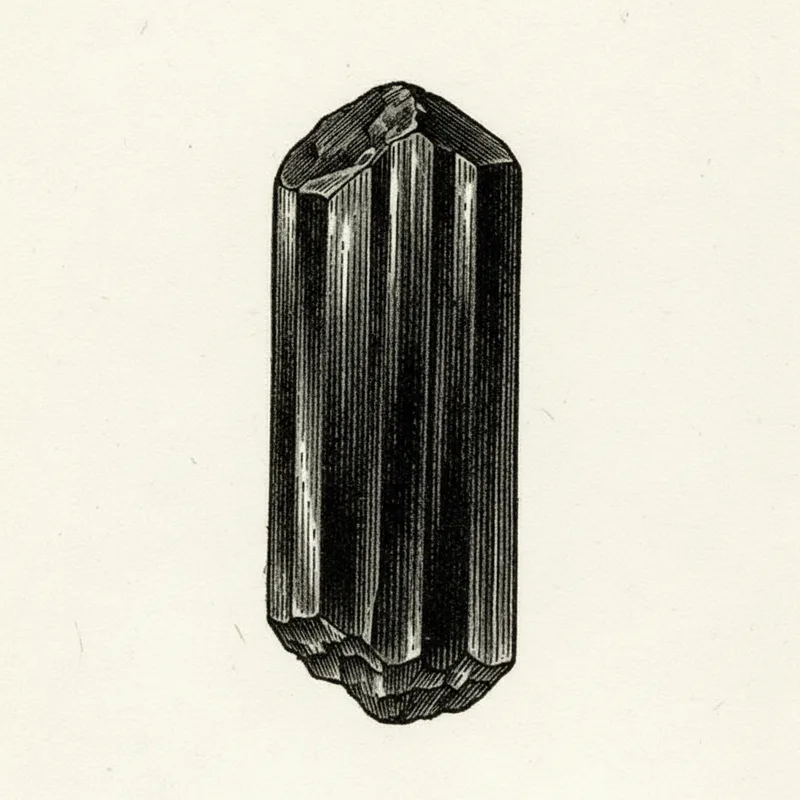
Black Tourmaline
The Shield Stone
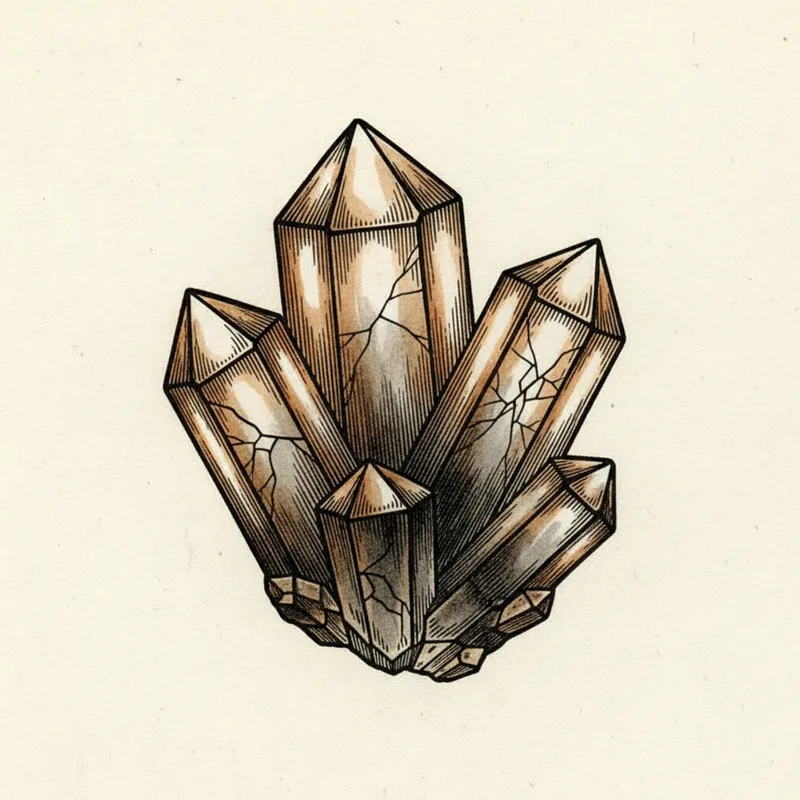
Smoky Quartz
The Grounding Stone
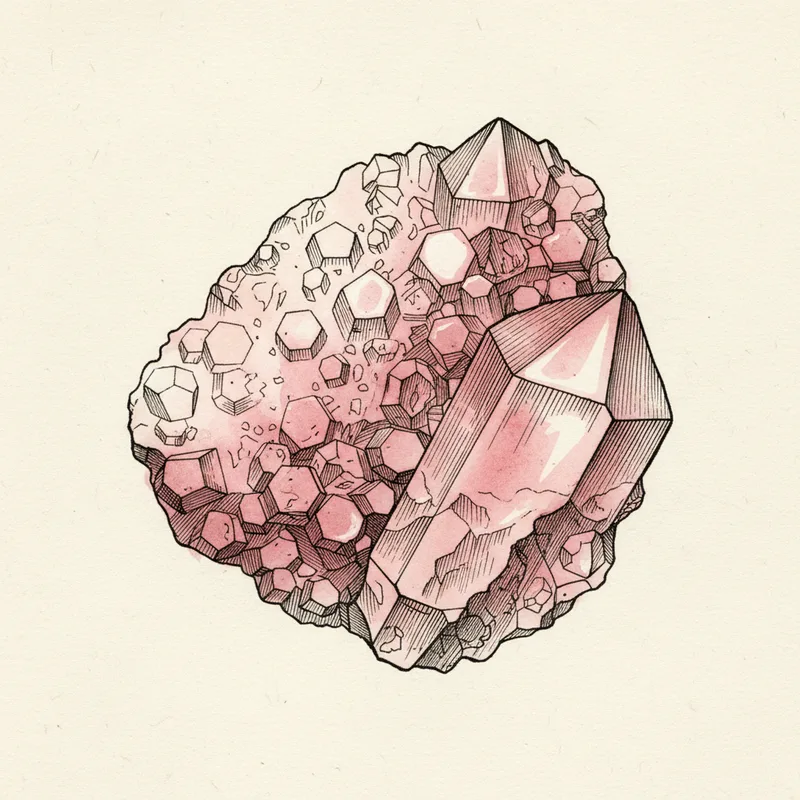
Rose Quartz
The Stone of Unconditional Love
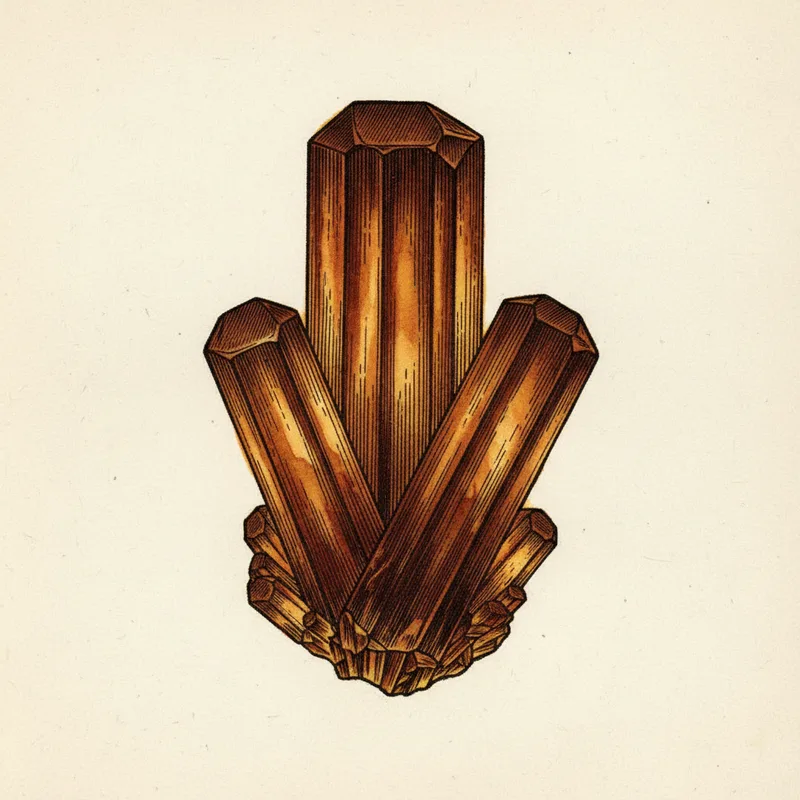
Tourmaline
The Rainbow Stone
Lepidolite
The Peace Stone

Satin Spar
The Silken Glow

Orthoclase
The Foundation Feldspar

Chrysotile
The Serpentine Fiber
Turquoise
The Sky Stone
Moonstone
The Traveler's Stone
Celestite
The Stone of Angels
Limestone
The Fossil Record
Keep Reading
Newsletter
Something shiny, now and then
A stone worth knowing, or a fake worth spotting, every so often. No spam.