Citrine vs Yellow Topaz: How to Tell Them Apart
Key Takeaway: Citrine and yellow topaz look similar at first glance, but they are completely unrelated minerals with different chemistry, hardness, density, crystal structure, and price. Most "citrine" on the market is actually heat-treated amethyst, which makes the confusion even worse.
If you have ever searched for a golden gemstone and felt overwhelmed by the overlap between "citrine" and "yellow topaz," you are not alone. Jewelers, crystal shops, and online sellers routinely swap these names, sometimes deliberately. The two stones sit next to each other in display cases, glow in similar shades of honey and champagne, and get marketed with nearly identical language.
But citrine and yellow topaz are not even distant cousins. They belong to entirely different mineral families, form through different geological processes, and behave differently when you wear them, cut them, or test them. Once you understand the science, telling them apart is surprisingly straightforward.
At a Glance
| Property | Citrine | Yellow Topaz |
|---|---|---|
| Chemical Formula | SiO₂ | Al₂SiO₄(F,OH)₂ |
| Mineral Family | Quartz (tectosilicate) | Topaz (nesosilicate) |
| Crystal System | Trigonal | Orthorhombic |
| Hardness (Mohs) | 7 | 8 |
| Specific Gravity | 2.65 | 3.49-3.57 |
| Refractive Index | 1.544-1.553 | 1.619-1.627 |
| Dispersion | 0.013 | 0.014 |
| Cleavage | None (conchoidal fracture) | Perfect basal cleavage |
| Luster | Vitreous | Vitreous (often more brilliant) |
| Streak | White | White |
| Color Cause | Iron (Fe³⁺) impurities | Color centers from defects in crystal lattice |
| Typical Price | $5-50/ct | $25-500/ct (Imperial: $1,000+/ct) |
| Birthstone Month | November (traditional) | November (precious topaz) |
Notice that they share a birthstone month. This is one of the historical reasons the two get tangled together so often.
Chemistry: Two Completely Different Minerals
Citrine is silicon dioxide, SiO₂. It belongs to the quartz family, the single most abundant mineral group in the Earth's continental crust. Every grain of sand on most beaches is quartz. Citrine is just quartz that happens to contain trace amounts of iron in the right oxidation state (Fe³⁺) to produce yellow coloration.
Yellow topaz is aluminum fluorosilicate, Al₂SiO₄(F,OH)₂. It is a nesosilicate, meaning its silicate tetrahedra are isolated units linked by aluminum, fluorine, and hydroxyl bonds rather than the continuous framework of shared oxygen atoms you find in quartz. The presence of fluorine is the signature element. Without fluorine-rich fluids, topaz simply cannot form.
This chemical difference is not a technicality. It determines everything that follows: how hard each stone is, how heavy it feels, how light moves through it, how it breaks, and how much it costs.
How Citrine Forms
Natural citrine is one of the rarest varieties of quartz. That statement surprises most people, because citrine is everywhere in crystal shops. The explanation is simple: almost all commercial citrine is manufactured by baking amethyst or smoky quartz in industrial ovens at 400-500 degrees Celsius.
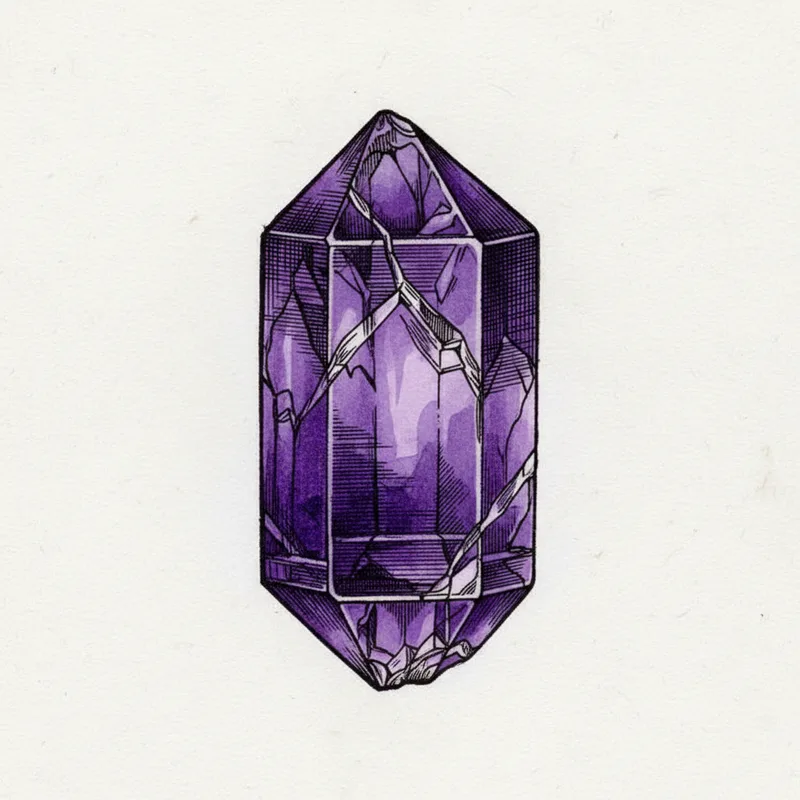
In nature, citrine forms when quartz containing trace iron impurities is exposed to sustained geothermal heat deep underground. The heat changes the oxidation state of the iron from Fe²⁺ (which gives amethyst its purple color) to Fe³⁺ (which produces yellow). This can happen when an amethyst deposit sits near a magma intrusion for millions of years.
The key localities for genuine natural citrine are limited. The Ural Mountains in Russia produce some of the finest lemon-yellow specimens. Parts of Madagascar, Zambia, and the Democratic Republic of Congo yield small quantities. Brazil produces enormous amounts of citrine, but the overwhelming majority of Brazilian "citrine" is heat-treated amethyst from the state of Rio Grande do Sul. The baked material tends to show a deep, burnt orange color with opaque white bases, which looks distinctly different from the pale, smoky lemon-yellow of natural citrine.
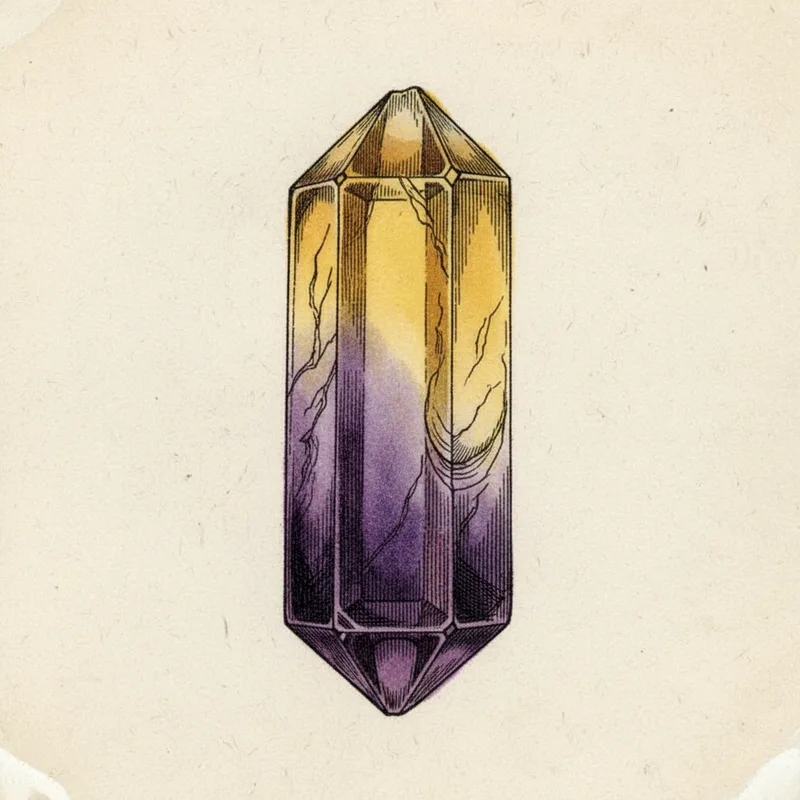
There is also a fascinating hybrid. Ametrine, found almost exclusively at the Anahi mine in eastern Bolivia, contains both purple amethyst and yellow citrine zones within a single crystal. The color zoning occurs because iron impurities in different parts of the crystal experience different oxidation conditions during growth, creating a natural split of purple and golden-yellow.
How Yellow Topaz Forms
Topaz has an entirely different geological story. It crystallizes during the late stages of igneous activity, specifically from fluorine-rich fluids and vapors that circulate through cooling granitic magma. These pneumatolytic and hydrothermal processes concentrate fluorine, which is essential for building the topaz crystal lattice.
Most topaz forms in one of three geological settings:
Pegmatites. These are coarse-grained igneous rocks that represent the last dregs of a cooling magma chamber. As the magma solidifies from the outside in, incompatible elements like fluorine, boron, and lithium get concentrated in the remaining melt. Topaz crystals grow in the cavities and pockets of these pegmatites, sometimes reaching enormous sizes. The famous Minas Gerais pegmatite district in Brazil has produced individual topaz crystals weighing hundreds of kilograms.
Rhyolite cavities. In some volcanic regions, topaz forms in gas pockets within rhyolite lava flows. The Thomas Range in Utah is a well-known locality where small, clear topaz crystals occur in the vugs of topaz-bearing rhyolite. These are typically colorless, but they demonstrate how topaz can form in extrusive volcanic rocks when fluorine concentrations are high enough.
Greisen deposits. When hydrothermal fluids rich in fluorine and tin alter granite along fracture zones, they create a rock type called greisen. Topaz is a characteristic mineral in these altered zones and often occurs alongside cassiterite (tin ore), tourmaline, and fluorite.
The yellow to golden-orange color of topaz is caused by color centers, which are structural defects in the crystal lattice that absorb specific wavelengths of light. In Imperial Topaz, the prized golden-orange to pinkish-orange variety found primarily near Ouro Preto, Brazil, the color is thought to involve chromium substituting for aluminum at certain lattice sites. Imperial Topaz is the most valuable form of any topaz and has been treasured in Brazil since the 18th century.
Optical Properties: How Light Tells the Truth
Under a refractometer, citrine and topaz are immediately distinguishable. Citrine has a refractive index of 1.544-1.553. Yellow topaz registers significantly higher at 1.619-1.627. This means topaz bends light more sharply, giving it more brilliance when cut. If you place a well-cut topaz next to a citrine of similar color, the topaz will look livelier, with more internal sparkle.
Their birefringence differs too. Citrine shows birefringence of 0.009, while topaz comes in at 0.008-0.010. In practice, this is close enough that you cannot use birefringence alone to separate them, but it contributes to subtle differences in how each stone handles polarized light.
Dispersion, the ability to split white light into spectral colors, is similar in both stones (0.013 for citrine, 0.014 for topaz). Neither is going to throw rainbows like a diamond. But combined with topaz's higher RI, the overall optical performance of a faceted yellow topaz outshines citrine in direct comparison.
Under a Chelsea filter, both appear unchanged. Neither stone contains chromium in amounts sufficient to produce a color shift. Under longwave ultraviolet light, some citrine specimens fluoresce a weak yellow-green, while most yellow topaz is inert. UV fluorescence is not reliable as a sole diagnostic, but it adds to the overall picture.
The Weight Test: Specific Gravity
This is one of the easiest and most satisfying ways to distinguish the two minerals without any equipment beyond your own hands. Topaz has a specific gravity of 3.49-3.57. Citrine (like all macrocrystalline quartz) sits at 2.65. That means topaz is about 33% denser than citrine.
In practical terms: if you hold two loose, unmounted stones of identical dimensions, one citrine and one yellow topaz, the topaz will feel noticeably heavier. Gemologists call this the "heft test," and it works remarkably well with these two stones because the density gap is so large.
For mounted stones, consider the visual size relative to carat weight. A one-carat topaz will appear physically smaller than a one-carat citrine because the topaz packs more mass into less volume. If you see a ring advertised as "yellow topaz" with a stone that looks too big for its stated carat weight, that is a red flag.
The Scratch Test and Cleavage
Topaz is an 8 on the Mohs hardness scale. Citrine is a 7. This means topaz will scratch citrine, but citrine cannot scratch topaz. While you should never perform destructive testing on a finished gemstone, this hardness difference is important for practical wear. A topaz ring will resist daily abrasion better than a citrine ring, particularly on the facet edges where softness shows first as dulling over time.
The more important structural difference is cleavage. Topaz has perfect basal cleavage, meaning it has one plane along which the crystal will split cleanly if struck with enough force in the right direction. This is a well-known vulnerability of topaz. Gem cutters orient topaz carefully during faceting to minimize the risk of cleavage, and wearers need to know that a sharp blow to the table of a topaz can, in unfortunate cases, split the stone.
Citrine has no cleavage at all. When it breaks, it exhibits conchoidal fracture, producing curved, shell-like surfaces similar to broken glass. This makes citrine tougher (more resistant to breaking) than topaz despite being softer (less resistant to scratching). Toughness and hardness are different properties, and this is a perfect example of why both matter.
The Heat-Treated Citrine Problem
The single biggest source of confusion in the citrine-versus-topaz conversation is that most citrine is not natural citrine at all. The global supply of "citrine" is dominated by heat-treated amethyst, and this has been the case for over a century.
Here is how to spot baked amethyst masquerading as citrine:
Color distribution. Heat-treated amethyst tends to show a deep, saturated orange to reddish-brown color that concentrates at the crystal tips while the base remains milky white or pale. Natural citrine typically shows a more even, pale smoky-yellow to champagne color throughout the crystal.
Transparency. Natural citrine is usually quite transparent, almost glass-clear with a subtle yellow tint. Baked amethyst often has a cloudy, opaque base with color concentrated in patches.
Color tone. If the "citrine" looks like burnt caramel or dark orange Fanta, it is almost certainly heat-treated. Natural citrine rarely reaches those saturated warm tones. Its color is more like weak tea or diluted lemon juice.
Price and size. Giant, cathedral-style geode clusters sold as "citrine" for a few hundred dollars are heat-treated amethyst. Natural citrine of that size and quality would be museum-grade and priced accordingly.
Accompanying minerals. If the "citrine" point still shows the classic six-sided amethyst crystal habit with a pointed termination and opaque matrix, consider that the original crystal was purple and got baked. Natural citrine crystals tend to have a different growth habit, often showing more prismatic development.
Heat-treated citrine is not "fake" in the sense that glass or synthetic quartz is fake. It is genuine quartz that has undergone a color change. The treatment is permanent and stable. But it is not what most people imagine when they hear "natural citrine," and the price should reflect the treatment. A large heat-treated citrine point might sell for $20-50, while a comparable-sized natural citrine crystal from Madagascar or Zambia could cost several hundred dollars.
Treated and Coated Topaz: The Mystic Topaz Question
Yellow topaz faces its own treatment issues, though they are very different from citrine's.
Mystic topaz. This is colorless or pale topaz that has been coated with a thin layer of titanium dioxide using a process called chemical vapor deposition (CVD). The coating creates an iridescent, rainbow effect on the stone's surface. Mystic topaz is visually dramatic, but the coating is only a few microns thick. It can scratch off, wear down with daily use, and cannot be re-polished without destroying the effect entirely. It is a novelty product, not a fine gemstone.
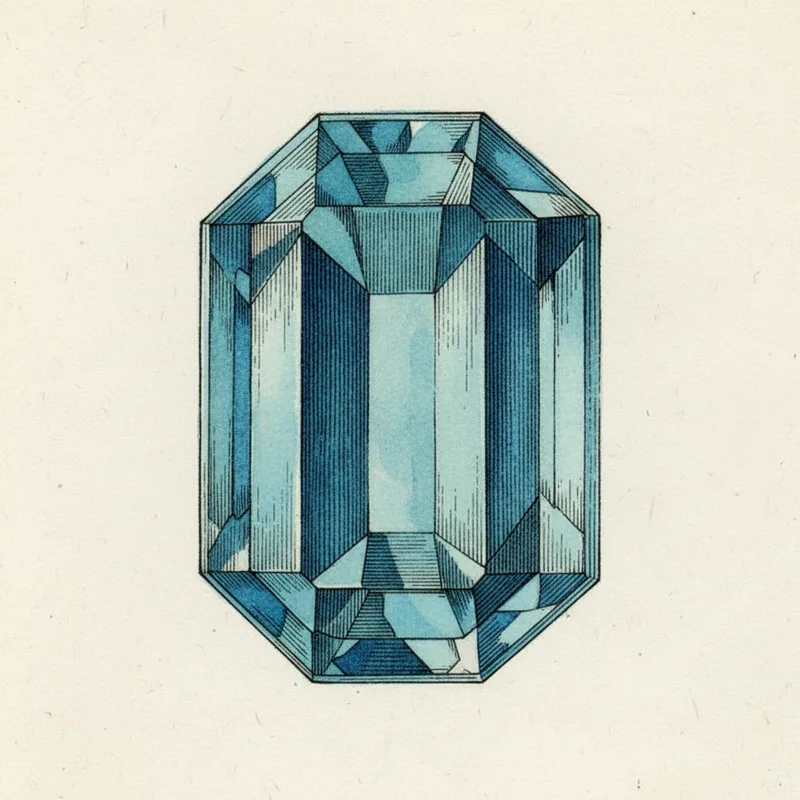
Blue topaz. Nearly all blue topaz on the market starts as colorless topaz that has been irradiated and then heated to produce blue colors. The three standard trade names, "Sky Blue," "Swiss Blue," and "London Blue," represent different intensities produced by varying irradiation doses and heat treatment protocols. The treatment is permanent and universally accepted in the gem trade, but it is worth knowing that vivid blue topaz does not occur naturally in significant quantities.
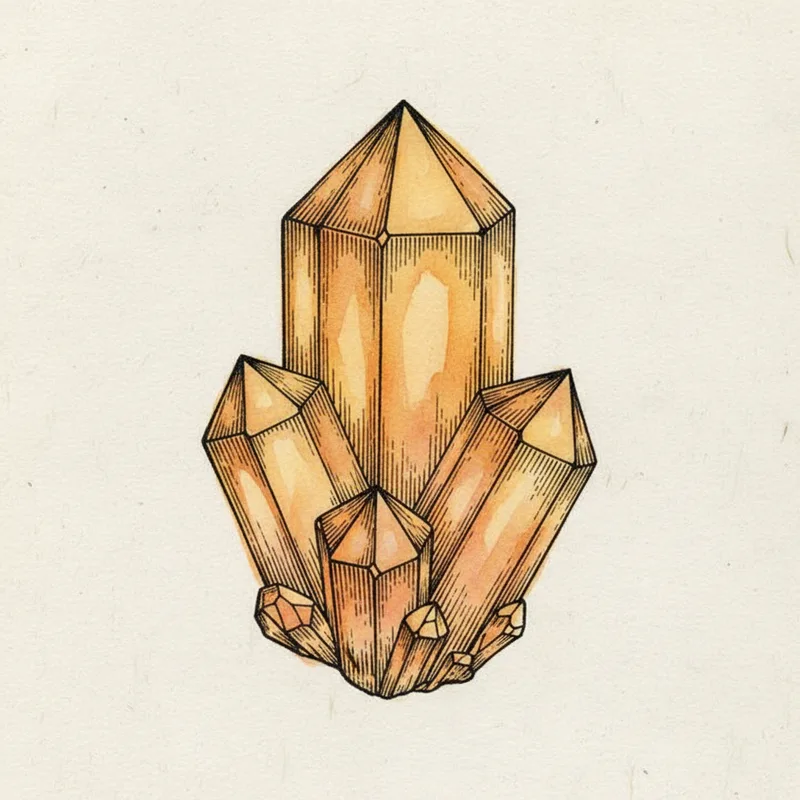
Imperial Topaz. The golden-orange to pinkish-orange variety from Ouro Preto, Brazil, is one of the few forms of topaz that is typically sold without any treatment. Its color is natural and stable. Imperial Topaz commands the highest prices of any topaz variety precisely because of this natural origin and its rarity. Demand consistently outstrips supply, and fine pieces appreciate in value over time.
Diffusion-treated topaz. Some topaz is surface-diffused with cobalt to produce a vivid blue color that penetrates slightly deeper than a CVD coating but is still limited to a thin surface layer. Re-cutting a diffusion-treated stone will remove the color.
The lesson here is the same as with citrine: always ask about treatments. A reputable seller will disclose them. If the price seems too good to be true for a vivid, saturated topaz, it probably reflects a treatment.
Price Comparison
The price gap between citrine and yellow topaz is significant but narrower than many people assume, because the low end of both markets is quite affordable.
Heat-treated citrine: $2-15 per carat for tumbled or cabochon-cut pieces. $5-30 per carat for faceted stones.
Natural citrine: $10-50 per carat for clean, well-cut specimens. Exceptional natural Zambian or Congolese citrine with vivid color can reach $100+ per carat, but this is unusual.
Standard yellow topaz: $25-100 per carat for clean, well-cut stones in common yellow shades.
Imperial Topaz: $200-1,000+ per carat for fine golden-orange specimens from Ouro Preto. Exceptional pieces with pinkish-red overtones have sold at auction for over $3,000 per carat.
Mystic topaz: $5-20 per carat. The coating process is inexpensive, and the base material (colorless topaz) is abundant.
For comparison, other yellow gemstones occupy different price points entirely. Heliodor (yellow beryl) runs $30-150 per carat. Chrysoberyl ranges from $50-500 per carat. Yellow sapphire starts around $100 per carat and can exceed $10,000 per carat for untreated Kashmir-origin stones.
Historical and Cultural Traditions
Topaz has been confused with other yellow stones for most of recorded history. The name likely derives from the Greek "Topazios," which referred to an island in the Red Sea (now Zabargad) that actually produced peridot, not topaz. For centuries, any yellow-to-orange transparent gemstone risked being called topaz regardless of what it actually was.
In ancient and medieval lapidary traditions, topaz was associated with the sun. Roman writers credited it with the power to detect poisons and calm anger. In Hindu tradition, topaz is associated with Jupiter and is considered one of the Navaratna, the nine sacred gemstones.
Citrine's cultural history is shorter, partly because the name was not widely used until the 14th century. The word comes from the French "citron," meaning lemon. In the Art Deco period (1920s-1930s), citrine experienced a surge in popularity. Hollywood costume designers and jewelers embraced it as an affordable, warm-toned stone that photographed well and complemented gold settings.
Both stones share the designation as November birthstones, which contributes to the persistent market confusion. The American Gem Trade Association lists topaz as the "precious" November birthstone and citrine as the "alternative."
Identification Checklist
If you are trying to determine whether an unmounted yellow stone is citrine or topaz, work through these checks in order:
1. The heft test. Hold the stone and gauge its weight relative to its size. If it feels surprisingly heavy for its dimensions, it is more likely topaz. If it feels light or comparable to glass, it is more likely citrine.
2. Check for cleavage. Examine the stone under magnification. Look for any flat, mirror-like internal fractures or planes. Topaz may show evidence of its perfect basal cleavage. Citrine will show only conchoidal fracture patterns or be clean.
3. Refractive index. If you have access to a refractometer, this is definitive. An RI reading of 1.544-1.553 is citrine. A reading of 1.619-1.627 is topaz. No overlap exists.
4. Color clues. Deep burnt-orange with a white base is almost certainly heat-treated amethyst sold as citrine. Pale, even, smoky-yellow suggests natural citrine. Golden-orange with hints of pink or peach suggests topaz, possibly Imperial Topaz.
5. Immersion test. Place the stone in a clear glass of water. Quartz has a lower RI and will become harder to see (less contrast with water) than topaz. Topaz will still stand out with visible facet edges and good relief.
6. Hardness test (last resort). If you have a known piece of quartz, try scratching the unknown stone with it. If the quartz slides off without leaving a mark, the unknown is at least as hard as quartz, consistent with topaz. If it scratches, the unknown is softer than quartz, which means it is neither citrine nor topaz.
Which Should You Choose?
The honest answer depends on what you are buying it for.
Choose citrine if you want an affordable, durable, warm-toned stone for everyday jewelry. Citrine's lack of cleavage makes it tough and forgiving. It handles bumps and knocks better than topaz. A well-cut natural citrine in a gold setting is genuinely beautiful, and you do not need to spend much to get a large, clean stone. Just make sure you know whether you are buying natural or heat-treated material, and pay accordingly.
Choose yellow topaz if you want a gemstone with superior hardness, higher brilliance, and a more prestigious reputation. Topaz's higher refractive index gives it more life under light. An Imperial Topaz is one of the great collector's gemstones, with natural color, genuine rarity, and strong investment potential. Just be aware of the cleavage risk and treat the stone with care.
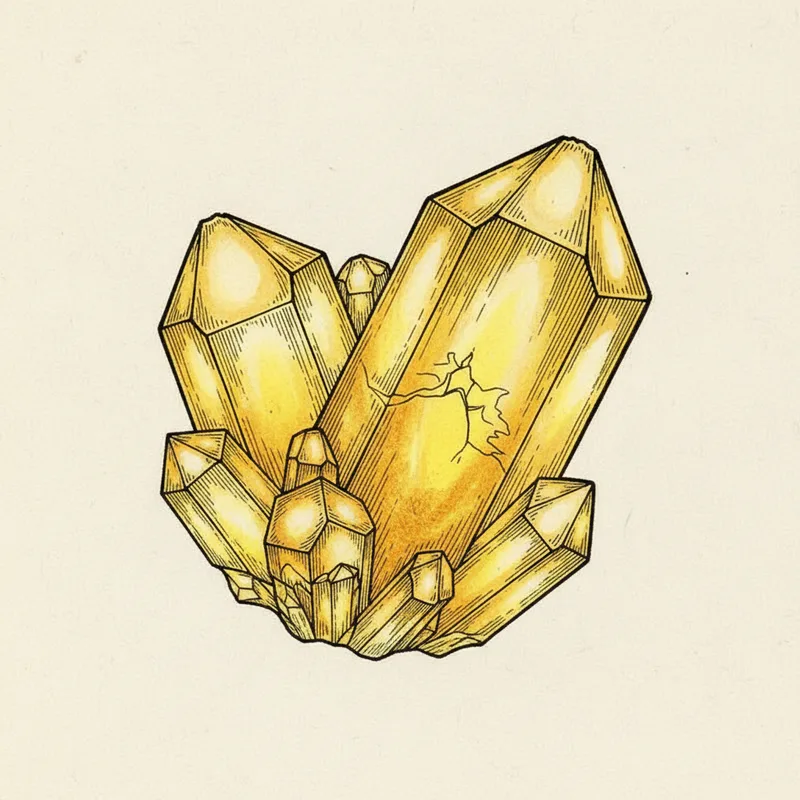
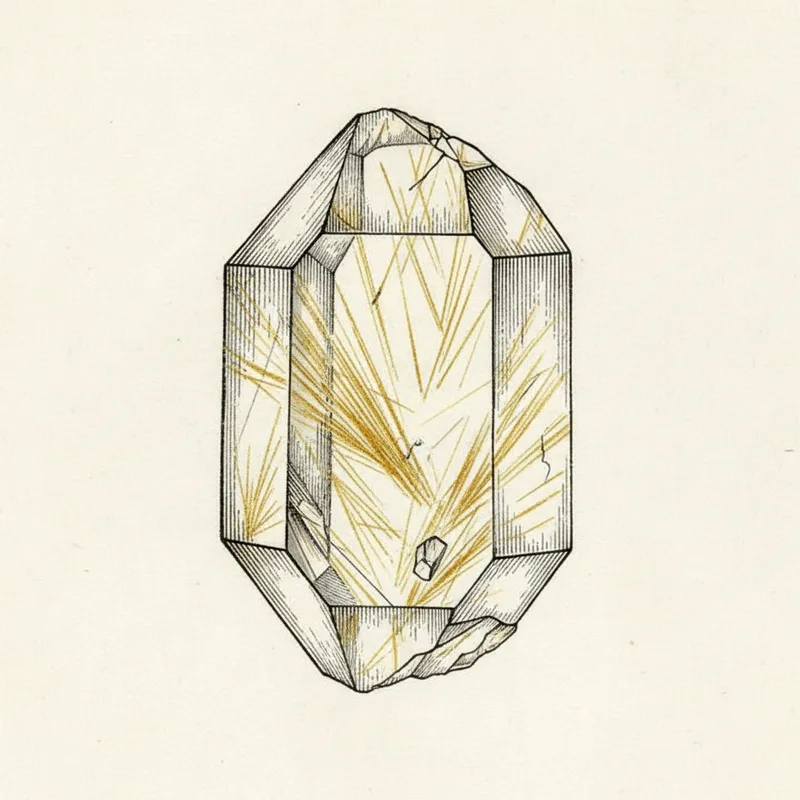
Consider alternatives if neither fits perfectly. Heliodor offers the warmth of citrine with the prestige of the beryl family. Rutilated quartz gives you golden color with dramatic internal needle inclusions. Golden healer quartz provides a rich yellow with iron-oxide surface coatings. And ametrine splits the difference between citrine and amethyst in a single stone.
Whatever you choose, buy from a seller who discloses treatments, and remember: a stone's value is not determined by its name alone. A fine natural citrine is worth more than a coated topaz. An untreated Imperial Topaz is worth more than a room full of baked amethyst. Understanding what you are actually holding is the whole game.
Crystals in This Article
Golden Healer Quartz
The Solar Catalyst
Rutilated Quartz
Venus Hair Stone
Yellow Sapphire
Pukhraj, the Stone of Jupiter
Imperial Topaz
The Crown Jewel of Topaz
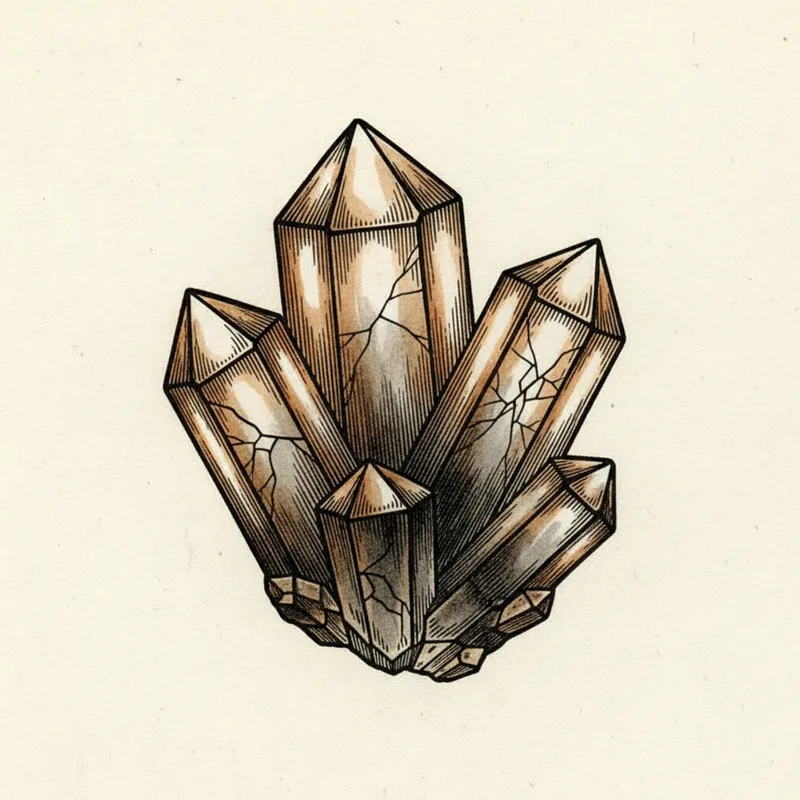
Smoky Quartz
The Grounding Stone
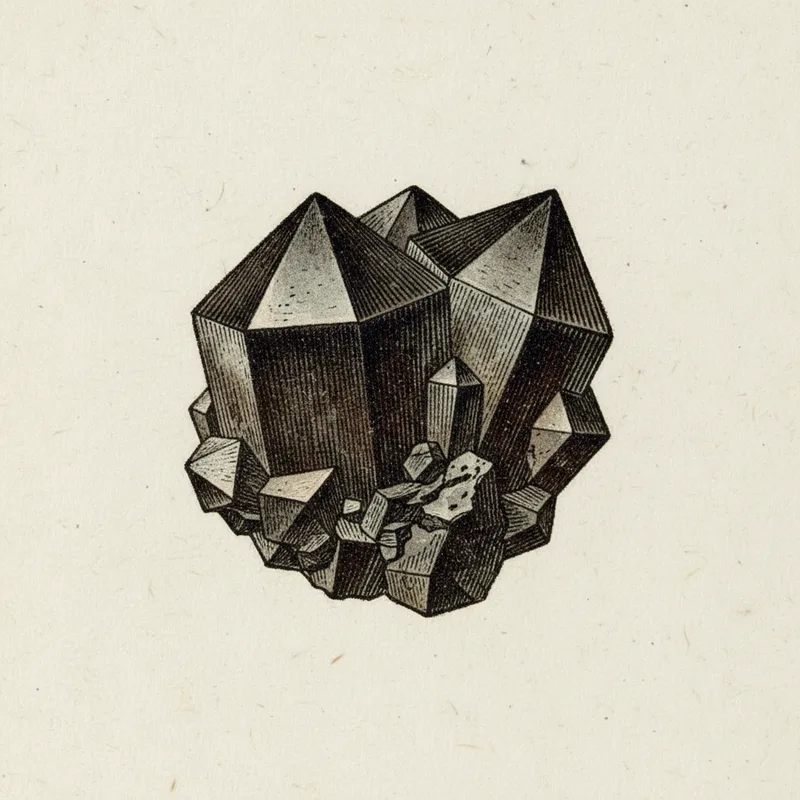
Cassiterite
The Tin Stone
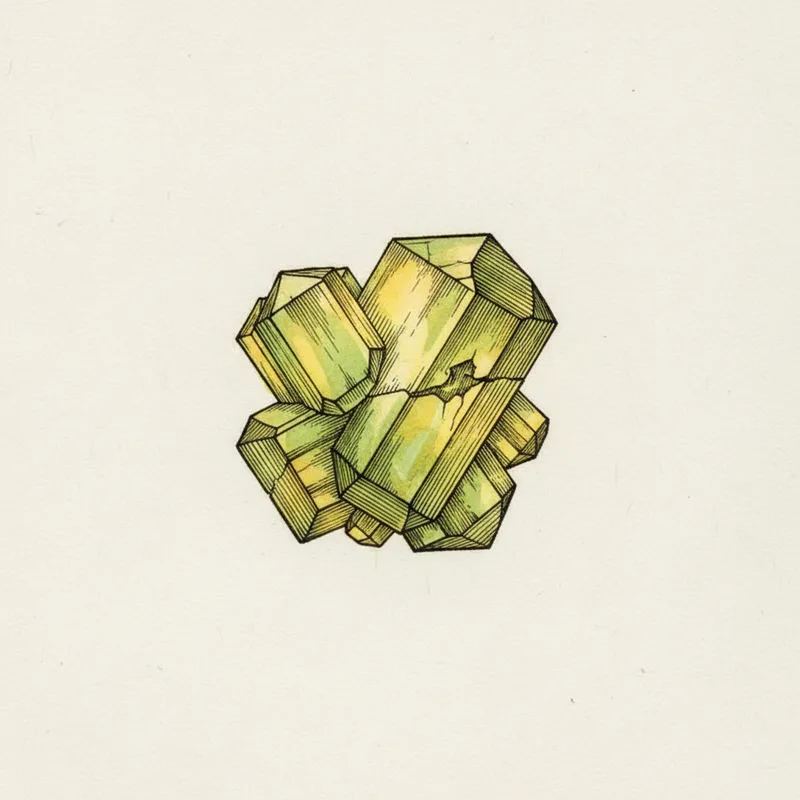
Chrysoberyl
The Cat's Eye Gem
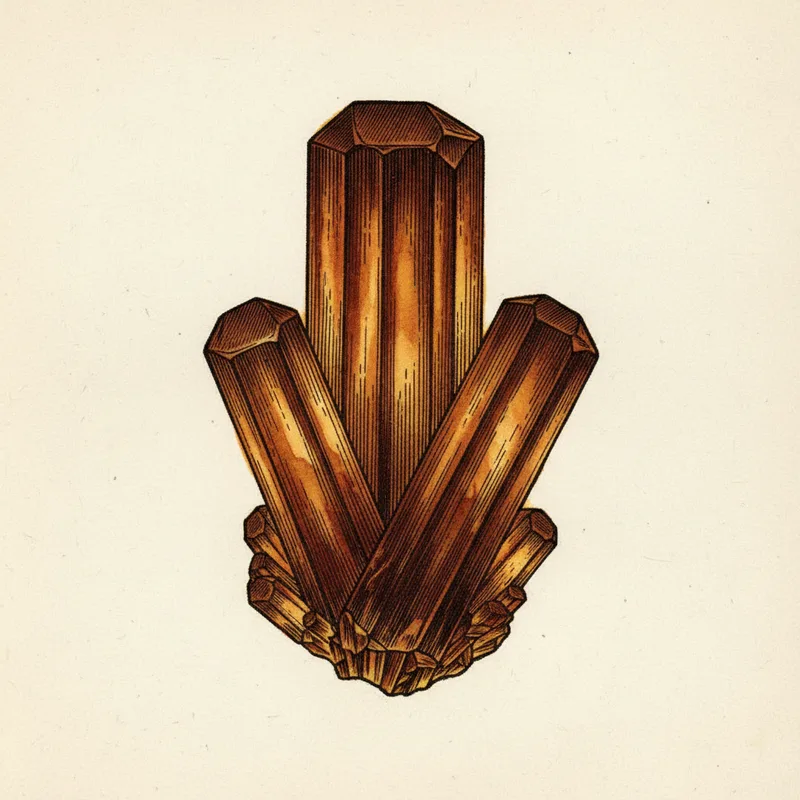
Tourmaline
The Rainbow Stone
Blue Topaz
The Engineered Ice
Amethyst
The Stone of Spiritual Wisdom
Fluorite
The Genius Stone
Ametrine
The Two-Toned Gem
Keep Reading
Stay in the loop
From the Almanac
Updates from Crystal Almanac, when there’s something worth sharing.