Best Crystals for Pregnancy and New Motherhood
Important medical note: This article discusses crystals as meaningful tactile objects and cultural companions during pregnancy. Nothing here is medical advice. Do not use any crystal in gem elixirs, bath water, or topically. Always consult your OB, midwife, or healthcare provider about any health questions. Some minerals are toxic and should be avoided entirely. See the "Stones to Avoid" section before this list.
Key Takeaway: Pregnancy traditions across cultures, from Vedic India to ancient Egypt to medieval Europe, have involved specific stones given by mothers, grandmothers, and partners. Ten stones carry real birth-adjacent history. None of them make medical claims, and a handful of common minerals should be avoided entirely during pregnancy.
Long before ultrasound and prenatal vitamins, people handed stones to pregnant family members. In the Vedic tradition of ancient India, moonstone was associated with the moon goddess Chandra and gifted during pregnancy. In ancient Egypt, carnelian was carved into the Knot of Isis, an amulet tied to the goddess's motherhood of Horus. Medieval European families passed down amethyst rosary beads, sometimes placed in cradles at christenings. These traditions are not medical. They are cultural, emotional, and tactile.
A stone given by a grandmother carries weight that has nothing to do with minerals. Holding something smooth and cool during a long, exhausting night, or placing a beautiful object on the dresser in a quiet nursery, is a real form of comfort. That comfort belongs to human ritual, not pharmacology.
This post covers ten stones with long birth-adjacent histories, how to use them safely, and, most importantly, which minerals to keep away from a pregnant person entirely.
Stones to AVOID During Pregnancy
This is the most important section of this post. Several popular crystals contain toxic elements. Do not handle these while pregnant, and do not bring them into a nursery.
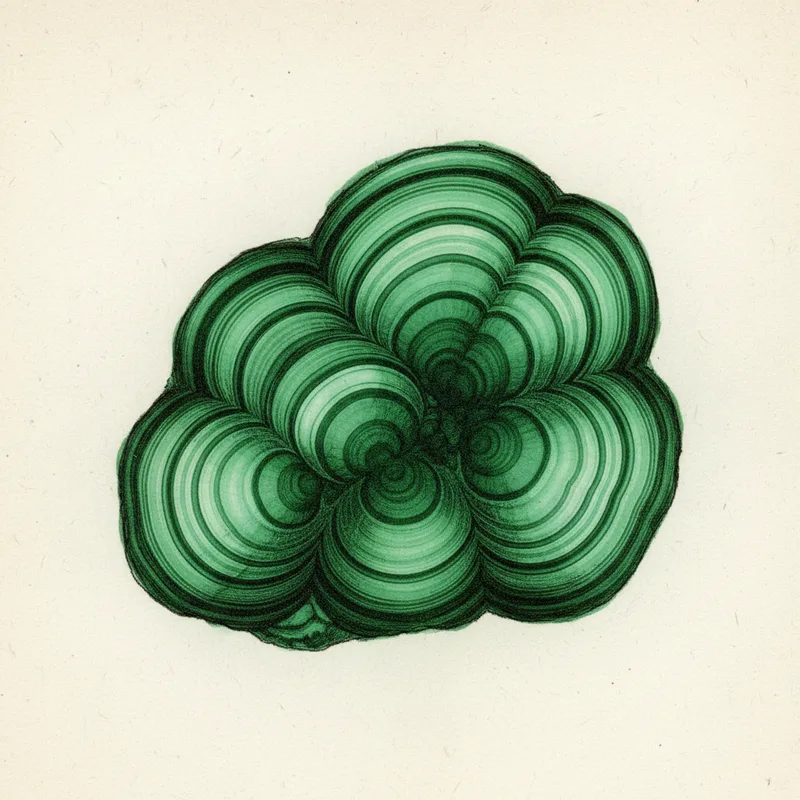
- Malachite. Copper carbonate. Beautiful, but copper leaches from the surface with handling. Skip it during pregnancy.
- Cinnabar. Mercury sulfide. Full stop. Do not handle.
- Galena. Lead sulfide. Avoid.
- Realgar and Orpiment. Both arsenic-bearing. Avoid entirely.
- Stibnite. Antimony sulfide. Avoid prolonged handling.
- Chrysotile and any asbestos-bearing stones. Respiratory hazard.
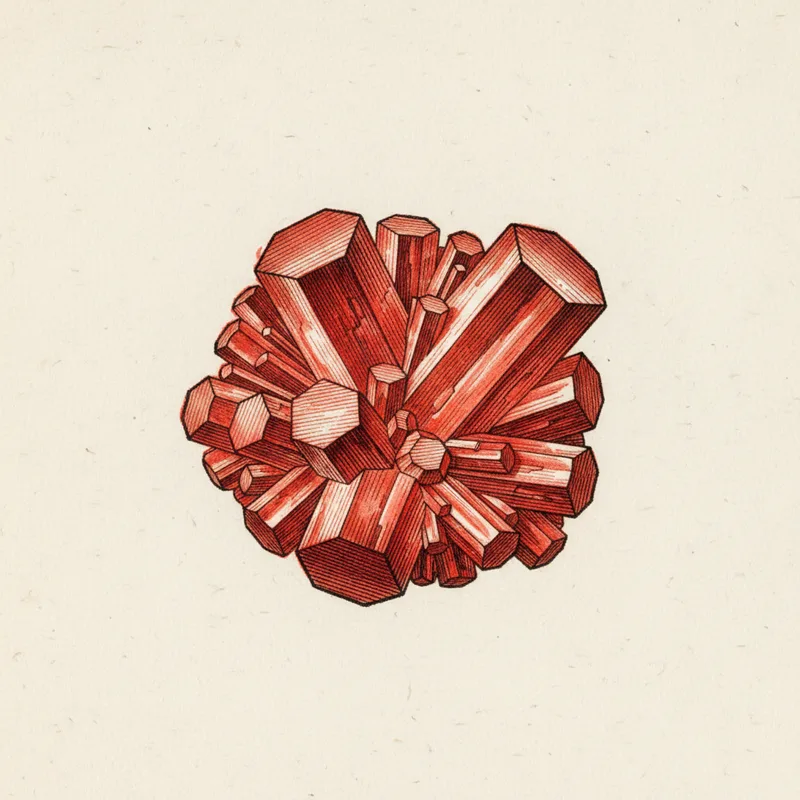
- Vanadinite, Wulfenite, Crocoite. All lead-bearing.
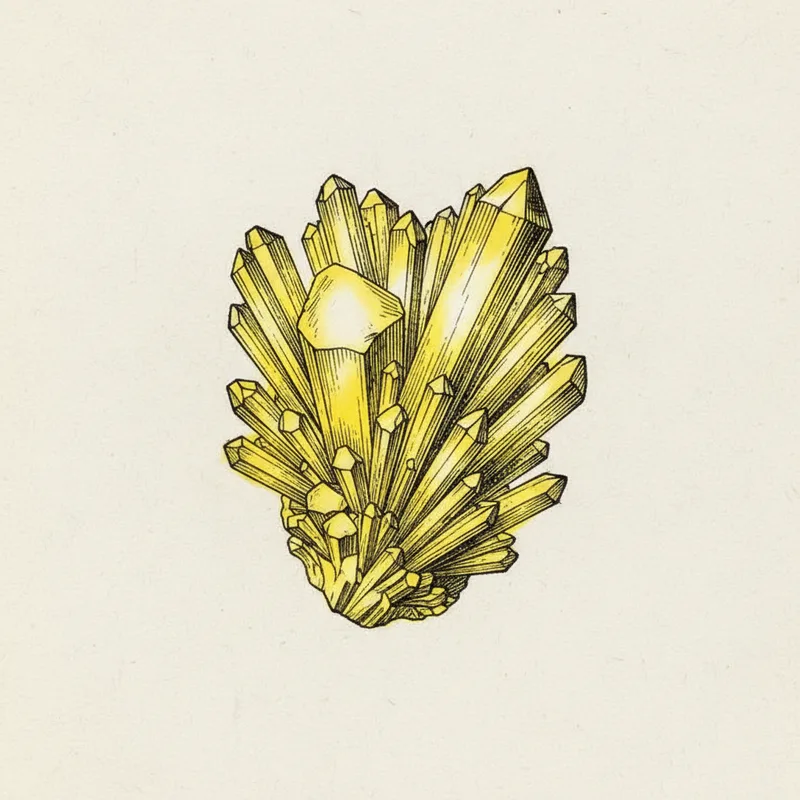
- Mimetite, Adamite, Legrandite. All arsenic-bearing.
- Arsenopyrite. Arsenic-bearing, and can produce arsenic vapors when struck.
A few universal rules for pregnancy, regardless of the stone:
- No gem elixirs of any crystal. Even "safe" stones can leach minerals into water. Not worth the risk.
- Do not drink water that has sat on any crystal overnight. Same reason.
- No crystal water bottles during pregnancy, including the ones with indirect-contact chambers. Just use plain water.
When in doubt, the safest use of any stone during pregnancy is to look at it on a shelf.
Quick Reference Table: Safe Companion Stones
| Crystal | Formula | Hardness | Tradition |
|---|---|---|---|
| Moonstone | (K,Na)AlSi₃O₈ | 6 | Vedic pregnancy stone, goddess Chandra |
| Rose Quartz | SiO₂ | 7 | Mother-child bonding, unconditional love |
| Unakite | Epidote + pink feldspar | 6 | Modern "pregnancy stone" in crystal circles |
| Amethyst | SiO₂ | 7 | European cradle-gift tradition |
| Aquamarine | Be₃Al₂Si₆O₁₈ | 7.5 | Roman sailors' wives tradition |
| Chrysocolla | hydrated copper silicate | 3.5 | "Teaching stone," CAUTION: contains copper |
| Prehnite | Ca₂Al₂Si₃O₁₀(OH)₂ | 6 | Modern midwife's stone tradition |
| Ocean Jasper | SiO₂ orbicular | 7 | Calming patterns, Madagascar tradition |
| Angelite | CaSO₄ | 3.5 | Lost-pregnancy grief, modern tradition |
| Carnelian | SiO₂ | 7 | Isis-Horus Egyptian motherhood tradition |
Note: Chrysocolla contains copper. If you want to include it, handle briefly and wash hands after. If you prefer to avoid all copper exposure during pregnancy, skip it and double up on moonstone or rose quartz instead.
Ways to Keep These Crystals in Your Life
Safe uses during pregnancy:
- Displayed in your nursery, on a dresser, or on a windowsill where you can see them.
- Held briefly in the hand during rest, meditation, or early labor.
- Placed under a pillow, ideally with a fabric pouch between stone and skin.
- Given by a family member as a heirloom birth gift.
- Worn as finished jewelry, set properly so the stone is not in direct contact with broken skin or mucous membranes.
What not to do:
- No elixirs, no crystal-infused water, no water bottles with stone chambers.
- No bathing with crystals in the tub.
- No prolonged topical placement on bare skin, particularly not for hours.
- Nothing inserted anywhere. Ever.
- Do not use crystals as teething toys once baby arrives. Purpose-made, tested baby products exist for that.
- Do not sleep with a stone in your mouth.
Moonstone: The Goddess Stone
Moonstone is an orthoclase-albite feldspar (K,Na)AlSi₃O₈ whose milky blue shimmer, called adularescence, comes from light scattering across intergrown microscopic lamellae of two feldspar varieties. In the Vedic tradition of ancient India, moonstone was linked to Chandra, the moon deity, and was considered an appropriate gift for a pregnant woman from her mother or grandmother. The practical case today is simple: it is a cool, smooth, softly luminous stone that looks beautiful on a bedside table during the long tired months of pregnancy.
Rose Quartz: Mother-Child Bonding
Rose quartz is SiO₂ colored pink by microscopic dumortierite or titanium inclusions. Across many cultures, including modern Japanese wedding and birth gifting traditions, rose quartz has been handed between generations of women as a symbol of unconditional love. That symbolism is cultural, not energetic. Framed honestly, rose quartz is a pink stone people have associated with maternal affection for a long time, and a carved palmstone makes a tactile companion for quiet moments.
Unakite: The Modern Pregnancy Stone
Unakite is not a single mineral. It is a metamorphic rock of pink orthoclase feldspar and green epidote, named after the Unaka Mountains of North Carolina and Tennessee. Its association with pregnancy is genuinely modern, largely a product of New Age writing in the 1970s and 1980s. That recency does not diminish its appeal. The pink-and-green color pairing is warm and grounding, and polished unakite tumbles sit comfortably in the hand.
Amethyst: Quiet Cradle Stone
Amethyst is SiO₂ colored purple by trace iron and natural irradiation. In medieval Catholic Europe, amethyst rosary beads were given at christenings and sometimes hung above cradles. The practical benefit is sensory: the deep violet color is genuinely calming to look at during long, sleepless stretches, and a small amethyst cluster on a nursery shelf is visually restful without being busy.
Aquamarine: Sailors' Wives Stone
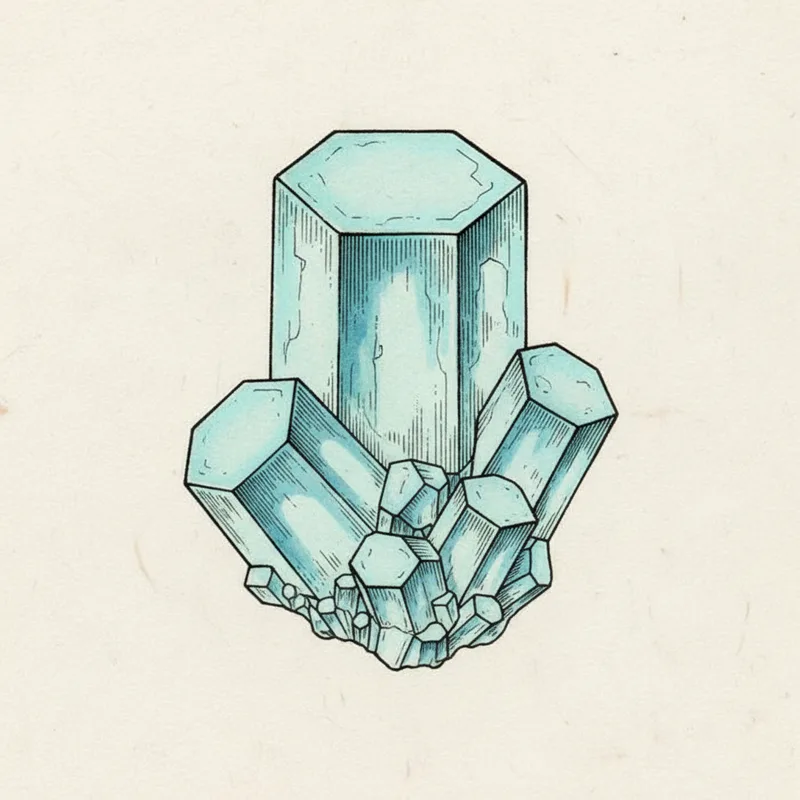
Aquamarine is beryl, Be₃Al₂Si₆O₁₈, colored pale blue-green by trace iron. Roman tradition held that pregnant wives of sailors kept aquamarine during their husbands' sea voyages, a ritual of safe return rather than any medical claim. The water-blue color carries its own calm. A faceted aquamarine in a pendant, or a raw crystal on a shelf, reads as water and sky.
Chrysocolla: The Teaching Stone, With a Caveat
Chrysocolla is a hydrated copper silicate, soft at Mohs 3.5. Hopi and other Southwestern tribes associated it with matrilineal knowledge transfer, a "teaching stone" passed from mother to daughter. Here is the caveat: chrysocolla contains copper. Handle briefly, wash your hands after, and skip it entirely if you prefer zero copper exposure during pregnancy. Safer alternatives with similar color and meaning include blue-green prehnite or pale aquamarine.
Prehnite: Modern Midwife's Stone
Prehnite is a calcium aluminum silicate, Ca₂Al₂Si₃O₁₀(OH)₂, named after Colonel Hendrik von Prehn, who brought the first samples from South Africa in the late 1700s. The association with midwifery and intuitive caretaking is very recent, a product of modern crystal-community writing, but the pale translucent green is gentle and reads beautifully in nursery decor.
Ocean Jasper: Calming Patterns
Ocean jasper is an orbicular chalcedony (SiO₂) with spherical inclusions of quartz and feldspar. The original deposit on Madagascar's Marovato coast is now mined out, which gives older specimens particular significance. The fractal-like orbs draw attention and slow the eye, which is why many people keep a polished slab nearby during labor as a focal object for breath work.
Angelite: For Pregnancy Loss Grief
Angelite is anhydrite, CaSO₄, a soft pale-blue stone. This is a gentle mention for readers who have experienced pregnancy loss. The modern crystal community associates angelite with mourning, and a small piece on a shelf can serve as a quiet marker. This is a hard topic, and stones are a small comfort next to real support. If you are grieving, please also reach out to a counselor, a pregnancy-loss support group, or your provider.
Carnelian: The Isis Stone
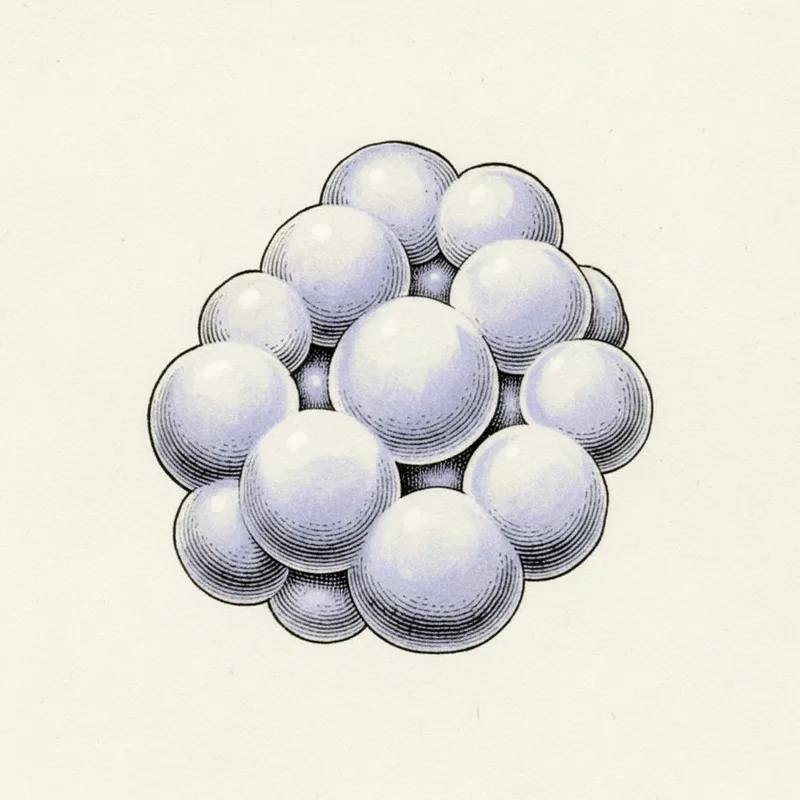
Carnelian is a chalcedony (SiO₂) colored red-orange by iron oxide. In ancient Egypt, the goddess Isis was depicted wearing carnelian, and the Knot of Isis (tyet) amulet, carved from carnelian, has been found in many tombs as a symbol of her motherhood of Horus. That makes carnelian one of the oldest continuously used motherhood stones in the archaeological record.
Gift-Giving: Stones From Family to Family
If you want to give a stone to a pregnant friend or family member, keep it simple. Pair the gift with a handwritten note explaining the tradition you are drawing on, whether that is a grandmother passing down moonstone or a friend giving carnelian because of its Egyptian history. Do not gift a crystal to someone who has expressed disinterest in them. It comes across as pushy. Raw clusters look grounded on a shelf, polished palmstones are tactile, and tumbled stones are modest. Skip any healing-claim language. "I thought this was beautiful, and people have given these for a long time" is the right tone.
Nursery Placement: After Baby Arrives
Keep stones well out of baby's reach. Any small stone is a choking hazard, and any stone in a baby's mouth is a risk regardless of what mineral it is. Display on high shelves. Avoid sharp-edged clusters in rooms where baby will crawl. As a general rule, no stone should touch baby's skin for prolonged periods until the child is old enough to understand not to put things in their mouth.
What These Stones Won't Do
They will not make labor easier. They will not prevent complications. They will not influence birth outcomes in any direction. What matters is prenatal care, rest, nutrition, mental health support, and the people around you. Crystals are lovely objects with rich cultural history. That is the whole claim, and it is enough.
Crystals in This Article
Moonstone, rose quartz, unakite, amethyst, aquamarine, chrysocolla, prehnite, ocean jasper, angelite, and carnelian.
Crystals in This Article
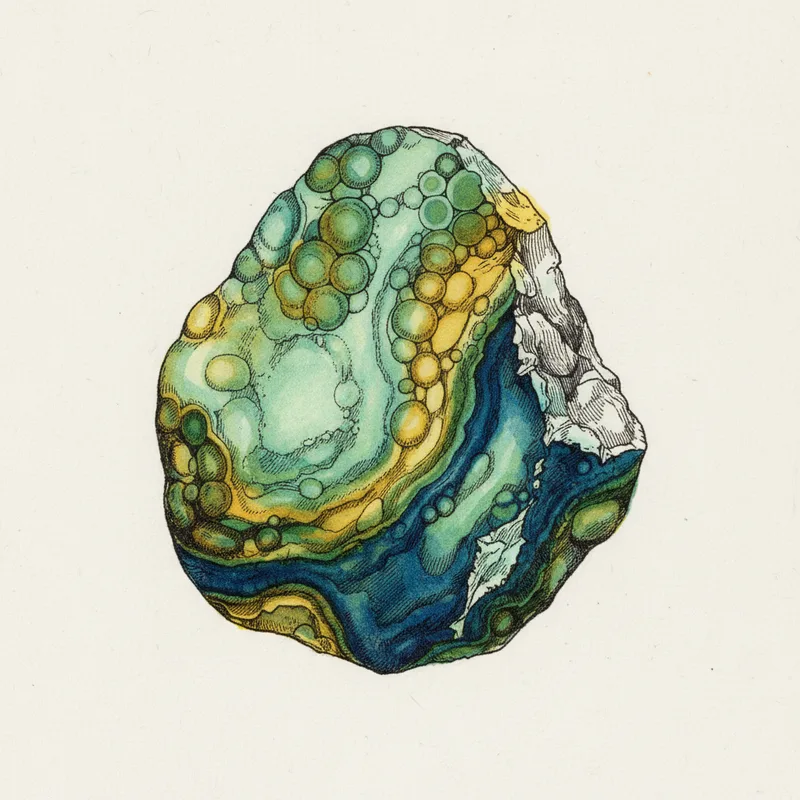
Ocean Jasper
The Orbicular Stone
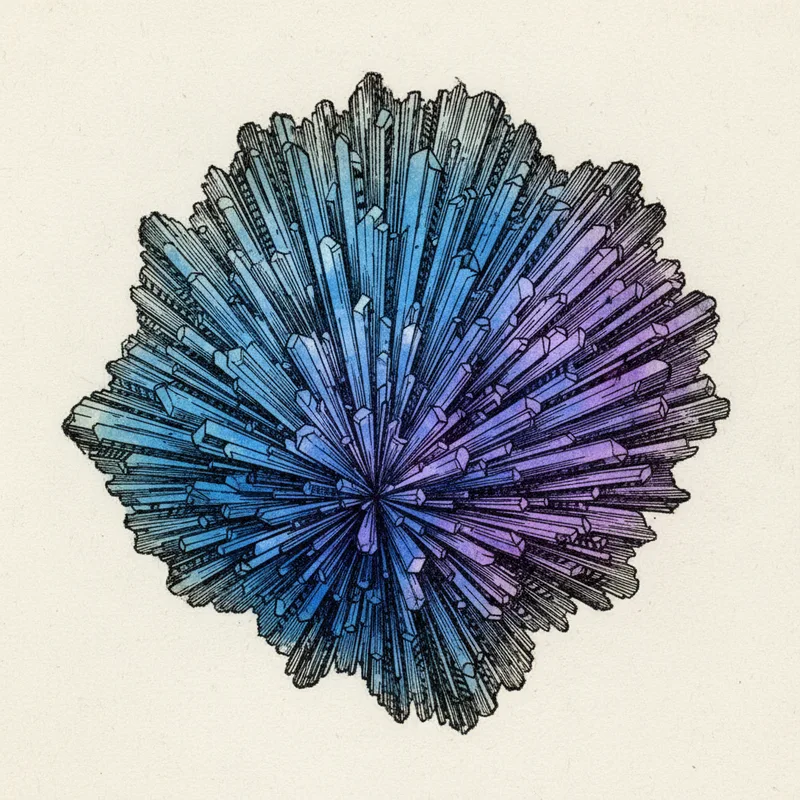
Dumortierite
The Patience Stone

Arsenopyrite
The Arsenic Iron Sulfide
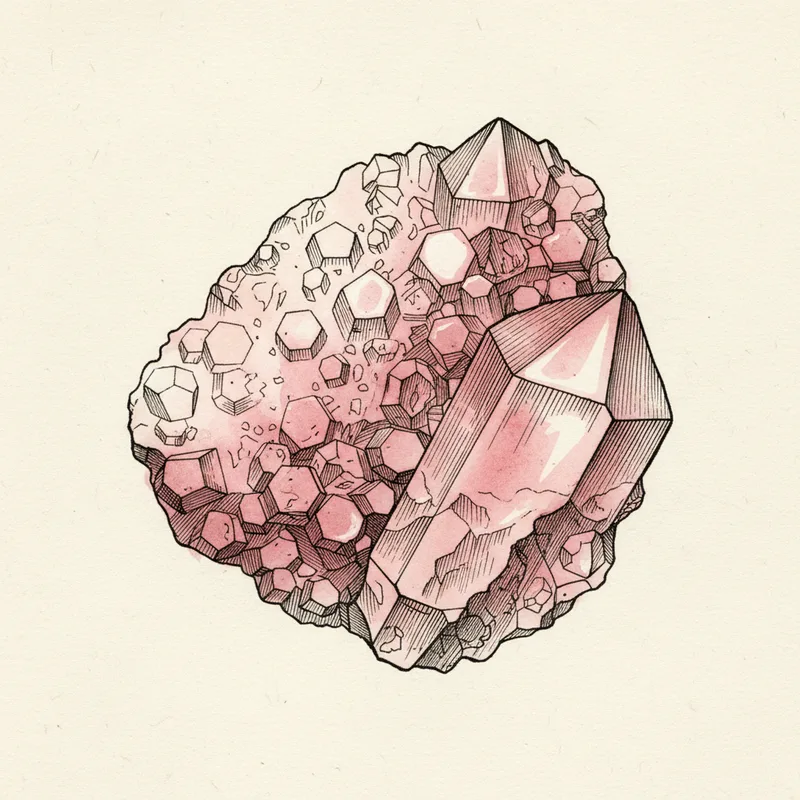
Rose Quartz
The Stone of Unconditional Love
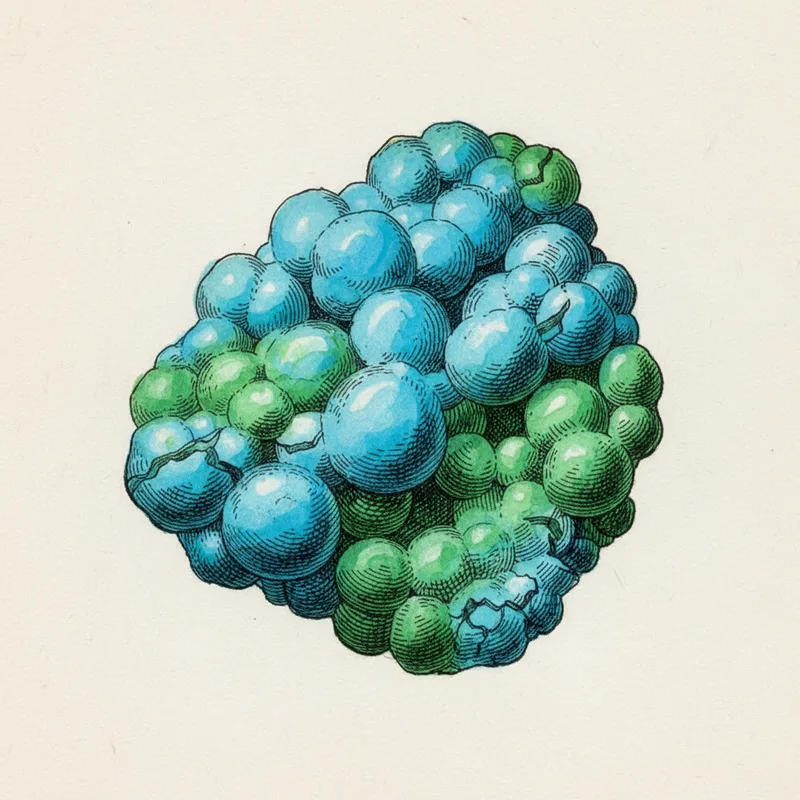
Chrysocolla
The Teaching Stone
Aquamarine
The Sailor's Gem
Vanadinite
The Endurance Stone
Chalcedony
The Mother of Agates
Legrandite
The Electric Yellow Crystal

Orthoclase
The Foundation Feldspar

Chrysotile
The Serpentine Fiber
Malachite
The Stone of Transformation
Keep Reading
Stay in the loop
From the Almanac
Updates from Crystal Almanac, when there’s something worth sharing.