Crystal Shapes Explained: Points, Clusters, Spheres & More
Key Takeaway: Crystal shapes fall into two categories: natural forms (how the mineral actually grew) and carved/polished forms (shaped by humans). Natural forms tell you about the crystal's geology. Carved forms are aesthetic choices. Both have traditional metaphysical associations, but the geological story is what makes each shape genuinely interesting.
Walk into a crystal shop and you'll see the same minerals in wildly different forms - amethyst as a rough cluster, a polished sphere, a pointed tower, a flat palm stone, a carved skull, and a raw chunk. Same mineral, completely different shapes, different prices, different uses.
Some of these shapes are natural - the crystal grew that way. Others are human-made through cutting and polishing. Understanding the difference helps you make better buying decisions and appreciate what you're actually looking at.
Natural Crystal Forms
These shapes formed without human intervention, over thousands to millions of years.
Points (Terminated Crystals)
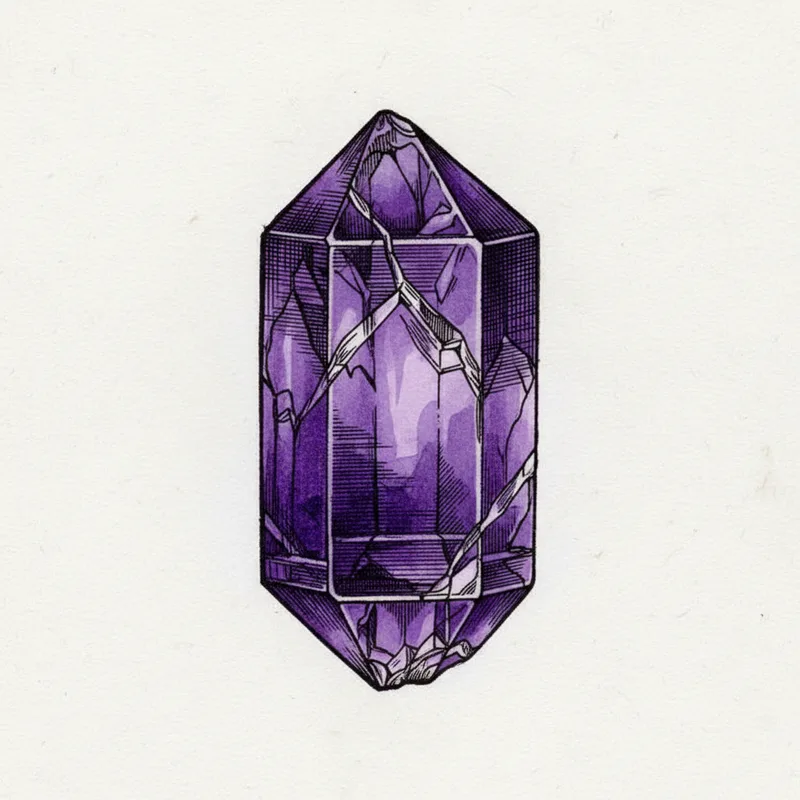
A crystal "point" is a single crystal with a natural termination - the pyramid-shaped tip where crystal growth ended. In quartz, this termination has six faces that come to a point, reflecting the mineral's hexagonal internal structure.
Single terminated points (flat on one end, pointed on the other) are the most common - the flat end is where the crystal was attached to its host rock. Doubly terminated points (pointed on both ends) are rarer and more prized because the crystal grew suspended in a pocket without attachment, allowing terminations on both sides. Herkimer diamonds from New York are the most famous doubly terminated quartz.
What it tells you geologically: The crystal had space and time to grow freely, and the termination angles reveal the crystal system.
Clusters
A cluster is a group of crystals that grew together from a shared base. Amethyst clusters, quartz clusters, and pyrite clusters are among the most popular display specimens.
Each crystal in a cluster competed for space and nutrients during growth, which is why cluster crystals are often thinner and more tightly packed than solitary crystals. The largest, best-formed crystals in a cluster are usually the ones that had the most room to grow.
What it tells you geologically: The crystals grew in an open cavity or vein, with multiple nucleation points where crystal growth started simultaneously.
Geodes
A geode is a hollow rock lined with crystals on the inside. They form when mineral-rich water fills a void in volcanic or sedimentary rock, depositing crystals on the cavity walls over millions of years. Breaking or cutting one open reveals the crystal-lined interior.
Amethyst geodes from Brazil and Uruguay are the most commercially significant. Some "cathedral" geodes stand over two meters tall. Smaller geodes from Mexico, Morocco, and the American Midwest contain quartz, calcite, or celestite crystals.
What it tells you geologically: The host rock formed first (usually volcanic basalt), then groundwater carried dissolved silica into gas-bubble cavities, crystallizing from the walls inward.
Druzy
Druzy (also spelled drusy or druse) is a coating of tiny, sparkling crystals covering a surface. The crystals are typically too small to see individually but collectively create a glittering carpet effect. Druzy quartz, druzy chrysocolla, and druzy pyrite are common varieties.
What it tells you geologically: Rapid nucleation created many tiny crystals rather than a few large ones - usually from a burst of supersaturated solution entering a cavity.
Botryoidal
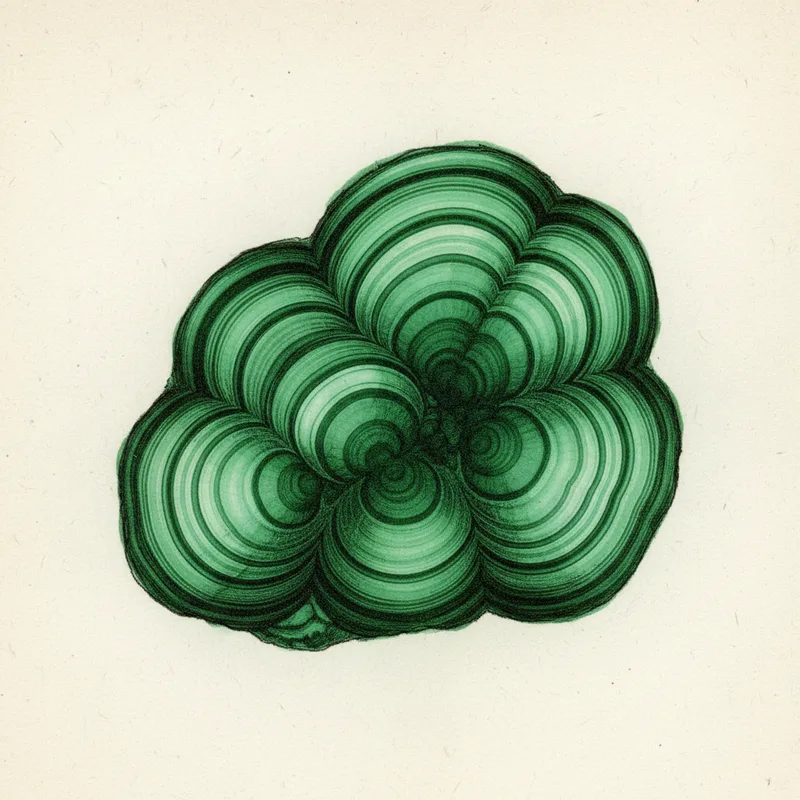
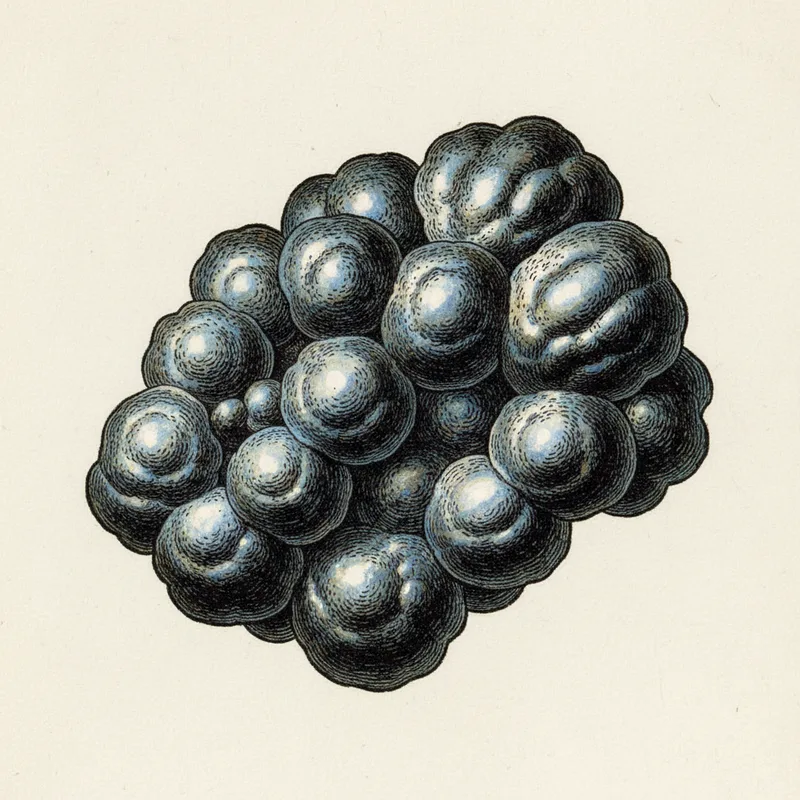
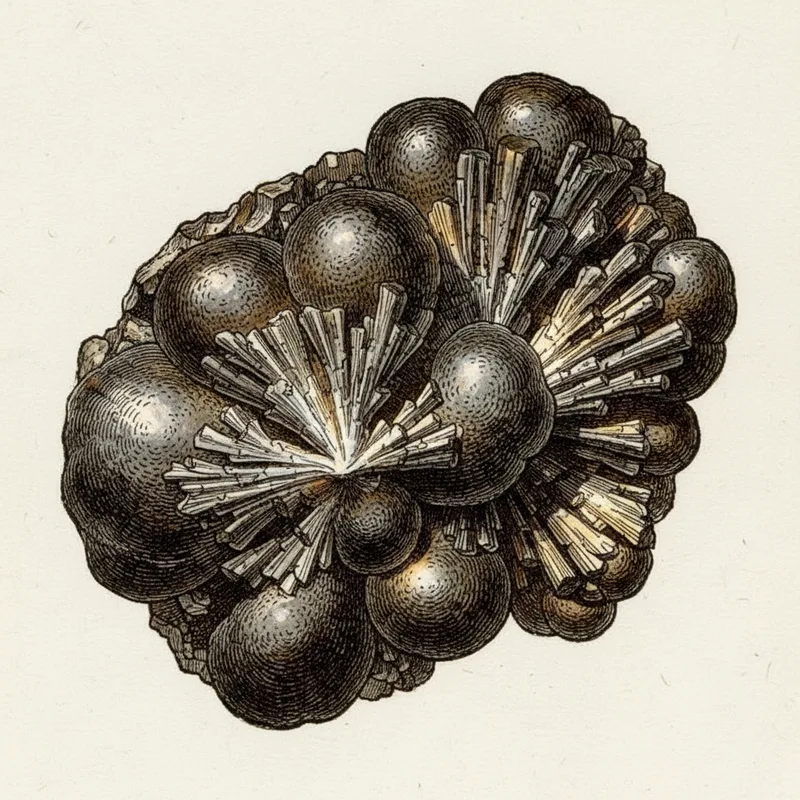
Botryoidal means "grape-like" - rounded, bubbly formations that look like clusters of grapes or bubbles. Malachite, hematite, chalcedony, and goethite commonly form this way.
This shape occurs when crystal growth radiates outward from many closely spaced nucleation points, creating overlapping spherical surfaces. Polished botryoidal malachite (showing concentric green banding within each "bubble") is one of the most striking display forms in the mineral world.
Stalactitic
Some minerals grow as stalactites - hanging formations built up layer by layer from dripping mineral-rich water. Rhodochrosite stalactites from Argentina's Capillitas Mine are famous for their concentric pink and white banding when sliced crosswise.
Human-Shaped Forms
These forms are created through cutting, polishing, carving, or tumbling.
Tumbled Stones
The most affordable and accessible crystal form. Raw chunks of mineral are placed in a rotating barrel with progressively finer abrasive grit for several weeks, smoothing rough edges and polishing the surface.
Tumbled stones are great for carrying, collecting, and learning mineral identification. They're uniform enough to be interchangeable (unlike natural specimens, which are each unique), which is why sellers use stock photos for tumbled stone listings.
Spheres
Crystal spheres are carved and polished from large blocks of raw material. A significant amount of material is wasted in the process (the sphere comes from the center of a larger rough piece), which is why spheres cost more than equivalent weight in raw material.
Quartz, amethyst, fluorite, and labradorite spheres are popular. The spherical shape allows you to see internal features - inclusions, color zoning, phantoms - from every angle.
Towers and Obelisks
Towers are cut and polished into elongated hexagonal or cylindrical columns with a pointed top. They resemble natural crystal points but are human-shaped - the proportions are chosen for aesthetics, not dictated by crystal growth.
Distinguish from natural points by checking the base: towers have flat, machine-cut bases. Natural crystals have irregular, rough bases where they detached from matrix rock.
Palm Stones
Flat, oval, polished stones sized to fit comfortably in your hand. Palm stones are popular for meditation and tactile comfort. They're cut from slabs of material and polished smooth.
Cabochons
Domed, polished stones typically used in jewelry settings. The dome shape is specifically designed to maximize optical effects - chatoyancy in tiger's eye, adularescence in moonstone, labradorescence in labradorite. A flat-cut labradorite would show far less flash than a properly oriented cabochon.
Hearts, Pyramids, and Carved Forms
Crystals carved into decorative shapes - hearts, pyramids, animals, skulls, and other figures. These are purely aesthetic choices. The carving doesn't change the mineral's properties, but it does create forms that some people find more appealing for display or personal use.
Does Shape Affect "Energy"?
In crystal healing traditions, shape is considered significant. Points are said to "direct energy." Spheres are believed to "radiate energy equally in all directions." Pyramids are associated with "focusing energy."
From a physics standpoint, crystals don't emit or direct energy regardless of shape. A quartz point and a quartz sphere are the same mineral with the same properties - the difference is geometric, not energetic.
That said, shape absolutely affects your experience of a crystal. A point feels different in your hand than a palm stone. A cluster creates a different visual impact than a sphere. A tower catches light differently than a tumbled stone. These sensory differences are real and valid reasons to prefer one form over another.
Buying Tips by Shape
Natural specimens are valued for crystal quality, formation rarity, and condition. A cluster with undamaged crystal tips is worth significantly more than one with broken points.
Polished forms are valued for color, translucency, size, and polish quality. Look for smooth surfaces without visible scratches, and check that the material is genuine (glass spheres sold as quartz are common).
Tumbled stones are valued for color, pattern, and polish. Quality varies dramatically between producers - compare suppliers before buying bulk.
The price hierarchy (same mineral, ascending price): tumbled < raw chunks < palm stones < towers < spheres < museum-quality natural specimens. This reflects both material waste in shaping and the selection of better rough for premium forms.
FAQ
Are natural crystals "better" than polished ones? Neither is inherently better - they serve different purposes. Natural specimens show you how the mineral actually grows, which is educational and often more visually dramatic. Polished forms are more portable, more uniform, and better for showing off internal color and transparency.
How can I tell if a crystal point is natural or carved? Natural points have slightly irregular faces, growth marks (striations, growth hillocks), and an irregular base where they detached from matrix. Carved points have perfectly smooth, even faces, no growth marks, and a machine-flat base.
Why are crystal spheres so expensive? Because a sphere is carved from the center of a much larger piece of rough material. A 3-inch sphere might require a 5-inch block of raw material, and most of that material is wasted. The rough also needs to be free of cracks and inclusions throughout, which limits what material is suitable.
What shape is best for a beginner? A natural cluster or a tumbled stone collection. Clusters show you how crystals actually grow and make impressive display pieces. Tumbled stones let you build a diverse collection affordably and learn to identify different minerals by handling them.
Crystals in This Article
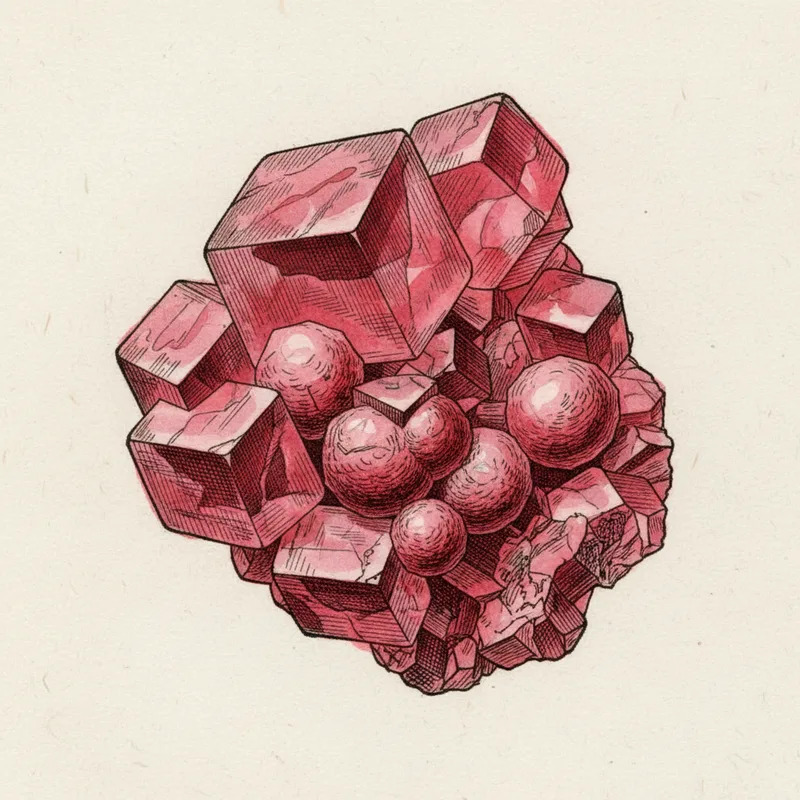
Rhodochrosite
The Rose of the Incas
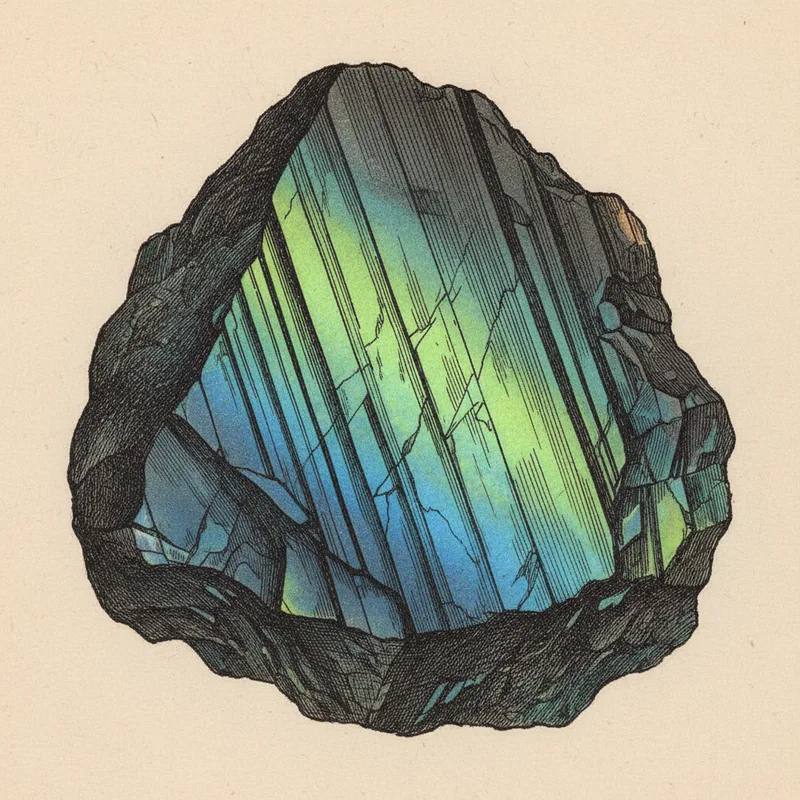
Labradorite
The Stone of Transformation
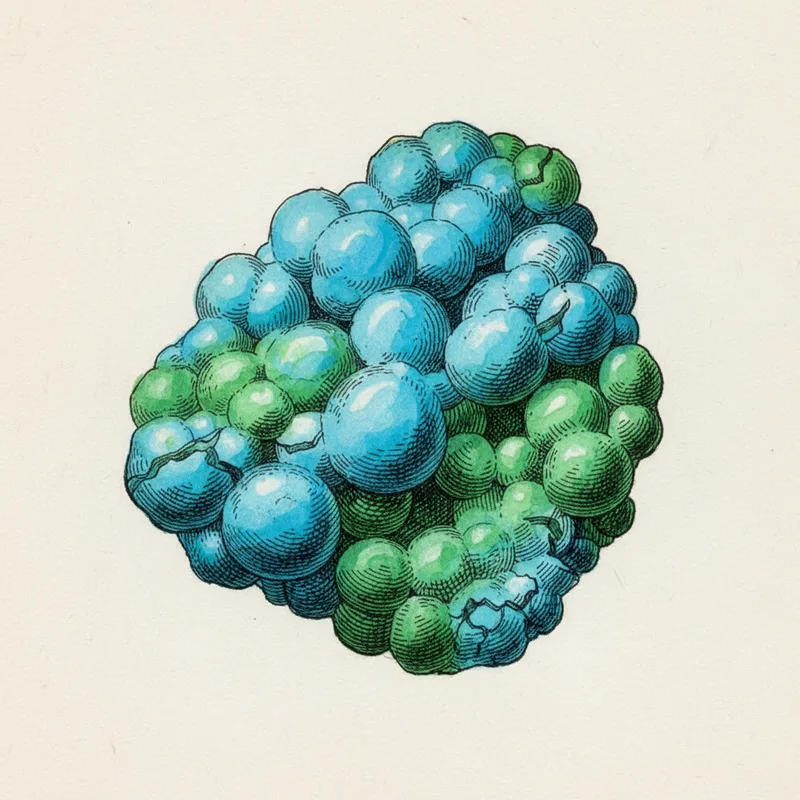
Chrysocolla
The Teaching Stone
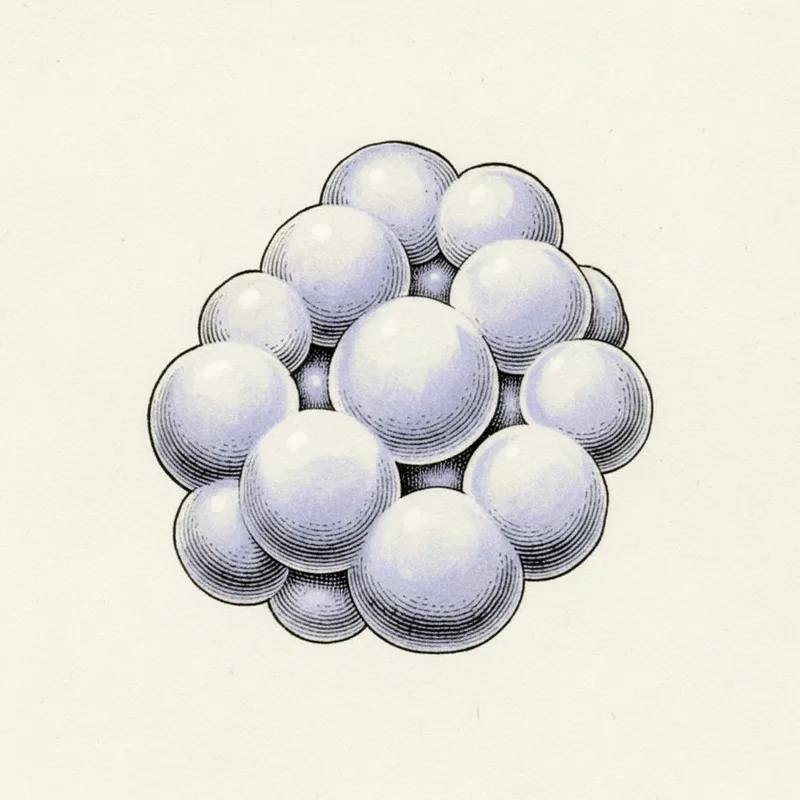
Chalcedony
The Mother of Agates
Malachite
The Stone of Transformation
Moonstone
The Traveler's Stone
Celestite
The Stone of Angels
Amethyst
The Stone of Spiritual Wisdom
Fluorite
The Genius Stone
Hematite
The Blood Stone
Goethite
The Poet's Iron
Calcite
The Shapeshifter
Keep Reading
Stay in the loop
From the Almanac
Updates from Crystal Almanac, when there’s something worth sharing.