Is My Turquoise Real? Spot Howlite and Plastic Fakes
Key Takeaway: Turquoise is the most-faked gemstone in the world. An estimated 90% of "turquoise" sold cheaply is actually dyed howlite, dyed magnesite, reconstituted turquoise dust, or plastic. Six tests separate the real thing from the fakes: the acetone swab test, the matrix pattern check, the hardness scratch, the hot-needle plastic test, the price-and-source reality check, and understanding "stabilized" (which is real turquoise, just resin-treated).
If you have ever wondered why turquoise jewelry at a tourist shop or roadside stall costs $5 while turquoise at a Native American gallery costs $500, this post is for you. The cheap stuff is almost never turquoise. The expensive stuff almost always is. The middle ground is where you have to actually test.
What Real Turquoise Is
Turquoise is a hydrated copper aluminum phosphate, formula CuAl₆(PO₄)₄(OH)₈·4H₂O. Mohs hardness is 5-6 (on the soft side for jewelry). Specific gravity is 2.6-2.9. Crystal system is triclinic, but turquoise rarely forms visible crystals - it occurs as veins, nodules, and massive aggregates in arid copper-rich rock environments.
Top-quality natural turquoise comes from a small number of mines:
- Iran (Nishapur) - finest historical material, "robin's egg blue" Persian turquoise
- United States (Sleeping Beauty mine in Arizona, Kingman, Bisbee, Royston) - the famous American sources
- China (Hubei province) - largest current commercial production
- Tibet, Mexico, Egypt - smaller historical sources
Real natural turquoise of jewelry grade starts at roughly $3-15 per carat for ordinary material and runs to $500+ per carat for gem-quality Persian or Sleeping Beauty stone. Most natural turquoise on the market is also stabilized (more on that below), which is real turquoise treated with resin to harden it for jewelry use.
The Fakes You Will Encounter
There are five common categories of fake turquoise:
- Dyed howlite - the most common fake. Howlite is a soft white-and-grey mineral that takes blue dye well and shows similar matrix patterns to turquoise.
- Dyed magnesite - similar to howlite, slightly different texture, also dyes blue easily.
- Reconstituted turquoise - actual turquoise powder mixed with resin and pressed into blocks. Real material, but manufactured.
- Plastic - cheapest fake, common in costume jewelry.
- Dyed jasper - sometimes sold as "African turquoise," which is not turquoise at all.
Six tests catch all five.
Test 1: The Acetone Swab Test (Catches Dyed Howlite and Magnesite)
This is the single most useful turquoise test. It costs nothing if you have nail polish remover.
Soak a cotton swab in acetone (pure acetone or nail polish remover with acetone). Press and rub it firmly against an inconspicuous area of the stone for 30-60 seconds.
Real turquoise: The swab stays clean. The stone color is integral to the material, not a surface dye.
Dyed howlite or magnesite: Blue dye transfers to the cotton, sometimes immediately, sometimes after extended rubbing. The swab turns blue or green-blue.
Stabilized turquoise: Usually no transfer (the resin holds the natural color). Some color-enhanced stabilized stones may transfer faintly.
This test is nearly definitive. If a stone bleeds dye, it is fake. If it does not, run the next tests to confirm.
Note: do this on a hidden area. Acetone can damage some surface finishes and lacquers. If a stone has a glossy lacquer coating that dissolves in acetone, that is itself a sign of a low-quality treatment.
Test 2: Matrix Pattern Check
Turquoise often forms with a "matrix" - veins and patches of the surrounding host rock visible in the stone. Different mines produce characteristic matrix patterns.
Real turquoise matrix:
- Irregular, organic, never repeating
- Black, brown, or golden veining (from limonite, pyrite, or host rock)
- Spider-web pattern in finer specimens
- Random distribution of color intensity within the stone
Fake matrix:
- Painted or printed patterns that look uniform across the surface
- Identical matrix lines on multiple "different" pieces from the same seller (mass production)
- Matrix that sits only on the surface, not penetrating into the stone (visible if you can see a chip or edge)
- Suspiciously perfect spider-web patterns repeated across the piece
The dead giveaway: if you can see a chip or scratch on the stone, real turquoise shows the same color and matrix continuing into the stone. Fakes show white howlite or magnesite underneath the dyed surface, with the matrix only painted on top.
Test 3: Hardness Scratch
Real turquoise is Mohs 5-6. Howlite is 3.5. Magnesite is 4. Plastic is roughly 2-3.
The test: A steel knife (5.5) will scratch howlite, magnesite, and plastic easily but will struggle on real turquoise. A copper coin (3.5) will not scratch turquoise but may scratch howlite.
More careful version: Try to scratch the stone with your fingernail (2.5). If your fingernail scratches it, it is plastic or extremely soft material. Real turquoise is far too hard for that.
The reverse: Real turquoise can be scratched by quartz (7) but not by glass (5.5) or steel.
This test eliminates plastic and the softer dyed minerals. It does not separate dyed howlite from real turquoise as cleanly because howlite at 3.5 still resists fingernails.
Test 4: The Hot Needle Test (Catches Plastic)
Heat a sewing needle in a flame for 10-15 seconds until it glows slightly. Press the hot tip against an inconspicuous spot on the stone.
Plastic: Melts. You will see a small dent and may smell burning plastic. The needle leaves a clear mark.
Real turquoise (and dyed howlite/magnesite): Nothing happens. The needle leaves no mark and does not stick.
This test catches plastic costume jewelry imitations specifically. It cannot distinguish real turquoise from dyed howlite, but combined with the acetone test it gives you a clear answer.
Be careful with this test. Hot needles can damage soft surface finishes and create permanent marks. Test only on hidden areas.
Test 5: Price and Source Reality Check
Real natural turquoise of any quality has a market floor.
Approximate price ranges (2026):
- Tumbled stones (Chinese commercial): $3-15 per piece
- Stabilized natural cabochons (small): $20-100 each
- Sleeping Beauty cabochons: $50-300 each depending on size and color
- Persian/Iranian top quality: $200-1000+ per carat
- High-grade American (Lander Blue, Bisbee, Lone Mountain): $500-2000+ per carat
A "turquoise pendant" for $5 is mathematically impossible. Even reconstituted turquoise costs more than that to manufacture and ship.
Source signals:
- Native American galleries with provenance to specific mines: very likely real
- Mineral dealers who name the mine (Sleeping Beauty, Kingman, Royston): very likely real
- Etsy sellers with "Tibet turquoise" in flat blue with no matrix: very likely dyed howlite
- "Tibetan silver" jewelry with "turquoise" stones at flea-market prices: almost certainly fake
- Anything labeled "African turquoise" or "Tibetan turquoise" with no matrix: usually dyed jasper or dyed howlite
Test 6: Stabilized vs Natural (Both Are Real Turquoise)
This is not a fake-detection test - it is a disclosure test.
Stabilized turquoise is real turquoise that has been infused with epoxy resin to harden the stone, prevent color-fading, and make it durable enough for daily-wear jewelry. Most low-grade and mid-grade turquoise on the market is stabilized. This is widely accepted in the jewelry industry and is not deceptive when disclosed.
Natural untreated turquoise is rarer, more expensive, and prized by collectors. It can fade or absorb oils over time, which some buyers consider character and others consider damage.
The signs your turquoise is stabilized:
- Sellers usually disclose it (look for "stabilized" or "natural matrix in resin")
- The stone takes a higher polish than untreated turquoise
- Color is more uniform and saturated than natural
- Less likely to absorb skin oils and darken over years of wear
The signs it is natural:
- Stated and priced as natural by a reputable dealer
- May show color variation across the stone
- Surface looks slightly less glossy after long wear
- Higher price (often 3-10x stabilized of similar quality)
If a seller cannot tell you whether their turquoise is stabilized or natural, treat that as a yellow flag. Most professional dealers know exactly which they are selling.
Quick Decision Tree
Run the tests in this order:
- Does it bleed dye in acetone? → Fake (dyed howlite/magnesite). Stop.
- Does the matrix only sit on the surface and reveal white underneath at chips? → Fake. Stop.
- Does a hot needle mark it? → Plastic. Stop.
- Does a fingernail scratch it? → Plastic or extremely soft fake. Stop.
- Does the price match real turquoise market floors? → If suspiciously low, very likely fake or low-grade reconstituted material.
- Did the seller disclose stabilized vs natural? → If yes and provenance is named, you are very likely getting real turquoise.
A piece that passes all six is real, even if stabilized.
Common Trade Names That Are NOT Turquoise
- African Turquoise - dyed jasper
- Tibetan Turquoise (most cheap pieces) - dyed howlite
- Turquenite - dyed howlite, marketed as a "type" of turquoise
- Reconstituted Turquoise - real turquoise powder + resin (technically real material, but not solid stone)
- Block Turquoise - usually plastic with turquoise dust mixed in
If a stone is sold under any of these names, expect it to be a treated or imitation material, not natural solid turquoise.
Related Reading
- How to Spot Fake Crystals - the general authentication hub covering 10 most-faked stones
- Crystal Authentication Field Guide - printable PDF for shop visits
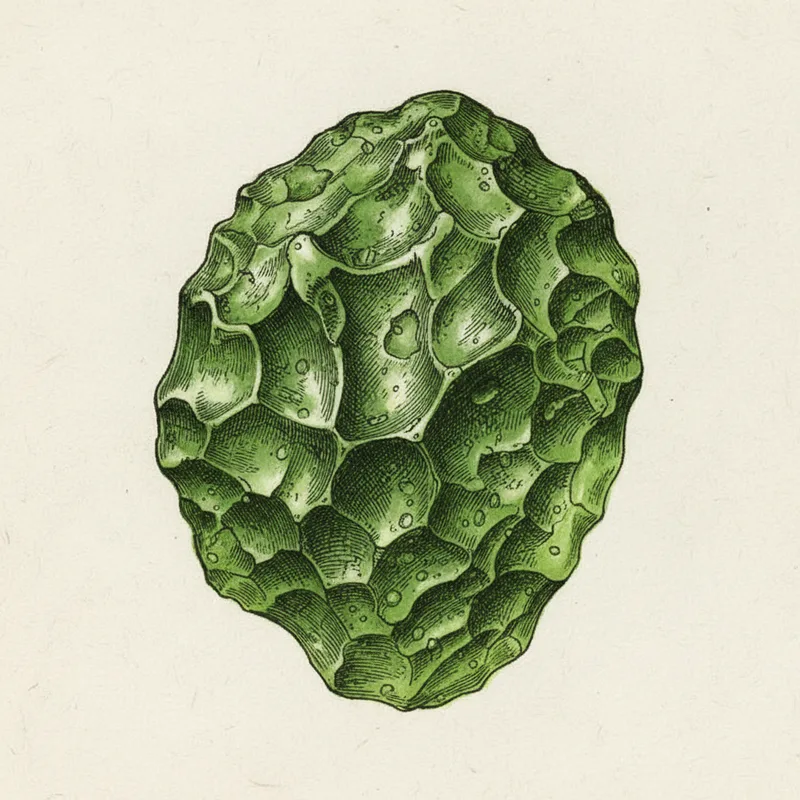
- Is My Moldavite Real? - the 6-test moldavite checklist
- Is My Amethyst Real? - 5 tests for glass and synthetic amethyst
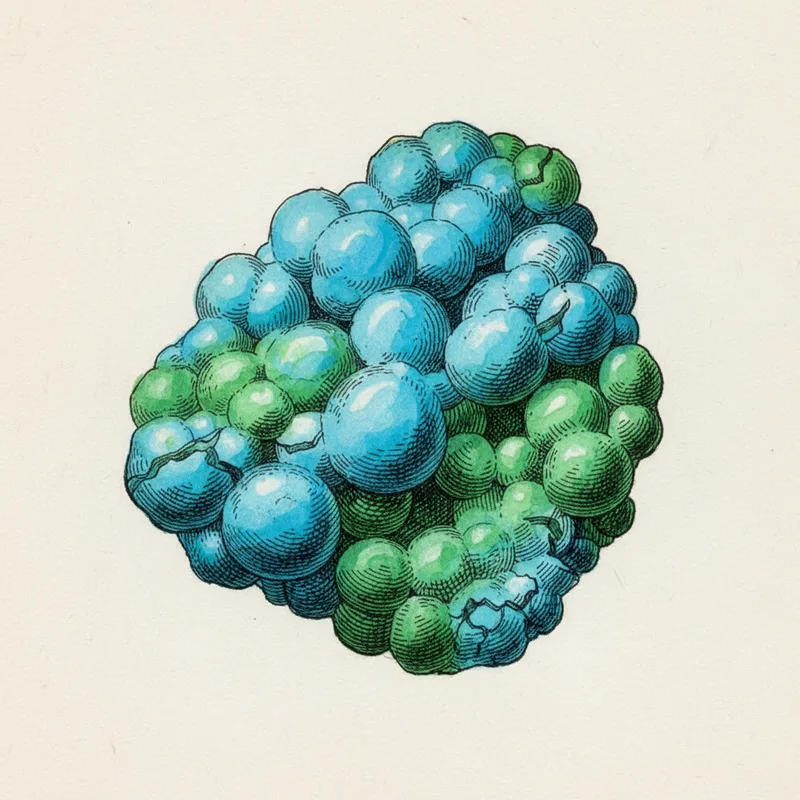
- Turquoise vs Chrysocolla - the closest natural look-alike
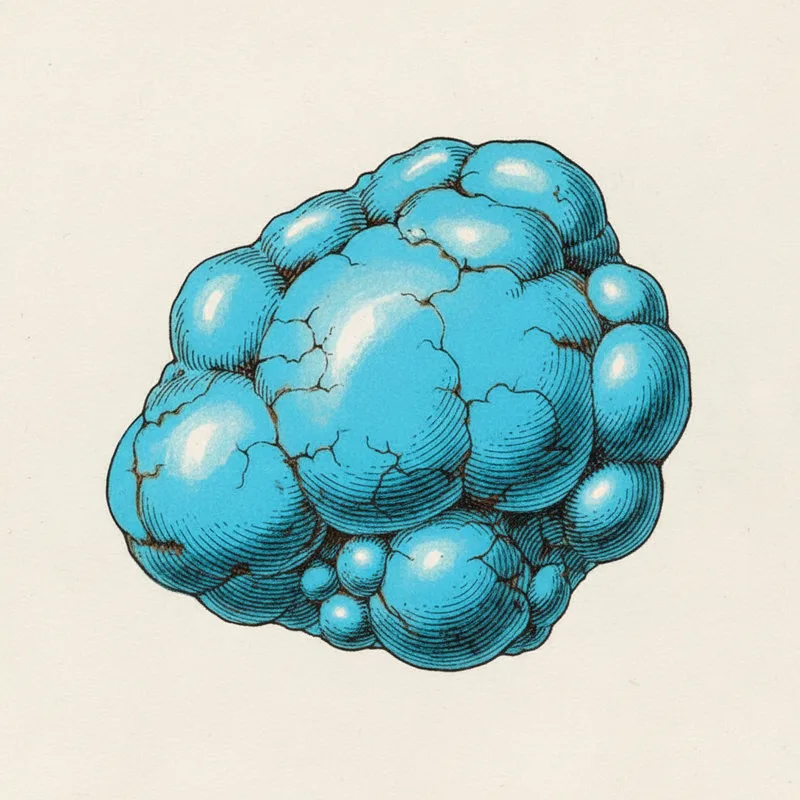
- Turquoise profile - full geological and metaphysical profile
Crystals in This Article
Keep Reading
Stay in the loop
From the Almanac
Updates from Crystal Almanac, when there’s something worth sharing.