Rose Quartz vs Pink Tourmaline: What's the Actual Difference?
Key Takeaway: Rose quartz and pink tourmaline are both pink, both called "love stones," and constantly mistaken for each other. They are different minerals with different chemistry, different crystal habits, and very different prices. Rose quartz is cloudy silica that rarely forms crystals, costs $5-20, and speaks to self-worth. Pink tourmaline forms striated gem crystals, costs $20-80 at the entry level and much more at quality, and is traditionally tied to compassion and romantic love.
If you have spent any time at a crystal shop, you have heard both of these stones called "the love stone" by a well-meaning salesperson. The confusion is reasonable. Both are pink. Both appear in heart-chakra collections. Both show up in jewelry labeled "compassion" or "love."
They are not the same mineral. They come from different geological environments, form in different shapes, have different hardness, and carry different traditional meanings. If you are deciding between them, the difference matters - especially if you are paying for pink tourmaline and hoping it is the real thing.
Here is the honest comparison, from chemistry to checkout.
At a Glance
| Feature | Rose Quartz | Pink Tourmaline |
|---|---|---|
| Chemical Formula | SiO₂ | Na(Li,Al)₃Al₆(BO₃)₃Si₆O₁₈(OH)₄ |
| Mineral Group | Quartz | Tourmaline (elbaite variety) |
| Crystal System | Trigonal | Trigonal |
| Mohs Hardness | 7 | 7-7.5 |
| Typical Habit | Massive, cloudy chunks | Prismatic crystals with vertical striations |
| Color Cause | Dumortierite-like fibers | Manganese trace elements |
| Typical Color | Soft milky pink, sometimes lavender-pink | Saturated pink, hot pink, sometimes red or peach |
| Price Range | $5-20 for palm stones, $20-60 for spheres | $20-80 for specimens, $200-2,000+ per carat faceted |
| Traditional Use | Self-love, unconditional love, self-worth | Romantic love, compassion, emotional healing |
What Each Stone Actually Is
Rose quartz is a macroscopic variety of quartz, meaning it is chemically the same silicon dioxide (SiO₂) as clear quartz or amethyst, just with a different coloring mechanism and a distinctive massive habit. For decades the pink color was a minor scientific mystery. The leading explanation today, supported by electron microscopy, is that rose quartz contains dense networks of microscopic fibers resembling dumortierite distributed through the crystal lattice. Those fibers scatter light and produce the soft, clouded pink you see in every tumbled chunk and carved sphere.
Pink tourmaline is a member of the tourmaline group, specifically the elbaite species, which is a complex boron-bearing aluminum silicate. The formula is long because tourmaline has one of the most chemically flexible structures of any mineral family. Pink tourmaline's color comes from manganese traces in the elbaite crystal lattice. Small amounts produce pale pink, higher concentrations yield the hot pink and red shades that approach ruby in saturation. The most famous pink tourmalines come from Brazil (including the blue-green Paraíba variety's pink relatives), California's Himalaya Mine, Madagascar, and parts of Afghanistan.
They belong to completely different mineral families. Rose quartz is a quartz. Pink tourmaline is not. That is the starting point of every real comparison between them.
How to Tell Them Apart by Sight
This is where most beginners slip up, so it is worth spending a minute on the visual differences.
Crystal habit is the biggest clue. Rose quartz almost never forms visible crystals. Those microscopic fibers disrupt crystallization before it can produce faces and terminations. What you see in a shop is a carved shape (heart, sphere, tower), a raw broken chunk, or a tumbled pebble. If someone is selling you a "rose quartz point" that looks like a single sharp hexagonal crystal, it is almost certainly either dyed quartz or a very rare specimen that will be priced accordingly.
Pink tourmaline, on the other hand, grows in long prismatic crystals with a very particular feature: vertical striations running along the length of the crystal. Run a fingernail down the side of a raw pink tourmaline and you will feel the grooves. You cannot fake those striations. They are a structural consequence of how the tourmaline lattice grows. Even cut gemstones, if you look at the rough they came from, show these grooves.
Color quality differs. Rose quartz is soft, milky, slightly cloudy. It transmits light but scatters it. Pink tourmaline at gem quality is clear or lightly included, with a saturated pink that can look almost glowing under strong lighting. Hold a piece of each up to a window and you will see the difference immediately. Rose quartz glows like frosted glass. Pink tourmaline glows like stained glass.
Under magnification. A 10x jeweler's loupe will show dense fibrous inclusions inside rose quartz, sometimes visible as faint striae or veils. Pink tourmaline shows its characteristic fluid inclusions, internal growth tubes, and sometimes trichites (hair-like fluid channels), but the overall clarity is much higher.
Weight and feel. Tourmaline is slightly denser than quartz and feels marginally heavier in the hand at the same size, though this is subtle and not a standalone test. More useful: tourmaline is pyroelectric and piezoelectric, meaning it develops a static charge when heated or rubbed. Rub a clean pink tourmaline briskly with a cloth and it will attract dust and small paper fibers. Rose quartz will not.
Price: The Single Biggest Practical Difference
This is the one that catches people off guard at the register.
Rose quartz is cheap. That is a feature, not a bug. It is mined in massive quantities, particularly in Brazil and Madagascar, and the typical commercial forms are abundant. A tumbled stone costs $3-10. A palm-sized heart or sphere costs $10-30. A nicely carved freeform runs $25-80. Even the star rose quartz from Madagascar, which shows a six-rayed asterism under directed light, tops out in the $50-200 range for specimen-quality pieces.
Pink tourmaline is not cheap. Even the low end starts at a multiple of rose quartz prices, and the high end is genuine gem territory. A small raw crystal or cluster specimen, suitable for a rock shelf, runs $20-80. Tumbled pink tourmaline (which is less common because good crystals get faceted, not tumbled) goes for $15-40. Cut and faceted pink tourmaline runs anywhere from $100 to $2,000 per carat depending on color saturation, clarity, and origin. Vivid hot pink stones from Brazil or California are at the upper end. Paraíba-adjacent neon pinks are their own market and run $1,000-10,000 per carat for investment-grade material.
If a seller is offering you "pink tourmaline" at rose quartz prices, it is almost certainly dyed quartz. Check the striations. Check the clarity. If in doubt, ask for a return policy.
Traditional Uses: Why Both Are Called "Love Stones"
This is where the stones diverge most clearly in contemporary crystal practice, even though outsiders lump them together.
Rose quartz is the self-love stone. Across contemporary crystal circles, it is consistently recommended for the relationship you have with yourself - self-worth work, self-acceptance, emotional repair after rejection. The Greek myth sometimes cited ties it to Aphrodite and Adonis, with the pink color said to come from their mingled blood, which is lovely and also probably not the actual origin of the association. What is clearer is that the soft, clouded, approachable quality of the stone matches the mood of self-directed tenderness. It is a crystal for the mirror, the journal, the bath.
Pink tourmaline is the romantic love and compassion stone. The traditional associations lean outward rather than inward - toward relationships, heart-chakra work, empathy, and the kind of love you direct at another person. Watermelon tourmaline (the pink-and-green variety) carries similar symbolism with an added emphasis on balancing the heart with boundaries. In contemporary practice, pink tourmaline is often recommended for active relationship phases (new partnerships, reconciliation, deepening intimacy), while rose quartz is recommended for the quiet-season work of healing and self-regard.
If you want a one-sentence heuristic: rose quartz is for how you treat yourself, pink tourmaline is for how you love other people.
Which One Should You Actually Buy?
Buy rose quartz if:
- You are new to crystals and want an affordable, durable starter stone for self-worth or emotional repair work
- You want a large decorative piece (sphere, tower, heart, freeform) without spending three figures
- You like the soft, cloudy aesthetic
- You want to use the stone during baths or self-care routines (rose quartz is safe in water when polished, though never use it in elixirs meant to be consumed)
Buy pink tourmaline if:
- You are working on a partnership or relational theme specifically
- You want a piece of jewelry that will hold its value and look spectacular
- You appreciate gemstone clarity and saturated color
- You already own rose quartz and want a complementary heart-chakra stone
- You are shopping for a meaningful gift (pink tourmaline's higher price point makes it a stronger "intentional" gift)
Buy both if:
- You are setting up a heart-chakra focused altar or display
- You are doing pair-based work: self-love with rose quartz and relational love with pink tourmaline
- Watermelon tourmaline (the pink-and-green variety) is also worth looking at in this case, as it bridges both
How to Avoid Getting Scammed on Pink Tourmaline
Because the price gap is so large, pink tourmaline is a stone where verification matters.
Dyed quartz is the most common fake. It will lack striations, will show dye concentration in fractures under magnification, and will not develop a static charge when heated or rubbed. Some dyed quartz is sold honestly as "pink quartz" or "dyed quartz," which is fine. It is the ones labeled "pink tourmaline" at $10 a piece that are the problem.
Glass is the second common impostor. Glass has no crystal structure, so it will show no striations, no crystalline growth patterns, and often contains round gas bubbles visible under a loupe. Real pink tourmaline shows angular fluid inclusions and internal growth tubes, never spherical bubbles.
Pink topaz and kunzite can look similar to pink tourmaline at first glance. Both are legitimate gemstones in their own right and are usually sold honestly. Pink topaz has higher hardness (8) and a different optical signature. Kunzite (a pink variety of spodumene) has strong pleochroism, meaning the color shifts dramatically when you rotate it, which tourmaline does to a lesser degree.
Synthetic pink tourmaline exists but is rare in the consumer market because natural tourmaline is plentiful enough that synthesis is not cost-effective at most quality levels.
If you are buying a significant piece of pink tourmaline, ask for origin disclosure (Brazil, California, Madagascar, Afghanistan, Nigeria, and Pakistan are the main sources), treatment disclosure (heat treatment is common and considered acceptable), and, for stones over a few hundred dollars, consider asking for an independent gemological report.
A Note on Care
Both stones are hard enough for regular handling, but they have different sensitivities.
Rose quartz can fade in direct sunlight over months or years, particularly the more delicate pink shades. Keep it out of strong window light if you want to preserve the color long-term. It is safe around water for cleansing purposes. Avoid thermal shock (do not move it between very hot and very cold environments quickly).
Pink tourmaline is slightly harder and more scratch-resistant. It is also safe with water but should be protected from heavy impact due to its long prismatic crystal habit, which has natural weakness along certain planes. Avoid ultrasonic cleaners for faceted tourmaline, as they can exacerbate internal fractures. A soft cloth and lukewarm water are safer.
See the crystal care guide for a broader overview, including which stones are water-safe and which are not.
Bottom Line
Rose quartz and pink tourmaline are not interchangeable, even though the shorthand of "pink love stones" makes them sound like cousins. They are cousins in symbolism and distant strangers in chemistry.
If you want one crystal and a small budget, rose quartz is the honest answer. It is the stone that more people should actually own, and the cost lets you get a beautiful display piece for the price of a nice lunch.
If you want a stone with gem-quality presence and a specific relational focus, pink tourmaline is worth the jump. The price is real because the material is real, and a good piece will hold its visual impact for decades.
Most people who keep going with crystals end up owning both. The pair makes more sense than either alone.
Crystals in This Article
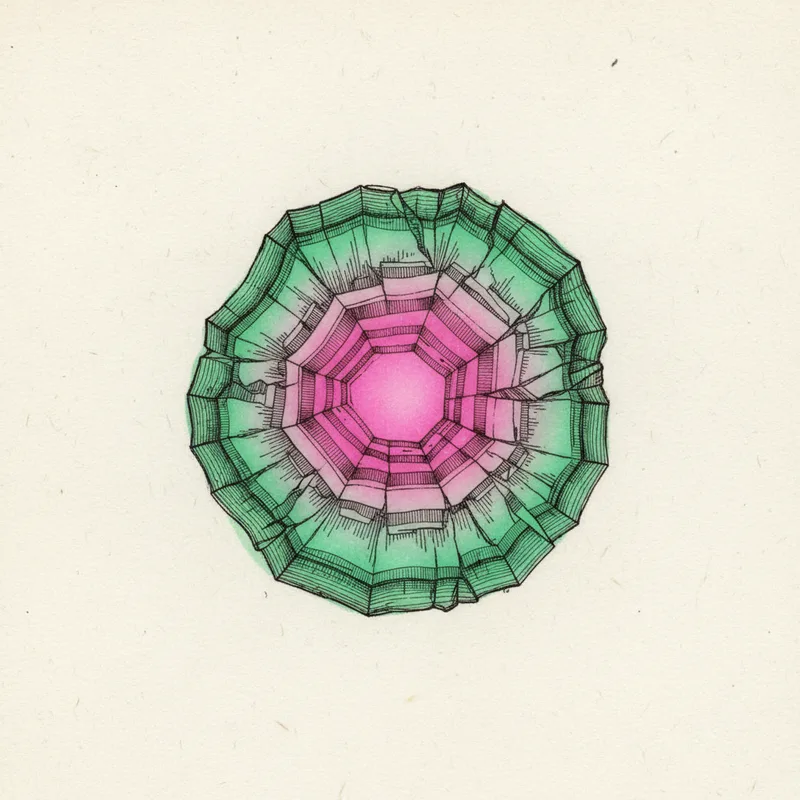
Watermelon Tourmaline
The Dual Heart Stone

Star Rose Quartz
The Star of the Heart
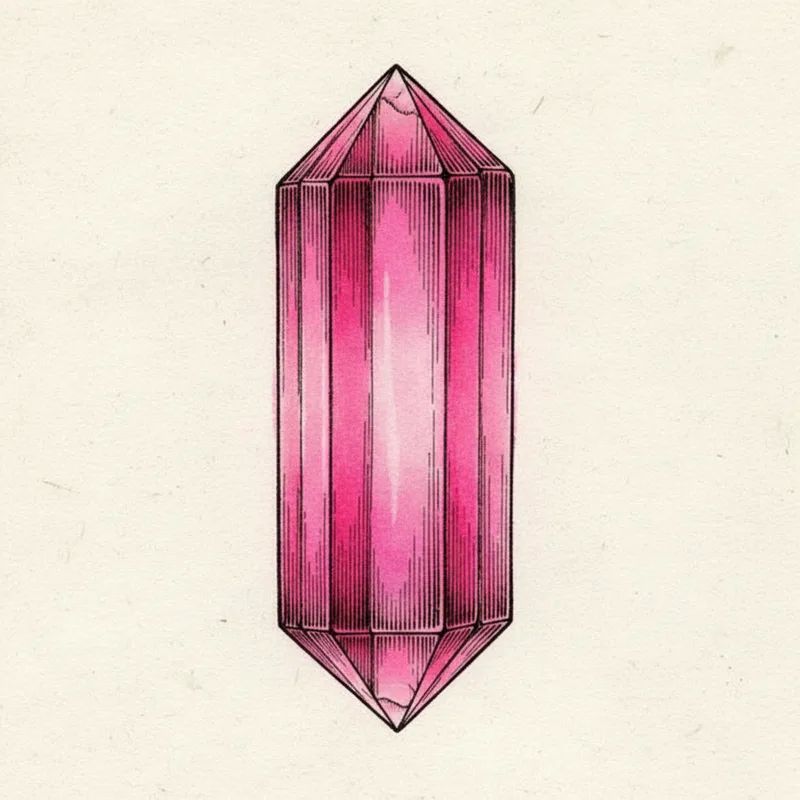
Pink Tourmaline
The Manganese Elbaite
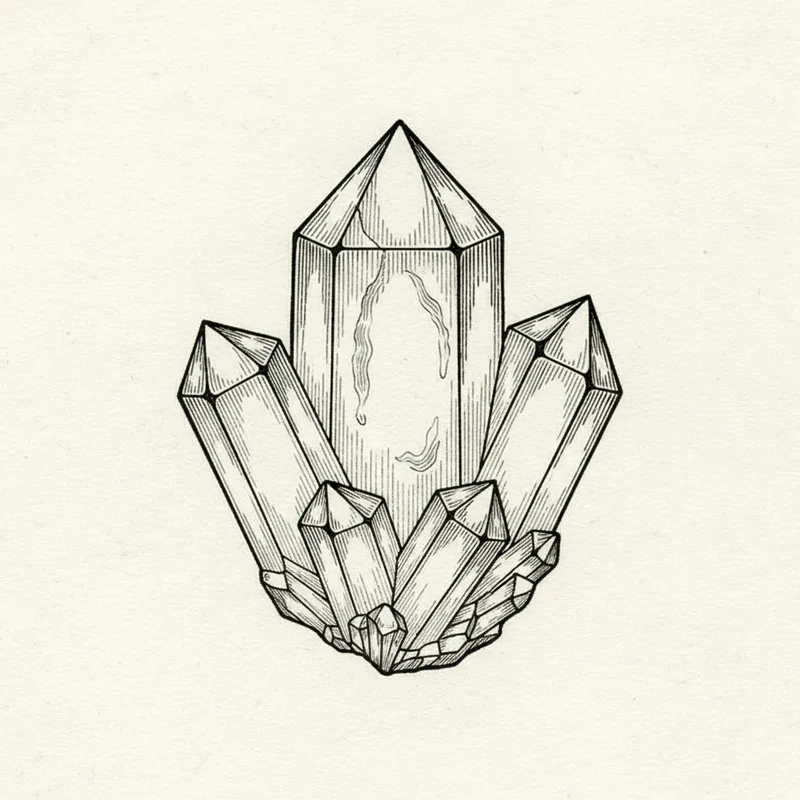
Clear Quartz
The Master Healer
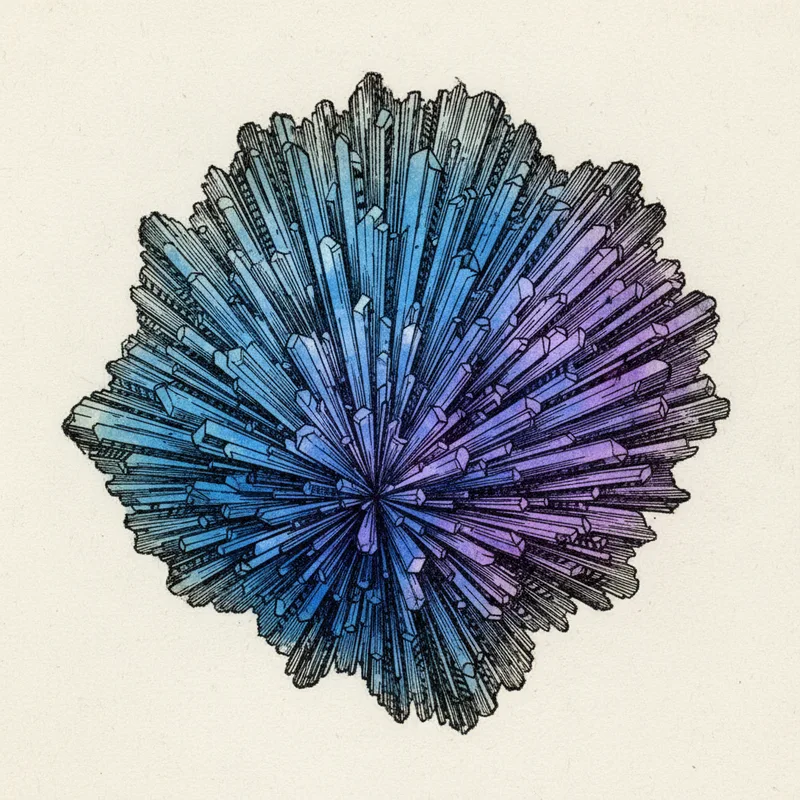
Dumortierite
The Patience Stone
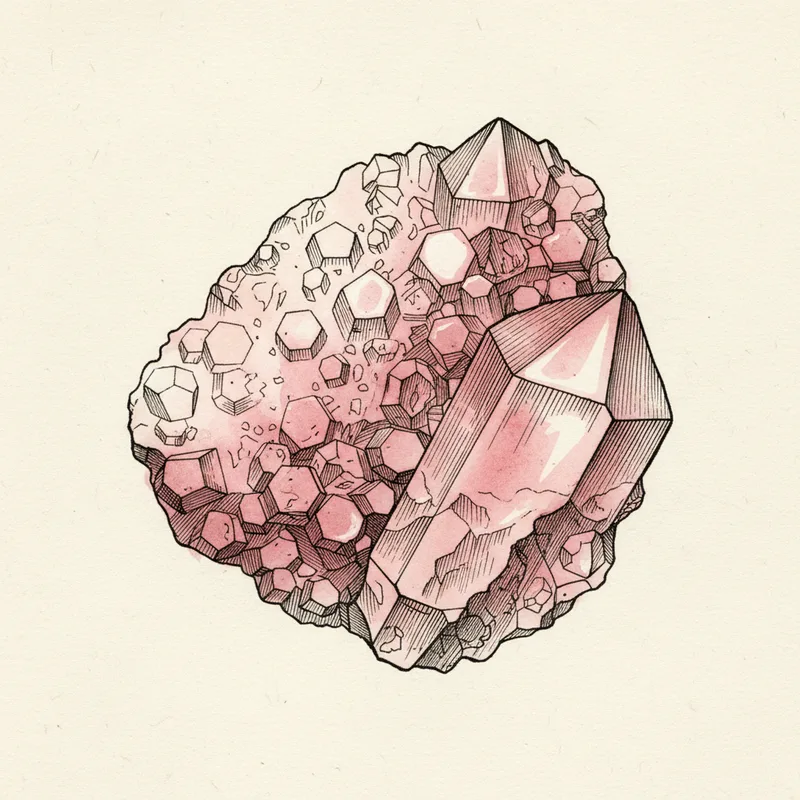
Rose Quartz
The Stone of Unconditional Love
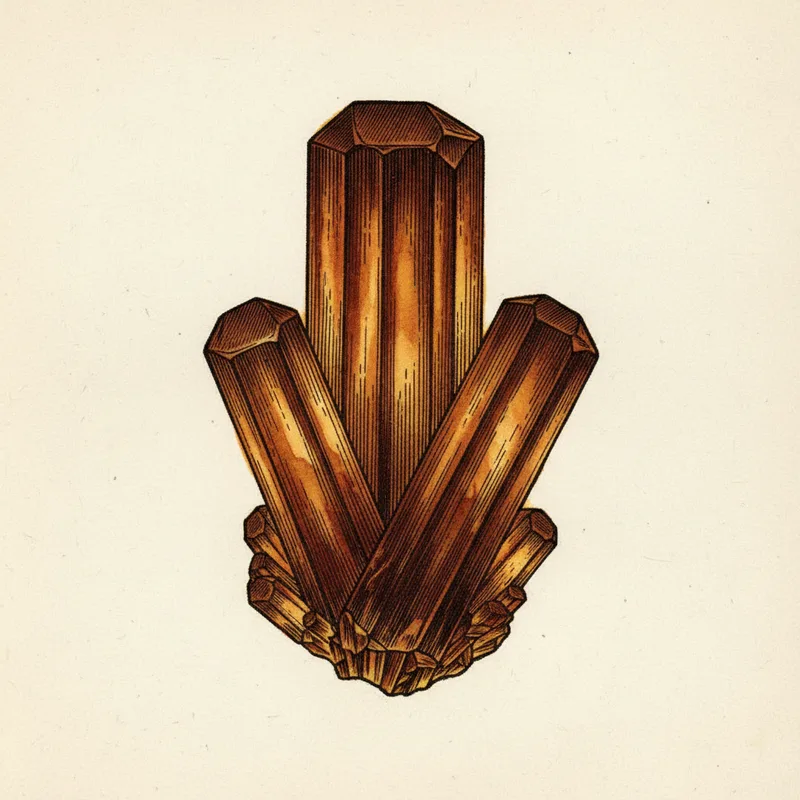
Tourmaline
The Rainbow Stone

Spodumene
The Lithium Giant
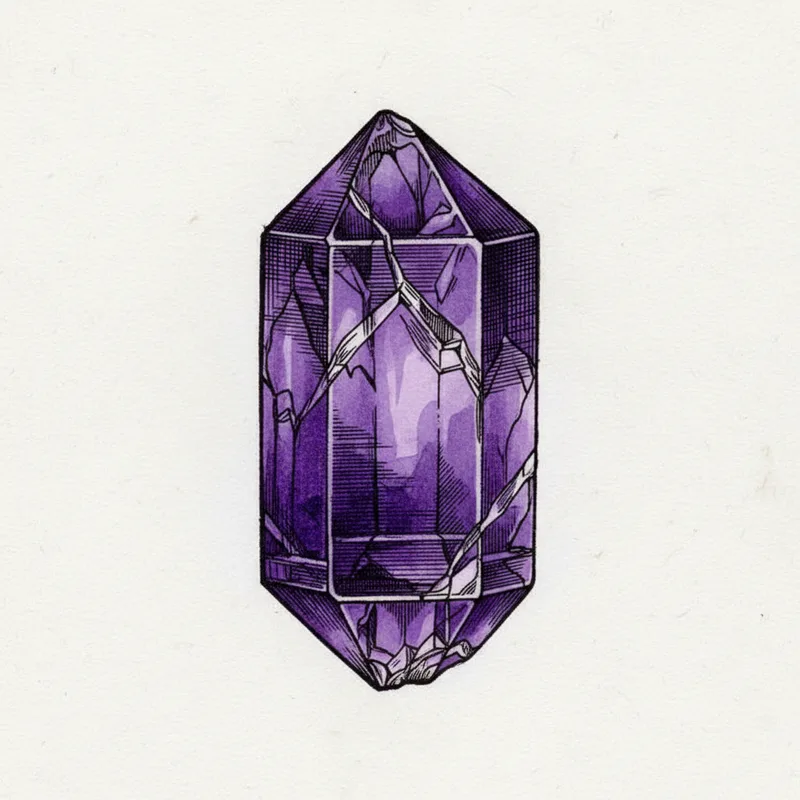
Amethyst
The Stone of Spiritual Wisdom
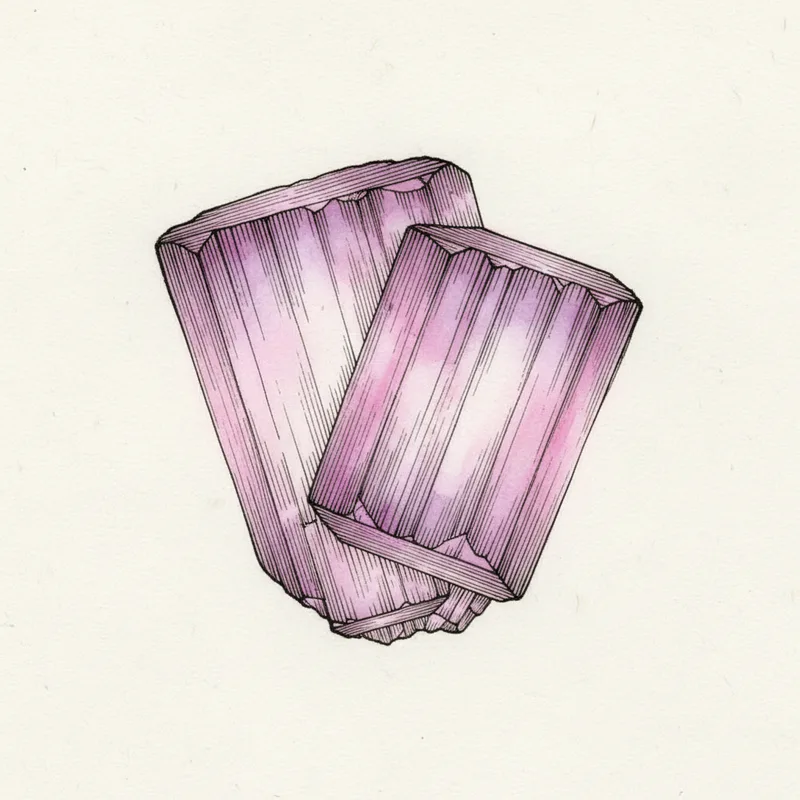
Kunzite
The Evening Stone

Elbaite
The Rainbow Tourmaline
Topaz
The Stone of Clarity
Keep Reading
Stay in the loop
From the Almanac
Updates from Crystal Almanac, when there’s something worth sharing.