Best Crystals for Anxiety: What the Science Actually Says
Key Takeaway: No scientific study has proven that crystals reduce anxiety. But the cultural traditions are ancient, the placebo effect is a real neurological phenomenon, and the geology behind these minerals is genuinely fascinating. Here's an honest look at the crystals most associated with calm, what's actually in them, and why holding a stone might help more than you think.
Let's start with the uncomfortable truth that most crystal websites skip over: there is no peer-reviewed, controlled scientific study demonstrating that crystals reduce anxiety or stress. A 2001 study by Christopher French at Goldsmiths, University of London found that people reported the same sensations whether they held real crystals or plastic fakes, as long as they were told they were real.
That doesn't make the conversation worthless. It makes it more interesting.
The traditions connecting specific minerals to emotional calm span thousands of years and cross nearly every culture on Earth. The placebo effect, far from being "fake," is a measurable neurological response involving real changes in brain chemistry, including dopamine and endorphin release. And some of these minerals contain genuinely remarkable chemistry that deserves attention on its own merits.
So here are the crystals most widely associated with anxiety relief across global traditions, examined through the lens of what they actually are, what's actually in them, and what the cultural record actually says.
Lepidolite
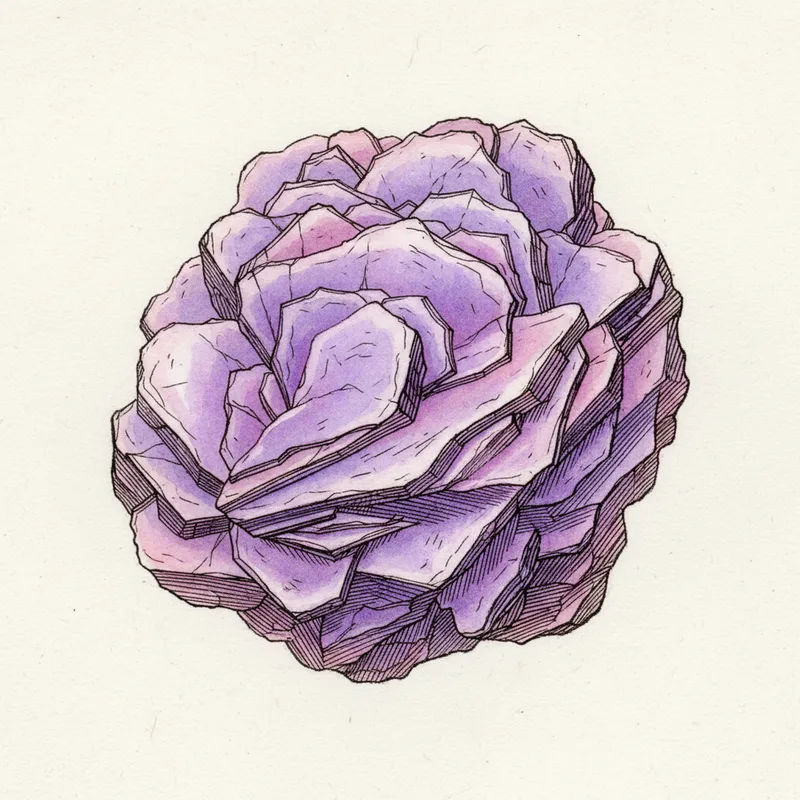
This is the crystal that makes geologists raise an eyebrow during the anxiety conversation, because lepidolite genuinely contains lithium. The same element. The one used in psychiatric mood stabilizers prescribed for bipolar disorder and treatment-resistant depression since the 1940s.
Lepidolite is a lithium-bearing mica with the formula K(Li,Al)₃(AlSi₃O₁₀)(F,OH)₂. It forms in lithium-rich granitic pegmatites, those coarse-grained igneous intrusions where rare elements concentrate during the final stages of magma crystallization. The lilac-to-purple color comes from manganese within its layered silicate structure, and it has that classic mica sheet habit, flaking apart along perfect basal cleavage planes.
Now the honest part: you cannot absorb therapeutic amounts of lithium by holding a rock. Lithium carbonate (the pharmaceutical form) works because it's soluble, enters your bloodstream through your digestive system, and crosses the blood-brain barrier at carefully controlled doses. Lepidolite is a stable aluminosilicate mineral. The lithium is locked inside its crystal lattice. Holding it delivers essentially zero lithium to your body.
But here's what IS true: lepidolite has been specifically associated with emotional calm and mental balance across multiple crystal healing traditions, and it's one of the few cases where there's a clear chemical reason why practitioners may have gravitated toward this particular mineral. Whether ancient healers somehow intuited the lithium connection or it's coincidence remains an open question.
What to buy: Look for specimens with visible crystal sheets and that distinctive lavender-pink color. Brazilian and Madagascan material tends to be the most vibrant. Tumbled stones are affordable at $3-8 for pocket-sized pieces.
Amethyst
The word amethystos is ancient Greek for "not intoxicated." Greek and Roman traditions held that drinking from an amethyst cup would prevent drunkenness, and the mineral was carved into goblets for exactly this purpose. This association with sobriety and mental clarity evolved over centuries into a broader connection with calm, clear-headedness, and emotional stability.
Geologically, amethyst is quartz (SiO₂) with its purple color created by iron (Fe³⁺) impurities exposed to natural gamma radiation from surrounding rock. The iron substitutes for silicon in the crystal lattice, and radiation creates color centers that absorb yellow-green light, transmitting the violet you see. Heat the stone above about 300-400°C and those color centers destabilize. The purple fades to yellow or orange, which is how most commercial "citrine" is actually made.
Amethyst is far and away the most commonly recommended crystal for anxiety across modern crystal healing traditions. Nearly every crystal reference associates it with calm, mental clarity, and stress relief. In Buddhist practice, amethyst prayer beads represent transformation and calm mind. In European medieval tradition, bishops wore amethyst rings as symbols of spiritual clarity.
What to buy: Amethyst is abundant and affordable. Uruguayan and Zambian material tends to show the deepest purple. A palm-sized polished piece runs $5-15, and even small geode sections are reasonable. Avoid anything labeled "deep purple amethyst" at unusually high prices, as the market is well-supplied.
Rose Quartz
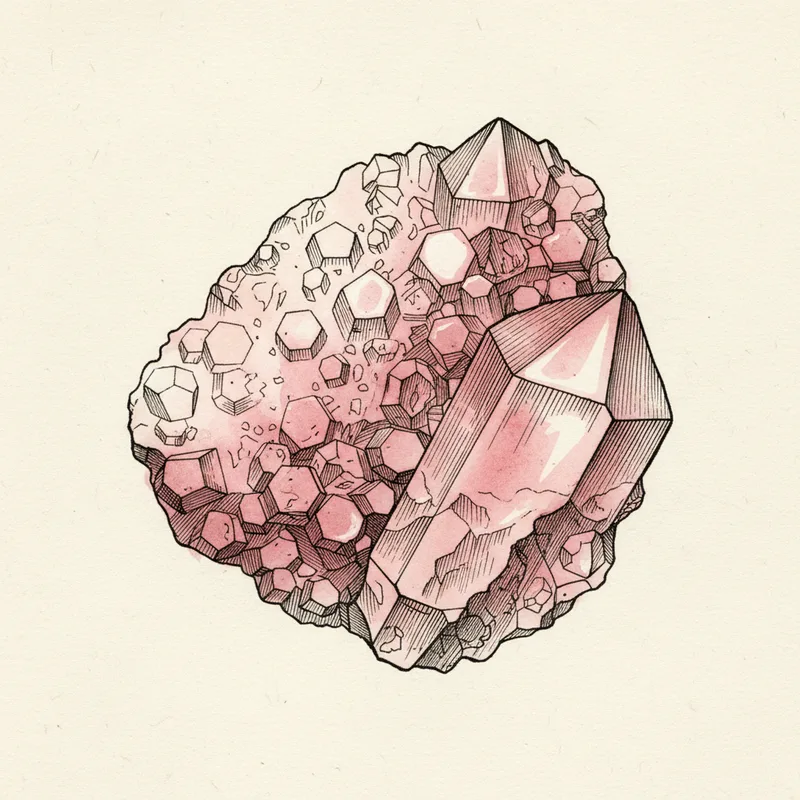
Rose quartz gets its soft pink color from one of two sources, depending on the specimen. Most massive rose quartz (the cloudy, translucent kind) gets its color from microscopic fibers of a mineral called dumortierite included within the quartz matrix. Rarer transparent pink quartz crystals owe their color to traces of phosphorus and aluminum, possibly with manganese or titanium involvement. The chemistry is genuinely complex, and researchers are still refining the picture.
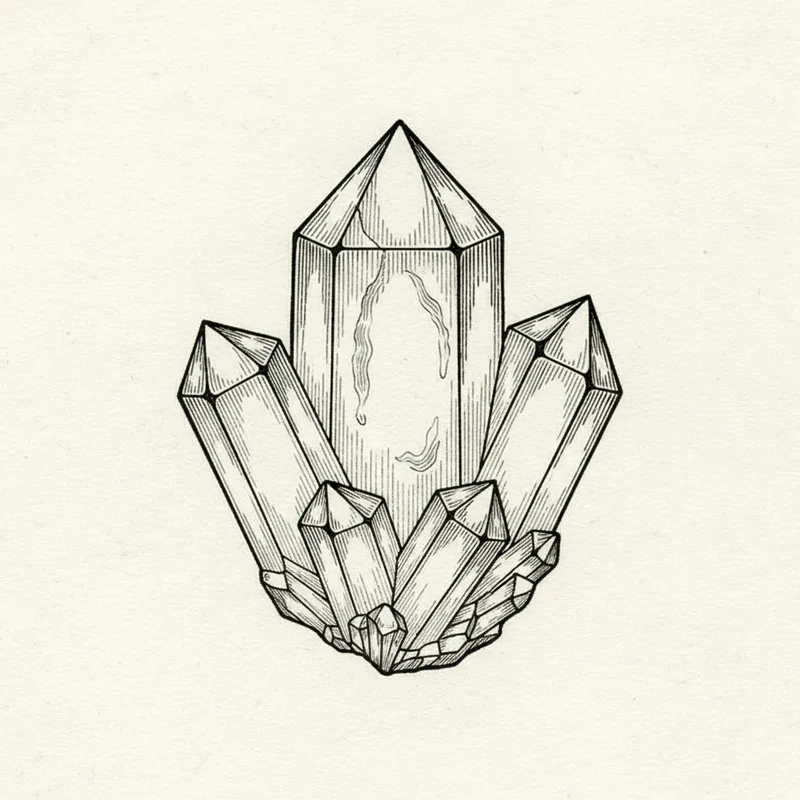
This is SiO₂ at its core, same as amethyst and smoky quartz, just with different trace elements creating different colors. Rose quartz forms in pegmatites and hydrothermal veins, typically in the cores of granitic intrusions where silica-rich fluids cool slowly enough for large crystal masses to develop.
The cultural association between rose quartz and emotional comfort is remarkably consistent across traditions. It appears in virtually every crystal healing system worldwide as a stone of emotional healing, self-compassion, and gentle calm. Ancient Egyptian and Roman traditions used rose quartz in facial masks and beauty treatments, connecting it to self-care practices that modern psychology would recognize as relevant to anxiety management.
What to buy: Rose quartz is one of the most affordable crystals on the market. Madagascar and Brazil produce enormous quantities of beautiful material. A polished palm stone costs $3-8, making it an accessible starting point.
Blue Lace Agate
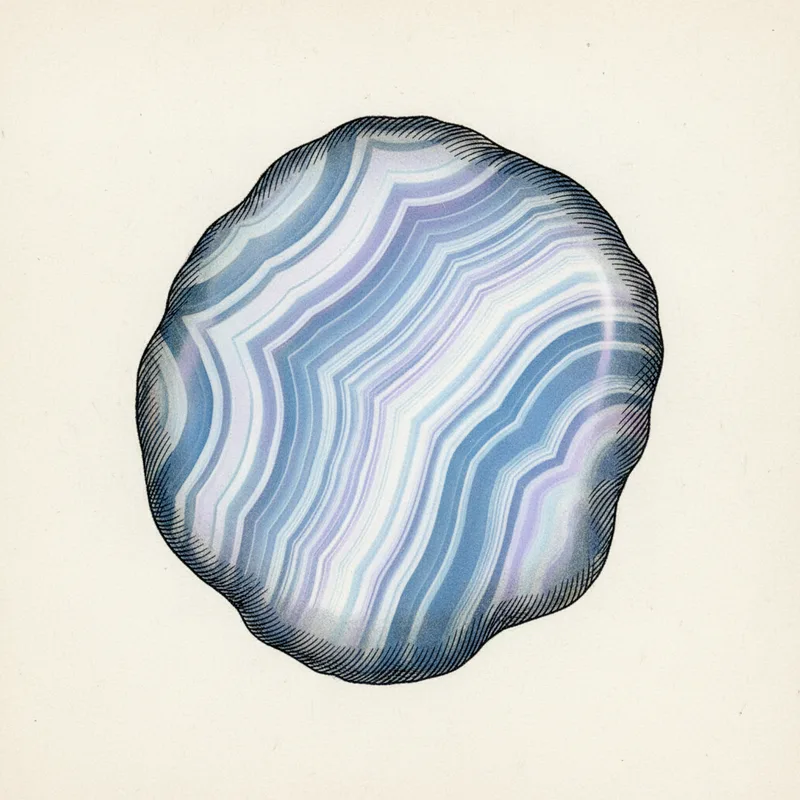
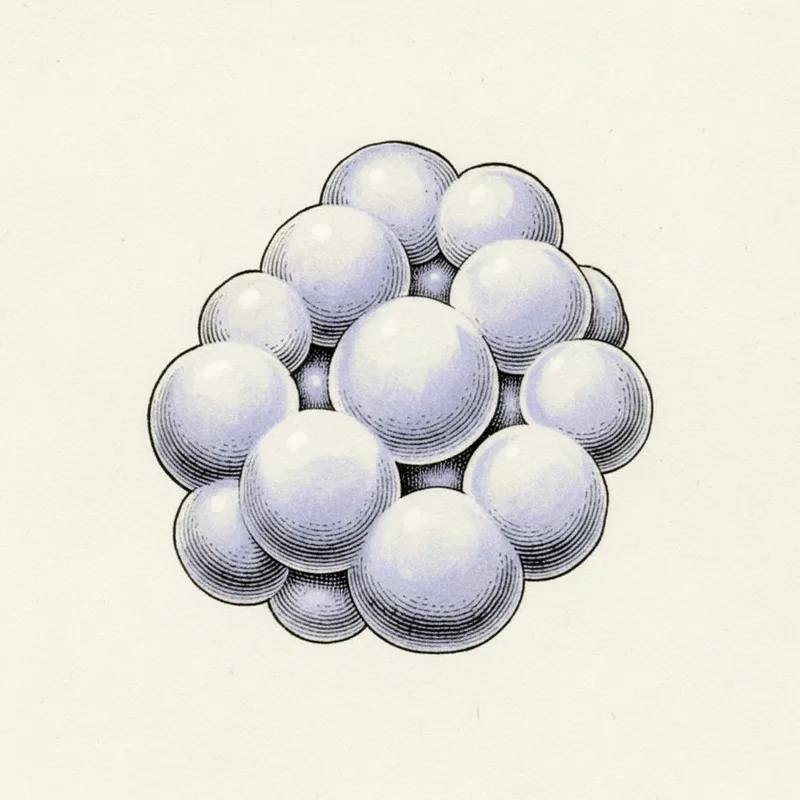
Blue lace agate is a variety of banded chalcedony, which is itself a microcrystalline form of quartz. The delicate blue-and-white banding forms through rhythmic precipitation, where silica-rich fluids deposit layers within volcanic cavities over long periods, with slight variations in chemistry and conditions creating each distinct band.
The blue color involves an interesting physics question. Unlike many colored minerals where transition metal ions absorb specific wavelengths, the pale blue of blue lace agate involves Rayleigh scattering of light by submicroscopic inclusions within the chalcedony matrix. It's related to the same phenomenon that makes the sky blue, though the geological context is entirely different.
Nearly all gem-quality blue lace agate comes from a single deposit in Namibia, making it significantly rarer than many more famous crystals. In crystal healing traditions, it's strongly associated with the throat chakra and calm communication. The tradition specifically connects it to relieving the anxiety of self-expression, public speaking, and difficult conversations.
What to buy: Due to its limited source, blue lace agate is moderately priced at $8-20 for a good tumbled stone. Look for distinct, well-defined banding. If the color is too uniform or too vivid, it may be dyed ordinary agate.
Black Tourmaline (Schorl)
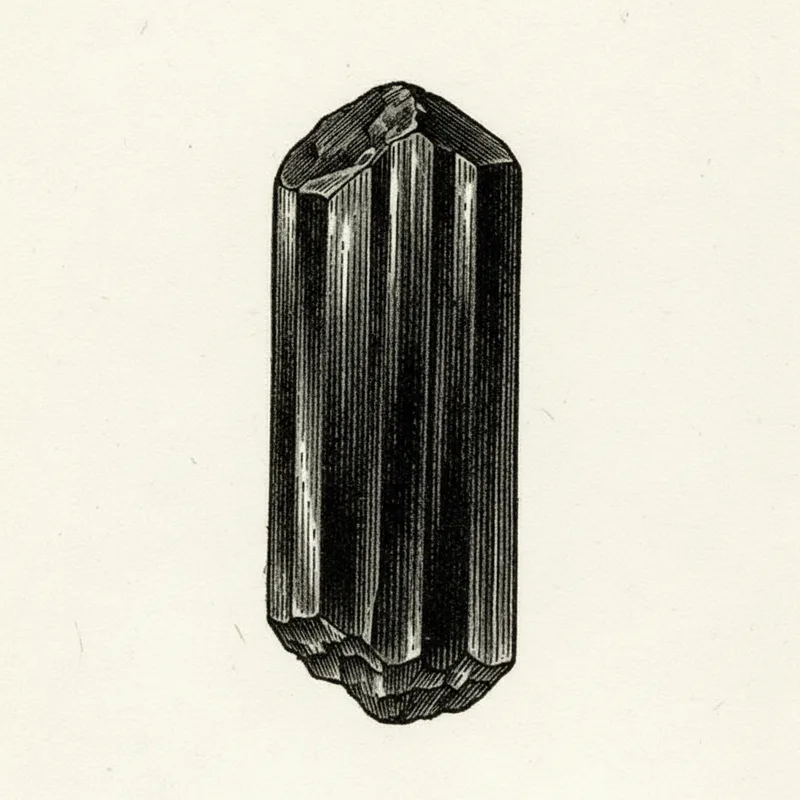
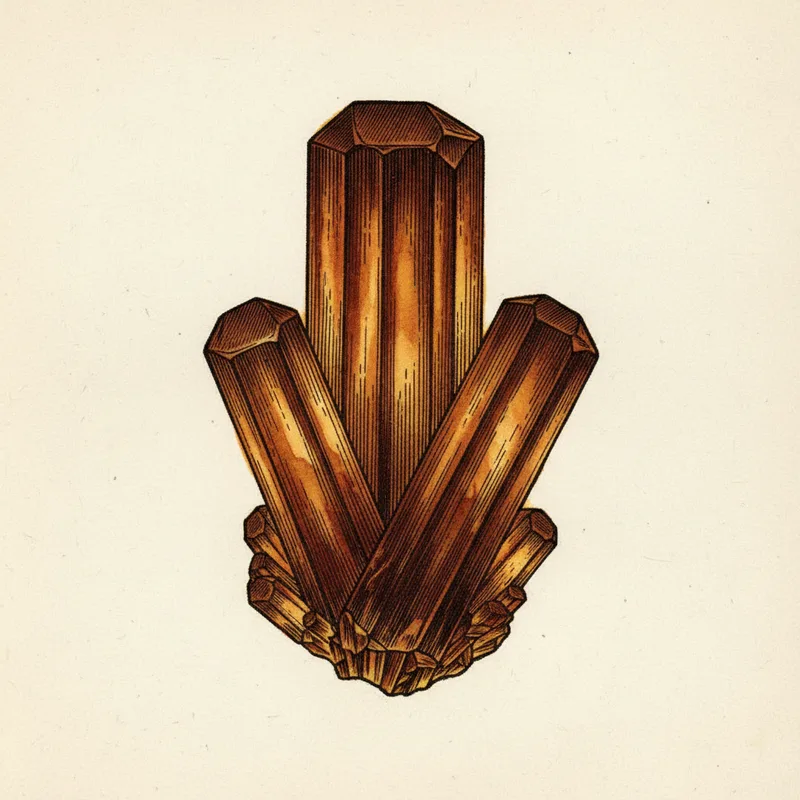
Here's where the science gets genuinely interesting. Black tourmaline (schorl) is piezoelectric, meaning it generates a small electrical charge when subjected to mechanical pressure. It's also pyroelectric, generating charge when heated. These are real, measurable physical properties. Tourmaline's complex chemical formula, NaFe²⁺₃Al₆(BO₃)₃Si₆O₁₈(OH)₄, creates a crystal structure with a permanent electric dipole.
Does this electrical property do anything therapeutic when you hold a piece? Almost certainly not. The charges generated are tiny and dissipate quickly. But it's worth knowing that when crystal traditions describe tourmaline as having "energy," there's a legitimate physical phenomenon underneath the metaphor.
Schorl forms in granite pegmatites and metamorphic rocks, often as striking prismatic crystals with a characteristic triangular cross-section. The iron content gives it that deep black color that's nearly opaque even in thin slices.
In protective crystal traditions, black tourmaline is the single most commonly recommended "grounding" stone. The tradition specifically associates it with absorbing negative energy and creating a sense of safety and stability. In anxiety contexts, practitioners recommend it for the physical symptoms of anxiety: the racing heart, the tight chest, the sense of being unanchored.
What to buy: Black tourmaline is abundant and affordable. Raw specimens with visible crystal striations are widely available for $5-15. Check that it's genuinely tourmaline and not black obsidian or onyx, as the prismatic crystal habit and striated surface are distinctive identifiers.
Smoky Quartz
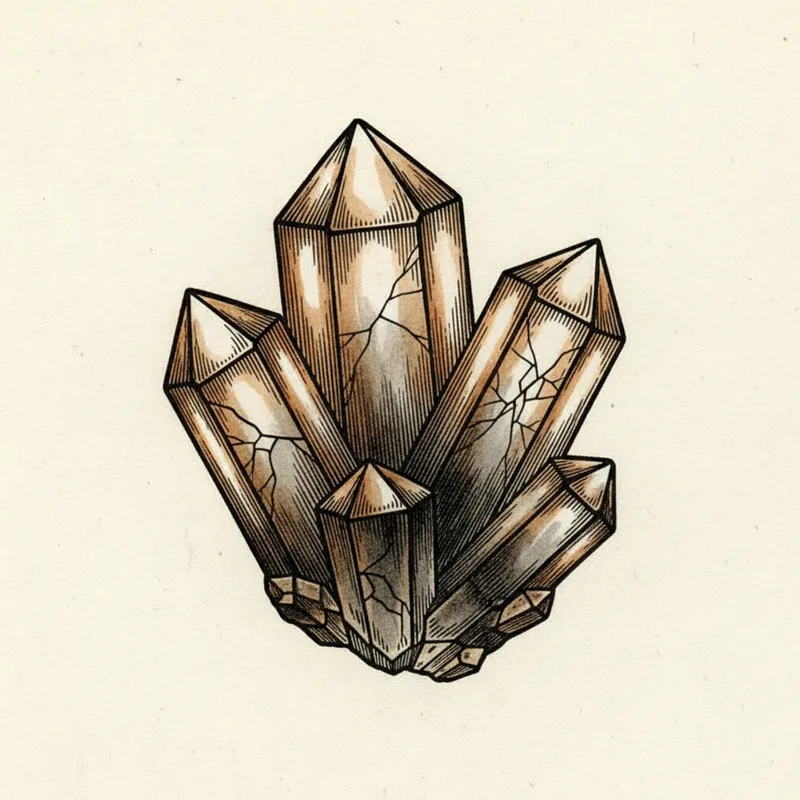
Smoky quartz demonstrates one of geology's more elegant color-creation mechanisms. Like all quartz, it starts as SiO₂. But trace amounts of aluminum substitute for silicon in the crystal lattice, and when natural gamma radiation from surrounding rocks hits those aluminum sites, it creates color centers that absorb light, producing colors ranging from pale brown to nearly black.
The amount of radiation exposure determines the depth of color. Specimens from uranium-bearing granites tend to be the darkest. And unlike amethyst's purple, smoky quartz's color is generally stable and won't fade in sunlight under normal conditions, though extreme heat will clear it.
Scotland designated smoky quartz as its national gem, and the Celts associated dark quartz with connection to the earth and protection against negative spirits. In modern crystal healing, smoky quartz is consistently associated with grounding, stress relief, and a specific quality of calm that practitioners describe as "clearing mental fog."
What to buy: Natural smoky quartz from the Swiss Alps, Brazil, or the Cairngorm mountains of Scotland tends to have the most appealing warm brown tones. Be aware that very dark, almost black "smoky quartz" is often clear quartz that's been artificially irradiated. Natural specimens typically show variation in color intensity. Expect $5-12 for a nice polished point.
Howlite
Howlite is calcium borosilicate hydroxide, Ca₂B₅SiO₉(OH)₅. It's a relatively soft mineral (3.5 on the Mohs scale) that forms in evaporite deposits, typically as white nodules with distinctive gray or black veining that resembles a web pattern. This veining is actually thin fractures filled with other minerals during formation.
Howlite's most controversial role in the crystal market is as a turquoise imitation. Its porous structure absorbs dye readily, and dyed blue howlite is one of the most common fake turquoise products on the market. If you're buying howlite specifically, make sure you're getting it in its natural white form.
In crystal traditions, howlite is specifically associated with sleep, calm, and patience. Practitioners commonly recommend placing it under a pillow or on a bedside table. The tradition connects its web-like veining pattern to the idea of interconnected thoughts settling into stillness.
What to buy: Natural white howlite is very affordable at $2-5 for tumbled stones. The distinctive veining pattern is easy to identify. Check our crystal care guide for handling tips, as howlite is soft enough to scratch easily.
Moonstone
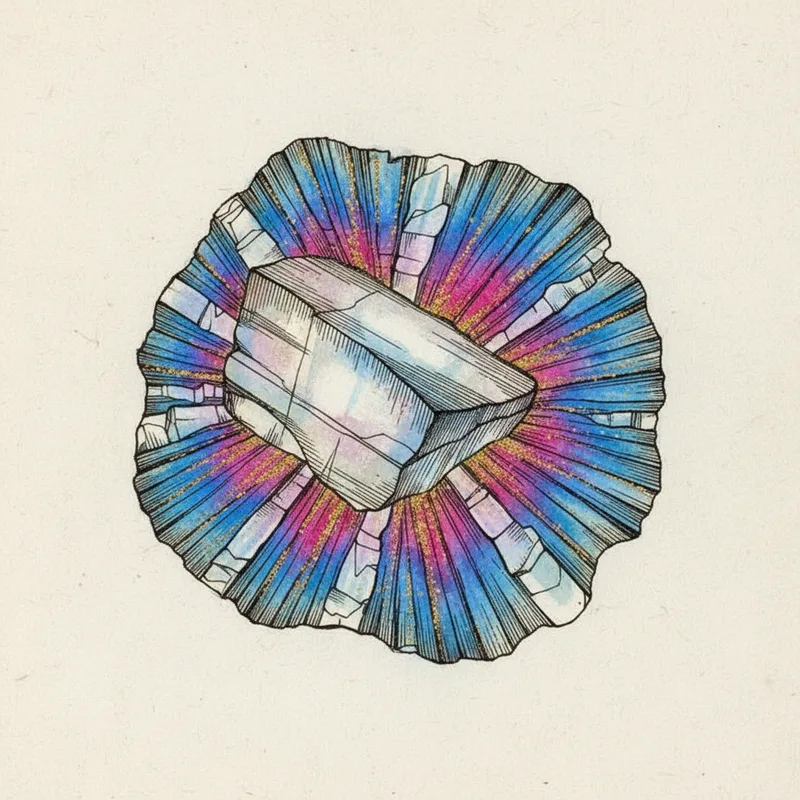
Moonstone is an orthoclase feldspar (KAlSi₃O₈) that displays adularescence, a billowing, bluish-white light that appears to move beneath the surface. This optical effect comes from the internal structure: as moonstone cools from magma, two feldspar components (orthoclase and albite) separate into alternating microscopic layers through a process called exsolution. When light enters and scatters between these lamellae, you get that characteristic floating glow.
The layers need to be approximately 500 nanometers thick to produce blue adularescence. Thicker layers scatter longer wavelengths, producing white or silver sheen. The geology directly determines the aesthetic.
Moonstone has been associated with emotional balance and intuition in Hindu, Roman, and Norse traditions. In Hindu tradition, it's considered sacred, formed from solidified moonbeams. In crystal healing practices, it's recommended specifically for emotional volatility and cyclical mood patterns, with practitioners connecting it to lunar rhythms and the natural ebb and flow of emotional states.
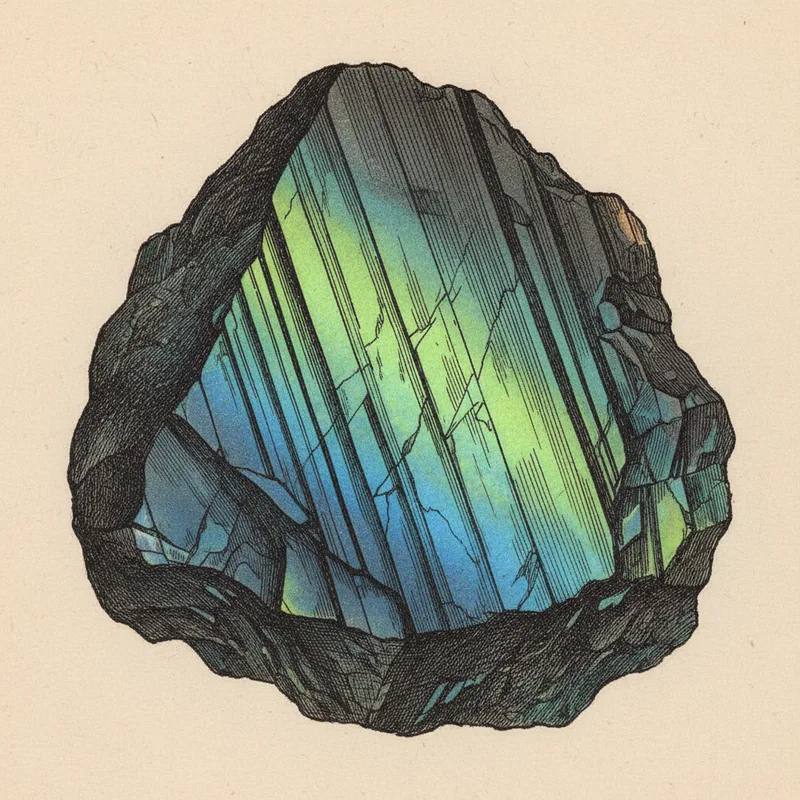
What to buy: Sri Lankan moonstone with strong blue adularescence is the most prized and costs $15-40 for a good cabochon. Indian moonstone is more affordable and often shows a white or peach sheen. Rainbow moonstone (actually a variety of labradorite) is beautiful but technically a different mineral.
The Science of Why Crystals Feel Calming
So if the crystals themselves aren't transmitting healing energy, why do so many people report feeling calmer when they use them? The answer involves several well-documented psychological mechanisms that have nothing to do with mysticism.
Tactile grounding is real therapy. Cognitive Behavioral Therapy (CBT) and Dialectical Behavior Therapy (DBT) both use grounding techniques that involve holding smooth, cool objects and focusing on their physical sensations: weight, temperature, texture. A polished crystal is, objectively, an excellent grounding object. It's smooth, cool to the touch, pleasantly heavy, and interesting enough to hold attention. The 5-4-3-2-1 grounding technique (identify 5 things you see, 4 you feel, 3 you hear, 2 you smell, 1 you taste) works because it redirects attention from anxious thoughts to present sensory experience. Holding a crystal does exactly this.
Ritual creates structure. Anxiety thrives in formlessness. Having a consistent practice, whether that's meditation, journaling, or sitting quietly with a specific crystal, creates structure and predictability. The crystal becomes an anchor for a calming routine, and the routine is the active ingredient.
Beauty reduces stress. There is genuine research demonstrating that exposure to natural beauty, including geological specimens, activates reward centers in the brain and reduces cortisol levels. A well-formed amethyst cluster is a remarkable natural object. The awe response it produces is real and measurable.
Intention matters. The act of choosing a crystal for a specific purpose, carrying it deliberately, and using it as a reminder of an intention to manage stress is a form of cognitive reframing. You're externalizing an internal goal and giving it physical form. Psychologists call this "implementation intention," and it's one of the more robust findings in behavior change research.
None of this requires believing that the crystal itself has supernatural properties. The crystal is a tool, a beautiful, geologically fascinating tool that supports real psychological techniques. The traditions surrounding these minerals, traditions developed over millennia across dozens of cultures, arrived at practices that modern psychology would recognize as legitimate anxiety management strategies. They just explained the mechanism differently.
For those who prefer a clinical approach to anxiety support, ashwagandha has the most anxiety-related research of any supplement. Ashwagandha has the most anxiety-related clinical research of any supplement - the cortisol-reduction mechanism is well-documented and distinct from the grounding practices described here.
Whether you're drawn to lepidolite's lithium-bearing mica sheets, amethyst's iron-and-radiation purple, or the simple weight of a black tourmaline in your pocket, what you're really engaging with is a piece of Earth's deep history. And there's something genuinely grounding about that.
Crystals in This Article
Rainbow Moonstone
The Labradorite in Disguise
Black Tourmaline
The Shield Stone
Blue Lace Agate
The Communication Stone
Clear Quartz
The Master Healer
Smoky Quartz
The Grounding Stone
Dumortierite
The Patience Stone
Labradorite
The Stone of Transformation
Rose Quartz
The Stone of Unconditional Love
Tourmaline
The Rainbow Stone
Lepidolite
The Peace Stone
Chalcedony
The Mother of Agates

Orthoclase
The Foundation Feldspar
Keep Reading
Stay in the loop
From the Almanac
Updates from Crystal Almanac, when there’s something worth sharing.