Best Crystals for 2026: Match Stones to Your Goals
Key Takeaway: Every crystal on this list started as a geological event, a collision of heat, pressure, and chemistry millions of years in the making. Here are 16 stones matched to 8 common intentions for 2026, with the real science of how each one formed, the cultural traditions that gave it meaning, and practical advice on what to actually buy.
You are holding a rock that is older than every civilization that ever assigned it meaning. That is the strange thrill of working with crystals. The amethyst in your hand crystallized inside a volcanic cavity 130 million years ago. The obsidian on your shelf cooled from lava in minutes. The pyrite on your desk assembled itself into perfect cubes without any human intervention.
Pairing crystals with personal intentions is one of humanity's oldest habits. Egyptian artisans carved carnelian scarabs for courage. Roman legionnaires carried tiger's eye into Gaul. Medieval merchants tucked citrine into their strongboxes. These traditions span thousands of years, dozens of cultures, and every continent with exposed bedrock.
Whether you approach crystals as geological specimens worth studying (absolutely) or as tools for focusing intention (a tradition with genuine roots), matching a stone to a goal is a surprisingly satisfying way to anchor your year. And the science behind each mineral is worth knowing regardless of what you believe it can do for you.
Here are 16 minerals for 8 common 2026 intentions. Science first. Traditions second. Shopping advice last.
1. Financial Abundance: Citrine and Pyrite
Citrine
Citrine is quartz (SiO₂) that owes its warm golden color to a quirk of atomic physics. Trace iron impurities sit inside the silicon dioxide crystal lattice, and when nearby radioactive minerals or hydrothermal heat oxidize that iron from Fe²⁺ to Fe³⁺, the absorption spectrum shifts and the crystal turns yellow to amber. Natural citrine is genuinely rare. It forms when amethyst or smoky quartz bakes slowly inside geothermal systems over geological time, the iron gradually oxidizing at temperatures around 300-400°C. The vast majority of "citrine" sold today is amethyst that has been heated in a kiln at roughly 470°C to force the same color change artificially. Still real quartz, still real iron chemistry, just on a human timeline instead of a geological one.
The merchant's stone tradition dates back at least to the 1600s, when European shopkeepers placed citrine in their cash boxes to attract business. Chinese feng shui positions it in the southeast corner of a room for wealth energy. The color connection is obvious: citrine glows the color of gold coins.
What to buy: Natural citrine is pale smoky gold, never bright orange. If the base of a point is white and the tip is vivid tangerine, it is heat-treated amethyst. Both are real quartz, but the price should reflect the difference. Tumbled stones run $3-5. A genuine untreated citrine point costs $15-40 for a small specimen. Buy from sellers who disclose treatment.
Pyrite
Pyrite is iron sulfide (FeS₂), and it is one of the most structurally fascinating minerals you can own. Its crystal system is isometric, which means it forms in the cubic system, and it takes that mandate seriously. Pyrite grows into nearly perfect cubes, pyritohedrons (twelve-sided forms), and octahedrons entirely on its own. No cutting, no polishing. Those geometric shapes emerge directly from the way iron and sulfur atoms arrange themselves at the molecular level. Pyrite forms in an enormous range of environments, from black shale to hydrothermal gold veins to volcanic fumaroles, making it one of the most geologically versatile minerals on Earth.
The abundance association is almost too straightforward. Pyrite looks like gold. It fooled prospectors so reliably that it earned the name "fool's gold," but the mineral is remarkable in its own right. Its name derives from the Greek "pyr" (fire), because striking pyrite against steel produces sparks, a property that made it essential for starting fires before matches existed. The Inca polished pyrite into mirrors used in ceremonial divination.
What to buy: Pyrite is abundant and inexpensive. A cluster of natural cubic crystals costs $8-20 for a palm-sized specimen. The cubes are the showpiece, so look for sharp, well-defined faces. Be cautious with "rainbow pyrite" unless the seller can confirm the iridescence is natural tarnish and not an artificial coating.
2. Calm and Anxiety Relief: Amethyst and Lepidolite
Amethyst
Amethyst has one of the best origin stories in mineralogy. It is purple quartz (SiO₂), and its color comes from a two-step process that takes millions of years. First, trace iron atoms (Fe³⁺) substitute into the quartz crystal lattice during growth. Then, natural gamma radiation from surrounding rocks, emitted by tiny amounts of potassium-40, uranium, or thorium in the host stone, bombards the crystal over geological time. That radiation knocks electrons around the iron sites, creating what physicists call "color centers" that absorb yellow-green light and transmit purple. Remove the radiation by heating the crystal above 400°C, and amethyst converts to citrine. Same mineral, same iron, different physics.
The ancient Greeks named this stone "amethystos," meaning "not intoxicated," and carved drinking goblets from it in the belief it would prevent drunkenness. Buddhist monks have used amethyst mala beads for meditation for centuries. In Western crystal traditions, it is the single most recommended stone for calming anxiety and promoting restful sleep.
What to buy: Amethyst is one of the best values in the mineral world. Tumbled stones cost $2-5. Small geode sections and clusters run $10-25. Deep, saturated purple commands higher prices, but pale lavender amethyst is equally genuine. If the color looks unnaturally uniform or neon-bright, question it. Good amethyst shows natural color zoning.
Lepidolite
Lepidolite is a lithium-bearing mica with the formula K(Li,Al)₃(Al,Si,Rb)₄O₁₀(F,OH)₂, and it contains a genuinely remarkable coincidence. This mineral is one of the most significant natural sources of lithium, containing 1.4-3.6% lithium oxide. Lithium, of course, is the same element used in lithium carbonate and lithium citrate, medications prescribed worldwide for mood stabilization and bipolar disorder. Lepidolite's lavender to pink color comes from manganese, and it forms in lithium-enriched granite pegmatites alongside tourmaline, spodumene, and quartz, often in the final stages of magma crystallization when rare elements concentrate in the last pockets of melt.
Crystal traditions have called lepidolite "the peace stone" and "the grandmother stone" for generations, associating it with emotional balance and gentle calm. This is one of the rare cases where ancient intuition and modern chemistry point in a similar direction, though the mechanism is entirely different. Holding a mica slab is not pharmacology. But the coincidence is striking enough to be worth noting.
What to buy: Lepidolite is moderately priced. Tumbled pieces run $4-8. Raw specimens showing the characteristic scaly, micaceous layers are $10-20 and have a beautiful sparkle. It is soft (2.5-3 on the Mohs scale), so keep it away from water and handle it gently. The sheets can flake if treated roughly.
3. Confidence and Courage: Carnelian and Tiger's Eye
Carnelian
Carnelian is a variety of chalcedony, which is itself microcrystalline quartz (SiO₂) built from fibers and grains too small to see with the naked eye. Carnelian's red-orange fire comes from iron oxide, specifically hematite (Fe₂O₃) and goethite (FeOOH) particles dispersed throughout the silica matrix. It forms in volcanic environments where silica-rich fluids infiltrate gas cavities in cooling basalt, depositing layers of agate from the outside in. Over time, iron in the surrounding rock oxidizes and stains the silica progressively deeper shades of orange and red. A cross-section of carnelian often reveals banding from this slow, patient process.
Carnelian's association with courage has a documented history spanning 4,500 years. Egyptian warriors wore carnelian amulets into battle. Islamic tradition holds that the Prophet Muhammad wore a carnelian ring on his right hand. Roman officials used carnelian signet rings to stamp wax seals on legal documents, because hot wax does not stick to its polished surface. That practical feature, the fact that carnelian literally would not flinch from molten wax, reinforced its reputation as a stone of boldness.
What to buy: Natural carnelian ranges from translucent pale orange to deep brownish-red. Uniformly bright, opaque red-orange pieces are often dyed agate. Check for dye concentrating in surface cracks, a dead giveaway. Tumbled stones cost $3-6. Polished palm stones run $10-20. Hold it up to a light. Genuine carnelian often shows subtle banding and translucency at thin edges.
Tiger's Eye
Tiger's Eye forms through one of geology's most elegant tricks: pseudomorphism. The process starts with crocidolite, a fibrous blue amphibole mineral (yes, technically a form of asbestos). Over millions of years, silica-rich groundwater dissolves the crocidolite fibers and deposits quartz in their place, atom by atom, preserving the original fibrous architecture while completely swapping the chemistry. Iron oxide from the dissolved crocidolite stains the replacement quartz golden-brown. The result is a stone with the durability of quartz but the internal structure of a fiber bundle. That preserved fibrous microstructure is what creates chatoyancy, the rolling band of light that sweeps across the surface like a cat's pupil.
Roman soldiers carried engraved tiger's eye for protection. South African traditions used it as a talisman against malice. Chinese culture connected it to the courage and ferocity of the tiger itself. The stone commands attention. It shifts and burns when you move it in the light. It is easy to understand why cultures worldwide read confidence into that visual intensity.
What to buy: Tiger's eye is abundant and very affordable. Tumbled stones run $2-4. Palm stones cost $5-12. The chatoyancy should be sharp and dramatic, a bright band that sweeps decisively across the surface. Dull specimens with weak or blurry shimmer are low grade. Blue tiger's eye (hawk's eye) retains the original crocidolite color and is slightly rarer. Worth seeking out if you want something unusual.
4. Love and Relationships: Rose Quartz and Rhodonite
Rose Quartz
Rose Quartz kept mineralogists arguing about its color for decades. The pink was attributed to titanium, to manganese, to iron, to aluminum, depending on who you asked and when. Modern research using transmission electron microscopy finally settled the debate: the color comes primarily from microscopic fibers of dumortierite, a borosilicate mineral, suspended throughout the quartz body. These fibers are so tiny they scatter light selectively, producing the soft pink glow. Traces of titanium and manganese contribute as well, but the dumortierite inclusions do the heavy lifting. Rose quartz forms in pegmatites, those slow-cooling, mineral-rich chambers inside granite bodies where crystals have the luxury of time and chemical variety. Interestingly, rose quartz almost never forms individual pointed crystals. It grows in massive form, large homogeneous blocks without crystal faces, which distinguishes it from the much rarer crystalline pink quartz.
The love association is ancient and nearly universal. Egyptian and Roman mythology tied pink quartz to Aphrodite and Venus. Carved rose quartz beads have been excavated from Mesopotamian sites dating to 7000 BCE, making it one of the oldest gemstones in continuous human use. In crystal healing traditions, it sits at the heart chakra without exception.
What to buy: Rose quartz is beautifully affordable. Tumbled stones cost $2-4. Raw chunks run $5-15. Look for an even, soft pink. Very intense or bright pink is unusual and may indicate dyeing. If you want something special, seek out star rose quartz, which displays a six-rayed asterism (star pattern) under direct light, caused by those same aligned dumortierite fibers. It is a premium variety and genuinely stunning.
Rhodonite
Rhodonite is a manganese inosilicate, (Mn,Fe,Mg,Ca)SiO₃, and it looks nothing like its chemical cousin rhodochrosite (MnCO₃), despite both being manganese minerals with pink coloring. Rhodonite forms in manganese-rich metamorphic environments where intense heat and pressure reorganize manganese-bearing sediments into new mineral structures. Its signature appearance is rosy pink shot through with veins and patches of jet-black manganese oxide. Those dark veins formed later, as manganese along fractures and grain boundaries oxidized upon exposure to air or groundwater. The contrast between the vivid pink silicate and the black oxide creates one of the most visually dramatic stones in any collection.
In crystal traditions, rhodonite occupies a specific niche. Where rose quartz represents new or gentle love, rhodonite is associated with repair: healing after heartbreak, rebuilding trust, working through the hard parts of partnership. Russian culture valued rhodonite exceptionally highly, carving it into elaborate decorative objects and recognizing it as one of the country's national stones.
What to buy: Tumbled rhodonite runs $3-6. The best specimens show vivid pink with sharply contrasting black veining. Stones that are mostly black with little pink are lower grade. At 5.5-6.5 on the Mohs scale, rhodonite is durable enough for pocket carrying or daily wear in jewelry.
5. Career Growth: Green Aventurine and Amazonite
Green Aventurine
Green Aventurine is quartz hosting an entire second mineral inside itself. Tiny platelets of fuchsite mica, a chromium-bearing variety of muscovite, are scattered throughout the translucent quartz body. When light enters the stone and hits these flat, reflective mica flakes, it bounces back with a distinctive glittery shimmer called aventurescence. The green color comes entirely from chromium in the fuchsite. Without those included mica platelets, you would be holding ordinary translucent quartz. The effect is structural, not chemical. The stone is literally built from collaboration between two minerals.
Italian gamblers carried aventurine as a lucky charm, and the name itself may derive from the Italian "a ventura," meaning "by chance." In modern crystal traditions, green aventurine is consistently called "the stone of opportunity" and associated with career advancement, new ventures, and professional risk-taking.
What to buy: The defining feature is the shimmer. Rotate the stone in direct light and look for the sparkle of internal mica flakes catching and releasing photons. Flat, dull green stones without that aventurescent glitter may be dyed quartzite. Tumbled stones cost $2-5. Palm stones run $6-12. No shimmer, no sale.
Amazonite
Amazonite is a green to blue-green variety of microcline feldspar (KAlSi₃O₈), and its color story recently got rewritten. For over a century, mineralogists assumed the teal color came from copper. Modern spectroscopic analysis proved otherwise. The color actually originates from small amounts of lead (Pb²⁺) and structural water trapped within the feldspar crystal lattice during formation. Amazonite crystallizes in granitic pegmatites and can produce large, well-formed crystals with the characteristic cross-hatched twinning pattern that identifies microcline under a microscope.
Despite the name, amazonite has no verified connection to the Amazon River basin. The name likely came from green stones traded through that region centuries ago. Egyptian artisans carved amazonite into amulets, and the golden death mask of Tutankhamun was inlaid with it. In crystal traditions, amazonite is linked to clear communication, leadership presence, and professional success.
What to buy: Seek a saturated teal-green. Pale or heavily white-streaked specimens are lower grade. Tumbled stones cost $3-6. Raw crystals from Colorado or Madagascar showing clean feldspar cleavage faces run $10-25. Amazonite is only 6-6.5 hardness and has two good cleavage directions, so avoid ultrasonic cleaners and hard impacts.
6. Creativity: Labradorite and Fluorite
Labradorite
Labradorite produces one of the most spectacular optical phenomena in mineralogy. It is a plagioclase feldspar, chemically unremarkable, but as the molten mineral cooled millions of years ago, two feldspar compositions separated into alternating layers called exsolution lamellae. These layers are astonishingly thin, between 50 and 200 nanometers, which puts them right at the wavelength of visible light. When light enters the stone and bounces between these nanoscale layers, constructive and destructive interference produce brilliant flashes of blue, gold, green, copper, and violet. This is labradorescence, and it operates on the same physics as a soap bubble or a butterfly wing. The color is not pigment. It is architecture.
The Inuit people of Labrador, where the mineral was first formally described in 1770, told stories that the northern lights were once trapped inside coastal rocks. A warrior struck the stone with his spear and freed most of the light into the sky, but some remained locked inside the stone forever. In modern crystal traditions, labradorite is the default recommendation for creativity, imagination, and artistic vision. Few minerals reward slow, shifting observation as richly.
What to buy: Labradorite's entire value proposition is the flash. Strong, multi-colored labradorescence spanning the full face of a polished piece is premium material. Dull gray specimens without optical play miss the point entirely. Polished free-forms with good flash run $10-30. Spectrolite, a top-grade variety from Finland that shows the full visible spectrum, commands higher prices and is worth the investment for a display piece.
Fluorite
Fluorite is calcium fluoride (CaF₂), and it holds a distinction no other mineral can claim: it is the most colorful mineral on Earth. Purple, green, blue, yellow, pink, clear, black, and multicolored banded varieties all exist, sometimes in the same crystal. The colors arise from different trace elements (yttrium, cerium, iron, manganese) and from radiation-induced color centers, defects in the crystal lattice that selectively absorb light. Fluorite also gave its name to the phenomenon of fluorescence. In 1852, George Stokes studied the way fluorite glows vivid blue-violet under ultraviolet light and coined the term after the mineral itself. Many specimens still put on this show beautifully under a UV lamp.
Chinese artisans carved fluorite into ornate vessels centuries ago. In crystal traditions, it is called "the genius stone" and associated with mental clarity, creative problem-solving, and focused study. Its cubic crystal habit and perfect octahedral cleavage (fluorite splits cleanly into octahedrons along four planes) make it one of the most geometrically satisfying minerals to hold and examine.
What to buy: Fluorite is affordable and wildly varied. Tumbled stones cost $3-6. Natural or cleaved octahedrons run $5-15 and make exceptional desk pieces. Banded fluorite towers showing multiple color zones cost $10-25. One critical note: fluorite is soft (hardness 4) with perfect cleavage in four directions. It chips and scratches easily. Display it. Do not pocket it.
7. Protection and Grounding: Black Tourmaline and Obsidian
Black Tourmaline (Schorl)
Black Tourmaline, properly called schorl, is the iron-rich end member of the tourmaline supergroup, with the formidable formula NaFe₃(Al,Fe)₆(BO₃)₃Si₆O₁₈(OH)₄. It crystallizes in granitic pegmatites and metamorphic rocks, forming long prismatic columns with distinctive vertical striations carved into their surfaces by the crystal's trigonal symmetry. But the genuinely remarkable property of tourmaline is electrical. It is both piezoelectric (generating voltage when squeezed) and pyroelectric (generating voltage when heated). Warm a tourmaline crystal, and one end becomes positively charged while the other goes negative. It will literally attract dust, ash, and small paper scraps. This is measurable, repeatable physics, not folklore.
Those real electrical properties almost certainly influenced tourmaline's cultural reputation. Dutch traders in the 1700s used heated tourmaline to pull ash from their meerschaum pipes and called it "aschentrekker," the ash puller. If a stone can visibly attract matter through an invisible force, it is not a stretch for pre-scientific cultures to extend that idea to protection against invisible threats. In crystal traditions, black tourmaline is the single most recommended stone for energetic protection, grounding, and personal boundaries.
What to buy: Raw black tourmaline is abundant and cheap. Rough specimens with visible striations run $3-8. Larger pieces with well-formed terminations (flat, geometric ends) cost $15-30. The raw, ridged texture is part of the appeal. Polished black tourmaline exists but loses the character of those natural striations.
Obsidian
Obsidian is not a mineral. It is volcanic glass, an amorphous solid formed when felsic (silica-rich) lava erupts and cools so rapidly that atoms freeze in place before they can organize into a crystal structure. The result is a material with 70-75% SiO₂, conchoidal fracture (it breaks in smooth, curved surfaces like glass), and edges that can be made sharper than anything manufactured by modern medicine. Obsidian fractures to edge widths of approximately 30 angstroms, roughly 500 times thinner than a surgical steel scalpel. Some microsurgeons still use obsidian blades for procedures where minimal tissue damage matters.
Obsidian has been a tool of protection in the most literal sense since the Stone Age. It was the cutting edge of technology for tens of thousands of years. Mesoamerican warriors embedded obsidian shards in wooden clubs called macuahuitl, creating weapons capable of decapitating a horse. In crystal traditions, obsidian is associated with protection, truth-telling, and cutting through illusion. The metaphor writes itself.
What to buy: Common black obsidian is very affordable. Tumbled stones run $2-4. Polished spheres and palm stones cost $8-20. For collectors, rainbow obsidian (showing color bands from thin-film interference of nanoparticle layers) and gold sheen obsidian (containing aligned gas bubble nanoparticles that reflect light) are premium varieties that reveal obsidian's surprising optical complexity.
8. Spiritual Growth: Clear Quartz and Moonstone
Clear Quartz
Clear Quartz is pure silicon dioxide (SiO₂), the second most abundant mineral in Earth's continental crust after feldspar. It forms in igneous, metamorphic, and sedimentary environments, making it essentially ubiquitous. But abundance does not mean boring. Clear quartz is piezoelectric: apply mechanical pressure and it generates a precise electrical voltage. Apply an alternating voltage and it vibrates at an extraordinarily stable frequency. A quartz oscillator vibrates at exactly 32,768 times per second, a frequency so reliable it revolutionized timekeeping and made modern electronics possible. Every phone, computer, and GPS satellite depends on quartz's vibrational precision. The crystal in your hand and the crystal in your watch are the same mineral doing the same physics.
In nearly every crystal tradition worldwide, clear quartz occupies the top of the hierarchy. Hindu practice associates it with the crown chakra. Japanese culture calls it "tama," the perfect jewel. Indigenous Australian ceremony uses quartz crystals in initiation rites. Western crystal healing considers it the "master healer" and universal amplifier. That cross-cultural consensus likely reflects something simple: clear quartz naturally grows into striking hexagonal points that look deliberately crafted, and the optical clarity of a fine specimen is genuinely breathtaking. It looks important because it is.
What to buy: Clear quartz is the most affordable crystal in existence. Tumbled stones cost $1-3. Natural points run $3-15 depending on clarity and size. For display, look for water-clear specimens with sharp terminations and minimal internal fractures. Phantom quartz, which shows ghost outlines of earlier growth stages preserved inside the crystal like tree rings, is a slightly pricier variety that tells a visible story of geological time.
Moonstone
Moonstone is an orthoclase feldspar (KAlSi₃O₈) that displays adularescence, a phenomenon so beautiful it almost does not need a cultural backstory. As moonstone cooled from its pegmatitic melt millions of years ago, two feldspar compositions, orthoclase and albite, exsolved into alternating layers within the crystal. When light penetrates these layers, it scatters between them and produces a floating, billowy glow that drifts across the surface as you tilt the stone. The thickness of the layers determines the color: thinner lamellae scatter shorter wavelengths and produce a coveted blue adularescence, while thicker layers yield a white or silvery sheen.
Hindu tradition holds that moonstone formed from solidified moonbeams. Roman naturalists believed its appearance changed in sync with lunar phases. During the Art Nouveau movement of the 1890s-1910s, moonstone became the jewel of choice for designers like Rene Lalique, who prized its ethereal, otherworldly quality. In crystal traditions, it represents intuition, inner growth, new beginnings, and the cyclical nature of spiritual development.
What to buy: Quality moonstone shows strong blue adularescence against a translucent to semi-transparent body. Milky, opaque stones without the floating glow are lower grade. Tumbled stones cost $4-8. Cabochons with good blue flash run $10-30. One important note: "rainbow moonstone" is actually a variety of labradorite (a different feldspar entirely), not true moonstone. Both are beautiful. Just know what you are paying for.
How to Work with Intention Crystals
The traditions around crystal use vary widely, but several practical approaches appear across cultures with remarkable consistency.
Carry it. A tumbled stone in your pocket or bag keeps the intention physically close. This is the oldest and simplest method.
Place it where you work. A crystal on your desk or in your creative space serves as a visual anchor. Every time your eye catches it, you remember what it represents.
Meditate with it. Holding a stone during meditation or placing it nearby gives your mind a tangible focal point. The weight and texture in your hand become associated with the practice.
Pair stones together. Many of the minerals above complement each other. Citrine and pyrite for abundance. Amethyst and lepidolite for calm. Clear quartz is traditionally placed alongside any other stone as an amplifier.
No controlled scientific study has demonstrated that crystals produce health effects beyond placebo. That is worth stating clearly. But the practice of using physical objects to anchor personal intentions is ancient, psychologically well-documented, and shows up in forms ranging from religious relics to wedding rings to vision boards. If holding a piece of rose quartz reminds you to invest in your relationships, the quartz is doing useful work. If a pyrite cube on your desk reminds you to take a financial risk you have been avoiding, the geology served its purpose.
The Bottom Line
Sixteen stones. Eight intentions. Billions of years of geology and thousands of years of human tradition. Whatever your goals for 2026, there is a mineral with a fascinating formation story, a real chemical identity, and a long cultural history tied to that exact pursuit.
Start with one or two stones that match your most pressing intention. Learn what they are made of. Appreciate the physics. Then get to work on the goal itself. The best crystal for any intention is the one that makes you think about that intention every time you see it. Pick the stone that earns your attention, learn its science, and let it remind you what you are building this year.
Crystals in This Article
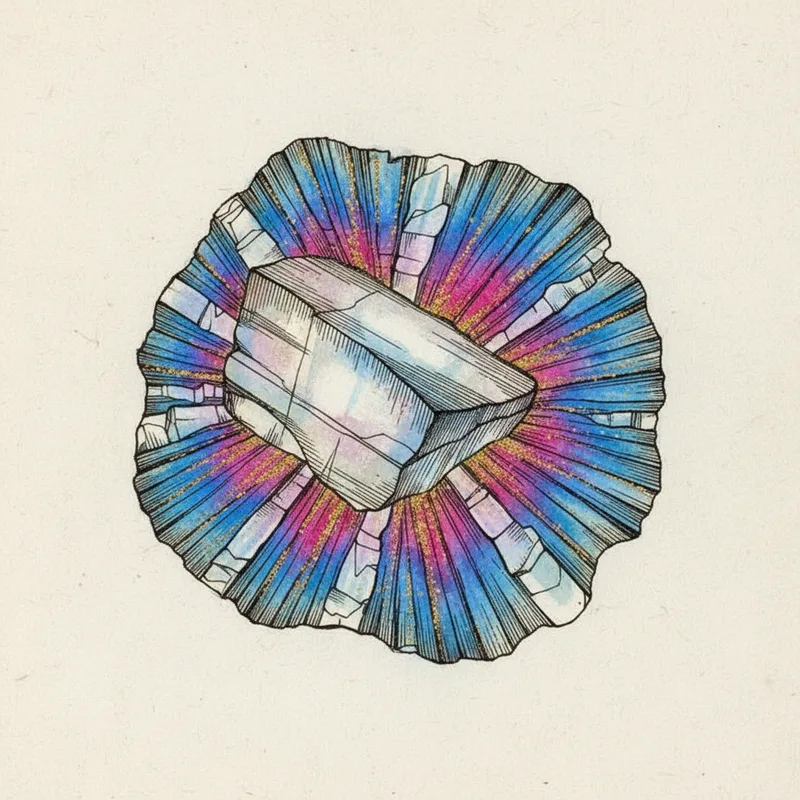
Rainbow Moonstone
The Labradorite in Disguise
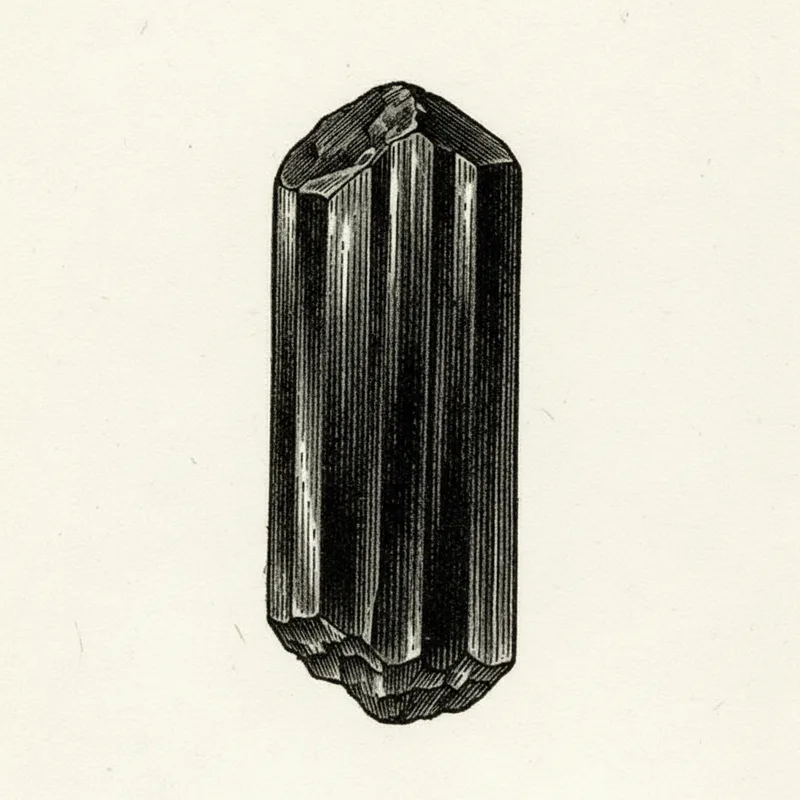
Black Tourmaline
The Shield Stone
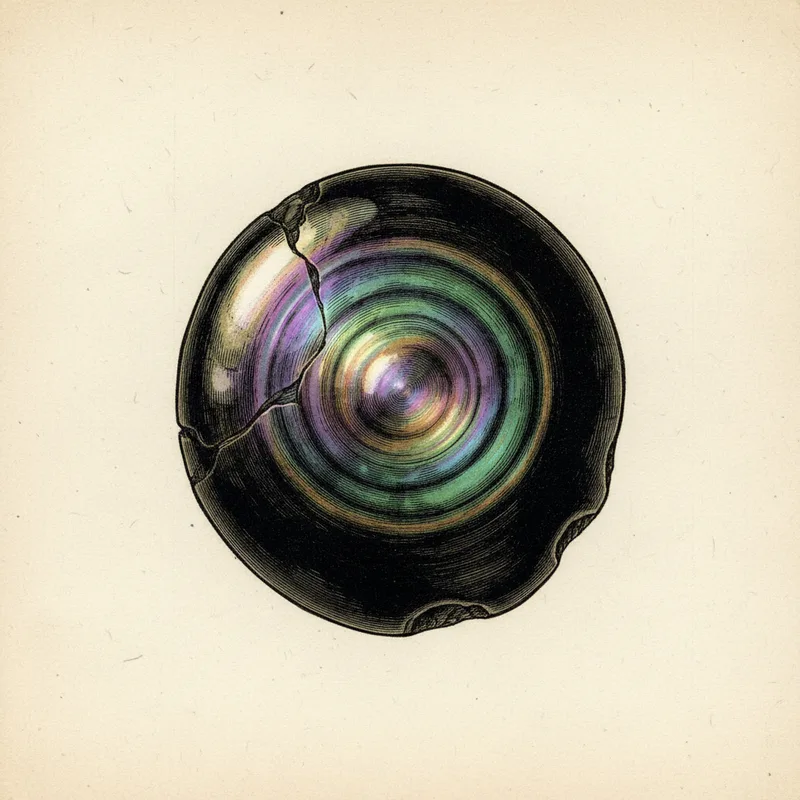
Rainbow Obsidian
The Stone of Light in Darkness

Star Rose Quartz
The Star of the Heart
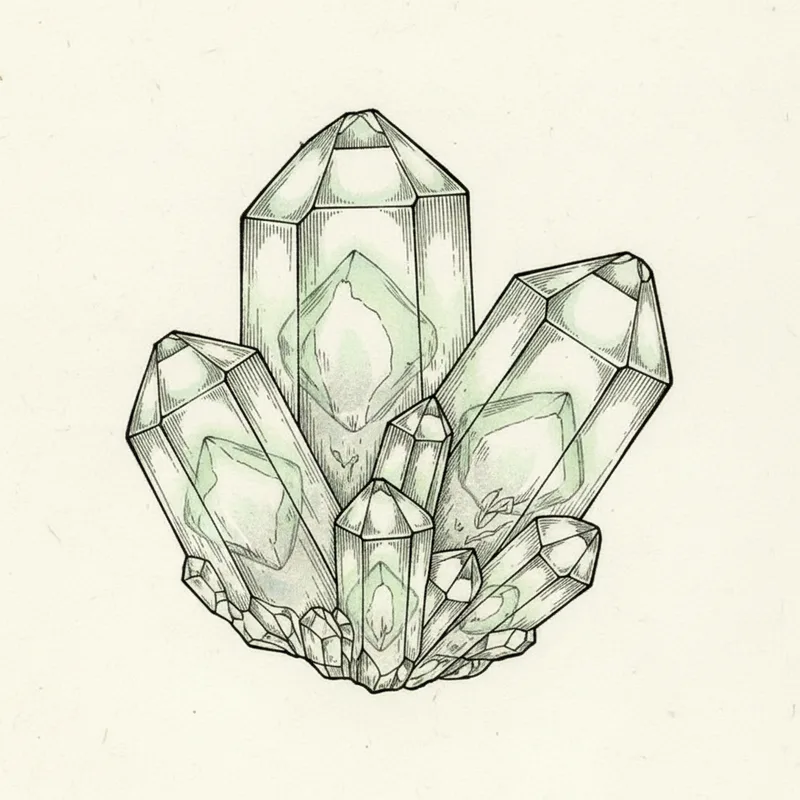
Phantom Quartz
The Ghost Crystal
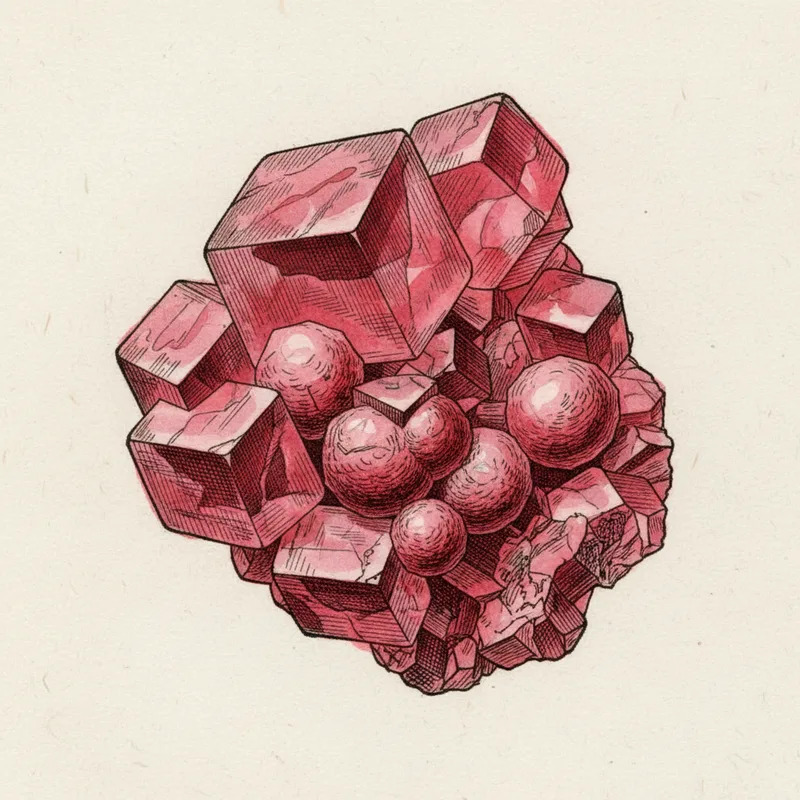
Rhodochrosite
The Rose of the Incas
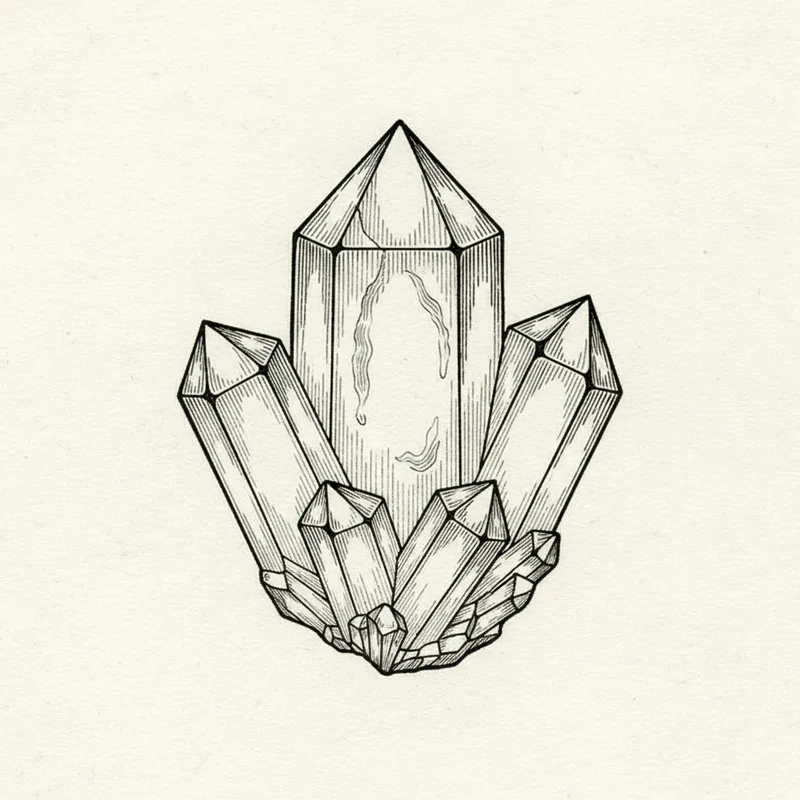
Clear Quartz
The Master Healer
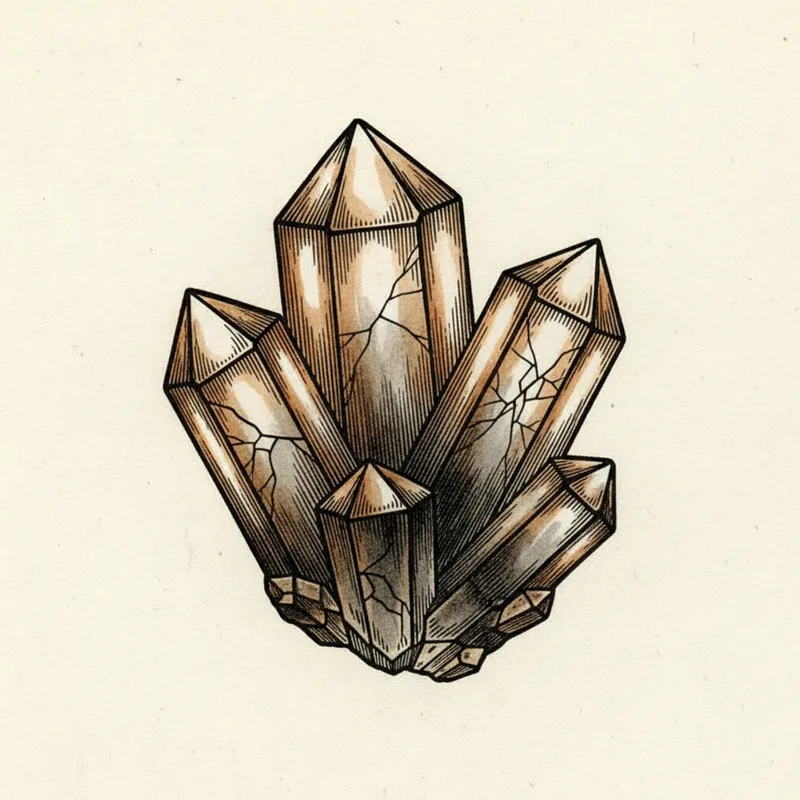
Smoky Quartz
The Grounding Stone
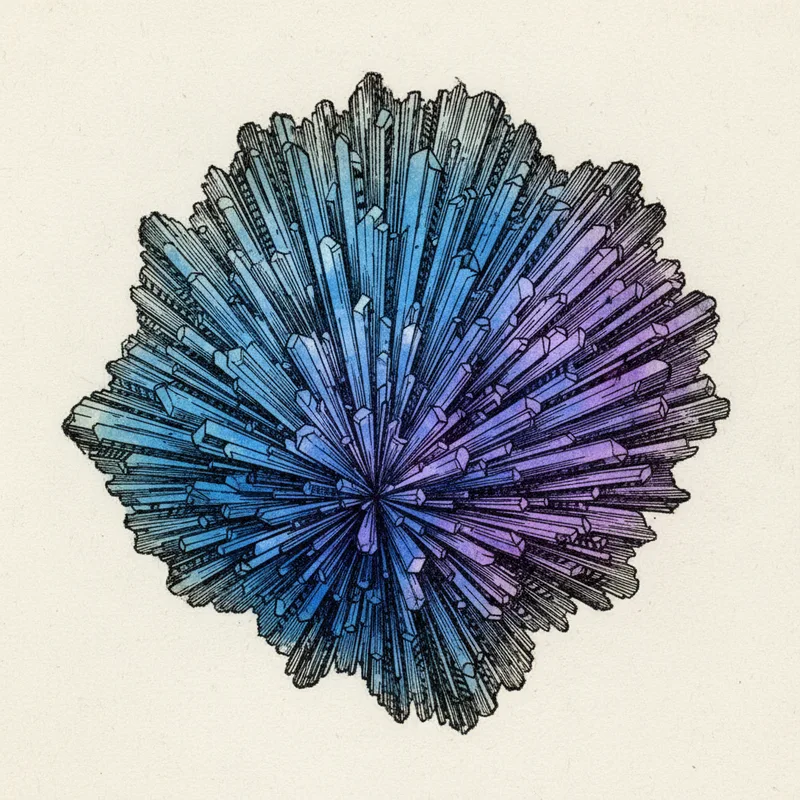
Dumortierite
The Patience Stone
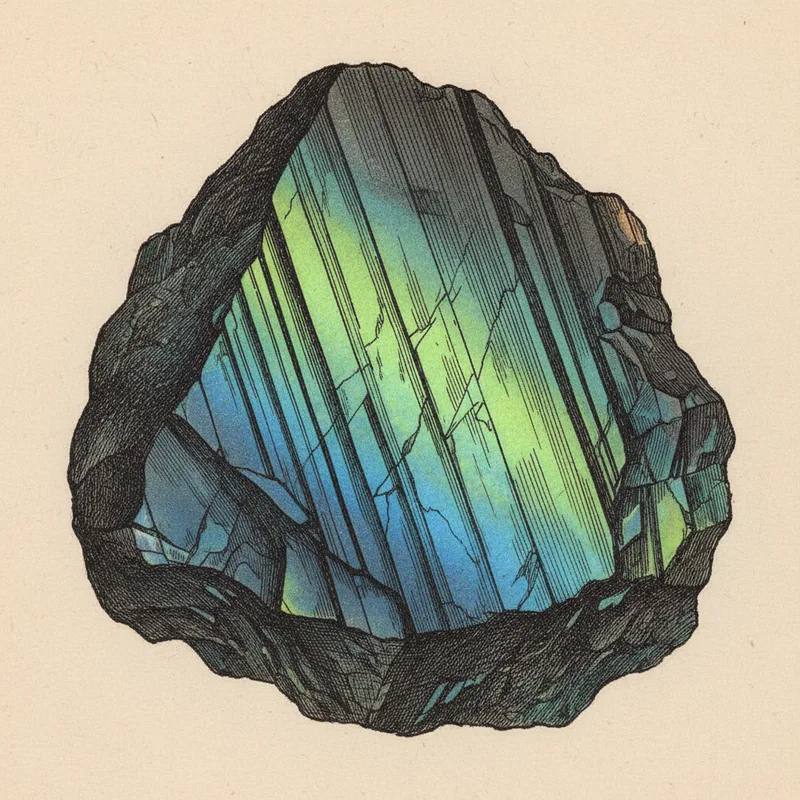
Labradorite
The Stone of Transformation
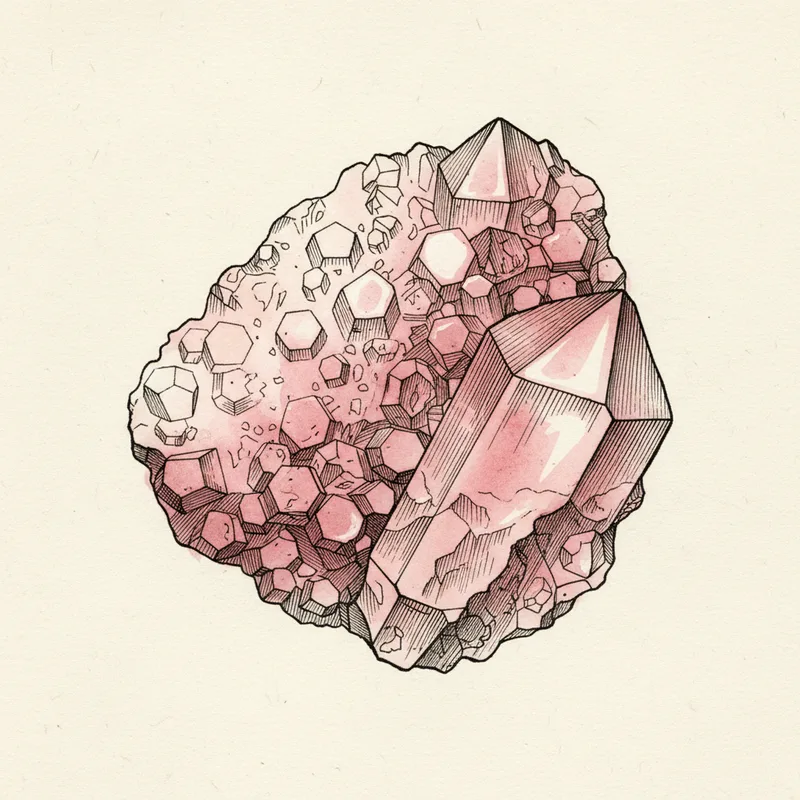
Rose Quartz
The Stone of Unconditional Love
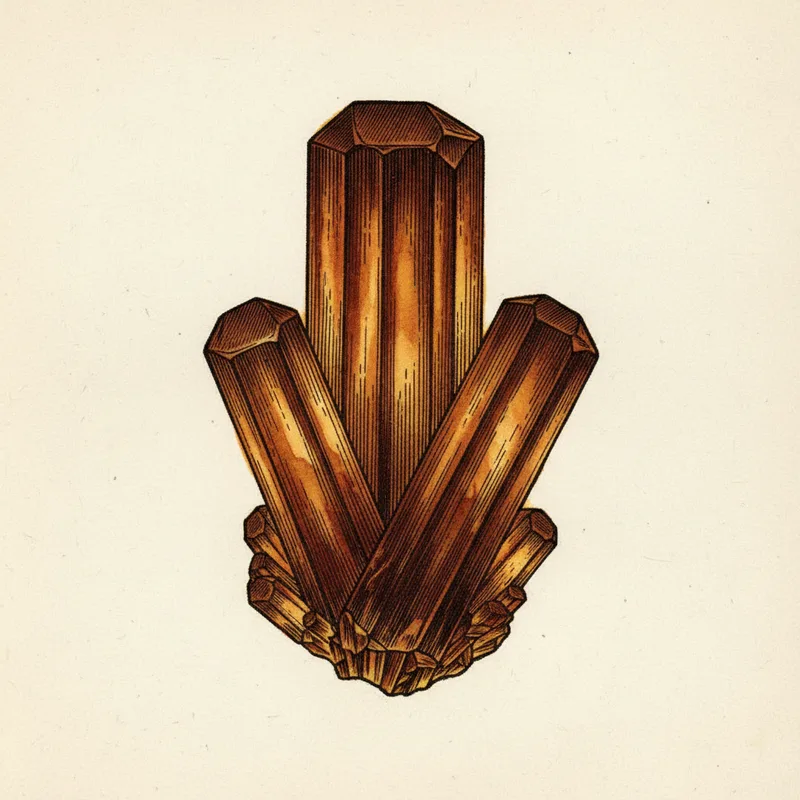
Tourmaline
The Rainbow Stone
Keep Reading
Stay in the loop
From the Almanac
Updates from Crystal Almanac, when there’s something worth sharing.