Toxic Crystals: The Complete Safety Guide
Key Takeaway: The vast majority of crystals are perfectly safe to handle, display, and enjoy. But a small number of commonly collected minerals contain lead, arsenic, mercury, or asbestos fibers, and knowing which ones carry real risks is essential for any serious collector. This guide covers every toxic mineral you're likely to encounter, what makes each one dangerous, and exactly how to handle them safely.
Let's start with the reassuring part. Most crystals are chemically inert silicates and oxides. Your amethyst, rose quartz, clear quartz, agate, and the vast majority of specimens in any crystal shop pose zero chemical risk. You can hold them, carry them in your pocket, sleep with them under your pillow, and display them on every surface in your home without a second thought.
But "most" is doing important work in that sentence. Some minerals contain elements that are genuinely hazardous to human health. Lead, arsenic, mercury, hexavalent chromium, and asbestos fibers all show up in minerals that collectors routinely buy, display, and handle. The crystal community doesn't always communicate these risks clearly. Social media is full of people making gem elixirs with stones that should never touch drinking water, or grinding mineral specimens without respiratory protection.
This isn't about fear. It's about respect for chemistry. The same geological processes that create stunningly beautiful crystals sometimes concentrate elements that the human body really doesn't want. Knowing which minerals carry risk, and following a few simple handling rules, means you can safely collect and enjoy everything from galena to cinnabar without worry.
Lead-Bearing Minerals
Lead is a cumulative neurotoxin. The human body has no use for it, no mechanism to process it efficiently, and it accumulates over time. Lead-bearing minerals are among the most common toxic specimens in collections because many of them are beautiful and relatively affordable.
The risk with lead minerals is primarily through hand-to-mouth transfer. You handle a specimen, the lead sulfide or lead chromate leaves invisible residue on your fingers, and then you eat lunch without washing your hands. Over time, repeated exposure adds up. The solution is simple: wash your hands after handling, and don't let children play with these specimens unsupervised.
Galena (PbS)
Galena is lead sulfide, the most important lead ore on Earth and one of the most recognizable minerals in any collection. Those perfect silver cubes with bright metallic luster are gorgeous on a shelf. But galena is roughly 87% lead by weight. It's dense, heavy, and leaves a dark gray residue on your hands. Handle it, admire it, then wash your hands. That's genuinely all you need to do. Don't grind it, don't let kids put it in their mouths, and don't store it loose in a bag where it can rub against other specimens and create lead dust.
Vanadinite (Pb₅(VO₄)₃Cl)
Vanadinite forms some of the most visually striking crystals in the mineral world. Those bright red-orange hexagonal barrels on a matrix of brown rock are showstoppers. They're also lead vanadate chloride. Each crystal is roughly 73% lead by weight. Vanadinite is strictly a display mineral. Keep it in a case or on a stable shelf where it won't get knocked around (the crystals are also fragile). Wash your hands after handling, and don't touch food before you do.
Wulfenite (PbMoO₄)
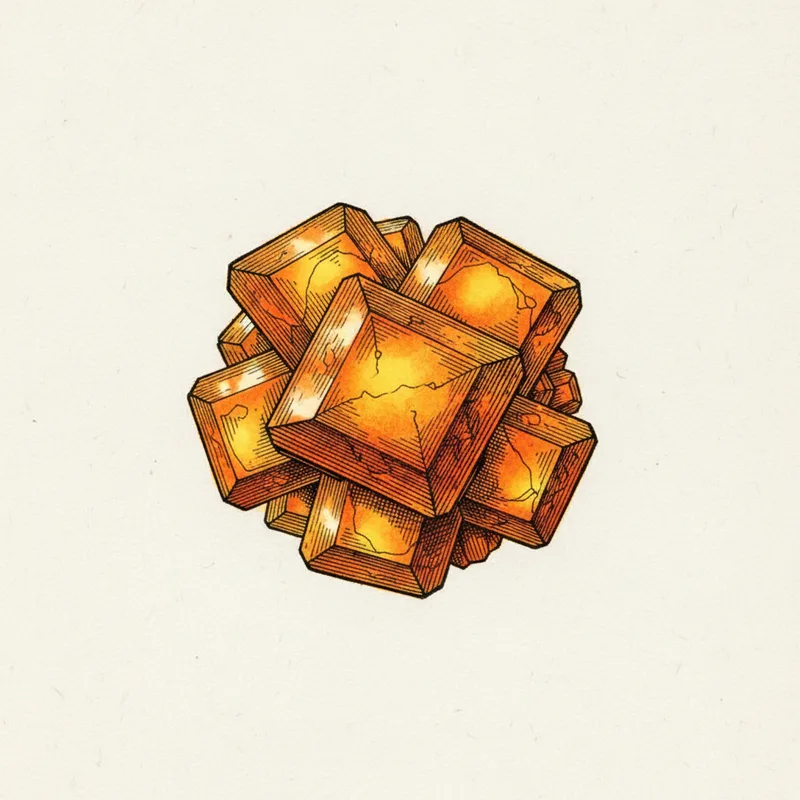
Wulfenite crystals are thin, square, bright orange tablets that look almost impossibly delicate. They're lead molybdate, which means they combine lead toxicity with extreme fragility. This is a mineral that practically demands a display case. The thin tabular crystals chip and shatter easily, potentially creating small toxic fragments. Keep wulfenite behind glass, handle it rarely, and wash your hands when you do.
Crocoite (PbCrO₄)
Crocoite is the double hazard of the mineral world. It's lead chromate, meaning it contains both lead and hexavalent chromium. If that second element sounds familiar, it's the carcinogen from the Erin Brockovich case. Crocoite's long, prismatic, brilliant red-orange crystals from Tasmania are museum-grade specimens, and they should be treated with museum-grade respect. Display only. Sealed case preferred. Wash hands thoroughly after any handling.
Anglesite (PbSO₄)
Anglesite is lead sulfate, which forms when galena weathers and oxidizes. It's softer than galena (Mohs 2.5-3), which means it scratches easily and can produce fine dust. The same handling rules apply: display, don't carry. Wash hands after touching.
Pyromorphite (Pb₅(PO₄)₃Cl)
Pyromorphite forms barrel-shaped hexagonal crystals in gorgeous greens, yellows, and browns. The name means "fire form" because the crystals melt into globules when heated. It's lead phosphate chloride, closely related to vanadinite in structure. Same precautions: wash hands, display only, keep away from children.
Arsenic-Bearing Minerals
Arsenic minerals are in a different risk category than lead minerals. While lead's danger comes from cumulative low-level exposure, several arsenic minerals actively decompose under normal conditions, releasing toxic compounds without you doing anything. Realgar literally falls apart in sunlight. These minerals demand more careful storage and handling than lead specimens.
Realgar (As₄S₄)
Realgar is arsenic sulfide, and it has a genuinely alarming property: it decomposes when exposed to light. Ultraviolet radiation breaks the As₄S₄ molecules apart, and the crystals slowly crumble into a yellow-orange powder called pararealgar. That powder is toxic arsenic sulfide dust. If you own realgar specimens, store them in a dark container or a closed cabinet. Don't display them on a sunny windowsill. Don't handle them frequently. And if you see a realgar specimen that's started to go powdery and crumbly on the surface, that's active decomposition happening. Handle it with gloves and store it sealed.
Orpiment (As₂S₃)
Orpiment is arsenic trisulfide, and it's frequently found alongside realgar because they form in the same hydrothermal environments. The golden-yellow foliated crystals are beautiful but carry the same arsenic risk. Orpiment is also relatively soft (Mohs 1.5-2) and cleaves easily into thin flexible sheets, which means handling creates fine particles. Like realgar, orpiment is photosensitive and should be stored away from direct light. Wash hands carefully after handling, and don't eat, drink, or touch your face before you do.
Arsenopyrite (FeAsS)
Arsenopyrite is the most common arsenic-bearing mineral in the Earth's crust. It looks similar to pyrite but has a slightly more silver-white color and forms monoclinic crystals rather than cubic ones. The classic identification trick: strike arsenopyrite with a hammer and it releases a garlic smell. That smell is arsenic gas. So maybe don't strike it with a hammer. Arsenopyrite in a collection is safe enough with basic precautions. It's harder than realgar and orpiment (Mohs 5.5-6) and doesn't decompose in light, making it the most forgiving of the arsenic minerals. Still, wash your hands after handling.
Proustite (Ag₃AsS₃)
Proustite is called "ruby silver" for its deep red translucent crystals. It's silver arsenic sulfide, and it shares realgar's photosensitivity. Exposure to light darkens proustite from brilliant red to dull black over time, which is a chemical decomposition that can release arsenic compounds. Store proustite specimens in the dark. Many serious collectors keep proustite wrapped in tissue inside closed boxes and only bring them out briefly for viewing.
Adamite (Zn₂AsO₄OH)
Adamite is zinc arsenate hydroxide. The bright yellow-green fluorescent crystals are popular among collectors, especially the gorgeous specimens from Mapimi, Mexico. The arsenic content means the usual precautions apply: wash hands after handling, don't ingest, and don't create dust.
Bumblebee Jasper
Bumblebee jasper deserves special attention because its name includes "jasper," which sounds safe and familiar. It isn't jasper at all. It's a volcanic fumarole deposit from Indonesia that contains realgar, orpiment, and sulfur in a calcium carbonate matrix. Those vivid yellow and orange bands? That's arsenic sulfide. Bumblebee jasper is safe enough to handle briefly with dry hands followed by handwashing. But it should absolutely never be used in crystal elixirs, gem water, or any preparation that involves soaking it in liquid. The arsenic compounds are slightly soluble. This is one of the most commonly misused toxic minerals in the crystal wellness community.
Mercury Minerals
Cinnabar (HgS)
Cinnabar is mercury sulfide, and it is the most toxic commonly collected mineral. Mercury is a potent neurotoxin that can be absorbed through the skin and inhaled as vapor. Cinnabar's brilliant red crystals have fascinated humans for thousands of years. The Chinese used it for lacquerware, the Romans mined it for vermillion pigment (and the miners died young), and it remains a popular collector mineral today.
In its solid crystal form, cinnabar is relatively stable. The mercury is locked into the sulfide structure and doesn't readily vaporize at room temperature. The danger comes from anything that breaks that structure. Never heat cinnabar. Never grind it. Never cut or polish it without professional equipment and ventilation. And never, under any circumstances, lick it or put it in water you intend to drink.
Handle cinnabar specimens briefly, wash your hands, and store them in a sealed container or display case. If a cinnabar specimen is crumbly, dusty, or disaggregating, consider whether it's worth keeping. Mercury sulfide dust is not something you want circulating in your home.
Asbestos-Form Minerals
Asbestos isn't a single mineral. It's a commercial term for several different minerals that happen to form microscopic fibrous crystals. When these fibers become airborne and are inhaled, they lodge in lung tissue permanently and can cause mesothelioma and other serious diseases decades later. The danger is specifically from breathing the fibers. Intact, undisturbed specimens in a display case pose essentially zero risk.
Chrysotile
Chrysotile is serpentine asbestos, the most common form. It forms silky, fibrous masses of white to green mineral that feel almost like cloth. The key rule is simple: never disturb the fibers. Don't brush, scrape, sand, or saw chrysotile. Don't handle specimens that are shedding loose fibers. If you collect chrysotile, keep it in a sealed container or behind glass. A solid, compact chrysotile specimen sitting undisturbed in a mineral cabinet is not a hazard. A crumbly one shedding fibers into the air is.
Tremolite (Fibrous Form)
Tremolite is an amphibole mineral that occurs in several forms. The prismatic crystal form is a perfectly normal, non-hazardous collector mineral. The problem is specifically the fibrous form, which is classified as amphibole asbestos. Fibrous tremolite looks like silky, hair-like fibers, very different from the blocky prismatic crystals. If you can't tell whether a tremolite specimen is fibrous, treat it as if it is. Same rules: don't disturb fibers, don't breathe dust, seal it in a case.
Tiger's Eye: The Nuanced One
Tiger's eye causes more unnecessary panic than probably any other mineral on this list. Here's the story: tiger's eye started its geological life as crocidolite, which is blue amphibole asbestos. Over millions of years, silica (quartz) replaced the crocidolite fibers through a process called pseudomorphosis. The fibrous structure is preserved, which creates tiger's eye's signature chatoyancy (the shimmer), but the actual asbestos material is gone. It's been replaced by quartz.
Is tiger's eye safe? Yes. The crocidolite has been fully replaced by SiO₂. You would need to grind tiger's eye into extremely fine dust and inhale it to encounter any risk, and at that point, inhaling any fine mineral dust (including pure quartz) is hazardous. Handling, wearing, and displaying tiger's eye is completely safe. You don't need to worry about your tiger's eye bracelet.
Copper Minerals (Mild Hazard)
Copper minerals represent a much lower tier of risk than the categories above. Copper is actually an essential trace element for human health. But in concentrated mineral form, copper compounds can cause gastrointestinal distress if ingested and can irritate skin with prolonged wet contact.
Malachite (Cu₂CO₃(OH)₂)
Malachite is copper carbonate hydroxide, and it's one of the most popular green minerals in the world. Those swirling green bands are instantly recognizable. Malachite is perfectly safe to handle with dry hands. The concern is with dust (don't cut or polish malachite without a respirator) and with ingestion. Malachite should never be used to make gem elixirs or crystal water. The copper compounds are slightly soluble, and drinking copper-infused water can cause nausea, vomiting, and in larger quantities, liver and kidney damage.
Chrysocolla and Azurite
Chrysocolla and azurite carry the same copper caution as malachite. Both are copper-bearing minerals that are safe for normal handling and display. Both should be kept out of drinking water and away from food preparation surfaces. Both produce hazardous dust when cut or ground. Handle them, enjoy them, wash your hands. That's the extent of the precaution needed.
Crystal Elixir Safety
This section matters. Crystal elixirs, gem water, crystal-infused water, whatever you call them, the practice of soaking crystals in drinking water is widespread in the crystal wellness community. And it's the single most dangerous intersection of crystal collecting and health.
The indirect method (placing crystals around but not in the water, or using a glass barrier between the crystal and water) eliminates chemical risk entirely. If you want the ritual without the risk, this is your answer.
If you insist on direct-contact gem water, here is the short list of minerals that are chemically safe to submerge in drinking water:
Safe for gem elixirs (direct contact):
- Clear quartz (SiO₂, completely inert)
- Amethyst (SiO₂ with trace iron, inert)
- Rose quartz (SiO₂ with trace titanium/manganese, inert)
- Agate (SiO₂, microcrystalline quartz, inert)
- Smoky quartz (SiO₂, inert)
- Citrine (SiO₂, inert)
- Jasper (SiO₂, inert)
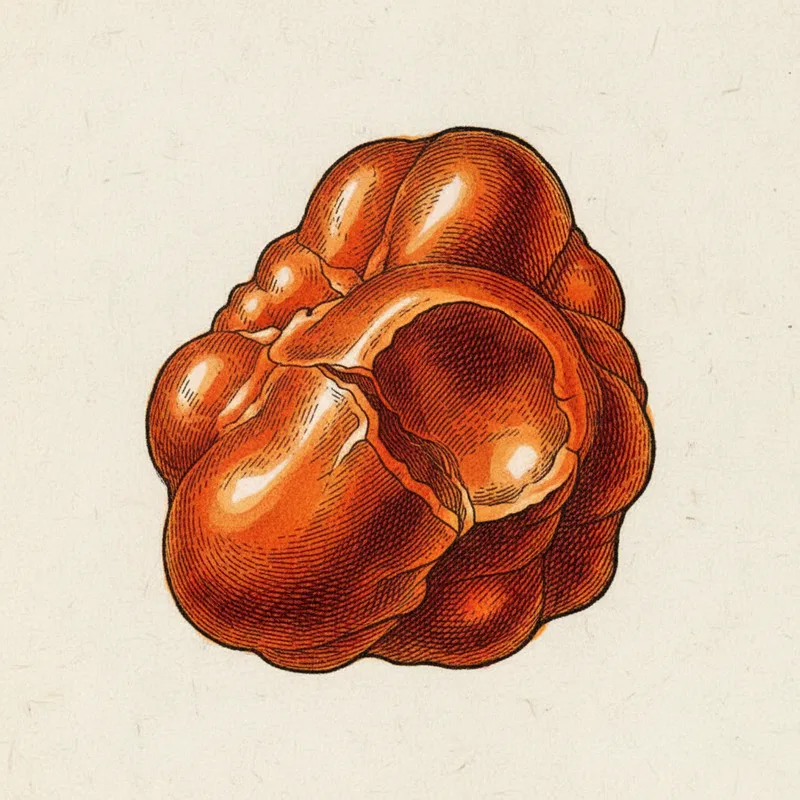
- Carnelian (SiO₂, inert)
Notice a pattern? They're all quartz varieties. SiO₂ is one of the most chemically stable compounds on Earth. It doesn't dissolve in water, doesn't react with water, and doesn't leach anything into water.
Never put these in drinking water:
- Malachite (copper)
- Azurite (copper)
- Chrysocolla (copper)
- Galena (lead)
- Cinnabar (mercury)
- Realgar or orpiment (arsenic)
- Bumblebee jasper (arsenic)
- Vanadinite (lead)
- Crocoite (lead + chromium)
- Any mineral from this guide
- Any mineral you can't positively identify
- Selenite, halite, or any water-soluble mineral
- Pyrite or marcasite (produces sulfuric acid in water over time)
When in doubt, don't soak it. Use the indirect method. Check our crystal care guide for water-safety information on every mineral.
Safe Handling Rules
Here's your summary. Print it, screenshot it, stick it on your mineral cabinet.
1. Wash your hands. After handling any lead, arsenic, or mercury mineral, wash your hands with soap and water before touching food, drinks, your face, or children. This single habit eliminates the majority of risk from toxic mineral collecting.
2. Don't lick your specimens. This sounds obvious, but the "taste test" is an old-school geological identification method (halite tastes salty, for instance). Never tongue-test any mineral you haven't confirmed is non-toxic.
3. Don't grind, cut, or polish without protection. Any mineral dust is bad for your lungs, but toxic mineral dust is dramatically worse. If you're cutting or polishing any mineral, use a respirator rated for mineral dust (N95 minimum), work wet to suppress airborne particles, and work in a well-ventilated area. For toxic minerals specifically, consider whether the project is worth the risk.
4. Keep toxic specimens away from children and pets. Young children put everything in their mouths. A bright orange piece of crocoite or wulfenite looks like candy to a toddler. Store toxic specimens in closed cases, on high shelves, or behind glass.
5. Store reactive specimens properly. Realgar goes in the dark. Cinnabar goes in a sealed container. Chrysotile stays in a case where fibers can't become airborne. Proper storage isn't just about preservation. It's about safety.
6. Label your specimens. Every toxic mineral in your collection should be labeled with its name and a note that it's toxic. If someone else handles your collection (a houseguest, a family member, a future buyer), they need to know what they're dealing with.
7. Don't panic. Brief handling of any mineral on this list, followed by handwashing, poses negligible risk. The dangers come from chronic exposure, ingestion, inhalation of dust, or creating gem elixirs with toxic stones. Informed, respectful handling is all you need.
The Bottom Line
Collecting toxic minerals is not dangerous. Collecting toxic minerals without knowing they're toxic is dangerous. The difference is information, and now you have it.
Every mineral on this list can be safely collected, displayed, and enjoyed with basic precautions. Wash your hands, store reactive specimens properly, never make gem water with anything you're not certain about, and keep toxic specimens away from small children. That's genuinely all it takes.
The mineral world is full of extraordinary chemistry. Some of the most beautiful specimens in existence contain elements that will make you sick if you're careless with them. But careful isn't afraid. It's informed. And informed collectors can build stunning collections that include everything from galena cubes to cinnabar crystals without a single health concern.
For detailed water safety, sun sensitivity, and care instructions for every mineral, visit our crystal care guide.
Crystals in This Article
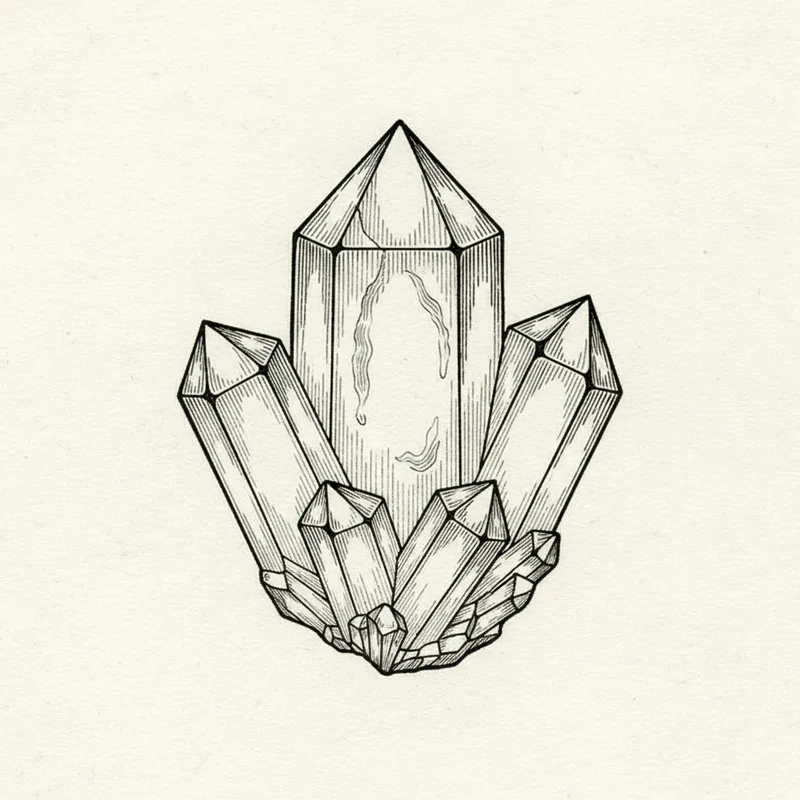
Clear Quartz
The Master Healer
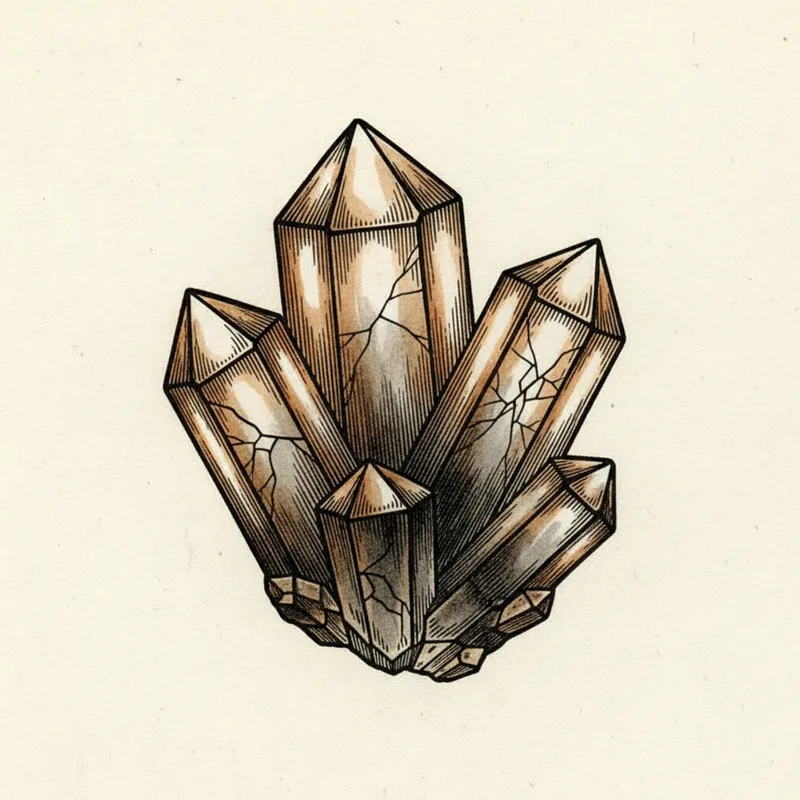
Smoky Quartz
The Grounding Stone
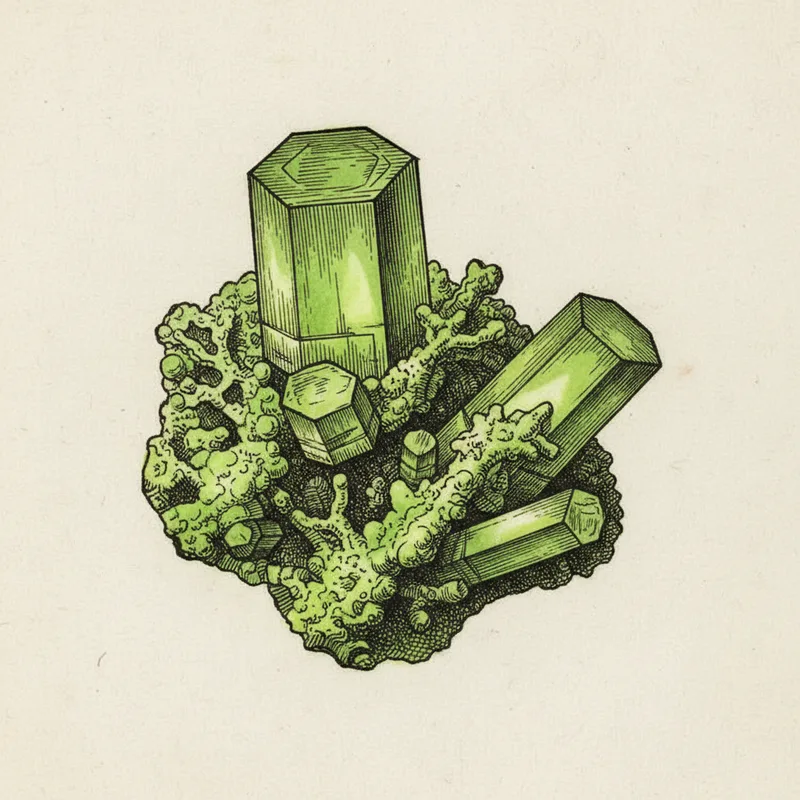
Pyromorphite
The Victory Stone

Arsenopyrite
The Arsenic Iron Sulfide
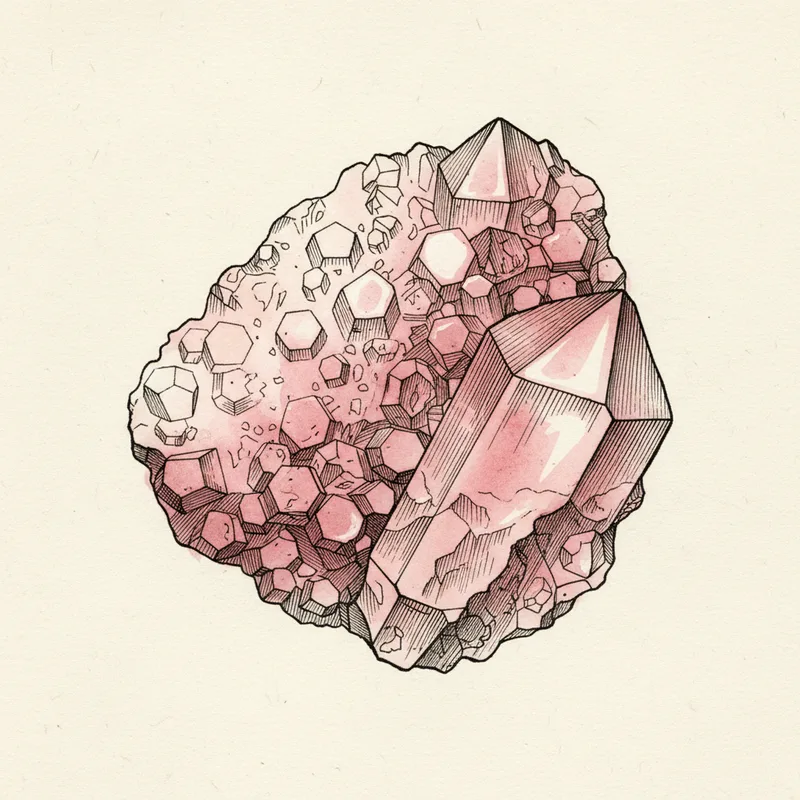
Rose Quartz
The Stone of Unconditional Love
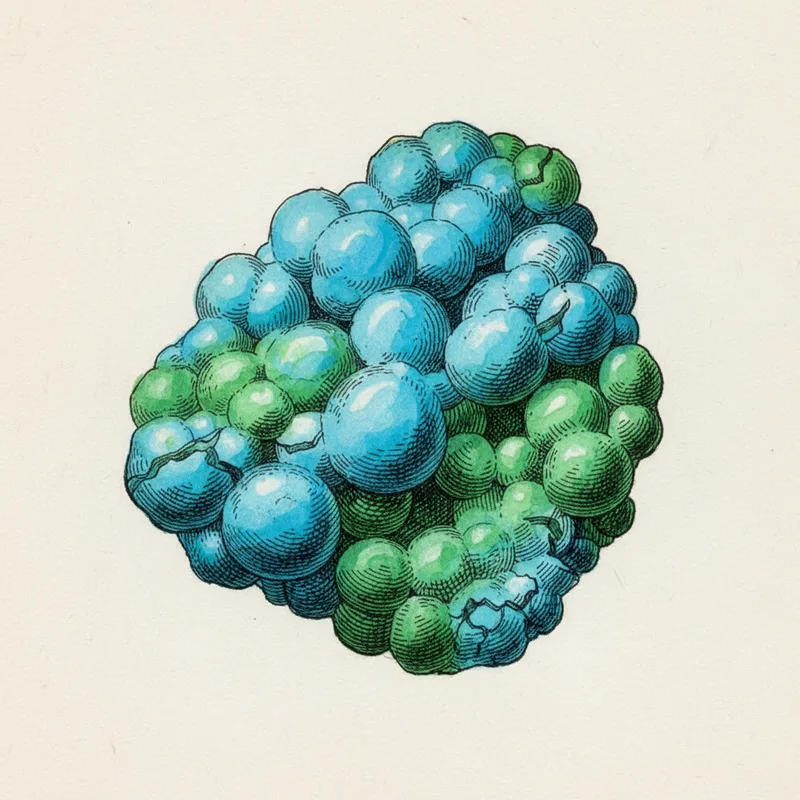
Chrysocolla
The Teaching Stone
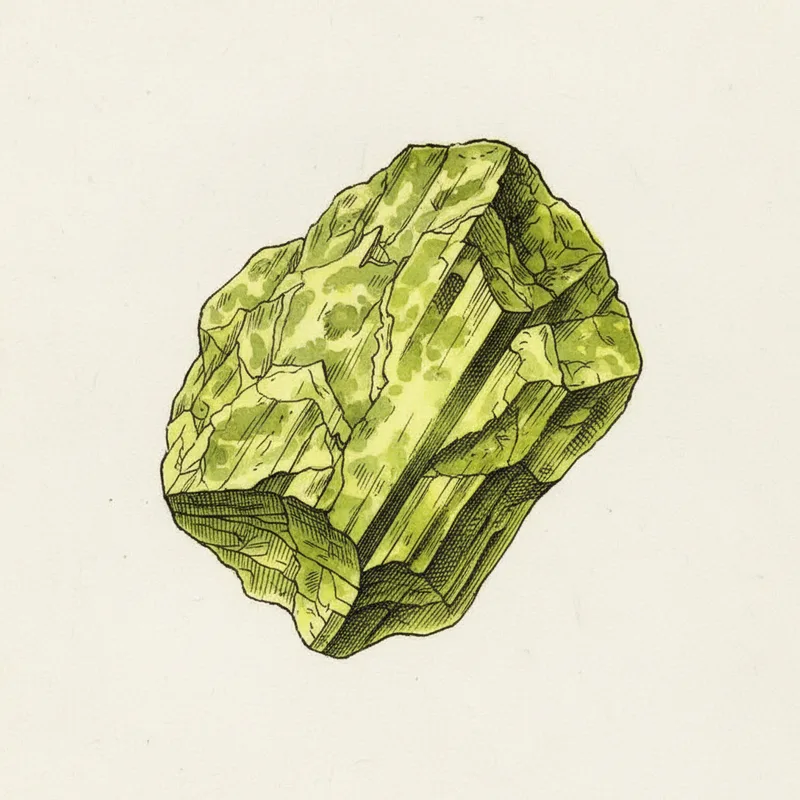
Serpentine
The Serpent Stone
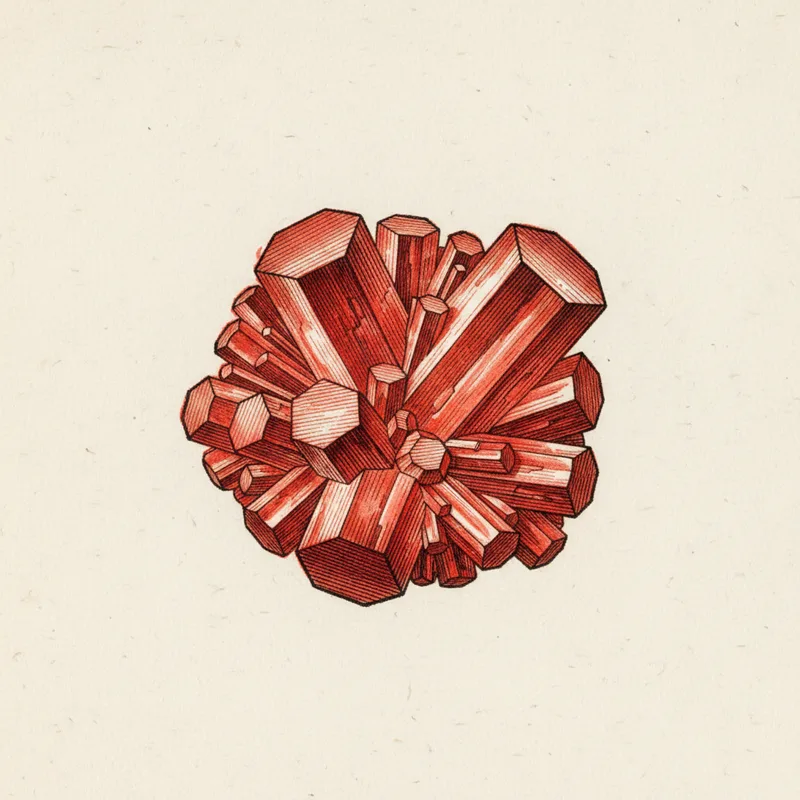
Vanadinite
The Endurance Stone

Chrysotile
The Serpentine Fiber
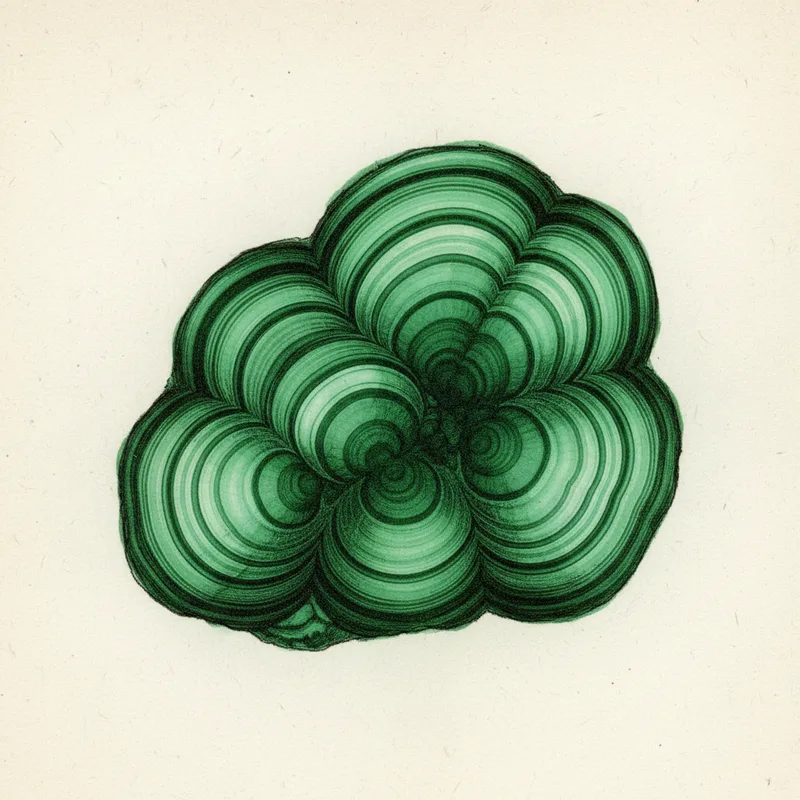
Malachite
The Stone of Transformation
Carnelian
The Singer's Stone
Wulfenite
The Painter's Stone