The 10 Most Expensive Crystals in the World
The most expensive crystal on Earth is not a diamond. Top-grade red beryl routinely trades above $100,000 per carat, musgravite often clears $50,000, and a single bangle of Imperial jadeite has sold for more than $30 million at auction. Rarity, gem quality, and color drive prices far more than name recognition. This list ranks ten crystals by their realistic per-carat ceilings for fine material, with the geology that explains why.
Quick Reference
| Crystal | Top Price / Carat | Why So Expensive |
|---|---|---|
| Red Beryl | $100,000+ | One gem-grade locality on Earth (Wah Wah, Utah) |
| Musgravite | $35,000 to $100,000+ | Only a handful of faceted gems exist |
| Painite | $10,000 to $100,000+ | Known from a few crystals for 50 years |
| Taaffeite | $10,000 to $50,000+ | Often misidentified as spinel until cut |
| Jeremejevite | $5,000 to $8,000+ | Tiny Namibian blue crystals, rarely over 1 ct |
| Benitoite | $5,000 to $15,000+ | One commercial mine ever (San Benito, CA) |
| Grandidierite | $10,000 to $30,000+ | Under 1% of mined material is gem grade |
| Paraiba Tourmaline | $20,000 to $100,000+ | Copper neon blue, original Brazilian source depleted |
| Alexandrite | $30,000 to $50,000+ | True color change, Russian Ural stones are iconic |
| Imperial Jadeite | Millions per piece | Translucent emerald color, Myanmar, cultural demand |
Why some crystals cost more than others
Three things set a gem's price: geological rarity, gem-grade rarity, and market dynamics. Geological rarity is how uncommon the mineral itself is on Earth. Red beryl, musgravite, and painite are rare minerals in the literal sense, known from a few localities, never in large quantities. That alone is not enough. Fluorite is common and still sells, while many rare minerals stay unknown because no one cuts them.
Gem-grade rarity is the sharper filter. Most of what comes out of the ground for any given species is opaque, fractured, too small to facet, or the wrong color. Grandidierite is a good example. The mineral is scarce, but the fraction of mined material that yields a clean, transparent faceted stone is under one percent. Benitoite has exactly one productive mine in history, and most of what came out of it was sub-millimeter. The crystals you can actually put in a ring are a tiny slice of a tiny slice.
Market dynamics do the rest. Jewelry demand sets a floor (emerald, ruby, sapphire), collectors set a ceiling (red diamond, musgravite), and treatment disclosure changes everything. An untreated Burmese ruby is worth many times the same stone if heated. A jadeite bangle with natural color and no polymer impregnation is worth a hundred times one that has been treated. At the top of the market, lab reports from AGL, GIA, or Gubelin are part of the price.
1. Red Beryl
Fine red beryl can exceed $100,000 per carat, with faceted stones over one carat reaching auction prices that rival red diamond. The chemistry is Be₃Al₂Si₆O₁₈ with manganese as the color chromophore, in the hexagonal crystal system, the same structure as emerald and aquamarine. Manganese replacing aluminum gives it the distinctive raspberry to crimson red.
The rarity is geological. Red beryl forms only where beryllium-rich rhyolite has been altered by gas-rich fluids under very specific conditions. The Ruby-Violet claim in Utah's Wah Wah Mountains is effectively the only source of gem-quality material on Earth. Some specimens come from the Thomas Range and New Mexico, but those crystals are usually too small or too included to facet. A faceted red beryl over two carats is one of the rarer objects in the gem trade.
Famous specimens are held by collectors and museums. The Smithsonian has several. The market has tried to normalize the trade name "bixbite" but most dealers stick with red beryl to avoid confusion with bixbyite, a different mineral entirely. See the red beryl profile for identification details and a complete chemistry breakdown.
2. Musgravite
Gem-quality musgravite trades between $35,000 and $100,000 per carat, with top stones setting records at the higher end. It is trigonal, with the complex formula Be(Mg,Fe,Zn)₂Al₆O₁₂, and sits in the taaffeite group. For decades after it was first described from the Musgrave Ranges of Australia in 1967, fewer than ten faceted gems existed in the world.
Supply has improved slightly with finds in Greenland, Sri Lanka, Madagascar, and Tanzania, but "improved" is relative. The total number of clean faceted stones ever cut is still measured in the hundreds. Most material is too small or too included for faceting. Color ranges from greenish grey through violet, and the most prized stones have a soft purplish hue.
Musgravite is also one of the most frequently misidentified gems on the market. Without proper testing, it is easy to confuse with grey spinel or taaffeite, and more than one stone has been sold as taaffeite only to later test as the more valuable musgravite. At these prices, a full lab report is standard. See the musgravite profile.
3. Painite
Fine gem-quality painite reaches $10,000 to $100,000+ per carat, depending on size and clarity. Its chemistry is CaZrBAl₉O₁₈, a calcium zirconium borate aluminate in the hexagonal system. When it was described in the 1950s, the mineral was known from a single crystal recovered from Myanmar. For decades afterward, the global inventory was three confirmed crystals. Guinness listed it as the rarest mineral on Earth.
That changed in the early 2000s when new deposits were located in Myanmar's Mogok region, and gem-quality material, mostly dark red to brownish red, began appearing on the market. A painite under one carat now sells for a few thousand dollars, and clean stones over three carats can still command tens of thousands per carat. But even now, the total number of cut painites in the world is small, and most show strong pleochroism visible to the naked eye.
Collectors prize painite precisely because it was unattainable for so long. Owning a clean faceted stone means owning one of a few thousand in existence. See the painite profile for more on its identification and history.
4. Taaffeite
Fine taaffeite reaches $10,000 to $35,000 per carat, with exceptional large stones above $50,000. The chemistry is BeMgAl₄O₈, hexagonal, and it has the distinction of being the only gem first identified from a faceted stone rather than a rough crystal. In 1945, gemologist Richard Taaffe noticed that a pale mauve stone he had bought as spinel showed double refraction, which spinel does not. That single cut stone turned out to be a new mineral.
Most taaffeite comes from Sri Lanka and Myanmar, with smaller finds in Tanzania. Colors range from colorless through pale mauve, pink, and greenish tints. Pink and violet stones are the most sought after. The overlap with spinel and musgravite in appearance and chemistry means most historical "taaffeite" transactions have been quietly reclassified after modern testing.
The gem remains scarce because it forms only in highly specific metamorphic environments where beryllium meets magnesium and aluminum under the right conditions. Most production is under two carats. See the taaffeite profile.
5. Jeremejevite
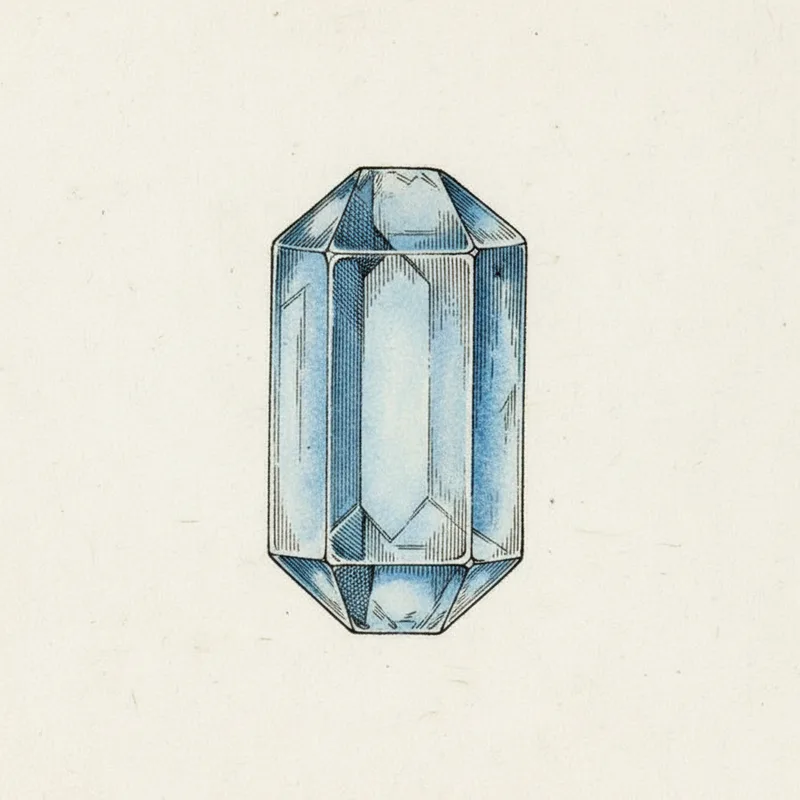
Top-grade jeremejevite, especially the vivid blue Namibian material, reaches $5,000 to $8,000 per carat for stones over three carats, with exceptional specimens higher. The chemistry is Al₆B₅O₁₅(F,OH)₃, hexagonal, and the mineral was first described from Siberia's Mount Soktui in 1883. Most crystals are small, often under a carat when faceted.
The gem-quality blue stones come almost exclusively from the Erongo and Cape Cross regions of Namibia. Siberian and Tajik material tends to be colorless or pale yellow and less commercially interesting. The Namibian blues owe their color to iron, and the best examples rival aquamarine in saturation while being hundreds of times rarer. Most faceted jeremejevite is under one carat because the crystals simply do not grow large in clean, transparent form.
Jeremejevite is one of those gems that most jewelers have never handled. It is a collector's stone more than a jewelry stone, though ring-mounted examples do exist. See the jeremejevite profile.
6. Benitoite
Fine benitoite sells for $5,000 to $15,000+ per carat for clean stones over one carat. The chemistry is BaTiSi₃O₉, hexagonal, and it is the state gem of California. It has been found as a curiosity in a handful of other localities, but the only commercially productive source was the Dallas Gem Mine in San Benito County, California, which closed to commercial operations in 2005.
The mine produced some of the most dispersive blue gems known. Benitoite's dispersion, the fire that separates white light into its spectral colors, is higher than diamond's. Under proper lighting, a well-cut benitoite flashes with more color play than most diamonds of the same size. The challenge is that most rough was small, heavily included, and only a fraction yielded clean stones over one carat. A benitoite over two carats is a museum-grade object.
Since commercial mining ended, existing inventory has slowly been absorbed by collectors. Prices have roughly doubled in the decade since the mine closed. See the benitoite profile.
7. Grandidierite
Fine transparent grandidierite reaches $10,000 to $30,000+ per carat, with translucent material much cheaper. The chemistry is (Mg,Fe²⁺)Al₃(BO₃)(SiO₄)O₂, orthorhombic, and the color ranges from bluish green to teal. The mineral was first found in Madagascar in 1902 and named for French explorer Alfred Grandidier.
Until around 2014, almost all grandidierite on the market was translucent, not transparent. Then a new pocket was hit in southern Madagascar that produced genuinely gem-quality transparent stones for the first time. Even so, under one percent of mined material is clean enough to facet. The overwhelming majority of rough stays in the translucent to opaque cabochon grade.
Sri Lanka has produced a very small amount of transparent material, but Madagascar remains effectively the only source of faceting rough. Because the transparent supply is so recent, price history is short and trending upward as more jewelers discover the gem. See the grandidierite profile.
8. Paraiba Tourmaline
Fine Paraiba tourmaline reaches $20,000 to $100,000+ per carat for top Brazilian stones. The chemistry is Na(Li,Al)₃Al₆(BO₃)₃Si₆O₁₈(OH)₄ with copper and manganese trace elements, in the trigonal system. The copper is what separates Paraiba from every other tourmaline: it produces an electric neon blue to green that no other gem, natural or synthetic, reproduces at saturation.
The original deposit in Brazil's Paraiba state was discovered in 1989 by Heitor Dimas Barbosa after five years of searching. The material that came out was immediately recognized as something new. Within a decade, the primary pocket was effectively exhausted. Similar copper-bearing tourmalines were later found in Nigeria and Mozambique, and the gem trade has fought for years over whether they can also be called Paraiba. Current practice is to label them Paraiba-type and note the origin.
Brazilian Paraiba with strong neon color and good clarity over one carat is among the most expensive tourmaline material ever sold. Origin matters: Brazilian stones typically sell at multiples of comparable Mozambican material. See the Paraiba tourmaline profile.
9. Alexandrite
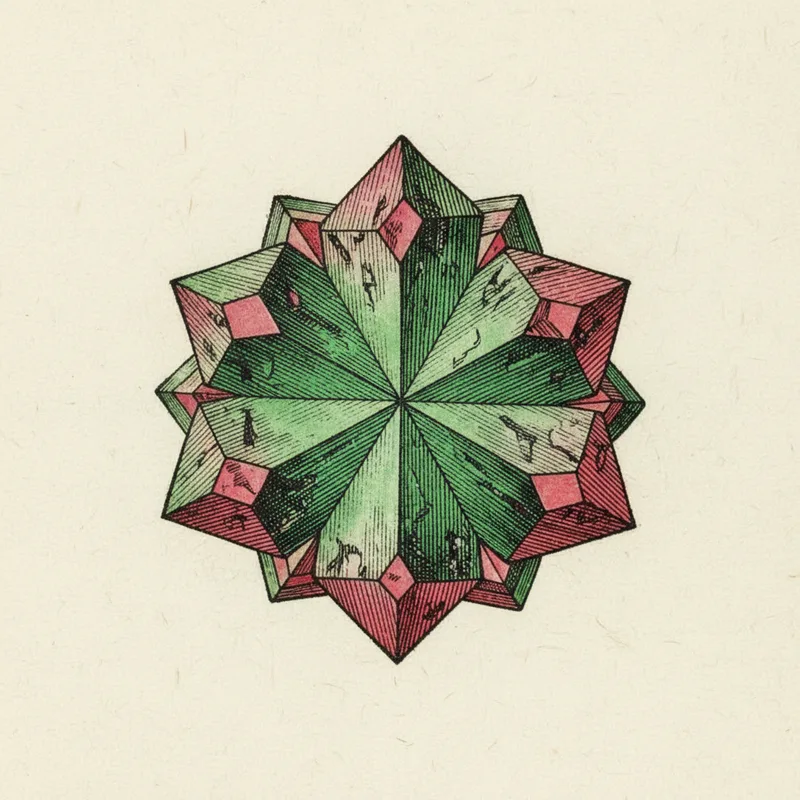
Top Russian alexandrite reaches $30,000 to $50,000+ per carat, with exceptional stones higher. The chemistry is BeAl₂O₄ with chromium, orthorhombic, a chromium-bearing variety of chrysoberyl. What makes it extraordinary is color change: under daylight or cool fluorescent light, a fine alexandrite looks bluish green to teal. Under incandescent or warm light, the same stone shifts to raspberry red to purple. The effect is caused by the way chromium absorbs light across the visible spectrum.
The original source was the Ural Mountains in Russia, discovered in the 1830s and named for Tsar Alexander II. Ural stones are the benchmark and still command the highest prices because the color change is the cleanest and most dramatic. Later finds in Brazil, Sri Lanka, Tanzania, and India have added supply, but most of this material shows weaker color change, and experienced gemologists can often tell the origin from the color behavior alone.
Russian material is essentially no longer mined. Stones on the market are mostly from old stock or from the newer African and Brazilian sources. See the alexandrite profile.
10. Imperial Jadeite
Fine Imperial jadeite does not price easily per carat because it is usually sold by the piece, but translations to per-carat ceilings run into the millions. The chemistry is NaAlSi₂O₆, monoclinic, and "Imperial" refers specifically to top-grade jadeite with a translucent, emerald-green color, ideally from Myanmar's Kachin state.
In 2014, the Hutton-Mdivani necklace, 27 jadeite beads, sold at Sotheby's for $27.4 million. The Cartier Doubly Fortunate jadeite bangle sold for over $30 million. Auction records for Imperial jadeite rival or exceed those of top diamonds, rubies, and emeralds. The demand is driven by centuries of Chinese cultural significance combined with the sheer rarity of material with natural untreated color and high translucency.
Most jadeite on the commercial market is treated. A-jade is untreated, B-jade has been polymer-impregnated, and C-jade has been dyed. Only A-jade at the top quality tier reaches Imperial prices. The vast majority of green jadeite sold at tourist markets is B-jade or C-jade and worth a tiny fraction of Imperial. See the jade profile.
Why famous gems did not all make the list
The big four, diamond, ruby, sapphire, and emerald, can match or exceed every number on this list for truly exceptional specimens. Fancy red diamonds have traded above $1 million per carat. Pigeon's blood Burmese rubies have cleared $1 million per carat at auction. Kashmir sapphires and Colombian Muzo emeralds do the same. The reason these gems are not ranked above is that their typical ceilings for fine commercial stones are lower, and the market for each species is vastly larger. A one-carat Burmese ruby of commercial quality is not especially rare. A one-carat clean red beryl is.
The point of this list is per-carat ceilings for named rare gem species where the entire species is scarce. Red beryl and musgravite beat diamond and ruby not because an exceptional diamond cannot be more valuable than an exceptional red beryl, but because almost every gem-grade red beryl is exceptional by virtue of existing at all.
Specimens vs gemstones: a different market
Everything above is about gemstones, crystals valued for their beauty when cut and polished. The mineral specimen market operates on different principles. Here, the value drivers are crystal perfection, size, aesthetic display quality, and locality.
A perfectly formed pyrite cube from Navajun, Spain, a mineral that sells for pennies per pound in industrial grades, can command $3,000+ as a display specimen because the crystal geometry is extraordinary. A large, cabinet-quality rhodochrosite from Colorado's Sweet Home Mine has sold for over $300,000 because nothing else on Earth looks like it. Fine silver "wires" from Kongsberg, Norway, and azurite "Singing Stone" specimens from Tsumeb have changed hands for similar numbers.
In the specimen world, beauty and rarity still matter, but provenance (where exactly the crystal came from) and condition (is it damage-free?) carry enormous weight. Two visually similar pyrite cubes from the same mine can differ tenfold in price based on termination quality and matrix presentation. If you are a collector rather than a jewelry buyer, specimen-grade material is often a better use of money than faceted rough.
A note on buying
Most online content about "the world's most expensive crystal" is marketing or clickbait. Real prices at this tier require real lab reports. For any stone over a few thousand dollars per carat, an AGL, GIA, or Gubelin report that identifies the species, discloses treatments, and confirms origin where possible is not optional. Dealers who resist providing lab reports are telling you something.
Treatment disclosure is where most buyers get burned. Heated versus unheated ruby, oil versus no oil emerald, A-jade versus B-jade, natural versus irradiated tourmaline. The same stone can differ tenfold in value based on treatment status. Lab-created alternatives exist for some species (synthetic alexandrite, lab-grown diamond, flux-grown red beryl), and they are legitimate products when disclosed. The problem is only when they are sold as natural.
For identification help at the consumer level, see our guide to spotting fakes. At the price points in this article, rely on labs, not on your own eye.
Rarity is not spiritual value
Price and metaphysical significance are two different things. Some of the most culturally important stones, rose quartz, clear quartz, amethyst, carnelian, have been used by humans for thousands of years and cost cents to dollars per gram. Their value to the people who use them does not scale with market price. If you are new to working with stones and the numbers above felt overwhelming, start with accessible species. See our beginners guide for a practical starting point.
FAQ
What is the most expensive crystal I can buy for under $100? A nice specimen of natural citrine, a small Herkimer diamond, or a good-quality labradorite with strong flash. These offer real geological interest and beauty without breaking the bank. For under $500, you can get into decent alexandrite color-change material from Brazil (not Russian tier, but real alexandrite) and small pieces of faceted tsavorite or tanzanite.
Are expensive crystals always better? Not at all. Price reflects rarity and market demand, not inherent superiority. A $5 pyrite cube is no less geologically remarkable than a $50,000 alexandrite. Collect what fascinates you, not what impresses others.
Why do crystals from certain locations cost more? Locality affects price because geological conditions vary, and certain locations produce material with unique characteristics found nowhere else. Kashmir sapphires command premiums over identical-looking stones from other localities. It is also about supply: a depleted mine means fixed supply and rising prices. Provenance is the crystal world's equivalent of terroir in wine.
Can I find valuable crystals myself? Possible but unlikely. Recreational rockhounding can turn up quartz, garnet, and agate, and public gem mines in North Carolina (emeralds) and Montana (sapphires) offer fee-dig experiences. Finding something truly valuable requires geological knowledge, access to productive localities, and a lot of luck.
Are synthetic crystals worth buying? Synthetic gems (lab-created ruby, sapphire, emerald, alexandrite) are chemically identical to natural stones at a fraction of the price. They are excellent for jewelry. They have essentially no resale value in the collector market, where natural origin is what drives demand. Disclosure is the ethical line: sold as synthetic, they are a legitimate product; sold as natural, fraud.
Crystals in This Article
- Red Beryl - raspberry red beryl, essentially one locality worldwide
- Musgravite - trigonal oxide, first described 1967 Australia
- Painite - calcium zirconium borate, Myanmar
- Taaffeite - first gem identified from a cut stone
- Jeremejevite - Namibian blue borate, under 1 ct typical
- Benitoite - barium titanium silicate, San Benito California
- Grandidierite - teal Madagascar gem, under 1% gem grade
- Paraiba Tourmaline - copper neon blue, Brazil origin premium
- Alexandrite - chromium color change, Ural Mountains benchmark
- Jade (Imperial Jadeite) - translucent emerald green, $30M+ auction records
- Diamond - fancy colors reach comparable prices
- Ruby - pigeon's blood Burmese at the top tier
- Sapphire - Kashmir and padparadscha at the top tier
- Emerald - untreated Colombian at the top tier
Crystals in This Article
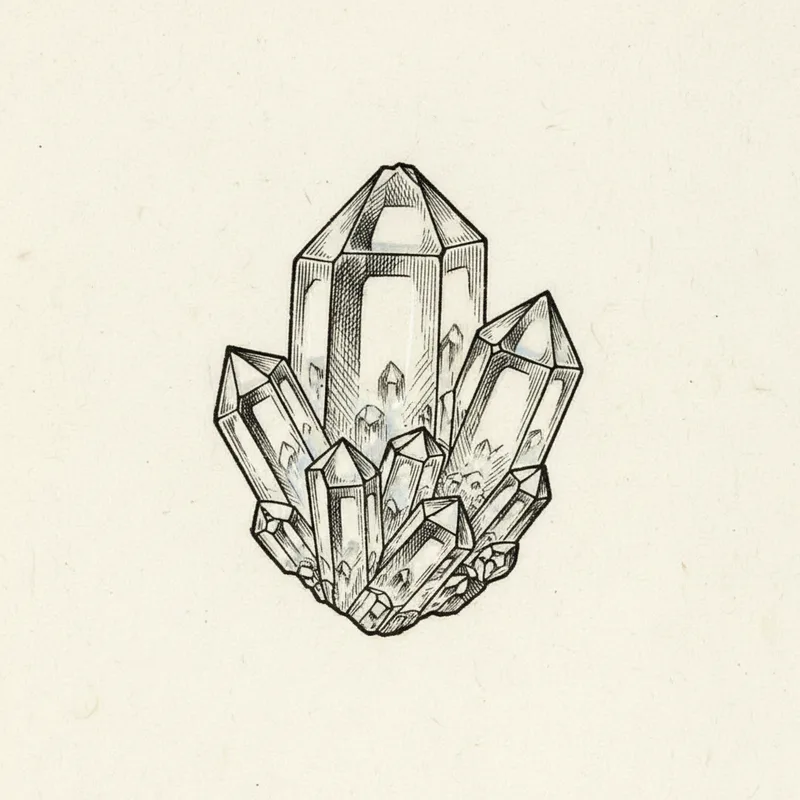
Herkimer Diamond
The Attunement Stone
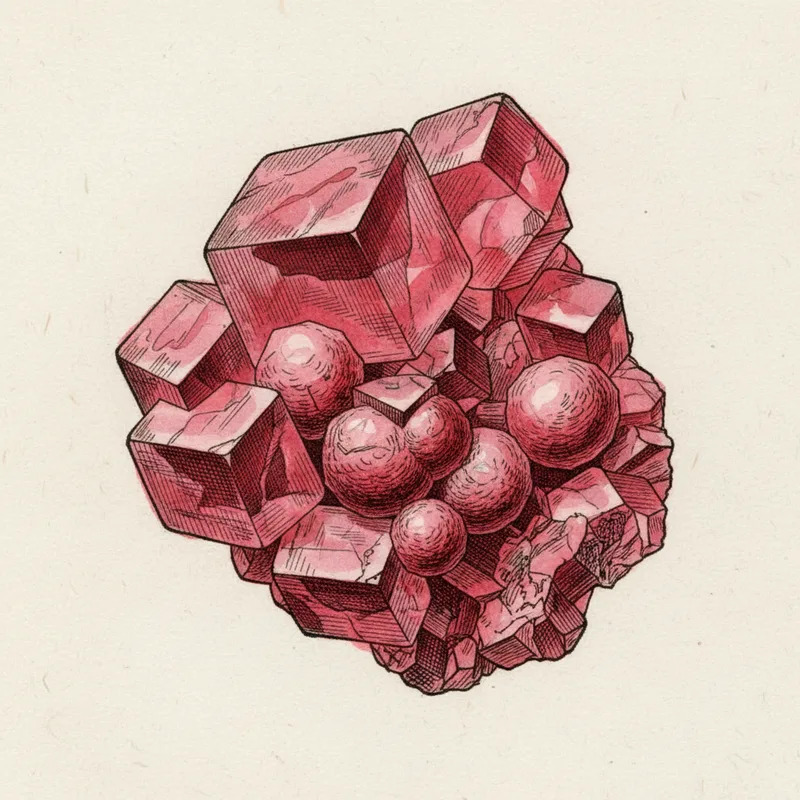
Rhodochrosite
The Rose of the Incas
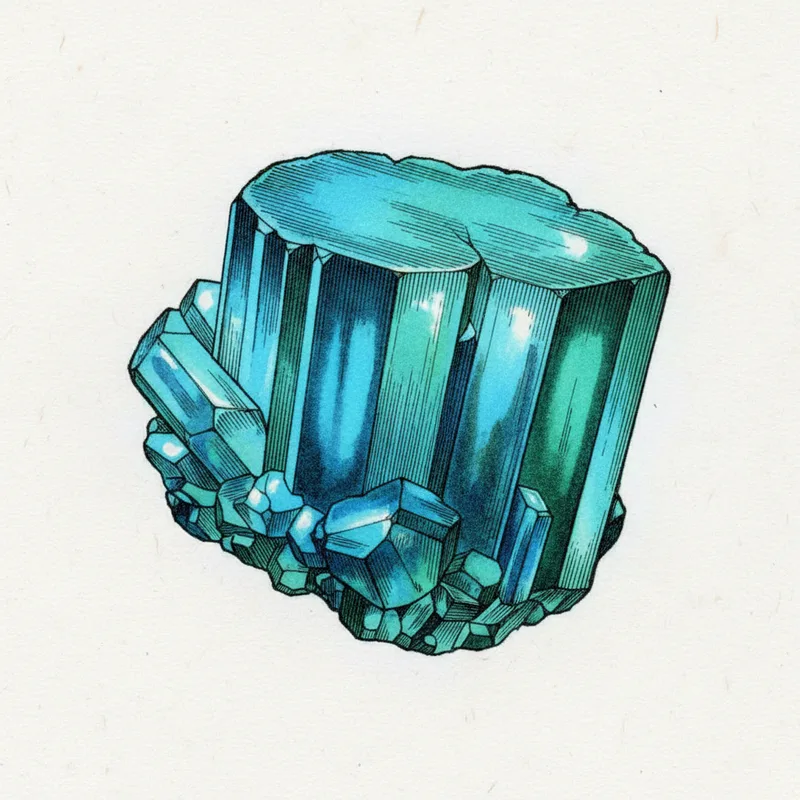
Grandidierite
The Madagascar Blue-Green
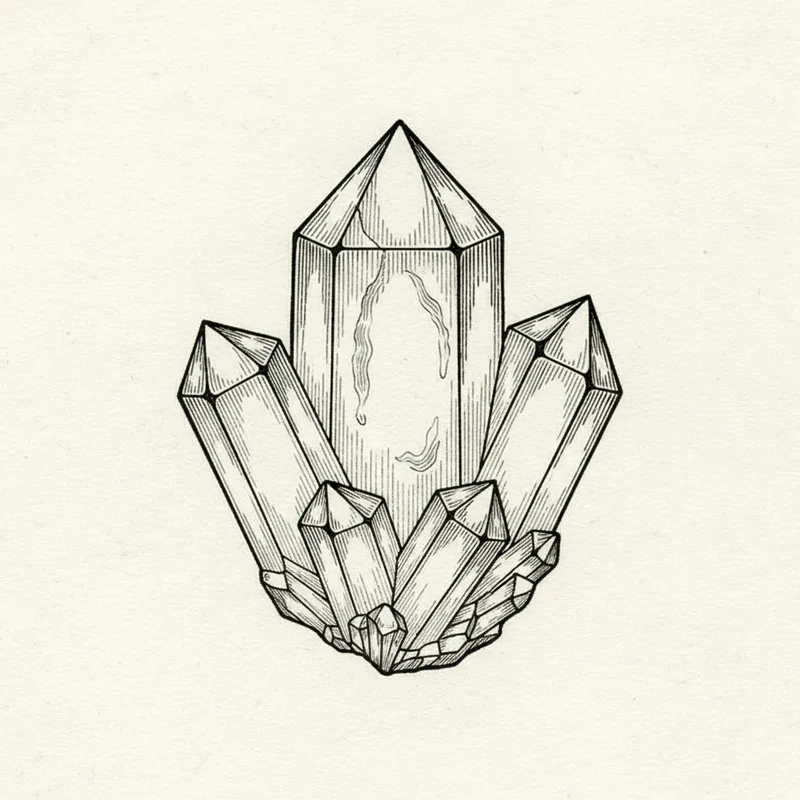
Clear Quartz
The Master Healer
Padparadscha
The Lotus-Blossom Sapphire
Jeremejevite
One of Earth's Rarest Gems
Labradorite
The Stone of Transformation
Rose Quartz
The Stone of Unconditional Love
Alexandrite
The Chameleon Gem
Chrysoberyl
The Cat's Eye Gem
Tourmaline
The Rainbow Stone
Aquamarine
The Sailor's Gem
Keep Reading
Stay in the loop
From the Almanac
Updates from Crystal Almanac, when there’s something worth sharing.