Emerald: The May Birthstone, Properties, and How It's Used
Key Takeaway: Emerald is the May birthstone and one of the four traditional "precious" gemstones alongside diamond, ruby, and sapphire. It is a variety of beryl colored green by chromium and vanadium, mined mostly in Colombia, Zambia, and Brazil. Nearly all commercial emerald is oil-treated (this is standard, not a scam). It pairs naturally with Taurus season and makes a timely Mother's Day gift on May 10.
Emerald has been out of fashion cyclically and come back every single time. Cleopatra wore it. Mughal emperors carved entire signet stones from Colombian crystals. Elizabeth Taylor's collection included a Bulgari emerald brooch that sold at auction for $6.5 million. In the current jewelry market, emerald has had a quiet resurgence alongside other colored gemstones, driven in part by people looking beyond diamond.
If you were born in May, emerald is your birthstone, and the timing of this post is not an accident. May birthstone month overlaps neatly with Taurus season (April 20 through May 20), which is a Venus-ruled window where green and heart-centered stones show up in a lot of practices. Mother's Day in the US falls on May 10. If you are shopping for one of those occasions, this is a decent window to understand what you are actually buying.
Here is what emerald is, where it comes from, how people use it, and what to watch for when you are spending real money.
What Emerald Actually Is
Emerald is a variety of the mineral beryl, with the chemical formula Be₃Al₂Si₆O₁₈. Pure beryl is colorless. Trace amounts of chromium, and sometimes vanadium, turn it into emerald. Iron impurities shift the color toward blue-green (more typical of Zambian material) or a more yellow-green. The purest, most saturated green, the color people associate with the word "emerald" itself, comes from chromium-rich deposits in Colombia.
Beryl is a hexagonal crystal, and emerald crystals form long six-sided prisms with flat terminations. In ideal conditions, a single crystal can grow to weighty specimen size. The famous Bahia Emerald from Brazil, an uncut crystal mass that became the subject of a long legal dispute, weighs 752 pounds. Most commercial emerald, obviously, is much smaller.
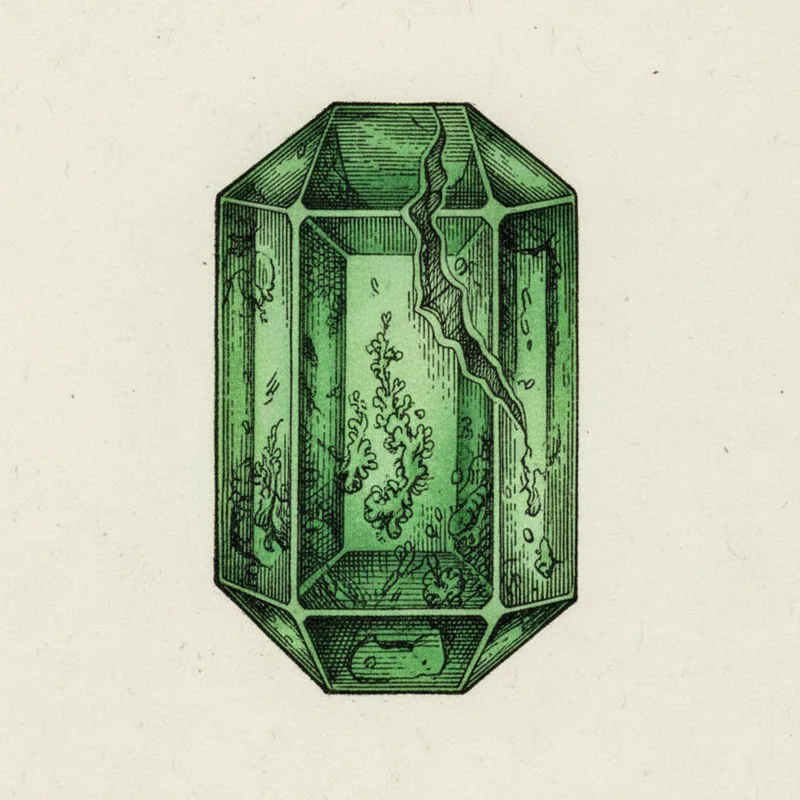
The hardness is 7.5 on the Mohs scale, which is hard enough for daily wear in most jewelry contexts but not as durable as sapphire or ruby (both 9) or diamond (10). The more significant practical issue with emerald is the internal fracturing. Emerald forms under geologically turbulent conditions, and almost every natural emerald contains internal fractures, feathers, and fluid inclusions. The trade calls these "jardin," French for garden, and a good jardin can actually enhance a stone's character and help confirm its natural origin.
Natural vs Lab-Created vs Simulant
This is where most consumer confusion happens, and where most online sellers are either clear or deceptive. Let's separate the three categories.
Natural emerald is mined from the earth. Most natural emerald is oil-treated (more on that below). Untreated natural emerald of investment quality is the rarest and most expensive category.
Lab-created emerald (synthetic emerald) is real emerald, chemically identical to the mined version, grown in a laboratory using hydrothermal or flux-growth techniques. Gilson, Chatham, and Biron are well-known labs. Lab-grown emeralds typically have fewer inclusions and better clarity than natural stones, and they cost a fraction of the price. They are the honest middle ground if you want the look and chemistry of emerald without gem-industry pricing.
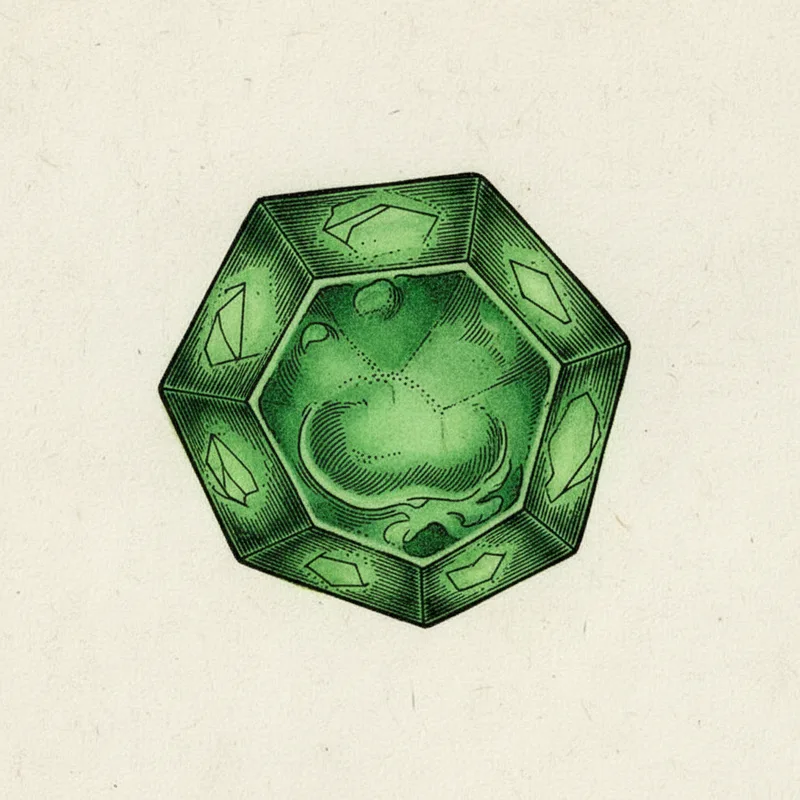
Simulants are stones that look like emerald but are not chemically emerald. Green glass, green cubic zirconia, green garnet (particularly tsavorite), and green tourmaline are all sometimes sold as emerald look-alikes. A stone sold as "emerald" that costs $30 for a large faceted piece is almost certainly a simulant, not actual emerald of any kind. Green glass is the most common.
How to tell: Under 10x magnification, natural emerald shows angular crystalline inclusions, three-phase inclusions (gas, liquid, and solid trapped together), and "jardin" features that look like feathery internal gardens. Glass shows round gas bubbles and curved flow lines. Lab emerald shows distinctive curved or wavy growth patterns from the synthesis process. A reputable jeweler can identify each category under a loupe.
The Oil Treatment Question
Nearly every commercial emerald you see in a jewelry case has been oil-treated. This is the single most important piece of information for a first-time emerald buyer.
Because emerald forms with internal fractures, light scatters at those fracture planes and makes the stone appear cloudier or less transparent than it could be. To improve clarity, stones are soaked in colorless oil (traditionally cedarwood oil) or a resin equivalent. The oil fills the surface-reaching fractures, reduces light scatter, and significantly improves how the stone looks.
This treatment has been practiced for millennia. It is disclosed in every major gemological grading system (GIA, AGL, Gübelin) as "F1 minor," "F2 moderate," or "F3 significant" enhancement. It is not considered a scam. It is considered standard for the gem.
The practical consequences:
- Oil can dry out over time, particularly in low-humidity environments or after exposure to heat, ultrasonic cleaning, or harsh chemicals. A stone that looked vivid five years ago might look cloudier today. Reputable jewelers offer re-oiling services.
- Untreated emerald (the rare top tier) is priced at a significant premium, often 2-3x the treated price at equivalent color and clarity, because the internal clarity of an untreated stone is inherently better.
- Resin-filled emerald (as opposed to oil-filled) is more stable long-term but harder to re-treat if damaged. Disclosure practices vary here and it is worth asking specifically.
What to ask when buying: "Is this stone treated? If so, what treatment?" A good jeweler will answer immediately. If the answer is evasive, consider walking.
Where Emerald Comes From
Colombia is the historical gold standard. The Muzo and Chivor mines, both active since pre-Columbian times, produce the deep pure green that defines the word "emerald" for most people. Colombian stones often contain three-phase inclusions (gas, liquid, and salt crystal) that are diagnostic of the origin. These are the most expensive emeralds per carat at equivalent quality.
Zambia is the largest modern producer by volume, primarily from the Kagem Mine. Zambian emeralds lean slightly bluer and more iron-rich than Colombian, with a clean saturated green that many buyers prefer. Pricing is lower than Colombian at equivalent grade.
Brazil (Minas Gerais, Bahia) produces a wide range of quality, from commercial-grade to fine gems. Brazilian emerald tends to be more included and slightly yellower than Colombian material, but exceptional stones do appear.
Ethiopia has emerged over the past decade as a newer source of good quality material. The deposits are still being characterized but early production has impressed the trade.
Other sources include Russia (Ural Mountains), Zimbabwe, Pakistan, and Afghanistan, each with distinct characteristics.
Price Expectations
Emerald pricing varies dramatically based on color saturation, clarity, size, and origin. Here is a rough orientation.
- Rough emerald specimens and emerald-in-matrix for rock collectors: $20-150 for a decent piece
- Small faceted lab-created emerald (under 1 carat): $30-150 per carat
- Commercial natural emerald (1-2 carats, treated, included): $300-1,500 per carat
- Fine natural emerald (good color, moderate clarity, 1-2 carats): $2,000-8,000 per carat
- Top-grade Colombian Muzo emerald (vivid green, good clarity, 2+ carats): $15,000-50,000 per carat
- Exceptional museum-grade stones: six and seven figures per carat
For context, at the top end, emerald can actually exceed diamond pricing per carat. Diamond is the default assumption for most jewelry shoppers, but top-tier colored gemstones, including emerald, ruby, and Paraíba tourmaline, have historically outperformed diamond at investment quality.
Traditional Properties
Emerald carries one of the longest symbolic histories of any gemstone, which is partly why the associations are so layered.
Heart chakra. In contemporary crystal practice, emerald is one of the primary heart-chakra stones. The vivid green is associated with the heart's energetic color in many traditions, and the stone is used for emotional balance, forgiveness work, and relational clarity.
Abundance and prosperity. Going back at least to Roman times, emerald has been associated with wealth and material flourishing. Pliny the Elder wrote that green was the color that relaxed and restored tired eyes, and he mentions emerald favorably in his Natural History. The modern wellness market has latched onto the abundance association heavily.
Loyalty and truth. Medieval lapidaries credited emerald with the power to reveal lies. A stone given between lovers was said to change color if either partner was unfaithful. This is lovely folklore, not verified mineralogy.
Growth. The Vedic tradition associates emerald with Mercury (Budha), the planet of intellect and communication. In this system, emerald is a stone for mental clarity, learning, and the growth of the mind.
Eternal youth. Ancient Egyptian tradition connects emerald to Isis and to regenerative symbolism. Mummies were sometimes buried with emerald inscribed with symbols of eternity.
In practice, most contemporary users reach for emerald during phases of heart-centered work, prosperity intention-setting, or growth-focused transitions (new jobs, new relationships, the start of spring).
How Emerald Is Used in Crystal Practice Today
The vast majority of emerald in circulation today is worn as jewelry. That is the primary use case. But a secondary market has grown around raw and tumbled emerald-in-matrix specimens, which give crystal practitioners access to the stone at rock-shop prices.
In jewelry: Engagement rings, Mother's Day gifts, heirloom pieces, and the resurgent colored-gemstone category more broadly. Emerald is one of the few colored stones that carries the cultural weight of diamond for gift-giving.
On an altar or desk: Raw emerald crystals, often embedded in white mica schist from Colombia or Brazil, work well as display specimens. They are green, they have weight, and they pair well with other heart-chakra stones.
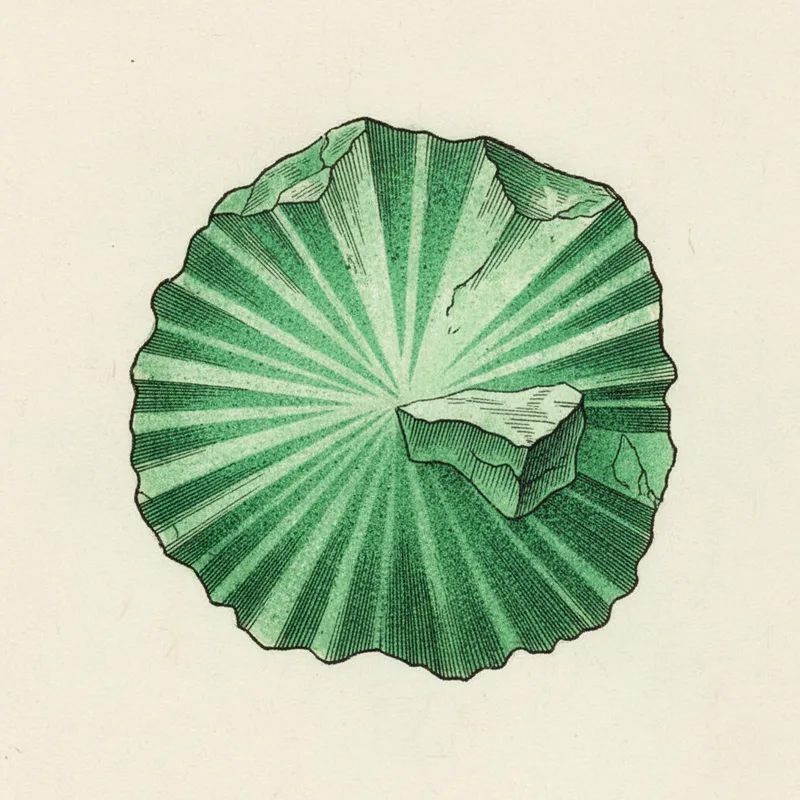
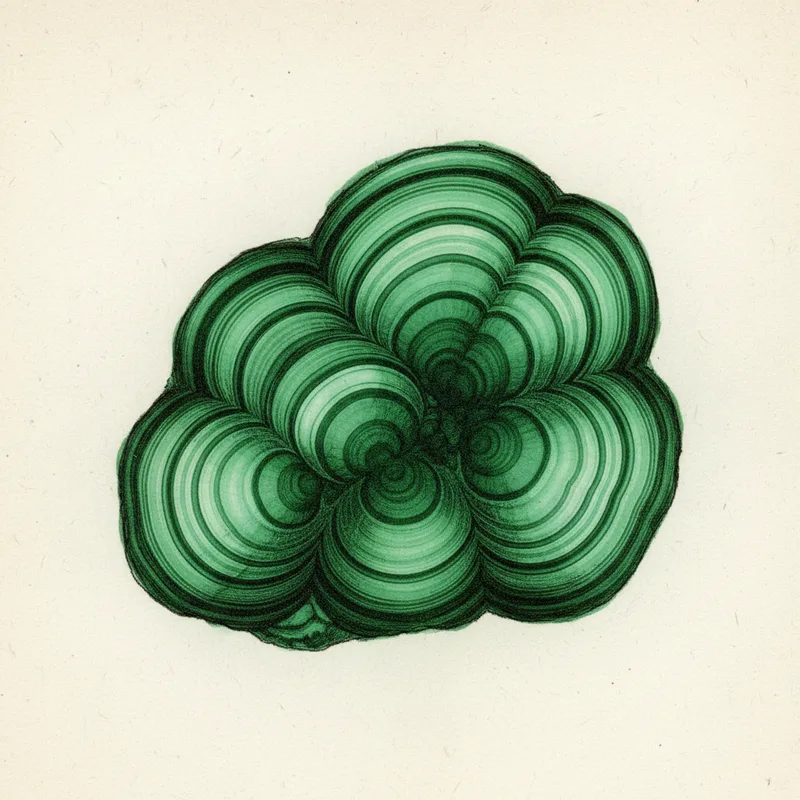
In meditation: Small tumbled emerald (usually emerald-in-matrix rather than pure cut stones, because pure emerald is too valuable to treat this way) is used in heart-chakra layouts, combined with stones like rose quartz, green aventurine, and malachite.
As a birthstone: For people born in May, emerald is the traditional monthly stone. This has been the case since the list was standardized in 1912 by the American National Retail Jewelers Association, and the association long predates that. Wearing your birthstone is one of the simplest and most enduring ways to carry a personally meaningful gem.
Care Instructions
Emerald requires more care than sapphire or diamond, primarily because of the internal fractures and the oil treatment.
- No ultrasonic cleaners. These can drive oil out of fractures and cause stones to look cloudier after cleaning. Ultrasonic cleaning can also exacerbate existing fractures.
- No steam cleaning. Same reason.
- Avoid sudden temperature changes. Thermal shock can propagate internal fractures.
- Clean with warm water, mild soap, and a soft brush. Nothing harsher.
- Avoid harsh chemicals. Chlorine, acetone, alcohol, and household cleaners can damage the oil and occasionally the stone surface. Take emerald rings off before swimming or using strong cleaning products.
- Re-oiling. Every 5-10 years, a professional jeweler can re-oil a faded emerald. This is a standard maintenance procedure, not a repair.
- Storage. Store emerald jewelry separately from harder stones (diamond, sapphire, ruby, topaz) that could scratch it. A soft pouch or lined jewelry box is ideal.
See the crystal care guide for more general guidance on caring for sensitive stones.
Mother's Day Gift Guide
If you landed here because you are shopping for May 10, here are the most realistic price tiers for a Mother's Day emerald gift.
Under $100: A tumbled emerald-in-matrix specimen, or a small lab-created emerald pendant. A beautiful rough crystal on a stand makes a thoughtful, unusual gift.
$100-500: A small lab-created emerald piece (earrings, pendant) in sterling silver or 10k gold. Also a reasonable range for a natural commercial emerald of small size in a simple setting.
$500-2,000: Entry-level natural emerald jewelry in gold. A ring with a 0.5-1 carat emerald of reasonable color, or earrings with a matched pair of smaller stones.
$2,000-10,000: Fine natural emerald jewelry. A 1-2 carat emerald of good color in a well-made setting.
$10,000+: Investment-grade natural emerald. Worth consulting a gemologist and getting a proper certification (GIA, AGL, or SSEF) before purchase.
Whatever you spend, always ask for:
- A written description of treatment (oil, resin, or untreated)
- A return policy
- For stones over $1,000, an independent gemological report
Bottom Line
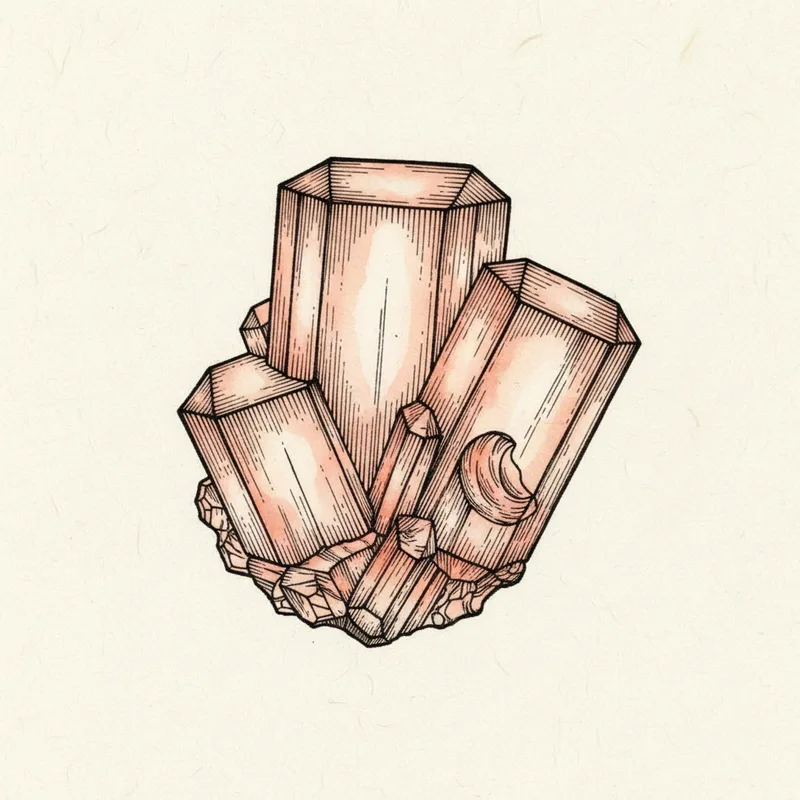
Emerald is a real gemstone with a long history, specific care requirements, and a price range that spans from rock-shop specimens to six-figure auction stones. The standard oil treatment is not a scam, but it should always be disclosed. Lab-created emerald is chemically real emerald and the honest value play for most buyers. Colombian origin carries the premium, but Zambian and Brazilian emerald can be exceptional.
If you are born in May, or someone you love is, this is a stone worth owning in some form. Even a modest specimen carries the weight of everything emerald has meant across two thousand years of human jewelry.
For more on birthstones by month, see the birthstones page. For the geology of the broader beryl family (which also includes aquamarine, morganite, and heliodor), browse the mineral groups page.
Crystals in This Article
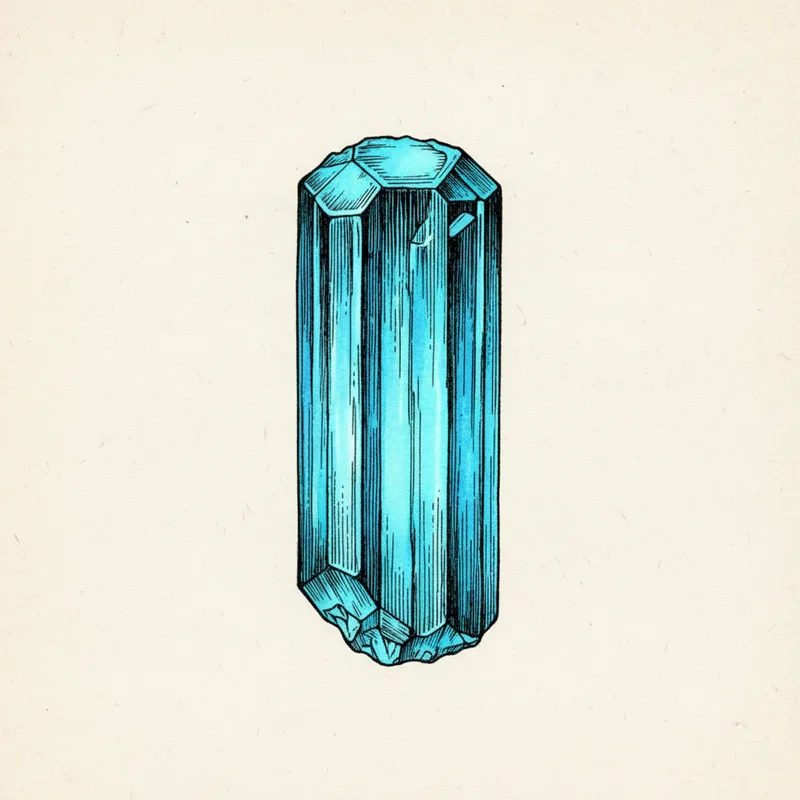
Paraíba Tourmaline
The Neon Gem
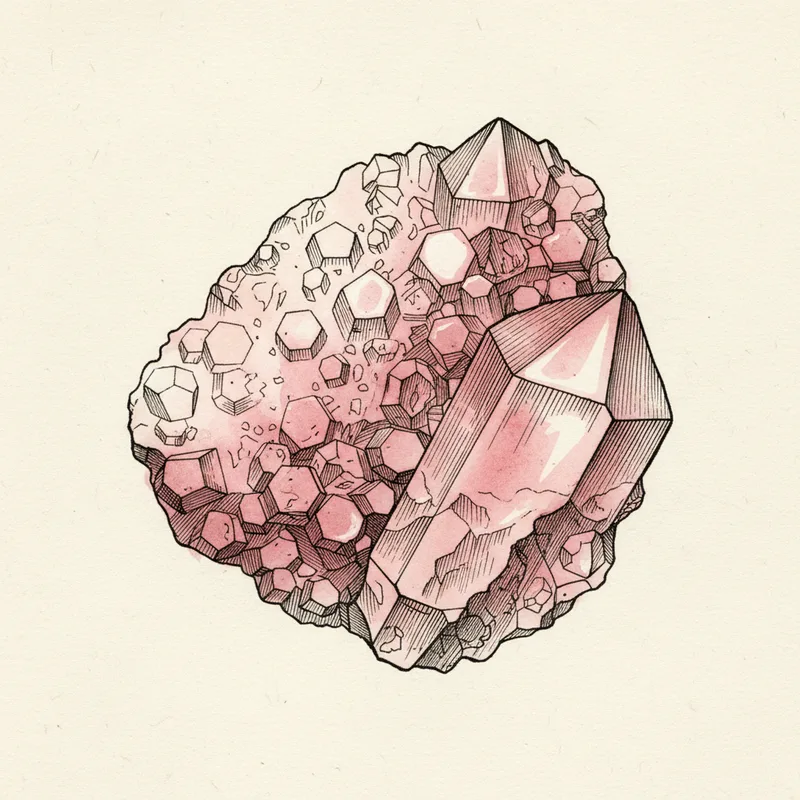
Rose Quartz
The Stone of Unconditional Love
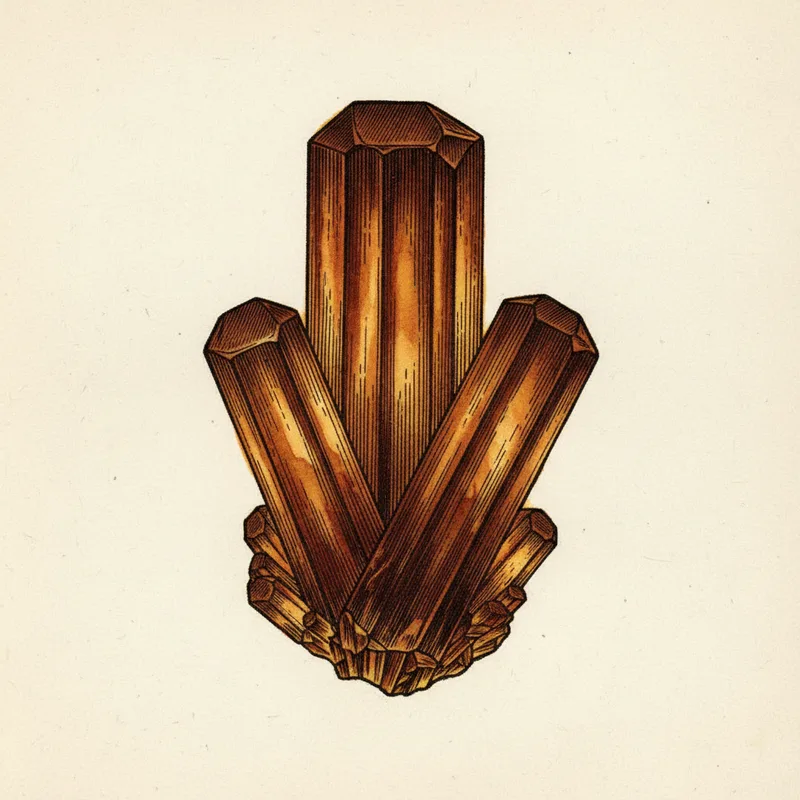
Tourmaline
The Rainbow Stone
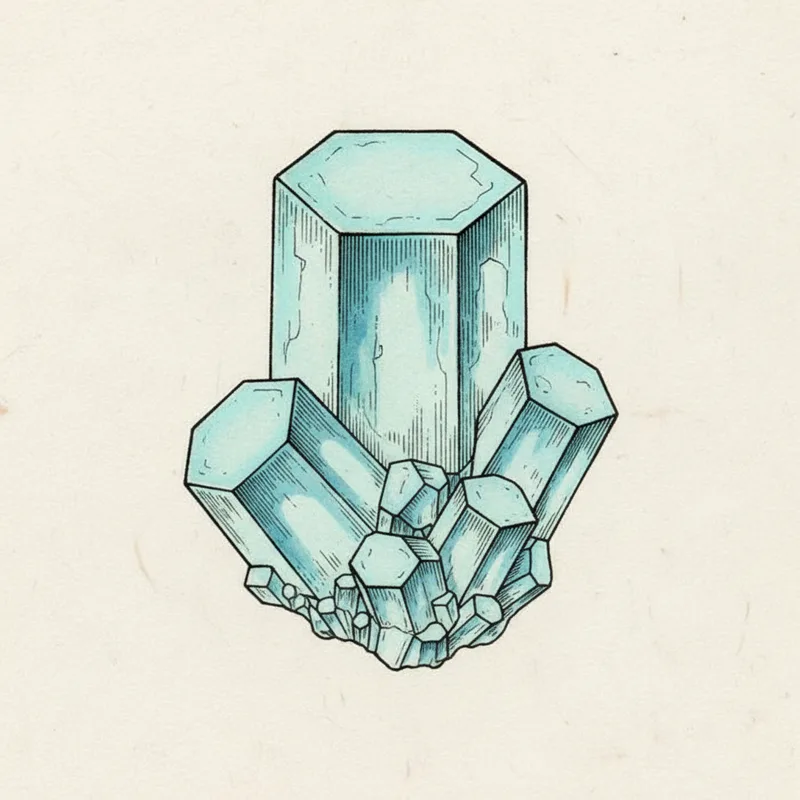
Aquamarine
The Sailor's Gem
Aventurine
The Stone of Opportunity
Malachite
The Stone of Transformation
Morganite
The Divine Love Stone
Tsavorite
The Emerald's East African Rival
Sapphire
The Gem of the Heavens

Heliodor
The Golden Beryl
Diamond
The Invincible
Emerald
The Stone of Successful Love
Keep Reading
Stay in the loop
From the Almanac
Updates from Crystal Almanac, when there’s something worth sharing.