Best Crystals After a Breakup: Heartbreak and Healing
Key Takeaway: Breakups follow a recognizable arc, and different crystals fit different stages of that arc. The first weeks are about acute grief and self-soothing. The middle months are about anxiety, sleep, and rebuilding identity. The later phase is about openness to new beginnings without rushing it. Here are seven crystals matched to each stage of the arc, with honest framing of what they can and cannot do, plus a reminder that for serious post-breakup distress, professional support beats any rock.
If you are reading this post in the first week after a breakup, the most important thing in this article is going to be in this paragraph, so let's put it up front. You are not broken. You are grieving. The thing you are feeling is the natural cost of having loved someone, and it will not feel this acute forever, even though right now it might be hard to believe that. The crystals below are not going to fix this. They are companions for the days when you do not know what else to hold.
If your post-breakup distress is severe - if you cannot eat or sleep for more than a few days, if you are having thoughts of self-harm, if you cannot function at work or with your kids - please call a therapist or a crisis line. There is no shame in this. The strongest people in your life have done it.
With that said, let's talk about the actual stones, organized by where you might be in the arc.
The Arc of a Breakup
Most modern grief and breakup research recognizes that recovery is not linear. You do not pass through stages like checkpoints. You oscillate. Some days you feel like you have made progress, and the next day you wake up devastated again, and that does not mean you are regressing. It means you are doing this correctly.
That said, there are recognizable phases that most people move through, even non-linearly:
- Acute grief (first 2-6 weeks): Crying, intrusive thoughts, physical symptoms (loss of appetite, broken sleep), inability to focus.
- Anxious middle (1-6 months): The acute pain dulls but is replaced by anxiety, identity questions, intermittent self-blame, and difficulty imagining the future.
- Tentative reopening (3 months onward, varies enormously): Curiosity about new connections, sometimes accompanied by guilt for "moving on," then gradually less guilt.
The crystals below are organized by this arc. You can pick the stone for where you are now and switch later as you move through phases.
Phase 1: Acute Grief (First Weeks)
1. Rose Quartz - The First Week Stone
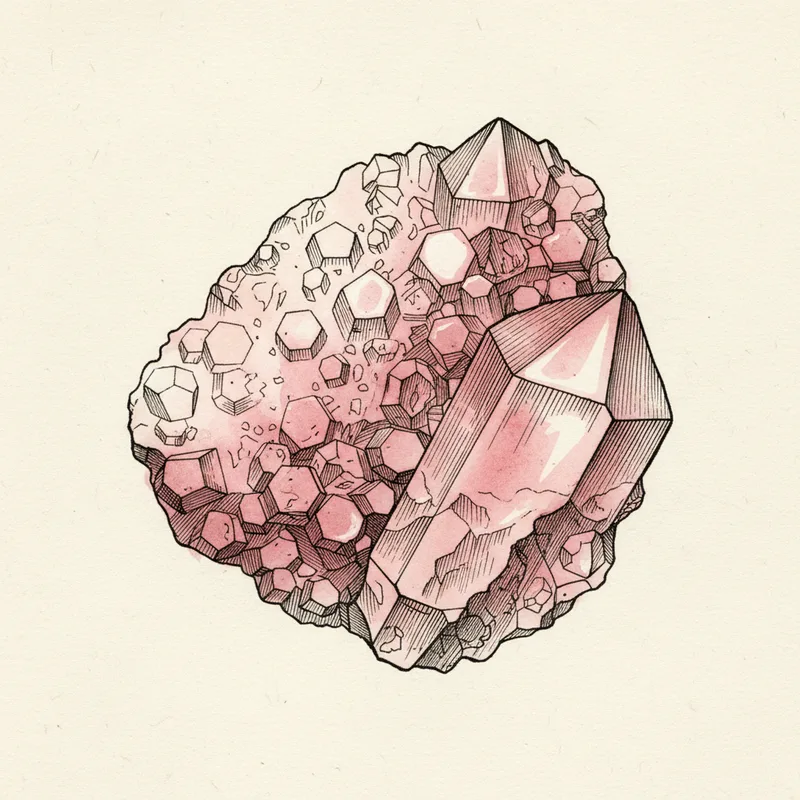
Rose quartz is the most-recommended single crystal for heartbreak across virtually every modern crystal tradition, and it earns the spot. It is pink-tinted quartz (SiO₂) with hardness 7, colored by microscopic fibers of dumortierite. The pink ranges from pale baby-pink to deeper rose, and the color is from microscopic mineral inclusions, not dye.
The traditional association is with self-compassion, which is exactly the disposition you need to extend to yourself in the first weeks after a breakup. The voice in your head that says "you should be over this by now" or "you should have seen it coming" is the voice rose quartz is meant to soften.
How to use it: Hold it during the worst moments. Carry a tumbled piece in a pocket. Place a larger piece on your bedside table for the nights when sleep is hardest. The point is tactile contact during the moments when self-criticism is loudest.
The honest framing: The stone is not generating self-compassion. You are. The stone is the cue that reminds you to do it.
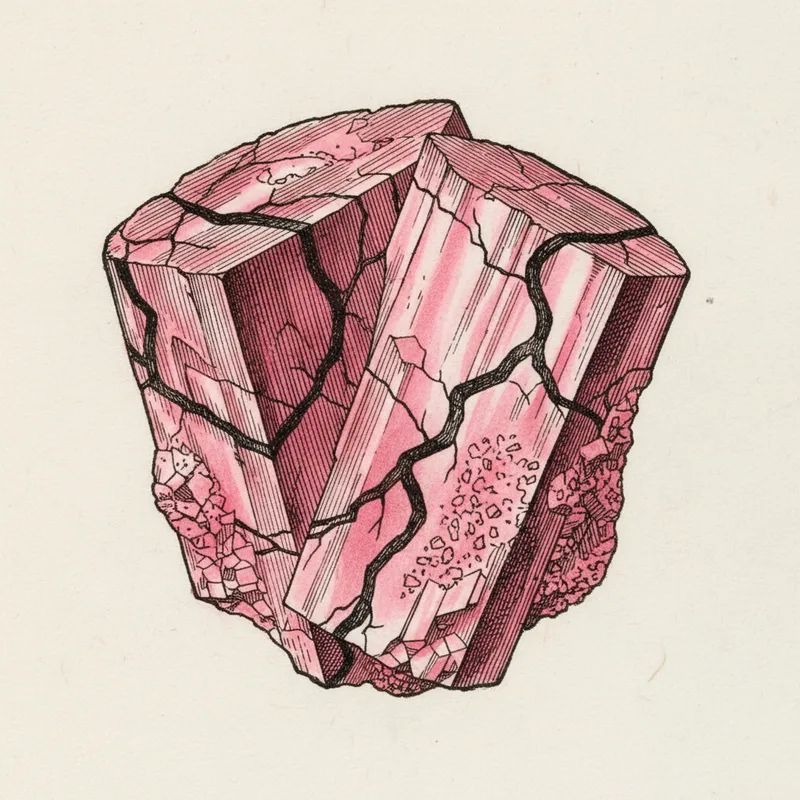
2. Rhodonite - The Heart-Wound Stone
Rhodonite is a manganese silicate (MnSiO₃) with pink-to-rose color and characteristic black manganese-oxide veining. Hardness 5.5-6.5. The black veining is part of its character and gives it a distinctive look unlike rose quartz.
In crystal traditions, rhodonite is specifically associated with healing emotional wounds, the kind that feel acute and physically located in the chest. The traditional pairing for breakups is rose quartz (compassion) plus rhodonite (active wound-healing) - one for how you treat yourself, one for the actual hurt.
How to use it: Often paired with rose quartz on the bedside table or carried together. Some traditions recommend holding rhodonite over the chest during particularly painful moments, which is a good reminder to do diaphragmatic breathing whether you believe in the metaphysics or not.
3. Rhodochrosite - The Inner-Child Stone
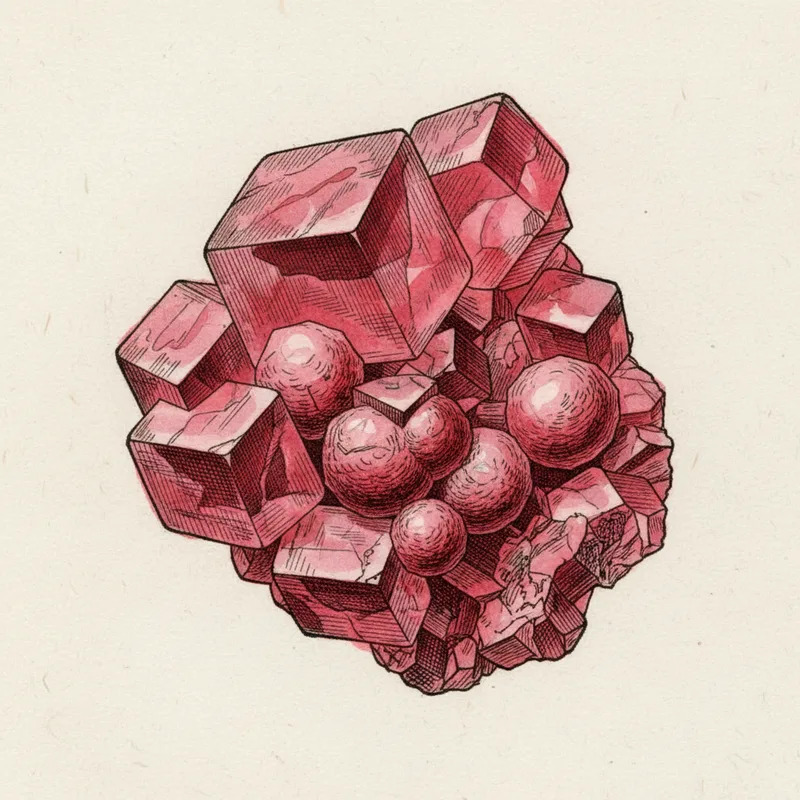
Rhodochrosite is a manganese carbonate (MnCO₃) with banded pink-and-white color, often forming dramatic stalactitic formations. Hardness 3.5-4 (relatively soft, handle gently). Argentina produces the most prized specimens.
Rhodochrosite is associated with the parts of post-breakup grief that touch deeper emotional history - the way a current breakup can reactivate older losses, parental wounds, abandonment fears, or attachment patterns from childhood. If your current breakup is hitting harder than the relationship "should" warrant, that is often because it is touching older material. Rhodochrosite is the traditional stone for that work.
How to use it: Less an everyday carry stone (it is soft and chips easily) and more a "sit with this" stone. Hold during journaling, therapy reflection, or quiet evenings.
Phase 2: The Anxious Middle (1-6 Months)
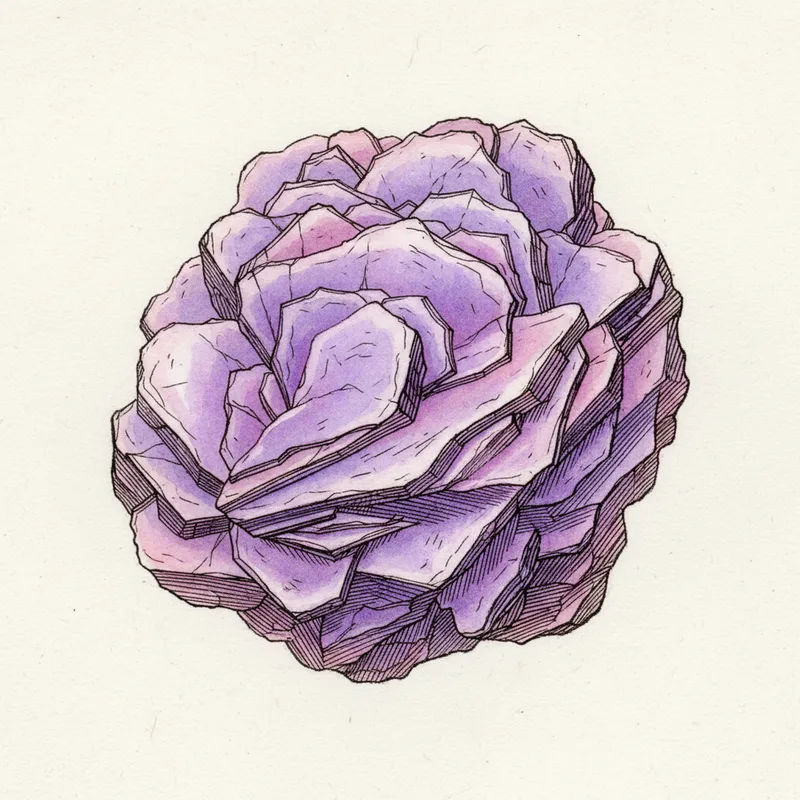
4. Lepidolite - The Anxiety Stone
Lepidolite is a lithium-bearing mica (K(Li,Al)₃(Si,Al)₄O₁₀(F,OH)₂) with characteristic pink-to-purple color from manganese impurities. Hardness 2.5-3.5 (very soft). It is the only crystal commonly recommended for anxiety that contains actual lithium, which is the active ingredient in some anxiety and bipolar medications.
To be very clear: holding lepidolite does not deliver therapeutic doses of lithium to your bloodstream. The lithium is locked in the silicate structure and is not bioavailable through skin contact. The connection is symbolic and historical (lepidolite was one of the early sources of mineral lithium for medical use), not pharmacological.
That said, lepidolite is the traditional stone for the anxious middle phase of any grief process - the period when acute pain is fading but is being replaced by chronic background anxiety, sleep disruption, and racing thoughts.
How to use it: Bedside table for sleep, palm stone for moments of acute anxiety during the day. For the deeper companion piece on lepidolite, see Lepidolite for Anxiety: Geology and Tradition.
5. Smoky Quartz - The Reset Stone
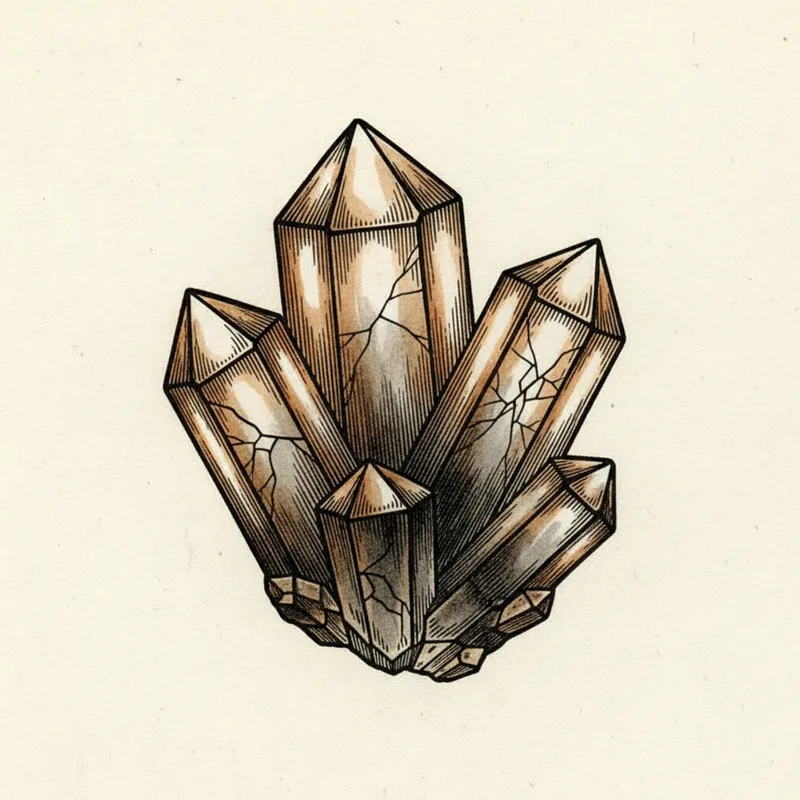
Smoky quartz is brown-to-grey-to-black quartz (SiO₂) with hardness 7. The color comes from trace aluminum and natural radiation displacing electrons over geological time. Smoky quartz has a long tradition in stress reduction, and it is the standard companion stone for the months when you are doing the hard work of building a daily life that does not include your former partner.
The breakup-specific use case for smoky quartz is the practical work of building new routines: cooking for one again, sleeping in a bigger bed, managing the calendar without "we" plans. Smoky quartz is the traditional stone for groundedness during practical reorientation.
How to use it: Workspace, kitchen counter, or any spot in the house where you are actively building new patterns. Pair with concrete behavioral changes (a new morning walk route, a new playlist, a new restaurant) so the stone becomes associated with the new rhythm.
Phase 3: Tentative Reopening (3+ Months)
6. Moonstone - The New Beginnings Stone
Moonstone is a feldspar (orthoclase variety) with characteristic adularescence - that subtle floating light that shifts as you move the stone. Hardness 6-6.5. Fragile relative to other stones on this list, so handle gently.
The traditional association is with cyclical change, fresh starts, and the period of opening to new possibility without forcing it. For breakup recovery specifically, moonstone is the stone for the moment when you start being curious about the future again - when you can imagine going on a date, or moving cities, or starting a project you would have done with them but now want to do for yourself.
How to use it: Worn as jewelry once you start feeling tentatively forward-looking. Some traditions recommend new-moon rituals with moonstone for setting intentions about a new chapter.
Crucial: This phase comes when it comes. Some people reach it in three months, some in two years. There is no correct timeline. Holding a moonstone before you are ready will not accelerate the timeline, and that is okay.
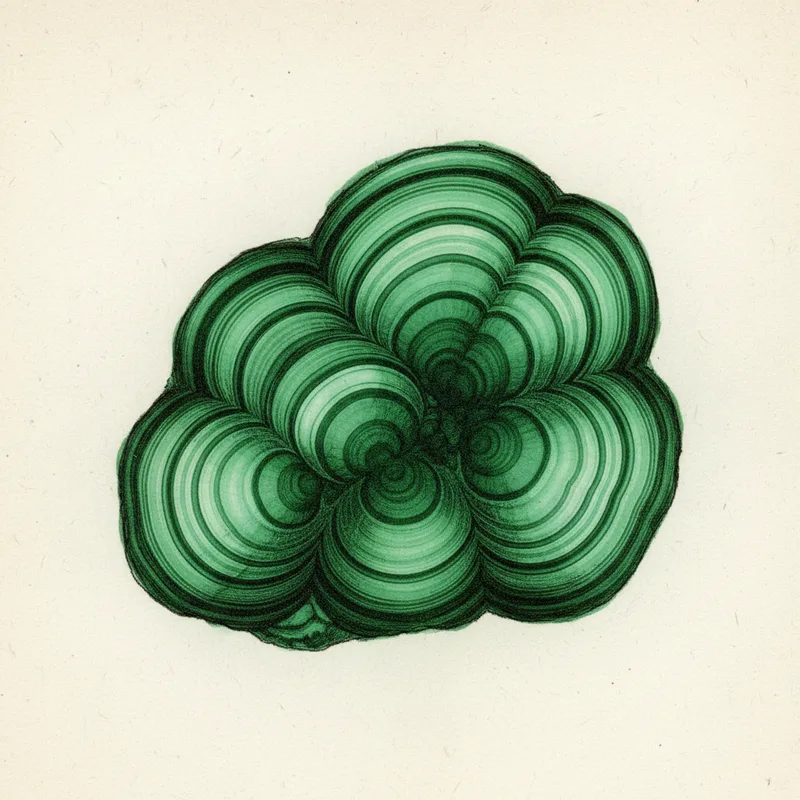
7. Malachite - The Transformation Stone
Malachite (Cu₂CO₃(OH)₂) is included on this list as the "later phase" stone for the harder reflective work that becomes possible months or years after the acute grief has passed. The traditional association is with transformation - looking honestly at the patterns that contributed to the relationship ending, the parts of yourself that you want to do differently next time, and the older patterns that the breakup may have surfaced.
Malachite is an uncomfortable stone for many people. Its mirror-like reflective quality in crystal traditions is associated with showing you what you actually believe and feel, sometimes uncomfortably. This is not the stone for week one. This is the stone for the conversation you have with your therapist a year after a breakup, when you can finally see your own patterns clearly enough to want to change them.
Safety: Polished malachite is safe to handle. Do not put it in water, do not grind it, replace it if it cracks. See crystal care.
How to use it: Workspace or therapy-prep desk during the deeper reflective months. Less a carry stone, more a "I am sitting down to think hard" stone.
A Suggested Three-Phase Kit
If you want a single recommendation for what to actually buy:
Week 1-6: Rose quartz + rhodonite (about $15-30 total for tumbled pieces). Carry one, sleep with the other.
Months 1-6: Add lepidolite for anxiety and smoky quartz for grounding (about $15-20 more). Move the rose quartz to your desk and carry the lepidolite.
Month 6+: Add moonstone when you start feeling forward-looking (about $10-25). Consider malachite for deeper work, but do not rush this one.
Total kit under $80 for the full arc. You will not need all of these at once. You will gradually move through them.
What Crystals Will Not Do
Honest list:
- They will not stop you from missing them
- They will not make the first morning waking up alone hurt less
- They will not bring them back, and frankly, you may not even want that in six months
- They will not replace therapy, friends, or time
What they can do is be small physical companions during the hardest moments. That is a real benefit, but it is the same benefit you get from a worry stone or a smooth pebble from a beach you visited as a kid. The crystal is one option among many for tactile self-soothing.
When to Seek Professional Help
A few flags worth knowing:
- Persistent inability to function (work, basic self-care) for more than 2-3 weeks
- Intrusive thoughts about hurting yourself or anyone else
- Substance use that is escalating
- Drastic weight loss or insomnia that does not improve
- Continued obsessive contact-checking (their socials, their phone) months later despite trying to stop
- A pattern of breakups that all feel the same way - that is worth exploring with a professional
If any of these apply, please call your doctor, a therapist, or a crisis line. The crystals are companions. They are not treatment.
FAQ
Best single crystal for the first week? Rose quartz. It is the most-recommended for a reason. Get a tumbled piece and carry it.
My breakup was over a year ago and I still feel terrible. What helps? Long grief like that often signals either complicated grief (which a therapist can help with) or that the breakup activated older losses. Rhodochrosite is the traditional stone for that deeper inner-child work, but more importantly, please consider talking to someone trained in grief therapy.
Should I cleanse the crystals my ex bought me? This is a personal call. Some people find it healing to keep them and energetically reset them (running water, smoke, or moonlight per your preferred tradition). Others find that the association is too strong and prefer to give them away or pass them to a friend. There is no wrong choice.
Can I combine multiple crystals from this list? Yes. The most common breakup pairing is rose quartz + lepidolite (compassion for the heart, calm for the mind). Add rhodonite if the heart-wound feels physically located.
Related Reading
- Best Crystals for Grief and Loss - the closest companion piece, focused on death and broader loss
- Best Crystals for Anxiety - the anxious-middle phase specifically
- Lepidolite for Anxiety - the deeper lepidolite breakdown
- Best Crystals for Relationships - for when you are eventually ready
- Best Crystals for Sleep - because breakup insomnia is real
- Crystal Care Guide - including handling notes for malachite and rhodochrosite
Crystals in This Article

Keep Reading
Stay in the loop
From the Almanac
Updates from Crystal Almanac, when there’s something worth sharing.